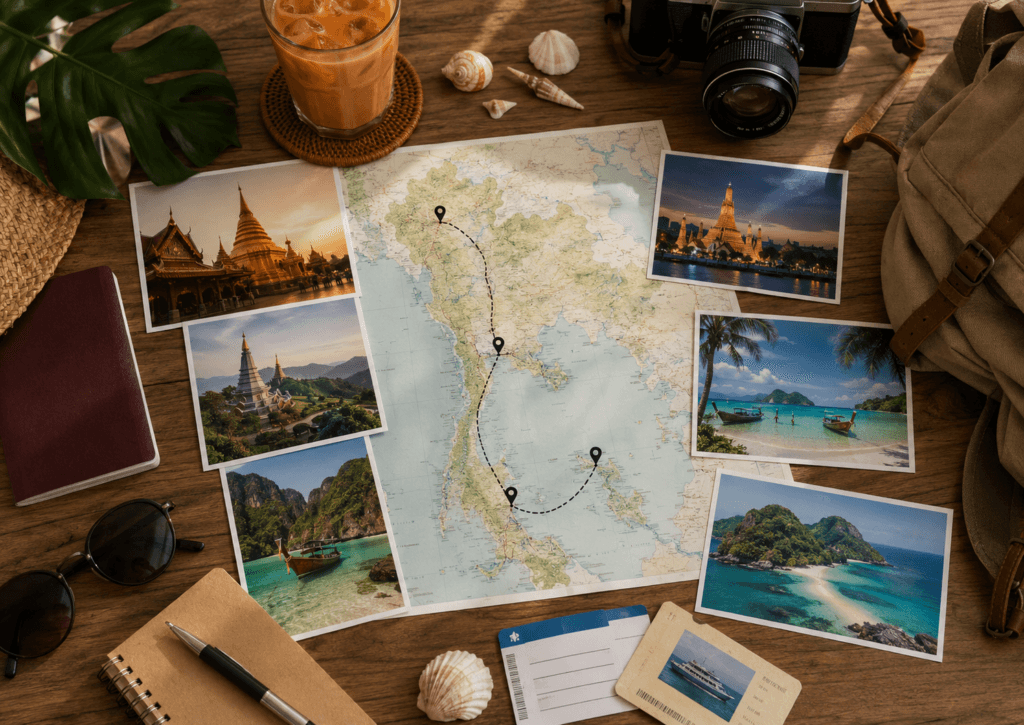
Planning a Thailand itinerary is fun until Thailand starts waving too many good ideas at you.
Bangkok waves first.
Then Chiang Mai waves.
Then Phuket, Krabi, Koh Samui, Koh Tao, Pai, Ayutthaya, Chiang Rai and every island with blue water begin waving too.
Your job is not to wave back at all of them.
Thailand is one of the easiest countries in Asia to love, but it is also very easy to overfill. The best Thailand itinerary is not about squeezing in every famous place. It is about choosing the right mix of Bangkok energy, northern culture and beach time without turning your trip into a domestic flight collection.
For most first-time visitors, the best Thailand itinerary is:
Bangkok → Chiang Mai → Phuket, Krabi or Koh Samui
If you have only 7 days, choose Bangkok plus one other region. If you have 10 days, you can include Bangkok, Chiang Mai and one beach area. If you have 2 weeks, Thailand finally has enough room to breathe.
Thailand is still one of Asia’s biggest travel destinations in 2026. Popular places such as Bangkok, Chiang Mai, Phuket, Krabi and Koh Samui can get busy, so book domestic flights, island hotels and key tours early during peak travel months.
This route is built around the choices that matter most: how many days you have, whether you want temples or beaches first, which island coast fits your season, how to avoid too many transfers and what entry rules to check before you fly.
If you are still comparing routes across the region, start with our Asia travel itinerary 2026 guide. If you want to combine Thailand with Vietnam, read our Thailand Vietnam itinerary 2026 before choosing your route.
Quick Answer: Best Thailand Itinerary
For most first-time visitors, the best Thailand itinerary is:
Bangkok → Chiang Mai → Phuket, Krabi or Koh Samui
This route gives you a strong first taste of the country:
- Bangkok for food, temples, markets and city energy
- Chiang Mai for northern culture, temples, cafes and slower days
- Phuket, Krabi or Koh Samui for beaches and island time
Here is the simple version:
| Trip Length | Best Route | Best For |
|---|---|---|
| 7 days | Bangkok + Chiang Mai | Culture, food and temples |
| 7 days | Bangkok + Phuket or Krabi | City and beach combination |
| 10 days | Bangkok + Chiang Mai + Phuket/Krabi/Koh Samui | Best first-time Thailand route |
| 2 weeks | Bangkok + Chiang Mai + Chiang Rai/Pai or Ayutthaya day trip + islands | Slower and deeper Thailand trip |
| 3 to 5 days | Bangkok only, or one island only | Short stopover |
The sweet spot is 10 days. It lets you enjoy Bangkok, add northern Thailand and still end near the beach without sprinting through airports in sandals.
Is Thailand Good for First-Time Visitors?
Yes, Thailand is one of the best countries in Asia for first-time visitors.
It is popular for good reason. Thailand has excellent food, strong tourism infrastructure, beautiful temples, friendly service, easy domestic flights, beaches, islands, markets, shopping, nightlife and a wide range of budgets.
Thailand is especially good for travelers who want street food, temples, big city energy, night markets, beach resorts, island hopping, affordable hotels, cafes, wellness, spas and a mix of comfort and adventure.
But Thailand is not one single travel mood.
Bangkok feels fast, hot and electric. Chiang Mai feels slower and more cultural. Phuket and Krabi bring beach energy. Koh Samui, Koh Phangan and Koh Tao follow a different island rhythm. Northern Thailand, southern Thailand and island Thailand do not all fit neatly into one tiny suitcase.
The best first Thailand trip should choose fewer regions and enjoy them properly.
If you are choosing between Thailand and another Southeast Asian country, compare it with our Vietnam itinerary 2026 or Bali itinerary 2026 before deciding.
How Many Days Do You Need in Thailand?
You need at least 7 days for a good first Thailand itinerary, but 10 days is much better.
A realistic guide:
- 3 to 5 days: Stay in Bangkok, or choose one island base
- 7 days: Bangkok + one region
- 10 days: Bangkok + Chiang Mai + one beach region
- 2 weeks: Best for Bangkok, northern Thailand and islands
- 1 month: Slow travel with several islands, mountains and smaller towns
If you only have one week, do not try to visit Bangkok, Chiang Mai, Chiang Rai, Phuket, Krabi, Koh Phi Phi, Koh Samui and Ayutthaya.
That is not an itinerary. That is a boarding pass garden.
Thailand is easy to move around compared with many countries, but domestic flights, ferries, airport transfers and hotel changes still take time. Every transfer quietly eats half a day, then smiles like nothing happened.
For most first-time visitors, 10 days gives the best balance. Two weeks is ideal if you want a less rushed trip.
Best Thailand Route: Bangkok, North and Islands
A classic first Thailand route has three parts:
Bangkok → Northern Thailand → Thai Islands or Beaches
This works because each part feels different.
If you prefer a multi-country route through Singapore and Malaysia, our Singapore Malaysia Thailand itinerary 2026 may fit better than a Thailand-only trip.
Bangkok
Bangkok is the best place to start for many travelers.
It gives you temples, street food, river views, markets, malls, nightlife, rooftop bars and easy onward flights. It can feel intense at first, but it is also one of Asia’s most rewarding cities if you give it time.
Bangkok is not just a transit city. Treating Bangkok like an airport waiting room with temples is one of the easiest ways to miss the point.
Northern Thailand
Northern Thailand usually means Chiang Mai, Chiang Rai, Pai or nearby mountain areas.
For first-time visitors, Chiang Mai is the easiest northern base. It has temples, night markets, cafes, cooking classes, elephant sanctuaries, mountain day trips and a slower atmosphere than Bangkok.
This is where Thailand changes pace. The city noise lowers, the temple bells get louder and your itinerary stops clenching its jaw.
Thai Islands and Beaches
Thailand’s beach section depends on your season and travel style.
Popular beach regions include:
- Phuket
- Krabi
- Koh Phi Phi
- Koh Lanta
- Koh Samui
- Koh Phangan
- Koh Tao
For most first-time visitors, Phuket or Krabi is easiest if you want the Andaman Coast. Koh Samui is a good choice if you want the Gulf Coast.
Do not choose islands by popularity alone. Weather, ferry time, flight access and travel style matter.
Thailand has two beach maps hiding inside one country.
7-Day Thailand Itinerary: Two Good Options
A 7-day Thailand itinerary should be simple.
With only one week, choose Bangkok plus one major region.
The two best options are:
Option A: Bangkok + Chiang Mai
Best for temples, food, culture and northern Thailand.
Option B: Bangkok + Phuket or Krabi
Best for city energy and beach time.
Trying to do Bangkok, Chiang Mai and the islands in 7 days is technically possible, but not very comfortable. Your trip may start smelling like airport carpet.
7-Day Option A: Bangkok + Chiang Mai
This route is best if you care more about culture, food, temples and atmosphere than beaches.
Suggested route:
- Days 1 to 3: Bangkok
- Days 4 to 7: Chiang Mai
Days 1 to 3: Bangkok
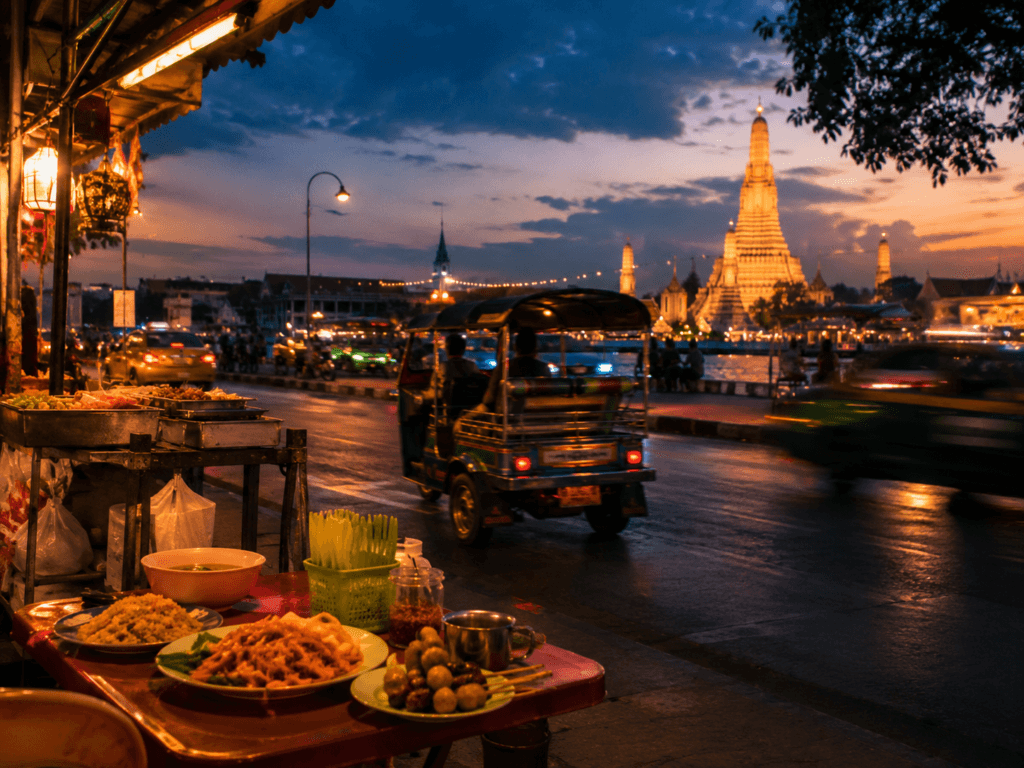
Start in Bangkok.
Use your first day gently. Bangkok can be exciting, loud, hot and busy, especially after a long flight.
A good first Bangkok day can include hotel check-in, an easy local meal, a short walk nearby, a river sunset or rooftop view, and an early night if needed.
On days 2 and 3, focus on Bangkok’s classic highlights.
Good places to visit include:
- Grand Palace
- Wat Pho
- Wat Arun
- Chao Phraya River
- Chinatown
- Chatuchak Weekend Market, if timing works
- Jim Thompson House
- IconSiam or Siam area
- Local food streets
- Rooftop bar or night market
Bangkok works best when you group sights by area. Do not jump from temple to mall to market to riverside dinner to night market without checking the map. Bangkok traffic has a talent for turning ambition into soup.
A good Bangkok plan usually includes one temple area, one food area and one evening area per day.
Days 4 to 7: Chiang Mai
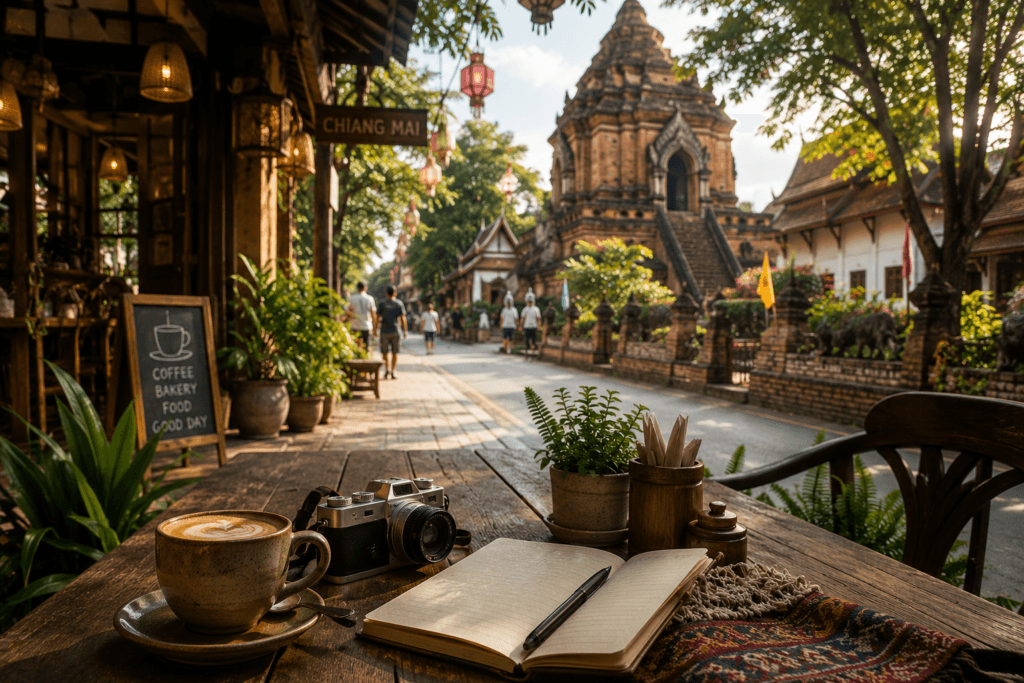
Fly from Bangkok to Chiang Mai.
Chiang Mai is one of the best places in Thailand for first-time visitors because it is easy, scenic and slower than Bangkok.
Good things to do in Chiang Mai include:
- Old City temples
- Wat Phra Singh
- Wat Chedi Luang
- Doi Suthep
- Night Bazaar
- Sunday Walking Street Market, if timing works
- Cooking class
- Cafe hopping
- Ethical elephant sanctuary
- Mountain day trip
- Thai massage or spa
Spend one day around the Old City, one day for Doi Suthep or nearby nature, and one day for a cooking class, cafe day or sanctuary visit.
Chiang Mai is not a beach destination, but it gives your Thailand trip depth. After Bangkok’s engine noise, Chiang Mai feels like someone turned the volume down and handed you a bowl of khao soi.
This 7-day route is best for travelers who want Thailand’s city and culture side more than beaches.
7-Day Option B: Bangkok + Phuket or Krabi
This route is best if beaches matter more than northern Thailand.
Suggested route:
- Days 1 to 3: Bangkok
- Days 4 to 7: Phuket or Krabi
Days 1 to 3: Bangkok
Start with the same Bangkok plan: temples, food, river views and markets.
Three days gives you enough time to see the highlights without turning Bangkok into a blur of gold roofs and noodles.
Days 4 to 7: Phuket or Krabi
Fly from Bangkok to Phuket or Krabi.
Choose Phuket if you want easier flights, more hotels, beach clubs, restaurants, nightlife, tours and resort choices.
Choose Krabi if you want dramatic limestone scenery, island trips, beaches, cliffs and a slightly more scenic coastal mood.
Phuket is easier and busier. Krabi is often prettier and a little more relaxed, depending on where you stay.
Good beach activities include:
- Island hopping
- Boat tours
- Beach day
- Sunset viewpoint
- Snorkeling
- Spa day
- Night market
- Seafood dinner
- Slow cafe morning
For a 7-day Thailand itinerary, do not change beach bases too much. Pick Phuket or Krabi and enjoy it.
Island hopping every morning sounds romantic until your beach holiday becomes a ferry spreadsheet.
10-Day Thailand Itinerary: Best First-Time Route
A 10-day Thailand itinerary is the best first-time route for most travelers.
The classic route is:
Bangkok → Chiang Mai → Phuket, Krabi or Koh Samui
Suggested route:
- Days 1 to 3: Bangkok
- Days 4 to 6: Chiang Mai
- Days 7 to 10: Phuket, Krabi or Koh Samui
This route gives you city, culture and beach without making the trip feel too thin.
Days 1 to 3: Bangkok
Start with three days in Bangkok.
Suggested plan:
- Day 1: Arrival, easy dinner and light evening
- Day 2: Grand Palace, Wat Pho, Wat Arun and riverside
- Day 3: Chinatown, markets, cafes, shopping or a night market
Bangkok deserves more than one rushed night.
It is one of Asia’s great food cities, and a huge part of the Thailand experience happens between formal sights: noodle shops, fruit carts, coffee stands, river boats, malls, markets and little side streets that were not on your list.
Days 4 to 6: Chiang Mai
Fly to Chiang Mai for three days.
Suggested plan:
- Day 4: Old City temples and night market
- Day 5: Doi Suthep, cafes and local food
- Day 6: Cooking class, ethical elephant sanctuary or countryside day trip
Chiang Mai gives the itinerary a calmer middle section. It is not as visually dramatic as the islands, but it is often where travelers feel Thailand start to slow down.
Do not overpack Chiang Mai. One temple morning, one mountain view, one market evening and one good bowl of khao soi can do more than six rushed stops.
Days 7 to 10: Phuket, Krabi or Koh Samui
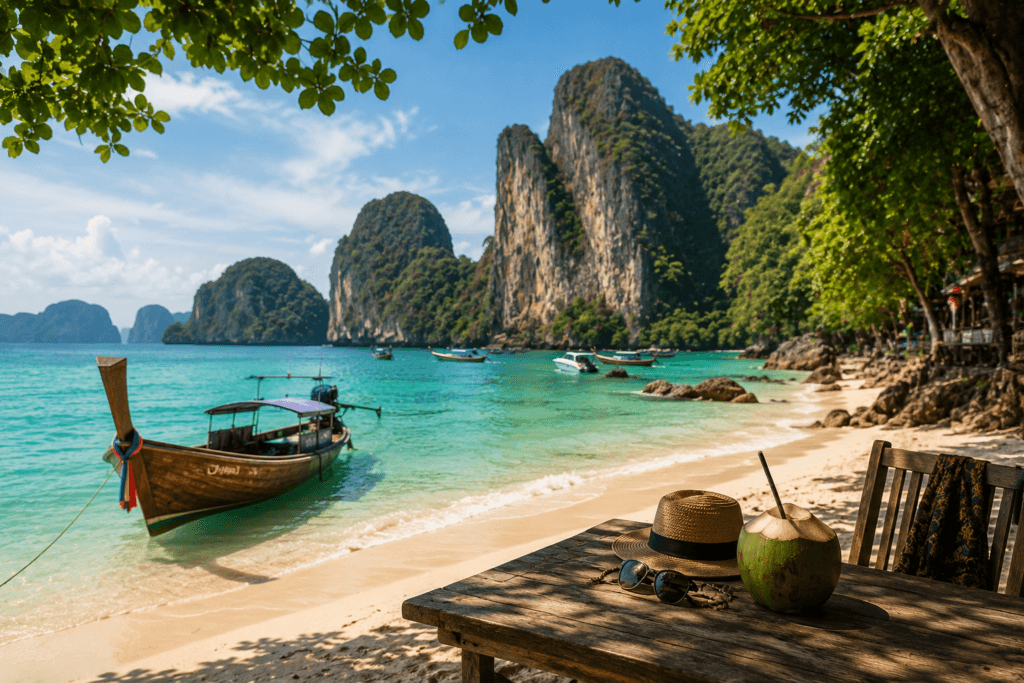
Finish with beach time.
Choose based on weather, access and your style.
Phuket is best for easy flights, lots of hotel choices, beach clubs, nightlife, day tours and resort comfort.
Krabi is best for limestone cliffs, island trips, Railay Beach, longtail boat scenery and a more dramatic coastal look.
Koh Samui is best if the Gulf Coast season works better for your travel dates, or if you want a resort-style island with good facilities.
Suggested plan:
- Day 7: Fly to beach region, check in and sunset
- Day 8: Beach day or island tour
- Day 9: Slow day, viewpoint, snorkeling or spa
- Day 10: Final swim, airport transfer and departure
The beach section should not feel like homework. Do not schedule a boat tour, viewpoint, night market, beach club and massage all on the same day unless you enjoy relaxing aggressively.
This 10-day route is the best Thailand starter pack: Bangkok wakes you up, Chiang Mai slows you down, and the beach reminds you why your suitcase has sandals.
2-Week Thailand Itinerary: Bangkok, North and Islands
A 2-week Thailand itinerary gives you enough time to travel better.
The best route is:
Bangkok → Chiang Mai → Chiang Rai or Pai → Thai Islands
You can also add Ayutthaya as a Bangkok day trip if history matters more than another northern stop.
Suggested route:
- Days 1 to 3: Bangkok
- Days 4 to 6: Chiang Mai
- Days 7 to 8: Chiang Rai or Pai, or add Ayutthaya as a Bangkok day trip
- Days 9 to 14: Phuket, Krabi, Koh Samui, Koh Phangan or Koh Tao
This is where Thailand starts to feel less like a highlight sampler and more like a real trip.
Days 1 to 3: Bangkok
Start with Bangkok.
Use these days for temples, food, river areas, markets and city energy.
If you like history, add Ayutthaya as a day trip from Bangkok. If you prefer to keep the first section simple, save the extra stop for later.
Bangkok is a good place to adjust to Thailand before moving north or south. It is busy, but it also gives you everything you need: hotels, transport, food, malls, SIM cards, tours and enough iced drinks to keep your plans alive.
Days 4 to 6: Chiang Mai
Fly to Chiang Mai.
Spend three days around temples, markets, mountains, food and slower northern culture.
A good Chiang Mai plan can include:
- Old City temples
- Doi Suthep
- Sunday Walking Street Market
- Night Bazaar
- Cooking class
- Ethical elephant sanctuary
- Cafe day
- Thai massage
- Nearby countryside
Chiang Mai is a good place to avoid rushing. It is not designed for checklist speed. It prefers slow mornings and long dinners.
Days 7 to 8: Choose Chiang Rai, Pai or Ayutthaya
For two extra days, choose one add-on.
Choose Chiang Rai if you want famous temples, including the White Temple, Blue Temple and northern scenery.
Choose Pai if you want mountain scenery, cafes, a backpacker mood and a slower small-town atmosphere.
Choose Ayutthaya if you want ancient ruins and history, usually as a day trip from Bangkok rather than a northern add-on.
For most first-time visitors, Chiang Rai is the easiest add-on from Chiang Mai if you want more temples and landscapes. Pai is better if you want a slower mountain feel, but the road is winding and not everyone loves the journey.
Ayutthaya works better if you prefer history and do not want to travel too far north.
Do not add all three. Thailand has many invitations. You still have one body.
Days 9 to 14: Thai Islands or Beaches
Finish with five or six nights near the beach.
This is where choosing the right coast matters.
The main options are:
Andaman Coast
- Phuket
- Krabi
- Koh Phi Phi
- Koh Lanta
- Railay Beach
Gulf Coast
- Koh Samui
- Koh Phangan
- Koh Tao
The Andaman Coast is often best for dramatic limestone scenery, island hopping and classic postcard beaches. Phuket and Krabi are the easiest bases for most first-time visitors.
The Gulf Coast can be better at different times of year and works well if you want Koh Samui, Koh Phangan or Koh Tao.
A good 2-week ending could be:
- Phuket + Phi Phi
- Krabi + Railay + Koh Lanta
- Koh Samui + Koh Phangan
- Koh Samui + Koh Tao
- Phuket only, if you want comfort and fewer transfers
- Krabi only, if you want scenery and easier pacing
Do not move islands every night. The sea is beautiful, but ferry logistics can chew holes in your beach mood.
For most first-time visitors, one main island base plus one side trip is enough.
Best Time to Visit Thailand
Thailand has several weather personalities, and not all of them agree with your beach plans.
The easiest time for most first-time visitors is usually the cool and dry season:
November to February
This period is popular because the weather is generally more comfortable for cities, temples, beaches and outdoor sightseeing.
But Thailand’s weather is not the same everywhere. Island weather depends heavily on which coast you choose.
Cool and Dry Season
The cool and dry season usually runs from around November to February.
This is often the best time for:
- Bangkok
- Chiang Mai
- Northern Thailand
- Phuket
- Krabi
- Many Andaman Coast destinations
- General first-time routes
The downside is higher prices and bigger crowds, especially around Christmas, New Year and peak winter travel months.
Hot Season
The hot season usually falls around March to May.
This can still be a good time to visit, but temperatures can be intense, especially in Bangkok and northern Thailand.
Plan slower days, stay hydrated and avoid building your schedule around midday walking marathons.
Bangkok in hot season can make your shirt reconsider its life choices.
Rainy Season
The rainy season varies by region, but many parts of Thailand see more rain from around May or June to October.
Rainy season does not always mean rain all day. It can mean short, heavy showers, humid afternoons and greener landscapes.
The tricky part is the islands.
How to Choose Thai Islands by Season
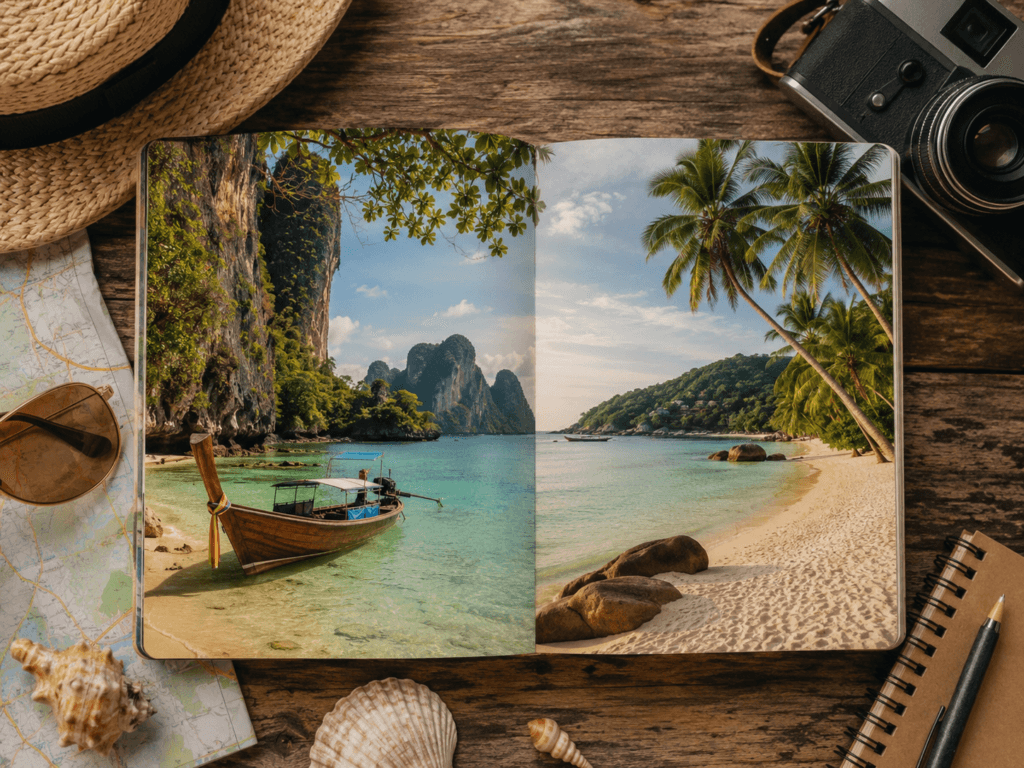
For beach days, do not choose Thai islands by popularity alone.
Thailand’s islands do not all share the same rainy-season pattern.
Andaman Coast
The Andaman Coast includes:
- Phuket
- Krabi
- Koh Phi Phi
- Koh Lanta
- Railay Beach
This side is usually most popular in the dry months, especially around November to April.
It can be wetter and rougher during the southwest monsoon period, especially from around May to October. Boat trips may be affected by weather and sea conditions.
Choose the Andaman Coast if you want limestone cliffs, island hopping, Phuket convenience, Krabi scenery and classic Thailand beach views.
Gulf Coast
The Gulf Coast includes:
- Koh Samui
- Koh Phangan
- Koh Tao
This side can work better during some months when the Andaman Coast is wetter, but it has its own rainy pattern. The Gulf Coast often sees heavier rain later in the year compared with some other regions.
Choose the Gulf Coast if you want Koh Samui resorts, Koh Phangan beaches and nightlife, or Koh Tao diving and snorkeling.
Simple Island Rule
For a first trip:
- Choose Phuket or Krabi if you want easier flights and classic scenery
- Choose Koh Samui if the Gulf Coast weather fits your dates
- Choose Koh Tao if diving matters
- Choose Koh Lanta if you want a slower Andaman island
- Choose Koh Phangan if you want beaches plus nightlife or a social scene
Thailand’s islands are not just interchangeable blue dots. Pick the coast that fits your month, not just the beach photo that shouted loudest on Pinterest.
How to Get Around Thailand
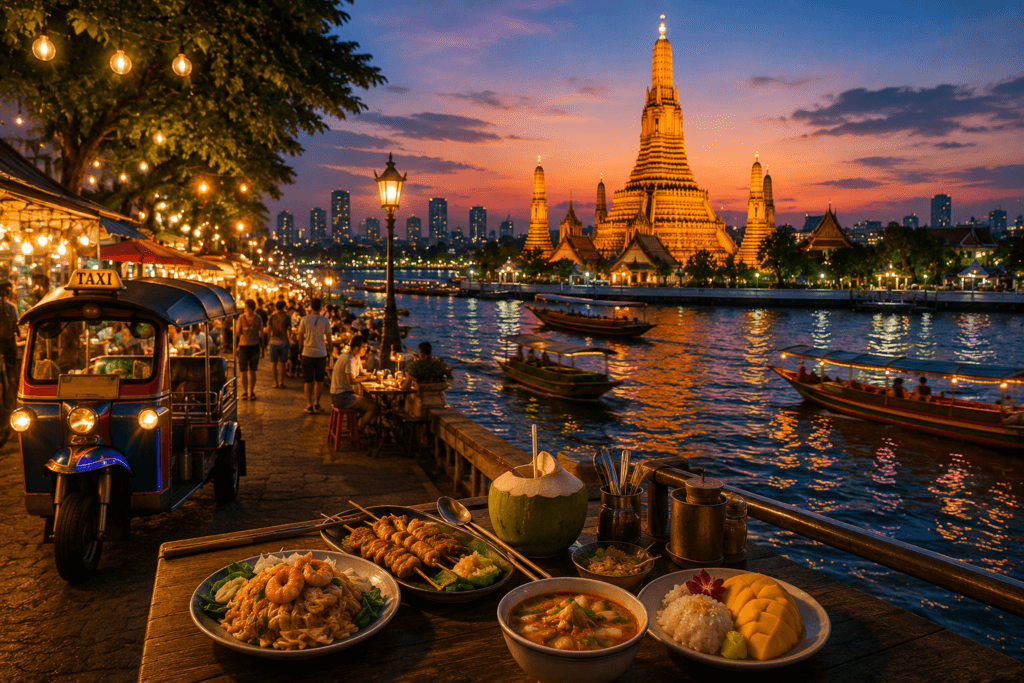
Thailand is fairly easy to travel around, but distances still matter.
Common transport options include:
- Domestic flights
- Trains
- Buses
- Ferries
- Taxis
- Ride-hailing apps
- Tuk-tuks
- Private transfers
- Boats and longtail boats
For most first-time visitors, domestic flights are best for long distances.
Domestic Flights
Domestic flights are useful for routes like:
- Bangkok to Chiang Mai
- Bangkok to Phuket
- Bangkok to Krabi
- Bangkok to Koh Samui
- Chiang Mai to Phuket, if available or with connection
- Chiang Mai to Bangkok, then onward south
Flying saves time, especially on 7-day and 10-day itineraries.
Trains
Trains are useful if you enjoy slower overland travel.
Popular train routes include Bangkok to Ayutthaya and Bangkok to Chiang Mai. Overnight trains can be memorable, but they also take time.
If you only have 7 or 10 days, flying is usually more practical.
Ferries
Ferries are part of many island routes.
Always check ferry schedules before booking hotels across multiple islands. Some routes do not run as often as travelers imagine, and weather can affect boats.
The sea is not your personal taxi app.
Taxis and Local Transport
In Bangkok and larger cities, taxis, ride-hailing apps and public transport are useful.
Bangkok also has BTS Skytrain, MRT, river boats and airport rail connections. Use them when possible, because road traffic can be slow.
Tuk-tuks can be fun for short rides, but agree on the price first.
Entry Rules in 2026
Before traveling to Thailand, check the latest entry rules based on your passport.
Thailand Digital Arrival Card
Foreign travelers need to submit the Thailand Digital Arrival Card, or TDAC, within 3 days before arriving in Thailand.
The TDAC is separate from your visa or visa exemption. Do not treat it as a replacement for checking your passport’s entry rules.
Use the official TDAC website only. Paying a random website for a free arrival card is not the kind of souvenir Thailand needs to give you.
Visa Exemption and Tourist Visa Rules
Thailand’s tourist entry rules have been changing, so check carefully before booking.
Thailand’s visa exemption rules have been changing, and older 60-day visa-free advice may not apply to every passport by the time you travel. Check the official Thai embassy, consulate or e-Visa information for your nationality before booking flights.
Visa rules depend on nationality, travel purpose and current policy. The safest approach is simple: check your passport on an official Thai source before you book flights, hotels or island ferries.
Before You Travel, Check These
Before departure, check:
- Passport validity
- TDAC submission
- Visa or visa-free eligibility
- Entry and exit dates
- Proof of onward or return travel, if required
- Hotel address for arrival forms
- Travel insurance
- Mobile data or eSIM
- Domestic flight details
- Ferry schedules, if visiting islands
Entry paperwork is not the glamorous part of Thailand planning, but it is better than making immigration the plot twist.
Budget Tips for Thailand
Thailand can be budget-friendly, mid-range or luxury depending on how you travel.
You can eat street food, stay in guesthouses and use public transport. You can also book private pool villas, beach clubs, domestic flights, spa days and island tours until your budget starts whispering in Thai baht.
Save Money on Food
Thailand is one of the best food countries in Asia.
Budget-friendly foods include:
- Pad Thai
- Pad kra pao
- Khao soi
- Som tam
- Mango sticky rice
- Boat noodles
- Tom yum
- Green curry
- Fried rice
- Grilled skewers
- Thai iced tea
Street food and local restaurants are often excellent value.
You do not need fancy restaurants every day. Some of the best Thailand meals happen at plastic tables with a fan working harder than anyone else.
Save Money on Accommodation
Book early during peak season, especially in Bangkok, Chiang Mai, Phuket, Krabi and Koh Samui.
Beach hotels can get expensive during high season. Staying slightly away from the most famous beach can save money.
In Bangkok, choose accommodation near BTS, MRT or river transport if possible. A cheaper hotel far from transport can cost you time and taxis.
Save Money on Transport
Use domestic flights for long distances when your itinerary is short.
Use trains and buses when you have more time.
Avoid changing islands too often. Every island move usually means a transfer, ferry, waiting time and another transfer. That can turn a cheap route into a full-day project wearing flip-flops.
Save Money on Tours
Compare what is included before booking tours.
For island tours, check whether transfers, lunch, national park fees, snorkeling gear and hotel pickup are included.
The cheapest tour is not always the cheapest if it leaves out half the things you actually need.
Common Mistakes to Avoid
Mistake 1: Trying to Visit Too Many Regions
Thailand has many good places, but you do not need all of them in one trip.
For 7 days, choose Bangkok plus one region. For 10 days, choose Bangkok, Chiang Mai and one beach region. For 2 weeks, you can add one extra northern or island stop.
Mistake 2: Choosing Islands Without Checking the Season
Thailand’s island weather depends on the coast.
Phuket, Krabi and Phi Phi do not follow exactly the same pattern as Koh Samui, Koh Phangan and Koh Tao. Check the season before choosing your beach route.
Mistake 3: Underestimating Bangkok
Many travelers use Bangkok only as a transit stop.
Bangkok deserves at least 2 or 3 days on a first Thailand itinerary. It has some of the best food, temples, markets and city experiences in the country.
Mistake 4: Booking Too Many Transfers
Domestic flights are easy, but they still take time.
A travel day is not just flight time. It includes packing, hotel checkout, airport transfer, check-in, waiting, flight, baggage, another transfer and hotel check-in.
Your itinerary may say “one-hour flight.” Your body may say “where did the afternoon go?”
Mistake 5: Treating All Beaches as the Same
Some Thai beaches are better for swimming. Some are better for snorkeling. Some are better for nightlife. Some are better for scenery.
Choose your beach base based on your travel style, not just one pretty photo.
Mistake 6: Forgetting TDAC or Visa Checks
Submit the TDAC before arrival and check visa rules for your passport.
Do not wait until the airport to make paperwork exciting.
FAQ: Thailand Itinerary
How many days do you need in Thailand?
You need at least 7 days for a good first Thailand trip. Ten days is better, and 2 weeks is ideal if you want Bangkok, northern Thailand and islands without rushing.
Is 7 days enough for Thailand?
Yes, 7 days is enough if you choose Bangkok plus one other region. The best 7-day Thailand itineraries are Bangkok + Chiang Mai or Bangkok + Phuket or Krabi.
Is 10 days enough for Thailand?
Yes, 10 days is one of the best lengths for a first Thailand trip. A good route is Bangkok, Chiang Mai and Phuket, Krabi or Koh Samui.
Is 2 weeks too long in Thailand?
No, 2 weeks is not too long. It is ideal if you want Bangkok, Chiang Mai, one extra northern stop and several beach days.
What is the best Thailand itinerary for first-time visitors?
The best first-time Thailand itinerary is Bangkok, Chiang Mai and one beach region such as Phuket, Krabi or Koh Samui.
Should I visit Phuket or Krabi?
Choose Phuket if you want easier flights, more hotels, nightlife, beach clubs and convenience. Choose Krabi if you want limestone cliffs, island tours, scenic beaches and a slightly more relaxed coastal mood.
Should I visit Koh Samui or Phuket?
Choose Koh Samui if the Gulf Coast weather fits your travel dates or you want a resort-style island. Choose Phuket if you want more flights, more activities and easier connections on the Andaman Coast.
Should I visit Chiang Mai?
Yes, Chiang Mai is worth visiting if you want temples, night markets, northern food, cafes, mountains and a slower cultural break from Bangkok.
What is the best time to visit Thailand?
November to February is usually the easiest time for a first Thailand trip because the weather is often cooler and drier. For islands, check the coast-specific weather before booking.
Do I need the Thailand Digital Arrival Card?
Foreign travelers need to submit the Thailand Digital Arrival Card, or TDAC, within 3 days before arriving in Thailand. It is separate from visa or visa exemption rules.
Final Thoughts: Do Not Wave Back at Every Island
Thailand is not difficult to plan, but it is very easy to overfill.
For 7 days, choose Bangkok plus one region.
For 10 days, choose Bangkok, Chiang Mai and one beach region.
For 2 weeks, add one extra northern stop or island section, but do not collect destinations like souvenirs.
The best Thailand itinerary is not the one with the most flights. It is the one where each part of the country has enough space to feel different.
Bangkok is the spark.
Chiang Mai is the slow breath.
The islands are the final page with sand on it.
Let Thailand unfold in sections. The food will still be there, the temples will still glow, and the islands will still wave.
You just do not need to wave back at all of them.
Official planning resources
Use these official resources to confirm entry rules, transport details, and destination updates before booking.