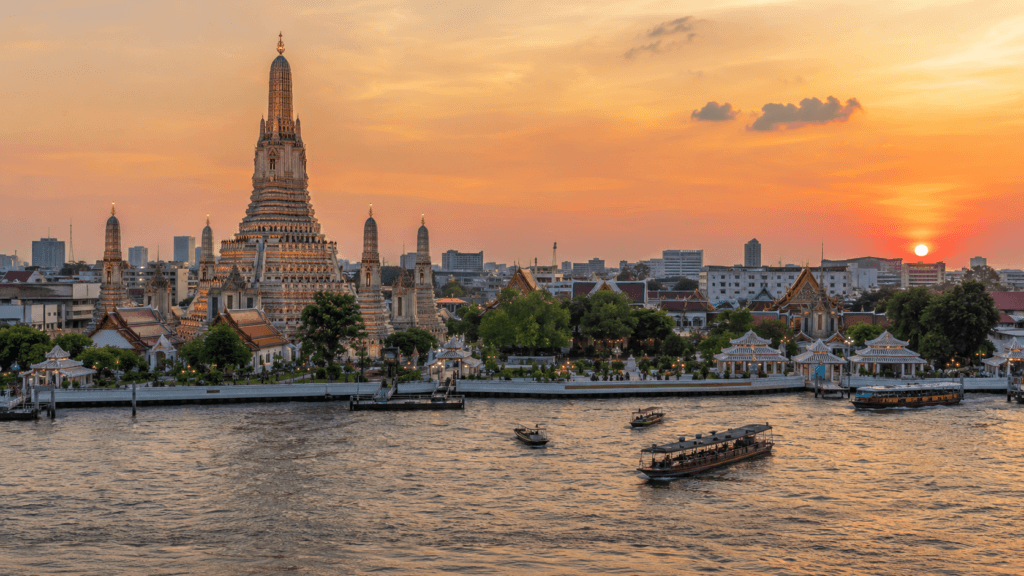
Bangkok is not difficult because it lacks things to do.
It is difficult because almost every neighborhood offers a different version of the city.
One morning may begin with temple roofs beside the Chao Phraya River. By lunch, the plan has moved into an air-conditioned shopping mall. A few hours later, the same traveler is eating noodles in Chinatown while motorcycles, neon lights, and food carts compete for the remaining space.
The mistake is trying to experience all of Bangkok at the same speed.
Temples are better in the morning. Shopping malls and museums make sense during the hottest part of the day. Markets, river views, and food streets become more interesting after sunset.
This guide focuses on what first-time visitors should prioritize, how to combine nearby areas, and which famous attractions can be left for another trip.
What Should First-Time Visitors Prioritize?
A strong first visit usually includes six experiences:
- The Grand Palace and one nearby temple
- A journey along the Chao Phraya River
- An evening eating in Chinatown
- One major market
- One modern Bangkok district
- One skyline, cultural, or nightlife experience
Three days is enough for the main highlights. Four or five days allows time for Chatuchak, museums, or a Muay Thai match. Add another day when Ayutthaya is part of the plan.
The completed Thailand itinerary 2026 can help place Bangkok within a longer trip.
Start With Old Bangkok
The historic center contains Bangkok’s most recognizable landmarks, but it is also where poor timing causes the most discomfort.
Arrive early.
The heat rises quickly, clothing rules are strict, and large tour groups begin filling the palace district through the morning.
The Grand Palace
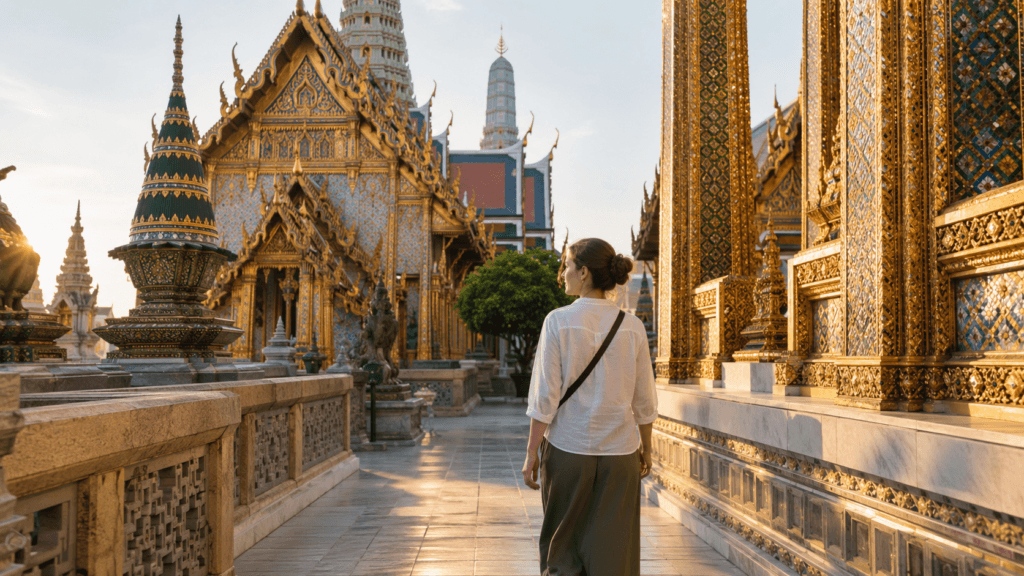
The Grand Palace remains the most important historic attraction for many first-time visitors.
The complex includes royal buildings, ceremonial halls, courtyards, and Wat Phra Kaew, home to the Emerald Buddha. It is highly detailed, visually intense, and usually crowded.
As of July 2026, the palace is open daily from 8:30 a.m. to 4:30 p.m. Ticket sales close at 3:30 p.m., and foreign admission is 500 baht.
Opening times can change for royal ceremonies, so check the official schedule shortly before visiting.
Plan to arrive close to opening and allow around two hours. Photography is restricted inside some sacred areas, and respectful clothing is required.
Shoulders and knees must be covered. Arriving in suitable clothes is easier than trying to solve the problem at the entrance.
Wat Pho or Wat Arun?
Visitors who enjoy temples can see both.
Everyone else can choose one.
Wat Pho sits near the Grand Palace and is known for its reclining Buddha, historic courtyards, and traditional massage school. Its location makes it the easiest addition after the palace.
Wat Arun stands across the river. Its tall central prang and riverside setting create a stronger exterior view, particularly in the late afternoon.
The natural route is:
Grand Palace → Wat Pho → Tha Tien ferry → Wat Arun
That full route works well when temples are a major interest.
Travelers who feel visually full after the palace may prefer Wat Pho, a ferry ride, and an exterior view of Wat Arun before moving on.
By the third temple, even beautiful architecture can begin merging into one extremely ornate memory.
Travel Along the Chao Phraya River
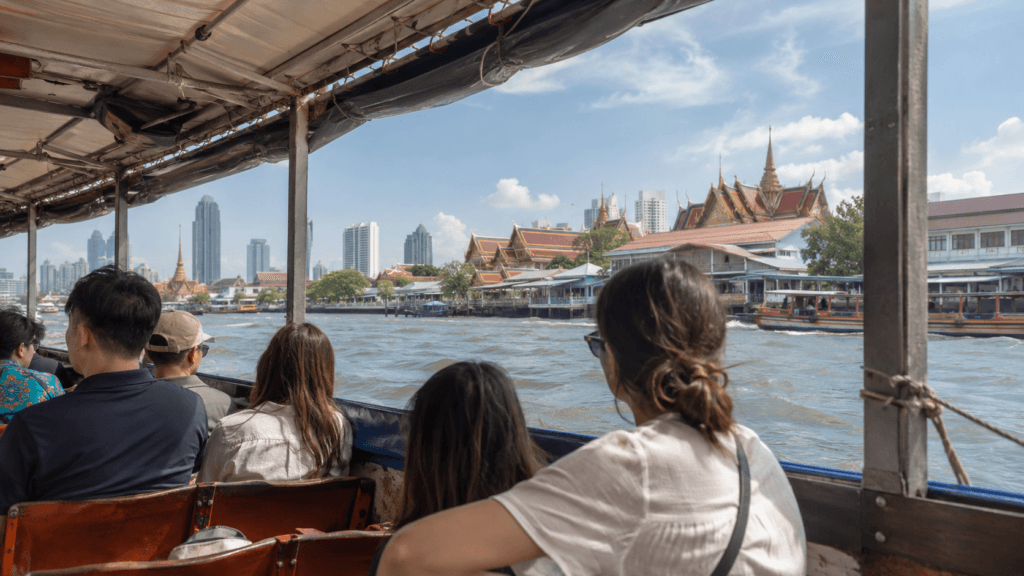
The Chao Phraya River is not only a scenic attraction.
It is also one of the most useful ways to move between historic Bangkok, Chinatown, ICONSIAM, riverside hotels, and several temples.
Boats pass old houses, warehouses, luxury hotels, office towers, temples, and construction sites within the same journey. This contrast reveals more about Bangkok than a road transfer between two attractions.
Public Boat or Tourist Boat?
Public express boats are the cheapest option and useful for confident travelers.
Route colors and stopping patterns can be confusing at first, but they become easier after one or two journeys.
Tourist boats cost more but stop at major visitor destinations and are simpler to understand. For many first-time visitors, the extra convenience is worth it.
A dinner cruise offers skyline views, illuminated temples, and an easy evening in one booking. The experience can feel organized and tourist-heavy, and the food is not always the main reason to go.
Choose a river cruise for the view and atmosphere rather than expecting Bangkok’s best meal.
Travelers more interested in food can take a normal boat ride and finish the evening in Chinatown.
Eat Bangkok After Dark
Bangkok’s food scene is too large to reduce to one market or one list of famous dishes.
The better approach is choosing an area that fits the rest of the evening.
Chinatown
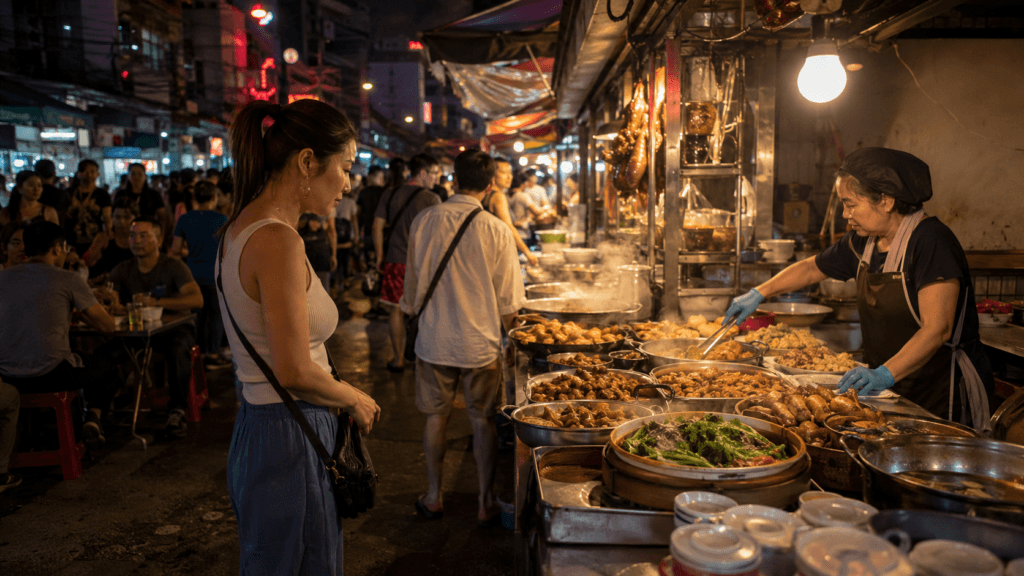
Yaowarat Road is the strongest first choice for a food-focused night.
The district becomes more active after sunset, when seafood restaurants, noodle stalls, dessert shops, fruit sellers, and small dining rooms fill the streets.
Do not arrive with a rigid list of ten stalls.
Queues change, businesses close, and a famous dish may become less appealing once Bangkok’s heat has removed all enthusiasm for standing forty minutes.
Choose two or three things to try, then leave room for whatever looks better nearby.
Common choices include noodle soup, grilled seafood, crispy pork, dim sum, Thai-Chinese desserts, and mango sticky rice.
A guided Bangkok food tour can help first-time visitors understand the area without spending the evening comparing map pins.
Independent exploration is also easy, especially when arriving before the busiest late-evening period.
Banthat Thong and Jodd Fairs
Banthat Thong Road offers a younger and more local-feeling alternative.
The street is lined with restaurants, dessert shops, cafes, and long evening queues. It fits naturally after a day around Siam and attracts Thai students and office workers alongside visitors.
Jodd Fairs Ratchada provides a different experience.
It is compact, easy to reach by MRT, and filled with grilled seafood, snacks, desserts, drinks, clothing, and highly photogenic dishes.
Older guides may point to a previous location, so check the current Ratchada map pin before leaving.
Jodd Fairs is convenient and lively, but it is better understood as a modern visitor-friendly night market than as the deepest expression of local food culture.
Not every meal needs to arrive smoking, overflowing, or tall enough to require structural engineering.
Choose One Major Market
Bangkok has many markets, but first-time visitors rarely need all of them.
Chatuchak Weekend Market
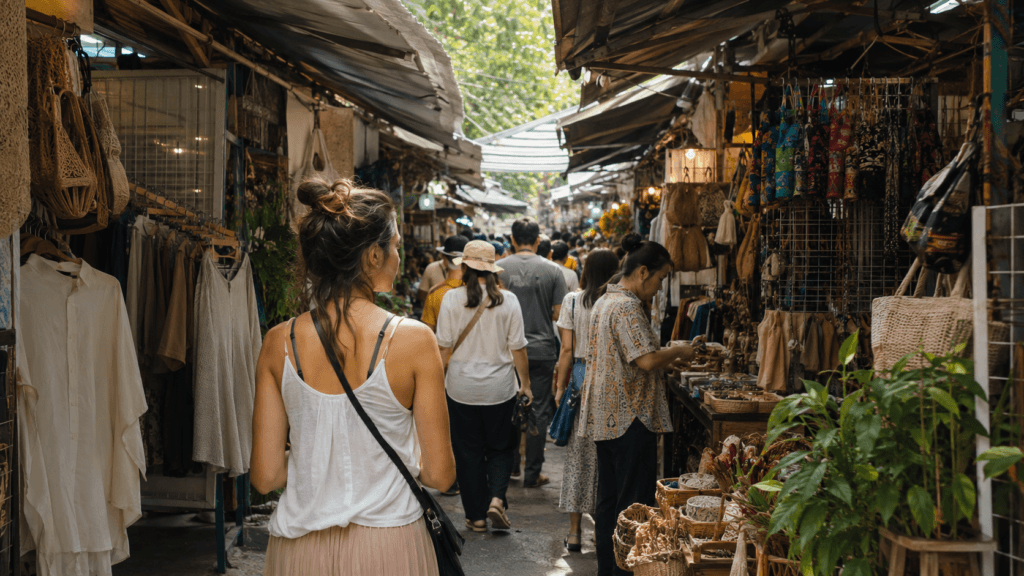
Chatuchak deserves time when shopping is a major interest.
The market contains clothing, homeware, art, crafts, plants, antiques, souvenirs, and enough narrow sections to make navigation feel optional.
Arrive in the morning before the heat and crowds become tiring. Carry water, wear light clothes, and save the map location of anything you may want to find again.
“I will remember this shop” is one of Chatuchak’s most optimistic sentences.
Allow at least three hours.
Travelers who dislike shopping, crowds, heat, or maze-like markets can skip it without damaging the Bangkok experience.
Other Market Choices
Pak Khlong Talat, Bangkok’s flower market, works better for photography, flowers, and local market atmosphere than souvenir shopping. It can be combined with the old city, Memorial Bridge, or the riverside.
Jodd Fairs is easier for an evening market. Chinatown is stronger for food. Chatuchak is best for serious weekend shopping.
One well-chosen market is usually better than three rushed ones.
See Modern Bangkok
Old temples are only one half of the city.
Modern Bangkok is shaped by shopping malls, transit stations, hotels, office towers, restaurants, parks, and large mixed-use developments.
Skipping this side of the city creates an incomplete picture.
Siam
Siam is the easiest place to understand central Bangkok’s shopping culture.
Siam Paragon, Siam Center, Siam Discovery, MBK, and centralwOrld sit within a relatively compact area connected by BTS stations and elevated walkways.
There is no need to visit every mall.
Choose based on the day:
- Siam Paragon for luxury brands and major attractions
- Siam Center and Siam Discovery for design and younger fashion
- MBK for practical shopping, electronics, and souvenirs
- centralwOrld for broad retail, dining, and events
During the hottest afternoon, an air-conditioned mall is not a failure of cultural ambition. It is Bangkok’s climate-adjusted urban planning.
ICONSIAM
ICONSIAM combines luxury shopping, dining, river views, indoor displays, and transport connections.
Its scale and polished design make it feel more like a destination than a normal mall. The indoor market-style food zone is visually impressive, although it is designed for visitors rather than functioning as a traditional street market.
ICONSIAM works best when combined with a river journey or evening waterfront view.
Do not cross the city solely for one photograph unless shopping and the river are already part of the plan.
Lumphini Park and One Bangkok
Lumphini Park provides green space in the city center, with paths, ponds, exercise areas, trees, and occasional monitor lizards moving as though they own the place.
Across from the park, One Bangkok represents a newer version of the city.
The mixed-use district includes shopping, dining, offices, public art, event spaces, and landscaped areas. It is useful during rain or the hottest part of the afternoon.
One Bangkok does not need to replace a historic attraction. It fits naturally into this route:
Lumphini Park → One Bangkok → dinner or rooftop bar
Art and Culture Beyond the Temples
Bangkok’s cultural scene extends beyond royal buildings and historic religious sites.
The city has a growing mix of public galleries, interactive museums, contemporary art spaces, and temporary exhibitions.
BACC, near the Siam shopping district, is the easiest cultural stop to add to a central Bangkok day. Its rotating exhibitions, design shops, cafes, and event spaces make it useful even when only an hour is available.
Museum Siam fits better with the old city. Its interactive displays explore Thai identity, history, and social change, providing context after a morning of historic architecture.
Dib Bangkok is one of the city’s newest contemporary art destinations. Opened in late 2025, it has become a notable addition to Bangkok’s art scene in 2026. Visitors should check the current exhibition before going, as the opening program ends in August 2026.
Choose BACC for convenience, Museum Siam for historical context, and Dib Bangkok for contemporary art.
What Is New in Bangkok in 2026?
Several newer developments are worth noting, although none needs to replace the city’s essential first-time experiences.
Dib Bangkok
The museum has become one of Bangkok’s most visible new art spaces.
It is best for travelers with a genuine interest in contemporary art rather than visitors trying to fit one more famous location into a short itinerary.
Bangkok Art Biennale 2026
The Bangkok Art Biennale runs from October 29, 2026 to February 28, 2027.
The 2026 edition, titled Angels & Mara, uses venues including Wat Arun, Wat Pho, BACC, Museum Siam, One Bangkok, centralwOrld, the National Museum, Siam Paragon, and Silpakorn University Art Centre.
This makes it easy to encounter exhibitions while following a normal sightseeing route.
Check the official exhibition map before visiting, as installations and venue access vary.
One Bangkok
One Bangkok continues to grow as a major mixed-use district for shopping, dining, public art, and events.
It is most useful as part of a Lumphini Park or central Bangkok day rather than as a standalone must-see attraction.
Choose the Right Bangkok Night
Bangkok nightlife is not one experience.
A rooftop bar, Muay Thai match, Chinatown meal, Khao San Road night, and Thonglor cocktail bar have almost nothing in common.
Choose the evening that matches the trip.
Rooftop or Muay Thai?
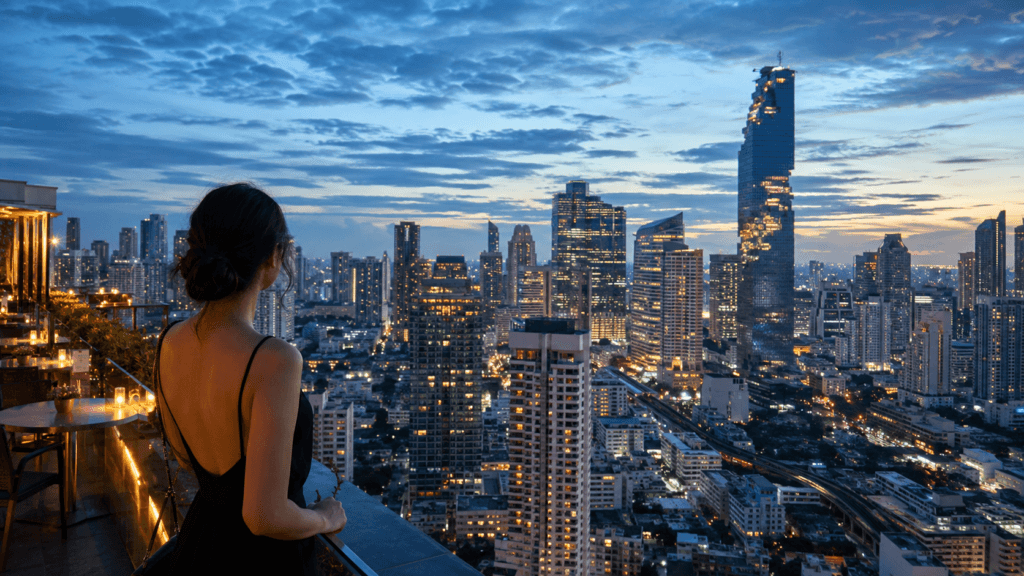
A rooftop bar provides skyline and river views, usually with premium drink prices and a smart-casual dress code.
Check reservation rules, footwear restrictions, minimum spending, and weather before visiting.
A live Muay Thai match offers a more cultural evening. Major stadiums such as Rajadamnern and Lumpinee host scheduled events, with ticket prices and atmosphere varying by event.
Official Muay Thai tickets are the easiest option. Confirm the correct stadium before leaving, as Bangkok travel times can be substantial.
Even visitors who do not normally follow combat sports may enjoy the music, rituals, crowd, and rhythm of the event.
Khao San, Thonglor, or Ekkamai?
Khao San Road suits backpacker nightlife, inexpensive bars, loud music, and a highly social atmosphere.
It is not essential for every first-time visitor.
Thonglor and Ekkamai offer cocktail bars, clubs, restaurants, and a more polished local nightlife scene. Venues are spread across side streets, so ride-hailing is often easier than walking.
Khao San makes more sense from the old city. Thonglor and Ekkamai fit better with a Sukhumvit stay.
Travelers seeking a calmer evening may prefer the river or Chinatown instead.
What Can You Skip on a Short Visit?
A three-day Bangkok trip becomes easier once a few famous activities are deliberately removed.
Too Many Temples
Visit the Grand Palace and one or two nearby temples.
There is no requirement to spend the entire day moving between gold roofs in increasing heat.
A Distant Floating Market
Damnoen Saduak and other famous floating markets are outside central Bangkok.
Travel can consume much of the day, and many tours start early. This may be worthwhile on a longer trip but is not essential during a short stay.
Every Major Shopping Mall
Choose Siam, ICONSIAM, or One Bangkok based on location and interests.
Five malls do not create five completely different cultural revelations.
A Rooftop Bar You Do Not Actually Want
Bangkok’s skyline can also be seen from boats, hotels, restaurants, and riverside spaces.
An expensive cocktail is one option, not an entrance fee for the night view.
Khao San Road
Skip it when backpacker nightlife and loud bars are not appealing.
Bangkok offers several other ways to spend the evening.
Best Day Trips From Bangkok
Day trips make more sense when the Bangkok stay lasts at least four or five days.
Ayutthaya
Ayutthaya is the strongest choice for history.
The former capital contains temple ruins, Buddha images, monasteries, and archaeological sites spread across a wide area.
Independent travel by train is cheaper and flexible, but moving between ruins requires local transport, a bicycle, or a hired vehicle.
An Ayutthaya day tour simplifies the logistics and usually includes several major sites.
Start early. Midday heat among exposed ruins can turn historical appreciation into a search for shade.
Ancient City and Floating Markets
The Ancient City, or Muang Boran, is a large open-air museum containing replicas and interpretations of important Thai architecture.
It works well for architecture, photography, and families who want a controlled day outside central Bangkok.
Floating market trips make sense for travelers who specifically want the experience and understand the travel time involved.
Damnoen Saduak is the most famous and tourist-oriented. Amphawa is associated with weekend and evening atmosphere.
For a short trip, the Chao Phraya River often provides a more practical water-based experience.
How to Combine Bangkok Neighborhoods
Keeping each day within one broad area saves time and makes the heat easier to manage.
Useful combinations include:
- Grand Palace → Wat Pho → Wat Arun → riverside dinner
- Pak Khlong Talat → Museum Siam → old city
- Siam shopping → BACC → Banthat Thong
- Lumphini Park → One Bangkok → rooftop or dinner
- Chatuchak Market → Ari cafes
- Chinatown → river walk → evening drinks
- ICONSIAM → Chao Phraya boat → old city
- Sukhumvit → Thonglor → Ekkamai nightlife
Avoid building days that bounce between the old city, Chatuchak, Sukhumvit, and the river simply because each location appears on a must-see list.
Bangkok traffic has little respect for ambitious spreadsheets.
Common Bangkok Travel Mistakes
Visiting Temples Too Late
Morning is cooler, less crowded, and more comfortable.
Late arrival can also mean missing ticket-sale cutoffs.
Ignoring Clothing Rules
Bring clothing that covers shoulders and knees for major temples and the Grand Palace.
Do not depend entirely on buying or borrowing something at the entrance.
Underestimating Travel Time
BTS and MRT are efficient, but they do not reach every attraction directly.
River boats, taxis, walking, and transfers still take time.
Planning Outdoor Attractions at Midday
Use the hottest hours for lunch, malls, museums, massages, or hotel breaks.
Save parks, temples, and markets for cooler periods.
Following Old Market Locations
Bangkok’s night markets move, close, reopen, and change names.
Check the current map pin and recent operating information before leaving.
Treating Street Food as Risk-Free
Choose busy stalls with high turnover and food cooked fresh.
Drink bottled or safely filtered water and be cautious with food that has been sitting in strong heat.
Before Exploring Bangkok in 2026
Thailand’s official Amazing Thailand app launched in 2026 and provides destination information and tourism updates.
Normal map and transport apps will still be necessary, but the official app can be useful for checking attractions and regional information.
Carry some cash for markets, boats, temples, and food stalls. Cards and digital payments are common in malls and larger businesses but are not universal.
A Thailand eSIM guide can help arrange mobile data before arrival, while Best time to visit Thailand provides more detail on heat, rain, crowds, and regional seasons.
FAQ
What Are the Best Things to Do in Bangkok for First-Time Visitors?
Visit the Grand Palace and one nearby temple, travel along the Chao Phraya River, eat in Chinatown, explore one market, see modern Bangkok around Siam or the river, and choose one evening experience.
How Many Days Do You Need in Bangkok?
Three days covers the main highlights.
Four or five days allows time for markets, museums, nightlife, and a slower pace. Add another day for Ayutthaya.
Is the Grand Palace Worth Visiting?
Yes, especially on a first trip.
Arrive early, dress appropriately, and allow around two hours.
Is Wat Pho or Wat Arun Better?
Wat Pho is easier to combine with the Grand Palace and is known for the reclining Buddha.
Wat Arun offers a more dramatic riverside exterior and is reached by a short ferry ride.
Which Bangkok Market Is Best?
Chatuchak is best for weekend shopping.
Jodd Fairs is easiest for a modern night market, Chinatown is strongest for food, and Pak Khlong Talat is best for flowers and local atmosphere.
What Is the Best Day Trip From Bangkok?
Ayutthaya is the strongest choice for history and temple ruins.
The Ancient City is easier for architecture and photography, while floating markets require more travel time and planning.
Final Thoughts
The best things to do in Bangkok are not simply the attractions with the most reviews or the largest crowds.
A good first trip needs contrast.
Start with the palace and river, then escape the afternoon heat inside a museum, mall, or long lunch. Spend one evening eating in Chinatown and another looking across the skyline, watching Muay Thai, or exploring a modern neighborhood.
Choose one serious market, not every market. Visit enough temples to appreciate them, but stop before the details blur together.
Most importantly, organize the city by time of day.
Bangkok becomes easier once the itinerary stops fighting the heat, traffic, and distance.
The city will still be loud, crowded, humid, and occasionally confusing.
That is part of the experience.