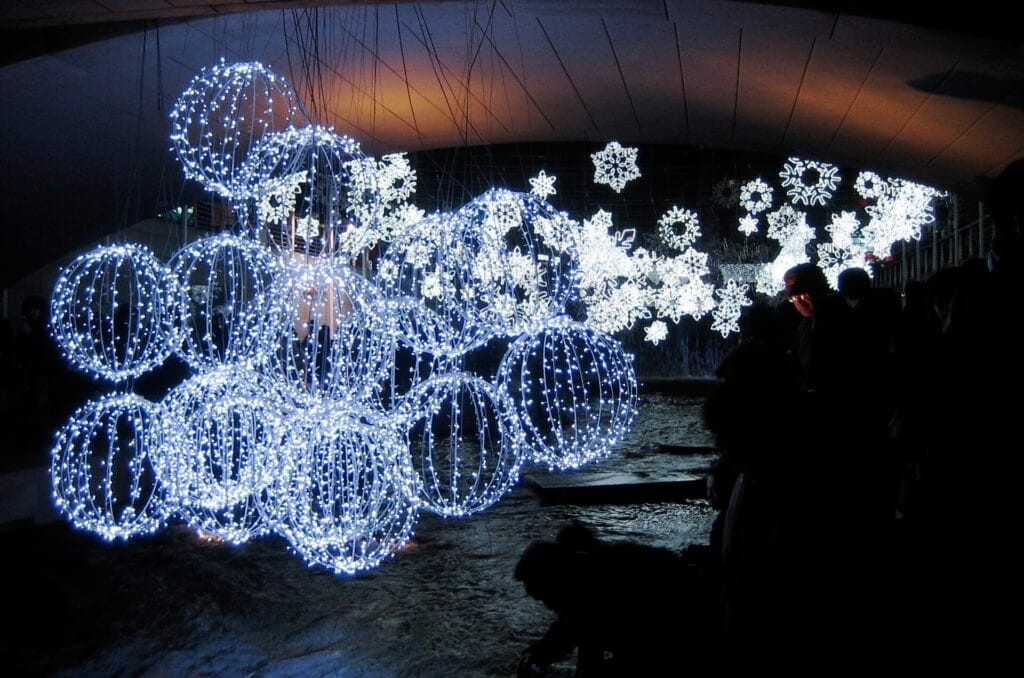
Use district-sized days and planned indoor breaks so palaces, markets, museums and night lights remain enjoyable when cold changes the pace.
- Length
- 4 days
- Base pattern
- One central district
- Planning window
- December–February broadly
- Reading time
- 8 minutes
Does Seoul work as a winter city break?
Yes, when winter is part of the reason to go and each outdoor route has a nearby museum, market, café or meal that restores the pace.
Plan the warm stop before the cold walk.
A central base and geographically small days keep the city coherent. Treat evening lights as a flexible layer after checking the exact venue program, not as a reason to cross Seoul several times.
Give each winter day one compact outdoor spine.
This Asia-level framework helps choose the rhythm. The full neighborhood-by-neighborhood five-day plan remains on Korea Travel Lab.
-
Day 1
Historic core and an early warm finish
Choose one palace area and its adjoining museum, market or teahouse. Stop before arrival fatigue turns the first evening into a long cold transfer.
-
Day 2
One contemporary district deeply
Choose Euljiro, Seongsu, Hongdae or another district by atmosphere, then keep shopping, food and indoor culture within the same broad zone.
-
Day 3
Market, museum and winter night
Use an indoor-heavy afternoon, confirm which central festival venue is active, and connect only one nearby evening light route.
-
Day 4
A flexible contrast before departure
Add one viewpoint, riverside walk or neighborhood missed earlier only if weather and onward transport leave a comfortable margin.
Choose a base that protects the coldest journeys.
The best winter base shortens the first and last outdoor transfer of the day. Atmosphere matters, but late return simplicity matters more.
-
Jongno
Best for: heritage and first trips
A practical start for palace districts, central public spaces and older neighborhoods with many indoor cultural stops nearby.
Tradeoff: Popular heritage routes still reward early starts and some streets quiet down at night.
-
Euljiro
Best for: central movement and food
Useful between the historic core and contemporary districts, with strong subway coverage and plenty of evening meal options.
Tradeoff: The block-by-block atmosphere varies and some accommodation feels business-oriented.
-
Hongdae
Best for: nightlife and airport rail
A good western base when music, late evenings and direct airport-rail access matter more than repeated palace mornings.
Tradeoff: Early historic-core starts require longer winter commutes.
Let winter change the operating plan.
Movement
Group adjoining stations and use underground or indoor connections when useful, but do not treat the subway map as proof that distant districts belong in one day.
Weather
Cold, wind, ice and occasional snow can change walking comfort quickly. Check a near-term forecast and carry layers that can be removed inside heated spaces.
Local context
Palaces, markets and neighborhoods remain lived places in winter. Follow access rules, avoid blocking narrow paths and separate public festival programs from ordinary community space.
What to remove
Remove the farthest district, a second night-light venue and any fixed riverside walk when weather or fatigue is worse than expected.