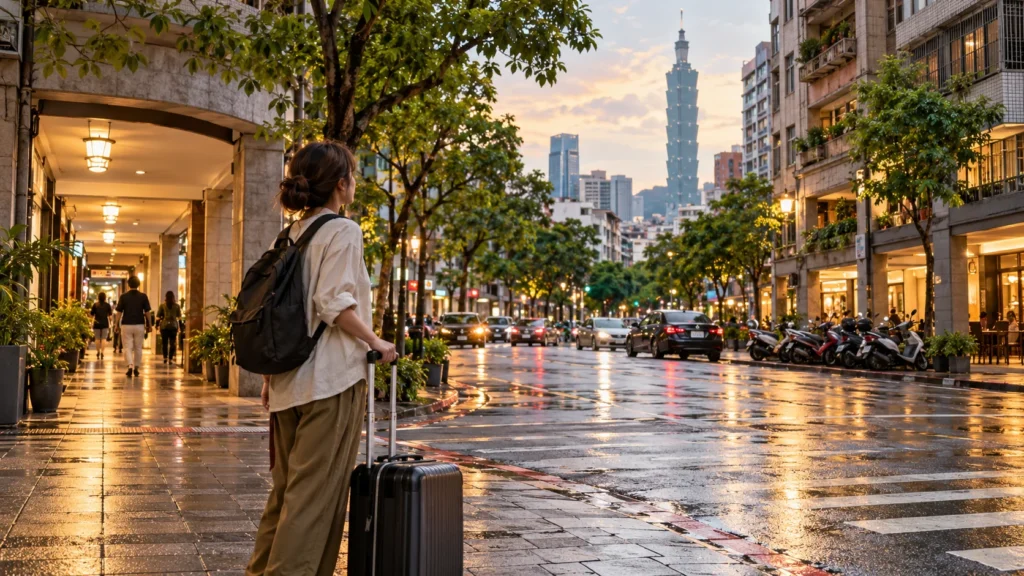
Your first Taipei hotel decision is really an evening decision. Do you want to walk straight into busy shopping streets, wander between cafes and noodle shops, or return to a practical room beside the rail hub? The MRT handles much of the daytime travel. The neighborhood outside your door determines how the hours before breakfast and after dinner feel.
For most first visits, start with Zhongshan or Ximending. Zhongshan balances food, cafes and useful rail connections; Ximending makes evenings easy and lively. Choose Taipei Main Station when trains and airport access shape the itinerary, Dongmen or Da’an for a calmer food-focused stay, and Xinyi for larger hotels, shopping and Taipei 101. Beitou is a separate hot-spring experience rather than the default city base.
This guide helps you choose between those experiences and then test the hotel itself. A convenient district cannot rescue a windowless room you did not expect, and a “station hotel” may still involve more corridors than your suitcase was hoping for.
Three versions of your first night in Taipei
You arrive tired and want dinner without another train
Start in Ximending or the streets around Zhongshan MRT. Both give you choices within walking distance, so you can check in, eat and explore a little without planning a second journey. Ximending feels busier and more youthful. Zhongshan is a better fit if a cafe, a restaurant and a calmer walk sound more appealing than shopping crowds.
You arrive with an early train booked for tomorrow
Look around Taipei Main Station, but identify the service you need before choosing the hotel. Taiwan Railways, High Speed Rail, Taipei Metro and the Airport MRT do not use one convenient shared platform. “Beside the station” is only helpful if it is beside the right entrance.
You want the hotel to feel like part of the holiday
Compare Da’an and Xinyi. Da’an gives you neighborhood streets, food and park access. Xinyi gives you malls, modern towers and the Taipei 101 setting. For a hot-spring night, compare Beitou separately rather than forcing it to serve every city sightseeing day.
| Base | Most useful for | Watch for |
|---|---|---|
| Zhongshan | A balanced first visit | A district label much wider than the MRT neighborhood |
| Ximending | Lively evenings and plentiful compact hotels | Street noise and longer walks at the western edge |
| Taipei Main Station | Rail trips and airport connections | The correct station entrance and final corridor walk |
| Dongmen / Da’an | Food, cafes and a calmer base | Choosing the right station within a large district |
| Xinyi | Shopping, full-service hotels and Taipei 101 | Long blocks and higher room totals |
| Beitou / Xinbeitou | A hot-spring stay | Extra travel for central Taipei days |
Zhongshan or Ximending: which first-trip base fits you?
These are the two areas to compare first if your itinerary combines city sights, food and a few excursions. Both are central enough for a varied stay. The distinction is less about being able to reach an attraction and more about the atmosphere you want every evening.
Zhongshan: the easiest compromise
Use Zhongshan MRT as your anchor, rather than the whole administrative district. The station connects the Red and Green lines. Around it, shopping streets, smaller cafes, restaurants and the lanes toward Shuanglian create a neighborhood you can enjoy without treating every outing as sightseeing.
The streets west and north of the station reward an unhurried walk. A hotel closer to Shuanglian can work just as well if you value breakfast shops and a quieter return route. Farther east, the setting changes toward larger roads and business hotels, so check whether the advertised Zhongshan location actually lies near your preferred station.
The city tourism office’s Zhongshan walking route links the station, linear park, Shuanglian and Chifeng Street. It is a useful orientation to the compact neighborhood people usually mean when recommending “Zhongshan.” It should not be mistaken for a promise that every hotel in Zhongshan District sits on that route.
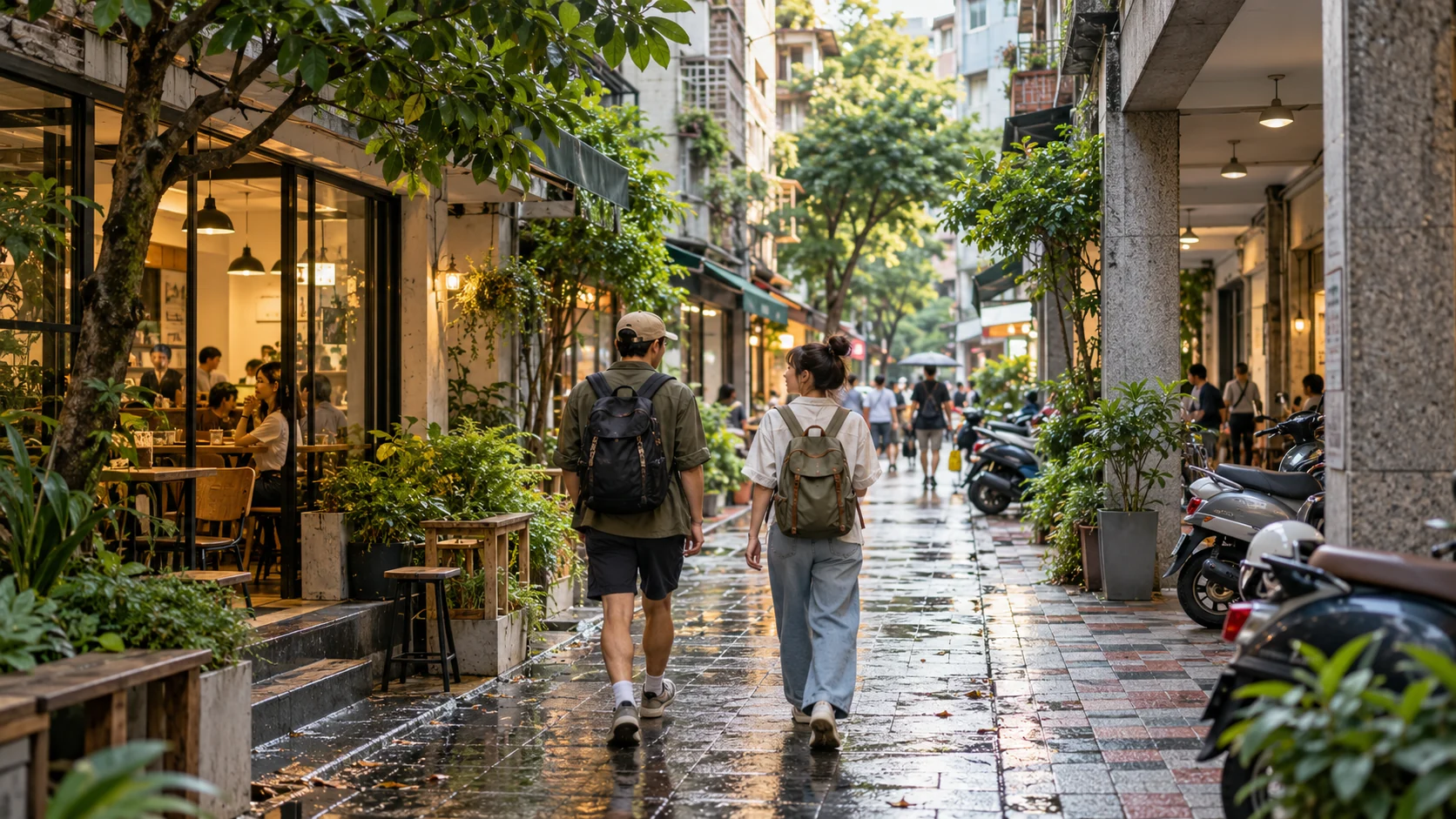
Noise still varies by street. Rooms overlooking a major road, restaurant entrance or late-night business can be louder than the general neighborhood description suggests. Ask for a room away from the street if sleep matters, and read recent reviews about sound insulation.
Ximending: easy evenings, more energy
Ximending is Taipei’s lively shopping and entertainment base. Ximen MRT connects the Blue and Green lines, while pedestrian streets, casual restaurants and shops give first-time visitors plenty to do after the main sightseeing day ends. It is particularly convenient when you want to eat, browse and return to the room without arranging another journey.
The core near Ximen station is busy. Moving several blocks away can reduce noise, but the walking distance increases. Hotels toward the river or farther northwest sometimes use the Ximending name even though their arrival route is noticeably longer than the central properties.
Do not choose by proximity to a shopping street alone. Ask about the room’s orientation, reception hours and lift. Some accommodation occupies upper floors of mixed-use buildings. That can be perfectly workable, but the entrance may be a modest doorway rather than the hotel lobby shown in your mental picture.
Pick Zhongshan if you want a balanced stay with cafes and a slightly gentler evening. Pick Ximending if a busy neighborhood, shopping and maximum casual dining choice make the holiday easier. For a group with different preferences, Zhongshan often offers the more comfortable compromise.
Taipei Main Station: useful, but choose the correct side
The station area is strongest when transport is central to your plans. You might have a morning HSR departure, several Taiwan Railways trips or an airport journey with luggage. The concentration of services is useful; the internal layout deserves respect.
The official Taipei Main Station information map shows the railway complex, city MRT, underground malls and the direction of the Taoyuan Airport MRT. They connect, but they are not interchangeable. A hotel convenient for one service may require a longer indoor walk to another.
The Airport MRT’s A1 station sits on the western side of the transport complex. If airport convenience is your priority, trace the route from A1 specifically. If you need an early HSR train, trace the route to the HSR entrance instead. The operator’s A1 station guide also identifies lift access, which is worth checking before choosing the shortest stair route.
Properties south of the railway station can be practical for food and city sightseeing. Those on the airport side may simplify an A1 arrival. Accommodation toward Beimen can work well for western Taipei, but the phrase “near Taipei Main Station” may hide a meaningful extra walk. Save the hotel’s Chinese address and entrance photo offline.
The trade-off is atmosphere. You get efficient transport and many services rather than a consistently charming neighborhood. Some streets are lively; others feel primarily functional. That is a reasonable bargain for a short rail-focused stay, but it need not dictate a five-night holiday.
For the full airport journey, use our Taoyuan Airport to Taipei transport guide. It explains why the journey to A1 is only part of the hotel transfer and when a local taxi for the last stretch is worth considering.
Dongmen and Da’an: choose a station, then enjoy the neighborhood
Da’an is a large district, not a single hotel zone. For visitors, the useful question is which station and set of streets match your days. Dongmen suits food around Yongkang Street. Da’an and Da’an Park suit a calmer stay with park access. Zhongxiao Fuxing suits shopping and east-west travel.
Dongmen connects the Red and Orange lines, making it a practical base rather than merely an attractive dining neighborhood. Yongkang Street is close, but nearby lanes are often more comfortable for a quiet return to the hotel. Stay beside the food street if you want immediate activity; stay a few blocks away if dinner is enjoyable but crowds outside the bedroom are not.
Da’an Park gives families and walkers a useful outdoor option, though a park-side address can still sit farther from the station than expected. Check crossings and the actual hotel doorway. A broad green view is pleasant; it does not carry your luggage across the road.
Near Zhongxiao Fuxing, hotels benefit from the Blue and Brown lines and plentiful shopping. This feels different from the Dongmen side of Da’an: more commercial, busier and useful for travelers whose plans lean east. Treat both as legitimate choices rather than trying to label all Da’an accommodation quiet and residential.
Choose this part of Taipei when you want a comfortable everyday rhythm: breakfast nearby, a useful MRT ride, then dinner within walking distance. The main compromise is a less direct airport arrival than the A1 side of Taipei Main Station. For several nights, that one arrival transfer can be a small price for better daily surroundings.
Xinyi: modern hotels and a Taipei 101 setting
Xinyi suits travelers who want malls, modern buildings, full-service hotels and the skyline around Taipei 101. It can be a particularly good fit for a shopping trip, business-and-leisure stay or a family that values predictable hotel facilities and indoor alternatives.
Choose between the Taipei City Hall side and the Taipei 101/World Trade Center side. The first uses the Blue Line; the second uses the Red Line. They are both useful, but neither places every hotel and mall immediately beside the platform. Large blocks and internal mall walks can make a compact-looking map feel much bigger.
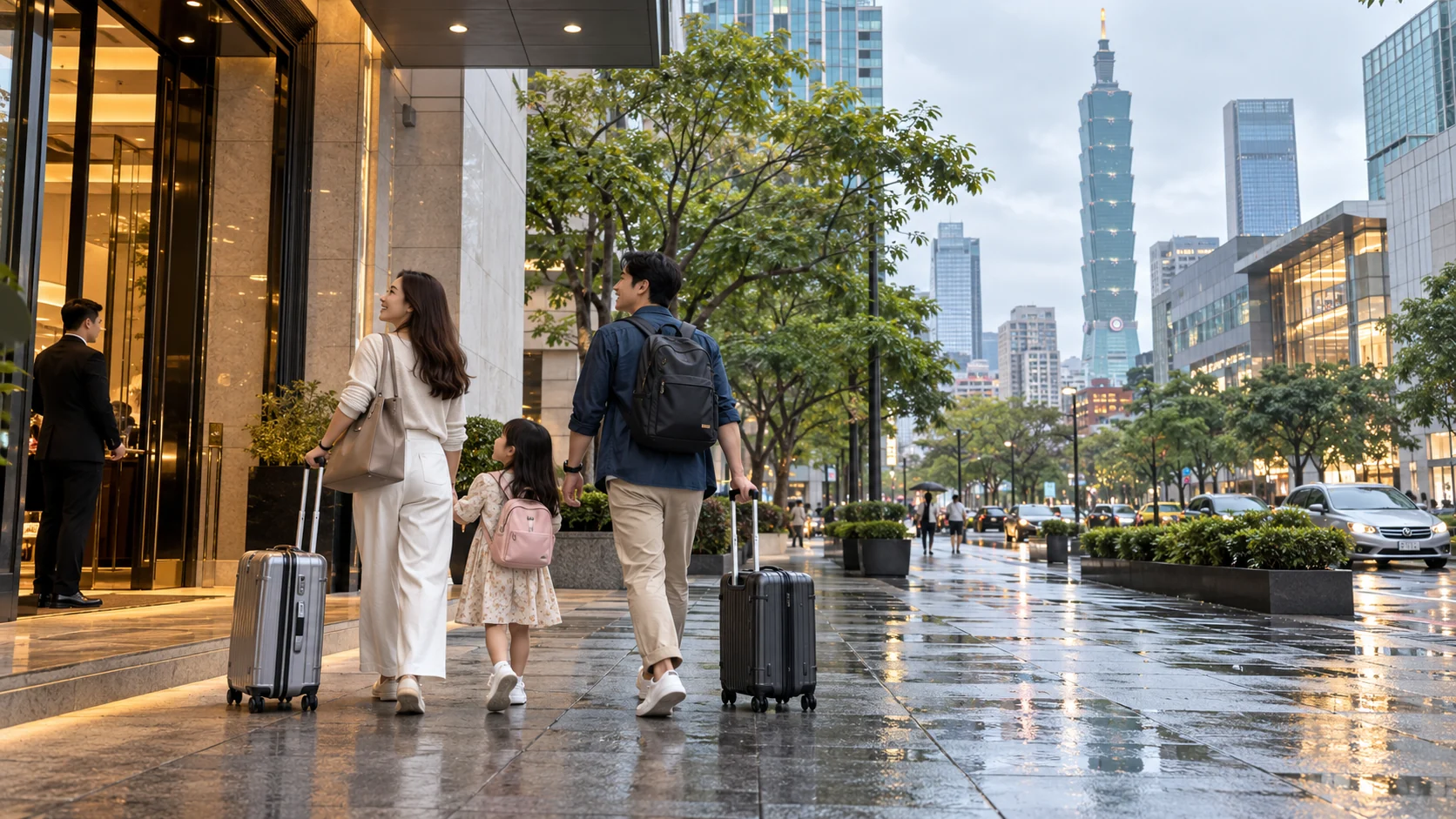
Evenings around the malls are polished and convenient, with less of the older neighborhood atmosphere found around Zhongshan or western Taipei. Room rates can be higher, especially when major events affect demand. Compare the final total rather than assuming a lower headline rate includes the same facilities or breakfast.
If visiting the observation deck, compare Taipei 101 Observatory ticket options on Klook. Packages may include different floors or fast-track access. Check the current entrance and redemption instructions on your voucher rather than relying on an old travel video; the product page has carried an entrance-relocation notice during 2026.
Choose Xinyi when the hotel, shopping and skyline form a substantial part of the trip. For a food-focused first visit with frequent western-Taipei evenings, Zhongshan or Ximending will often be the more natural base.
Beitou: a separate experience worth planning deliberately
Beitou makes sense when you want a hot-spring stay, not simply a cheaper room farther from the centre. Accommodation around Xinbeitou can provide a very different final night: baths, greenery and a slower pace after several busy city days.
Check whether the hotel is near Beitou station, near Xinbeitou station or farther uphill. These are different arrival experiences. A hotel shuttle can help, but ask about its frequency and last service. With a heavy bag, a short uphill walk stops being short surprisingly quickly.
Also confirm what “hot spring” includes. A private room bath, shared bathing facilities and a timed bath session are different products. Read the hotel’s access rules, cleaning times and any clothing requirements before booking. For families, verify child access and supervision rules directly with the property.
Beitou is a reasonable split stay for a longer holiday, but daily central sightseeing adds travel. On a short visit, staying centrally and making a planned excursion may use your time more efficiently. Change hotels because you want the experience, rather than because the map suggested the whole city was one compact neighborhood.
The hotel checks that matter more than the star rating
Ask about the window
Compact city hotels sometimes offer rooms without external windows. Others have an internal-facing window or frosted glass that provides limited daylight. If this matters, choose a room category explicitly stating an external window and ask the property to confirm. A bright lobby does not prove your bedroom will know what time of day it is.
Find the lift and the entrance
Check the MRT exit with lift access, the hotel lift and any steps between street and reception. A property can have an elevator inside the building yet still require stairs at the entrance. Travelers with strollers, mobility needs or heavy luggage should ask about the full route.
Read reviews for humidity, sound and room size
Pay attention to recurring comments about dampness, air conditioning, thin walls and the space around the bed. One bad review is not decisive, but a repeated pattern is useful evidence. Compare the room category in the review with the one you plan to book; the larger suite does not describe the cheapest double.
Check reception and late arrival
Smaller properties may use self check-in or limited reception hours. Save the instructions and Chinese address before flying. If your arrival is late, confirm how delays are handled and whether anyone will answer the phone. Do not assume a hotel near an airport train has reception arrangements matched to your flight.
Compare the same room at the final checkout price
You can compare Taipei hotels on Agoda and check Taipei hotel rates on Trip.com. Match dates, room type, window category, breakfast and cancellation conditions before comparing the total. A lower price with no refund is a different decision, not an automatic saving.
Affiliate disclosure: these links may earn us a commission at no additional cost to you. We include them as comparison tools; location and room conditions determine the recommendation.
Build a shortlist in ten minutes
- Pick the evening you want. Busy shopping, cafes, a quiet food neighborhood or a modern hotel district.
- Choose two station areas. Compare Zhongshan with Ximen for a first visit, or Dongmen with Da’an for a calmer stay.
- Trace the arrival route. Include the walk from A1 or the transfer you will actually make.
- Filter the room, not just the hotel. External window, bed arrangement, bathroom and floor area.
- Read recent reviews. Focus on sleep, dampness, stairs and check-in.
- Compare final totals. Include breakfast and cancellation terms before booking.
Keep the official Taipei Metro map and timetable page handy while planning. Station access and transfers matter more than memorizing district boundaries. A hotel within a comfortable five- to eight-minute walk of the right station is a sensible target, especially when rain joins the luggage party.
Before you decide
What is the best area for a first visit to Taipei?
Zhongshan is the strongest balanced choice; Ximending is better for travelers who want lively evenings and shopping. Both provide useful MRT access and plenty to do near the hotel.
Is Taipei Main Station better than Ximending?
Choose Taipei Main Station for repeated rail trips or an airport-focused short stay. Choose Ximending if the neighborhood experience and easy evenings matter more. The station area is not automatically the easiest hotel transfer: check the exact side and entrance.
Where should families stay?
Compare Da’an for parks and neighborhood food with Xinyi for modern hotels and malls. Prioritize room size, actual beds, lift access and a short station walk over a district’s reputation.
Is Xinyi too far from the rest of Taipei?
No. Its MRT connections make it a workable base, but frequent trips to western neighborhoods add travel compared with staying around Zhongshan or Ximen. It is most attractive when shopping, the hotel and Taipei 101 feature heavily in your plans.
Should I stay in Beitou for my whole trip?
Only if a quieter hot-spring holiday is the main goal. For a conventional city visit, stay centrally and consider Beitou as an excursion or one-night change of pace.
Do I need to change hotels during a short Taipei visit?
Usually not. A central MRT base works for most three- to five-night stays. Packing, storing luggage and waiting for a second check-in can consume time better spent on the city.
Start with Zhongshan if you want one balanced answer, Ximending if you want more evening energy, and Dongmen or Da’an if the neighborhood itself matters most. Then judge the exact room and front-door route. Those details will shape the stay far more than a broad promise of being “in central Taipei.”