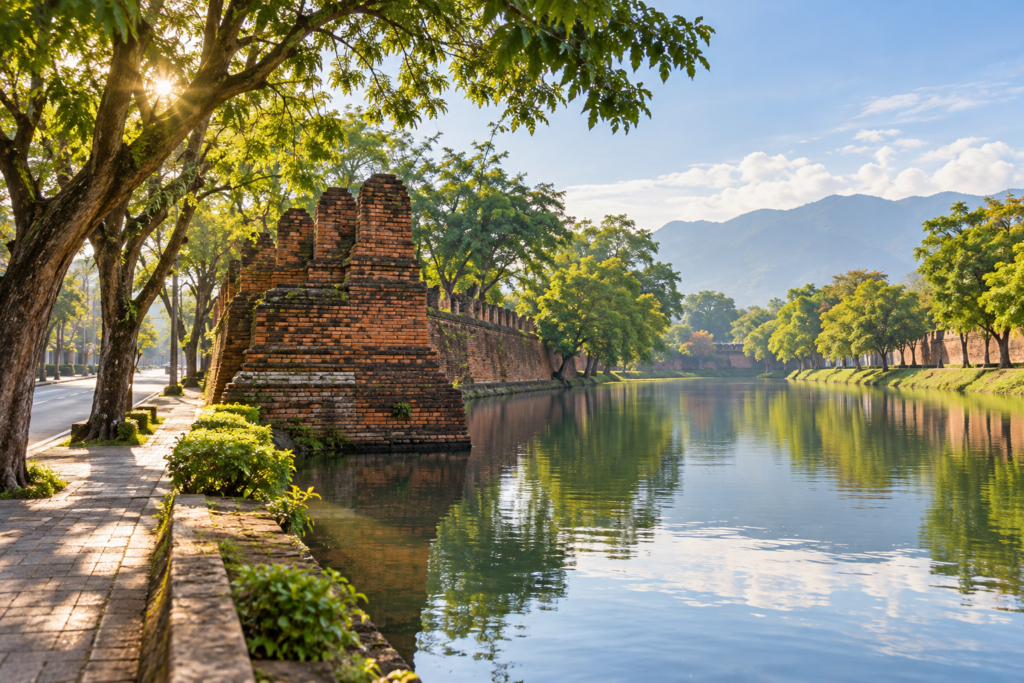
Booking a Chiang Mai hotel looks easy until three attractive options put you on three different holidays. One opens onto temple streets. Another is surrounded by coffee shops. A third has a river-facing terrace that makes leaving the hotel feel slightly unreasonable.
The useful question is not which neighborhood wins. It is which neighborhood makes your actual days easier. For a short first visit focused on temples and central walks, start with the Old City. Choose Nimman when cafés and a slower urban routine matter more. Consider the Night Bazaar area for evening convenience, or the riverside when time at the hotel is part of the trip.
This guide compares those choices, then deals with the details that hotel photos tend to leave out: noise, luggage access, late arrivals, festival transport and the difference between a cheap room and a cheap stay.
Researched on October 10, 2026. Hotel rates, availability, transfer arrangements and event programs can change. Check your exact dates and booking conditions before paying. Images are AI-generated editorial illustrations, not documentary photographs or hotel endorsements.
Affiliate disclosure: Some booking links below are affiliate links. Asia Travel Lab may earn a commission if you book through them, at no extra cost to you. Choose the location and conditions that work for your trip; no booking is required to use this guide.
The quick choice: what do you want outside your door?
| Base | Best starting point for | The tradeoff to check |
|---|---|---|
| Old City | A first visit built around temples and central wandering | The exact lane, room position and vehicle access |
| Nimman / Nimmanhaemin | Cafés, contemporary shops and a longer urban stay | Extra rides for repeated Old City visits; possible street or aircraft noise |
| Night Bazaar / Chang Klan | Evening outings and a hotel east of the historic core | Busy frontage versus a quieter room; the actual walk to your destinations |
| Ping River area | A hotel-led break with terrace, pool or riverside time | “Riverside” covers different locations; verify access and the booked room view |
These are planning recommendations, not guarantees about every hotel in each area. A well-run property on the right side street can beat a supposedly perfect district with the wrong room.
Start by marking three places you expect to visit more than once. Breakfast counts. So does the tour pickup point. A famous attraction you will see once should not automatically dictate four nights of accommodation.
Old City: the simplest starting point for a short first trip
The moat gives the historic core a recognizable outline, and Tha Phae Gate marks its eastern side. Inside and around that outline, temple visits and short neighborhood walks can form the backbone of a first stay without making every outing a transport project.
That is the real advantage: flexibility. You can go out early, return for a break, and leave again for dinner. A day with only two planned stops still feels like a day in Chiang Mai, rather than a day spent collecting rides.
Do not confuse central with silent. Read the recent reviews for the exact property and look for comments about street-facing rooms, music, construction and sound between rooms. A courtyard in the listing is encouraging, but it does not establish which direction your room faces.
Choose a part of the Old City, not just the label
For temple-focused days, compare a hotel near the places you actually intend to visit, such as Wat Phra Singh or Wat Chedi Luang. For evenings that extend eastward, the Tha Phae side may suit your route better. Neither choice removes the need to check the final approach to the entrance.
Ratchadamnoen Road is associated with the Sunday Walking Street, which is a different outing from the Chang Klan Night Bazaar. A Sunday market location can be useful for shopping and less convenient for arriving with suitcases. Ask the hotel whether vehicles can reach its entrance during the market and where to meet a driver if they cannot. Do not assume that last week’s access arrangement applies to your arrival.
The tourism-board-hosted Old City overview identifies Tha Phae Gate and the Sunday Walking Street route toward Wat Phra Singh. It is a partner promotion, not a live road-closure notice; use it for orientation and ask your hotel about current access.
For a three-night visit, the Old City is the strongest default in this guide. The exception is a trip whose main pleasures are elsewhere: working in cafés, spending afternoons by a pool, or attending an event with a pickup point outside the historic core.
Before committing, compare Chiang Mai hotel options on Agoda, then use the map to narrow the city-wide results to your preferred streets. That link opens Chiang Mai, not a preselected Old City shortlist; the map pin is still your homework.
Nimman: choose it for the routine, not just the café photos
Nimman is shorthand for the Nimmanhaemin area, where cafés, shops and contemporary urban life offer a different base from the temple-centered historic core. The Tourism Authority of Thailand’s Nimman feature describes that shopping-and-café character and its setting near Chiang Mai University. It is background context, not a promise that every business in an older feature remains open.
This base makes sense when you want an unhurried morning, somewhere to sit between activities, and a neighborhood you can revisit rather than finish. A longer stay gives you time to use those advantages. For a two-day temple sprint, they may become expensive scenery outside a room you barely occupy.
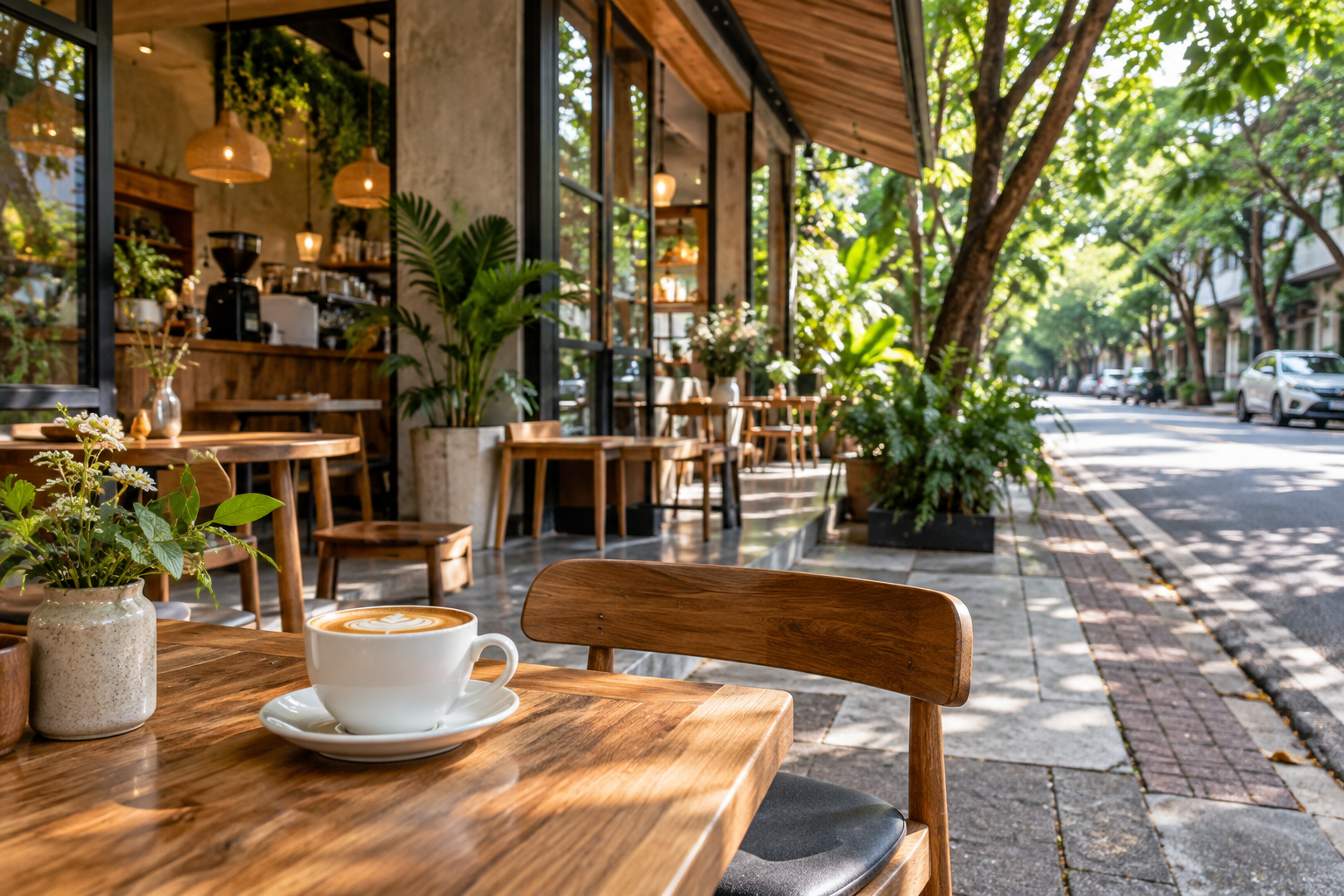
The main planning cost is repeated movement to other parts of town. If every morning starts in the Old City and every evening ends near the Night Bazaar, staying in Nimman adds journeys between the things you actually came to do. Compare that inconvenience with what you gain near the hotel.
Check sleep and working conditions separately
Possible aircraft noise is worth checking in recent property reviews, along with bars, traffic and neighboring businesses. Do not treat the whole area as equally noisy or equally quiet. Ask about your room position and windows, especially if you sleep early or are sensitive to intermittent sound.
For remote work, “free Wi-Fi” answers only the easiest question. Ask about a usable desk, an accessible power socket and the connection in the room category you plan to book. A lobby connection is not evidence of reliable video calls upstairs. Also check whether your preferred café actually welcomes longer laptop sessions; buying one coffee does not make every table a coworking membership.
Nimman is a good choice when those daily comforts are central to the trip. It is a weaker choice when you select it because social media made every other neighborhood look unfashionable. Chiang Mai will survive your decision to sleep closer to a temple.
Night Bazaar and Chang Klan: useful evenings, exact-location homework
The Night Bazaar area is an alternative to staying inside the moat, particularly if browsing and eating out after dark are a recurring part of your plan. Chang Klan is the road name to notice in hotel maps, not simply the words “near night market.”
A local hotel operator’s Night Bazaar overview places the market setting on Chang Klan Road. That helps identify the area; it does not verify opening hours for every stall or guarantee that a hotel nearby has a quiet room.
Think of this as an evening-convenience option. You might return from a day out, change, and head back outside without arranging another long cross-town outing. However, the historic core remains a separate destination. Plot the hotel-to-temple walk rather than assuming “central Chiang Mai” means everything sits on the next corner.
For families, couples with different walking speeds, or anyone who values an easy return after dinner, the exact route matters more than a district ranking. Check crossings, the final lane and whether the entrance is clearly identifiable after dark. A map measures distance; it does not carry your sleepy child.
Be especially careful about room type. A hotel may offer both appealing views over a lively road and rooms set farther from it. Ask which category fits your sleep preferences. Do not book a frontage room and expect the market to lower its voice for you.
Compare the same dates and room conditions using Chiang Mai hotels on Trip.com if you want a second booking comparison. The useful comparison is the final total for the same room, breakfast and cancellation policy—not two attractive starting prices for different products.
Riverside: worthwhile when you will actually use the hotel
A Ping River base works best when the accommodation itself is part of the itinerary. You want a longer breakfast, a terrace, perhaps a pool break, and fewer obligations to be somewhere else every hour.
There are genuine riverfront properties: Anantara’s official Chiang Mai page, for example, confirms its location on the Mae Ping River. That is a location example, not a claim that we inspected the hotel or that its current rates suit your budget.
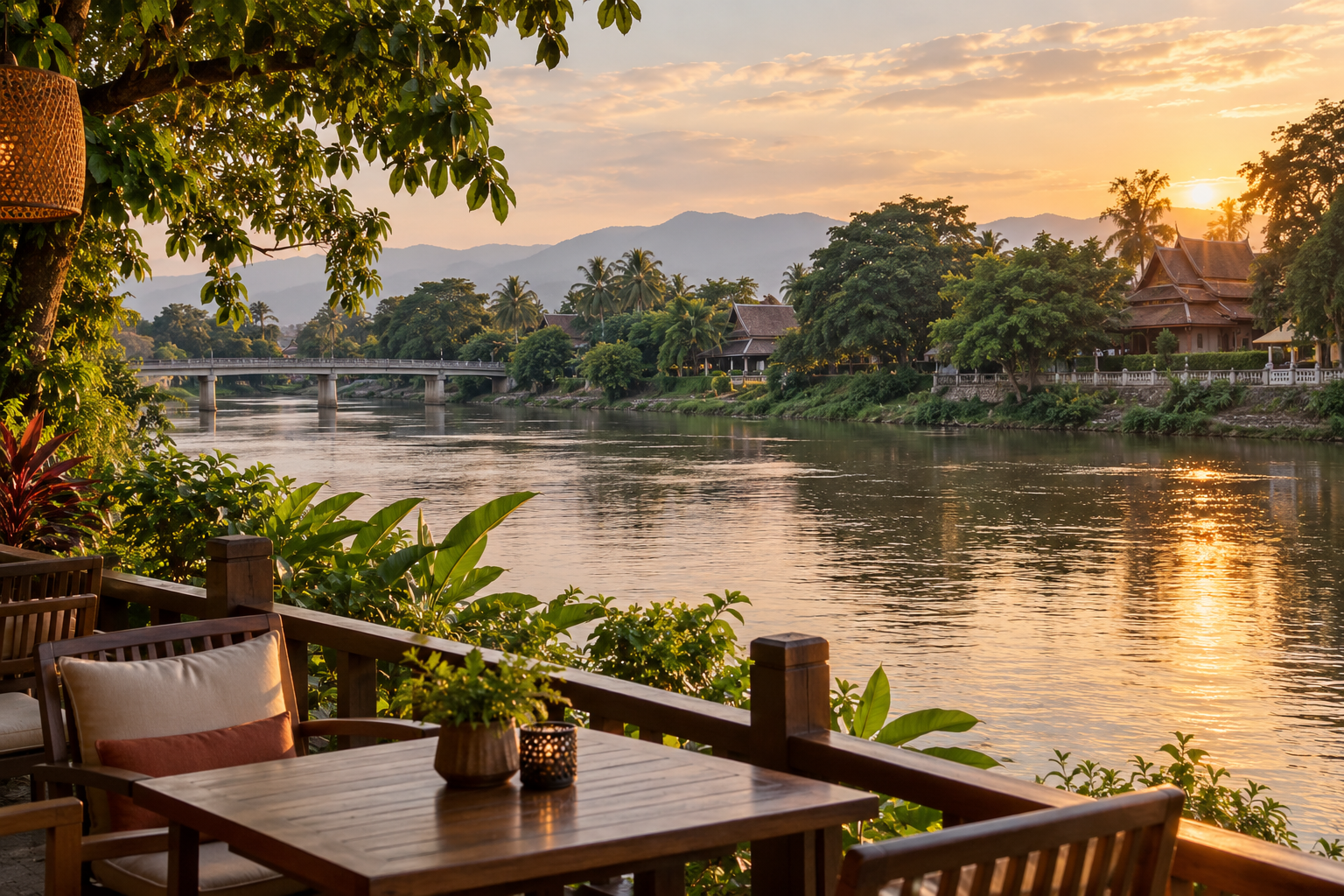
“Riverside” is not one interchangeable map pin. Some hotels are near central attractions; others make more sense with planned car journeys. Establish which bank and which stretch you are looking at, then test routes to dinner, your tour pickup point and the historic core.
Check the room description separately from the property’s location. A riverfront hotel can sell rooms without a river view. A photograph of the best terrace does not establish your access to it, and a garden-view room does not turn into a river-view room because you zoomed in optimistically.
During wet weather, review current local notices and ask the hotel about any effect on access or operations. Do not infer a present flood warning from old news, or assume a property is unaffected merely because it is taking bookings. Current, location-specific information beats a broad seasonal label.
This base is less convincing for a short visit with dawn departures and late returns every day. If you will never sit on the terrace, its main function becomes improving someone else’s holiday photographs.
November plans: connect the hotel to the actual event
Cool-season travel and lantern-season interest can make Chiang Mai an appealing late-year trip. TAT’s 2026 northern Thailand winter feature describes cooler conditions from November to February. That is seasonal context, not a forecast for your travel dates or a guarantee of clear skies.
If a festival is the reason for the visit, identify the specific program before choosing the hotel. A public city celebration, a temple observance and a ticketed event outside town can have different locations, transport rules and schedules. A central hotel is not automatically close to a private event venue.
Use our Chiang Mai lantern-season verification guide to check the organizer, venue and return journey. This accommodation guide deliberately does not assign one unverified date to every event carrying a lantern image.
Then check the booking in both directions. Where do you meet the outbound transport? Where will it leave you afterward? Can you reach the hotel on foot from that point if central streets are restricted? Does the hotel provide a late-arrival contact? An impressive ticket package is much less useful if its final stop leaves you guessing.
Keep a written cancellation deadline for the room and a separate one for any ticket or transfer. These are different contracts. If an event changes, a hotel refund is not automatic, and vice versa.
Make arrival day fit the address you booked
Chiang Mai International Airport is CNX. Before traveling, save the hotel’s full name, Thai address, phone number and entrance map pin offline. Similar English property names and a map pin on the wrong side of a building can turn a straightforward arrival into an unnecessary negotiation.
The airport’s Airport Taxi information page describes a flat-rate service. Confirm the current destination quote and any additional conditions at the official service point. We are not quoting an old city-wide fare as if it covers every hotel.
A prebooked transfer is another option, particularly when you have several bags, a late arrival or a hotel entrance that needs explanation. The Klook Chiang Mai airport-transfer comparison page lets you search by destination and arrival details. It is a comparison page, not a guaranteed fixed-price product or a reservation already made for you.
Read the selected supplier’s meeting instructions, included waiting time, flight-delay policy, baggage capacity, cancellation deadline and child-seat options before paying. Do not assume that every vehicle displayed on the page includes every optional service.
Send the hotel your expected arrival time as well. Airport pickup and hotel check-in are separate arrangements: an early ride does not guarantee an early room, and a late flight does not guarantee that a small property’s reception stays staffed.
For departure, ask about current traffic and an appropriate pickup time. Avoid using the short distance on a map as your entire airport buffer, especially around events or road restrictions.
A booking checklist that catches more than star ratings
Shortlist three properties, not thirty. For each one, answer the following questions using the room conditions, recent reviews and a direct message when necessary.
- Can the vehicle reach the entrance? Ask about your arrival date and time, not access in general. Check stairs or lift access if carrying luggage or traveling with limited mobility.
- What is the sleep risk? Look for repeated recent reports of noise and ask about an inward-facing room. A high overall rating can coexist with a room unsuitable for an early sleeper.
- What does this room include? Confirm bed arrangement, occupancy, windows, air conditioning and bathroom setup. Family occupancy rules matter more than a photograph of a large bed.
- What is the final payable total? Compare taxes, fees, breakfast and any extra-person charges. Check the payment currency and your card’s conversion terms rather than assuming the first displayed number is final.
- When can I cancel? Record the deadline and applicable time zone. “Pay later” and “free cancellation” describe different conditions and are not interchangeable.
- What happens before check-in or after check-out? Confirm luggage storage and whether any day-use facilities remain available. Do not plan a pool afternoon after checkout without permission.
For longer stays, add laundry arrangements and weekly cleaning conditions. For accessibility needs, request specific answers about steps, bathroom layout and lift access; an “accessible” filter is not a substitute for the features you need.
Keep confirmation messages offline. If something has been promised, a written record is more helpful at reception than “the booking page looked like it would be fine.”
Spend less by reducing friction, not just room cost
The cheapest nightly rate is not always the lowest trip cost. Add the rides you expect to take repeatedly and the meals or facilities you would otherwise buy. A somewhat more expensive room close to your daily routine can be better value than a bargain requiring transport for everything.
The reverse also applies. Do not pay for an elaborate breakfast if every morning starts with an early tour pickup. Do not choose a pool-led property for a trip that leaves no daylight to swim. Buy the conveniences you will use.
For two to four nights, one base usually keeps things simpler. Moving hotels consumes packing, checkout and waiting time that rarely appears in an itinerary. With a longer stay and genuinely different plans, an Old City segment followed by a café- or hotel-focused segment can make sense. The reason should be a changed routine, not fear of missing a neighborhood.
If Chiang Mai is one stop in a larger journey, use our Thailand itinerary options to decide how many nights belong here before booking. For the capital portion, our Bangkok hotel-area guide addresses a different transport problem; a neighborhood strategy that works in Bangkok should not be copied blindly into Chiang Mai.
The final decision
Choose the Old City for a first stay centered on temples and flexible walking days. Choose Nimman for a café-led routine and a longer urban visit. Choose the Night Bazaar area when evening convenience outweighs staying within the moat. Choose the riverside when enjoying the hotel is part of the point.
Then inspect the exact address, room and conditions. That final step matters more than winning an argument about the “best” neighborhood. A good Chiang Mai base is the one that lets you spend less time solving logistics and more time doing what you came for.