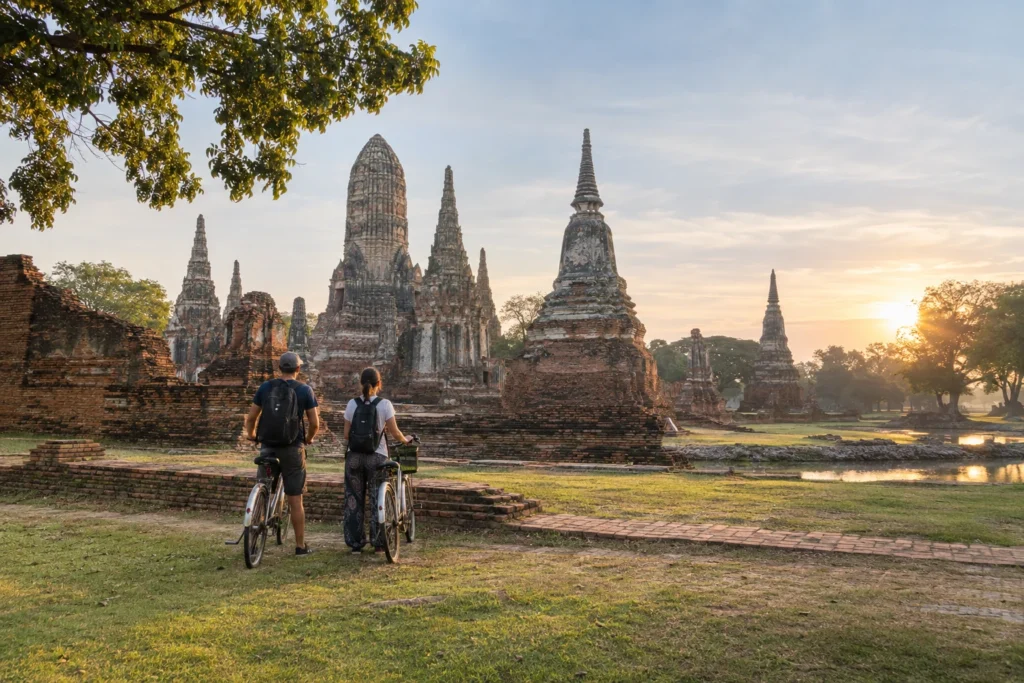
Ayutthaya is close enough to Bangkok for a day trip, but the distance is the easy part. The real decision is whether you want the cheapest ride, the simplest day, or enough freedom to see more than three temples before the heat wins.
For most independent travelers, the train is the best-value choice. Take an early service from Krung Thep Aphiwat, then use a tuk-tuk in Ayutthaya if the temperature is high. A guided tour works better for first-time visitors who want historical context and zero transport negotiation. A private car becomes sensible for three or four people, families, or anyone combining Bang Pa-In with the ruins.
This guide was checked in September 2026. State Railway of Thailand schedules, tour meeting points and monument fees can change, so verify them again for your date. Ayutthaya is forgiving; missing the last comfortable train back to Bangkok is less so.
Choose Your Route in 30 Seconds
| Option | Typical door-to-door time | Best for | Main catch |
|---|---|---|---|
| Train | About 2–3 hours from a central Bangkok hotel to the first ruin | Solo travelers, couples, budget trips | The correct Bangkok station and onward transport matter |
| Minivan | Roughly 2.5–3.5 hours door to door | Travelers already near Mo Chit | Departure and drop-off can feel improvised |
| Taxi or private driver | About 1.5–2 hours each way, traffic permitting | Families, groups, limited mobility | Price and waiting time must be agreed clearly |
| Guided tour | Usually a full 7–12-hour program | First visits, history, no-planning days | Fixed pace and meeting-point rules |
Do not compare only the advertised journey time. A 50-minute express is not a 50-minute excursion once you add the trip to Krung Thep Aphiwat and transport from Ayutthaya station to the historical island. The cheapest ordinary train is less charming at 2:00 p.m. without air-conditioning.
The Train: Best Value, with One Station Trap
Ayutthaya sits on Thailand’s northern and northeastern railway routes. In 2026, most useful rapid and express services depart from Krung Thep Aphiwat Central Terminal, the large station also known informally by its former Bang Sue name. Some ordinary commuter services may still use Bangkok Station at Hua Lamphong. Never tell a driver simply “Bangkok train station.” Check the departure station shown beside your exact train number.
The official SRT timetable shows multiple daily arrivals, with faster morning services from Krung Thep Aphiwat taking roughly 50–80 minutes and ordinary trains taking longer. A new air-conditioned Bangkok–Ayutthaya suburban option began operating in August 2026. Check the SRT timetable or D-Ticket system the evening before travel.
How early should you arrive?
Allow at least 30 minutes at Krung Thep Aphiwat if you do not know the station. It is enormous, platform access is controlled, and buying coffee on the wrong level is a surprisingly efficient way to make a relaxed morning stressful. Use the MRT Blue Line to Bang Sue, follow signs for the central terminal, and keep your train number visible.
Reserve express seats for weekends or Thai holidays. Ordinary tickets may be sold closer to departure and may not appear online in the same way. If the booking site shows nothing, check that you entered Krung Thep Aphiwat rather than “Bangkok.”
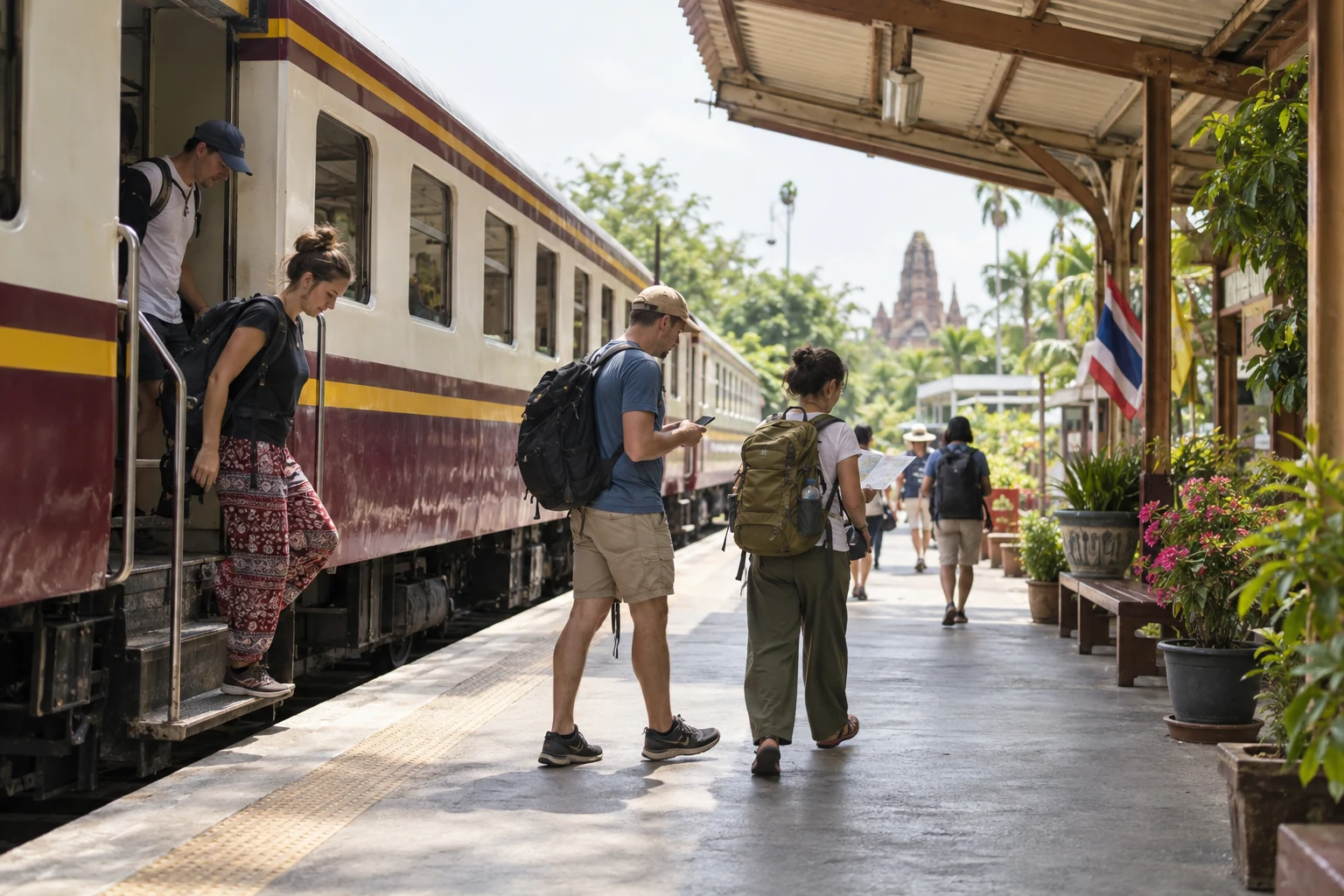
Arrival is not the historical park
Ayutthaya railway station is east of the main historical island. The famous ruins do not begin at the platform. You can walk toward the river and use the local ferry when it is operating, or take a tuk-tuk or ride-hailing car directly to your first stop. Ferry operations and landing points can change with water conditions, so ask at the station instead of building the day around a five-baht crossing you saw in an old blog post.
If you arrive before 9:00 a.m., go straight to Wat Mahathat or Wat Phra Si Sanphet. If you arrive later and the sun is already sharp, hire transport first. Walking from the station, finding the crossing, renting a bicycle and then navigating to the ruins can consume an hour before the sightseeing has even started.
The Minivan: Convenient Only from the Right Part of Bangkok
Minivans run from the Mo Chit terminal area, with current listings commonly showing 75–120 minutes after departure. This works if your hotel is already in northern Bangkok. From Sukhumvit, Silom or the riverside, reaching the terminal may erase the advantage.
Vans often leave when full rather than behaving like a train with a sacred relationship to the minute hand. Luggage space is limited. Return vehicles may pick up and drop off passengers along the route, and the final Bangkok stop should be confirmed before boarding. Say “Ayutthaya Historical Park” or show your first temple on a map; “Ayutthaya” covers more ground than a visitor expects.
Choose the van when its terminal suits your location and you are comfortable asking questions. Otherwise, the train is easier—and kinder to knees.
Taxi or Private Driver: When Paying More Saves the Day
A direct car from central Bangkok usually needs around 90 minutes in reasonable traffic, but Friday evenings and holiday weekends can stretch that estimate. The hard part is arranging several widely separated stops and a dependable return.
For a private driver, confirm these details in writing:
- hotel pickup time and exact lobby;
- total hours included;
- whether parking, tolls and fuel are included;
- the planned temples and any Bang Pa-In stop;
- overtime charges and the final Bangkok drop-off;
- whether the driver waits at each site or returns later.
A car is strongest for young families, limited mobility and groups of three or four. A driver is not automatically a guide. If you want more than attractive brick, book a licensed guide or guided vehicle.
Guided Tour: The Low-Friction First Visit
A tour solves three annoyances at once: Bangkok transport, movement between scattered sites, and understanding what you are looking at. That last point matters. After the fourth beautiful chedi, unguided temple fatigue can make the fifth feel suspiciously similar.
Current tours combine ruins with Bang Pa-In Palace, sunset boats or floating markets. More stops do not guarantee a better day; ambitious combinations spend a large share of it inside a vehicle.
For a first trip, choose a tour centered on Ayutthaya with at least three substantial temple stops. Check whether admission is included, where the group meets, what language the guide actually uses, and whether hotel pickup applies to your district. The current Klook Ayutthaya day-tour options include join-in and private packages; compare the exact itinerary rather than choosing the longest attraction list.
Affiliate disclosure: Asia Travel Lab may earn a commission if you book through this link, at no extra cost to you. We recommend comparing the meeting point, inclusions and cancellation policy before paying.
Once You Arrive: Walk, Bicycle or Tuk-Tuk?
The UNESCO property is not a gated theme park with one entrance. Ruins, active temples, roads, neighborhoods and rivers spread across and beyond the historical island. Wat Mahathat and Wat Ratchaburana sit close together. Wat Phra Si Sanphet is farther west. Wat Chaiwatthanaram is across the river. Trying to connect everything on foot is possible on a cool map and unpleasant in tropical reality.
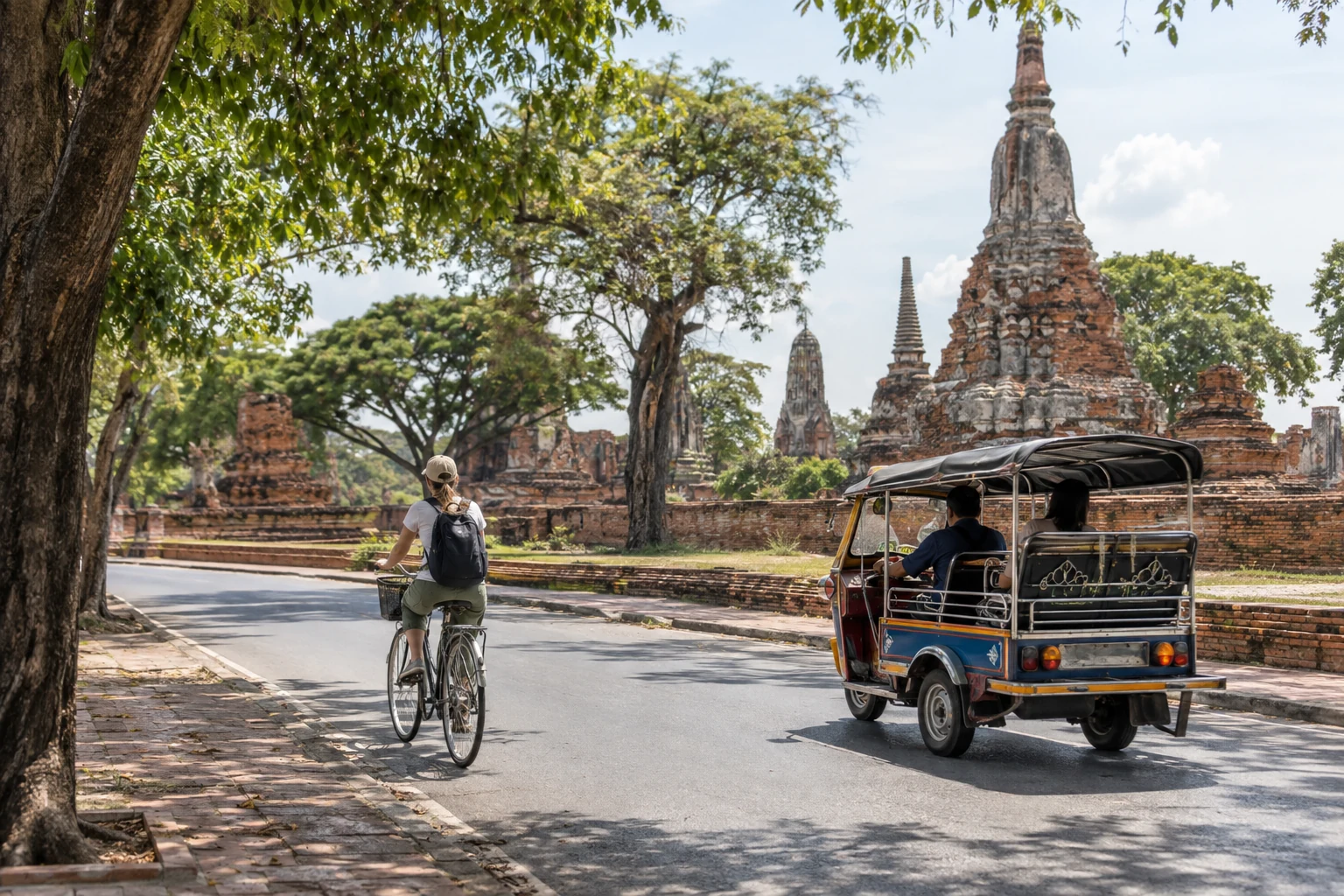
Choose a bicycle in cool, dry weather
Cycling is inexpensive and gives the day a sense of discovery. It works best from November to February, with an early start and a short route inside the island. Inspect the brakes, tires and seat before leaving the shop. Traffic drives on the left, dogs and uneven surfaces appear without invitations, and shade disappears on several roads.
Do not choose a bicycle because it looks romantic in photos if the forecast says 35°C with thunderstorms. The temples have dress requirements, so you may already be wearing more fabric than the weather would personally recommend.
Choose a tuk-tuk for efficiency
Ayutthaya’s local tuk-tuks are useful for a two- to four-hour circuit. Agree on the total price, duration and named stops before getting in. Photograph or write the vehicle number, and pay at the end unless you agree otherwise. Drivers may suggest shops or extra attractions; a friendly “no, thank you” keeps the route yours.
For two people, a tuk-tuk can cost more than bicycles but save enough heat and road crossings to justify it. Ask for Wat Mahathat, Wat Phra Si Sanphet and Wat Chaiwatthanaram as a compact first-visit trio. Add Wat Ratchaburana if you have time. Four major ruins are plenty for one day.
A Day Plan That Does Not Collapse at Lunch
06:30–07:30: Leave your Bangkok hotel. Aim for a morning train that reaches Ayutthaya before 9:00. Travelers using a tour or driver should request an early pickup where possible.
09:00–10:30: Visit Wat Mahathat before the largest groups and then walk across to Wat Ratchaburana. At the Buddha head entwined in tree roots, remain lower than the image when posing and follow posted guidance.
10:45–12:00: Continue to Wat Phra Si Sanphet and the former royal-palace area. This is where a guide adds the most value because the open foundations make more sense with a plan of the former complex.
12:00–13:30: Stop for lunch and shade. Boat noodles and roti sai mai are local specialties, but choose a convenient restaurant rather than crossing town for a single viral pin. Hydration is part of the itinerary, not an optional side quest.
14:00–15:30: Visit the Chao Sam Phraya National Museum if you want air-conditioning and historical context, or take a slower riverside break. Check its opening day before planning; museums commonly close on Mondays and Tuesdays or public holidays.
16:00–17:30: Finish at Wat Chaiwatthanaram when the light softens. Arrange onward transport before sunset rather than expecting an empty car to materialize beside the river.
Evening: Return by a preselected train, van or driver. Save the next train option in case your first choice sells out or runs late. If you want a genuinely relaxed sunset, stay overnight instead of watching the sky and your departure time compete.
Tickets, Clothing and the 2026 Price Confusion
Ayutthaya’s ticketed monuments charge separately, with a multi-site ticket available. During this September 2026 check, the Fine Arts Department’s online service page still displayed THB 50 per foreign visitor and THB 220 for the combination ticket, while newer visitor information reported THB 80 per site and THB 300 for the updated combination pass. Budget using the higher figures and confirm the current price and covered sites at the first official ticket window. This avoids turning an online discrepancy of a few hundred baht into a ruined morning.
The combination ticket makes sense if you intend to enter four or more covered ruins. For a short tour with two ticketed sites, individual admission may be cheaper. Active temples, museums, Bang Pa-In Palace and private attractions can have separate tickets.
Cover shoulders and knees at active religious sites and whenever signs request it. Light trousers or a long skirt are easier than carrying a last-minute wrap all day. Remove hats and shoes where instructed. Bring cash in small notes because not every ticket window, bicycle shop or ferry should be expected to accept an international card.
Weather Changes the Best Transport
From roughly March to May, heat favors a tuk-tuk, car or tour. Start early and plan a shaded lunch. In rainy season, protect your phone and passport, and never cycle through water when you cannot see the road surface.
November through February generally brings more comfortable sightseeing, but also busier weekends and holiday demand. Reserve the outbound trip when possible and keep flexibility for the return. Midday sun remains strong even in the cooler season.
Which Option Should You Actually Book?
- Solo traveler: early train plus a bicycle in cool weather or shared tuk-tuk in heat.
- Couple: train for value; a tuk-tuk circuit after arrival prevents route fatigue.
- Family: private driver or focused guided tour, especially with small children.
- History-focused traveler: guided tour with fewer, longer temple visits.
- Photographer: overnight in Ayutthaya for early and late light; a day trip compresses both.
- Very short Bangkok stay: join-in tour if Ayutthaya is essential; otherwise keep the day in Bangkok.
If you are still shaping the larger trip, our Thailand itinerary for 2026 shows where an Ayutthaya day trip fits without stealing time from northern Thailand or the islands. For the days you remain in the capital, use our practical list of things to do in Bangkok rather than treating the city only as a departure platform.
Questions Travelers Ask Too Late
Can I visit Ayutthaya without a tour?
Yes. Take an early train, then rent a bicycle or negotiate a tuk-tuk route. Download an offline map and select three or four main sites before arrival. The difficulty is not access; it is distance, heat and missing the historical context.
Is half a day enough?
A focused half-day can cover Wat Mahathat, Wat Ratchaburana and Wat Phra Si Sanphet. It will not feel relaxed once Bangkok transfers are included. A full day is better, and one night is best for photographers or slow travelers.
Should I book train tickets in advance?
Book reserved rapid or express seats for weekends, holidays and fixed itineraries. Ordinary local tickets may be sold at the station. Always search using the exact departure station and verify the train number on the official SRT timetable.
Can I use cards in Ayutthaya?
Larger hotels and some restaurants accept cards, but temple tickets, ferries, bicycle rentals, markets and tuk-tuks often work more smoothly with cash. Carry small baht notes.
Is Ayutthaya worth it if I have only three days in Bangkok?
Yes if Thai history is a priority and you are willing to give it a full day. If markets, food neighborhoods and Bangkok’s major temples rank higher, stay in the capital. Ayutthaya is not a compulsory exam question.
Bottom line: take the train for value, a tour for context, and a private car for control. Whichever route you choose, solve the final two kilometers before arrival. That small decision separates a graceful morning among 600-year-old ruins from standing outside the station at 9:30, negotiating in direct sunlight while your sunscreen remains at the hotel.