
A Japan eSIM can feel like a minor travel purchase until you leave the airport and discover that Google Maps is now responsible for most of your immediate future.
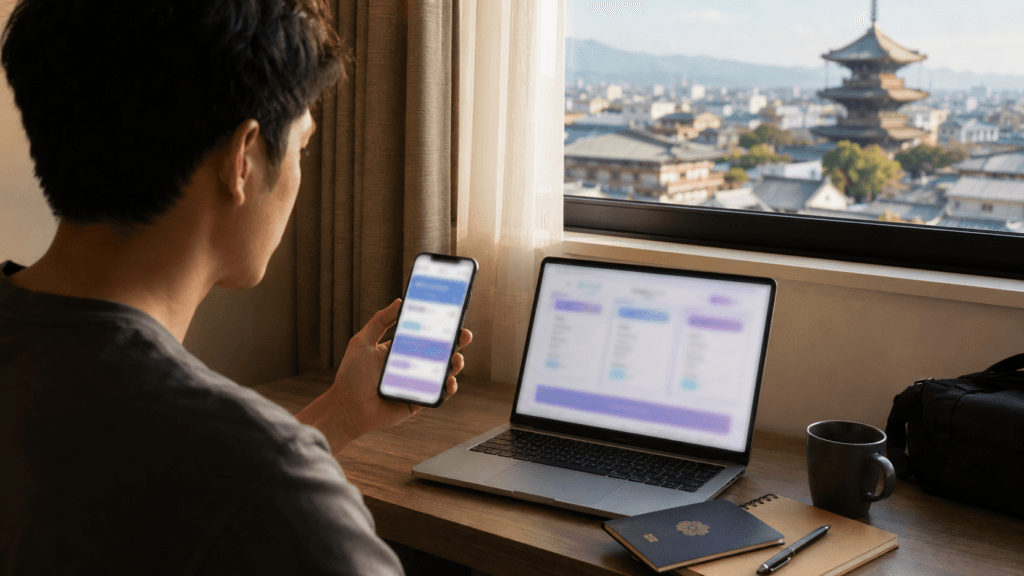
Japan has public Wi-Fi in airports, hotels, major stations, and many cafes. The problem is that it rarely follows you onto a quiet Kyoto street, into a rural train station, or through the wrong exit of a Shinjuku subway concourse.
An eSIM gives your phone mobile data without replacing the physical SIM already inside it. Your device must support eSIM technology and be unlocked by its original carrier, but once those two boxes are checked, setup is usually much easier than collecting a physical SIM or carrying a pocket Wi-Fi router.
For most travelers choosing between Airalo and Ubigi, the decision comes down to data size.
Airalo is usually more attractive for small packages and short visits. Ubigi currently offers strong value around 5GB to 10GB, along with clearly stated full-speed limits on its unlimited plans.
For an ordinary 7- to 14-day trip, 10GB is the safest middle ground. It gives most travelers enough data for maps, train searches, translation, restaurant bookings, messaging, and some social media without turning the data counter into a nightly ritual.
Prices in this guide were checked on July 16, 2026. Promotions, currencies, and package availability can change, so always confirm the final price and conditions before purchasing.
Quick Answer: Airalo or Ubigi for Japan?
Airalo is the stronger choice for travelers who need only 1GB to 3GB, already use the Airalo app, or want one regional eSIM for Japan and another Asian destination.
Ubigi makes more sense around 5GB to 10GB, particularly for a trip lasting one or two weeks. Its current Japan plans use KDDI and NTT Docomo, allow data sharing, and activate after arrival through Ubigi’s SmartStart system.
Heavy users should compare the unlimited plans carefully rather than judging them by the word “unlimited.” Ubigi’s current 7-day plan includes 25GB at full speed before the connection is reduced to 2Mbps.
Airalo vs Ubigi at a Glance
| Feature | Airalo | Ubigi |
|---|---|---|
| Best for | Small plans, short trips, regional coverage | Mid-size plans and clearly defined unlimited limits |
| Useful small option | 1GB for 7 days | Main one-off options begin at 5GB |
| Popular mid-size option | Check current 5GB and 10GB offers | 10GB for 30 days |
| High-data option | 20GB for 30 days | 25GB for 30 days |
| Unlimited plans | Available, conditions vary | 25GB or 30GB full speed before throttling on current plans |
| Japan networks | SoftBank and KDDI on the current Japan offer | KDDI and NTT Docomo |
| Hotspot | Supported | Supported |
| Calls and SMS | Generally data-only | Data-only |
| Activation | Activates when connected in Japan on the current offer | SmartStart activates upon arrival |
| Top-ups | Available on eligible packages | Available in the app |
Airalo’s official Japan comparison currently lists plans starting at US$4.50 for 1GB over seven days, US$8.50 for 3GB over 30 days, and US$26 for 20GB over 30 days. Airalo also states that its Japan eSIM can use SoftBank and KDDI and supports hotspot sharing.
Ubigi currently lists 10GB for 30 days at US$16.50 and 25GB for 30 days at US$32. Both are one-time plans with SmartStart activation, KDDI and NTT Docomo access, top-ups, and data sharing.
Current Japan eSIM Prices
The following prices are representative rather than a complete list of every promotion.
| Provider | Data | Validity | Price checked |
|---|---|---|---|
| Airalo | 1GB | 7 days | US$4.50 |
| Airalo | 3GB | 30 days | US$8.50 |
| Airalo | 20GB | 30 days | US$26 |
| Ubigi | 5GB | 15 days | US$10 |
| Ubigi | 10GB | 30 days | US$16.50 |
| Ubigi | 25GB | 30 days | US$32 |
| Ubigi Unlimited | Unlimited, 25GB full speed | 7 days | US$25 |
| Ubigi Unlimited | Unlimited, 30GB full speed | 15 days | US$39 |
Airalo is difficult to beat when you need only a small amount of data. Paying for 1GB or 3GB makes sense on a short Tokyo stop when the phone will mainly handle directions, messages, and restaurant searches.
Ubigi becomes more attractive in the middle. Its 10GB plan is large enough for most trips of one or two weeks without moving into high-data pricing.
At 20GB to 25GB, the price per gigabyte is nearly identical. At that point, promotions, network preference, activation, and the app you find easier to use matter more than a few dollars.
Airalo Japan eSIM
Airalo offers local, regional, and global eSIMs through one app. That makes it especially convenient when Japan is part of a wider trip that also includes South Korea, Thailand, Vietnam, Singapore, or another destination.
Its biggest advantage in Japan is the range of small data plans.
Someone visiting for four days and using hotel Wi-Fi at night may not need 10GB. A small package can cover train directions, messaging, translations, and the occasional search for a restaurant that is apparently nearby but has hidden its entrance on the third floor.
Current representative prices include:
| Data | Validity | Price |
|---|---|---|
| 1GB | 7 days | US$4.50 |
| 3GB | 30 days | US$8.50 |
| 20GB | 30 days | US$26 |
Airalo also offers other fixed-data and unlimited packages, so check the latest Airalo Japan eSIM plans before paying. The provider’s July 2026 Japan comparison lists hotspot sharing and connections through SoftBank and KDDI.
Who Airalo Suits Best
Airalo is a natural fit for:
- A short Japan stop
- Light mobile data use
- Travelers who already have the app
- Trips covering more than one country
- Anyone who wants a 1GB or 3GB option
The company allows tethering on its current Japan eSIM, so the phone can share data with a laptop, tablet, or another phone. Keep in mind that every connected device uses the same allowance.
Airalo Unlimited Plans
Airalo also displays unlimited Japan plans, but the conditions can vary by package.
Read the fair-use information before purchasing. An unlimited plan may reduce speeds after a daily or total high-speed allowance, and the exact rule shown at checkout matters more than the word printed in the headline.
Reduced speed may still be enough for messages, maps, and light browsing. Video calls, high-resolution uploads, and cloud backups are less forgiving.
Unlimited is a large word. The footnote is usually where the real plan lives.
Ubigi Japan eSIM
Ubigi is particularly competitive for travelers who need more than a tiny package but do not want to pay for unlimited data.
Its current one-time Japan lineup includes 5GB, 10GB, and 25GB options, alongside unlimited plans for shorter high-data trips.
The 10GB package costs US$16.50 and is valid for 30 days. The 25GB package costs US$32, also for 30 days. Both support KDDI and NTT Docomo, 4G and 5G where available, top-ups, and hotspot sharing.
For many travelers, 10GB is the sweet spot. It leaves enough room for daily navigation and photo sharing without paying for an allowance that may still be mostly untouched when the flight home begins boarding.
Check the current Ubigi Japan eSIM plans before purchase.
SmartStart Activation
Ubigi’s one-time Japan plans use SmartStart.
You can install the eSIM before departure, but the validity period starts when the plan connects after arrival in Japan. Ubigi’s product pages also state that the device must be unlocked and eSIM-compatible.
This is useful because installation can be completed at home on reliable Wi-Fi. You do not have to spend the first 20 minutes at the airport switching between a QR code, the settings menu, and a public Wi-Fi login page.
The US$8 Monthly Plan Warning
Ubigi also lists a recurring Japan plan with 5GB per month for US$8.
That price belongs to a monthly subscription, not a one-time tourist package. The allowance and payment renew automatically, and cancellation is only possible after three months. A traveler who sees only the US$8 headline could therefore pay for at least three monthly cycles.
For an ordinary holiday, the one-time 5GB or 10GB plan is much easier to understand.
What Ubigi “Unlimited” Actually Means
Ubigi is unusually clear about the high-speed allowance on its current unlimited Japan plans.
The seven-day plan costs US$25 and includes 25GB at full speed. Once that amount is used, the connection continues at up to 2Mbps for the remainder of the seven-day period. Ubigi says this reduced speed is intended for messaging, email, maps, and light browsing.
The 15-day plan follows the same idea but provides 30GB at full speed before throttling.
For most tourists, 25GB or 30GB is already a generous amount. The limit matters more when the phone is supporting video meetings, constant streaming, large uploads, or several devices through a hotspot.
This is unlimited total data, not unlimited full-speed data.
How Much Data Do You Actually Need?
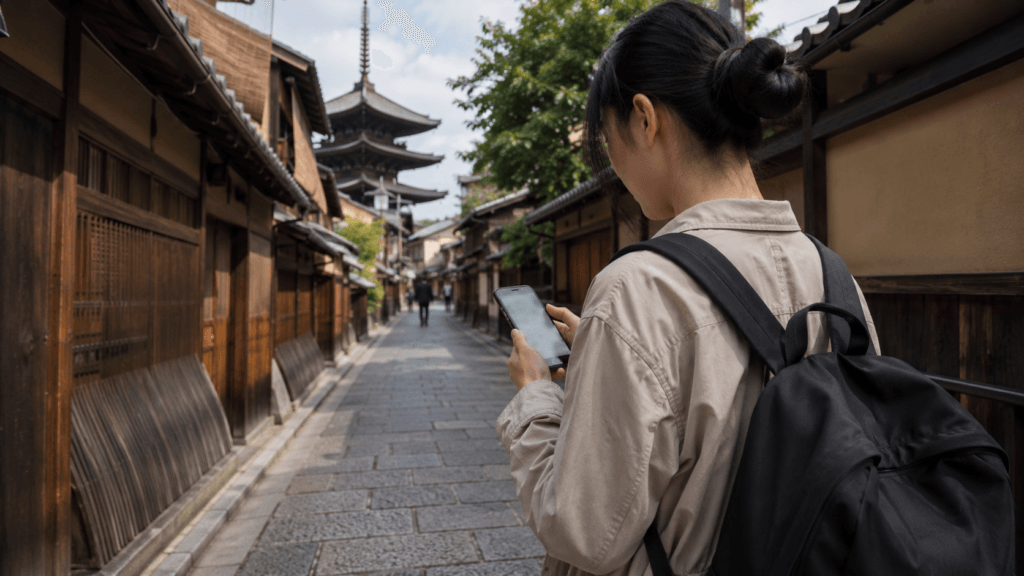
Many travelers use less mobile data than expected because hotel Wi-Fi handles app updates, long videos, and photo backups.
The data usually disappears during the day instead. Maps reopen after the correct station exit has already been passed. Menus need translating. Train platforms change. A five-minute restaurant search somehow becomes 20 minutes of reviews and food photographs.
For 5 to 7 Days
3GB to 5GB is usually enough for maps, messages, translation, bookings, and light social media.
A 1GB plan can work for a careful traveler who uses Wi-Fi whenever possible. It leaves very little margin for automatic photo uploads or video use.
For 7 to 14 Days
10GB is the most comfortable choice for an ordinary trip.
It allows frequent navigation, restaurant searches, mobile tickets, messaging, and moderate social media without constant rationing.
For 2 to 4 Weeks
20GB to 25GB suits travelers moving between several cities, uploading photos regularly, or making video calls.
A long trip does not automatically require high data, but most people become less interested in strict Wi-Fi discipline after the first week.
For Remote Work or Heavy Streaming
Choose 25GB or an unlimited plan with a clearly stated full-speed allowance.
Video meetings, laptop updates, cloud storage, and hotspot sharing consume data far faster than maps and messaging.
Network Coverage in Japan
Airalo currently states that its Japan eSIM uses SoftBank and KDDI. Ubigi’s current Japan plans list KDDI and NTT Docomo.
For a normal route through Tokyo, Kyoto, Osaka, Hiroshima, Fukuoka, or other major cities, either provider should cover everyday travel needs.
Network choice matters more when the itinerary includes remote Hokkaido, mountain villages, national parks, small islands, or long drives through rural areas.
No travel eSIM can guarantee a strong signal on every hiking trail. Before a remote trip, download offline maps and save accommodation details somewhere that does not require mobile reception.
Calls, SMS and Your Normal SIM
The standard local Japan plans discussed here are data-only.
They do not usually include a Japanese phone number for traditional calls or SMS. LINE, WhatsApp, FaceTime, Messenger, Skype, and other internet-based services work through the data connection.
A compatible dual-SIM phone can keep the original SIM active for calls and authentication texts while using the eSIM for mobile data.
The important settings are:
- Select the Japan eSIM for mobile data.
- Enable data roaming on the travel eSIM when required.
- Disable data roaming on the home SIM.
- Turn off automatic cellular data switching.
- Check the selected line before making an ordinary phone call.
Leaving the original SIM active can be useful for bank verification codes, but receiving or sending messages may still trigger charges depending on the home carrier.
A dual-SIM phone follows its settings with impressive confidence, including the expensive ones.
Can You Share the Connection?

Both providers support hotspot use on their current Japan products. Airalo says its Japan eSIM can share data, while Ubigi’s 10GB and 25GB product pages list data sharing as allowed.
A hotspot is practical for connecting a laptop briefly or helping a travel companion whose phone has lost service.
It is less ideal as the main internet source for an entire family. Streaming, software updates, and video calls on several devices can drain a small plan quickly.
For two travelers who regularly separate during the day, individual eSIMs are usually more convenient than sharing one connection.
Installing the eSIM
Install the eSIM before flying while connected to dependable Wi-Fi.
Before buying, confirm that the exact phone model supports eSIM and that the device is carrier-unlocked. Phones sold under the same model name can have different eSIM capabilities in different regions.
Before Departure
- Purchase the plan.
- Install it through the provider’s app or QR code.
- Rename the line
Japan eSIM. - Save the installation and APN instructions offline.
- Do not delete the eSIM profile after installation.
After Landing
- Turn on the Japan eSIM.
- Select it for mobile data.
- Enable roaming on the travel eSIM.
- Disable roaming on the original SIM.
- Wait a few minutes for a network connection.
- Restart the phone if no data appears.
- Check the APN instructions if the problem continues.
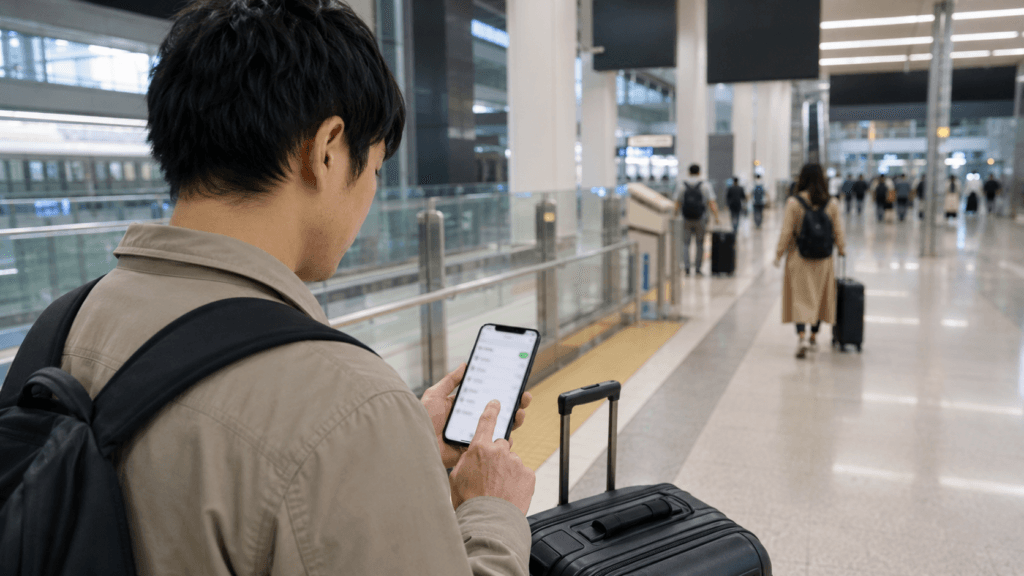
Having the eSIM ready before landing also makes the first journey from Narita Airport to Tokyo easier. Train platforms, hotel directions, and live transport changes are much less stressful when the phone is already online.
Japan eSIM or Pocket Wi-Fi?
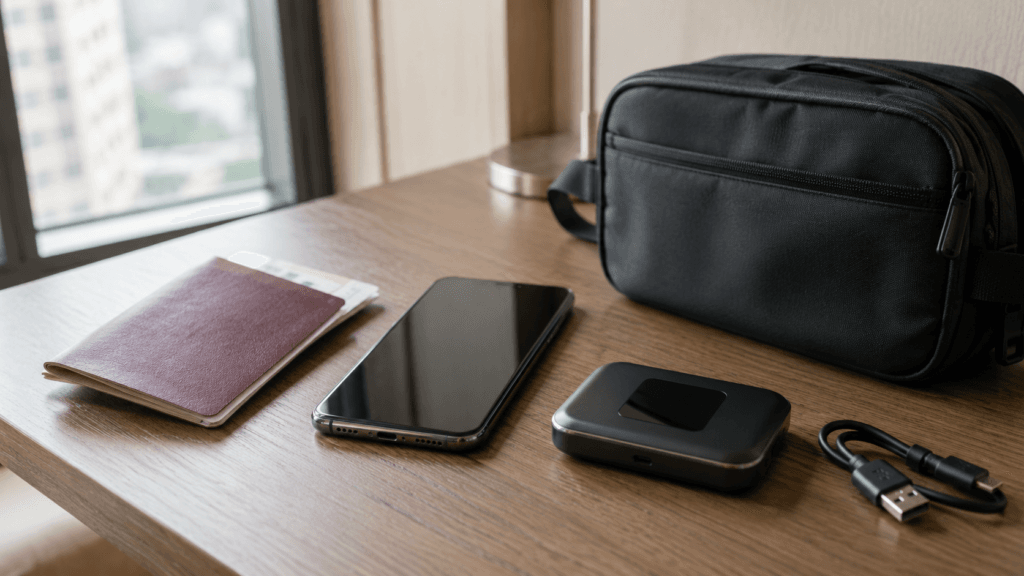
An eSIM is usually easier for a solo traveler or couple.
There is no extra device to collect, carry, charge, or return. Each person can also keep their own connection when splitting up for a few hours.
Pocket Wi-Fi can still be useful for:
- A family using several devices
- Phones that do not support eSIM
- Groups staying together all day
- Heavy laptop use
- Travelers who prefer one shared connection
Airalo’s own comparison says its Japan eSIM supports tethering, while a pocket Wi-Fi router typically connects several devices but must be charged and returned.
The main weakness of pocket Wi-Fi is simple: everyone loses internet when the person carrying it walks into a different shop.
Refunds and Purchase Mistakes
Digital eSIM products are not always easy to refund after activation.
Ubigi states that unused plans may qualify for a refund, but a request with proof of payment must be submitted within 14 business days of purchase. Once a plan has been used, even partially, the refund may be refused. Ubigi may also consider cases involving proven technical problems on its side.
Airalo refund eligibility depends on the package, issue, and current terms. Review the policy shown during purchase rather than assuming that a change of travel plans or an incompatible device will qualify.
The safest approach is checking these details before payment:
- eSIM compatibility
- Carrier-unlocked status
- Destination coverage
- Data allowance
- Validity period
- Activation policy
- Fair-use limits
- Need for a local phone number
A few careful minutes before checkout are usually easier than a long conversation with customer support from an airport bench.
Common Japan eSIM Mistakes
Buying for a Locked Phone
A phone can support eSIM and still be locked to its original carrier.
Both conditions must be checked.
Activating Too Early
Installation and activation are not necessarily the same event.
Read the package policy before switching the line on. Ubigi SmartStart begins the validity period upon arrival in the destination.
Leaving Roaming Off on the Travel eSIM
Travel eSIMs commonly require data roaming to be enabled on the eSIM line.
The home SIM should remain disabled for data roaming.
Allowing Automatic Data Switching
Some phones move to the other SIM when the selected connection becomes weak.
Turn this off unless you are comfortable with possible home-carrier roaming charges.
Expecting a Japanese Number
The local plans compared here are data-only.
A traveler who needs a Japanese number for calls or reservations should choose a product that explicitly includes voice service.
Buying Too Little Data
A tiny package is inexpensive until it has to be replaced twice.
Be realistic about video, cloud backups, social media, and hotspot use.
Deleting the eSIM While Troubleshooting
Do not remove the eSIM profile unless the provider tells you to.
Some QR codes cannot simply be scanned again after deletion.
FAQ
What Is the Best Japan eSIM for Most Travelers?
Ubigi’s 10GB plan is currently a strong choice for a normal trip lasting one or two weeks.
Airalo is often better when only 1GB to 3GB is needed or when the same app will be used in several countries.
Is 5GB Enough for Japan?
Five gigabytes is usually enough for a week of maps, translation, messages, mobile bookings, and light social media.
It may not be enough for regular streaming, cloud backups, or hotspot sharing.
Is 10GB Enough for Two Weeks?
Yes, for most travelers.
Hotel Wi-Fi can handle large downloads and photo backups, leaving mobile data for daytime travel.
Do Airalo and Ubigi Include a Phone Number?
The standard Japan plans discussed in this guide are data-only.
Calls and messages work through internet apps, but a Japanese mobile number is not normally included.
Can I Keep My Original SIM Active?
Yes, on a compatible dual-SIM phone.
Use the eSIM for data and keep the original SIM available for calls or verification texts. Disable mobile data roaming on the original SIM.
Can I Install the eSIM Before Japan?
Yes.
Installing it before departure is usually easier. Follow the provider’s activation instructions so the validity period starts at the correct time.
Can Airalo and Ubigi Be Used as Hotspots?
Yes, on their current Japan offers.
Hotspot use still consumes the plan’s normal data allowance and can use it quickly when several devices are connected.
Final Thoughts
Airalo and Ubigi are both sensible options for staying connected in Japan, but they suit slightly different trips.
Airalo is stronger for small data packages, short stays, and multi-country travel. Ubigi currently offers excellent value around 5GB to 10GB, clearly identifies its Japanese partner networks, and explains the high-speed limits of its unlimited plans.
For most visitors spending one or two weeks in Japan, 10GB is the comfortable choice. Light users can save money with 3GB to 5GB, while remote workers, content creators, and frequent hotspot users should consider 20GB or more.
Install the eSIM before departure, check that the phone is unlocked, and disable data roaming on the original SIM. Those three steps prevent most arrival-day problems.
Reliable data will not fix every wrong turn, but it makes adjusting a Japan itinerary much easier when a train is delayed, a restaurant is full, or the hotel entrance has once again chosen a different street from the one shown on the map.
The best eSIM is not the plan with the largest number beside it. It is the one that connects when you land, lasts until you leave, and quietly does its job while you get on with the trip.