
Planning a Thailand and Vietnam itinerary is one of the best ways to experience Southeast Asia in one trip.
Thailand gives you Bangkok’s temples, street food, night markets, islands, shopping malls, rooftop bars and that dangerous little sentence: “Let’s just get one more mango sticky rice.” Vietnam gives you Hanoi’s old streets, strong coffee, Hoi An lanterns, Da Nang beaches, Ho Chi Minh City energy and enough noodle soup to make your travel plans temporarily disappear.
Together, Thailand and Vietnam make a strong first Southeast Asia route. The countries are well connected by flights, both are popular with first-time travelers, and the trip can be cheaper and more flexible than many East Asia routes.
But this itinerary needs planning.
Thailand and Vietnam both look easy on a map. Then you remember that Vietnam is long, Thailand has islands, weather changes by region, and airports have a talent for eating half a day without apologizing.
This guide keeps the route practical: how many days you need, where to start, when to fly, where to slow down, and how to avoid turning a Southeast Asia trip into a suitcase obstacle course.
If you are still deciding between East Asia and Southeast Asia, start with our East Asia vs Southeast Asia guide first. For a wider regional plan, our Asia travel itinerary 2026 guide can also help you compare this route with Japan, Korea, Taiwan and Singapore-based trips.
Quick Answer: Best Thailand and Vietnam Itinerary
For most first-time visitors, the best Thailand and Vietnam itinerary is:
Bangkok → Chiang Mai → Hanoi → Hoi An/Da Nang
This works especially well for a 2-week trip.
If you only have 10 days, keep it simple:
Bangkok → Hanoi
or
Bangkok → Ho Chi Minh City
If you have 3 weeks, you can add more variety:
Bangkok → Chiang Mai → Phuket → Hanoi → Hoi An/Da Nang → Ho Chi Minh City
Here is the simple version:
| Trip Length | Best Route | Best For |
|---|---|---|
| 10 days | Bangkok + Hanoi or Ho Chi Minh City | Short trip, city food, easy flights |
| 2 weeks | Bangkok + Chiang Mai + Hanoi + Hoi An/Da Nang | Best balanced first-time route |
| 2 weeks alternative | Bangkok + Phuket + Ho Chi Minh City + Hoi An/Da Nang | Beaches, warm weather, relaxed finish |
| 3 weeks | Bangkok + Chiang Mai + Phuket + Hanoi + Hoi An/Da Nang + Ho Chi Minh City | Deeper Southeast Asia trip |
| 1 month | Thailand + Vietnam slow route | Backpackers and slow travelers |
The sweet spot is 2 weeks. You get enough variety without making every third day feel like a boarding gate pretending to be a vacation.
Is Thailand and Vietnam a Good First Southeast Asia Trip?
Yes, Thailand and Vietnam are one of the best Southeast Asia combinations for first-time visitors.
Thailand is often easier for a soft landing. Bangkok has strong international flight connections, plenty of hotels, familiar tourist infrastructure and a huge range of food and transport options. It is busy, but it is also easy to understand once you choose one area at a time.
Vietnam adds a different rhythm. Hanoi feels older and more atmospheric. Hoi An is slower and prettier. Ho Chi Minh City is faster, busier and more modern. Vietnam also rewards travelers who enjoy walking, coffee, food streets and a little beautiful chaos.
This route is especially good if you want street food, warm weather, good value, big cities, cafes, markets, beaches, temples and flexible travel days.
Compared with a Japan Korea itinerary 2026, this route is usually warmer, cheaper and more flexible. But it also requires more weather planning, more flight choices and a little more patience with travel days.
If East Asia is trains, seasons and organized city travel, Thailand and Vietnam are markets, scooters, beaches, hot soup and the sudden realization that your “relaxed day” somehow includes three cafes and a night market.
How Many Days Do You Need for Thailand and Vietnam?
You need at least 10 days for a simple Thailand and Vietnam trip, but 2 weeks is much better.
A realistic guide:
- 7 days: Choose only one country
- 10 days: Bangkok + one Vietnam city
- 2 weeks: Bangkok + Chiang Mai + Hanoi + Hoi An/Da Nang
- 3 weeks: Add Phuket and Ho Chi Minh City
- 1 month: Add more islands, northern Vietnam or slower overland sections
If you only have 10 days, do not try to visit Bangkok, Chiang Mai, Phuket, Hanoi, Hoi An and Ho Chi Minh City.
That is not an itinerary. That is a weather forecast with luggage.
Thailand and Vietnam both deserve time. You do not need to see every famous stop on your first trip. A good itinerary should feel like a journey, not a checklist running away from you.
Should You Start in Thailand or Vietnam?
For most first-time visitors, starting in Thailand is slightly easier.
The simplest direction is:
Thailand → Vietnam
Bangkok works well as a first stop because it has many international flights, a wide range of hotels and enough food, temples, markets and shopping to fill several days without complicated planning.
Vietnam first can also work, especially if flights into Hanoi or Ho Chi Minh City are cheaper. The right answer depends on your flights, season and where you want to end the trip.
Start in Thailand If…
Start in Thailand if your best international flight arrives in Bangkok, you want an easier soft landing, or you want to begin with temples, markets, street food and warm city energy before moving into Vietnam.
A Thailand-first route often looks like this:
Bangkok → Chiang Mai → Hanoi → Hoi An/Da Nang
This is my favorite 2-week route for first-time visitors because it gives you a big city, northern Thailand, northern Vietnam and a relaxed central Vietnam finish.
Start in Vietnam If…
Start in Vietnam if flights into Hanoi or Ho Chi Minh City are cheaper, or if you want to travel through Vietnam first before ending with Thailand’s beaches or Bangkok shopping.
A Vietnam-first route can look like this:
Hanoi → Hoi An/Da Nang → Ho Chi Minh City → Bangkok → Phuket
This is a good choice for travelers who want to end with beach time. Ending a trip with a Thai island is not a bad idea. Your inbox may disagree, but your soul will understand.
My Recommendation
For most first-time visitors, choose:
Bangkok → Chiang Mai → Hanoi → Hoi An/Da Nang
It is balanced, not too rushed and easy to understand.
If beaches are your top priority, choose:
Bangkok → Phuket → Ho Chi Minh City → Hoi An/Da Nang
The best route depends on your season, your flights and how much beach time you want.
10-Day Thailand Vietnam Itinerary: Bangkok + Hanoi or Ho Chi Minh City
If you only have 10 days, keep the itinerary simple.
The best route is:
Bangkok → Hanoi
or
Bangkok → Ho Chi Minh City
Bangkok + Hanoi is the best 10-day route if you want contrast without too much movement. Bangkok gives you temples, malls, markets and street food energy, while Hanoi gives you older streets, coffee culture and a more compact city rhythm.
Bangkok + Ho Chi Minh City is better if you prefer modern city energy, southern Vietnam food, cafes and easier day trips.
Days 1 to 4: Bangkok

Start in Bangkok.
A good first Bangkok plan might include the Grand Palace area, Wat Pho, Wat Arun, Chinatown, a riverside stop, a night market, one shopping area and at least one meal that makes you wonder why your home city has been hiding from flavor.
Do not try to do everything on your first day. Bangkok is warm, busy and full of choices. Start with one area, eat something good and let the city introduce itself without kicking the door open.
A simple 4-day Bangkok plan could look like this:
- Day 1: Arrival, hotel check-in and easy dinner
- Day 2: Grand Palace area, Wat Pho and Wat Arun
- Day 3: Chinatown, river route, market or mall time
- Day 4: Chatuchak if weekend, cafes, shopping or flexible day
Bangkok is not just a stopover city. Give it a few days, or it will quietly prove your itinerary was underestimating it.
Days 5 to 10: Hanoi Option
Fly from Bangkok to Hanoi if you want your Vietnam section to feel older, moodier and more food-focused.
Hanoi is one of the best cities in Southeast Asia for food and atmosphere. The Old Quarter is a strong base for first-time visitors, and the city works well if you enjoy walking, coffee, lakes, small streets and food that appears exactly when your willpower is weakest.
Good first-time stops include:
- Old Quarter
- Hoan Kiem Lake
- Temple of Literature
- West Lake
- Coffee shops
- Street food walks
- Ha Long Bay day trip or overnight cruise
Hanoi is not a city to rush. Half the fun is walking, eating, drinking coffee and wondering how the scooters seem to understand rules written in invisible ink.
Days 5 to 10: Ho Chi Minh City Option
Choose Ho Chi Minh City if you want a more modern Vietnam city, southern food, cafes and easy day trips.
Ho Chi Minh City is faster and more urban than Hanoi. It works well if you want museums, markets, coffee apartments, nightlife and side trips such as Cu Chi Tunnels or the Mekong Delta.
A simple Ho Chi Minh City plan might include:
- War Remnants Museum
- Central Post Office
- Ben Thanh Market
- Nguyen Hue Walking Street
- Cafe apartments
- Cu Chi Tunnels day trip
- Mekong Delta day trip
For most first-time visitors, I prefer Bangkok + Hanoi because the contrast feels stronger. But Bangkok + Ho Chi Minh City is easier if you want a warmer, faster and more modern city route.
2-Week Thailand Vietnam Itinerary: Bangkok + Chiang Mai + Hanoi + Hoi An/Da Nang
For most travelers, this is the best Thailand and Vietnam itinerary.
The route is:
Bangkok → Chiang Mai → Hanoi → Hoi An/Da Nang
This gives you Thailand’s capital, northern Thailand, northern Vietnam and a relaxed central Vietnam finish.
Days 1 to 4: Bangkok
Spend your first four days in Bangkok.
Suggested plan:
- Day 1: Arrival and easy dinner
- Day 2: Grand Palace area, Wat Pho and Wat Arun
- Day 3: Chinatown, markets, river route or mall time
- Day 4: Chatuchak if weekend, cafes, shopping or flexible day
Four days is enough to enjoy Bangkok without sprinting through it.
Use Bangkok to settle into Southeast Asia. Eat well, move slowly on arrival day and avoid planning five neighborhoods before your body has figured out the local time.
Days 5 to 7: Chiang Mai

Fly or take the overnight train to Chiang Mai.
For most short trips, flying is easier. The overnight train can be fun, but it takes more time and may not be worth it if your schedule is tight.
Chiang Mai is slower than Bangkok and gives your Thailand section a different mood. It is a good place for temples, night markets, cafes, cooking classes and nature-focused day trips.
A simple Chiang Mai plan could include:
- Old City temples
- Wat Phra That Doi Suthep
- Night markets
- Cooking class
- Cafes
- Carefully researched ethical elephant sanctuary
Chiang Mai is a good place to slow down. After Bangkok, your brain may appreciate a city that does not feel like it is operating on six screens at once.
Day 8: Fly to Hanoi

Fly from Chiang Mai or Bangkok to Hanoi, depending on available routes.
Direct flight options can change by season and airline, so check current schedules before locking your plan.
Do not overplan this travel day. International flights between Southeast Asian cities can look short, but airport transfers, check-in, immigration and luggage all bring their tiny spoons to eat your afternoon.
Days 9 to 11: Hanoi
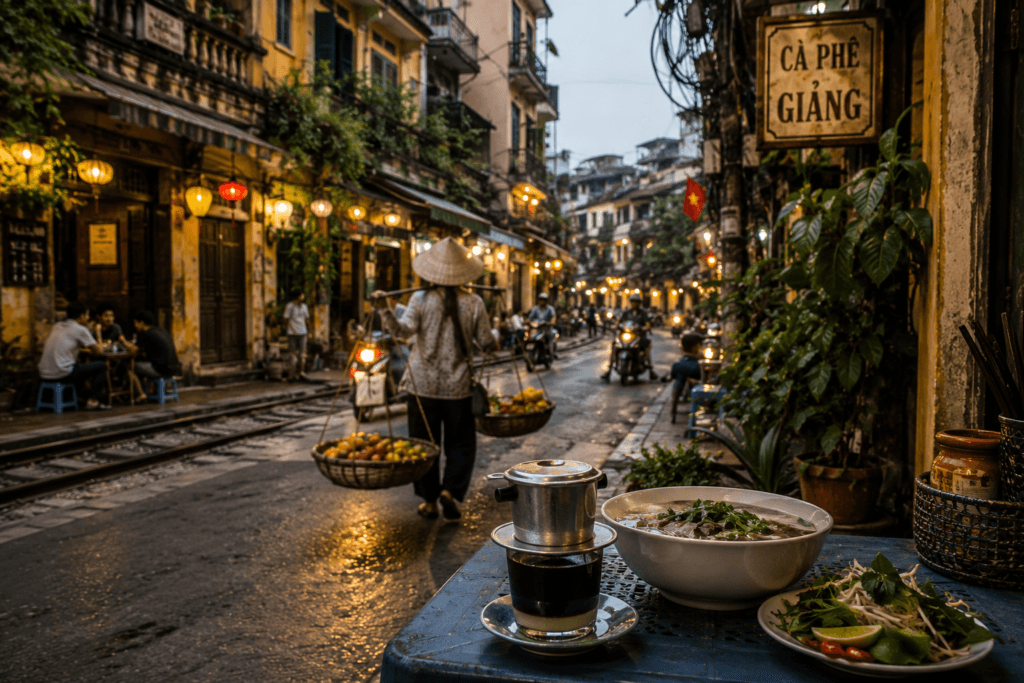
Spend three days in Hanoi.
Suggested plan:
- Day 9: Old Quarter and Hoan Kiem Lake
- Day 10: Temple of Literature, West Lake, cafes and food
- Day 11: Ha Long Bay day trip or more Hanoi
If you want to do an overnight Ha Long Bay cruise, you may need to adjust the route and reduce time elsewhere.
Hanoi works best when you leave room for wandering. A perfect Hanoi afternoon can be nothing more than coffee, noodles, an old street and the brave decision to cross the road.
Days 12 to 14: Hoi An or Da Nang
Fly from Hanoi to Da Nang, then stay in Da Nang or Hoi An.
Da Nang has beaches, a modern city feel and easier transport. Hoi An is smaller, prettier and more atmospheric, especially in the evening.
Choose Da Nang if you want beach access, modern hotels, easier airport access and a more practical base.
Choose Hoi An if you want old town atmosphere, lantern streets, tailor shops, cafes and a slower final stop.
For many first-time visitors, Hoi An is the better emotional ending. Da Nang is the easier practical base. This is the kind of travel decision where your suitcase says Da Nang and your camera says Hoi An.
2-Week Alternative: Bangkok + Phuket + Ho Chi Minh City + Hoi An/Da Nang
If you want more beach time, choose this route:
Bangkok → Phuket → Ho Chi Minh City → Hoi An/Da Nang
This route is better for travelers who want beaches, warmer weather and a more relaxed Southeast Asia feeling.
Suggested route:
- Days 1 to 3: Bangkok
- Days 4 to 7: Phuket
- Days 8 to 11: Ho Chi Minh City
- Days 12 to 14: Hoi An or Da Nang
Days 1 to 3: Bangkok
With only three days in Bangkok, focus on the essentials: temples, Chinatown, one market, one shopping or riverside area and one relaxed food evening.
Keep the first day light if you are arriving from far away. Bangkok can be wonderful, but it does not need to be tackled like a competitive sport.
Days 4 to 7: Phuket
Fly to Phuket.
Phuket works well if you want beaches, resorts, island tours and a break from city travel. It is a good choice for travelers who want their Thailand section to feel more tropical.
Good options include:
- Beach time
- Old Phuket Town
- Island tours
- Sunset viewpoints
- Night markets
- Spa or wellness day
Phuket looks simple on a map, but islands enjoy stealing time. Leave space between beach days, tours and flights unless you want your swimsuit drying on an airport chair.
Days 8 to 11: Ho Chi Minh City
Fly from Phuket to Ho Chi Minh City if schedules work. If direct flights are not available or convenient, you may need to connect through Bangkok or another hub.
Ho Chi Minh City gives this route a strong urban Vietnam section. It is busy, warm and energetic. It is not always pretty in a postcard way, but it has momentum.
Use these days for museums, cafes, markets, food and one possible day trip. If you want both Cu Chi Tunnels and the Mekong Delta, add more time or accept that your schedule may start making dramatic noises.
Days 12 to 14: Hoi An or Da Nang

End with Hoi An or Da Nang.
This gives the route a calmer finish after Bangkok, Phuket and Ho Chi Minh City.
The final days should not be too full. Let yourself enjoy the last part of the trip instead of trying to squeeze in every possible tour. The beach does not read your itinerary.
3-Week Thailand Vietnam Itinerary: Bangkok + Chiang Mai + Phuket + Hanoi + Hoi An + Ho Chi Minh City
If you have 3 weeks, you can build a much fuller Thailand and Vietnam itinerary.
The best route is:
Bangkok → Chiang Mai → Phuket → Hanoi → Hoi An/Da Nang → Ho Chi Minh City
This route gives you big cities, northern Thailand, beaches, northern Vietnam, central Vietnam and southern Vietnam.
Days 1 to 4: Bangkok
Start with four days in Bangkok.
Use this time for temples, food, markets, shopping and a flexible day.
A flexible day matters because Bangkok has many possible side routes. You may want more markets, a cooking class, a river day, a spa day or just one day where the main activity is eating things with confidence.
Days 5 to 8: Chiang Mai
Spend four days in Chiang Mai.
This gives you enough time for temples, night markets, cafes, Doi Suthep and one longer activity such as a cooking class or carefully researched ethical elephant sanctuary.
Chiang Mai is a good contrast to Bangkok. It feels slower and more manageable.
Days 9 to 12: Phuket
Fly to Phuket for beach time.
You can spend these days doing very little, which is sometimes the most advanced form of travel planning.
Good options include beach time, Old Phuket Town, an island tour, a viewpoint, a spa day and relaxed seafood dinners.
If you prefer a less resort-heavy beach base, you can consider Krabi instead. But for a first Thailand and Vietnam itinerary, Phuket usually has easier flight access.
Day 13: Fly to Hanoi
Fly from Phuket to Hanoi, with a connection if needed.
This is a big travel day, so keep the evening simple.
Days 14 to 16: Hanoi
Spend three days in Hanoi.
Use this time for the Old Quarter, Hoan Kiem Lake, food, coffee and maybe a Ha Long Bay day trip.
If Ha Long Bay is a priority, consider adding an overnight cruise and reducing time somewhere else. It is beautiful, but it deserves time.
Days 17 to 19: Hoi An/Da Nang
Fly to Da Nang and spend three days in Hoi An or Da Nang.
This gives you a softer middle-to-late Vietnam section with beaches, old streets and cafes.
A good plan:
- Day 17: Arrive, beach or old town
- Day 18: Hoi An old town and food
- Day 19: Da Nang beach, Marble Mountains or flexible day
Days 20 to 21: Ho Chi Minh City
Fly to Ho Chi Minh City for the final part of the trip.
With only two days, focus on the city center, museums, cafes and one strong food day.
If you want the Mekong Delta or Cu Chi Tunnels, you may need one extra day.
This 3-week route is the best version if you want both countries to feel balanced. But keep it linear. Vietnam is long and Thailand is not exactly pocket-sized either. Avoid bouncing around like a confused pinball.
Best Time to Visit Thailand and Vietnam
The easiest overall season for a Thailand and Vietnam itinerary is usually:
November to February
This period is often more comfortable for Thailand and many popular Vietnam stops. But Southeast Asia weather does not behave like a neat spreadsheet.
You should check the exact cities on your route.
Thailand Weather
Thailand is often most comfortable from November to February.
March to May can be very hot. The rainy season usually affects many areas from around May to October, though patterns vary by region.
For islands, weather can differ between coasts, so always check your exact beach destination before booking.
Vietnam Weather
Vietnam is long, so the weather changes a lot by region.
Northern Vietnam, including Hanoi, can be cool in winter and hot in summer.
Central Vietnam, including Da Nang and Hoi An, can have heavier rain in parts of the year, especially around the autumn months.
Southern Vietnam, including Ho Chi Minh City, is usually warm year-round, with dry and rainy seasons.
The simple rule:
- November to February is usually easiest overall
- March to May can be very hot
- Rainy season does not hit every place the same way
- Check Bangkok, Chiang Mai, Phuket, Hanoi, Da Nang, Hoi An and Ho Chi Minh City separately
Weather is not just background information for this route. It decides whether your beach day is golden or whether your shoes become small boats.
How to Travel Between Thailand and Vietnam
For most Thailand and Vietnam itineraries, flying is the easiest option.
Overland routes can be interesting, especially for backpackers with more time, but they are usually not the best choice for first-time 10-day or 2-week vacations.
Common flight routes to check include:
- Bangkok to Hanoi
- Bangkok to Ho Chi Minh City
- Bangkok to Da Nang
- Chiang Mai to Hanoi
- Phuket to Ho Chi Minh City
- Phuket to Hanoi
- Da Nang to Bangkok
- Ho Chi Minh City to Bangkok
Flight schedules can change by season and airline, so check current routes before finalizing your itinerary.
Travel Within Thailand
In Thailand, Bangkok works as the main hub.
Common routes include:
- Bangkok to Chiang Mai: flight or overnight train
- Bangkok to Phuket: flight
- Bangkok to Krabi: flight
- Bangkok to Ayutthaya: easy day trip
- Bangkok to Pattaya: short side trip, but not essential
For short trips, flying is usually the easiest way to connect Bangkok with Chiang Mai or Phuket.
Travel Within Vietnam
Vietnam looks manageable until you remember it is long, narrow and very committed to being long.
For short trips, fly between major cities instead of forcing every transfer by land.
Common routes include:
- Hanoi to Da Nang: flight or overnight train
- Da Nang to Hoi An: road transfer
- Da Nang to Ho Chi Minh City: flight
- Hanoi to Ha Long Bay: day trip or overnight cruise
- Ho Chi Minh City to Mekong Delta: day trip or overnight tour
If your trip is only 10 days or 2 weeks, use flights for long distances. Save slower overland travel for longer backpacking routes.
Entry Rules and Travel Paperwork in 2026
Before booking, check entry rules for both Thailand and Vietnam based on your passport.
Do not rely only on old blog posts. Entry rules change, and travel paperwork has a strange hobby of becoming important right when you are already packed.
Thailand
Most foreign travelers entering Thailand need to complete the Thailand Digital Arrival Card, or TDAC, online before arrival.
The TDAC should be completed online within 3 days before arrival, using the official Thai Immigration portal.
Thailand’s visa rules have also been changing, so travelers should check the latest rules for their passport before booking. Do not assume every eligible traveler automatically gets 60 days visa-free based on older information.
The safe advice is simple: check your passport, check the latest official rules and do not leave entry paperwork until the airport.
Vietnam
Vietnam is relatively convenient for itinerary planning because its official eVisa can be valid for up to 90 days, with single-entry or multiple-entry options.
Some travelers may also qualify for visa-free entry to Vietnam, including certain 45-day visa exemptions. Eligibility depends on nationality, so always check the latest official rules for your passport before departure.
For many Thailand and Vietnam itineraries, Vietnam’s eVisa flexibility can be useful, especially if you are entering Vietnam after Thailand or if your route includes multiple border crossings.
Before You Travel, Check These
Before departure, check:
- Passport validity
- Thailand TDAC requirement
- Thailand visa or visa-exemption rules
- Vietnam eVisa or visa-free eligibility
- Proof of onward travel
- Accommodation address for arrival forms
- Travel insurance
- Mobile data or eSIM
- Airport transfer plans
This part is not glamorous, but neither is solving visa paperwork while your airport coffee gets cold.
Budget Tips for a Thailand and Vietnam Trip
Thailand and Vietnam are generally more budget-friendly than Japan and Korea, but costs can still rise quickly if you move too often or choose expensive beach areas.
Save Money on Accommodation
Stay near the area you actually plan to explore.
In Bangkok, choose a base near transit or near the neighborhoods you care about. Bangkok traffic is not a gentle creature.
In Hanoi, the Old Quarter is convenient for first-time visitors.
In Da Nang, beach areas can be good value.
In Hoi An, staying near the old town or between the old town and beach can work well.
In Phuket, location matters a lot. A cheaper hotel far from the beach or tours may not save much after transport.
Save Money on Food
Food is one of the best-value parts of this route.
Budget-friendly options include:
- Thai street food
- Local markets
- Food courts
- Noodle shops
- Vietnamese banh mi
- Pho and bun cha shops
- Coffee stalls
- Casual seafood spots
- Night markets
You do not need expensive restaurants every day. Some of the best meals in Thailand and Vietnam come from plastic stools, tiny tables and a cook who has no interest in your Instagram angle.
Save Money on Transport
The easiest way to waste money is to move too much.
Every extra flight means:
- Airport transfer
- Check-in time
- Luggage time
- Possible delays
- Another hotel change
- Another half-day gone
A slightly simpler itinerary often feels better and costs less.
Common Mistakes to Avoid
Mistake 1: Adding Too Many Cities
The biggest mistake is trying to visit Bangkok, Chiang Mai, Phuket, Hanoi, Hoi An, Da Nang, Ho Chi Minh City, Ha Long Bay and the Mekong Delta in one short trip.
Pick fewer places and enjoy them properly.
Mistake 2: Ignoring Weather by Region
Thailand and Vietnam do not have one single weather pattern.
Check each city and beach area separately before booking flights and hotels.
Mistake 3: Treating Travel Days Like Sightseeing Days
International flights, domestic flights and airport transfers take time.
Do not plan a major temple, beach tour and night market on the same day you fly between countries.
Mistake 4: Forgetting Entry Paperwork
Thailand has the TDAC. Vietnam may require an eVisa depending on your passport.
Check official rules before departure.
Mistake 5: Choosing Beaches Without Checking Transport
Beach destinations can take more time than they seem.
Phuket, Krabi, Hoi An and Da Nang all have different transport situations. Choose based on your route, not only on pretty photos.
Mistake 6: Underestimating Vietnam’s Length
Vietnam is long. Hanoi, Da Nang and Ho Chi Minh City are not close together.
For short trips, fly between major regions.
FAQ: Thailand Vietnam Itinerary
Is Thailand and Vietnam a good first Southeast Asia trip?
Yes. Thailand and Vietnam are one of the best Southeast Asia combinations for first-time visitors. The route offers food, cities, beaches, markets, cafes, temples and good value.
How many days do you need for Thailand and Vietnam?
You need at least 10 days for a simple Thailand and Vietnam trip. Two weeks is better, and 3 weeks is ideal if you want Bangkok, Chiang Mai, Phuket, Hanoi, Hoi An and Ho Chi Minh City.
Is 10 days enough for Thailand and Vietnam?
Yes, 10 days is enough if you keep the route simple. Bangkok plus Hanoi or Ho Chi Minh City is the best short version. Do not try to add too many extra cities.
Should I visit Thailand or Vietnam first?
For most first-time visitors, Thailand first is slightly easier because Bangkok is a strong arrival city. But Vietnam first also works if flights are cheaper or if you want to end with Thailand’s beaches.
Can I visit Bangkok, Hanoi and Hoi An in 2 weeks?
Yes. A good 2-week route is Bangkok for 4 days, Chiang Mai for 3 days, Hanoi for 3 days and Hoi An or Da Nang for 3 days, with travel days included.
Is Phuket worth adding to a Thailand and Vietnam itinerary?
Phuket is worth adding if you want beach time and have at least 2 weeks. If your trip is only 10 days, Phuket may make the itinerary feel too rushed.
Do I need a visa for Thailand and Vietnam in 2026?
It depends on your passport. Thailand requires most foreign travelers to complete TDAC before arrival, and visa rules have been changing. Vietnam offers eVisa options and some visa-free exemptions depending on nationality. Always check official rules before travel.
What is the best month to visit Thailand and Vietnam?
November to February is usually the easiest overall season for a Thailand and Vietnam itinerary. But weather varies by region, especially in Vietnam, so check each city on your route.
How do you travel between Thailand and Vietnam?
Flying is the easiest option for most travelers. Common routes include Bangkok to Hanoi, Bangkok to Ho Chi Minh City, Bangkok to Da Nang, Chiang Mai to Hanoi and Phuket to Ho Chi Minh City.
Is Thailand or Vietnam cheaper?
Vietnam is often slightly cheaper for food, accommodation and local transport, but both countries can be budget-friendly. Thailand can become more expensive in popular beach areas such as Phuket.
Final Thoughts: Thailand and Vietnam Are Easy to Combine, But Plan the Route Carefully
A Thailand and Vietnam itinerary is one of the best Southeast Asia trips for first-time visitors.
The countries are close enough to combine, different enough to stay exciting and flexible enough for many travel styles.
For 10 days, choose Bangkok and one Vietnam city.
For 2 weeks, choose Bangkok, Chiang Mai, Hanoi and Hoi An or Da Nang.
For 3 weeks, add Phuket and Ho Chi Minh City.
The best Thailand and Vietnam itinerary is not the one with the most stops. It is the one where the route makes sense, the weather works, and you have enough time to enjoy the places you choose.
Bangkok, Chiang Mai, Phuket, Hanoi, Hoi An, Da Nang and Ho Chi Minh City are not going anywhere.
The noodles, beaches, temples, coffee shops and night markets will still be there when you arrive.
Let the trip breathe a little. Southeast Asia is much better when your itinerary is walking beside you, not sprinting ahead in flip-flops.