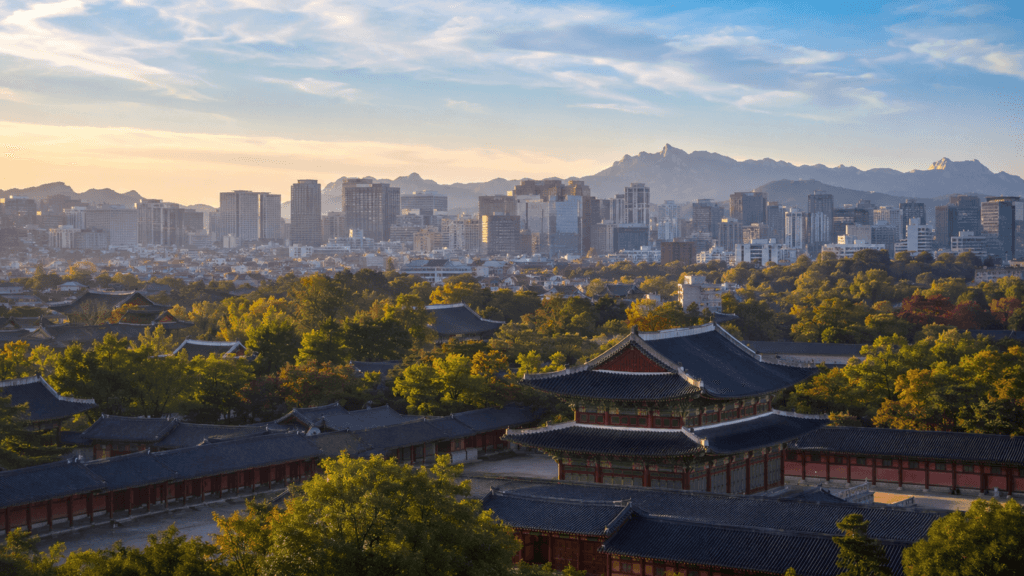
Seoul has a habit of making reasonable travel plans grow extra limbs.
A palace visit becomes lunch in Seochon. Lunch leads to a bakery, which somehow leads to Bukchon, Insadong, and a late dinner in Ikseon-dong. By the end of the day, the original plan is barely recognizable, but the route still feels right.
The challenge is not finding things to do in Seoul. It is deciding which version of the city you want to see.
First-time visitors usually want some combination of royal palaces, traditional streets, Korean food, shopping, K-beauty, modern neighborhoods, mountain views, and the Han River. Seoul offers all of them, but not every famous attraction deserves equal time.
You do not need three observation decks. You do not need to visit every market. Hongdae, Seongsu, Gangnam, and Hannam-dong may all be described as trendy, but they create very different days.
This guide focuses on what is genuinely worth prioritizing, how to combine nearby areas, and what can be saved for another trip.
What Should First-Time Visitors Prioritize?
For a first visit, build the trip around these experiences:
- Explore one major royal palace.
- Walk through one or two traditional neighborhoods.
- Eat at a market that fits the day’s route.
- Spend an afternoon in Hongdae or Seongsu.
- Shop for Korean skincare or fashion.
- Watch the sunset beside the Han River.
- Choose one major Seoul viewpoint.
- Visit one museum or cultural program.
- Try Korean barbecue, market food, and a convenience-store meal.
- Take one day trip when the stay is long enough.
Travelers with three days should concentrate on the first seven. Five days allows time for museums, southern Seoul, or a cultural activity. A week leaves room for Suwon or the DMZ without turning the rest of the trip into a race.
The completed Seoul itinerary for 3, 5, 7 or 10 days shows how to arrange these experiences into practical neighborhood routes.
Begin With Historic Seoul
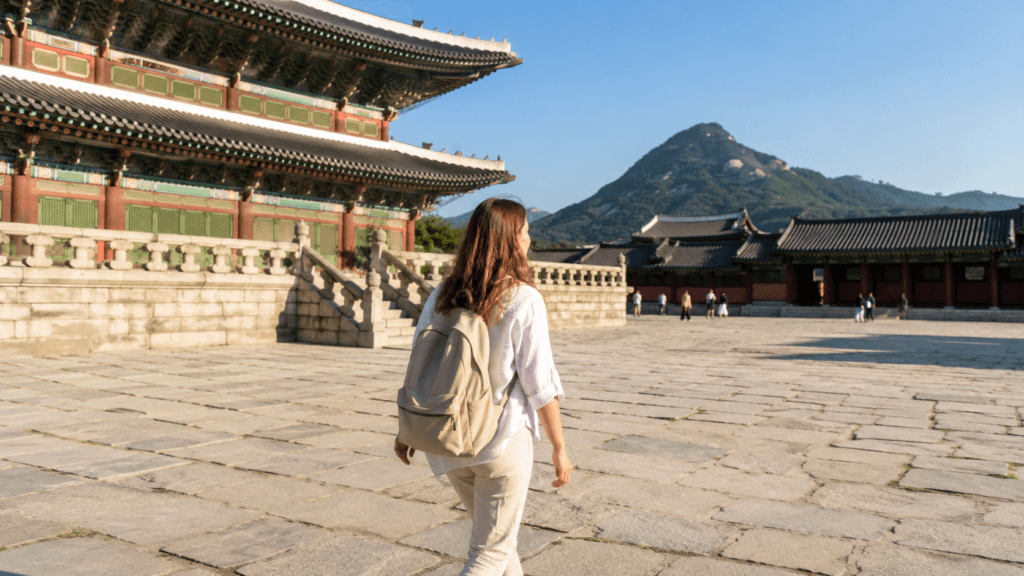
Historic Seoul is the clearest starting point for a first visit. The palace district connects naturally to Seochon, Bukchon, Insadong, Ikseon-dong, Gwanghwamun, and several museums.
The key is treating these places as one flowing route rather than separate attractions scattered across several days.
Gyeongbokgung Palace and Seochon
Gyeongbokgung is the easiest major palace to recommend for a first visit.
It is Seoul’s largest royal palace and stands close to Gwanghwamun Square, the National Palace Museum, Seochon, and Bukchon. Allow at least 90 minutes, and closer to two hours when architecture, photography, or museums are part of the plan.
Arrive early during summer. The courtyards have limited shade, and the pale stone ground becomes far less inviting in the middle of a hot afternoon.
After leaving the palace, walk toward Seochon instead of returning immediately to the subway. The neighborhood feels more residential than many of Seoul’s famous cafe districts, with bakeries, small restaurants, older shops, and narrow lanes close to the palace wall.
This creates a natural morning: palace first, neighborhood lunch second.
Gyeongbokgung is normally closed on Tuesdays. Changdeokgung, which is usually closed on Mondays, is the obvious alternative. Its Secret Garden requires separate admission and timed entry, so it needs a little more planning.
Visit Bukchon Respectfully
Bukchon Hanok Village is still worth seeing, but older travel advice should be treated carefully.
The restricted residential area around Bukchon-ro 11-gil allows tourist visits only between 10:00 a.m. and 5:00 p.m. The old recommendation to arrive before sunrise is no longer appropriate.
The most photographed lanes are still home to local residents. Keep voices low, avoid blocking gates, and do not treat doorways as private photo sets.
Thirty to sixty minutes is enough for the main streets. Travelers who want a deeper experience may get more from a hanok tea house, craft workshop, museum, or guided walk.
Bukchon works best as part of this route:
Gyeongbokgung or Changdeokgung → Bukchon → Insadong → Ikseon-dong
Insadong and Ikseon-dong
Insadong remains useful for crafts, traditional tea, galleries, souvenirs, and snacks. The main street is tourist-friendly, but the smaller side lanes are usually more rewarding.
Ikseon-dong makes a natural evening stop. Its compact hanok alleys contain restaurants, cafes, bars, and boutiques, although weekends can become crowded.
Some venues are more photogenic than memorable, so choose where to eat based on the menu rather than the doorway.
There is little reason to visit Bukchon, Insadong, and Ikseon-dong on three separate days. Seoul’s subway can take you almost anywhere. That does not mean every neighborhood needs its own morning.
Choose the Market That Fits the Route
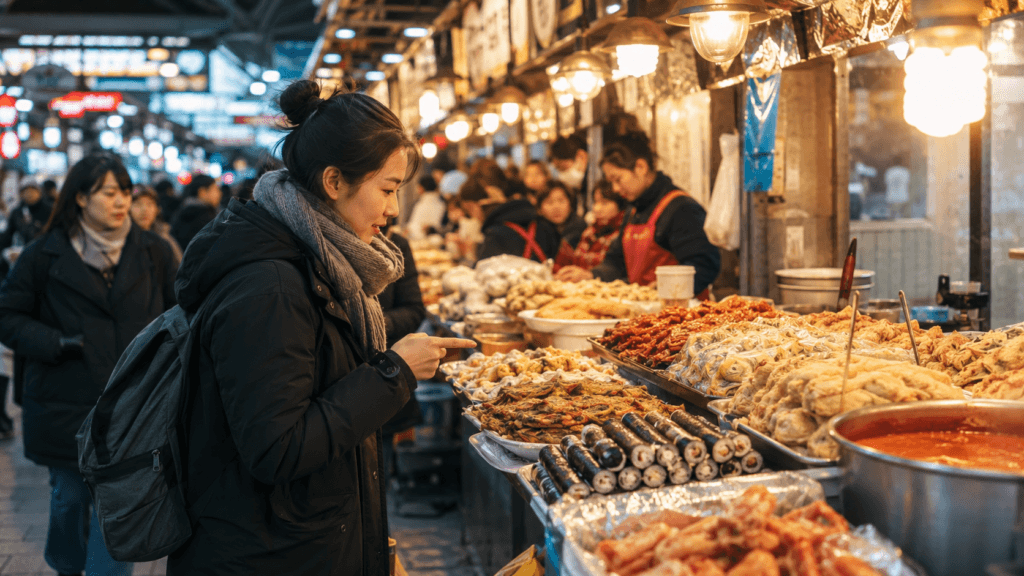
Seoul’s traditional markets do not provide the same experience.
The best choice depends on where the rest of the day is taking you.
| Market | Best paired with | Why visit |
|---|---|---|
| Gwangjang Market | Jongno, Cheonggyecheon, DDP | Famous food stalls and a central location |
| Mangwon Market | Hongdae, Yeonnam, Han River | Easy stop for picnic food |
| Namdaemun Market | Myeongdong, Namsan | Large traditional market and practical shopping |
| Tongin Market | Gyeongbokgung, Seochon | Compact market near the palace district |
Gwangjang or Mangwon?
Gwangjang Market is the famous option.
It is central, energetic, and easy to combine with Jongno, Cheonggyecheon, or Dongdaemun. The food alleys are often busy, particularly during lunch and on weekends.
Visit for the atmosphere and try a few dishes, but do not assume every popular stall represents the best version of Korean food in the city.
Mangwon Market is smaller and easier to navigate. Its real advantage is the route: buy snacks or a casual dinner, then continue to Mangwon Hangang Park.
For travelers already spending the day around Hongdae and Yeonnam-dong, Mangwon is usually the more convenient choice.
Namdaemun and Tongin
Namdaemun is more than a food market.
Its lanes contain clothing, accessories, kitchenware, imported products, children’s goods, and food alleys, often packed together with little concern for neat categories. It works particularly well before Myeongdong and Namsan.
Tongin Market is much smaller. It is not essential, but it fits neatly into a Seochon and Gyeongbokgung day without requiring a detour.
The simplest rule is also the most useful: choose the market already near the rest of the itinerary.
Pick the Seoul Neighborhood That Matches Your Trip
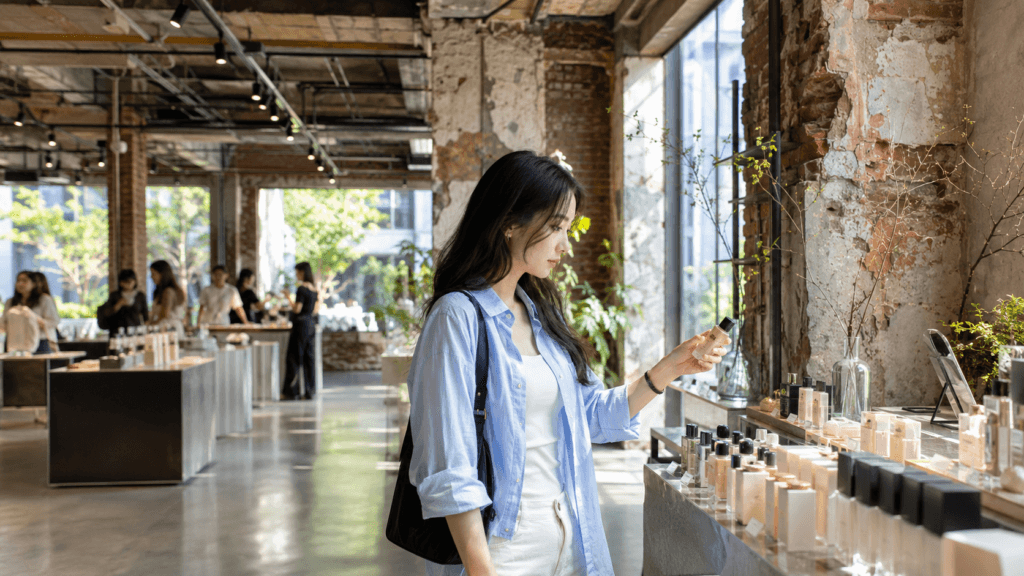
Seoul’s popular districts are often described using the same words: fashionable, youthful, creative, and full of cafes.
The differences become clearer once you look at how each place actually feels.
Hongdae and Yeonnam-dong
Hongdae is the stronger option for nightlife, casual shopping, music, photo booths, arcades, beauty services, bars, and late dinners.
It becomes more active from late morning onward. An early arrival reveals mostly delivery vehicles and closed doors, which is not necessarily the Seoul scene most visitors imagined.
Yeonnam-dong softens the pace. Gyeongui Line Forest Park, small shops, restaurants, and residential streets make it easier to spend a slower afternoon before returning toward Hongdae after dark.
Hongdae is especially suitable for younger travelers, nightlife, budget shopping, and convenient airport railway access.
Seongsu-dong and Seoul Forest
Travelers interested in Korean fashion, beauty launches, temporary pop-ups, and design-focused cafes will probably spend more time in Seongsu than in Hongdae.
The neighborhood developed from an industrial area into one of Seoul’s most visible centers for brands, cafes, and creative retail. Old workshops and warehouses remain mixed with highly polished stores.
Seongsu changes quickly. A pop-up that dominates social media this month may disappear before an older guide notices it existed.
Begin at Seoul Forest, then move into Seongsu after lunch. The park provides a calmer morning and makes the transition into the busier shopping streets feel less abrupt.
Between May 1 and October 27, 2026, the Seoul International Garden Show is being held across Seoul Forest and the surrounding Seongsu area. Visitors traveling during that period should allow extra time for the gardens and installations.
Myeongdong
Myeongdong is bright, commercial, crowded, and extremely practical.
It remains one of the easiest places for Korean cosmetics, pharmacies, mainstream fashion, tax-free shopping, and street snacks. First-time visitors can compare several brands without traveling across the city.
Myeongdong is less rewarding for small independent boutiques or quiet cafes. Its strength is convenience, not discovery.
It also connects naturally with Namdaemun Market, Namsan, and N Seoul Tower.
Hannam-dong and Gangnam
Hannam-dong works well for galleries, quieter boutiques, cafes, and a polished afternoon. It pairs naturally with Itaewon or the Leeum Museum of Art.
Gangnam is useful for nightlife, large commercial streets, shopping, business travel, clinics, COEX, Bongeunsa Temple, and access to Jamsil.
Garosu-gil should no longer be treated as an automatic priority simply because older Seoul guides included it. The store mix has changed, and Seongsu or Hannam may offer a more interesting use of limited time.
A famous street can remain famous after its most interesting period has moved elsewhere. Cities are inconvenient that way.
See Seoul After Sunset
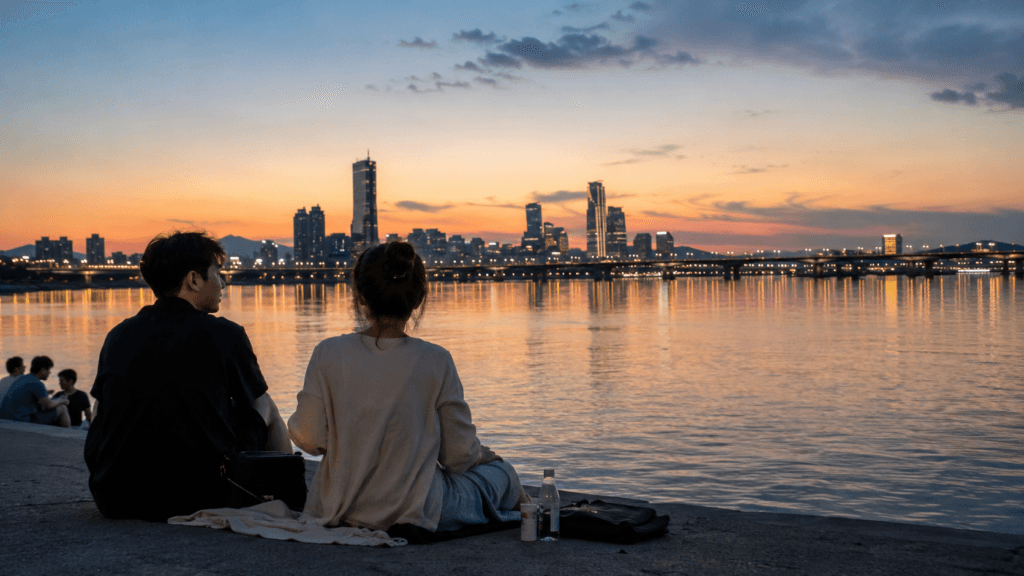
Seoul deserves at least two different evenings.
Spend one beside the Han River or in a lively neighborhood. Use another for a major viewpoint, night market, or architectural area.
The Han River
The Han River is not one attraction with one correct entrance.
Different parks fit different routes:
- Mangwon for Hongdae and market food
- Ttukseom for Seongsu
- Yeouido for central river views
- Banpo for evening atmosphere and seasonal fountain shows
- Jamwon for a quieter walk in southern Seoul
Spring and autumn are ideal for picnics. Summer evenings can still be humid, while winter wind makes the riverside feel much colder than nearby streets.
Convenience-store ramen is popular, but it is not compulsory. Fried chicken, kimbap, market snacks, or a drink work equally well.
Choose One Major Viewpoint
N Seoul Tower, Seoul Sky, and SEOULDAL all offer elevated views, but most travelers only need one.
| Viewpoint | Best reason to choose it |
|---|---|
| N Seoul Tower | Namsan walk and classic central Seoul views |
| Seoul Sky | High indoor observatory and a Jamsil day |
| SEOULDAL | Short aerial experience above Yeouido |
N Seoul Tower works well after Myeongdong or a Namsan walk. Visitors can enjoy city views from the surrounding park without necessarily entering the paid observatory.
Seoul Sky fits naturally with Bongeunsa, COEX, Seokchon Lake, or Lotte World.
SEOULDAL is a newer experience above Yeouido Park. The tethered helium balloon offers a short aerial view over the Han River, but operation depends heavily on wind and weather. Treat it as a flexible option rather than the foundation of an evening.
Three viewpoints would provide three sets of city lights and one increasingly tired traveler.
Dongdaemun Design Plaza
DDP is most appealing after sunset, when its curved exterior and surrounding city lights become more dramatic.
It is a good choice for architecture, exhibitions, fashion events, and night photography. Visitors with no interest in design may not need to cross the city solely for it.
Pair DDP with Gwangjang Market, Cheonggyecheon, or Dongdaemun shopping.
Shopping and K-Beauty
Shopping can easily become a major part of a Seoul trip.
Plan honestly. Myeongdong, Seongsu, department stores, and beauty appointments all take longer than they appear on an itinerary.
Where to Shop
Myeongdong provides the easiest concentration of well-known Korean skincare and cosmetics brands. Promotions change constantly, so compare bundle prices instead of assuming the largest discount sign gives the lowest final cost.
Seongsu is better for newer labels, design-heavy stores, temporary launches, and brand experiences. The trade-off is that current pop-up information needs to be checked shortly before visiting.
Department stores are useful for premium beauty counters, fashion, food halls, and tax-free services. Underground shopping centers suit budget clothing and accessories, although quality varies.
COEX offers a convenient indoor option during bad weather. Starfield Library is attractive but often crowded, so it is best visited when already in the area rather than as the only reason for a cross-city journey.
Beauty Treatments
Facials, scalp treatments, color analysis, makeup services, dermatology, and hair appointments are increasingly common additions to Seoul trips.
Research providers carefully, especially for medical or invasive procedures. Confirm the full price, consultation language, recovery time, and whether the treatment could affect outdoor plans.
A strong skin treatment immediately before a sunny palace day is rarely an elegant piece of scheduling.
Culture Beyond the Palaces
Palaces introduce royal history, but Seoul’s culture is much broader than historic architecture.
National Museum of Korea
The National Museum of Korea is one of the city’s strongest indoor attractions.
Its permanent collection covers archaeology, ceramics, sculpture, Buddhist art, painting, and wider Asian history. The museum is large, so choose the galleries that genuinely interest you rather than attempting to see every room.
It pairs well with Yongsan, Itaewon, or Hannam-dong and works especially well during rain, summer heat, or winter cold.
Rotating Cultural Programs
Namsangol Hanok Village hosts seasonal workshops, performances, traditional customs, and food-related activities throughout the year.
The exact programs, prices, and dates change frequently. Check the current calendar before visiting rather than relying on an event listed in an older guide.
Seoul’s taekwondo performances also operate on selected dates rather than continuously. In 2026, weekend shows are scheduled during parts of spring and autumn, with a summer pause.
These experiences are most useful when they fit an existing Myeongdong or Namsan day.
Modern Seoul Experiences
A cultural activity does not need to involve a historic building.
A K-pop dance class, Korean cooking lesson, baseball game, traditional alcohol tasting, live music venue, or beauty workshop may reveal more about contemporary Seoul than another hour spent photographing a palace wall.
Korean baseball is particularly approachable even for visitors who do not follow the league. The food, chants, crowd, and atmosphere often matter more than the final score.
Seasonal Things to Do in Seoul in 2026
Seasonal programs should be treated as bonuses, not permanent attractions.
Seoul International Garden Show
From May 1 to October 27, 2026, the Seoul International Garden Show is taking place around Seoul Forest and Seongsu.
The event includes large garden installations and makes Seoul Forest more substantial than a quick walk before shopping.
Seoul Outdoor Library
The Seoul Outdoor Library returns at locations including Gwanghwamun Square, Cheonggyecheon, and Seoul Plaza during selected spring and autumn periods.
Schedules vary by venue, weather, and season. It is a pleasant addition when already exploring central Seoul, but not something to build an entire day around.
Palace Night Openings
Seasonal night openings at Gyeongbokgung and other palaces are announced separately.
Do not assume that palaces remain open late throughout the year. Check the official schedule shortly before the trip.
Temporary Exhibitions and Festivals
DDP, Gwanghwamun, Namsangol Hanok Village, Seoul Forest, and riverside parks regularly host festivals, exhibitions, workshops, and performances.
A quick event-calendar check shortly before travel can reveal something more memorable than the attraction originally planned for that afternoon.
Best Day Trips From Seoul
Day trips make the most sense when the Seoul stay lasts at least five to seven days.
Visitors with only three days should usually remain in the city.
DMZ or Suwon?
The DMZ is the strongest choice for travelers interested in the division of Korea, modern history, and the relationship between North and South Korea.
Access to controlled sites requires an approved tour, and routes can change because of military conditions, weather, or operational restrictions. Bring a passport and do not assume that the Joint Security Area will be included.
A DMZ tour from Seoul is the practical way to visit.
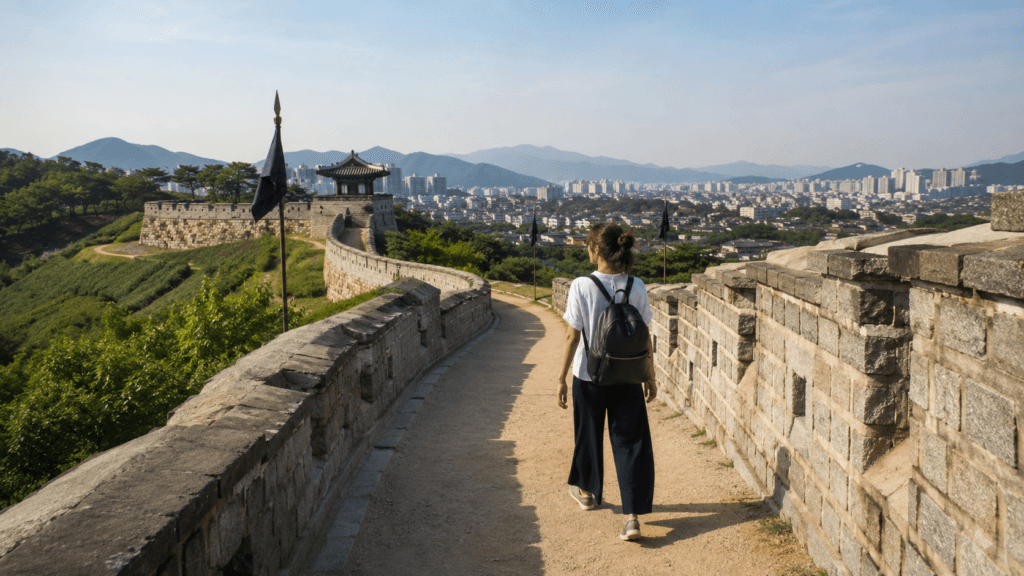
Suwon offers a completely different day. It is easier to explore independently and combines Hwaseong Haenggung, the fortress walls, Banghwasuryujeong Pavilion, and cafes around Haengnidan-gil.
The full fortress route is long enough to become a genuine walk, so comfortable shoes matter.
The DMZ is better for guided history. Suwon is better for independence, architecture, walking, and flexible timing.
Nami Island or Incheon?
Nami Island suits travelers looking for seasonal scenery, riverside paths, family activities, or a slower outdoor day.
The journey takes substantial time and becomes particularly busy during weekends and peak autumn foliage. It can be enjoyable on a longer Korea trip but is not essential during a short Seoul stay.
Incheon provides either a historic or modern day trip.
Chinatown, the Open Port area, Sinpo Market, and Wolmido create one route. Songdo offers modern architecture, waterfront parks, and a very different urban atmosphere.
Do not try to explore both deeply in the same day.
What Can You Skip on a Short Visit?
A short trip becomes easier once a few famous places are deliberately removed.
Multiple Observation Decks
Choose one.
N Seoul Tower, Seoul Sky, and SEOULDAL are different, but most visitors do not need all three.
A Distant Cafe
A beautiful cafe is rarely worth a long cross-city trip unless the surrounding neighborhood is also part of the plan.
Seoul contains more cafes than any reasonable itinerary can absorb.
Too Many Palaces
History enthusiasts may enjoy both Gyeongbokgung and Changdeokgung.
Most first-time visitors are satisfied with one major palace and the surrounding neighborhoods.
Garosu-gil as a Mandatory Stop
Visit when nearby or when a specific store matters.
It is no longer an automatic priority over Seongsu, Hannam, Hongdae, or Ikseon-dong.
A Day Trip During a Three-Day Stay
The DMZ, Suwon, and Nami Island all consume a large part of the day.
Seoul itself provides more than enough for three full days.
How to Combine Seoul Neighborhoods
Keeping each day within one broad area saves time and creates more natural routes.
Useful combinations include:
- Gyeongbokgung → Seochon → Bukchon → Insadong → Ikseon-dong
- Namdaemun → Myeongdong → Namsan
- Hongdae → Yeonnam-dong → Mangwon Market → Mangwon Hangang Park
- Seoul Forest → Seongsu → Ttukseom Hangang Park
- Bongeunsa → COEX → Seokchon Lake → Lotte World Tower
- National Museum of Korea → Itaewon or Hannam-dong
- Gwangjang Market → Cheonggyecheon → DDP
Hongdae, Jamsil, Bukchon, and Gangnam do not belong in the same day simply because public transport connects them.
Choosing where to stay in Seoul also affects how much time disappears underground. Travelers comparing neighborhoods and current prices can check Seoul hotel options before finalizing the route.
Common Seoul Travel Mistakes
Planning Every Hour
Subway transfers, shopping, meals, and queues usually take longer than expected.
Leave room for changes.
Ignoring Closing Days
Palaces, museums, restaurants, and markets may close on different weekdays.
Check anything important before assigning it to a fixed date.
Following Old Bukchon Advice
Do not enter the restricted residential area before 10:00 a.m. or after 5:00 p.m.
Crossing the City for One Photograph
A famous library, cafe, staircase, or mural may not justify a long detour during a short visit.
Underestimating Summer Heat
Move palace courtyards, parks, hiking, and fortress walks to the morning or evening during July and August.
Treating Shopping as a Quick Stop
Myeongdong, Seongsu, COEX, and department stores can easily consume several hours.
FAQ
What Are the Best Things to Do in Seoul for First-Time Visitors?
Visit one major palace, explore a traditional neighborhood, eat at a market, spend time in Hongdae or Seongsu, walk beside the Han River, shop in Myeongdong, and choose one viewpoint.
Add a museum or day trip when the stay is longer.
How Many Days Do You Need in Seoul?
Three days covers the main highlights.
Five days offers the best balance for most first-time visitors, while seven days allows time for a day trip and slower neighborhood exploration.
Is Gyeongbokgung or Changdeokgung Better?
Gyeongbokgung is easier for a first visit because of its size, central location, and connections to Seochon and Gwanghwamun.
Changdeokgung is particularly appealing for visitors interested in architecture and the Secret Garden.
Which Seoul Market Is Best?
Gwangjang is the most famous.
Mangwon is convenient before a Han River picnic, Namdaemun is better for broader shopping, and Tongin fits naturally with Seochon.
Is Hongdae or Seongsu Better?
Hongdae is better for nightlife, entertainment, budget shopping, and younger energy.
Seongsu is better for fashion, beauty brands, cafes, design, and temporary pop-ups.
What Is the Best Day Trip From Seoul?
The DMZ is best for modern history and a guided experience.
Suwon is better for independent travel, fortress walks, architecture, and cafes.
Final Thoughts
The best things to do in Seoul are not simply the attractions with the longest queues or the most photographs online.
A first trip needs contrast.
See a palace, then eat lunch in a neighborhood. Spend one afternoon around new brands and polished cafes, then finish another beside the Han River with food from a market. Choose one major night view, one cultural experience, and one part of Seoul that was not already familiar before arrival.
More importantly, allow the city to interrupt the plan.
A restaurant may have a queue. A pop-up may have closed. A quiet street may feel more appealing than the next attraction.
Seoul rarely follows an itinerary perfectly, and the trip is usually better when it does not.