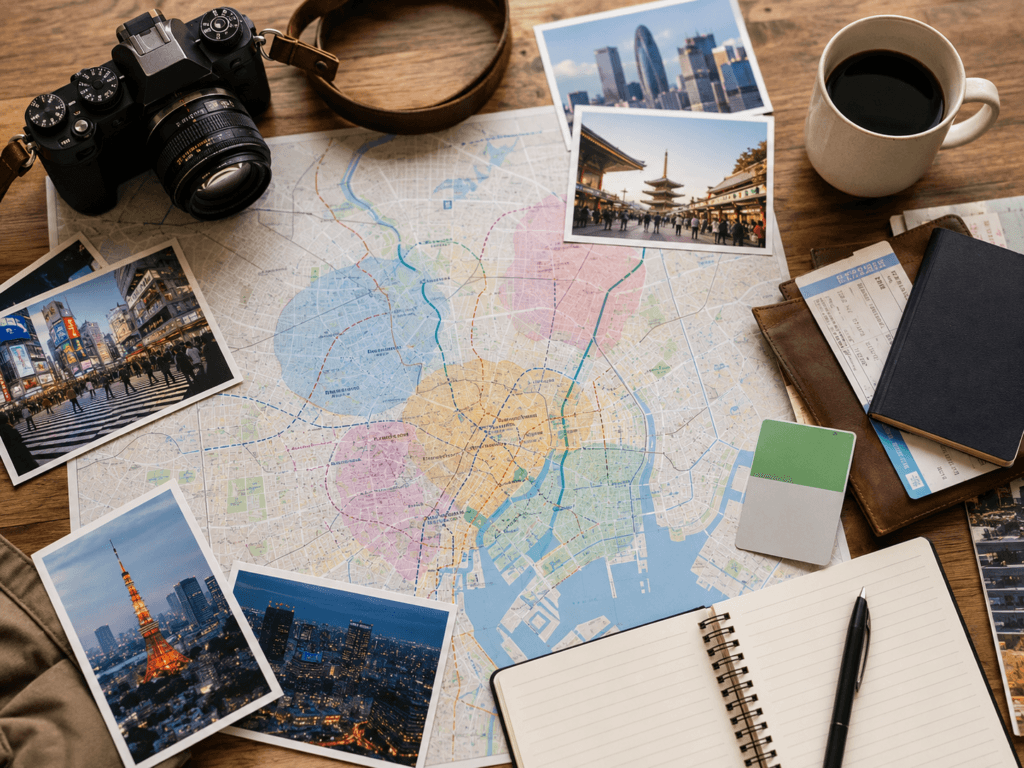
Planning a Tokyo itinerary sounds simple until Tokyo starts offering you more options.
Another train line.
Another ramen shop.
Another glowing street.
Another neighborhood that somehow deserves half a day.
Tokyo does not ask whether you want more choices. It simply opens another door and lets your itinerary slowly become a beautiful little monster.
For most first-time visitors, the best Tokyo itinerary is not about seeing everything. That is impossible unless you have several weeks, excellent shoes and a suspicious amount of confidence. The best Tokyo itinerary is about grouping neighborhoods wisely so you do not spend half your trip inside stations wondering why your “quick transfer” has three exits, two underground malls and the emotional complexity of a small airport.
With 3 days in Tokyo, focus on the classic first-time areas: Asakusa, Ueno, Akihabara, Shibuya, Harajuku, Shinjuku, Ginza and Tokyo Station.
With 4 days in Tokyo, add a modern culture day around Azabudai Hills, Tokyo Tower, Roppongi or a digital art experience.
With 5 days in Tokyo, add Tokyo Disney Resort, Kamakura, Yokohama, Nikko or a Mount Fuji day trip.
Tokyo is huge, but it becomes much easier when you stop planning by random attractions and start planning by areas.
If Tokyo is part of a longer Japan trip, start with our Japan itinerary 2026 guide before deciding how many nights to spend in the city. If you are still comparing Japan with other Asian routes, our Asia travel itinerary 2026 guide can help you choose the right region.
Quick Answer: Best Tokyo Itinerary
For most first-time visitors, the best Tokyo itinerary is:
- Day 1: Asakusa, Ueno and Akihabara
- Day 2: Shibuya, Harajuku and Shinjuku
- Day 3: Ginza, Tokyo Station, Roppongi or Tokyo Tower
- Day 4: teamLab Borderless, Azabudai Hills, Tokyo Tower or Odaiba/Toyosu
- Day 5: Tokyo Disney Resort, Kamakura, Yokohama, Nikko or Mount Fuji day trip
Here is the simple version:
| Trip Length | Best Route | Best For |
|---|---|---|
| 3 days | East Tokyo + West Tokyo + Central Tokyo | First-time highlights |
| 4 days | Add Azabudai Hills, Tokyo Tower or digital art | Better city pacing |
| 5 days | Add Disney or a day trip | Best flexible Tokyo plan |
| 1 to 2 days | Choose one or two areas only | Stopovers |
| 1 week | Tokyo plus slower neighborhoods and multiple day trips | Deeper city travel |
The sweet spot is 4 or 5 days. Three days works, but it is tight. Five days lets you enjoy Tokyo without your itinerary constantly waving a subway map at you.
Is Tokyo Good for First-Time Visitors?
Yes, Tokyo is one of the best cities in Asia for first-time visitors.
It is safe for most travelers, well connected by trains, full of excellent food, packed with interesting neighborhoods and surprisingly easy to enjoy once you understand the basic structure.
Tokyo is especially good for travelers who want:
- Food
- Shopping
- Anime, gaming and pop culture
- Museums and design
- Night views
- Cafes
- Traditional temples
- Clean public transport
- Easy day trips
- Theme parks
- Solo travel
- City photography
- Convenience store joy at strange hours
But Tokyo is not “easy” in the way a small city is easy.
Tokyo is easy because it works.
Tokyo is hard because it works in every direction at once.
A first-time visitor can have an amazing trip here, but only if the itinerary has boundaries. Shibuya, Asakusa, Shinjuku, Ginza and Akihabara are not all neighbors. Tokyo’s train system is excellent, but excellent transport should not become an excuse to bounce across the city like a confused pinball.
The best Tokyo itinerary groups nearby areas together. That one choice can save hours.
If you are still deciding whether Japan or Southeast Asia fits your travel style better, our East Asia vs Southeast Asia guide can help you compare the mood, budget and route style.
How Many Days Do You Need in Tokyo?
You need at least 3 days in Tokyo for a good first visit.
A realistic guide:
- 1 day: Choose one side of Tokyo only
- 2 days: East Tokyo and West Tokyo highlights
- 3 days: Best minimum for first-time visitors
- 4 days: Better for culture, views and modern attractions
- 5 days: Best for adding Disney or a day trip
- 1 week: Great for slower neighborhoods and deeper exploring
Three days gives you the main highlights, but it will feel fast. Four days gives the city more breathing room. Five days lets you add one major extra without stuffing your schedule like a convenience store rice ball that has seen too much pressure.
If you only have 2 days, do not try to “finish Tokyo.” Choose Asakusa/Ueno/Akihabara for one day and Shibuya/Harajuku/Shinjuku for the other.
If you have 5 days, Tokyo becomes much easier. You can add Tokyo Disney Resort, Kamakura, Yokohama, Nikko, Mount Fuji or a slower neighborhood day.
Where to Stay in Tokyo
Where you stay in Tokyo matters because the city is large.
A good hotel location can save time every day. A cheaper hotel far from useful train lines can quietly steal your mornings, evenings and patience.
For first-time visitors, these areas are usually the easiest:
Shinjuku
Shinjuku is one of the most convenient areas for first-time visitors.
It is good for:
- Nightlife
- Food
- Shopping
- Transport
- Day trips
- Easy access to many parts of Tokyo
Shinjuku Station is huge. It can feel like a city pretending to be a station. But once you learn your exit and hotel direction, the area is extremely useful.
Stay in Shinjuku if you want energy, convenience and a strong first Tokyo base.
Shibuya
Shibuya is great for travelers who want fashion, youth culture, shopping, cafes, nightlife and easy access to Harajuku, Omotesando and Ebisu.
It is lively, busy and very Tokyo.
Stay in Shibuya if you want your trip to feel modern, bright and full of movement.
Ginza / Tokyo Station
Ginza and Tokyo Station are polished and practical.
They work well for:
- Shopping
- Restaurants
- Airport access
- Shinkansen connections
- Upscale hotels
- Clean city atmosphere
This area is less chaotic than Shinjuku or Shibuya and can be very convenient for travelers who want a smoother base.
Stay here if you care about comfort, train connections and a calmer central location.
Asakusa / Ueno
Asakusa and Ueno are good for travelers who want traditional atmosphere, temples, markets, museums and slightly more relaxed city energy.
They are also useful for Narita Airport access.
Stay here if you want old Tokyo, easier sightseeing and a slightly less glossy base.
Roppongi / Akasaka
Roppongi and Akasaka can be good for nightlife, restaurants, museums, Tokyo Tower, Azabudai Hills and central access.
Stay here if you want a modern central base with food, art and evening options.
Simple Recommendation
For most first-time visitors:
- Choose Shinjuku for convenience and nightlife
- Choose Shibuya for energy and shopping
- Choose Ginza / Tokyo Station for polish and transport
- Choose Asakusa / Ueno for old Tokyo and better value
The best area is not the one that appears most often on social media. It is the one that fits your actual itinerary.
3-Day Tokyo Itinerary
A 3-day Tokyo itinerary should be focused and area-based.
The best route is:
- Day 1: Asakusa, Ueno and Akihabara
- Day 2: Shibuya, Harajuku and Shinjuku
- Day 3: Ginza, Tokyo Station, Roppongi or Tokyo Tower
Best for 3 days: do not chase every district. Choose one east-side day, one west-side day and one central Tokyo day.
This gives you old Tokyo, modern Tokyo and central Tokyo without dragging your suitcase-shaped soul across the city too many times.
Day 1: Asakusa, Ueno and Akihabara
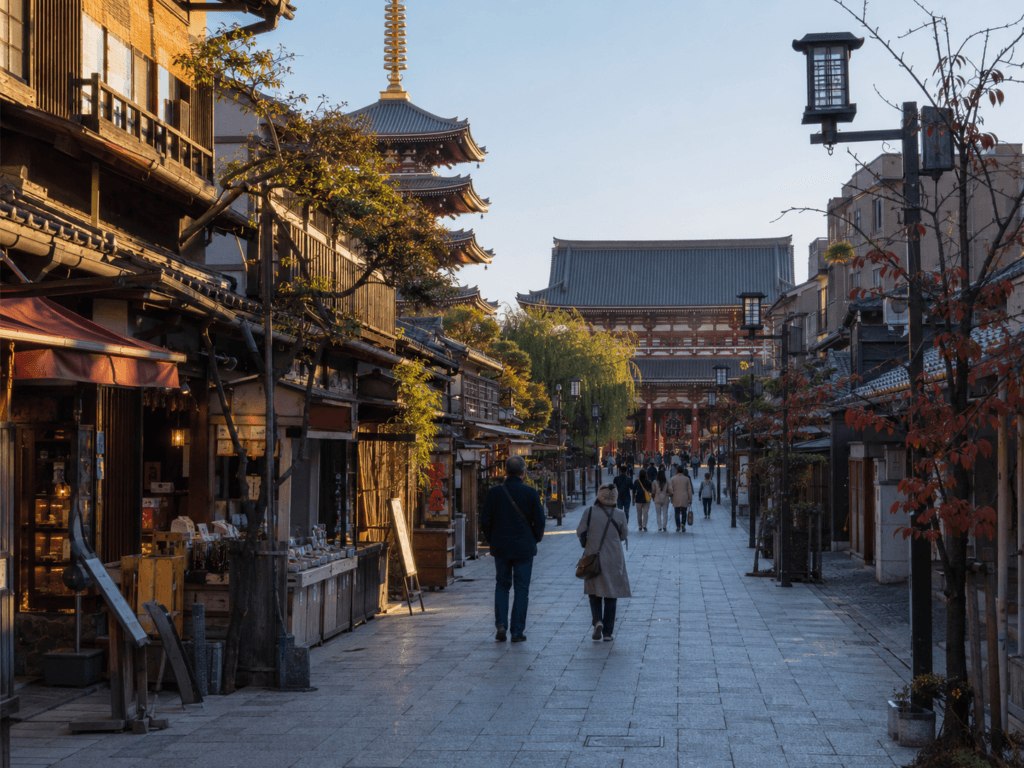
Start with East Tokyo.
This day works well because Asakusa, Ueno and Akihabara are relatively easy to connect and give you three different versions of Tokyo.
Morning: Asakusa
Start in Asakusa.
Visit Senso-ji, walk through the shopping streets around the temple and enjoy the older atmosphere of Tokyo. Come early if you want fewer crowds.
Asakusa is one of the best first stops because it gives you traditional Tokyo before the city turns into neon, department stores and train transfers with opinions.
Things to do in Asakusa:
- Senso-ji Temple
- Kaminarimon Gate
- Nakamise shopping street
- Hoppy Street
- Sumida River walk
- Tokyo Skytree view from across the river
Do not rush Asakusa. It is touristy, yes, but it still feels like a proper opening scene.
Afternoon: Ueno
Next, go to Ueno.
Ueno is good for parks, museums, markets and a more relaxed city feeling.
Things to do in Ueno:
- Ueno Park
- Tokyo National Museum
- Ameya-Yokocho Market
- Ueno Zoo, if traveling with kids
- Small food streets around the station
If you like museums, Ueno can take half a day by itself. If you prefer food and markets, keep it lighter and spend more time around Ameya-Yokocho.
Evening: Akihabara
Finish in Akihabara.
Akihabara is best for anime, gaming, electronics, arcades and pop culture. Even if you are not a hardcore fan, it is worth a short visit because the area has a completely different rhythm from Asakusa and Ueno.
Things to do in Akihabara:
- Game centers
- Anime and manga shops
- Electronics stores
- Figure shops
- Themed cafes
- Evening street photography
Akihabara is not for everyone, but it is very Tokyo. If your suitcase has a secret compartment for collectibles, this is where it may start making decisions without you.
Day 2: Shibuya, Harajuku and Shinjuku
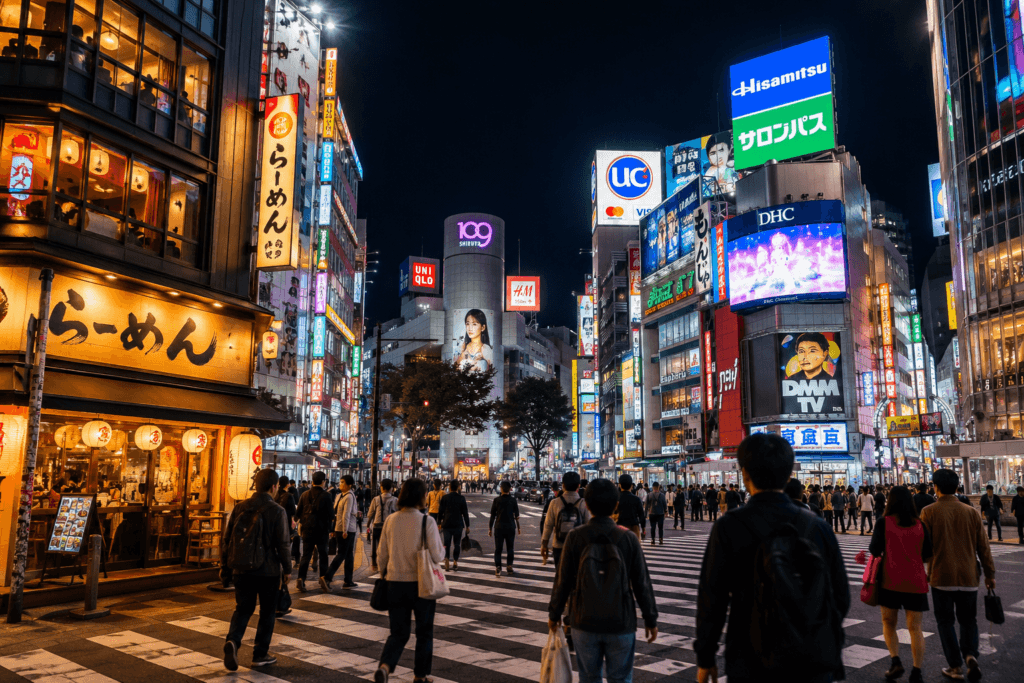
Day 2 is West Tokyo.
This is the bright, fast, fashionable and crowded version of Tokyo many travelers imagine before arriving.
Morning: Harajuku and Meiji Shrine
Start at Meiji Shrine.
It gives you a quiet forest walk before the day becomes louder. Then continue to Harajuku and Omotesando.
Things to do:
- Meiji Shrine
- Yoyogi Park
- Takeshita Street
- Omotesando
- Cat Street
- Cafes and fashion shops
Harajuku can be crowded, especially on weekends. If Takeshita Street feels too packed, escape toward Omotesando or Cat Street for a calmer route.
Afternoon: Shibuya
Move to Shibuya.
Shibuya is one of Tokyo’s most famous areas, but it is better when you give it enough time instead of using it only for a quick crossing photo.
Things to do:
- Shibuya Crossing
- Hachiko statue
- Shibuya Sky
- Shibuya Scramble Square
- Center Gai
- Miyashita Park
- Shopping and cafes
Shibuya Sky is one of Tokyo’s best city-view stops. Sunset slots are popular, so book ahead if you want the city to shift from daylight to neon while you are above it.
Shibuya is not just one crossing. It is a whole district of food, fashion, rooftops, side streets and “wait, where did that hour go?”
Evening: Shinjuku
Finish in Shinjuku.
Shinjuku is ideal at night because the lights, food streets and city energy all wake up.
Things to do:
- Omoide Yokocho
- Kabukicho
- Golden Gai
- Shinjuku Gyoen, if visiting earlier in the day
- Tokyo Metropolitan Government Building area
- Tokyo Night & Light projection mapping, if timing works
For a free night option, check Tokyo Night & Light at the Tokyo Metropolitan Government Building. It is a good low-cost evening add-on if your feet still have battery left.
Shinjuku is fun, but it is easy to get disoriented. Save your hotel location, know your station exit and do not assume “Shinjuku Station” means one simple place. It is not a station. It is a transport kingdom wearing a station hat.
Day 3: Ginza, Tokyo Station, Roppongi or Tokyo Tower
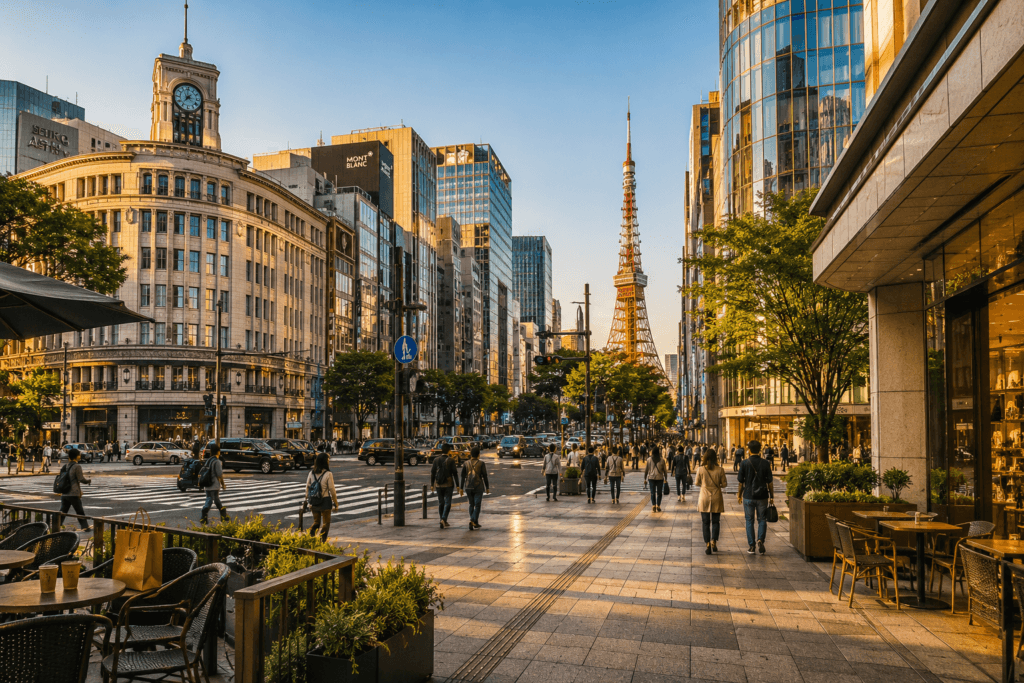
Day 3 should be a little smoother.
You have two good options:
Option A:
Ginza + Tokyo Station + Imperial Palace area
Option B:
Roppongi + Tokyo Tower + Azabudai Hills
Choose based on your travel style.
Option A: Ginza and Tokyo Station
Choose this option if you like shopping, food, architecture and polished city streets.
Things to do:
- Ginza shopping streets
- Department store food halls
- Tsukiji Outer Market nearby
- Tokyo Station
- Marunouchi
- Imperial Palace East Gardens, if open
- Character Street or ramen streets near Tokyo Station
Ginza is clean, elegant and easy to walk. Tokyo Station is excellent for food, shopping and onward travel planning.
This is a good final day if you are catching a train to Kyoto or Osaka later.
Option B: Roppongi, Tokyo Tower and Azabudai Hills
Choose this option if you want city views, museums, modern architecture and a more contemporary Tokyo day.
Things to do:
- Roppongi Hills
- Mori Art Museum, depending on exhibition
- Tokyo Tower
- Azabudai Hills
- teamLab Borderless
- Cafes and restaurants
If you want a digital art experience, remember that teamLab Borderless is now at Azabudai Hills, not Odaiba. It works well on a Roppongi, Tokyo Tower or Azabudai Hills day.
This route is a good way to make Tokyo feel modern without turning the whole day into shopping.
4-Day Tokyo Itinerary
A 4-day Tokyo itinerary is much better than 3 days.
The best route is:
- Day 1: Asakusa, Ueno and Akihabara
- Day 2: Shibuya, Harajuku and Shinjuku
- Day 3: Ginza, Tokyo Station, Roppongi or Tokyo Tower
- Day 4: Azabudai Hills, teamLab Borderless, Odaiba or Toyosu
With 4 days, Tokyo finally stops feeling like a race.
Day 4 Option A: Azabudai Hills, teamLab Borderless and Tokyo Tower
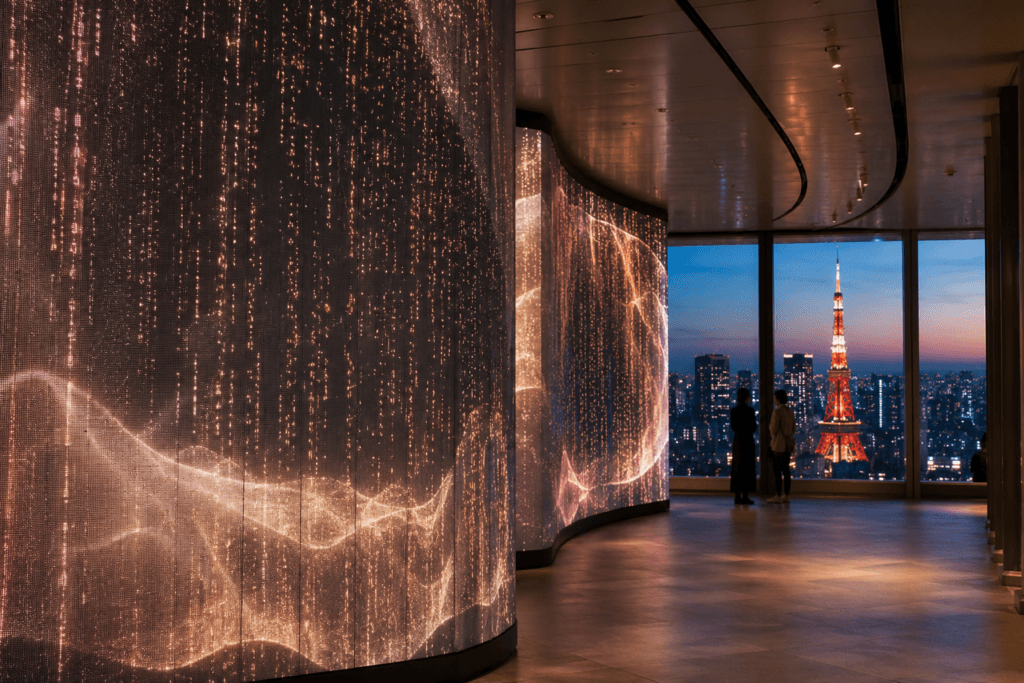
This is the best modern Tokyo option.
Start around Azabudai Hills, visit teamLab Borderless if you have tickets, then continue to Tokyo Tower or Roppongi.
This day works well because the areas are close enough to connect without turning the afternoon into a subway puzzle.
Suggested plan:
- Morning: Slow start, coffee or nearby neighborhood walk
- Midday: teamLab Borderless
- Afternoon: Azabudai Hills and nearby food/cafes
- Evening: Tokyo Tower or Roppongi
Book digital art attractions ahead, especially on weekends and holidays.
Do not plan this as a casual “maybe” if it is important to you. Tokyo’s popular attractions enjoy selling out just when your itinerary starts feeling confident.
Day 4 Option B: Odaiba and Toyosu
Choose this if you want waterfront views, malls, markets, museums or a more open city day.
Things to do:
- Toyosu Market area
- TeamLab Planets, if operating and part of your plan
- Odaiba waterfront
- Rainbow Bridge views
- Shopping malls
- Bay area evening views
This route is more spread out than Azabudai Hills and Roppongi, but it can be fun if you want a different side of Tokyo.
Day 4 Option C: Slow Neighborhood Day
If your first 3 days were busy, use Day 4 for slower neighborhoods.
Good options:
- Kichijoji and Inokashira Park
- Nakameguro and Daikanyama
- Shimokitazawa
- Yanaka
- Kagurazaka
- Koenji
This is the Tokyo many travelers remember most. Not because it has the biggest landmark, but because it lets you breathe, eat, wander and accidentally find a cafe that did not shout for your attention.
5-Day Tokyo Itinerary
A 5-day Tokyo itinerary gives you real flexibility.
The best route is:
- Day 1: Asakusa, Ueno and Akihabara
- Day 2: Shibuya, Harajuku and Shinjuku
- Day 3: Ginza, Tokyo Station, Roppongi or Tokyo Tower
- Day 4: Azabudai Hills, teamLab Borderless, Odaiba or slow neighborhoods
- Day 5: Tokyo Disney Resort or a day trip
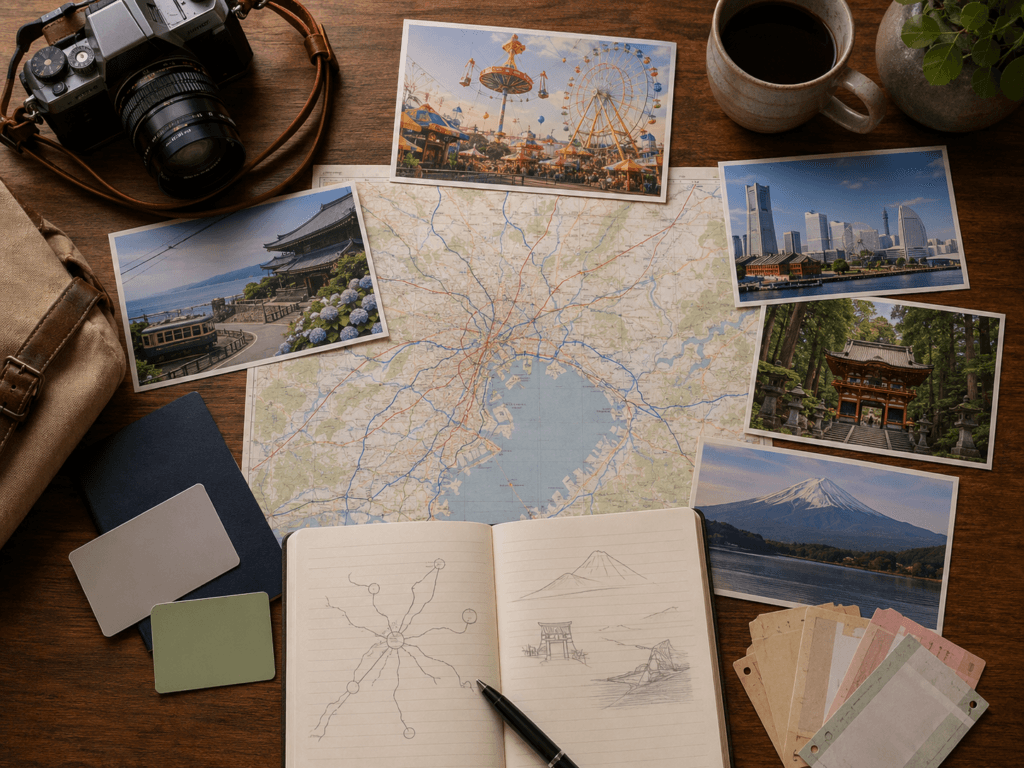
Day 5 is your choice day.
Pick one major option. Do not try to do Disney in the morning, Kamakura in the afternoon and Shinjuku at night unless your travel style is “chaos with snacks.”
Option 1: Tokyo Disney Resort
Tokyo Disney Resort deserves a full day, not a half-day squeezed between Shibuya and Asakusa.
If Disney is a priority, build it as a separate day and check the official ticket calendar before choosing your date.
You can choose:
- Tokyo Disneyland
- Tokyo DisneySea
Tokyo Disneyland is classic Disney. Tokyo DisneySea feels more distinctive and is often a favorite among adult travelers.
Tokyo DisneySea is often the more distinctive choice for adult travelers and first-time visitors because it feels unique to Japan. Fantasy Springs and the Tokyo DisneySea 25th anniversary period make DisneySea especially worth considering in 2026.
If you choose Disney, keep the evening flexible. You may return tired, happy and slightly confused about how many snacks one person can emotionally justify.
Do not place Disney after a full Shibuya and Shinjuku day unless your idea of vacation includes walking through the park with the energy of a tired suitcase.
Option 2: Kamakura
Kamakura is one of the easiest day trips from Tokyo.
It is good for temples, the Great Buddha, small streets, cafes and coastal scenery.
Choose Kamakura if you want:
- Temples
- A slower atmosphere
- Coastal scenery
- Easy train access
- A classic day trip without too much stress
Kamakura is a strong choice for travelers who want a break from the city without going too far.
Option 3: Yokohama
Yokohama is close to Tokyo and easy to visit.
It is good for:
- Waterfront views
- Chinatown
- Cup Noodles Museum, if interested
- Red Brick Warehouse area
- Minato Mirai
- A relaxed evening
Yokohama is less intense than Tokyo and works well as a half-day or easy full-day trip.
Option 4: Nikko
Nikko is more ambitious but rewarding.
It is good for:
- Shrines
- Forest scenery
- History
- Waterfalls and nature, if extending the day
- Autumn color, depending on timing
Nikko needs more planning and an earlier start. It is not the day trip to choose if you want a lazy morning.
Option 5: Mount Fuji Day Trip
A Mount Fuji day trip is possible, but weather matters.
Choose this only if you understand that Mount Fuji may hide behind clouds like it has a personal privacy policy.
Popular areas include:
- Kawaguchiko
- Hakone
- Fuji Five Lakes area
For a first Tokyo trip, Mount Fuji works best if you really care about the view and are willing to accept weather risk.
Best Time to Visit Tokyo
Tokyo is a year-round city, but the best seasons for first-time visitors are usually spring and autumn.
Spring
Spring is one of the most popular times to visit Tokyo.
Cherry blossoms usually draw big crowds, especially around parks and rivers. The city is beautiful, but hotel prices can rise and popular areas can get packed.
Good spring areas include:
- Ueno Park
- Chidorigafuchi
- Meguro River
- Shinjuku Gyoen
- Sumida River
- Yoyogi Park
Spring is wonderful, but do not build your entire trip around one exact blossom date. Flowers do not read your spreadsheet.
Summer
Summer in Tokyo can be hot and humid.
June may bring rainy-season weather, while July and August can be sweaty, lively and festival-heavy. Tokyo still works in summer, but you need indoor breaks, light clothing and realistic walking plans.
Plan museums, malls, cafes, department stores and indoor attractions during the hottest part of the day.
Your itinerary should not pretend humidity is a minor side character. It is very much in the cast.
Autumn
Autumn is one of the best times to visit Tokyo.
October and November are usually comfortable for walking, food, parks and city exploring. Autumn leaves often arrive later in Tokyo than in mountain areas, but the city still becomes beautiful.
Good autumn areas include:
- Shinjuku Gyoen
- Meiji Jingu Gaien
- Rikugien
- Koishikawa Korakuen
- Ueno Park
- Imperial Palace area
Autumn is one of the easiest seasons for a first Tokyo trip.
Winter
Winter can be a good time to visit Tokyo.
The weather is cold but often clear. City views can be excellent, illuminations are common and indoor attractions are easy to enjoy.
Winter is good for:
- Shopping
- Food
- Museums
- Night views
- Illuminations
- Fewer crowds than peak spring and autumn periods
Tokyo in winter is not beachy, obviously. But it is crisp, bright and very good at making hot ramen feel like a life decision.
How to Get Around Tokyo
Tokyo’s train and subway system is excellent.
It is also large enough to make first-time visitors briefly question whether they are in a station or an underground nation-state.
The key is simple:
Use navigation apps, group your sightseeing by area and avoid unnecessary cross-city jumps.
IC Cards
For most first-time visitors, an IC card is the easiest way to move around Tokyo.
You tap in, tap out and avoid buying individual tickets for every ride.
Visitor-friendly options include Welcome Suica and TOURIST PASMO, but availability and sales locations can change. Check official airport or card information before arrival.
IC cards are useful for:
- Trains
- Subways
- Buses
- Convenience stores
- Vending machines
- Coin lockers in some stations
- Small payments at many places
An IC card does not make Tokyo small, but it does make movement smoother.
Tokyo Subway Ticket
The Tokyo Subway Ticket can be useful if your Tokyo days are subway-heavy.
It covers Tokyo Metro and Toei Subway lines for 24, 48 or 72 hours, depending on the ticket. But it does not cover every train in Tokyo.
This is the important part: Tokyo has JR lines, private railways, subways and more. A subway ticket is not a magic door to all transport.
Buy it if your planned routes use Tokyo Metro and Toei Subway often. Skip it if your route depends heavily on JR lines or private railways.
The ticket can save money. It can also become a small rectangle of confusion if you buy it without checking routes.
JR Lines
JR lines are useful in Tokyo, especially the Yamanote Line.
The Yamanote Line connects major areas such as:
- Shinjuku
- Shibuya
- Harajuku
- Ueno
- Tokyo Station
- Akihabara
- Shinagawa
- Ikebukuro
Many first-time visitors use both JR and subway lines during their stay.
Taxis
Taxis in Tokyo are clean and reliable, but expensive compared with trains.
Use taxis for:
- Late nights
- Short hops when tired
- Luggage-heavy transfers
- Rainy moments
- Family travel
- Areas where train transfers are annoying
Do not use taxis for everything unless your budget has been doing push-ups.
Haneda and Narita Airport Tips
Tokyo has two major international airport gateways:
- Haneda Airport
- Narita Airport
Haneda is closer to central Tokyo. Narita is farther away but still well connected.
Haneda Airport
Haneda is convenient for many Tokyo travelers.
It works well for:
- Shinjuku
- Shibuya
- Tokyo Station
- Ginza
- Shinagawa
- Asakusa, depending on route
Haneda is closer, so arrival day can feel easier. If you land late, staying near a useful train or monorail connection can save stress.
Narita Airport
Narita is farther from central Tokyo, so airport transfer planning matters more.
It works well with:
- Narita Express
- Keisei Skyliner
- Airport buses
- Local train options, depending on budget and destination
If you land at Narita, do not schedule a packed first evening. Airport transfer, immigration, luggage, train tickets and jet lag already form a small welcoming committee.
Arrival Day Advice
On arrival day, keep your plan simple.
Good arrival day ideas:
- Check in
- Get an IC card or transport setup
- Eat near your hotel
- Walk one nearby area
- Visit a convenience store
- Sleep before your itinerary becomes dramatic
Do not land at Narita in the afternoon and plan Shibuya, Asakusa, Shinjuku and Tokyo Tower that night. That is not ambition. That is jet lag wearing sunglasses.
Tokyo Disney Resort: Should You Add It?
Tokyo Disney Resort is worth adding if Disney is a priority for you.
But it needs a full day.
Tokyo Disney Resort includes:
- Tokyo Disneyland
- Tokyo DisneySea
Tokyo Disneyland is classic Disney. Tokyo DisneySea feels more distinctive and is often a favorite among adult travelers.
Tokyo DisneySea is often the more distinctive choice for adult travelers and first-time visitors because it feels unique to Japan. Fantasy Springs and the Tokyo DisneySea 25th anniversary period make DisneySea especially worth considering in 2026.
If you add Disney, place it on Day 5 of a Tokyo itinerary or as a separate day outside your main sightseeing plan.
Do not place Disney after a full Shibuya and Shinjuku day unless your idea of vacation includes walking through the park with the energy of a tired suitcase.
Tips:
- Buy tickets ahead
- Check the official calendar
- Choose Disneyland or DisneySea carefully
- Arrive early
- Keep the next morning lighter if possible
- Do not underestimate travel time to and from the resort
Disney is fun. Disney is also a full-body activity wearing cute ears.
Common Mistakes to Avoid
Mistake 1: Trying to See All of Tokyo in 3 Days
Tokyo is too big for that.
With 3 days, focus on classic areas. With 4 or 5 days, add extra neighborhoods, Disney or day trips.
Mistake 2: Not Grouping Areas
This is the biggest Tokyo mistake.
Do not visit Asakusa, Shibuya, Ginza, Akihabara and Shinjuku randomly in one day. Group nearby areas together.
Your future self, standing in a station corridor with 4 percent phone battery, will appreciate it.
Mistake 3: Booking a Bad Hotel Location
A cheap hotel far from useful transport can cost you time every day.
Stay near a station that connects well with your plans.
Mistake 4: Assuming One Train Pass Covers Everything
Tokyo transport is layered.
The Tokyo Subway Ticket can be useful, but it does not cover every train. IC cards are simpler for many visitors.
Mistake 5: Overpacking Shibuya and Shinjuku
Shibuya and Shinjuku both deserve time.
Do not treat them as quick photo stops. They are large areas with food, shops, stations, side streets, viewpoints and crowds.
Mistake 6: Leaving Popular Attractions Too Late
Book ahead for places like Shibuya Sky, Tokyo Disney Resort and popular digital art attractions, especially during peak periods.
Mistake 7: Ignoring Jet Lag
Tokyo is exciting, but your first day should be gentle.
Do not fight jet lag with a 14-hour sightseeing plan. Jet lag has experience. It has beaten stronger itineraries than yours.
FAQ: Tokyo Itinerary
How many days do you need in Tokyo?
You need at least 3 days in Tokyo for a good first visit. Four days is better, and 5 days is ideal if you want to add Disney or a day trip.
Is 3 days enough for Tokyo?
Yes, 3 days is enough for Tokyo highlights if you group areas wisely. A good 3-day route is Asakusa/Ueno/Akihabara, then Shibuya/Harajuku/Shinjuku, then Ginza/Tokyo Station/Roppongi or Tokyo Tower.
Is 4 days in Tokyo too much?
No, 4 days in Tokyo is not too much. It gives you enough time for major neighborhoods, city views, food, shopping and one modern attraction day.
Is 5 days in Tokyo enough?
Yes, 5 days is an excellent length for Tokyo. You can see the main areas and add Tokyo Disney Resort, Kamakura, Yokohama, Nikko or Mount Fuji as a day trip.
Where should first-time visitors stay in Tokyo?
Shinjuku, Shibuya, Ginza, Tokyo Station, Asakusa and Ueno are all good areas for first-time visitors. Shinjuku is best for convenience and nightlife. Ginza and Tokyo Station are best for polish and transport. Asakusa and Ueno are good for old Tokyo and value.
Should I visit Shibuya or Shinjuku?
Visit both if you can. Shibuya is better for youth culture, shopping and crossing views. Shinjuku is better for nightlife, food streets and transport connections.
Is Tokyo Disney Resort worth it?
Yes, Tokyo Disney Resort is worth it if Disney is a priority. Give it a full day and choose between Tokyo Disneyland and Tokyo DisneySea based on your interests.
Should I buy the Tokyo Subway Ticket?
Buy the Tokyo Subway Ticket if your routes use Tokyo Metro and Toei Subway lines often. If your itinerary uses many JR lines or private railways, an IC card may be simpler.
Which airport is better, Haneda or Narita?
Haneda is closer to central Tokyo and usually more convenient. Narita is farther away but well connected by train and bus.
What is the best time to visit Tokyo?
Spring and autumn are usually the best times to visit Tokyo. Spring is famous for cherry blossoms, while autumn has comfortable weather and seasonal color. Winter is also good for clear views and illuminations.
Final Thoughts: Tokyo Is Better When You Stop Chasing Everything
Tokyo is not hard because it lacks things to do.
Tokyo is hard because it has too many things to do.
A good Tokyo itinerary does not try to catch the whole city. It chooses smart areas, leaves space between neighborhoods and understands that one extra train transfer can quietly eat half an afternoon.
For 3 days, focus on Asakusa, Ueno, Akihabara, Shibuya, Harajuku, Shinjuku, Ginza and Tokyo Station.
For 4 days, add Azabudai Hills, Tokyo Tower, Roppongi or a digital art experience.
For 5 days, add Tokyo Disney Resort, Kamakura, Yokohama, Nikko or Mount Fuji.
Tokyo is the spark of many Japan trips. It is bright, organized, chaotic, delicious and slightly too confident in its ability to offer you another option.
Let the city be big.
Your itinerary does not have to be.