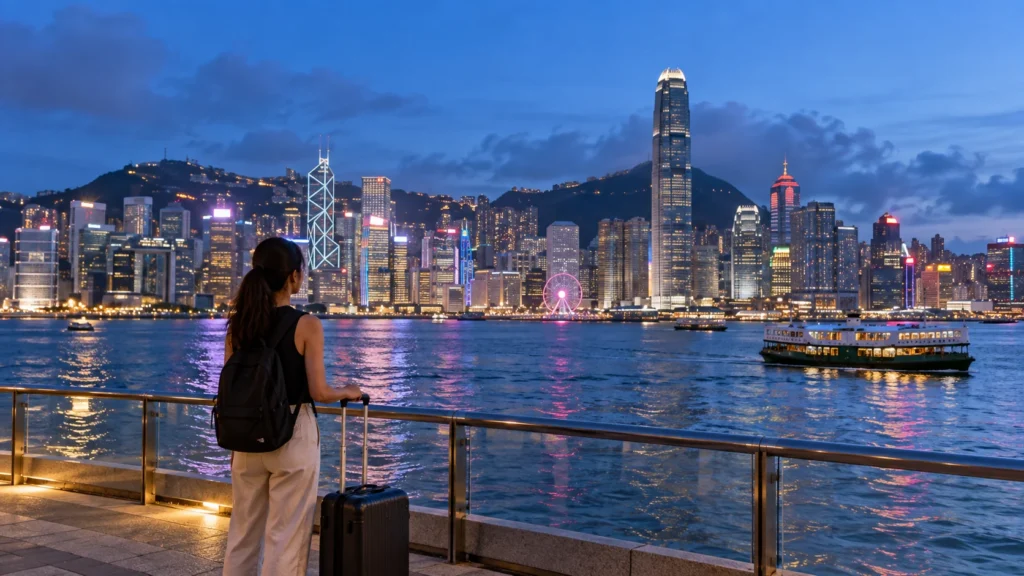
Choosing where to stay in Hong Kong is less about finding the “best neighborhood” and more about deciding which inconvenience you would rather avoid.
Tsim Sha Tsui puts the harbour and classic first-trip sights outside your door, but its busiest blocks can feel relentless. Central and Sheung Wan make Hong Kong Island dinners and nightlife easy, while hills and higher hotel prices quietly join the booking. Mong Kok gives you late-night food and a more local Kowloon rhythm, but calm is not really its brand.
For most first-time visitors, Tsim Sha Tsui is the safest all-round choice. Choose Central or Sheung Wan if your days lean toward Hong Kong Island, restaurants and bars. Choose Mong Kok if food, markets and value matter more than harbour views. Wan Chai and Causeway Bay are the useful middle options people often discover only after they have already booked somewhere else.
The 30-second decision
| Area | Best for | Main advantage | The catch |
|---|---|---|---|
| Tsim Sha Tsui | First visits, sightseeing, families | Harbour, Star Ferry and excellent transport | Crowded blocks and wildly variable room quality |
| Central / Sheung Wan | Food, nightlife, business, short luxury trips | Island attractions and Airport Express access | Higher prices, hills and weekend noise |
| Mong Kok / Yau Ma Tei | Food, markets, value, repeat visitors | Energetic Kowloon life late into the night | Dense streets and less convenient harbour access |
| Wan Chai | Balanced island base, conventions | Central location without always paying Central rates | Block-by-block atmosphere changes quickly |
| Causeway Bay | Shopping, dining, night owls | Everything stays close and lively | Heavy crowds and slower airport arrival |
If you want one answer without opening twelve map tabs, book within a genuine five-minute walk of Tsim Sha Tsui, Jordan, Central, Sheung Wan, Wan Chai or Causeway Bay MTR. “Five minutes” should come from recent guest reviews, not the hotel description. Hong Kong hotel copy has a generous relationship with walking speed.
Four questions that matter more than the star rating
1. Which side of the harbour will you use most?
If your priority list is the Peak, Central, SoHo, Wan Chai, Causeway Bay and south-island trips, sleeping on Hong Kong Island saves repeated crossings. If it is the Tsim Sha Tsui promenade, West Kowloon, Temple Street, Mong Kok and day trips north, Kowloon makes more sense.
Crossing Victoria Harbour is easy by MTR and much prettier by Star Ferry. It is still travel time. Do it for the view, not because a cheap room accidentally placed every dinner on the opposite shore.
2. How much luggage are you bringing?
Station names do not reveal stairs, long underground passages, steep streets or the final humid walk. Central station connects to a vast pedestrian network, while Tsim Sha Tsui and East Tsim Sha Tsui are linked but count as separate journeys when using a contactless bank card. A hotel beside the wrong end of a station can turn a tidy map pin into ten minutes of suitcase steering.
Check the exact entrance, lift access and road gradient. In Central and Sheung Wan, a 400-metre uphill walk can be more annoying than an extra MTR stop.
3. Do you need quiet before midnight?
Hong Kong is compact, and sound travels vertically. Rooms facing Nathan Road, bar streets or a market loading lane may stay noisy after the attractions close. Ask for a high floor or inward-facing room, but do not assume “city view” means peaceful. It often means you can see the traffic responsible for the sound.
4. Is the room actually large enough?
Square metres matter more than poetic room names. A “deluxe” room can still leave two open suitcases negotiating custody of the floor. Before paying, check room size, bed width, window type, lift access and whether taxes and service charges are included in the displayed total.
Tsim Sha Tsui: the easiest first-time Hong Kong base
Tsim Sha Tsui occupies the southern end of Kowloon, facing Hong Kong Island across Victoria Harbour. The promenade, Avenue of Stars, major museums, Star Ferry and dense shopping streets are all close together. This is the Hong Kong many first-time visitors imagined before arrival.
The area works because it gives you several transport choices. The Tsuen Wan Line runs directly to Central. East Tsim Sha Tsui connects toward the West Rail corridor. Ferries turn a routine crossing into one of the city’s best cheap views. Airport bus A21 serves the Nathan Road corridor, while the Airport Express reaches Kowloon Station farther west.
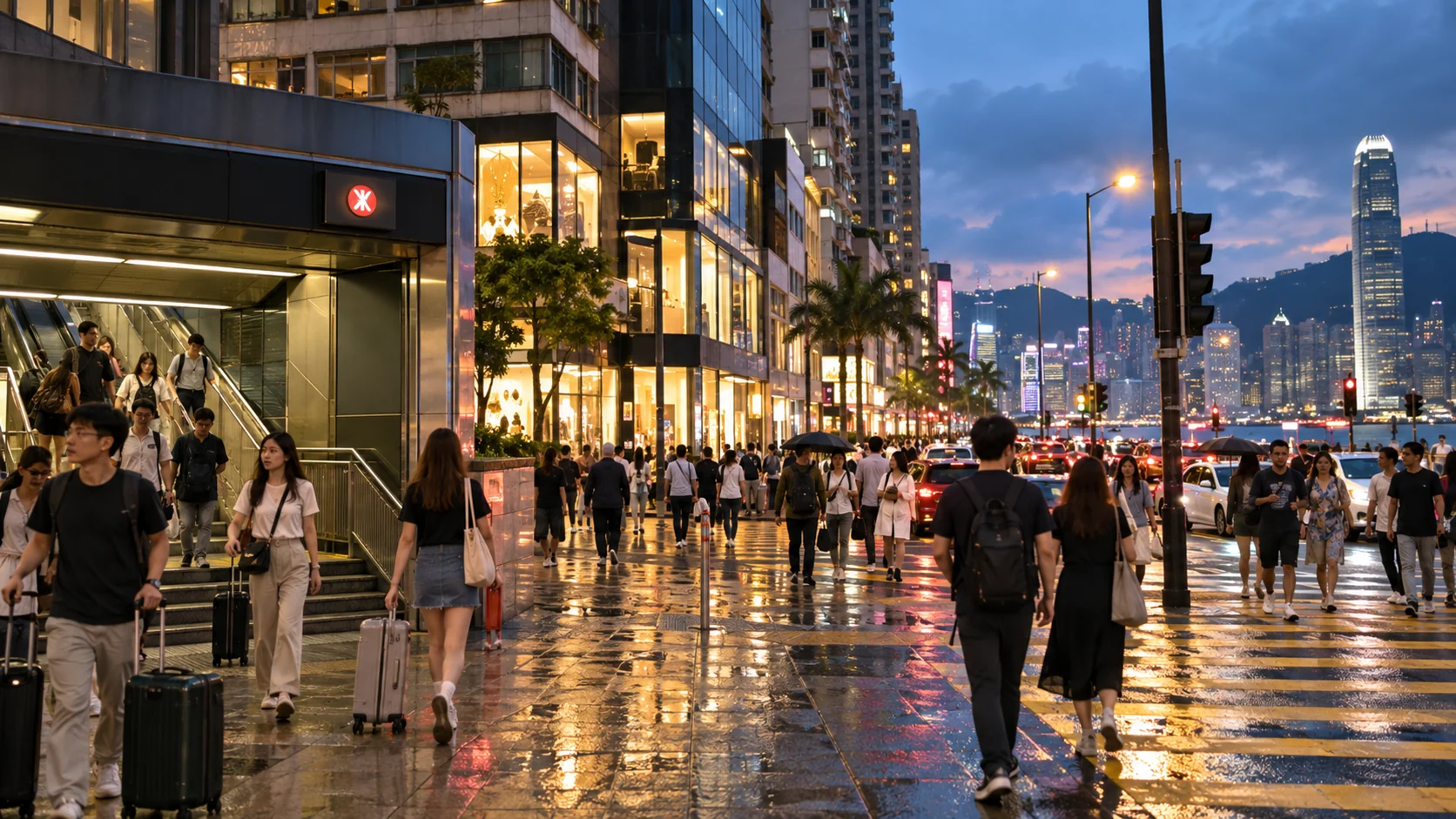
Where inside Tsim Sha Tsui?
- Near Salisbury Road and the waterfront: best for harbour views, museums and the Star Ferry. Expect luxury pricing and longer walks to some local food streets.
- Near Nathan Road and Tsim Sha Tsui MTR: best all-round convenience. It is busy from breakfast until late evening.
- Tsim Sha Tsui East: wider streets, many larger hotels and good promenade access. Confirm how far the property is from the MTR entrance you will actually use.
- Jordan: technically north of central Tsim Sha Tsui, but often the better-value choice. Temple Street and practical restaurants are close, and the red MTR line keeps sightseeing simple.
Good hotel shortlists: The Salisbury–YMCA of Hong Kong is known for an unusually practical waterfront position; Park Hotel Hong Kong is useful for Tsim Sha Tsui East; The Peninsula and Regent Hong Kong occupy the high-end harbour category. Around Jordan, Eaton HK is a strong lifestyle option. Availability and room categories change, so compare the exact dates rather than treating a hotel as permanently “budget” or “luxury.”
Who should not stay here?
Avoid the busiest Nathan Road blocks if you dislike tour groups, aggressive retail frontage or crowded pavements. Also read building and room reviews carefully at the lowest price points. A central address does not guarantee a full-service hotel, a generous lift or a room matching the glamour of the district.
Central and Sheung Wan: best for island dining and a polished short trip
Central is Hong Kong’s financial core, but the useful visitor zone spreads west into Sheung Wan and uphill into SoHo. Glass towers, old market streets, cocktail bars, galleries, the Mid-Levels Escalator and ferry piers share a surprisingly compact area.
Stay here when your ideal evening ends with dinner and drinks rather than a cross-harbour train. The Airport Express terminates at Hong Kong Station, making arrival particularly clean if your hotel is walkable or a short taxi ride away.
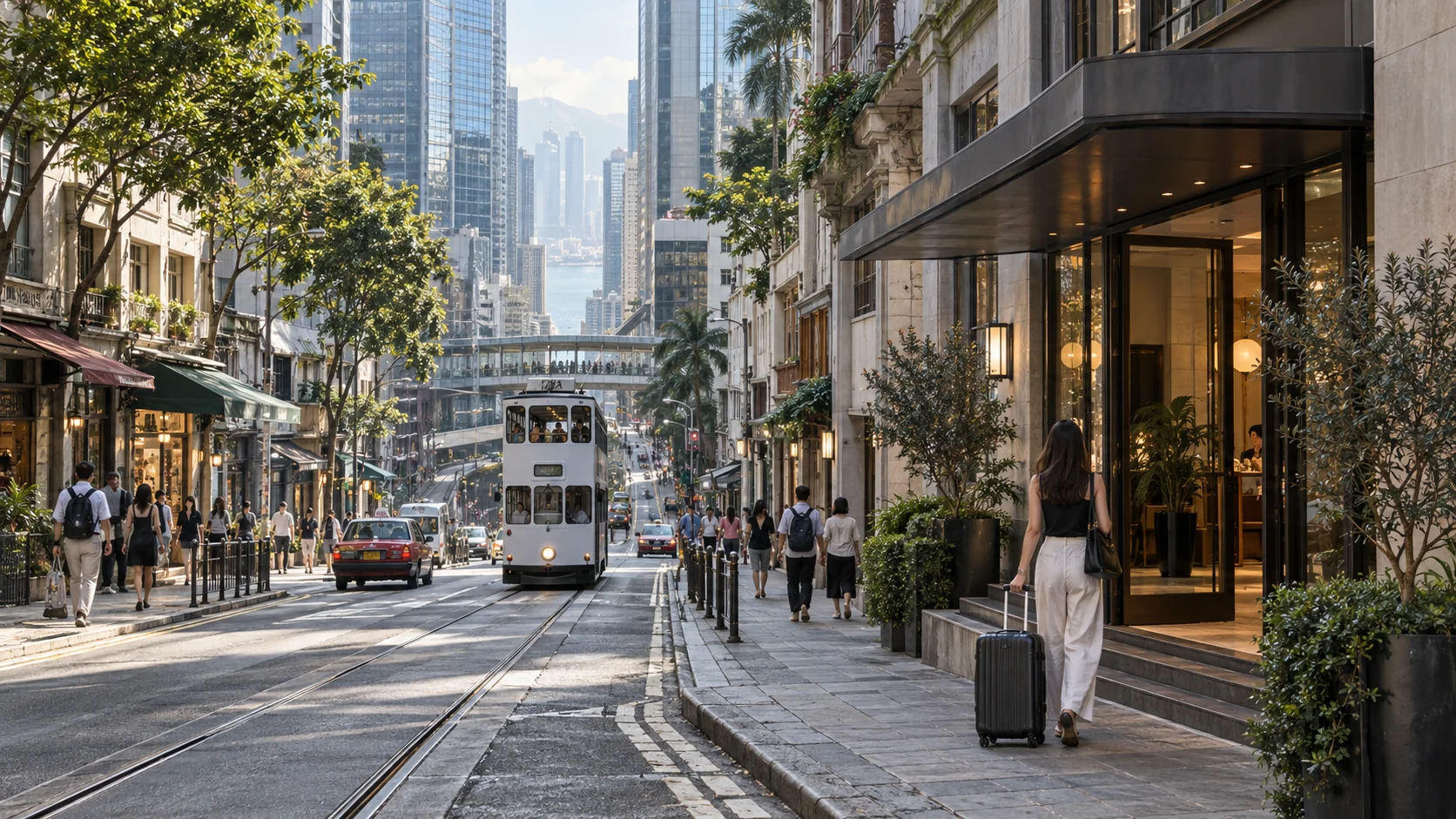
Central or Sheung Wan?
Central suits business travelers, short luxury stays and visitors who prioritize the Peak, Landmark shopping, ferries and high-end dining. Prices are usually higher and streets quieten unevenly after office hours.
Sheung Wan feels more residential and textured. It places you near dried-seafood streets, independent cafes, Man Mo Temple and western Central without fully living inside the office core. Hotel rates can be friendlier, though room sizes remain very Hong Kong.
Good hotel shortlists: Four Seasons Hong Kong and The Murray fit the luxury end around Central. Butterfly on Wellington is a more compact central option. In Sheung Wan, 99 Bonham and The Jervois offer apartment-style space, while iclub Sheung Wan is often considered for simpler stays.
The hill test
Open the map in terrain or street view before booking. A hotel described as “near Central” may sit above Queen’s Road, and the return from the MTR can feel very different at 11 p.m. The Mid-Levels Escalator helps only in specific directions and hours; it is transport infrastructure, not a personal uphill exemption.
Mong Kok and Yau Ma Tei: best for food, markets and value
Mong Kok delivers dense Kowloon energy without waiting for a postcard moment. Markets, sneaker shops, cha chaan tengs, dessert stops and late-night food sit under residential towers. The Hong Kong Tourism Board describes Yau Ma Tei, Tsim Sha Tsui and Mong Kok as one connected food-rich district, and that is how the area feels on foot: every few blocks change the menu and the crowd.
Hotels here often offer better space or facilities for the same money as Central, though “better value” never means universally cheap. Mong Kok station sits on the Tsuen Wan and Kwun Tong lines, making both Central and eastern Kowloon straightforward.
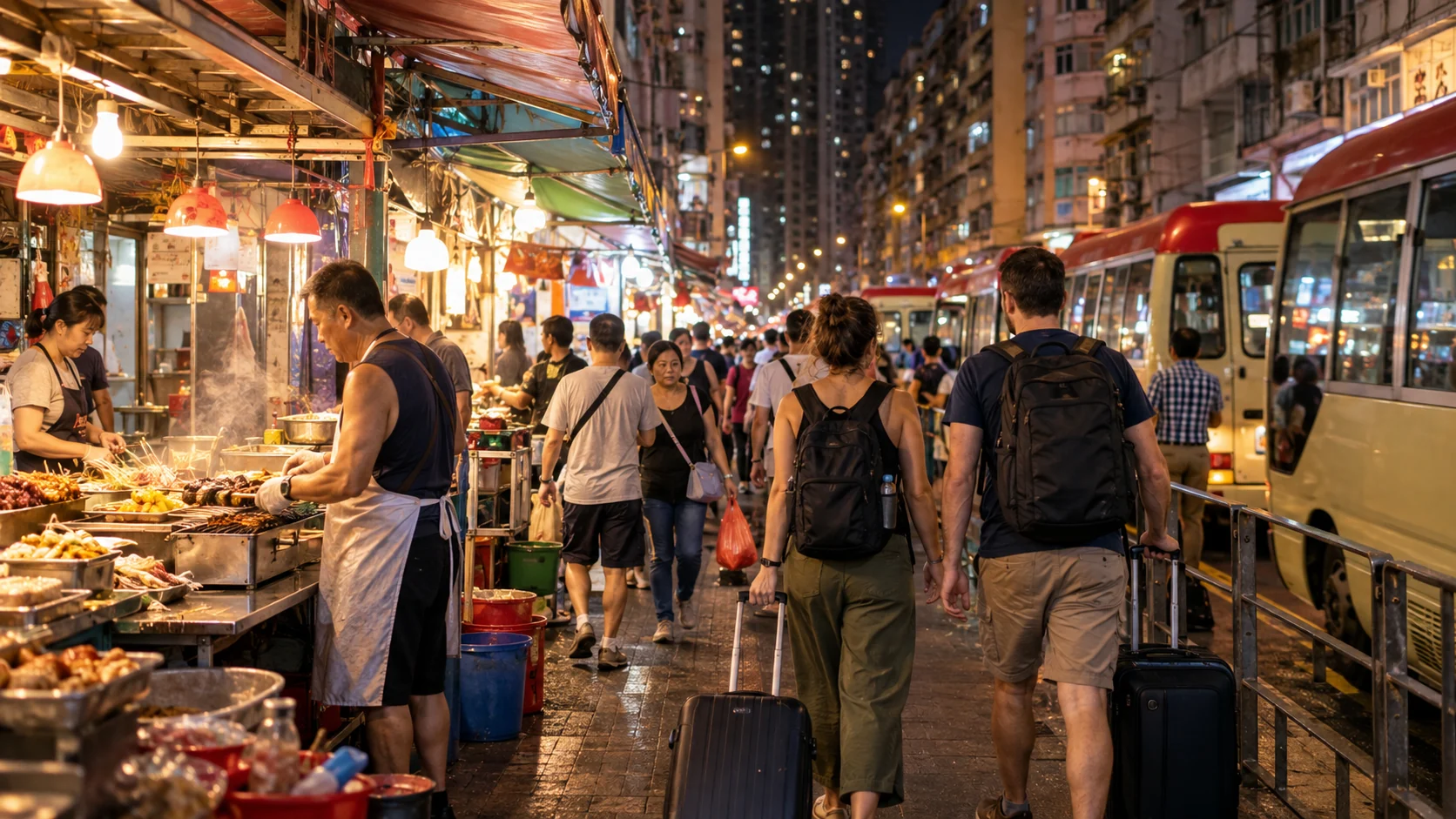
Pick the calmer edge, not the loudest pin
Staying directly beside a famous market sounds efficient until delivery carts, shoppers and cleaning crews share the lane. A property five to eight minutes from the action can produce much better sleep without losing the neighborhood.
Yau Ma Tei is a useful compromise. It is close to Temple Street and local restaurants, one MTR stop south of Mong Kok and walkable toward Jordan. It generally feels less commercially intense than the blocks around Mong Kok station.
Good hotel shortlists: Cordis, Hong Kong connects conveniently with the Mong Kok commercial core; Royal Plaza Hotel sits by Mong Kok East; Dorsett Mongkok is often considered by value-focused travelers but requires closer inspection of its exact walking and shuttle logistics. The Cityview near Yau Ma Tei is a practical location-first option.
Who will love it?
Food-motivated travelers, photographers, repeat visitors and anyone who wants to step outside into everyday city life. Who may not? Light sleepers, stroller users who dislike tight pavements, and travelers whose schedule is almost entirely on Hong Kong Island.
Wan Chai and Causeway Bay: the island alternatives
Wan Chai sits between Central and Causeway Bay and often delivers the best compromise on Hong Kong Island. The convention centre, tram, Star Ferry and MTR are useful, but the atmosphere changes from office towers to nightlife streets within minutes. Check the exact block. The Harbourview, Burlington Hotel, The Hari and Grand Hyatt represent very different price and style levels in the broader area.
Causeway Bay suits shoppers and travelers who like bright, late city energy. Restaurants, department stores and Victoria Park are close, but pavements and station passages become extremely busy. The Park Lane Hong Kong, Mira Moon and TUVE are useful names across luxury and boutique categories. For airport arrival, expect an extra connection or a longer road transfer than Central.
Families wanting more quiet might also consider Fortress Hill or North Point. They are less cinematic, often better value and still connected by the Island Line. That can be a smart trade if the hotel room itself matters more than stepping into a famous street.
Where I would stay by trip type
- First trip, three or four nights: Tsim Sha Tsui near the MTR, but outside the noisiest Nathan Road frontage.
- Couple focused on restaurants and bars: Sheung Wan or western Central.
- Food-first solo trip: Yau Ma Tei or Mong Kok.
- Family with children: Tsim Sha Tsui East, Jordan or a larger-room hotel near an accessible station.
- Business plus sightseeing: Central, Admiralty or Wan Chai.
- Shopping weekend: Causeway Bay for fashion and department stores; Mong Kok for street retail and sneakers.
- One-night airport stop: Central only if the Airport Express and city plans justify it; otherwise consider Tung Chung or an airport hotel instead of commuting for the skyline.
How to compare hotels without losing an afternoon
Search the same dates, room type and cancellation terms on at least two platforms. Sort by map only after setting a realistic total budget. Then check these six items:
- Total price including service charges and taxes
- Room size in square metres
- Recent reviews mentioning lifts, mould, street noise and air-conditioning
- Exact MTR entrance and whether it has lift access
- Refund deadline in Hong Kong local time
- Bed type—“double” and “queen” are not interchangeable promises
For current inventory, compare Hong Kong hotels on Agoda with the same dates on Trip.com’s Hong Kong hotel search. The cheaper headline is not always the cheaper refundable total.
Affiliate disclosure: Asia Travel Lab may earn a commission from eligible bookings made through the Agoda, Trip.com and Klook links in this article, at no additional cost to you. Recommendations are based on location and travel practicality, not commission level.
Airport arrival changes the value of each neighborhood
The Airport Express connects Hong Kong International Airport with Tsing Yi, Kowloon and Hong Kong stations. It is fastest for Central/Sheung Wan and useful for Tsim Sha Tsui if you continue from Kowloon Station by taxi or local transport. From May 31, 2026, MTR began accepting contactless bank-card payment on Airport Express as its new gates rolled out.
Airport buses can be more direct to hotel corridors: A21 serves much of Nathan Road toward Tsim Sha Tsui and Mong Kok, while A11 serves the Hong Kong Island side. They are slower in traffic but remove the station-to-hotel transfer. With a suitcase and a hotel directly beside a bus stop, “slower” can still be easier.
Travelers who prefer to book before landing can check the Hong Kong Airport Express ticket on Klook. Confirm the redemption method, destination station and current fare before paying.
Payment and transport details that prevent small mistakes
Visa, Mastercard and UnionPay contactless bank cards can be used at designated MTR gates, including Airport Express. Use the same card or device to enter and exit. Contactless fares match adult Octopus fares, but some discounts do not apply.
An Octopus remains useful for convenience stores, small purchases and transport beyond the heavy-rail network. Physical Tourist Octopus cards are available after arrival, and eligible iPhone or Apple Watch users can add an Octopus through the tourist app.
One niche but useful warning: MTR says an interchange between Tsim Sha Tsui and East Tsim Sha Tsui is treated as two separate journeys when paying with a contactless bank card. Octopus users may receive different interchange treatment. Do not assume every connected underground corridor is one continuous fare.
Booking mistakes that cost more than the room
Booking the view instead of the route. A partial harbour view is pleasant for five minutes each morning. A convenient station saves time twice a day.
Trusting the neighborhood label. Platforms may group Jordan with Tsim Sha Tsui or call a hillside property “Central.” Always inspect the pin.
Ignoring typhoon flexibility. Hong Kong’s severe weather can disrupt flights and local plans. During the wetter season, a refundable rate and a hotel connected to practical transport may be worth more than a small advance-purchase discount.
Assuming a famous building is a standard hotel. Some central Kowloon addresses contain many separately operated guesthouses. Read the property name, floor, reception hours and lift reviews carefully.
Changing hotels to “experience both sides.” On a four-night trip, moving across the harbour wastes more time than it creates variety. Ride the ferry; do not relocate your socks.
Final verdict
Book Tsim Sha Tsui for the most balanced first visit. Choose Central or Sheung Wan when your evenings and airport logistics matter more than room value. Choose Mong Kok or Yau Ma Tei when food, markets and a lively local base are the point of the trip. Wan Chai is the dependable compromise; Causeway Bay is for people who consider crowds a sign that something interesting is probably nearby.
If Hong Kong is one stop in a longer trip, compare it with other city combinations in our Asia itinerary guide for first-time visitors. Our East Asia vs Southeast Asia guide also helps if you are still deciding what kind of trip you actually want.
FAQ
Is Tsim Sha Tsui or Central better for first-time visitors?
Tsim Sha Tsui is better for most first-time visitors because it combines harbour views, museums, shopping, ferries and direct MTR access to Central. Central is better for travelers prioritizing island restaurants, nightlife, business or the quickest Airport Express arrival.
Is it better to stay in Kowloon or on Hong Kong Island?
Stay in Kowloon for classic harbour views, markets and often better hotel value. Stay on Hong Kong Island for Central, SoHo, Wan Chai, Causeway Bay and easier late-night dining without a cross-harbour return.
What is the best area for budget hotels in Hong Kong?
Yau Ma Tei, Jordan and Mong Kok usually provide more value than Central, though dates and room size matter. North Point and Fortress Hill can also offer good value on Hong Kong Island.
Where should families stay in Hong Kong?
Tsim Sha Tsui East and Jordan are practical for transport and food, while larger hotels around Mong Kok East may provide more room. Prioritize lift access, room size and a short station walk over nightlife.
How many nights should I stay in Hong Kong?
Four nights is a comfortable first visit. Three nights covers major city sights at a faster pace; five or more gives room for Lantau, outlying islands, hiking or a slower food-focused schedule.
Should I split my stay between Kowloon and Hong Kong Island?
Usually not for a trip under a week. MTR and ferries make crossing simple, while changing hotels consumes check-out time, luggage storage and another check-in.
Which area is best for Hong Kong nightlife?
Central and Sheung Wan are best for cocktail bars, restaurants and SoHo evenings. Wan Chai has a mixed nightlife scene. Mong Kok is better for late food and busy streets than polished bars.
Hotel examples, transport details and payment rules were checked on September 11, 2026. Always verify the final room conditions, total price and current transport service before booking.