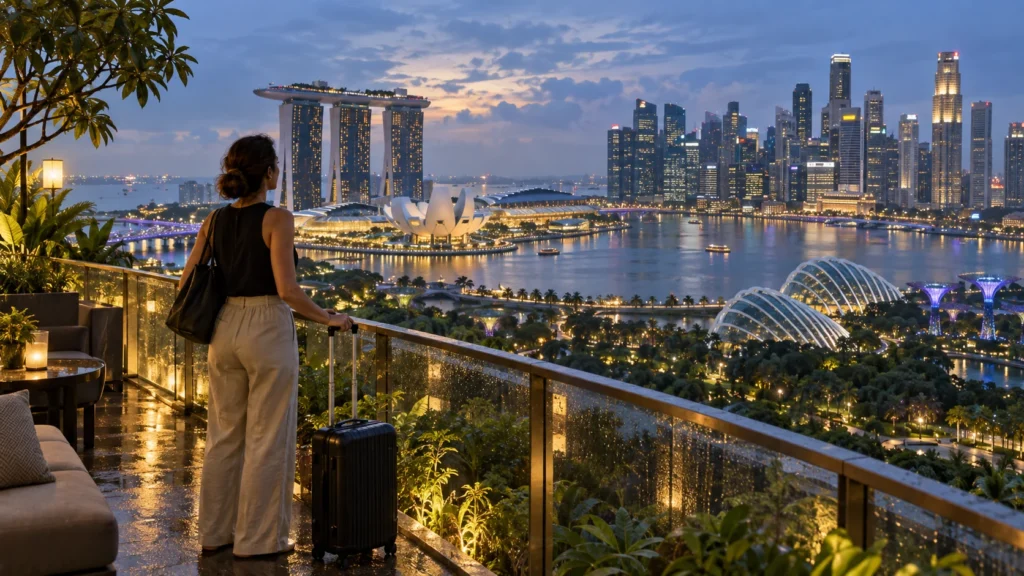
Singapore is compact enough to cross by train, but that does not make every hotel location equally convenient. A room can be “near Marina Bay” while sitting fifteen exposed minutes from the station. Another can look less glamorous on the map yet put you beside two MRT lines, late-night food and a covered walkway. In 32°C heat—or a rainstorm with theatrical timing—that difference becomes the trip.
For most first-time visitors, Bugis or City Hall offers the best balance of transport, food and manageable hotel prices. Choose Marina Bay for a short, landmark-heavy luxury stay; Chinatown or Tanjong Pagar for food and evening atmosphere; Orchard for shopping and full-service family hotels; and Sentosa only when the resort is the point of the trip.
This is not a list of pretty neighborhoods pretending that every traveler has the same holiday. It is a location guide for the decisions that actually affect your day: which MRT station you will use, how far you will drag a suitcase, what is open after 10 p.m., and whether the cheapest room quietly forgot to mention its lack of a window.
The 60-second Singapore hotel decision
| Area | Best for | Big advantage | Main catch |
|---|---|---|---|
| Bugis / Bencoolen | First visits, food, balanced itineraries | Several useful MRT lines and walkable evenings | Busy roads and weekend crowds |
| Marina Bay | Luxury, skyline views, short iconic trips | Major sights outside the door | High rates and surprisingly long internal walks |
| Chinatown / Tanjong Pagar | Food, couples, heritage, value | Hawker centres plus excellent central transit | Small rooms and potential street noise |
| Orchard Road | Shopping, families, reliable full-service hotels | Malls, dining and shelter from rain | A long district; not every “Orchard” hotel is near the best station |
| Little India / Farrer Park | Budget-conscious trips and local food | Strong value near central Singapore | Older rooms, noise and uneven late-night atmosphere |
| City Hall / Clarke Quay | Central sightseeing and nightlife | Easy access in several directions | River nightlife can be noisy |
| Sentosa | Resorts, theme parks, young families | Beach and attractions feel like a separate holiday | Expensive and inefficient for daily city sightseeing |
| Katong / Joo Chiat | Repeat visitors, food and neighborhood character | Local rhythm and better airport-side position | More last-mile planning |
If you want one rule, book within a genuine five- to eight-minute walk of the MRT entrance you will use. Do not measure to the station pin in the middle of a giant complex. Check the exact exit, pedestrian crossings and whether the route is covered. Singapore’s trains are excellent; Singapore’s midday sun remains unconvinced that you are on vacation.
Before booking: five details that change the answer
1. “Near the MRT” needs a walking test
Open the map in walking mode and trace the route from station entrance to hotel lobby. A 600-metre route with shade and one crossing is fine. The same distance around a convention centre, across a multilane road and through a closing mall is not. Read recent reviews for phrases such as “underground link,” “lift at the exit,” “steep bridge” and “covered all the way.” Those comments are usually more valuable than a rooftop-pool photo.
On buses and the MRT, Singapore’s SimplyGo system accepts many contactless bank cards and mobile wallets. Foreign-issued cards may attract administrative or currency charges, so check your bank’s terms. An EZ-Link card is optional for many visitors, not a compulsory souvenir.
2. Compare the final room total
Hotel search tiles can display prices differently. Service charges, GST, breakfast and cancellation terms may only become obvious later in checkout. Compare the same room and dates on at least two platforms, then judge the final payable amount. You can compare Singapore hotels on Agoda and check Singapore hotel rates on Trip.com. Filter by your real dates: conference weeks, school holidays and the Singapore Grand Prix period can move central prices dramatically.
Affiliate note: these booking links may earn us a commission at no extra cost to you. We use them as practical comparison tools; location and room quality still come first.
3. Room size and windows are not small details
Singapore hotel rooms can be compact even at respectable mid-range properties. Check the listed floor area, bed width and bathroom photos. A room described as “cosy,” “cabin” or “studio” may have very little space around an open suitcase. Budget rooms sometimes have no external window or use a frosted internal panel. Fine for one night, less charming on day four when you no longer know whether the thunder is weather or plumbing.
4. Rain protection beats map perfection
Short tropical showers can be intense. A hotel connected to a mall, arcade or underground passage may be more useful than one 300 metres closer to a landmark but fully exposed. This especially matters around Orchard, City Hall and Marina Bay, where buildings are large and the correct indoor connection can save time as well as wet shoes.
5. Check what survives after 10 p.m.
Mall-heavy districts are wonderfully convenient until restaurants begin closing. Chinatown, Bugis, Geylang’s edge and parts of Little India tend to offer more late food than quiet stretches of Marina Bay. If your flight lands late, check reception hours and save one nearby supper option. Our guide to getting from Changi Airport to the city also explains the late-arrival trade-off between MRT, taxi and ride-hailing.
Bugis, Bencoolen and Kampong Glam: the best all-round base
Bugis works because it sits between several versions of Singapore. Walk south and you reach City Hall and the museums. Walk north and you enter Little India. Kampong Glam and Haji Lane add cafes, bars and colorful shophouses to the east. Bugis MRT connects the East West and Downtown lines; nearby Bencoolen and Rochor add more useful options.
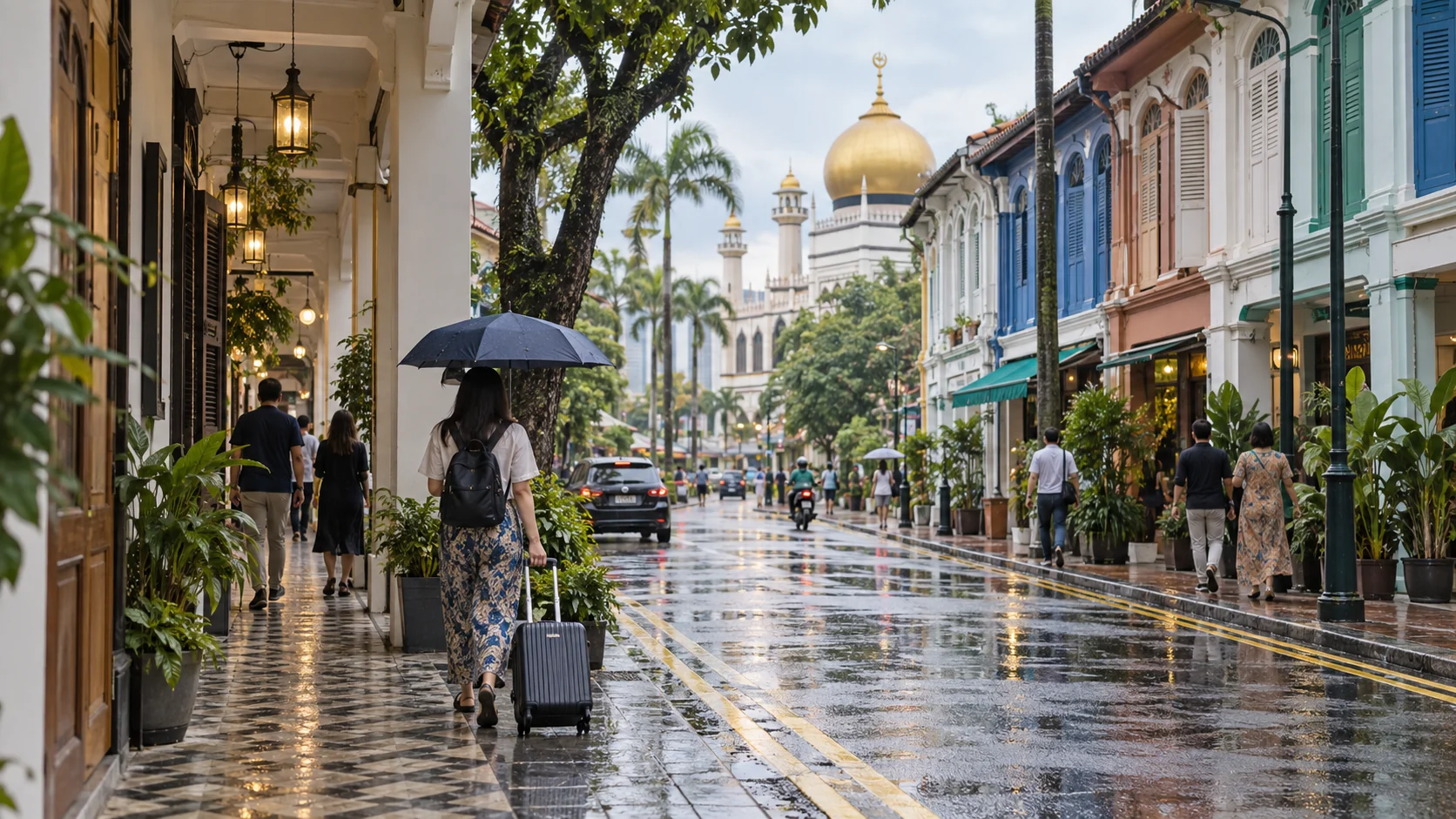
This is the area I would choose for a three- to five-night first visit with a mixed itinerary. You can reach Marina Bay, Chinatown and Orchard without building your day around transfers, while dinner does not require another train ride. Mid-range hotels and compact design hotels are common, though weekend foot traffic around Bugis Junction and Haji Lane can be heavy.
Pick the micro-area carefully. Near Bugis MRT is best for airport-line convenience and shopping. Bencoolen suits museum days and gives you Downtown Line access. Kampong Glam has more evening personality, but rooms beside bar streets may collect noise. Rochor often prices well and is excellent for Little India, though the streets can feel more functional at night.
Choose Bugis if: you want one forgiving base for sightseeing, food and public transport. Skip it if: you want resort quiet or a skyline view from bed.
Marina Bay: spectacular, convenient—and larger than it looks
Marina Bay is the postcard answer. Gardens by the Bay, the waterfront promenade, ArtScience Museum, the Merlion and the towers of the financial district are all nearby. For a two-night celebration or a first visit with a generous hotel budget, waking up here can be genuinely special.
The catch is scale. Bayfront, Downtown and Promenade stations serve different sides of a vast district. Two attractions that appear adjacent may be separated by an indoor mall, a bridge and ten minutes of determined walking. Check which station and exit serve your hotel; “Marina Bay area” is not precise enough.
Evenings are polished but less neighborhood-like. Food courts and mall restaurants help, yet local breakfast streets are not the main attraction. You are paying for architecture, views and immediate access to landmark sights. If Gardens by the Bay is central to your itinerary, you can check current Gardens by the Bay ticket options on Klook. Compare inclusions carefully; Cloud Forest, Flower Dome and special exhibitions may be bundled differently.
Choose Marina Bay if: this is a short landmark trip, the hotel experience matters, or you want sunrise and night views without commuting. Skip it if: you would rather spend the budget on food, attractions and a longer stay.
Chinatown and Tanjong Pagar: food first, with excellent transport
Chinatown combines heritage streets, hawker centres, temples, bars and fast access to the CBD. Chinatown MRT sits on the Downtown and North East lines, while Outram Park and Tanjong Pagar widen your options. The result is a base that feels active without trapping you in a tourist bubble.
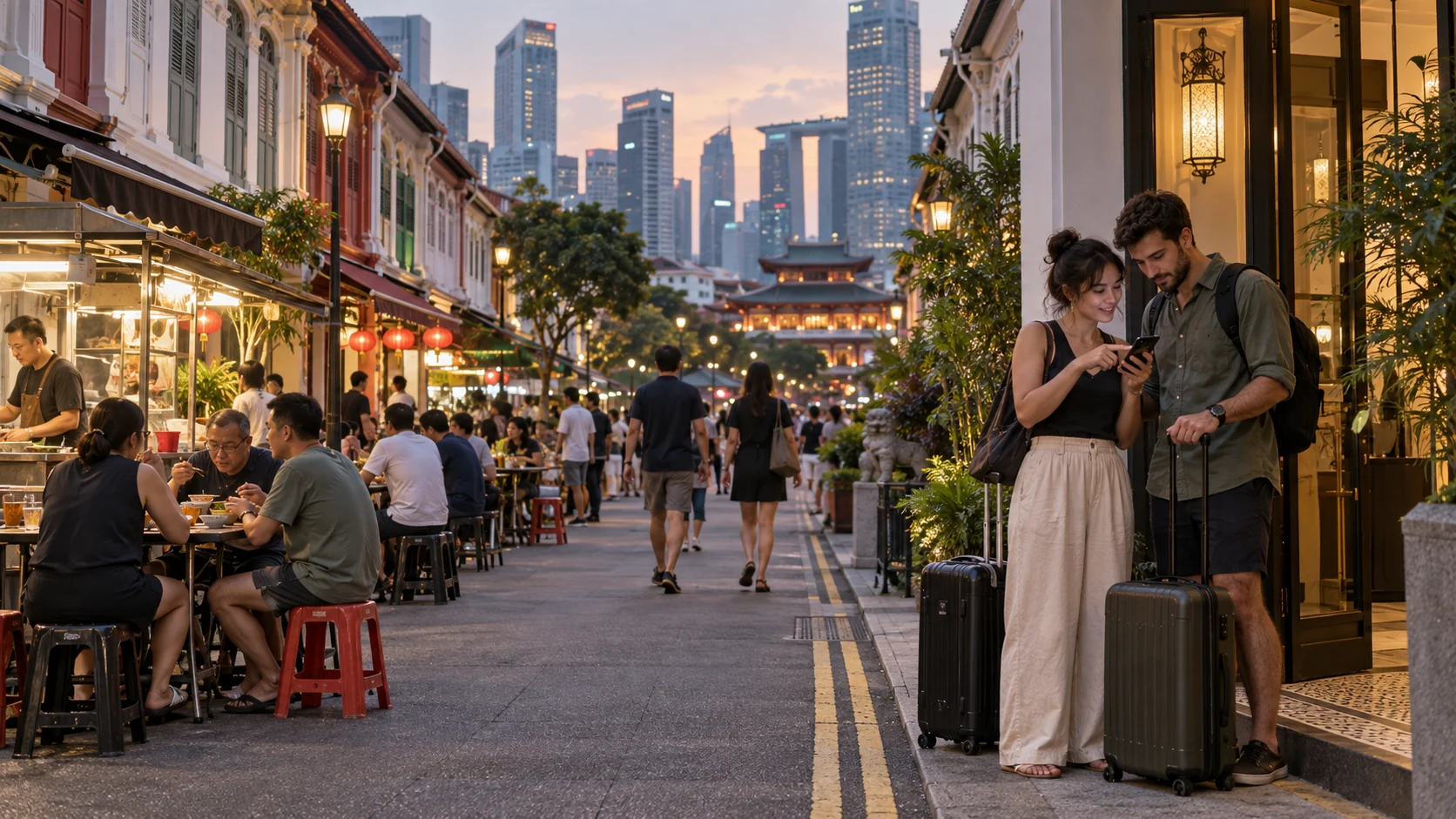
Stay near Chinatown station for maximum convenience and a lively evening. Move toward Tanjong Pagar for smarter business hotels, Korean restaurants and a slightly calmer mood. Outram Park is less picturesque but useful for multiple rail lines and Singapore General Hospital access.
Heritage hotels deserve extra scrutiny. Beautiful shophouses can mean narrow stairs, small windows and street-facing rooms. Ask about lift access if carrying heavy luggage, and read noise comments for rooms near bars. Also check whether “Chinatown” means the MRT core or a farther property using the name creatively.
Choose this area if: meals are part of your sightseeing, you enjoy walking after dinner, or you want central convenience without Marina Bay pricing. Skip it if: you need a large family room, a resort pool or guaranteed silence.
Orchard Road: easiest for shopping and full-service comfort
Orchard Road is a long, linear district of malls, department stores, hotels and clinics. Families often like it because full-service properties are common, taxis understand the area, and rain can be managed through covered passages and malls. Dining ranges from basement food courts to expensive hotel restaurants, so a group can disagree about dinner without causing a diplomatic incident.
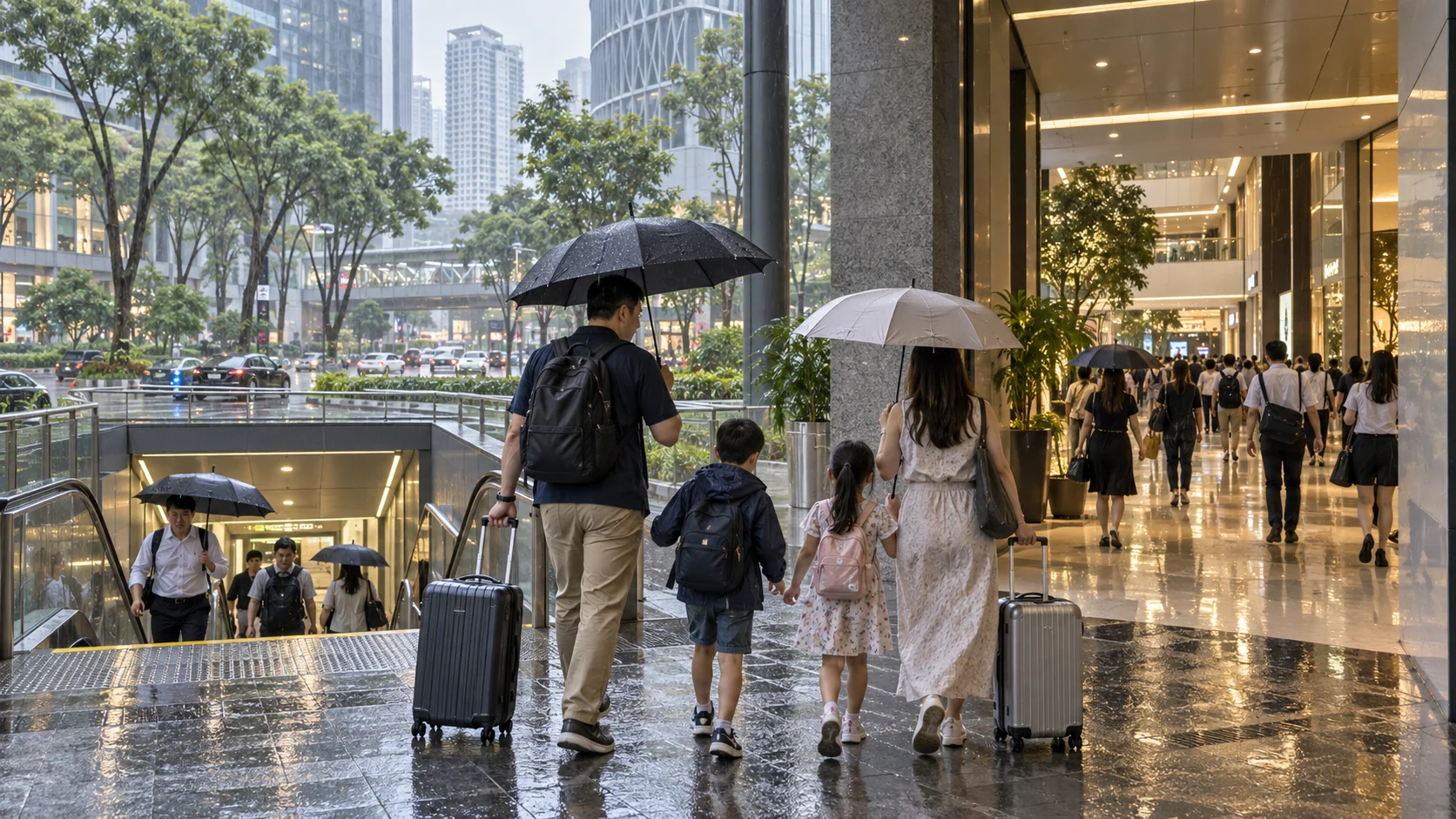
The district’s weakness is its length. Orchard, Somerset and Dhoby Ghaut stations are not interchangeable. A hotel advertised on Orchard Road can sit far from the shopping stretch you imagined, and the walk along the boulevard feels longer with children or luggage. Properties toward Tanglin are calmer and greener but may require more bus or taxi use. Somerset is livelier and convenient for younger travelers; Dhoby Ghaut is stronger for rail connections and museum access.
Choose Orchard if: shopping is a priority, you want a predictable hotel operation, or your family values malls and easy food choices. Skip it if: you want heritage atmosphere or plan to spend every day around Marina Bay and Chinatown.
Little India and Farrer Park: strong value with real neighborhood energy
Little India offers fragrant restaurants, markets, temples, textile shops and some of the better central hotel value. Little India MRT connects the Downtown and North East lines; Farrer Park is one stop north on the North East Line and has larger modern hotels near a mall and hospital complex.
The area is not uniformly hectic. Streets beside the main market and shopping corridors are busy, particularly on weekends. A hotel one or two blocks away can feel much calmer. Review comments about soundproofing, room maintenance and bathroom design; the price gap sometimes reflects an older building rather than a miraculous deal.
Choose Little India if: you want memorable inexpensive food, useful rail access and better value. Choose Farrer Park instead for a more orderly hotel environment with quick access to Little India. Light sleepers should avoid rooms directly over busy restaurants or facing major roads.
City Hall and Clarke Quay: central, but for different nights
City Hall is one of the easiest bases for a sightseeing-heavy first trip. The National Gallery, civic district, Fort Canning, Esplanade and Marina Bay edge are close, and several rail routes intersect nearby. Hotels can be expensive, but the location saves time in almost every direction.
Clarke Quay trades daytime efficiency for riverfront nightlife. Restaurants and bars stay lively, and the walk toward Boat Quay is pleasant after dark. The obvious downside is noise. Confirm whether the room faces the river, a club street or an internal courtyard. Ride-hailing pickup can also slow when nightlife crowds and road closures meet.
Choose City Hall if: museums and central walks dominate the plan. Choose Clarke Quay if: you want dinner and drinks outside the door. Families and early sleepers should lean City Hall.
Sentosa: book it when Sentosa is the holiday
Sentosa makes sense for resort pools, Universal Studios Singapore, beaches and young children who consider an MRT platform a poor substitute for a waterslide. Staying on the island removes the daily commute to its attractions and makes midday breaks possible.
It is less sensible as a default Singapore base. Trips to Chinatown, Bugis and Orchard require extra time, meals can cost more, and evening variety is narrower. If you split the stay, put Sentosa at the end: city first, then resort. Moving once is annoying; commuting back and forth every day is a hobby nobody requested.
Choose Sentosa if: at least half your plans are on the island or the resort itself is a major attraction. Skip it if: your itinerary is mostly hawker centres, museums and neighborhoods.
Katong and Joo Chiat: best for repeat visitors and food-focused stays
Katong and Joo Chiat offer colorful shophouses, Peranakan heritage, cafes and excellent local food. They feel residential and lived-in compared with the downtown hotel belt. Newer Thomson-East Coast Line stations around Marine Parade and Tanjong Katong have improved access, but the last walk still matters; some hotels remain more convenient by bus or taxi.
The east-side location shortens the road journey to Changi Airport, though it does not automatically create a simple direct train ride. Check the exact hotel-to-station route and late-night food nearby. Beach access at East Coast Park sounds close on a map, but crossings and underpasses determine whether the walk is enjoyable.
Choose Katong if: you have visited before, neighborhood meals matter, or you want an airport-side final night. Skip it if: you are trying to fit every headline sight into 48 hours.
Best Singapore area by traveler type
- First trip, three to five nights: Bugis, Bencoolen or City Hall.
- Couples who plan around food: Chinatown or Tanjong Pagar.
- Luxury weekend: Marina Bay.
- Family with shopping and indoor backup plans: Orchard Road.
- Family focused on theme parks: Sentosa, possibly as a split stay.
- Lower budget without leaving central Singapore: Little India, Farrer Park or the Bugis–Rochor edge.
- Nightlife: Clarke Quay or the right part of Chinatown.
- Repeat visit and local food: Katong or Joo Chiat.
- Early airport departure: Katong for a pleasant final night, or an airport hotel when the flight is brutally early.
If Singapore is one part of a longer regional trip, location should also match the next move. Our Singapore–Malaysia–Thailand itinerary explains when a central MRT base is worth more than a scenic one-night splurge.
A practical booking sequence
- List the three places you will visit most. Ignore the attraction you might visit if everyone wakes up energetic.
- Choose two areas, not eight. For most first trips, compare Bugis against Chinatown or City Hall.
- Filter for your real needs. Window, room size, lift, 24-hour reception, breakfast and cancellation terms.
- Trace the station-to-lobby walk. Look for exits, crossings, covered sections and stairs.
- Read the newest low-scoring reviews. They reveal construction noise, tired rooms and awkward deposits faster than the marketing copy.
- Compare the final total. Include taxes, service charges and breakfast before declaring a winner.
FAQ
What is the best area to stay in Singapore for a first visit?
Bugis or City Hall suits most first-time visitors. Both are central, well connected and close to food and major sights. Bugis usually has more neighborhood variety and mid-range choice; City Hall is slightly more polished and convenient for museums and Marina Bay walks.
Is Marina Bay worth the extra hotel cost?
Yes for a short special trip, skyline views or immediate access to the bay attractions. No if the room cost forces you to shorten the trip or skip experiences. Singapore’s MRT makes visiting Marina Bay easy from Bugis, Chinatown and City Hall.
Should I stay near Orchard Road or Marina Bay?
Choose Orchard for shopping, family-friendly malls and full-service hotels. Choose Marina Bay for landmark views and a luxury atmosphere. Orchard feels more like a practical hotel district; Marina Bay feels more like the destination itself.
Where should budget travelers stay?
Check Little India, Farrer Park, Rochor and the edges of Chinatown. Compare room size, windows and recent maintenance reviews, not just the nightly rate. Capsule hotels can work for solo travelers, but storage, bathroom privacy and quiet hours vary.
Can I stay in Sentosa and still explore Singapore?
Yes, but daily city trips add friction. Sentosa is best when its resorts and attractions fill at least half the itinerary. For a balanced trip, consider splitting the stay between a central area and Sentosa.
How close should my hotel be to an MRT station?
A real five- to eight-minute walk is ideal. Up to twelve minutes is manageable in the evening, but it can feel long with luggage, heat or heavy rain. Check the exact exit and walking route because station complexes are large.
Do I need an EZ-Link card for Singapore transport?
Not necessarily. Many visitors use eligible contactless bank cards or mobile wallets through SimplyGo. Check foreign-card fees and always tap in and out with the same card or device. An EZ-Link card can still be useful if your bank charges heavily or you prefer a separate transit balance.
Bottom line: Bugis is the safest all-round recommendation, Chinatown is the most satisfying food-and-city compromise, and Marina Bay is the memorable splurge. Pick the hotel by its front door, not its marketing district. Your feet will notice the difference long before your camera does.