
Planning a Vietnam itinerary looks simple until you remember one small detail.
Vietnam is long.
Very long.
On a map, Hanoi, Hoi An and Ho Chi Minh City may look like they are politely lined up for you. In real life, they are not neighboring subway stops. Vietnam is shaped like a travel noodle, and if you move too fast, your itinerary can turn into a laundry schedule with scenic interruptions.
That does not mean Vietnam is difficult. It means Vietnam needs a smart route.
For most first-time visitors, the best Vietnam itinerary follows a north-to-south route:
Hanoi → Ha Long Bay or Ninh Binh → Hoi An / Da Nang → Ho Chi Minh City
With more time, you can add Hue, Da Lat, Nha Trang, Phu Quoc, Sapa or the Mekong Delta. With less time, you should choose fewer stops and enjoy them properly.
Vietnam is one of the best countries in Asia for a first travel route because it gives you old towns, street food, beaches, mountains, caves, coffee, cities, rivers and landscapes that feel completely different from one region to the next.
Vietnam is not a quiet backup destination in 2026. Popular routes around Hanoi, Ha Long Bay, Ninh Binh, Hoi An, Da Nang and Ho Chi Minh City can get busy, so book overnight cruises, domestic flights and well-located hotels early during peak travel months.
This route is built around the parts that can make or break a Vietnam trip: distance, weather, transport, regional timing and the number of stops your suitcase can survive.
If you are still comparing routes across Asia, start with our Asia travel itinerary 2026 guide. If you want to combine Vietnam with another country, our Thailand Vietnam itinerary 2026 guide may be a better starting point.
Quick Answer: Best Vietnam Itinerary
For most first-time visitors, the best Vietnam itinerary is:
Hanoi → Ha Long Bay or Ninh Binh → Hoi An / Da Nang → Ho Chi Minh City
This route works because it gives you a strong mix of north, central and south Vietnam without making every travel day feel like a transportation exam.
Here is the simple version:
| Trip Length | Best Route | Best For |
|---|---|---|
| 10 days | Hanoi + Ha Long Bay or Ninh Binh + Hoi An/Da Nang + Ho Chi Minh City | Fast first-time highlights |
| 2 weeks | Hanoi + Ha Long Bay + Ninh Binh + Hoi An/Da Nang + Ho Chi Minh City | Best balanced first Vietnam trip |
| 3 weeks | Hanoi + Ha Long Bay/Ninh Binh + Hue + Hoi An/Da Nang + Da Lat/Nha Trang/Phu Quoc + Ho Chi Minh City | Deeper north-to-south route |
| 5 to 7 days | Choose north or central Vietnam only | Short trip |
| 1 month | Slow route with Sapa, Ha Giang, Phong Nha or islands | Long-stay travelers |
The sweet spot is 2 weeks. Ten days works, but it requires choices. Three weeks lets Vietnam unfold more naturally.
Is Vietnam Good for First-Time Visitors?
Yes, Vietnam is one of the best countries in Asia for first-time visitors.
It is exciting, affordable, food-focused, visually rich and full of route options. You can build a trip around culture, nature, cities, beaches, history, street food, coffee, motorbike routes, caves or islands.
Vietnam is especially good for travelers who want big city energy, excellent food, affordable travel, old towns, cultural sites, limestone landscapes, beaches, river trips, coffee culture, night markets and a strong backpacker or mid-range travel scene.
But Vietnam is not the easiest country to rush.
Distances are long. Weather changes by region. Traffic can feel intense in big cities. Some famous places are crowded. And if you try to squeeze the whole country into one week, Vietnam will politely hand you a bus ticket and watch your confidence leave the room.
The best first Vietnam trip should respect distance, weather and regional differences.
If you are choosing between a long country route and an island-based trip, compare this with our Bali itinerary 2026 before deciding.
How Many Days Do You Need in Vietnam?
You need at least 10 days for a good first Vietnam itinerary.
A realistic guide:
- 5 to 7 days: Choose one region only
- 10 days: Fast north-to-south highlights
- 2 weeks: Best first-time Vietnam itinerary
- 3 weeks: Better for a full north-to-south route
- 1 month: Great for slow travel, mountains, caves and islands
If you only have one week, do not try to visit Hanoi, Ha Long Bay, Ninh Binh, Hue, Hoi An, Da Nang, Ho Chi Minh City, the Mekong Delta and Phu Quoc.
That is not a vacation. That is a luggage relay race.
For most travelers, 10 days gives you a solid introduction. Two weeks gives you a better rhythm. Three weeks lets you add variety without feeling like you are constantly packing socks in the dark.
Best Direction: North to South or South to North?
Both directions work.
Most first-time visitors choose:
North to South
This means starting in Hanoi and ending in Ho Chi Minh City.
North to south works well because Hanoi is a strong cultural starting point, Ha Long Bay and Ninh Binh fit naturally after Hanoi, Central Vietnam comes next, and Ho Chi Minh City makes a practical final stop.
A south-to-north route also works if your flights are cheaper or your weather timing is better.
The best direction depends on:
- Your arrival airport
- Your departure airport
- Weather by region
- Domestic flight prices
- Whether you want beaches earlier or later
- Whether you are combining Vietnam with another country
If your trip is part of a wider Southeast Asia route, compare it with our East Asia vs Southeast Asia guide or our best countries to visit in Asia in 2026 guide.
10-Day Vietnam Itinerary: Fast First-Time Route
A 10-day Vietnam itinerary should stay focused.
The best route is:
Hanoi → Ha Long Bay or Ninh Binh → Hoi An / Da Nang → Ho Chi Minh City
Suggested route:
- Days 1 to 3: Hanoi
- Days 4 to 5: Ha Long Bay or Ninh Binh
- Days 6 to 8: Hoi An / Da Nang
- Days 9 to 10: Ho Chi Minh City
This route gives you cities, food, old streets, limestone scenery and central Vietnam charm without trying to do everything.
Days 1 to 3: Hanoi
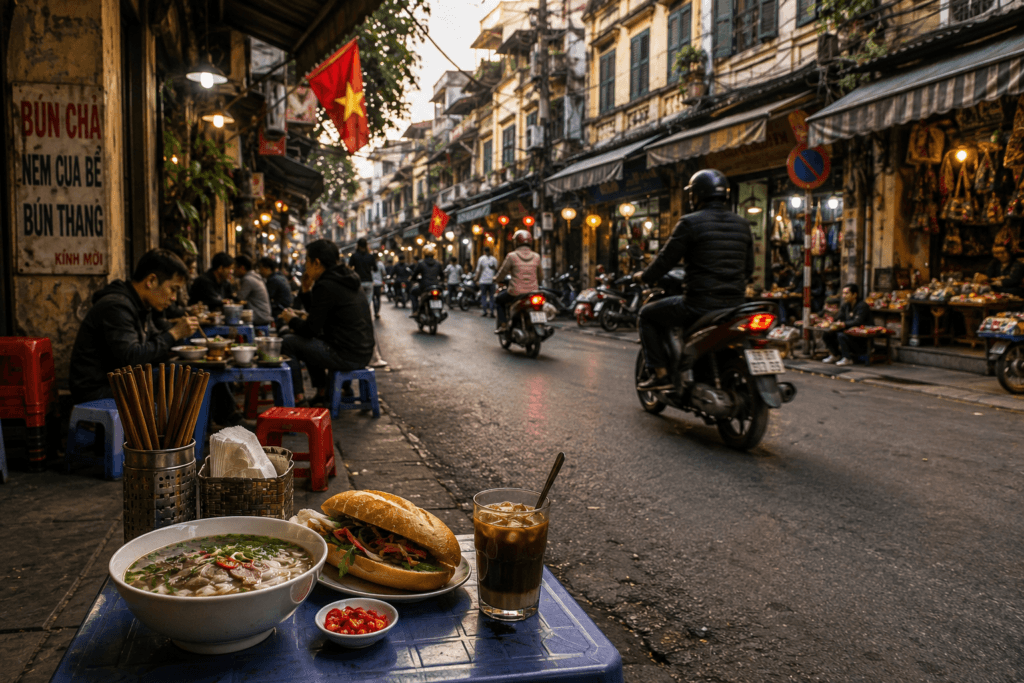
Start your Vietnam trip in Hanoi.
Hanoi is one of the best introductions to Vietnam because it has history, street food, lakes, old streets, cafes and a kind of controlled chaos that somehow works.
A good first Hanoi route can include the Old Quarter, Hoan Kiem Lake, the Temple of Literature, the Ho Chi Minh Mausoleum area, coffee shops, street food, local markets and a water puppet show.
Use your first day gently. Jet lag and Hanoi traffic are not a cute combination.
A good first evening in Hanoi is simple: walk around Hoan Kiem Lake, eat something hot, drink egg coffee and let the city introduce itself at street level.
On your second and third days, focus on food, culture and the Old Quarter. Hanoi is not a city you need to “finish.” It is a city you absorb between bowls of noodles.
Days 4 to 5: Ha Long Bay or Ninh Binh

With only 10 days, choose carefully between Ha Long Bay and Ninh Binh.
Choose Ha Long Bay if you want limestone islands, an overnight cruise experience, ocean scenery and classic Vietnam postcard views.
Choose Ninh Binh if you want boat rides through limestone landscapes, rice fields, temples, shorter land travel from Hanoi and a quieter feel than some cruise routes.
Ha Long Bay is iconic, but cruises need booking and weather matters. Ninh Binh is easier to do by land and can feel more flexible.
If this is your first Vietnam trip and you really want the classic cruise image, choose Ha Long Bay. If you prefer land scenery, temples and a slightly calmer pace, choose Ninh Binh.
Do not try to do both properly in a 10-day itinerary unless you are willing to trim something else. Vietnam is generous, but your calendar is not made of elastic.
Days 6 to 8: Hoi An and Da Nang

Fly from Hanoi to Da Nang, then base yourself in Hoi An or Da Nang.
For most first-time visitors, Hoi An is the more atmospheric base. Da Nang is more practical for beaches, city comfort and airport access.
Hoi An is best for Ancient Town, lantern streets, tailor shops, cafes, cooking classes, riverside evenings, bicycle rides and nearby beaches.
Da Nang is best for beach hotels, easier transport, modern city comfort, Marble Mountains, Ba Na Hills day trips and airport convenience.
If you only have three days in Central Vietnam, stay in Hoi An and use Da Nang for airport transfers or a short day trip.
Hoi An can be touristy, but it still works beautifully if you slow down. The town is best in the morning, late afternoon and evening. Midday is when heat and crowds start holding meetings.
Days 9 to 10: Ho Chi Minh City
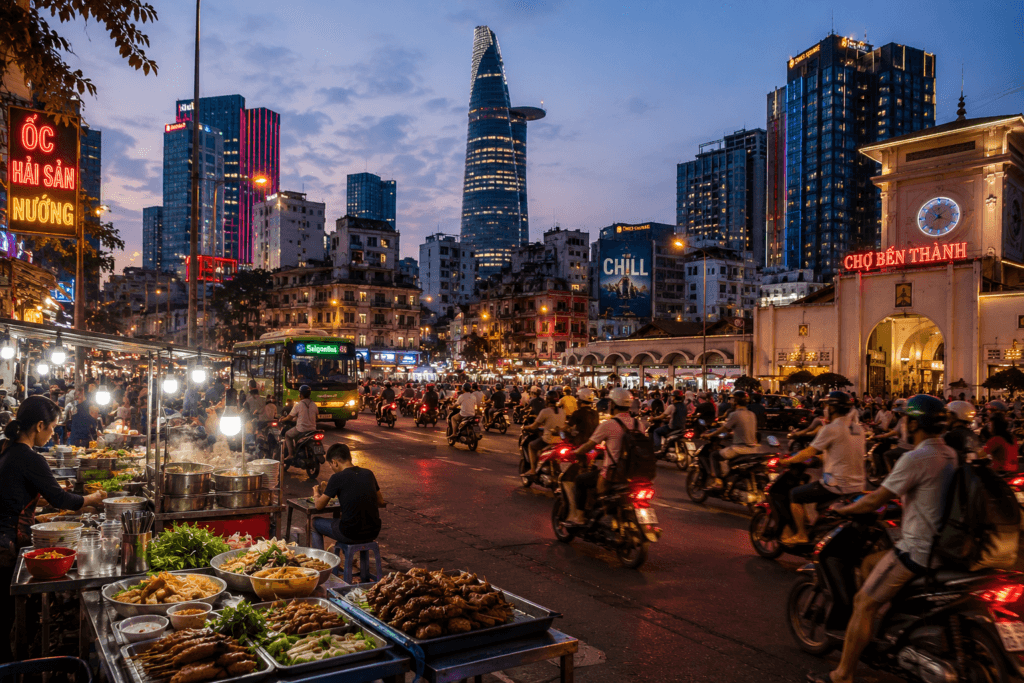
End your 10-day Vietnam itinerary in Ho Chi Minh City.
Ho Chi Minh City is bigger, faster and more modern than Hanoi. It has rooftop bars, markets, museums, cafes, food streets and strong day trip options.
Good things to do include:
- War Remnants Museum
- Reunification Palace
- Notre-Dame Cathedral area
- Central Post Office
- Ben Thanh Market
- Nguyen Hue Walking Street
- Coffee shops
- Street food tour
- Cu Chi Tunnels day trip
- Mekong Delta day trip
With only two days, keep it simple. Spend one day in the city and choose one half-day or full-day trip if you really want it.
If your flight leaves from Ho Chi Minh City, avoid planning a distant day trip right before departure. Airports and optimism should not be mixed too aggressively.
2-Week Vietnam Itinerary: Best Balanced Route
A 2-week Vietnam itinerary is the best choice for most first-time visitors.
The route is:
Hanoi → Ha Long Bay → Ninh Binh → Hoi An / Da Nang → Ho Chi Minh City + Mekong Delta or Cu Chi Tunnels
Suggested route:
- Days 1 to 3: Hanoi
- Days 4 to 5: Ha Long Bay
- Days 6 to 7: Ninh Binh
- Days 8 to 10: Hoi An / Da Nang
- Days 11 to 14: Ho Chi Minh City + Mekong Delta or Cu Chi Tunnels
This route gives you north, central and south Vietnam with enough time to feel the difference between regions.
Days 1 to 3: Hanoi
Start with three days in Hanoi.
Use these days for Old Quarter walks, street food, Hoan Kiem Lake, coffee, temples and city history.
Suggested plan:
- Day 1: Arrival, Hoan Kiem Lake and easy dinner
- Day 2: Old Quarter, food tour, Temple of Literature and cafes
- Day 3: Museums, local markets, coffee shops or a slower city day
Three days in Hanoi gives you enough time to settle in without treating the city like a checklist.
Days 4 to 5: Ha Long Bay
Next, take an overnight cruise in Ha Long Bay or Lan Ha Bay.
A one-night cruise is enough for most first-time visitors. It usually includes meals, kayaking or boat activities, scenery and a night on the water.
Book early during busy travel periods. Popular cruises can sell out, especially for better cabins and better routes.
Ha Long Bay is famous for a reason, but the experience depends heavily on weather, cruise quality and crowd levels. Choose carefully. A cheap cruise can turn paradise into a floating group project.
Days 6 to 7: Ninh Binh
After Ha Long Bay, travel to Ninh Binh.
Ninh Binh is one of the best places in northern Vietnam for nature, temples and boat rides.
Good stops include:
- Trang An
- Tam Coc
- Hang Mua viewpoint
- Bich Dong Pagoda
- Hoa Lu Ancient Capital
- Rice fields and countryside roads
Ninh Binh gives the north a slower, greener layer after Hanoi and Ha Long Bay.
Spend at least one night if you can. A day trip is possible, but staying overnight lets you enjoy early morning or late afternoon when the scenery feels calmer.
Days 8 to 10: Hoi An and Da Nang
Fly or travel south to Central Vietnam.
Most travelers will fly from Hanoi to Da Nang, then continue to Hoi An.
Spend three days between Hoi An and Da Nang.
Suggested plan:
- Day 8: Arrive in Da Nang, transfer to Hoi An, evening in Ancient Town
- Day 9: Hoi An old town, cafes, tailor shops or cooking class
- Day 10: Beach, Marble Mountains, Da Nang or countryside cycling
Hoi An is one of Vietnam’s most beautiful towns, but it can feel crowded. Start early, take breaks and avoid building every day around the busiest lanes.
Da Nang is useful if you want beach time or a more modern base. Hoi An is better if you want atmosphere.
Days 11 to 14: Ho Chi Minh City and Southern Vietnam
Finish in Ho Chi Minh City.
Suggested plan:
- Day 11: Fly to Ho Chi Minh City, evening food walk
- Day 12: City sights and museums
- Day 13: Cu Chi Tunnels or Mekong Delta
- Day 14: Coffee, shopping and departure
Choose Cu Chi Tunnels if you are more interested in history.
Choose Mekong Delta if you want rivers, local life, boats and a slower rural contrast.
You can do both with more time, but in a 2-week route, one is usually enough.
Ho Chi Minh City is a good final stop because it has strong food, nightlife, airport access and enough energy to wake up your itinerary before the flight home.
3-Week Vietnam Itinerary: Full North-to-South Route
A 3-week Vietnam itinerary gives you much more room.
The best route is:
Hanoi → Ha Long Bay / Ninh Binh → Hue → Da Nang / Hoi An → Da Lat, Nha Trang or Phu Quoc → Ho Chi Minh City / Mekong Delta
Suggested route:
- Days 1 to 4: Hanoi
- Days 5 to 7: Ha Long Bay and Ninh Binh
- Days 8 to 10: Hue
- Days 11 to 14: Da Nang and Hoi An
- Days 15 to 17: Da Lat, Nha Trang or Phu Quoc
- Days 18 to 21: Ho Chi Minh City and Mekong Delta
This is a deeper route for travelers who want Vietnam to feel like a journey, not a highlight sampler.
Days 1 to 4: Hanoi
With four days in Hanoi, you can slow down.
Add more food stops, coffee shops, museums, neighborhoods and maybe a day trip. This is also a good place to recover from your flight before longer travel days begin.
Hanoi rewards wandering. The best moments are often not on the formal itinerary: a tiny plastic stool, a bowl of noodles, a quiet lake corner, a cafe hidden upstairs.
Days 5 to 7: Ha Long Bay and Ninh Binh
With 3 weeks, you can include both Ha Long Bay and Ninh Binh.
A good plan:
- Day 5: Travel to Ha Long Bay, overnight cruise
- Day 6: Return from cruise, transfer toward Ninh Binh
- Day 7: Ninh Binh boat ride, viewpoint or temples
This gives you two very different northern landscapes: ocean limestone scenery and inland limestone countryside.
Do not rush this section too much. Transfers between these places take time, and the north is better when you let the scenery stretch out.
Days 8 to 10: Hue
Hue is a great addition to a 3-week Vietnam itinerary.
It is often skipped by faster travelers, but it adds history, imperial architecture, river scenery and a quieter central Vietnam atmosphere.
Good things to do in Hue include:
- Imperial City
- Royal tombs
- Thien Mu Pagoda
- Perfume River
- Local food
- Garden houses
- Hue-style noodle dishes
Hue is especially good if you want Vietnam to feel deeper than beaches and old towns.
It can be hot and rainy depending on the season, so plan with weather in mind.
Days 11 to 14: Da Nang and Hoi An
Continue to Da Nang and Hoi An.
If you enjoy scenic travel, the route between Hue and Da Nang via the Hai Van Pass is one of the most memorable transitions in Central Vietnam.
Spend four days across Da Nang and Hoi An.
A good split:
- 1 or 2 nights in Da Nang
- 2 or 3 nights in Hoi An
Da Nang gives you beach hotels, modern convenience and easy transport. Hoi An gives you old town atmosphere, lantern evenings, tailor shops and cafes.
Together, they make one of the best Central Vietnam combinations.
Days 15 to 17: Choose Da Lat, Nha Trang or Phu Quoc
For the next section, choose based on your travel style.
Choose Da Lat if you want cooler weather, cafes, waterfalls, pine hills and a different mountain atmosphere.
Choose Nha Trang if you want a beach city, island trips and a coastal stop along the mainland route.
Choose Phu Quoc if you want a more relaxed island ending, beaches and resort time.
Do not add all three unless you have more than 3 weeks. This is the point where many Vietnam itineraries start collecting destinations like fridge magnets.
Pick one. Enjoy it properly.
Days 18 to 21: Ho Chi Minh City and Mekong Delta
End in Ho Chi Minh City.
With four days, you can enjoy the city and add the Mekong Delta without rushing.
Suggested plan:
- Day 18: Arrive in Ho Chi Minh City
- Day 19: City sights, museums, cafes and food
- Day 20: Mekong Delta day trip or overnight trip
- Day 21: Shopping, final meal and departure
The Mekong Delta works better if you stay overnight, but a day trip is possible if time is limited.
A 3-week Vietnam itinerary lets you see the country’s rhythm change from north to central to south. The food changes, the weather changes, the cities change and your coffee order may become part of your personality.
Best Time to Visit Vietnam
Vietnam is long enough to have more than one weather personality.
There is no single perfect month for every place, but March to May is often one of the easiest countrywide windows.
The best time depends on your route.
Northern Vietnam
Northern Vietnam includes Hanoi, Ha Long Bay, Ninh Binh, Sapa and Ha Giang.
Good months often include:
- March
- April
- May
- September
- October
- November
Northern Vietnam can be cool in winter, hot and humid in summer, and misty or rainy depending on the season.
Ha Long Bay can be beautiful in spring and autumn, but cruises depend on weather. Ninh Binh is especially pleasant when temperatures are mild and the countryside is green or golden.
Central Vietnam
Central Vietnam includes Hue, Da Nang and Hoi An.
Good months often include:
- February
- March
- April
- May
- June
- July
- August
Central Vietnam can have heavy rain and flooding risk in parts of the year, especially around autumn. Hoi An can still be beautiful during wetter periods, but plans may need flexibility.
If Hoi An is the emotional center of your trip, check seasonal rain before locking your dates.
Southern Vietnam
Southern Vietnam includes Ho Chi Minh City, the Mekong Delta and Phu Quoc.
The south is warmer year-round and usually has a dry season and wet season pattern.
Good months often include:
- December
- January
- February
- March
- April
Rainy season can still be fine, but afternoon showers are common.
Best Overall Months
For a first north-to-south Vietnam itinerary, good overall months often include:
- March
- April
- May
- October
- November
No month is perfect everywhere. Vietnam does not do one-size-fits-all weather. It prefers regional drama.
How to Get Around Vietnam

Getting around Vietnam is part of the experience.
Common transport options include:
- Domestic flights
- Trains
- Sleeper buses
- Private transfers
- Taxis and ride-hailing apps
- Motorbike routes
- Boats and cruises
For most first-time visitors, domestic flights are best for long distances.
Domestic Flights
Domestic flights are useful for covering long distances quickly.
Common flight routes include:
- Hanoi to Da Nang
- Hanoi to Ho Chi Minh City
- Da Nang to Ho Chi Minh City
- Ho Chi Minh City to Phu Quoc
- Hanoi to Phu Quoc, sometimes with limited schedules or connections
Flying saves time, especially on 10-day and 2-week itineraries.
Trains
Trains are slower but more scenic.
They work well if you enjoy overland travel and want to see more of the country between major stops.
Popular train sections include:
- Hanoi to Ninh Binh
- Da Nang to Hue
- Da Nang to Nha Trang
- Nha Trang to Ho Chi Minh City
The train is not always the fastest option, but it can be part of the trip rather than just a way to move.
Sleeper Buses
Sleeper buses are common and budget-friendly, but quality varies.
They can save money and one hotel night, but they may not be comfortable for everyone. If you sleep badly on buses, do not build your dream itinerary around pretending otherwise.
Taxis and Ride-Hailing
In cities, taxis and ride-hailing apps are useful.
Use reputable services and check prices before getting in. In busy areas, traffic can be slow, so allow extra time.
Motorbike Routes
Vietnam is famous for motorbike travel, especially in northern routes such as Ha Giang.
Only do this if you are properly licensed, insured and experienced. Roads can be challenging, weather can change and mountain routes are not the place to discover that confidence is not the same as skill.
Entry Rules in 2026
Before traveling to Vietnam, check the latest entry rules based on your passport.
Vietnam e-Visa
Vietnam’s official e-Visa system allows eligible travelers to apply for an e-Visa valid for up to 90 days, with single or multiple entry options.
For most 10-day, 2-week and 3-week Vietnam itineraries, that is more than enough time.
Always check the official Vietnam e-Visa site for your passport before booking flights.
Visa-Free Entry
Some passport holders can enter Vietnam visa-free for up to 45 days, while others need an e-Visa.
Visa rules depend on nationality, travel purpose and current policy. Do not copy visa advice from a random travel forum unless you also enjoy airport plot twists.
Passport and Documents
Before departure, check:
- Passport validity
- Visa or visa-free eligibility
- e-Visa approval, if needed
- Entry and exit dates
- Proof of onward or return travel, if required
- Hotel address for your first stay
- Travel insurance
- Mobile data or eSIM
- Domestic flight details
Entry paperwork is not the exciting part of Vietnam planning, but it is the part that keeps the exciting part from being replaced by airport stress.
Budget Tips for Vietnam
Vietnam can be very budget-friendly, but your spending depends on your travel style.
You can travel cheaply with local food, guesthouses, buses and simple tours. You can also spend more on boutique hotels, cruises, domestic flights, private transfers and guided experiences.
Save Money on Food
Vietnam is one of the best countries in Asia for affordable food.
Great budget-friendly foods include:
- Pho
- Banh mi
- Bun cha
- Com tam
- Cao lau
- Mi quang
- Bun bo Hue
- Fresh spring rolls
- Vietnamese coffee
Local food is not just cheaper. It is often the best part of the trip.
If your Vietnam itinerary does not include at least a few meals on small stools, something has gone suspiciously polished.
Save Money on Transport
Use domestic flights for long distances when time matters.
Use trains or buses for shorter routes when it makes sense.
Do not choose the cheapest overnight bus automatically. Sometimes saving a little money costs you an entire next day of energy.
Save Money on Tours
Book important tours early, especially Ha Long Bay cruises, Ninh Binh day trips, Mekong Delta trips and popular food tours.
Compare what is included. A cheaper tour is not always cheaper if it skips transfers, meals or key stops.
Save Money on Hotels
Vietnam has strong value in guesthouses, boutique hotels and mid-range stays.
Book early in popular areas such as Hanoi Old Quarter, Hoi An Ancient Town, Da Nang beachfront, Ha Long Bay cruise routes and central Ho Chi Minh City.
Common Mistakes to Avoid
Mistake 1: Trying to Do Too Much in 10 Days
Vietnam is long.
A 10-day itinerary should focus on major highlights, not every famous stop.
Mistake 2: Ignoring Regional Weather
Vietnam’s weather changes by region.
Do not assume beach weather in Da Nang means perfect weather in Hanoi or Ha Long Bay.
Mistake 3: Booking Too Many Overnight Transfers
Overnight trains and buses can save time, but too many of them can make your trip feel rough.
Use them carefully.
Mistake 4: Choosing Both Ha Long Bay and Ninh Binh Without Enough Time
Both are worth visiting, but in a short trip, choosing one may give you a better experience.
In a 2-week or 3-week trip, doing both works better.
Mistake 5: Underestimating Central Vietnam
Many travelers rush through Hoi An and Da Nang.
Central Vietnam deserves time, especially if you add Hue, beaches, food, countryside or tailor shops.
Mistake 6: Treating Ho Chi Minh City Only as an Airport Stop
Ho Chi Minh City is worth at least 2 days.
It gives you food, museums, markets, coffee, nightlife and easy access to southern day trips.
Mistake 7: Forgetting Visa Rules
Check your e-Visa or visa-free status before travel.
Do not wait until the airport to discover that your paperwork has decided to become the main character.
FAQ: Vietnam Itinerary
How many days do you need in Vietnam?
You need at least 10 days for a good first Vietnam itinerary. Two weeks is better, and 3 weeks is ideal for a fuller north-to-south route.
Is 10 days enough for Vietnam?
Yes, 10 days is enough if you keep the route focused. A good 10-day Vietnam itinerary includes Hanoi, Ha Long Bay or Ninh Binh, Hoi An or Da Nang and Ho Chi Minh City.
Is 2 weeks enough for Vietnam?
Yes, 2 weeks is the best length for most first-time visitors. It gives you enough time for Hanoi, Ha Long Bay, Ninh Binh, Hoi An, Da Nang and Ho Chi Minh City.
Is 3 weeks too long in Vietnam?
No, 3 weeks is not too long. It is a great length if you want to add Hue, Da Lat, Nha Trang, Phu Quoc, the Mekong Delta, Sapa or Ha Giang.
Should I travel north to south or south to north in Vietnam?
Both work. North to south is popular because Hanoi, Ha Long Bay, Ninh Binh, Central Vietnam and Ho Chi Minh City connect naturally. South to north is also fine if flights or weather work better.
Should I visit Ha Long Bay or Ninh Binh?
Choose Ha Long Bay if you want an overnight cruise and ocean limestone scenery. Choose Ninh Binh if you want inland landscapes, boat rides, temples and countryside views. With 2 weeks or more, you can visit both.
Is Hoi An worth visiting?
Yes, Hoi An is worth visiting, especially for first-time travelers. It has an old town, lantern streets, cafes, food, tailor shops, nearby beaches and a slower Central Vietnam atmosphere.
How do you travel between Hanoi and Da Nang?
The fastest way is by domestic flight. Trains and buses are possible, but they take much longer. For most 10-day and 2-week itineraries, flying saves valuable time.
What is the best month to visit Vietnam?
March to May is often one of the best countrywide windows. October and November can also work well for many routes. The best month depends on which regions you visit.
Do I need a visa for Vietnam in 2026?
It depends on your passport. Some travelers can enter visa-free for up to 45 days, while others need an e-Visa. Always check the official Vietnam e-Visa site before booking.
Final Thoughts: Let Vietnam Stretch Out
Vietnam is one of the best countries in Asia for a first-time travel route, but it works best when you respect its shape.
For 10 days, choose the highlights carefully.
For 2 weeks, follow a balanced north-to-south route.
For 3 weeks, add Hue, a beach or mountain stop, and a slower southern finish.
The best Vietnam itinerary is not the one with the most destinations. It is the one where each region has enough time to feel different.
Hanoi, Ha Long Bay, Ninh Binh, Hoi An, Da Nang, Hue, Ho Chi Minh City and the Mekong Delta are not just dots on a map. They are separate moods.
Let Vietnam stretch out.
The country is long, the coffee is strong and your itinerary will be much happier if it is not sprinting through three climate zones with a backpack half-zipped.
Official planning resources
Use these official resources to confirm entry rules, transport details, and destination updates before booking.