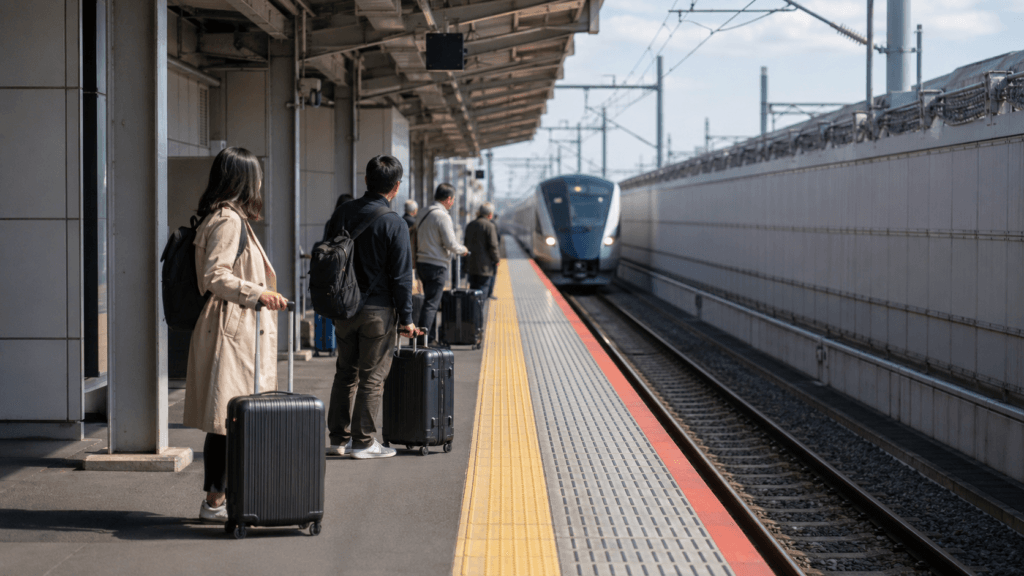
Landing at Narita Airport feels like arriving in Tokyo, but your hotel may still be another hour or two away.
Narita sits well outside central Tokyo, and there is no single airport transfer that works best for everyone. The Skyliner is excellent for Ueno and Nippori. The Narita Express is usually easier for Tokyo Station, Shibuya, and Shinjuku. Budget buses can save a surprising amount of money, while a limousine bus or private transfer may be worth paying for when children, parents, or several large suitcases are involved.
The easiest way to decide is to start with the neighborhood printed on your hotel booking.
- Ueno or Nippori: Skyliner
- Tokyo Station, Shibuya, or Shinjuku: Narita Express
- Asakusa or Nihombashi: Access Express
- Tokyo Station on a tight budget: TYO-NRT bus
- A hotel served directly by an airport bus: Limousine Bus
- Late arrival, family group, or heavy luggage: Taxi or private transfer
The fastest train on paper is not always the fastest route to your room. A 36-minute train followed by a transfer, escalators, and a crowded local line may feel longer than a direct train that takes an extra 20 minutes.
Narita Airport to Tokyo: Quick Comparison
| Transport | Main destinations | Typical journey time | Adult fare | Best for |
|---|---|---|---|---|
| Keisei Skyliner | Nippori, Ueno | From 36–41 minutes | About ¥2,580 | Ueno, Nippori, northern Tokyo |
| Narita Express | Tokyo, Shinagawa, Shibuya, Shinjuku, Yokohama | Tokyo from 53 minutes | From ¥3,140 | Central and western Tokyo without transfers |
| TYO-NRT Bus | Tokyo Station, Ginza | From about 65 minutes | ¥1,500 | Budget travelers |
| Limousine Bus | Major districts and selected hotels | Often 90–120 minutes | About ¥3,100–¥3,600 | Large luggage and hotel access |
| Access Express | Asakusa, Nihombashi, Shimbashi, Shinagawa | Roughly 50–75 minutes | About ¥1,290–¥1,520 | Lower-cost direct train travel |
| Taxi or private transfer | Hotel entrance | Traffic dependent | From about ¥29,000 | Families, groups, late arrivals |
Times vary by terminal, departure, traffic, and the distance between the final station and your hotel.
Start With Your Hotel Location
Airport signs and booking pages usually advertise the fastest station-to-station time. What they do not show is the second half of the journey, when you are looking for the correct exit with a suitcase and trying to remember whether the Yamanote Line should be heading toward Shinjuku or Tokyo Station.
The Skyliner is the fastest train into the city, but it finishes at Nippori and Ueno. That is ideal when your hotel is nearby. It is less convenient when you still need to cross Tokyo.
The N’EX takes longer to reach central Tokyo, but it continues directly to Tokyo Station, Shibuya, Shinjuku, Shinagawa, and Yokohama. Staying seated can be more valuable than saving 15 minutes on the first train.
A bus may be slower again, but stepping off outside your hotel can feel wonderfully simple after a long flight.
This is one reason deciding where to stay in Tokyo should come before choosing an airport ticket.
Keisei Skyliner: Fastest for Ueno and Nippori
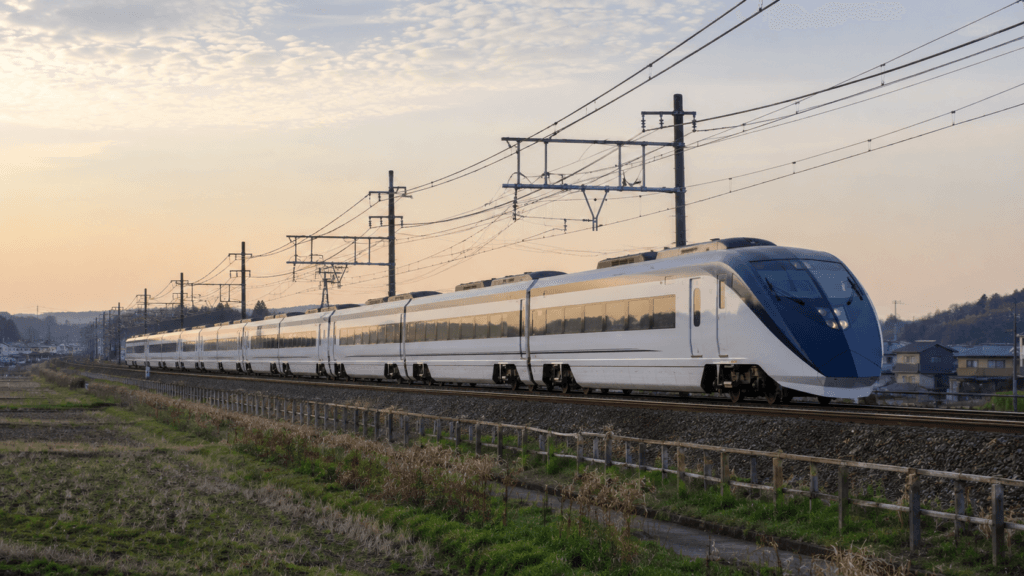
The Keisei Skyliner is the fastest rail connection from Narita Airport into Tokyo.
The quickest services reach Nippori in about 36 minutes and Keisei-Ueno in roughly 41 minutes. Trains normally run several times an hour, and all seats are reserved.
There is proper luggage storage, power access, and more space than you will find on an ordinary commuter train. After a long flight, simply knowing where your suitcase belongs can feel like a small luxury.
When the Skyliner Makes Sense
The Skyliner is usually the strongest choice for accommodation around:
- Ueno
- Nippori
- Yanaka
- Northern Asakusa
- Akihabara
- Ikebukuro
- Stations with easy access from the northern Yamanote Line
Nippori offers convenient JR transfers toward Ikebukuro, Shinjuku, Tokyo Station, and other parts of the city.
The transfer is not especially difficult. It simply feels different when one hand is pulling a full-size suitcase and the other is checking whether the next train is heading in the correct direction.
Skyliner Fare in 2026
The standard one-way fare between Narita Airport and Nippori or Ueno is currently about ¥2,580, including the reserved-seat supplement.
Some Keisei English-language pages have displayed older or inconsistent fare information, so check the final amount shown on the official booking screen or ticket machine.
Discounted e-tickets and packages combined with Tokyo subway access may also be available. Compare the standard fare with a Skyliner airport ticket before booking.
Do You Need to Reserve It?
Buying after arrival is normally possible, but advance booking is useful during:
- Cherry blossom season
- Golden Week
- Autumn weekends
- New Year travel periods
- Public holidays
- Large events in Tokyo
Avoid reserving a train too close to your scheduled landing time.
Landing time is only the beginning. Immigration may be fast, or the queue may stretch across the hall. Then there is baggage claim, customs, the first bathroom stop, and the walk to the station.
Leaving a comfortable buffer is better than beginning the trip with a sprint through Terminal 1.
Narita Express: Easiest for Tokyo, Shibuya and Shinjuku
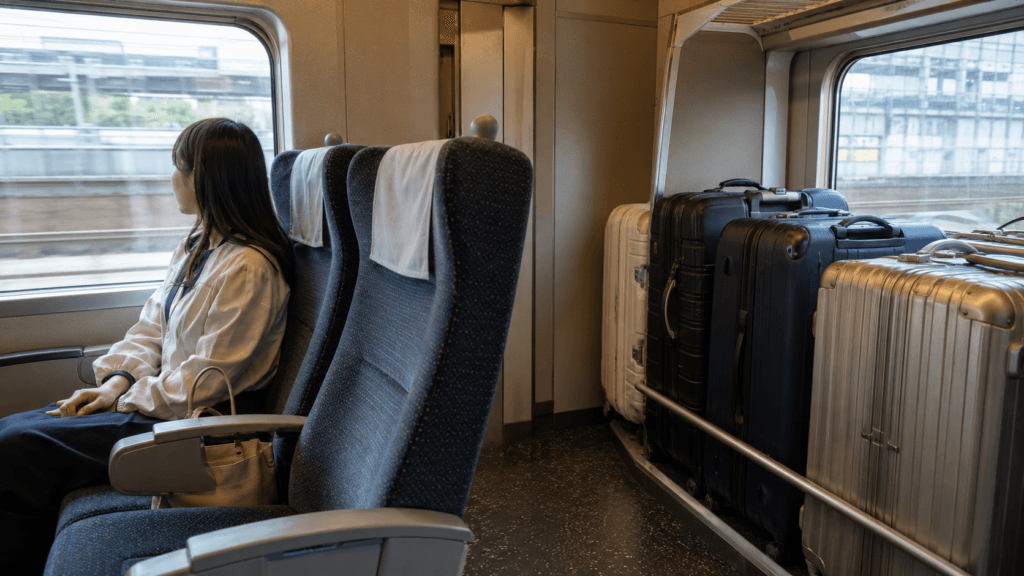
The Narita Express, usually called the N’EX, connects Narita Airport directly with Tokyo Station, Shinagawa, Shibuya, Shinjuku, Yokohama, and several other JR stations.
The fastest service reaches Tokyo Station in about 53 minutes.
For hotels around Tokyo Station, Shibuya, Shinjuku, Shinagawa, or Yokohama, the N’EX is often the easiest arrival-day choice. You board at the airport, place your luggage in the storage area, and remain on the same train until the city.
It may not win the pure speed contest against the Skyliner, but it often wins the “I do not want to transfer with two suitcases” contest.
N’EX Fares
Typical one-way ordinary-car fares are:
| Destination | One-way fare |
|---|---|
| Tokyo Station | ¥3,140 |
| Shibuya or Shinjuku | ¥3,330 |
| Yokohama | ¥4,480 |
The train costs more than the Skyliner or airport bus, but the direct route can justify the difference.
N’EX Tokyo Round Trip Ticket
The N’EX Tokyo Round Trip Ticket costs ¥5,200 and can be used for a return journey within 14 days.
It is useful for travelers who plan to take the N’EX in both directions. The Tokyo-side station does not have to be the same for each journey.
For example, you can travel from Narita Airport to Shinjuku on arrival and return from Tokyo Station at the end of the trip.
Check the validity dates carefully. A 15-day stay is only one day longer, but railway tickets can be surprisingly strict about arithmetic.
If Your Flight Is Delayed
When possible, change your reservation through the JR East booking system.
If you miss the booked train, the ticket can normally be used on a later N’EX that same day. You may sit in an unoccupied seat, but you must move if the person holding the reservation arrives.
A seat is therefore not guaranteed unless you secure a new reservation.
This flexibility is reassuring, but a generous booking buffer is still the calmer option.
TYO-NRT Bus: Cheapest Simple Route to Tokyo Station
The Airport Bus TYO-NRT is one of the easiest low-cost ways to reach central Tokyo.
The standard adult fare is ¥1,500, while certain late-night or early-morning services cost more. The fastest scheduled journeys to Tokyo Station take around 65 minutes, although road traffic can stretch that time considerably.
For a hotel near Tokyo Station, ¥1,500 is difficult to argue with, especially when the bus stop is only a short walk away.
Who Will Find It Useful?
The TYO-NRT bus works particularly well for:
- Tokyo Station accommodation
- Ginza hotels near the relevant stop
- Solo travelers
- Visitors watching their budget
- Anyone who prefers one direct ride to a train transfer
Seats are not always reservable, so you may need to wait for the next departure during busy periods.
Luggage Restrictions
Passengers are generally limited to one suitcase in the luggage compartment.
Oversized equipment such as bicycles, surfboards, and certain sporting items may not be accepted. Travelers carrying more than one large case should check the latest luggage rules before joining the queue.
The price is excellent, but the bus is not designed to relocate an entire apartment.
The Main Drawback
Traffic is unpredictable.
For the arrival journey, that may simply mean reaching the hotel later than planned. For the return journey to Narita, the consequences are more serious.
Leave a large buffer before an international flight. Airport buses are comfortable, but they cannot negotiate personally with Tokyo traffic.
Airport Limousine Bus: Best for Heavy Luggage
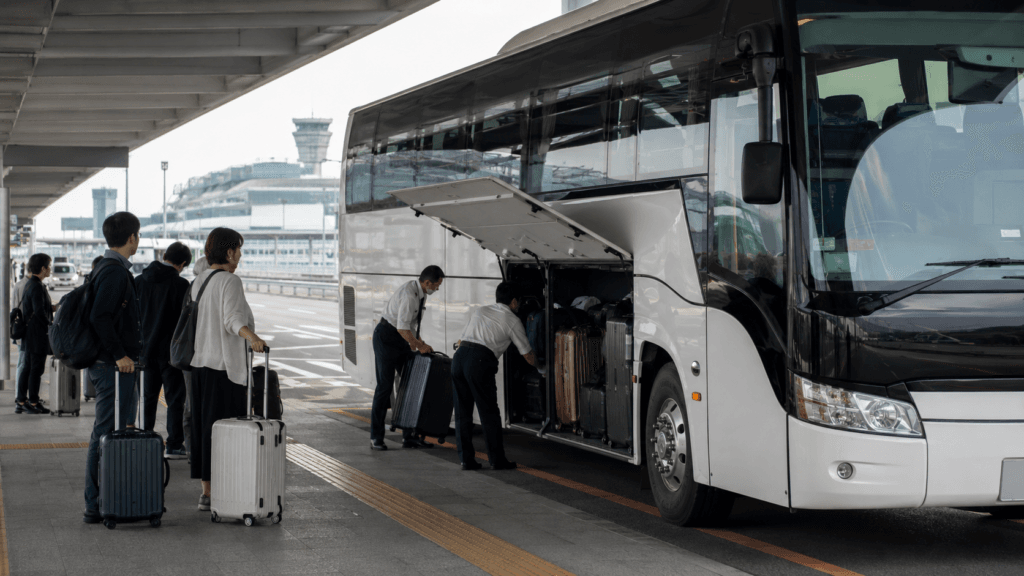
The Airport Limousine Bus serves major Tokyo districts, transport hubs, and selected hotels.
Unlike the low-cost TYO-NRT bus, it operates across a wider range of destinations. Some services stop outside major hotels, saving you from a final subway ride or taxi transfer.
Typical fares to major areas such as Shinjuku are around ¥3,600, although the amount varies by destination.
Why It Can Be Worth the Extra Cost
The main advantage is not speed. It is the lack of effort.
Your luggage goes beneath the bus. Everyone in the group remains together. Rain becomes less of a problem. When the service stops at your hotel, there is no need to decode Shinjuku Station on the first evening of the trip.
That convenience is particularly useful for:
- Families with children
- Older travelers
- Visitors with limited mobility
- Travelers carrying several bags
- Guests at hotels served directly by the bus
- Anyone who would rather sit than transfer
Before booking, confirm the exact stop. “Shinjuku area” can still leave you a long walk from a particular hotel.
The timetable also matters. Some hotel stops have only a few services each day.
Access Express: Good Value for Asakusa and Nihombashi
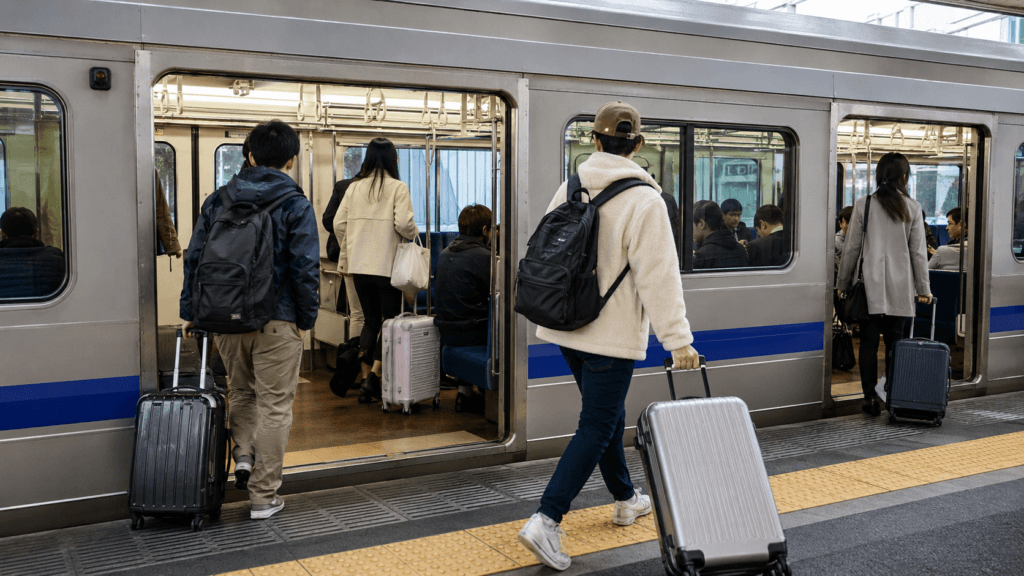
The Keisei Access Express uses the Narita Sky Access route but operates as a regular commuter-style train.
It is slower than the Skyliner and has no reserved seating, but it does not require an airport limited-express supplement. Some services continue directly toward Oshiage, Asakusa, Nihombashi, Shimbashi, and Shinagawa.
For a hotel near Asakusa or Nihombashi, the balance of price and convenience can be excellent.
Typical Adult Fares
| Destination | Approximate fare |
|---|---|
| Asakusa | ¥1,290 |
| Nihombashi | ¥1,330 |
| Shimbashi | ¥1,330 |
| Shinagawa | ¥1,520 |
| Ueno or Nippori | ¥1,240 |
IC-card fares may differ slightly.
What It Is Actually Like
This is not a dedicated airport train.
There are no reserved seats, and luggage space is limited. When the carriage is quiet, the journey can be perfectly comfortable. During commuter periods, a large suitcase may feel less like luggage and more like an extra passenger you forgot to buy a ticket for.
Not every train follows the same route. Check the final destination shown on the platform before boarding.
A train that looks correct may have plans for a completely different part of Tokyo.
The Cheaper Keisei Main Line
The Keisei Main Line is another budget option for Ueno and Nippori.
It usually costs a little less than the Access Express but takes longer and offers the same commuter-style seating. It makes sense when saving every yen matters more than speed or comfort.
For most tired arrivals, the Access Express is the more useful budget train. The Main Line is the deeper discount version.
Taxi and Private Transfer: Best for Groups and Late Arrivals
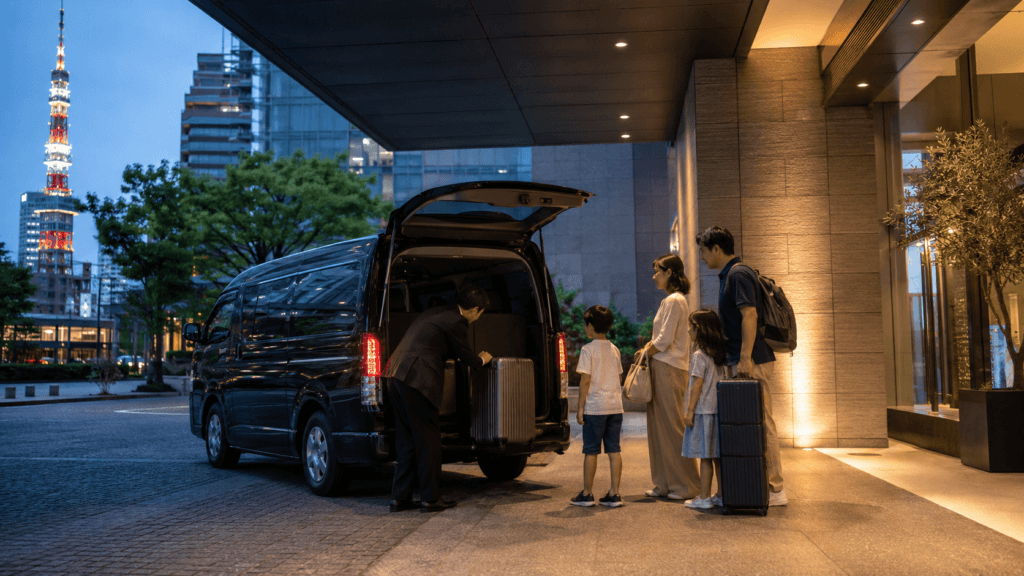
A taxi is the simplest route from Narita Airport to your hotel and the most expensive.
Official fixed-fare taxis operate to different Tokyo zones. Highway tolls are charged separately, and late-night or early-morning surcharges apply.
Typical Fixed Fares
| Tokyo area | Approximate fixed fare |
|---|---|
| Central and eastern districts | ¥29,000–¥31,000 |
| Shinjuku, Shibuya and nearby districts | ¥31,500–¥32,500 |
| Western residential districts | ¥35,500–¥38,500 |
The exact zone depends on the destination.
When the Cost Can Make Sense
A taxi or private transfer becomes more reasonable when:
- Three or four travelers split the fare
- The group has several large suitcases
- You are traveling with young children
- A passenger has limited mobility
- The flight arrives after regular public transport
- The hotel is difficult to reach from a station
- You want a driver waiting after immigration
A prebooked transfer may also provide a larger vehicle and a clearer meeting arrangement.
Compare the total price, waiting policy, and luggage capacity of a Narita Airport private transfer before booking.
A standard Japanese taxi may not fit four adults and four large suitcases. In that situation, the luggage has formed its own travel group, and a van is the sensible choice.
Best Transport by Tokyo Neighborhood
Ueno and Nippori
The Skyliner is the clear choice.
It is fast, direct, and designed around these stations. Many Ueno hotels are within walking distance or a short taxi ride from Keisei-Ueno.
Asakusa
The Access Express is often the best-value direct option.
For heavier luggage, taking the Skyliner to Ueno and continuing by taxi may be easier. Check airport bus stops as well, since some Asakusa hotels are more convenient from the road than the railway.
Tokyo Station and Marunouchi
The N’EX is the easiest direct train.
The TYO-NRT bus is much cheaper and works well when the hotel is close to the Yaesu side of Tokyo Station.
Ginza
The TYO-NRT bus can be convenient for hotels near its Ginza stop.
The Access Express to Higashi-Ginza is another useful option when you prefer rail travel and want to avoid road traffic.
Shinjuku
The N’EX offers the simplest train journey.
The Limousine Bus may be better when it stops at your hotel. The Skyliner can still work, but the transfer at Nippori is less appealing with large luggage.
Shibuya
The N’EX is generally the easiest public transport option.
A limousine bus or private transfer may be more comfortable when the hotel is a long walk from Shibuya Station.
Ikebukuro
Take the Skyliner to Nippori and transfer to the JR Yamanote Line.
A limousine bus is slower but easier for travelers who prefer to avoid the transfer.
Shinagawa
The N’EX is the simplest direct option.
Some Access Express services continue to Shinagawa at a lower fare, but check the destination and timetable carefully.
Yokohama
The N’EX is the obvious direct route.
A cheaper journey using several local trains is possible. After an international flight, however, not every technically possible plan deserves to live.
Getting to the Station From Each Narita Terminal
Terminal 1
Narita Airport Station is beneath Terminal 1.
Allow around five minutes to reach the station area after entering the public arrivals section, although the exact time depends on your arrival gate and luggage.
Terminal 2
Narita Airport Terminal 2·3 Station is beneath Terminal 2.
The walk is generally straightforward and takes around five minutes once you are through arrivals.
Terminal 3
Terminal 3 does not have its own railway station.
Train passengers must use Narita Airport Terminal 2·3 Station. The walk takes roughly ten minutes, and a free shuttle also connects the terminals.
Travelers arriving on a low-cost airline should include this extra time before choosing a train.
Landing, immigration, baggage claim, and the station walk rarely combine into the elegant 20-minute sequence imagined while booking from home.
Arriving Late at Night
Check the final train and bus for your exact terminal and travel date.
Do not rely on a screenshot from an older travel blog. Airport schedules change, and the last connection may leave earlier than expected.
When public transport has finished, the practical options are:
- Official fixed-fare taxi
- Prebooked private transfer
- Airport hotel with shuttle service
- Waiting until morning in an accessible terminal area
For solo travelers, an airport hotel can cost much less than a late-night taxi into Tokyo. It also turns a stressful arrival into sleep, breakfast, and a much calmer train the next morning.
Common Mistakes
Choosing the Fastest Train Without Checking the Final Destination
The Skyliner is fastest to Nippori, not automatically to Shinjuku, Shibuya, or your hotel entrance.
Compare the full journey.
Booking Too Soon After Landing
Do not treat scheduled landing time as station arrival time.
Immigration, baggage, customs, and terminal walking can easily add an hour or more.
Forgetting the Terminal 3 Walk
Terminal 3 passengers need extra time to reach Terminal 2·3 Station.
Include this before selecting a departure.
Taking a Commuter Train With Too Much Luggage
The Access Express and Keisei Main Line are affordable, but reserved airport trains are much easier with large bags.
Saving money is less exciting when the suitcase spends 70 minutes blocking your knees.
Buying the N’EX Round Trip Ticket for a Long Stay
The round-trip ticket must be used within its stated validity period.
Check the return date before paying.
Assuming Every Airport Bus Stops at Every Hotel
Airport bus routes are selective.
Confirm the exact stop, operating days, and walking distance to the hotel.
Relying on the Bus Too Close to Departure
Road delays can be substantial.
For the return journey to Narita, leave more time than the scheduled travel duration suggests.
Booking a Standard Taxi for Too Many Bags
Four passengers and four large suitcases may require a van.
Vehicle capacity matters as much as the number of seats.
FAQ
What Is the Fastest Way From Narita Airport to Tokyo?
The Skyliner is the fastest train to Nippori and Ueno.
For Shinjuku or Shibuya, the direct N’EX may be faster in practical terms because it avoids a transfer.
What Is the Cheapest Way From Narita Airport to Tokyo?
The Keisei Main Line is among the cheapest train options.
The TYO-NRT bus costs ¥1,500 and is the simplest low-cost route to Tokyo Station.
Is the Skyliner or N’EX Better?
Take the Skyliner for Ueno, Nippori, or a convenient northern Yamanote Line connection.
Take the N’EX for Tokyo Station, Shinagawa, Shibuya, Shinjuku, or Yokohama.
Can I Use Suica or PASMO?
Suica and PASMO can be used for regular base fares and many buses.
The Skyliner and N’EX still require the appropriate limited-express or reserved-seat ticket.
Do I Need to Reserve the Skyliner or N’EX?
Reservations are recommended, especially during busy travel periods.
Tickets are normally available at the airport, but popular departures can sell out.
Which Option Is Best With Children or Heavy Luggage?
A Limousine Bus is often easiest when it stops close to the hotel.
For a larger family group with several bags, a van-sized private transfer may be worth comparing.
Final Thoughts
After a long flight, the best airport transfer is usually the one that asks the least from you.
For some travelers, that means taking the fastest train. For others, it means sitting on a bus until the hotel appears outside the window.
The Skyliner is ideal for Ueno and Nippori. The N’EX is easier for Tokyo Station, Shibuya, Shinjuku, Shinagawa, and Yokohama. The TYO-NRT bus is difficult to beat on price, while the Access Express works especially well for Asakusa and Nihombashi.
Travelers with children, older relatives, or several suitcases should not dismiss the Limousine Bus or a private transfer simply because it costs more. Saving one transfer on arrival day can be worth more than saving 20 minutes.
Check the last service, leave enough time after landing, and choose the route that ends closest to your hotel.
Narita is far from central Tokyo, but the journey becomes much easier once you stop looking for one universal best option. From there, the airport transfer becomes just the first practical step in a longer Japan itinerary.