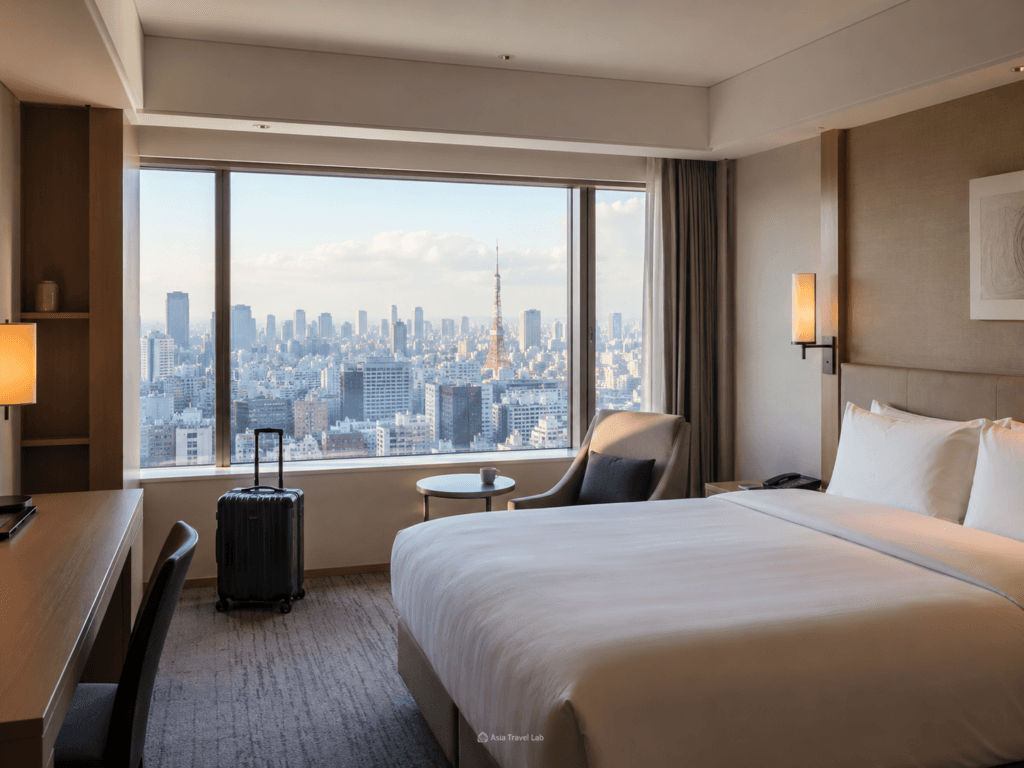
Choosing where to stay in Tokyo can feel harder than choosing what to eat in Tokyo, and that is saying something in a city where even convenience-store snacks have emotional power.
Tokyo is huge. The best hotel area is not only about pretty streets, famous nightlife, or how calm the room looks in photos. For first-time visitors, the real question is much more practical: how tired do you want to be at the end of each day?
A good Tokyo hotel location can make your trip feel smooth. A bad location can turn every morning into a train puzzle and every evening into a small suitcase opera.
This guide covers the best areas to stay in Tokyo in 2026, including Shinjuku, Shibuya, Ginza, Tokyo Station, Asakusa, Ueno, Shinagawa, Roppongi, Akasaka, and Ikebukuro. It also explains which area works best for first-time visitors, families, couples, budget travelers, airport access, nightlife, and travelers continuing to Kyoto or Osaka.
Before choosing your hotel, it helps to understand Tokyo’s layout in Tokyo Travel Guide 2026. For a day-by-day plan, pair this hotel guide with Tokyo Itinerary 2026.
Some links in this guide may be affiliate links, which means we may earn a small commission if you book through them, at no extra cost to you.
How to Choose the Best Area to Stay in Tokyo
Tokyo is not a city where you should choose a hotel only because the room looks nice online.
Hotel photos can be very persuasive. They show the bed, the breakfast, the bathtub, maybe a calm little lobby plant. They rarely show the 18-minute walk to the station while dragging luggage in July humidity.
For first-time visitors, the best Tokyo hotel area usually comes down to three things: station access, airport access, and how well the area matches your actual itinerary.
Stay Near a Useful Station
In Tokyo, station access matters more than room size. A small hotel room near a useful station is often better than a bigger room far away from everything.
Try to stay within a short walk of a train or subway station. Even better, stay near a station that connects easily to your main sightseeing areas.
Useful hotel areas for first-time visitors include Shinjuku, Shibuya, Tokyo Station, Ginza, Ueno, Asakusa, Shinagawa, Akasaka, and Roppongi.
You do not need to stay right beside the busiest station exit, but you should avoid places that require long walks, awkward transfers, or buses for basic sightseeing.
Think About Your Airport
Tokyo has two main international airports: Haneda and Narita.
Haneda is closer to central Tokyo and works especially well with areas like Shinagawa, Hamamatsucho, Ginza, Tokyo Station, Shibuya, and Shinjuku.
Narita is farther away, so your hotel location matters more. Ueno and Nippori work well with the Keisei Skyliner. Tokyo Station, Shinjuku, and Shibuya can work well with Narita Express or airport buses, depending on your hotel.
Arriving late at night? Choose a hotel with simple airport access, or consider Tokyo airport transfer if you want a smoother arrival after a long flight.
Choose Convenience Over “Perfect”
There is no single perfect area in Tokyo. Shinjuku is convenient but busy. Shibuya is exciting but expensive. Ginza is elegant but not cheap. Asakusa has charm but is less central for nightlife. Ueno is practical but not as stylish as Tokyo’s trendier districts.
The goal is not to find the perfect neighborhood. The goal is to choose the area that causes the least daily friction.
That sounds unromantic, but so does missing the last train because your hotel is hidden somewhere inconvenient.
Quick Answer: Best Areas to Stay in Tokyo
For most first-time visitors, these are the easiest choices.
- Best overall area: Shinjuku
- Best for Tokyo energy: Shibuya
- Best for comfort and easy travel: Ginza / Tokyo Station
- Best for traditional Tokyo: Asakusa
- Best for budget and Narita access: Ueno
- Best for Haneda and Shinkansen: Shinagawa
- Best for dining and nightlife: Roppongi / Akasaka
- Best budget alternative to Shinjuku: Ikebukuro
For most first-time travelers, it is worth comparing Tokyo hotels for first-time visitors in Shinjuku, Shibuya, Ginza, Tokyo Station, Asakusa, and Ueno before choosing your final base.
Shinjuku: Best Overall Area for First-Time Visitors
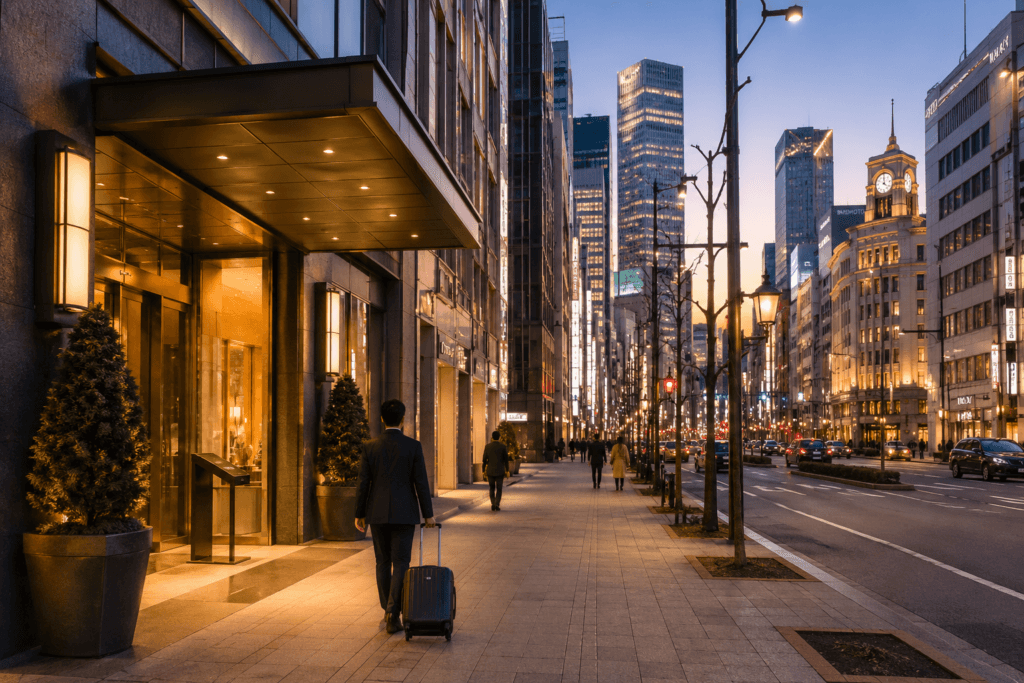
Shinjuku is the safest “default answer” for many first-time visitors to Tokyo.
It has excellent transport, endless restaurants, nightlife, shopping, hotels, and easy connections to many parts of the city. Shinjuku also works well for travelers planning day trips or moving around Tokyo a lot.
Stay in Shinjuku if you want:
- The best overall convenience
- Easy transport around Tokyo
- Nightlife and late food options
- Shopping and restaurants nearby
- A strong first-time Tokyo base
Shinjuku is especially good for travelers who plan to visit Shibuya, Harajuku, Ikebukuro, Nakano, Tokyo Station, and western Tokyo areas.
The main downside is the atmosphere. Shinjuku is big, bright, crowded, and sometimes confusing. Shinjuku Station is famous for being huge, and finding the correct exit can feel like a tiny quest you did not agree to join.
Some parts near Kabukicho can also feel loud or intense at night. Families and travelers who prefer quiet evenings may want to choose the calmer west side of Shinjuku or consider Ginza, Tokyo Station, Asakusa, or Ueno instead.
For convenience, compare Shinjuku hotels in Tokyo early, especially during cherry blossom season, autumn, holidays, and weekends.
Shibuya: Best for Shopping, Cafes and Tokyo Energy
Shibuya is one of the most exciting areas to stay in Tokyo. It gives you that immediate “I am in Tokyo” feeling: giant screens, busy crossings, fashion stores, cafes, restaurants, music shops, nightlife, and streets that stay lively into the evening.
Shibuya is great for first-time visitors who want energy right outside the hotel door. It is also convenient for Harajuku, Omotesando, Daikanyama, Ebisu, and Shinjuku.
Stay in Shibuya if you want:
- A lively Tokyo atmosphere
- Shopping and cafes
- Night views and city photos
- Easy access to Harajuku and Omotesando
- A younger, trendier base
Shibuya is especially good for couples, younger travelers, solo travelers, and anyone who wants Tokyo to feel exciting from the first evening.
The downside is price. Hotels in Shibuya can be expensive, and the station area is very busy. It may not be the best choice for travelers who want quiet nights, larger rooms, or better value.
Shibuya is not always the easiest area with heavy luggage either. The station has improved over the years, but it can still feel like a vertical maze when you are tired.
Choose Shibuya for energy, not calm.
Ginza and Tokyo Station: Best for Comfort and Easy Travel
Ginza and Tokyo Station are ideal for travelers who want convenience with a more polished atmosphere.
Ginza is elegant, clean, and excellent for shopping, department stores, food halls, cafes, restaurants, and evening walks. Tokyo Station and Marunouchi are practical for train connections, Shinkansen travel, Narita Express, restaurants, and business-style hotels.
This area is especially useful if Tokyo is the first stop before Kyoto or Osaka. Tokyo Station gives you easy access to the Shinkansen, so leaving the city with luggage is much easier than crossing Tokyo from a less convenient neighborhood.
Stay around Ginza or Tokyo Station if you want:
- A cleaner, calmer city base
- Easy access to Shinkansen trains
- Department stores and food halls
- Good restaurants and cafes
- Comfortable hotels
- A polished Tokyo atmosphere
This area works well for couples, families, business travelers, older travelers, and anyone who wants less nightlife noise than Shinjuku or Shibuya.
The downside is that it can feel less young and electric than Shibuya or Shinjuku. It is also not usually the cheapest area.
Still, Ginza and Tokyo Station are excellent for a first trip when comfort matters. You may not get the wildest Tokyo street energy, but you get convenience, clean streets, good food, and fewer “where am I?” moments.
Travelers heading west after Tokyo can continue with Kyoto Itinerary 2026 or Osaka Itinerary 2026. If you are still choosing hotel areas outside Tokyo, compare Where to Stay in Kyoto 2026 and Where to Stay in Osaka 2026.
For a smoother multi-city trip, compare Ginza and Tokyo Station hotels if your route includes Kyoto or Osaka by Shinkansen.
Asakusa: Best for Traditional Tokyo and Better Value
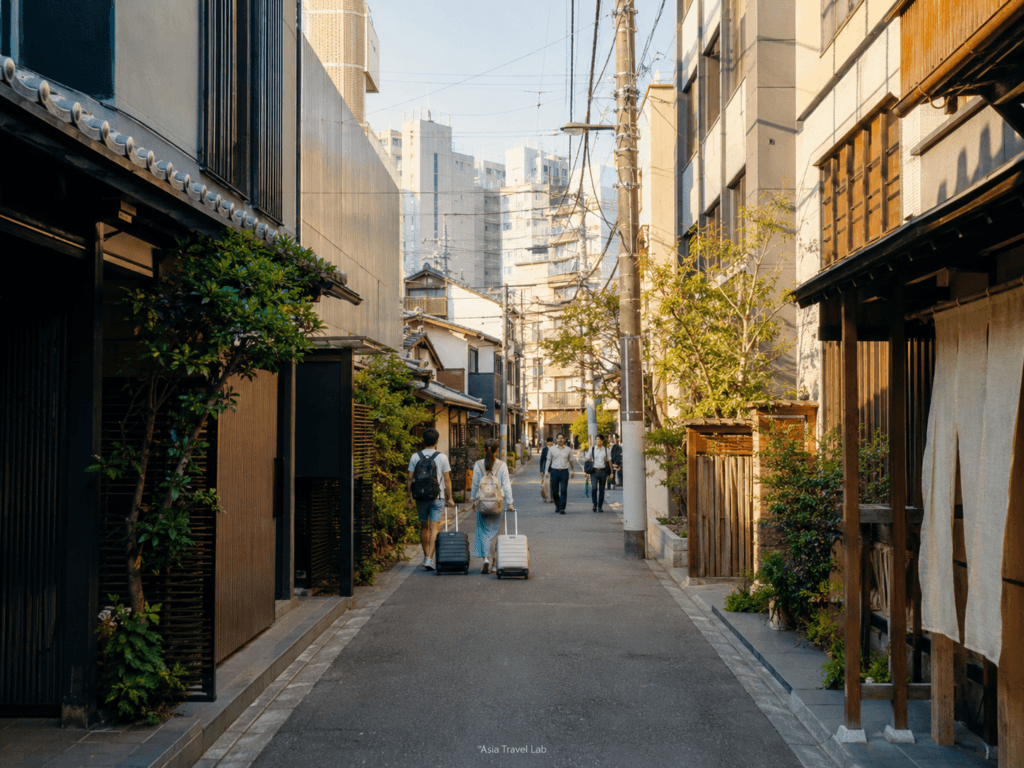
Asakusa is one of the best areas to stay for travelers who want a more traditional Tokyo atmosphere.
The area is known for Senso-ji Temple, Nakamise Street, old shopping lanes, casual restaurants, souvenir shops, and views toward Tokyo Skytree. It feels more relaxed than Shinjuku or Shibuya, especially in the evening.
Stay in Asakusa if you want:
- Traditional Tokyo atmosphere
- Better-value hotels
- Easy access to Senso-ji Temple
- A quieter evening base
- A good area for families or slower travelers
Asakusa works well for first-time visitors who care more about temples, old streets, and a calm base than nightlife. It is also good for travelers who prefer a neighborhood that feels easy to understand.
The downside is location. Asakusa is not as central for Shibuya, Shinjuku, Harajuku, or western Tokyo. You can still get around easily, but some routes take longer.
Asakusa is great if your idea of a good Tokyo evening is a quiet walk, a casual meal, and maybe a view of Tokyo Skytree. It is less ideal if your main plan is nightlife in Shibuya or Shinjuku.
For better value and a traditional mood, compare Asakusa and Ueno hotels before booking.
Ueno: Best for Budget Travelers and Narita Access
Ueno is practical, well connected, and often easier on the budget than Shinjuku, Shibuya, or Ginza.
It has Ueno Park, museums, Ameyoko Market, casual restaurants, shopping streets, and strong transport links. Ueno is also useful for Narita Airport access because the Keisei Skyliner connects Narita Airport with the Ueno and Nippori side of Tokyo.
Stay in Ueno if you want:
- Better-value hotels
- Good Narita Airport access
- Museums and parks nearby
- Casual food and local shopping streets
- Practical transport
Ueno is not as stylish as Shibuya or as polished as Ginza, but that is not necessarily a problem. For many travelers, Ueno simply works. It has food, trains, hotels, markets, and enough life without the same level of chaos as Shinjuku.
Ueno is also a good choice for travelers who plan to visit Asakusa, Akihabara, Tokyo Skytree, Tokyo Station, or northern Tokyo areas.
The downside is that some streets can feel a little less polished, and the area does not have the same trendy energy as Shibuya or Omotesando. But for budget-conscious travelers, Ueno is one of the strongest options in Tokyo.
Shinagawa: Best for Haneda Airport and Shinkansen
Shinagawa is not the area you choose for Tokyo’s most exciting street life. It is the area you choose when your flight, luggage, or Shinkansen schedule matters more than atmosphere.
For short stays, early departures, Haneda access, or smooth travel toward Kyoto or Osaka, Shinagawa can quietly save your trip from becoming a logistics workout.
It has hotels, restaurants, office buildings, and strong rail connections. It can be especially useful when Tokyo is part of a larger Japan trip and you plan to continue west by Shinkansen.
Shinagawa is a good fit for business travelers, short-stay visitors, Haneda Airport users, and travelers who prefer practicality over nightlife.
The downside is simple: Shinagawa may feel less memorable than Shinjuku, Shibuya, Asakusa, or Ginza. It is efficient, not romantic. But sometimes efficient is exactly what you need, especially when your flight leaves early and your suitcase has developed its own personality.
Stay here for convenience, not for the most exciting street life.
Roppongi and Akasaka: Best for Dining, Nightlife and Couples
Roppongi and Akasaka are good choices for travelers who want restaurants, nightlife, art, and a slightly more grown-up Tokyo atmosphere.
Roppongi is known for nightlife, international dining, museums, Tokyo Tower views, and access to areas like Azabudai Hills. Akasaka is a little more business-like and calmer, with good restaurants and convenient transport.
This area can work well for repeat visitors, couples, food-focused travelers, and people who want nightlife without staying in Kabukicho or central Shibuya.
Compared with Shinjuku, the nightlife here can feel more international and adult. Compared with Ginza, it feels less polished but livelier after dark.
The downside is that Roppongi is not always the easiest first-time base for sightseeing across Tokyo. It is good, but not quite as universally convenient as Shinjuku, Shibuya, or Tokyo Station.
Choose Roppongi or Akasaka if you already know you want dining, nightlife, museums, and a more mature city mood.
Ikebukuro: Best Budget Alternative to Shinjuku
Ikebukuro is a useful alternative when Shinjuku and Shibuya hotels are too expensive.
It has strong train connections, shopping, restaurants, anime and game-related stores, department stores, and plenty of hotel options. It is not always a first choice for first-time visitors, but it can be a smart backup.
Ikebukuro works especially well for budget travelers who still want a big-station area. It is also good for travelers interested in anime, shopping, or easy access to northern and western Tokyo.
The downside is that Ikebukuro can feel busy and less polished. It does not have the same iconic first-trip feeling as Shibuya, and it is less elegant than Ginza.
Think of Ikebukuro as a practical backup. It may not be the dreamiest Tokyo base, but it becomes very useful when Shinjuku and Shibuya prices start climbing.
Where Not to Stay in Tokyo for a First Trip
Tokyo has many good hotel areas, but first-time visitors should be careful with places that look close on a map but are less convenient in real life.
You do not necessarily need to avoid these areas completely, but think twice before booking them for a first trip.
Too Far from a Train or Subway Station
A hotel that is 15 to 20 minutes from the nearest useful station may look fine online, but that walk gets old quickly. Add rain, luggage, summer heat, or tired feet, and it becomes less charming.
Far Suburban Areas
Outer Tokyo can be cheaper, but staying too far out may cost you time every day. For a short first trip, saving money on the room may not be worth losing sightseeing time.
Areas Chosen Only for Cheap Prices
A cheap hotel is not automatically a good deal. Check transport, station access, reviews, room size, and nighttime convenience before booking.
Party Areas with the Wrong Hotel Location
Nightlife areas can be fun, but staying directly above the loudest streets is not always fun when you need sleep. In Shinjuku or Shibuya, check the exact hotel location and reviews carefully.
Best Tokyo Areas by Traveler Type
Best Area for First-Time Visitors
Shinjuku is the best overall choice for most first-time visitors because it is convenient, lively, and well connected.
Ginza and Tokyo Station are better for travelers who prefer comfort and calmer streets.
Best Area for Couples
Shibuya, Ginza, Roppongi, Akasaka, and Tokyo Station are good choices for couples.
Shibuya has energy, Ginza has elegance, and Roppongi or Akasaka offer dining and nightlife without quite the same chaos as Shinjuku.
Best Area for Families
Ginza, Tokyo Station, Asakusa, Ueno, and quieter parts of Shinjuku can work well for families.
Families should prioritize station access, room size, easy food options, and simple airport transfers.
Best Area for Budget Travelers
Ueno, Asakusa, Ikebukuro, and some parts of Shinagawa can offer better value.
Ueno is especially practical for budget travelers using Narita Airport.
Best Area for Nightlife
Shinjuku, Shibuya, Roppongi, and Akasaka are the strongest nightlife areas.
Shinjuku is the biggest and most intense. Shibuya is younger and trendier. Roppongi and Akasaka feel more international and grown-up.
Best Area for Haneda Airport
Shinagawa, Hamamatsucho, Ginza, Tokyo Station, and Shimbashi can work well for Haneda access.
Shinagawa is especially practical.
Best Area for Narita Airport
Ueno, Nippori, Tokyo Station, Shinjuku, and Shibuya can all work depending on your transport choice.
Ueno and Nippori are especially convenient for Keisei Skyliner users.
Tokyo Accommodation Tax and Booking Tips
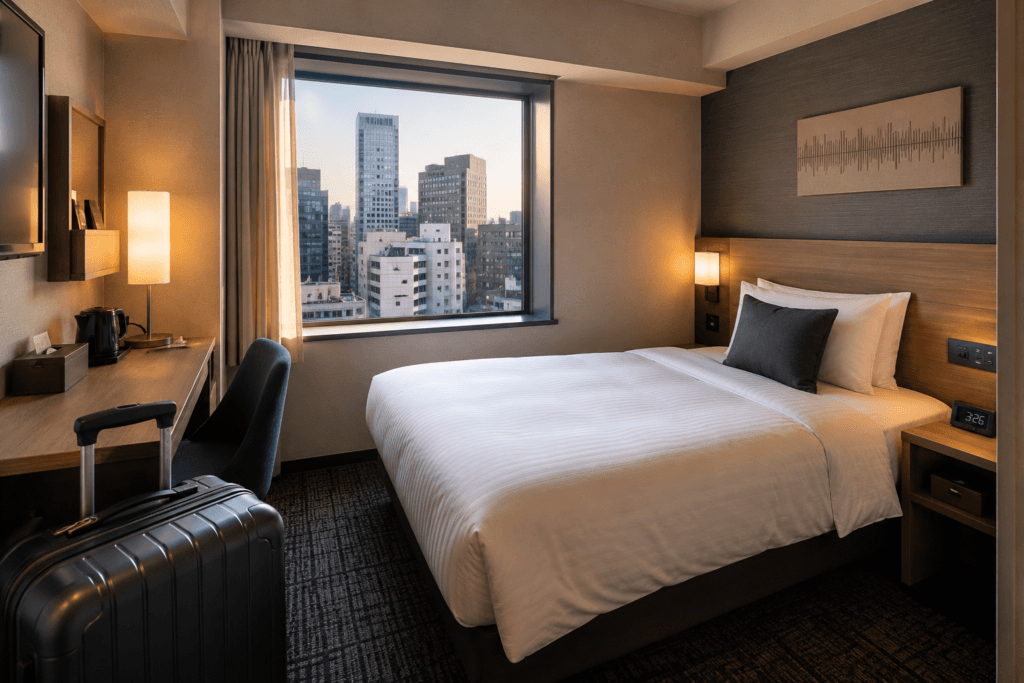
Tokyo charges a small accommodation tax depending on the room rate. It is usually collected by the hotel, so do not be surprised if a small local tax appears at check-in or check-out.
At the time of writing, Tokyo’s current accommodation tax is based on the room charge per person per night. A revised percentage-based system is scheduled to begin in April 2027, so future travelers should check the latest rules before booking.
Other booking tips:
- Book early for cherry blossom season and autumn.
- Check room size carefully. Tokyo hotel rooms can be small.
- Read reviews for station access, not just cleanliness.
- Check whether the hotel is near a useful train line.
- Confirm luggage storage options if arriving before check-in.
- Look for airport bus stops when traveling with large luggage.
- Use properly registered accommodation for apartment-style stays.
Apartment-style stays can be useful for families or longer trips, but Japan’s private lodging rules are strict. Use legitimate, properly registered accommodation to avoid booking problems.
Before arrival, mobile data also helps with maps, station exits, hotel directions, and translation apps. Check Japan eSIM for travelers before your trip so your first Tokyo task is not hunting for Wi-Fi with luggage.
Common Mistakes When Booking Hotels in Tokyo
Choosing the Cheapest Hotel Without Checking Location
Tokyo is a city where location can save your day. A cheaper hotel far from a station may cost you more in time, transfers, and daily exhaustion.
Always check walking time to the nearest useful station.
Assuming All Tokyo Stations Are Equal
Being near a station is good. Being near a useful station is better.
A small local station may be fine for repeat visitors, but first-time travelers usually benefit from staying near larger, better-connected areas.
Booking Too Far from Your Main Plans
When your itinerary is mostly Shibuya, Shinjuku, Harajuku, and west Tokyo, staying far east may create extra travel time. When your plans are Asakusa, Ueno, Skytree, and Tokyo Station, staying in Shibuya may not be necessary.
Match your hotel to your actual route.
Ignoring Airport Access
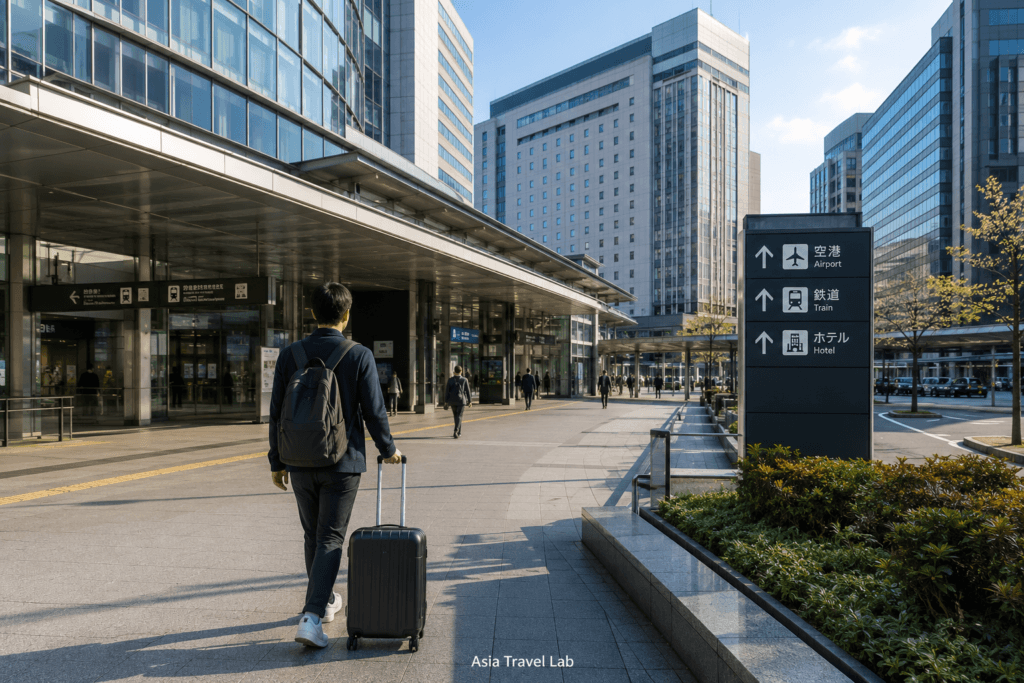
Airport access matters most on arrival and departure days. A hotel that seems fine during sightseeing may become annoying when you need to reach Narita or Haneda with luggage.
Forgetting About Room Size
Tokyo hotel rooms can be compact. Very compact. Sometimes the suitcase becomes part of the furniture.
Check square meters, bed size, and reviews before booking, especially for couples, families, or travelers with large luggage.
Staying in a Nightlife Area Without Reading Reviews
Shinjuku, Shibuya, and Roppongi can be fun, but some hotel locations are noisier than others. Read recent reviews for noise, safety, and late-night atmosphere.
Waiting Too Long During Peak Seasons
Tokyo gets busy during cherry blossom season, autumn, holidays, and major events. Good hotel locations can sell out early or become expensive.
When your dates are fixed, compare hotel options sooner rather than later, especially if you want a convenient station area.
Where to Stay in Tokyo: Simple Recommendations
For a first Tokyo trip, choose Shinjuku if you want the easiest all-around base.
Choose Shibuya if you want energy, shopping, cafes, and nightlife.
Choose Ginza or Tokyo Station if you want comfort, clean streets, good restaurants, and easy onward travel.
Choose Asakusa if you want traditional Tokyo and better value.
Choose Ueno if you want budget-friendly convenience and strong Narita access.
Choose Shinagawa if you want Haneda Airport access and Shinkansen practicality.
Choose Roppongi or Akasaka if you want dining, nightlife, and a more grown-up city mood.
Choose Ikebukuro if Shinjuku and Shibuya are too expensive, but you still want a big-station area.
Tokyo Hotel FAQ
What is the best area to stay in Tokyo for first-time visitors?
Shinjuku is the best overall area for many first-time visitors because it has excellent transport, restaurants, nightlife, shopping, and hotel options. Ginza and Tokyo Station are better for travelers who want a calmer and more comfortable base.
Is Shinjuku or Shibuya better to stay in?
Shinjuku is better for overall transport and convenience. Shibuya is better for shopping, cafes, nightlife, and younger city energy.
Choose Shinjuku for practicality. Choose Shibuya for atmosphere.
Is Ginza a good place to stay in Tokyo?
Yes. Ginza is a very good area for travelers who want comfort, shopping, restaurants, department stores, and a cleaner, calmer city base. It is especially convenient when paired with Tokyo Station.
Is Asakusa a good area to stay in Tokyo?
Yes, especially for travelers who want traditional atmosphere, better-value hotels, and easy access to Senso-ji Temple and Tokyo Skytree. It is less ideal for travelers focused on Shibuya or Shinjuku nightlife.
Is Ueno good for tourists?
Yes. Ueno is practical, well connected, and often better value than more famous hotel areas. It is especially good for Narita Airport access, museums, Ueno Park, Ameyoko, and casual food.
Where should families stay in Tokyo?
Families may prefer Ginza, Tokyo Station, Asakusa, Ueno, or quieter parts of Shinjuku. These areas offer practical transport, food options, and relatively easy sightseeing routes.
Where should couples stay in Tokyo?
Couples often enjoy Shibuya, Ginza, Roppongi, Akasaka, or Tokyo Station. Shibuya is livelier, Ginza is more elegant, and Roppongi or Akasaka are good for dining and nightlife.
Should I stay near Tokyo Station?
Stay near Tokyo Station if you want easy Shinkansen access, Narita Express access, polished streets, restaurants, and a convenient base for a multi-city Japan trip. It is especially useful before traveling to Kyoto or Osaka.
Is it better to stay near Haneda or in central Tokyo?
For most visitors, central Tokyo is better unless you have a very early flight, late arrival, or short layover. Shinagawa and Hamamatsucho can be good compromises because they offer easier Haneda access while still connecting well to the city.
How early should I book hotels in Tokyo?
Book as early as possible for cherry blossom season, autumn foliage season, holidays, weekends, and major events. Tokyo has many hotels, but the best-value rooms in convenient areas can disappear quickly.
Final Thoughts
The best area to stay in Tokyo is not the same for every traveler.
For most first-time visitors, Shinjuku is the easiest overall choice. Shibuya is better for energy and nightlife. Ginza and Tokyo Station are better for comfort and onward travel. Asakusa and Ueno are strong for value and traditional atmosphere. Shinagawa is practical for Haneda and Shinkansen travel. Roppongi and Akasaka work well for dining and couples. Ikebukuro is a useful budget alternative when prices in the more famous areas start acting dramatic.
Tokyo is huge, but your hotel choice can make it feel much easier. Stay near a useful station, match your area to your itinerary, think about airport access, and do not choose a hotel only because the room photo looks peaceful.
The room may be peaceful. The commute may not be.
For a wider Japan route, continue with Japan Itinerary 2026, Kyoto Itinerary 2026, and Osaka Itinerary 2026.