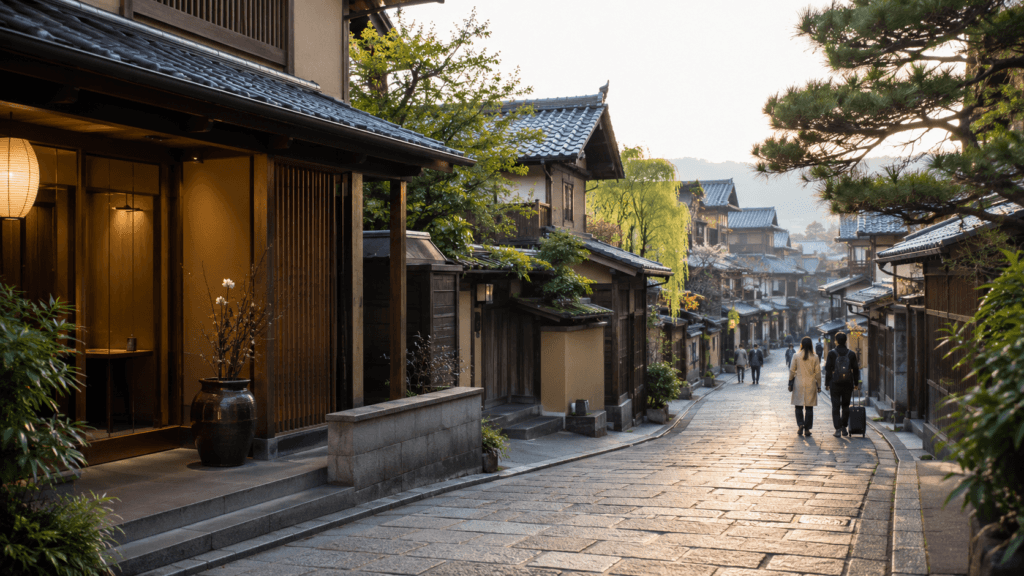
Choosing where to stay in Kyoto sounds easy until you open a map and realize the city is not built like a simple sightseeing checklist.
Kyoto has temples in one direction, bamboo forests in another, old streets on hills, riverside dining areas, train lines that matter more than expected, and buses that can feel very different when you are carrying luggage. A hotel that looks “close enough” online can become a daily lesson in tired feet, crowded buses and quiet regret.
For first-time visitors, the best area to stay in Kyoto depends on your travel style. Kyoto Station is the most practical. Shijo-Kawaramachi and Shijo-Karasuma are the best overall choices for food, shopping and easy evenings. Gion and Higashiyama are the most atmospheric. The Nijo Castle and Kyoto Imperial Palace area is quieter and more local. Arashiyama is beautiful, but better for slow scenic stays than a first-timer’s main base.
If you are planning your sightseeing route first, start with Kyoto Itinerary 2026 and then choose your hotel area around that plan. Kyoto is much easier when your bed, your train station and your dinner options are not fighting each other.
Before booking, it is also worth comparing Kyoto hotel deals early, especially if you are visiting during cherry blossom season, autumn foliage or major festival periods. Kyoto is beautiful in peak season, but hotel prices can become surprisingly ambitious.
Here is where to stay in Kyoto in 2026, with the real pros, cons and small travel headaches that do not always appear in hotel photos.
Quick Answer: Best Area to Stay in Kyoto
For most first-time visitors, the best area to stay in Kyoto is Shijo-Kawaramachi or Shijo-Karasuma.
These central areas give you a good balance of restaurants, shopping, transport, evening walks and access to Kyoto’s main sightseeing zones. You are close to Nishiki Market, the Kamo River, Gion, Pontocho and several useful train or subway options.
If you want the easiest transport, stay near Kyoto Station.
If you want the strongest traditional atmosphere, stay in Gion or Higashiyama.
If you want a quieter stay, look around Nijo Castle or Kyoto Imperial Palace.
If you want scenery and ryokan-style relaxation, consider Arashiyama, but only if you understand that it is less convenient for late nights and daily city movement.
A simple rule works well: choose Kyoto Station for convenience, Shijo-Kawaramachi for balance, Gion for atmosphere, and Arashiyama for scenery.
1. Kyoto Station: Best for First-Time Visitors Who Want Easy Transport
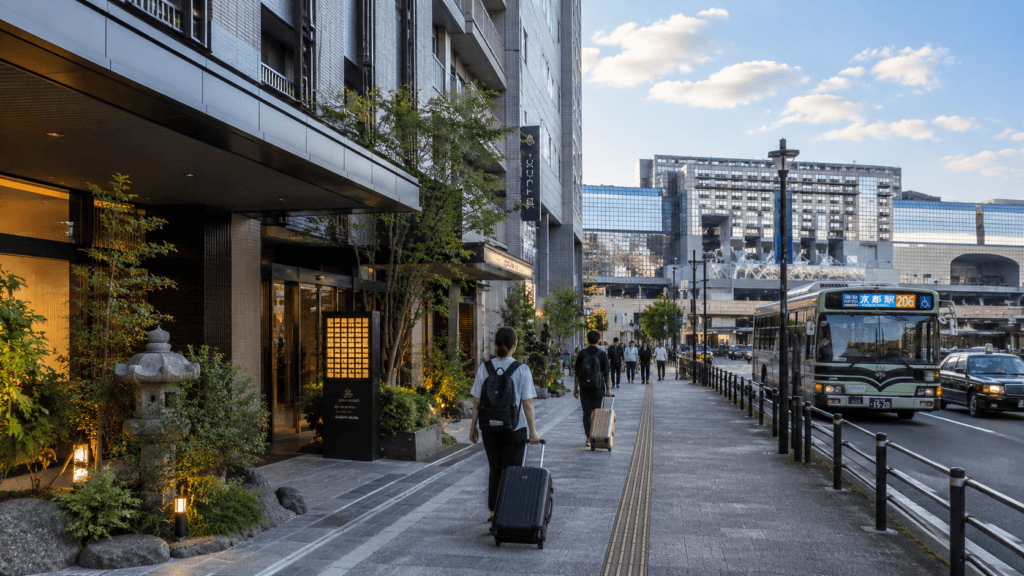
Kyoto Station may not be the most romantic area in Kyoto, but it is the area you appreciate when you arrive with luggage, a tired face and no desire to decode another bus route.
This is the most practical base for first-time visitors. If you are arriving by Shinkansen, coming from Kansai Airport via Osaka, taking day trips, or leaving early for another city, Kyoto Station makes travel smoother. It is also useful if your Japan trip includes Tokyo, Osaka or Nara.
The area around the station has large hotels, business hotels, shopping malls, restaurants, luggage storage options and easy access to trains. It does not have the old wooden-lane charm of Higashiyama, but it has something equally powerful after a long travel day: convenience.
Kyoto Station works especially well if you are following Japan Itinerary 2026 or combining Kyoto with Tokyo Itinerary 2026 and Osaka Itinerary 2026.
If convenience is your priority, compare Kyoto hotels near Kyoto Station before booking. This area is especially useful if you are arriving by train, traveling with large luggage or planning day trips outside Kyoto.
Why Stay Near Kyoto Station?
Stay here if you want transport to be simple.
Kyoto Station is useful for Fushimi Inari, Nara, Osaka, Tokyo and many regional transfers. It is also one of the easiest areas for travelers arriving with suitcases. Many first-time visitors underestimate how annoying luggage can be in Kyoto. The city is beautiful, but stone paths, station stairs and crowded buses do not make suitcases feel loved.
This area is also good if you are staying only two or three nights. Short trips benefit from easy movement because you do not want to spend your best morning trying to figure out which bus stop is across the street, behind the station or hidden somewhere that only local commuters understand.
Downsides of Kyoto Station
The main downside is atmosphere.
Kyoto Station is practical, modern and busy. It does not feel like the Kyoto you see in temple photos. If your dream is to step outside your hotel into lantern-lit lanes and traditional wooden buildings, this may feel a little too functional.
That said, many travelers are happy to trade a little romance for convenience. You can always visit atmospheric areas during the day and return to a hotel that is easy to reach at night.
Best For
First-time visitors.
Travelers with luggage.
Short stays in Kyoto.
Day trips to Nara or Osaka.
Shinkansen arrivals and departures.
Families who want easy transport.
Travelers who value convenience over atmosphere.
2. Shijo-Kawaramachi and Shijo-Karasuma: Best Overall Area to Stay in Kyoto
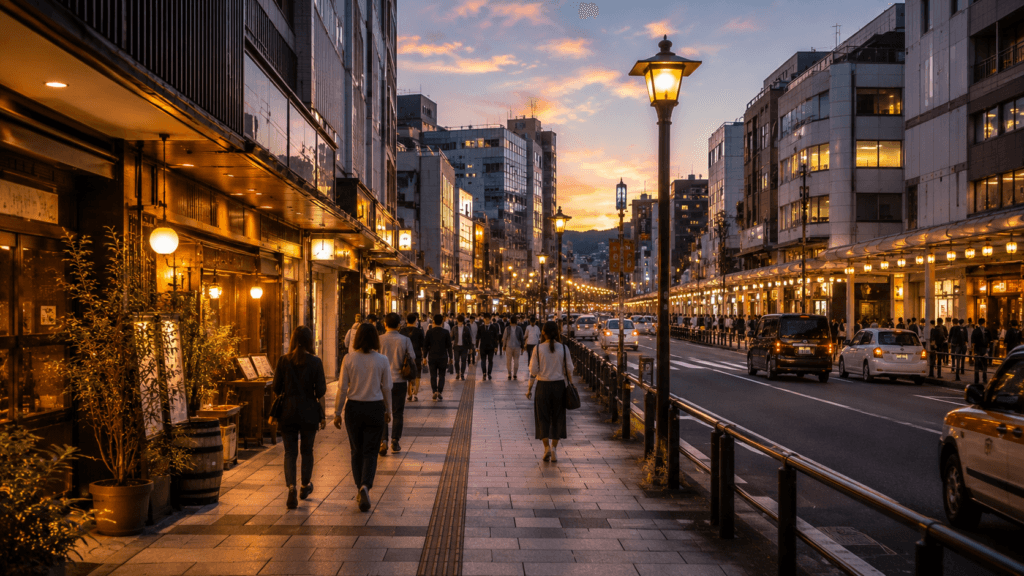
If Kyoto Station is the sensible suitcase friend, Shijo-Kawaramachi is the friend who knows where dinner is, where the shops are and where to walk after sunset.
For many first-time visitors, this is the best overall area to stay in Kyoto. It gives you a strong balance of convenience and atmosphere without pushing you too far into either extreme.
Shijo-Kawaramachi is great for restaurants, shopping, cafes, nightlife, Nishiki Market, the Kamo River and evening walks. Shijo-Karasuma is slightly calmer and more business-like, with strong subway access and easy movement around the city.
Together, these areas make central Kyoto feel easy. You can eat late, shop without planning, walk toward Gion, cross the river, visit Pontocho, or return to your hotel without feeling stranded after sunset.
If your Kyoto stay is part of a wider Kansai trip, this area also pairs well with Nara Day Trip 2026 and Dotonbori Osaka Guide 2026 because you can enjoy Kyoto evenings while still keeping regional travel realistic.
For the best balance of location and comfort, compare Kyoto hotels near Shijo-Kawaramachi or Kyoto hotels near Shijo-Karasuma. These are some of the most useful hotel searches for first-time visitors who want food, shopping and transport in one base.
Why Stay in Shijo-Kawaramachi or Shijo-Karasuma?
This area is best for travelers who want a little bit of everything.
You are not right inside the most traditional streets, but you are close enough to walk or take a short ride. You are not directly at Kyoto Station, but you still have good transport access. You are near restaurants, but not trapped in a tourist-only food zone.
That balance matters in Kyoto. After a day of temples and buses, being able to walk to dinner is not a small thing. It is a quiet little victory with chopsticks.
Shijo-Kawaramachi is also one of the best areas if you enjoy city energy. It has department stores, shopping arcades, cafes, food streets and access to the Kamo River. On a first Kyoto trip, this makes evenings much easier.
Downsides of Shijo-Kawaramachi and Shijo-Karasuma
This area can be busy.
Hotels near the most convenient spots can be expensive during cherry blossom season, autumn foliage and holidays. Streets around Kawaramachi can also feel crowded at night.
Still, the convenience is hard to beat. If you are unsure where to stay and want the safest all-around choice, this is usually the answer.
Best For
First-time visitors.
Food lovers.
Shopping and cafe travelers.
Couples.
Solo travelers.
Travelers who like evening walks.
People who want easy access without staying at Kyoto Station.
3. Gion and Higashiyama: Best for Traditional Kyoto Atmosphere
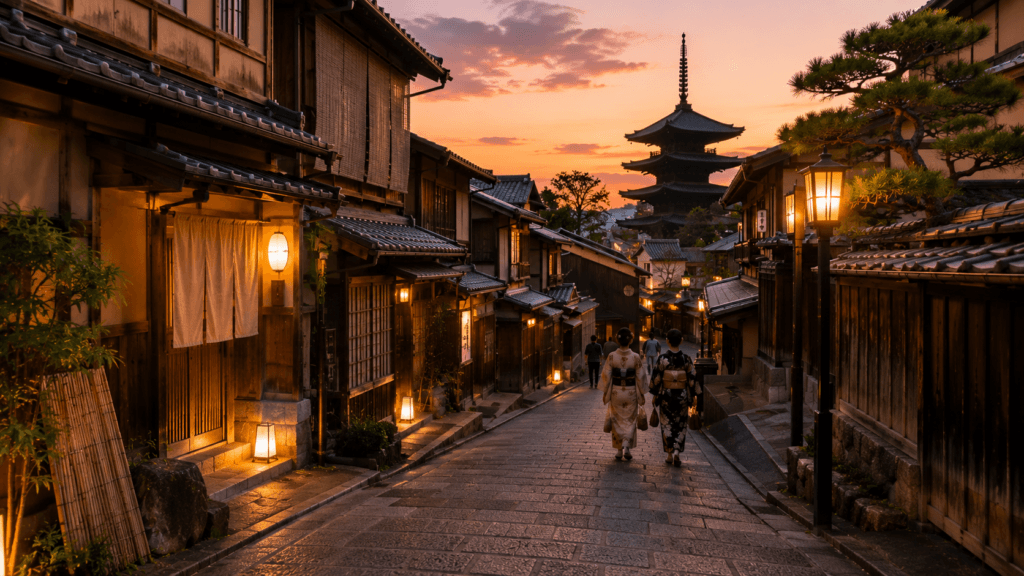
Gion and Higashiyama are the areas many travelers imagine before they arrive in Kyoto.
Old streets, wooden buildings, temples, shrines, lanterns, slopes, tea houses, ryokan and quiet side lanes all live in this part of the city. If you want Kyoto to feel like Kyoto the moment you step outside, this is one of the strongest places to stay.
This area is especially convenient for Kiyomizu-dera, Yasaka Shrine, Sannenzaka, Ninenzaka, Kodai-ji, Maruyama Park, Gion and parts of the Higashiyama walking route. If your trip is built around atmosphere, photography and slow walks, staying here can feel special.
It also connects naturally with Kyoto Itinerary 2026, especially the Day 1 route around Kiyomizu-dera, Higashiyama and Gion.
If you want a more atmospheric stay, compare Kyoto ryokan stays in Gion or Kyoto hotels near Higashiyama. These areas are especially appealing for couples, special trips and travelers who want traditional Kyoto scenery close to the hotel.
Why Stay in Gion or Higashiyama?
Stay here if atmosphere matters more than perfect transport.
Gion and Higashiyama are beautiful in the early morning and evening. The streets feel very different before the main crowds arrive or after day-trippers leave. If you enjoy walking back to your hotel through old streets instead of returning to a large station area, this can be a memorable base.
This is also a good area for couples, special occasions, ryokan stays and travelers who want a more traditional Kyoto feeling.
There is a small warning, though: beautiful areas are not always easy areas. Some streets are narrow, some hotels are tucked away, and luggage movement can be awkward. A dreamy lane can become less dreamy when your suitcase wheels start making themselves part of the soundtrack.
Gion Manners Matter
Gion is not a stage set.
People live and work here, and some parts of the neighborhood have struggled with overtourism and poor visitor behavior. Do not chase geiko or maiko, block streets, take intrusive photos, enter private lanes, or treat the neighborhood like an outdoor performance.
The best travelers bring quiet feet, patient cameras and basic manners. Kyoto notices.
Downsides of Gion and Higashiyama
Hotels can be expensive.
Transport may be less convenient than Kyoto Station or Shijo-Kawaramachi.
Some restaurants require reservations.
Luggage movement can be annoying.
Popular streets become crowded during the day.
For first-time visitors, this area is wonderful if you understand the trade-off. You get atmosphere, but you may lose some transport convenience.
Best For
Couples.
Ryokan stays.
Photography-focused travelers.
Slow travelers.
Traditional atmosphere.
Visitors who want to walk around old Kyoto early or late.
4. Nijo Castle and Kyoto Imperial Palace Area: Best for Quiet Stays
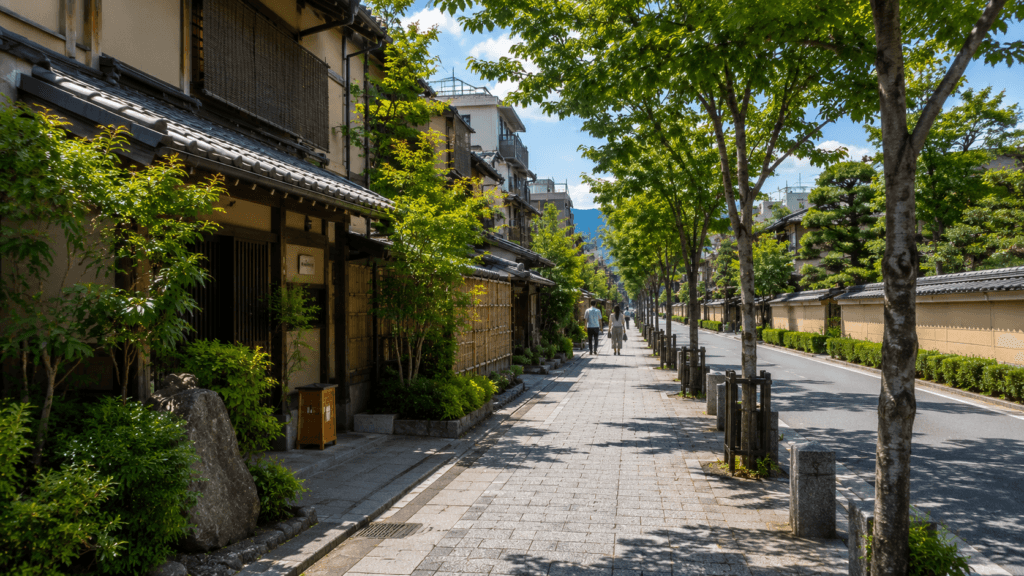
The Nijo Castle and Kyoto Imperial Palace area does not shout for attention, which is exactly why some travelers end up liking it.
This part of Kyoto is quieter than Kawaramachi and less tourist-heavy than Higashiyama. You still have important attractions nearby, including Nijo Castle and the Kyoto Imperial Palace area, but the streets feel more residential and calm.
It is a good choice if you want a slower base, more space, and fewer late-night crowds outside your hotel. It can also work well for families or travelers staying longer than a few nights.
If you prefer a calmer hotel base, compare Kyoto hotels near Nijo Castle. This area can be a smart choice for travelers who want quieter nights without being too far from central Kyoto.
Why Stay Near Nijo Castle or Kyoto Imperial Palace?
Stay here if you like calm more than nightlife.
This area gives you a more local Kyoto feeling. It is not as instantly dramatic as Gion, and it is not as convenient as Kyoto Station, but it has a comfortable rhythm. You can find cafes, smaller hotels, guesthouses and easier streets for everyday movement.
It can also be a good value compared with the most popular hotel zones, especially outside peak seasons. If your trip is not built around late-night food or constant shopping, this area may feel surprisingly pleasant.
For sightseeing, it works well if you plan to visit Nijo Castle, the Imperial Palace area, central Kyoto and parts of northern Kyoto.
Downsides of Nijo Castle and Kyoto Imperial Palace Area
The main downside is that it may feel too quiet for some first-time visitors.
If you want restaurants, shopping and nightlife right outside your door, Shijo-Kawaramachi will probably suit you better. If you want maximum transport convenience, Kyoto Station is easier.
But if you want a calm place to sleep after busy sightseeing days, this area has real appeal. Not every hotel base needs to sparkle. Some just need to let you recover like a normal human being.
Best For
Quiet travelers.
Families.
Longer stays.
Second-time visitors.
Travelers who like calmer neighborhoods.
People who do not need nightlife outside the hotel.
5. Arashiyama: Best for Scenic Ryokan Stays
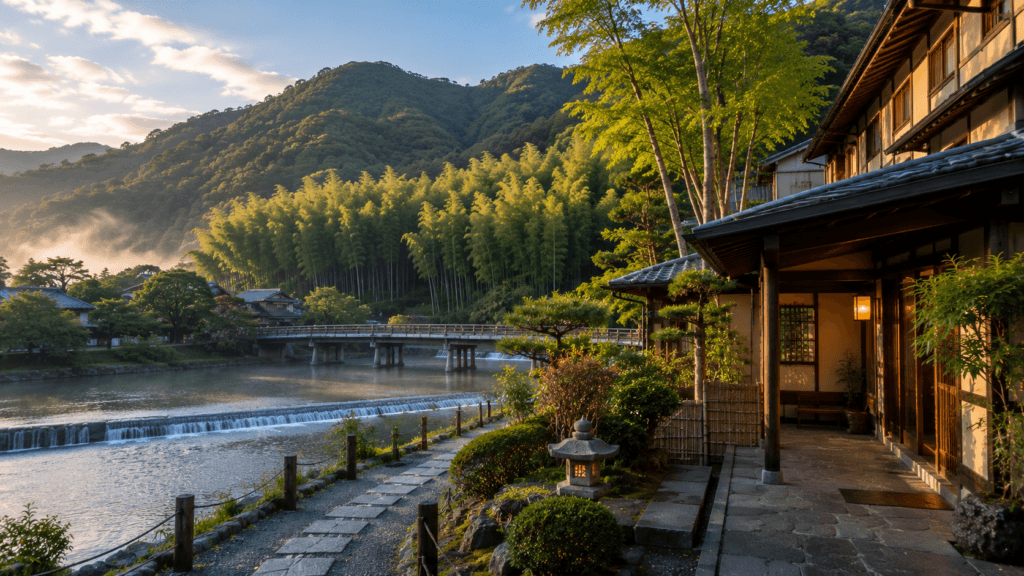
Arashiyama is beautiful, but it is not the easiest base for most first-time visitors.
This western Kyoto area is known for the Bamboo Grove, Togetsukyo Bridge, riverside scenery, Tenryu-ji, mountain views and ryokan-style stays. If you want quiet mornings and scenic views, Arashiyama can be wonderful.
The problem is convenience. Arashiyama is not in central Kyoto, and the atmosphere changes after daytime visitors leave. That can be lovely if you want peace. It can be frustrating if you expect endless dinner options, nightlife or quick access to every Kyoto attraction.
For travelers visiting Kyoto mainly for temples, food, shopping and classic sightseeing, Arashiyama is usually better as a day trip area than your main hotel base. For travelers who want a slow ryokan stay, it can be a very good choice.
If you want one special scenic night, compare Arashiyama ryokan stays. This works best when you want a slower Kyoto experience, not when you need the most efficient sightseeing base.
Why Stay in Arashiyama?
Stay here if you want scenery more than city convenience.
Arashiyama gives you the chance to enjoy the area early in the morning before the busiest crowds arrive. That alone can be valuable if the Bamboo Grove or riverside views are a major reason for your trip.
It can also be excellent for couples, luxury travelers and people who want a calmer Kyoto experience. Some ryokan and upscale stays in this area focus more on relaxation than sightseeing efficiency.
If your trip includes both Kyoto and Osaka, consider staying centrally in Kyoto first, then adding one special night in Arashiyama rather than using it as your only base.
Downsides of Arashiyama
It is less convenient for central Kyoto.
Restaurants and cafes may close earlier.
Nightlife is limited.
Travel time adds up.
It can feel too quiet after dark.
This is not a bad area. It is just a specific area. Arashiyama is wonderful if you want what it offers. It is less wonderful if you expect everything outside your hotel door.
Best For
Ryokan stays.
Couples.
Scenic trips.
Slow travelers.
Second-time visitors.
Travelers who want quiet mornings near the Bamboo Grove.
Areas I Would Avoid for a First Kyoto Trip
Kyoto has many good places to stay, but not every cheap hotel is a smart hotel.
For a first Kyoto trip, be careful with areas that are far from useful train or subway access. A cheaper hotel can become expensive in time, energy and bus frustration.
You should also be careful with hotels that look close to famous temples but are awkward for daily movement. Some temple areas are lovely during the day but quiet or inconvenient at night. Others require too many bus rides, which can become tiring during busy seasons.
A hotel far from rail access may look fine when you are browsing at home. It feels different when you are standing at a crowded bus stop after a long sightseeing day and your phone battery has started negotiating its resignation.
Simple Hotel Location Checklist
Before booking a Kyoto hotel, check these things:
Is it within 5 to 10 minutes on foot from a useful station?
Can you reach Kyoto Station without too much trouble?
Are there restaurants nearby at night?
Can you return easily after visiting Gion, Kawaramachi or Kyoto Station?
Will you need to carry luggage through slopes or narrow lanes?
Are reviews mentioning difficult access, noise or bus dependence?
If the answer feels messy, keep looking. Kyoto has enough beauty. Your hotel location does not need to add puzzle gameplay.
Kyoto Accommodation Tax in 2026
Kyoto’s accommodation tax changed from March 1, 2026, and this matters when comparing hotel prices.
The tax is charged per person per night, based on the accommodation fee. Budget stays have a smaller tax, while higher-end hotels and luxury ryokan can add much more. If you are traveling as a couple or family, the total can become noticeable.
This does not mean you should avoid Kyoto. It just means hotel prices may look different once taxes and fees are added. When comparing hotels, check whether the displayed price includes taxes or whether the accommodation tax is collected separately at the property.
This is especially important for ryokan, luxury hotels and peak-season stays. A room that already looks expensive may still have extra fees waiting at checkout, quietly polishing its little calculator.
Kyoto Hotel Booking Tips for 2026
Book early if you are visiting during cherry blossom season, autumn foliage or major festivals.
Kyoto is one of Japan’s most popular cities, and the best-value hotels do not sit quietly forever. During peak seasons, good rooms disappear quickly, prices rise, and the remaining options may be farther from transport.
If you are visiting in spring, autumn or during Gion Matsuri, booking early is not just a suggestion. It is self-defense with a confirmation email.
For regular seasons, you still want to compare location carefully. A slightly more expensive hotel in a better area can be worth it if it saves you time and crowded bus rides every day.
Kyoto Transportation and Hotel Location
In Kyoto, hotel location is not just about distance. It is about how easy the route feels at the end of a long day.
The Subway & Bus 1-Day Pass can be useful if you plan to use both subway and buses several times in one day. But you do not need a pass every day, and a hotel that depends only on buses can still become tiring.
For first-time visitors, the safest hotel locations are near useful train, subway or major transport links. Kyoto Station, Shijo-Karasuma, Shijo-Kawaramachi and some parts of Gion or Higashiyama can all work well depending on your route.
If you are arriving through Osaka first, read Kansai Airport to Osaka 2026 before planning your Kyoto transfer. Many visitors enter the region through Kansai Airport, spend time in Osaka, and then continue to Kyoto.
Kyoto vs Osaka: Where Should You Stay?
If your main goal is Kyoto sightseeing, stay in Kyoto.
You will get earlier starts, quieter mornings and easier evenings. This matters for places like Kiyomizu-dera, Fushimi Inari and Arashiyama, where early timing can completely change the experience.
If your main goal is food, nightlife, shopping and a wider Kansai base, Osaka can work very well. Osaka is often more energetic at night and can be cheaper for hotels. It is also convenient for Universal Studios Japan, Dotonbori and some regional routes.
Many travelers split the trip: stay in Kyoto for temples and old streets, then move to Osaka for food and nightlife. That is often the easiest way to enjoy both cities without forcing one city to do the other city’s job.
If you are comparing both, use Where to Stay in Osaka 2026, Osaka Itinerary 2026 and Dotonbori Osaka Guide 2026 together with this Kyoto guide.
If your trip includes Universal Studios Japan, check Universal Studios Japan Guide 2026 before choosing hotel nights. Do not put a full USJ day inside a delicate Kyoto temple schedule. That is how itineraries start coughing.
Best Area by Travel Style
For first-time visitors: Kyoto Station or Shijo-Kawaramachi.
For the best overall balance: Shijo-Kawaramachi or Shijo-Karasuma.
For traditional atmosphere: Gion or Higashiyama.
For transport convenience: Kyoto Station.
For food and shopping: Shijo-Kawaramachi.
For quiet stays: Nijo Castle or Kyoto Imperial Palace area.
For ryokan and scenery: Arashiyama.
For day trips to Osaka or Nara: Kyoto Station.
For couples: Gion, Higashiyama or Arashiyama.
For families: Kyoto Station, Shijo-Karasuma or Nijo Castle area.
For budget travelers: Kyoto Station or areas slightly away from the busiest central blocks, as long as rail access is still good.
My Final Recommendation
If this is your first time in Kyoto and you are still unsure, stay in Shijo-Kawaramachi, Shijo-Karasuma or Kyoto Station.
Choose Shijo-Kawaramachi or Shijo-Karasuma if you want the best balance of food, shopping, evening walks and transport.
Choose Kyoto Station if your trip involves luggage, day trips, Shinkansen travel or a short stay.
Choose Gion or Higashiyama if atmosphere matters more than convenience.
Choose Arashiyama only if you want a scenic, slower stay and do not mind being farther from central Kyoto.
The best Kyoto hotel area is not always the prettiest one. It is the one that makes your actual trip easier.
Kyoto already has enough stairs, slopes and crowded buses. Your hotel should not join the enemy team.
FAQ: Where to Stay in Kyoto
What is the best area to stay in Kyoto for first-time visitors?
The best areas for first-time visitors are Shijo-Kawaramachi, Shijo-Karasuma and Kyoto Station. Shijo-Kawaramachi is best for food, shopping and evening walks, while Kyoto Station is best for transport and luggage convenience.
Is Kyoto Station a good place to stay?
Yes, Kyoto Station is one of the best places to stay in Kyoto if you want easy transport. It is especially useful for Shinkansen arrivals, day trips to Nara or Osaka, and travelers with luggage. The atmosphere is more modern than traditional, but the convenience is excellent.
Is Gion a good area to stay in Kyoto?
Gion is a great area if you want traditional Kyoto atmosphere, evening walks and easy access to Higashiyama. However, it can be expensive and less convenient for luggage or transport. Visitors should also be respectful because Gion is a real neighborhood, not a tourist stage.
Should I stay in Kyoto or Osaka?
Stay in Kyoto if your main goal is temples, shrines, old streets and quiet mornings. Stay in Osaka if your main focus is food, nightlife, shopping and Universal Studios Japan. Many travelers split their nights between both cities.
Is Arashiyama a good place to stay?
Arashiyama is beautiful for scenic stays and ryokan trips, but it is not the most convenient base for a first Kyoto visit. It is better for slow travelers, couples or second-time visitors who want quiet mornings and mountain views.
What area is best for Kyoto nightlife and food?
Shijo-Kawaramachi is the best area for food, shopping and evening activity. It gives you easy access to restaurants, Nishiki Market, Pontocho, Gion and the Kamo River.
Where should families stay in Kyoto?
Families should consider Kyoto Station, Shijo-Karasuma or the Nijo Castle area. These areas are practical, relatively easy to navigate and better for transport. Kyoto Station is especially useful if you have luggage or day trips.
When should I book hotels in Kyoto?
Book as early as possible for cherry blossom season, autumn foliage, Gion Matsuri and major holidays. Kyoto hotels can sell out or become expensive during peak seasons. For regular seasons, location should still matter more than chasing the cheapest room.
Final Thoughts: The Best Place to Stay in Kyoto
Where you stay in Kyoto can shape the whole trip.
A good hotel area makes Kyoto feel smooth: early temple mornings, easy dinners, fewer stressful transfers and less time trapped in bus confusion. A bad hotel area can make even a beautiful city feel tiring.
For most first-time visitors, Shijo-Kawaramachi, Shijo-Karasuma and Kyoto Station are the safest choices. Gion and Higashiyama are wonderful for atmosphere, while Arashiyama is best for scenic, slower stays.
Choose the area that matches your trip, not just the hotel photo that looks prettiest. Kyoto is not short on beauty. What you need is a base that lets you enjoy it without turning every day into a transport riddle.
Start with Kyoto Itinerary 2026, compare your wider route with Japan Itinerary 2026, and if you are also visiting Osaka, use Where to Stay in Osaka 2026 before locking in your hotel nights.
Then book the place that makes your trip feel easier. Your future tired feet will understand.