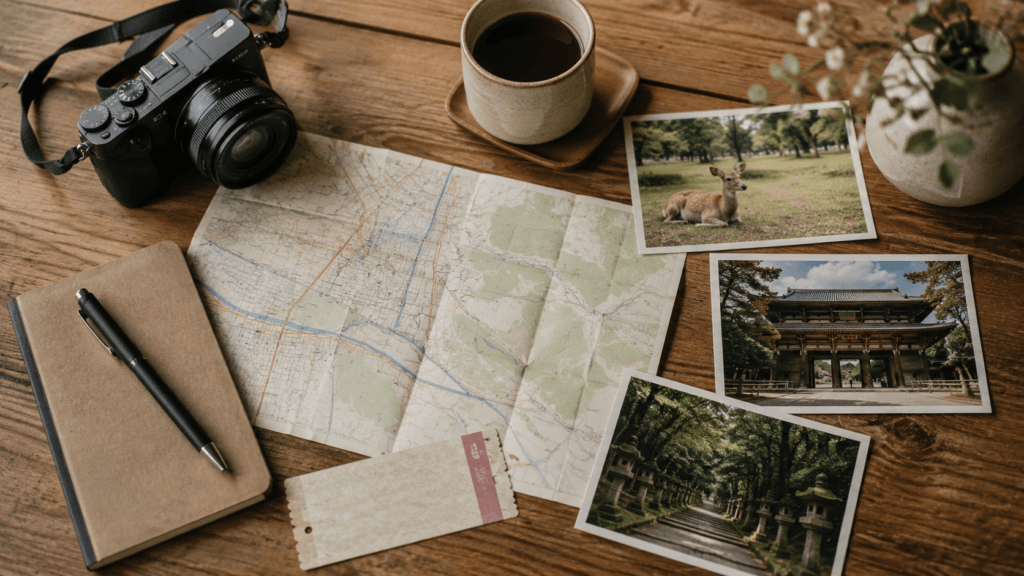
Nara is one of the easiest day trips from Osaka or Kyoto.
It is also one of the easiest places in Japan to misunderstand.
Many travelers hear “Nara” and think only of deer. Cute deer, bowing deer, deer selfies, deer crackers, deer with suspicious snack ambition.
And yes, the deer are famous.
But Nara is not just “the deer place.”
Nara was once Japan’s ancient capital, and a good Nara day trip gives you temples, shrines, old streets, quiet park paths, giant wooden gates, a massive Buddha statue, forest atmosphere and just enough deer drama to keep the day memorable.
The best Nara day trip route is simple:
Nara Station → Kofuku-ji / Sarusawa Pond → Todai-ji Temple → Nara Park Deer → Kasuga Taisha → Higashimuki Shopping Street or Naramachi → Return to Osaka or Kyoto
For most first-time visitors, Nara works best as a full day trip from either Osaka or Kyoto. It is easy to reach, easy to walk and easy to love. The only real danger is treating it like a quick deer photo stop and missing the reason the deer chose such a beautiful neighborhood.
If you are staying in Osaka, read our Osaka itinerary 2026 guide first so you can decide whether Nara fits better than USJ, Kobe or Himeji. If you are coming from Kyoto, our Kyoto itinerary 2026 guide can help you avoid stacking too many temple-heavy days back-to-back. For a bigger Japan route, start with our Japan itinerary 2026 guide before choosing where Nara fits.
Quick Answer: Best Nara Day Trip Route
For most first-time visitors, the best Nara day trip route is:
- Arrive at Kintetsu-Nara Station or JR Nara Station
- Walk toward Kofuku-ji and Sarusawa Pond
- Visit Todai-ji Temple and the Great Buddha Hall
- Spend time in Nara Park
- Feed deer safely with official deer crackers
- Walk to Kasuga Taisha if you have enough energy
- Return toward Higashimuki Shopping Street or Naramachi
- Go back to Osaka or Kyoto in the late afternoon or evening
The easiest version:
| Time | Route |
|---|---|
| Morning | Arrive in Nara, Kofuku-ji, Sarusawa Pond |
| Late morning | Todai-ji Temple and Great Buddha Hall |
| Midday | Nara Park and deer |
| Afternoon | Kasuga Taisha or Naramachi |
| Late afternoon | Food, shopping, return to Osaka or Kyoto |
For most travelers, Kintetsu-Nara Station is the easiest arrival point because it is closer to Nara Park. JR Nara Station also works, especially for travelers using JR routes or rail passes, but expect a longer walk or use a local bus.
Nara is best explored on foot, but the park is larger than many visitors expect. The map is being polite. Your feet may have a different opinion.
Is Nara Worth Visiting?
Yes, Nara is absolutely worth visiting, especially if you are staying in Osaka or Kyoto.
Nara is good for travelers who want:
- An easy day trip
- Temples and shrines
- Deer encounters
- A slower day than Osaka
- A less crowded alternative to some Kyoto sightseeing areas
- Ancient capital history
- Walkable routes
- Family-friendly travel
- Photography
- A peaceful break during a busy Japan itinerary
Nara feels different from both Kyoto and Osaka.
Kyoto is elegant and layered. Osaka is loud, bright and hungry. Nara feels older, quieter and more spacious, even when the deer are trying to inspect your bag like tiny park security.
A Nara day trip is especially good after several busy city days. It gives your Japan itinerary a slower rhythm: walk, temple, deer, shrine, lunch, quiet streets.
It is not a high-speed sightseeing day. It is a day that works best when you leave space for wandering.
Osaka to Nara vs Kyoto to Nara
Nara is easy from both Osaka and Kyoto, so the better starting point depends on your route.
From Osaka to Nara
Osaka is one of the best bases for visiting Nara.
From Osaka-Namba, Kintetsu trains are usually convenient because Kintetsu-Nara Station is close to Nara Park. If you are staying closer to Osaka Station or using a JR pass, JR routes may still make more sense.
Choose Osaka to Nara if:
- You are staying in Namba
- You are using Osaka as a Kansai base
- You want Nara as a day trip option after Osaka sightseeing
- You are comparing Nara with USJ, Kobe or Himeji
- You prefer a quieter cultural day after Dotonbori and Osaka food
If you are choosing between a theme park day and a quieter cultural day trip, our Universal Studios Japan Guide 2026 can help you compare USJ with Nara.
From Kyoto to Nara
Kyoto is also an excellent base for Nara.
From Kyoto Station, both JR and Kintetsu routes can work. Kintetsu-Nara is closer to Nara Park, while JR Nara may be more convenient depending on your rail pass, hotel area or wider Japan route.
Choose Kyoto to Nara if:
- You are staying near Kyoto Station
- You want an easy day trip without changing hotels
- You are already visiting temples and shrines in Kyoto
- You want to compare Kyoto’s refined atmosphere with Nara’s older capital feel
- You have 3 or 4 days in Kyoto and want one day outside the city
One warning: do not pack Kyoto temples, Fushimi Inari, Arashiyama and Nara into back-to-back high-energy days without rest. That is not a cultural itinerary. That is a sandal endurance test.
Which Is Better?
For most travelers:
- Stay in Osaka if you are also visiting USJ, Dotonbori and other Kansai day trips
- Stay in Kyoto if you want a quieter temple-focused route
- Use Kintetsu-Nara Station for easier walking access to Nara Park
- Use JR Nara Station if your pass or hotel location makes JR more convenient
There is no single correct answer. Nara is polite enough to work from both cities.
How to Get to Nara
Nara has two main train stations used by visitors:
- Kintetsu-Nara Station
- JR Nara Station
Both are useful, but they are not equally close to the main sightseeing area.
Kintetsu-Nara Station
Kintetsu-Nara Station is usually the easiest station for first-time visitors.
It is closer to:
- Kofuku-ji
- Sarusawa Pond
- Nara Park
- Todai-ji walking route
- Higashimuki Shopping Street
For a classic Nara day trip, Kintetsu-Nara is often the smoothest arrival point.
From Osaka-Namba, Kintetsu is especially practical.
From Kyoto, Kintetsu can also be convenient, especially if you take a limited express or direct route depending on your timing.
JR Nara Station
JR Nara Station is still a good option.
It is useful if:
- You are using JR routes
- You are staying near Osaka Station
- You have a JR pass or regional JR pass
- Your route from Kyoto works better by JR
- You do not mind a longer walk or taking a bus
From JR Nara Station, you can walk toward Nara Park along Sanjo-dori Street. The walk takes around 20 minutes to the park area, so build that into your day.
This walk is not difficult, but it can feel longer in summer, rain or after several temple-heavy days.
Kintetsu-Nara vs JR Nara Station
Here is the simple version:
| Station | Best For |
|---|---|
| Kintetsu-Nara | Easiest access to Nara Park |
| JR Nara | JR routes, rail pass users, some Osaka/Kyoto routes |
| Kintetsu-Nara from Osaka-Namba | Very convenient for Namba travelers |
| JR Nara from Osaka Station | Convenient for JR-focused routes |
| Either from Kyoto | Depends on price, pass and timing |
For most first-time travelers who are not using a pass, Kintetsu-Nara is usually easier.
Should You Use a Bus in Nara?
Nara Park is best explored on foot, but buses can help.
Consider using a bus if:
- You arrive at JR Nara Station and do not want the 20-minute walk
- You are traveling with children
- You are visiting in summer heat
- You have limited mobility
- You want to visit sites farther apart
- You are adding Kasuga Taisha, Naramachi or Nishinokyo
- Your feet have started filing complaints
The Nara Kotsu 1-Day Pass can be useful for central sightseeing. The regular 1-Day Pass costs 600 yen for adults and covers sightseeing areas such as Nara Park, Todai-ji, Kasuga Taisha, Kofuku-ji and Naramachi.
For a simple Nara Park, Todai-ji and deer route, walking may be enough. For a hotter day or a wider route, the pass can be helpful.
Do the math before buying any pass. A pass is useful only when your route actually needs it. Otherwise, it becomes a souvenir with opinions.
Should You Join a Nara Day Tour?
A Nara day trip is easy to do independently.
That said, a tour can be useful if:
- You prefer not to manage train routes
- You want a guide explaining history
- You are visiting with family
- You want to combine Nara with Kyoto, Uji or another nearby area
- You have limited time
- You want less planning stress
Independent travelers can easily visit Nara with trains, walking and a simple route. Travelers who prefer structure can compare Nara day tour options from Osaka or Kyoto before booking.
Best 1-Day Nara Itinerary
This route works well for most first-time visitors.
It keeps the day focused, walkable and realistic.
Morning: Arrive at Nara Station
Try to arrive in Nara in the morning.
Nara is popular, and Todai-ji can get busier later in the day. Arriving early gives you a calmer start and better walking weather.
Recommended arrival time:
- Around 8:30 to 10:00 a.m. for a relaxed full day
- Earlier during cherry blossom or autumn foliage season
- Later only if you are planning a short half-day route
From Kintetsu-Nara Station, walk toward Higashimuki Shopping Street, Kofuku-ji and Sarusawa Pond.
From JR Nara Station, walk along Sanjo-dori Street or take a bus toward Nara Park.
Do not start the day by buying deer crackers immediately unless you are ready to become extremely interesting to deer.
Stop 1: Kofuku-ji and Sarusawa Pond
Kofuku-ji and Sarusawa Pond make a good first stop because they are close to Kintetsu-Nara Station and naturally lead you toward Nara Park.
Kofuku-ji is one of Nara’s important temple sites, and the area gives you an easy first taste of Nara’s old capital atmosphere.
Things to do here:
- See the temple buildings
- Walk around Sarusawa Pond
- Take photos from the pond area
- Ease into the day before the busier park route
This stop does not need to be long. Think of it as the opening scene before Nara becomes larger, greener and more deer-populated.
Stop 2: Todai-ji Temple
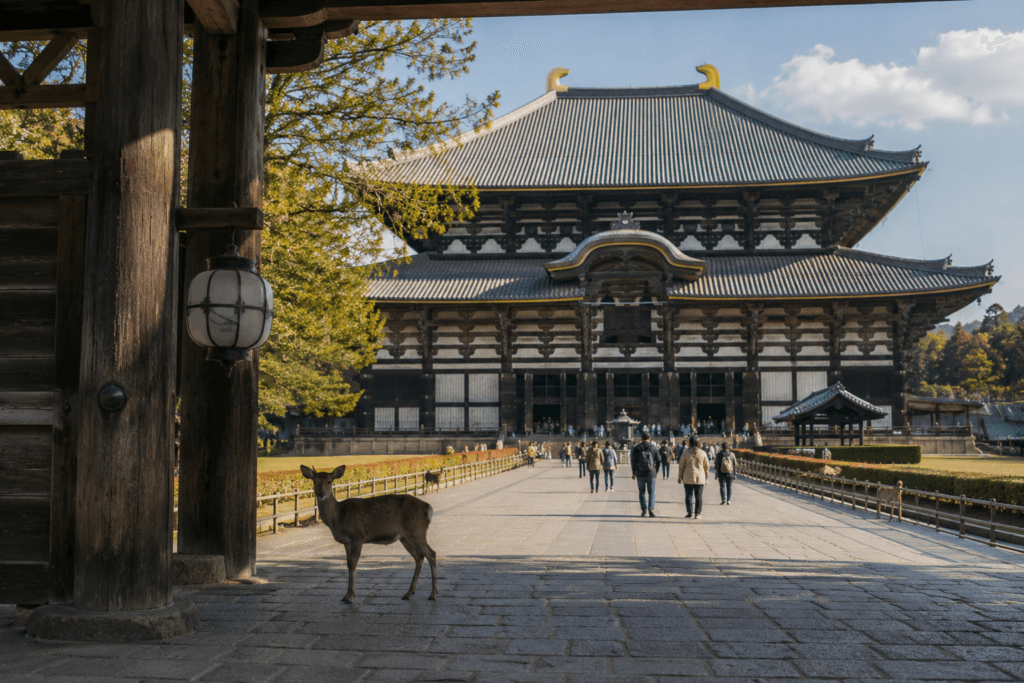
Todai-ji is the major highlight of Nara.
It is famous for the Great Buddha Hall and the massive bronze Buddha inside. Even travelers who are not deeply interested in temples usually find Todai-ji impressive.
Start with Todai-ji in the morning if you can. It is one of Nara’s biggest highlights, and visiting earlier helps you enjoy the Great Buddha Hall before the day becomes a school-trip-and-deer-cracker parade.
Things to see:
- Nandaimon Gate
- Great Buddha Hall
- Great Buddha statue
- Temple grounds
- Nearby deer along the approach
- Nigatsu-do if you have extra time and energy
Todai-ji is not a quick “photo and leave” stop. Give it time.
The Great Buddha Hall alone deserves a real visit, not a rushed glance while your next snack is already loading in your mind.
Todai-ji Practical Tips
Todai-ji’s Great Buddha Hall has paid admission, and hours can vary by season.
As of the current official information, adult admission is listed at 800 yen, and opening hours vary by season. Before visiting, check the official Todai-ji website for the latest Great Buddha Hall hours and fees, especially around events or seasonal periods.
An audio guide is also available for 500 yen and supports several languages, including English, Korean, Chinese, French, German, Spanish, Italian and Vietnamese.
A good plan is to give Todai-ji at least 60 to 90 minutes if you are visiting the Great Buddha Hall and walking the nearby area. More time is better if you also want Nigatsu-do or the museum.
Stop 3: Nara Park and the Deer
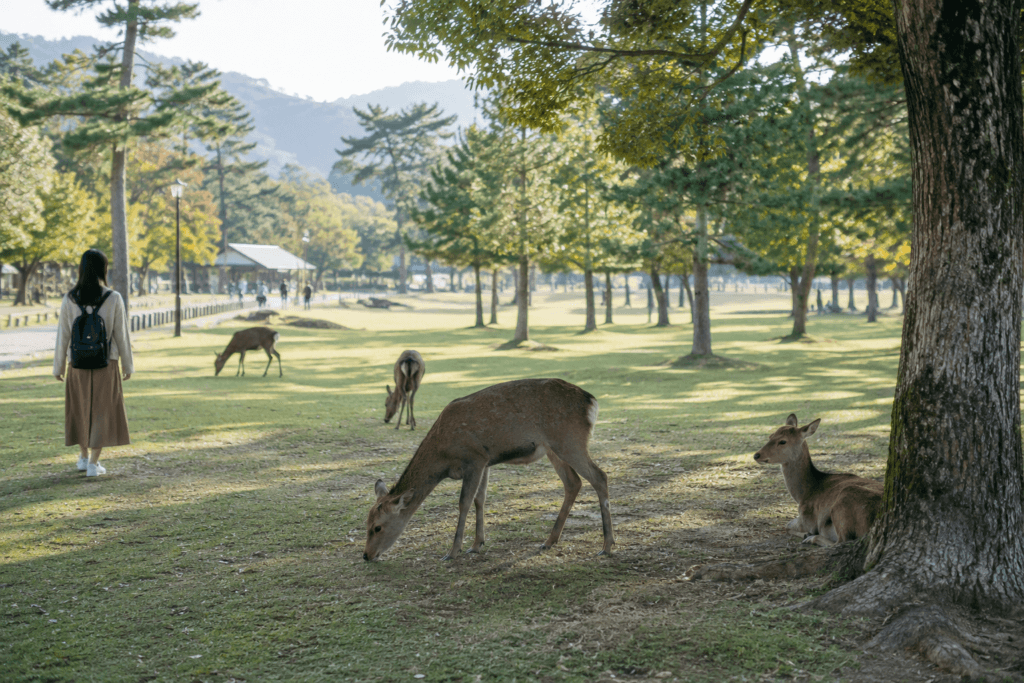
After Todai-ji, spend time in Nara Park.
Nara Park is large, famous and full of free-roaming deer. It is one of the most memorable parts of a Nara day trip, but it needs a little etiquette.
The deer are cute, famous and very photogenic, but they are still wild animals.
Feed them only official deer crackers.
Do not feed them:
- Bread
- Sweets
- Vegetables
- Leftovers
- Snacks from your bag
- Plastic
- Paper
- Maps
- Pamphlets
A deer may look like a gentle postcard, but it does not need your sandwich.
How to Feed the Deer Safely
Official deer crackers are usually sold around Nara Park.
A pack of 10 deer crackers costs 200 yen according to current local tourism guidance. They are made for the deer and do not contain sugar or sweeteners.
Tips:
- Feed crackers one by one
- Do not tease deer by holding crackers where they can see them
- Keep bags, papers and food hidden
- Spread your arms when you run out
- Help children feed deer safely
- Be careful around male deer with horns
- Do not chase, hug or block deer
When the crackers are gone, spread your arms to show you have no more.
This is not magic.
It is deer diplomacy.
The deer understand the system better than most tourists do.
Stop 4: Kasuga Taisha
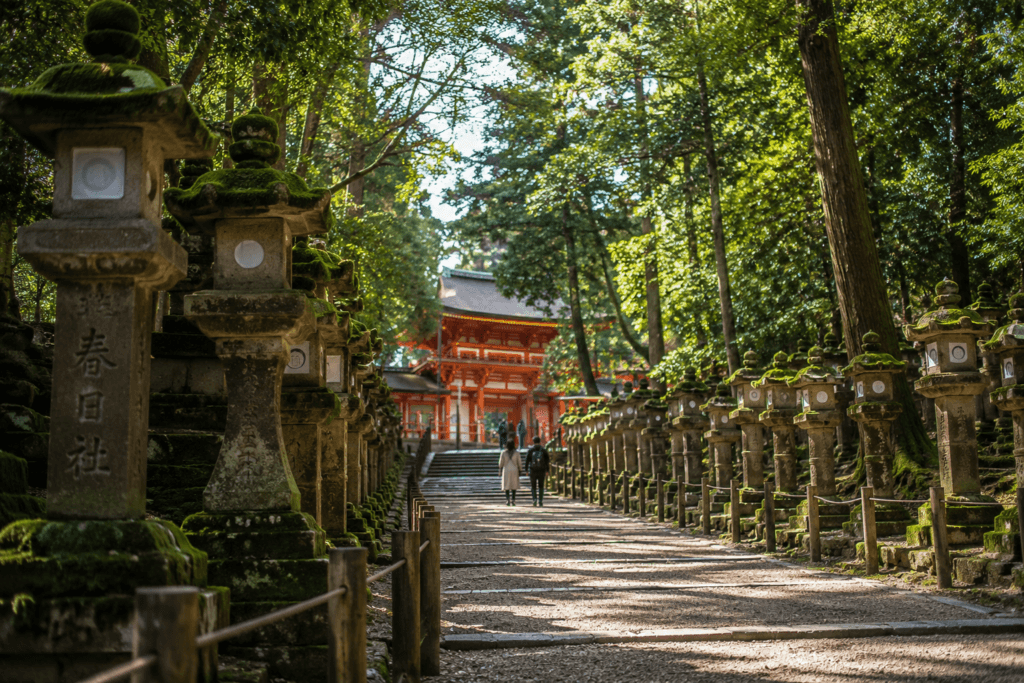
After Nara Park, continue to Kasuga Taisha if you have enough energy.
Kasuga Taisha is one of Nara’s most atmospheric shrines, known for its forest approach, lanterns and sacred feeling. It gives the day a deeper, quieter mood after the open park and Todai-ji area.
Kasuga Taisha is worth adding if you want Nara to feel more like an old sacred forest than just a deer photo stop.
Things to notice:
- Stone lanterns along the approach
- Forest atmosphere
- Vermilion shrine buildings
- Brass lanterns
- Seasonal flowers and shrine events
- A calmer walking mood
General worship hours are listed as 6:30 to 17:30 from March to October, and 7:00 to 17:00 from November to February. Special worship of the Main Sanctuary is listed from 9:00 to 16:00, with a 700 yen fee. Hours and access can change due to shrine ceremonies and events, so check the official website before visiting.
Kasuga Taisha is not difficult to visit, but it adds walking time. On a hot day, rainy day or short schedule, choose between Kasuga Taisha and a slower Naramachi finish.
You do not have to win every shrine on the map.
Stop 5: Higashimuki Shopping Street or Naramachi
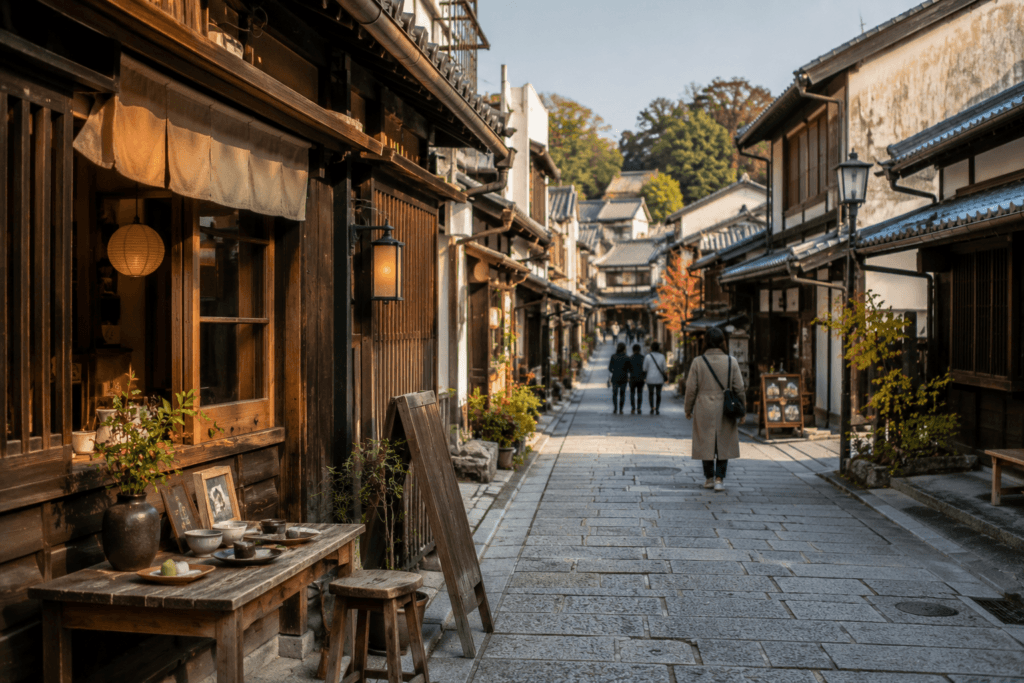
After the park and shrine route, return toward central Nara for food, shopping or a slower walk.
Good options:
- Higashimuki Shopping Street
- Mochiidono Shopping Street
- Naramachi
- Local cafes
- Souvenir shops
- Casual restaurants
- Traditional sweets shops
Higashimuki is easy and close to Kintetsu-Nara Station. Naramachi is better for travelers who like old merchant streets, quiet lanes and a slower local feel.
Choose Higashimuki if you are tired or heading back soon.
Choose Naramachi if you still have energy and want a quieter ending.
This is also a good time to eat, buy souvenirs or let your legs negotiate with a cafe chair.
Evening: Return to Osaka or Kyoto
Most travelers return to Osaka or Kyoto in the late afternoon or early evening.
A relaxed Nara day might look like this:
- 9:00 a.m. arrive in Nara
- 9:30 a.m. Kofuku-ji and Sarusawa Pond
- 10:30 a.m. Todai-ji
- 12:00 p.m. Nara Park and deer
- 1:00 p.m. lunch
- 2:30 p.m. Kasuga Taisha or Naramachi
- 4:30 p.m. shopping or cafe
- 5:30 p.m. return to Osaka or Kyoto
This gives you a full day without making the deer, temples and your feet compete for survival.
Short Half-Day Nara Itinerary
A half-day Nara trip is possible, but it should stay focused.
Best half-day route:
- Arrive at Kintetsu-Nara Station
- Walk to Kofuku-ji and Sarusawa Pond
- Visit Todai-ji
- See deer in Nara Park
- Return to the station
Skip Kasuga Taisha and Naramachi unless you move quickly.
A half-day Nara visit works best for travelers who are short on time, but the full-day version is much better.
Nara is simple, but not tiny.
Nara Deer Park Tips
The deer are part of Nara’s charm, but this is not a petting zoo.
Keep these tips in mind:
Feed Only Official Deer Crackers
Do not feed the deer anything except official deer crackers.
Human food can harm them and cause accidents.
Keep Food Hidden
Deer may try to grab items that look edible.
Keep bags, maps, pamphlets and snacks away from curious mouths.
A deer cannot read your itinerary, but it may still try to eat it.
Do Not Tease the Deer
Holding crackers in front of deer without feeding them can make them excited.
Feed one cracker at a time and move calmly.
Show Empty Hands
When you run out of crackers, spread your arms to show you have none left.
This simple gesture helps end the snack discussion.
Be Careful with Children
Children should feed deer with adult help.
Some deer can be pushy, especially when food is visible.
Respect the Animals
Do not chase, hit, grab, ride, scare or corner deer.
Take photos from a respectful distance.
The best deer photos are the ones where nobody, including the deer, looks like they are negotiating a hostage situation over crackers.
How Much Time Do You Need in Nara?
Most travelers need one full day for Nara.
A realistic guide:
| Time | Best For |
|---|---|
| 3 to 4 hours | Very short visit, Todai-ji and deer only |
| 5 to 6 hours | Good basic day trip |
| Full day | Best first-time route |
| Overnight | Slower temples, Naramachi, quiet morning/evening atmosphere |
For most first-time visitors, a full day is best.
Nara is easy enough for a day trip, but rich enough that rushing it feels like skipping the middle of a story.
If you are visiting from Kyoto or Osaka, plan Nara as one dedicated day, not as something you squeeze between checkout, luggage storage and a late train.
Best Time to Visit Nara
Nara is a year-round destination.
Each season has a different feel.
Spring
Spring is beautiful in Nara, especially around parks, temple grounds and cherry blossom areas.
Good for:
- Cherry blossoms
- Mild weather
- Photography
- Walking routes
- Osaka and Kyoto combinations
Watch out for:
- More tourists
- Higher hotel prices in Kyoto and Osaka
- Popular sightseeing days
Spring is lovely, but it can be busy. Arrive early.
Summer
Summer in Nara can be hot and humid.
Good for:
- Green landscapes
- Fewer layers to carry
- Morning sightseeing
Watch out for:
- Heat
- Sun exposure
- Long walks
- Tired children
- Deer areas with little shade
Start early, drink water and use buses when needed.
Summer Nara is possible, but your itinerary should not pretend the sun is a minor detail.
Autumn
Autumn is one of the best times to visit Nara.
Good for:
- Comfortable walking weather
- Fall foliage
- Temples and shrine paths
- Photography
- Day trips from Kyoto or Osaka
Watch out for:
- More visitors during peak foliage periods
- Busy weekends
Autumn may be the easiest season for a first Nara day trip.
Winter
Winter can be quiet and atmospheric.
Good for:
- Fewer crowds
- Clearer air
- Temple atmosphere
- Cooler walking weather
- A slower travel mood
Watch out for:
- Cold mornings and evenings
- Shorter daylight
- Earlier closing times at some attractions
Winter Nara is not flashy, but it can feel wonderfully calm.
What to Eat in Nara
Nara is not as famous for food as Osaka, but there are still several things worth trying.
Kakinoha-zushi
Kakinoha-zushi is a local specialty: pressed sushi wrapped in persimmon leaves.
It is one of the most famous foods associated with Nara and makes a good lunch or snack.
Miwa Somen
Miwa somen are thin noodles associated with Nara Prefecture.
They are especially nice in warmer months.
Mochi
Nara has popular mochi shops, especially around central shopping streets.
Fresh mochi can make a good snack after walking.
Traditional Sweets
Look for wagashi, matcha sweets and local cafe desserts around Naramachi or central shopping streets.
Easy Lunch Areas
Good areas for food:
- Higashimuki Shopping Street
- Mochiidono Shopping Street
- Naramachi
- Around Kintetsu-Nara Station
- Near JR Nara Station
- Cafes around the park
Do not over-plan lunch unless you have a specific restaurant in mind. Nara works well with a flexible food stop after Todai-ji or before Naramachi.
If you need mobile data for maps, train routes and restaurant searches, set up Japan eSIM options before your day trip.
Common Mistakes to Avoid
Mistake 1: Thinking Nara Is Only About Deer
The deer are famous, but Nara is much more than deer photos.
Todai-ji, Kasuga Taisha, Kofuku-ji, Naramachi and the park atmosphere are all part of the experience.
Mistake 2: Feeding Deer the Wrong Food
Feed deer only official deer crackers.
No bread, snacks, vegetables, leftovers or random travel bag surprises.
Mistake 3: Starting Too Late
Nara is easy to reach, but popular areas get busier as the day goes on.
Start in the morning for a calmer route.
Mistake 4: Underestimating Walking Distances
Nara Park is large.
Wear comfortable shoes and consider buses if needed.
Mistake 5: Trying to See Everything
A day trip should focus on the main route.
Do not try to add Horyuji, Yoshino, Nishinokyo and central Nara all into one casual day unless your schedule has discovered teleportation.
Mistake 6: Ignoring Station Choice
Kintetsu-Nara is closer to the main park route.
JR Nara is useful, but usually involves more walking or a bus.
Mistake 7: Treating Todai-ji as a Quick Stop
Todai-ji deserves time.
The Great Buddha Hall is one of Nara’s major highlights, not a hallway on the way to deer crackers.
Mistake 8: Packing Nara After a Huge Kyoto Day
Nara has temples, shrines and walking.
Do not place it immediately after an exhausting Kyoto route unless you are planning a slower day.
Mistake 9: Forgetting Cash
Some smaller shops, snack sellers or local services may prefer cash.
Carry some yen, especially for small purchases and deer crackers.
Suggested Osaka and Kyoto Routes with Nara
Nara fits easily into both Osaka and Kyoto itineraries.
Osaka with Nara
A good Osaka route:
- Day 1: Osaka Castle, Umeda and Dotonbori
- Day 2: Namba, Kuromon Market, Shinsekai and Tsutenkaku
- Day 3: Nara day trip or USJ
- Day 4: USJ, Kobe, Himeji or slow Osaka food day
This works well because Nara gives a cultural break from Osaka’s food and nightlife energy.
Use our Osaka itinerary 2026 guide to decide where Nara fits.
Kyoto with Nara
A good Kyoto route:
- Day 1: Kiyomizu-dera, Higashiyama and Gion
- Day 2: Fushimi Inari, Nishiki Market and central Kyoto
- Day 3: Arashiyama or Nara day trip
- Day 4: Nijo Castle, Kinkaku-ji or slower Kyoto neighborhoods
This works well if you want one day outside Kyoto without traveling too far.
Use our Kyoto itinerary 2026 guide to balance Kyoto and Nara without creating temple fatigue.
Japan Route with Nara
For a wider Japan trip, Nara fits best between Kyoto and Osaka.
A simple route:
- Tokyo
- Kyoto
- Nara day trip
- Osaka
- USJ or Kansai day trip
- Return or continue west
Use our Japan itinerary 2026 guide before finalizing the full route.
FAQ: Nara Day Trip 2026
Is Nara worth a day trip?
Yes, Nara is one of the best day trips from Osaka or Kyoto. It combines easy train access, Todai-ji Temple, Nara Park, deer, Kasuga Taisha and old capital history.
Is Nara better from Osaka or Kyoto?
Both work well. Osaka-Namba to Kintetsu-Nara is very convenient, while Kyoto also has easy JR and Kintetsu routes. Choose based on your hotel area and rail pass.
Is Kintetsu-Nara or JR Nara better?
Kintetsu-Nara is usually better for first-time visitors because it is closer to Nara Park. JR Nara is useful if your rail pass or route favors JR.
How many hours do you need in Nara?
Plan at least 5 to 6 hours for a basic Nara day trip. A full day is better for Todai-ji, Nara Park, deer, Kasuga Taisha and Naramachi.
Can you do Nara in half a day?
Yes, but keep it simple. Visit Kofuku-ji, Todai-ji and Nara Park, then return to Osaka or Kyoto. Skip farther stops if time is tight.
Can you feed the deer in Nara?
Yes, but only with official deer crackers. Do not feed them bread, sweets, vegetables, leftovers or snacks.
How much are deer crackers in Nara?
Current local tourism guidance lists deer crackers at 200 yen for a pack of 10. Carry small cash just in case.
Are the deer in Nara safe?
They are used to people, but they are still wild animals. Stay calm, feed properly, keep food hidden and help children interact safely.
What is the best route for a Nara day trip?
The best route is Kintetsu-Nara or JR Nara Station, Kofuku-ji, Sarusawa Pond, Todai-ji, Nara Park, Kasuga Taisha, then Higashimuki Shopping Street or Naramachi.
Is Nara good with kids?
Yes, Nara can be great with kids, especially because of the deer and open park areas. Plan breaks, watch deer interactions carefully and avoid overloading the walking route.
What should I not miss in Nara?
Do not miss Todai-ji Temple, the Great Buddha Hall, Nara Park, the deer and Kasuga Taisha if you have enough time.
Final Thoughts: Nara Is More Than the Deer
Nara is easy to reach, easy to walk and easy to remember.
Yes, the deer are part of the fun. They are cute, bold and occasionally behave like tiny snack tax collectors.
But Nara is more than that.
It is Todai-ji’s Great Buddha Hall.
It is the forest path to Kasuga Taisha.
It is the quiet shift from city streets to temple grounds.
It is the feeling that Japan’s old capital is still breathing under the trees.
For most travelers, the best Nara day trip is simple: arrive in the morning, visit Kofuku-ji and Todai-ji, enjoy Nara Park, treat the deer respectfully, continue to Kasuga Taisha if you have energy, then finish with food or a slow walk near the station.
Nara does not need a complicated itinerary.
It just needs enough time, comfortable shoes and a clear understanding that your sandwich is not part of the deer feeding program.