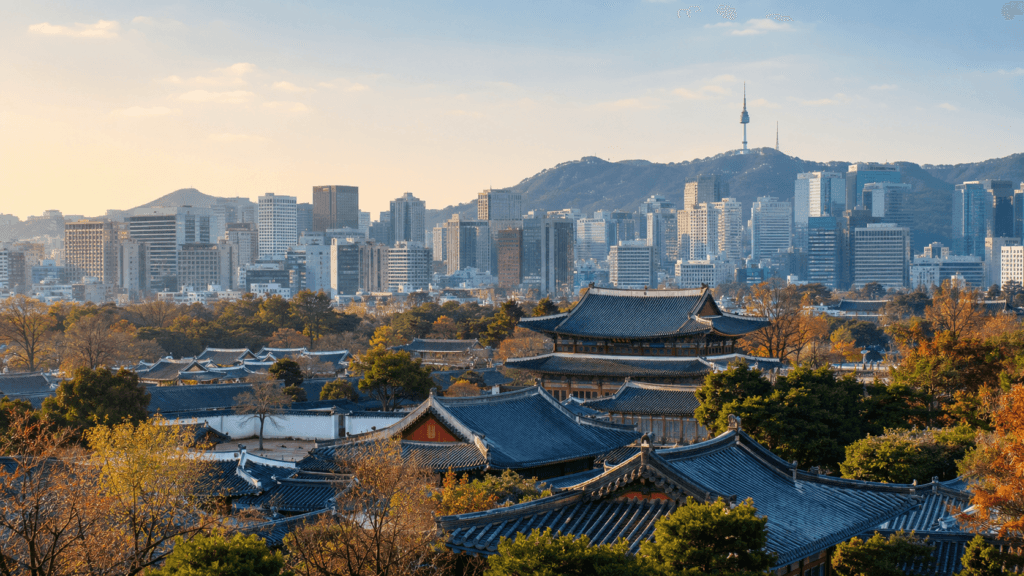
Seoul is easy to underestimate.
Many of its famous neighborhoods look close together on a map. In practice, a day can disappear somewhere between a palace courtyard, a subway transfer, a market lunch, and the discovery that the cafe you saved is on the opposite side of the river.
Three days is enough to see Seoul’s main landmarks. Five days gives most first-time visitors the best balance of history, neighborhoods, food, and modern city life. Seven days leaves room for a day trip and slower evenings, while ten days works well for travelers who want to explore beyond the obvious highlights.
The itineraries below build on one another. A five-day trip includes the three-day route, a seven-day trip adds two more days, and a ten-day trip expands the same plan with additional excursions and a flexible final day.
How Many Days Do You Need in Seoul?
| Trip length | Best suited to | Realistic travel pace |
|---|---|---|
| 3 days | Short first visits | Main palaces, central Seoul, Hongdae and the Han River |
| 5 days | Most first-time visitors | Historic areas, western Seoul, Seongsu, Gangnam and Jamsil |
| 7 days | A more relaxed first trip | Major neighborhoods plus one day trip |
| 10 days | Slow travel or repeat visits | Seoul in depth, several excursions and recovery time |
For most travelers, five days is the strongest choice.
Three days works when Seoul forms part of a wider Japan–Korea itinerary, although the schedule will feel active. Seven days provides enough space for museums, cafes, and one day outside the city. Ten days allows the itinerary to bend when it rains, a reservation falls through, or a slow morning becomes more appealing than another early start.
Seoul Itinerary at a Glance
3 Days in Seoul
- Day 1: Gyeongbokgung, Bukchon, Insadong and Ikseon-dong
- Day 2: Namdaemun, Myeongdong, Namsan and optional Dongdaemun
- Day 3: Hongdae, Yeonnam-dong, Mangwon Market and the Han River
5 Days in Seoul
Add:
- Day 4: Seoul Forest, Seongsu-dong and Ttukseom
- Day 5: Bongeunsa, COEX and Jamsil
7 Days in Seoul
Add:
- Day 6: DMZ or Suwon
- Day 7: National Museum, Itaewon or Hannam-dong, and Banpo
10 Days in Seoul
Add:
- Day 8: The day trip skipped earlier
- Day 9: Nami Island or Incheon
- Day 10: Shopping, missed sights or a favorite neighborhood
Before Planning Your Seoul Itinerary
A few practical rules can change the order of the trip.
Check Palace Closing Days
Gyeongbokgung Palace is normally closed on Tuesdays.
Changdeokgung Palace is normally closed on Mondays. Its Secret Garden requires separate admission and timed entry, so book it before building the rest of the day.
A simple swap usually solves the problem:
| Day | Better palace option |
|---|---|
| Monday | Gyeongbokgung |
| Tuesday | Changdeokgung |
| Wednesday to Sunday | Either palace |
Visitors wearing a complete hanbok outfit can usually enter Seoul’s main royal palaces without paying the standard admission fee. A hanbok top worn with ordinary trousers does not count, regardless of how convincing the trousers feel.
Visit Bukchon During Official Tourist Hours
Bukchon Hanok Village is a residential neighborhood.
Tourist access to the restricted red-zone area around Bukchon-ro 11-gil is limited to 10:00 a.m. to 5:00 p.m. Older advice recommending a sunrise visit should no longer be followed.
Keep voices low, avoid blocking entrances, and remember that some of the most photographed gates lead directly into private homes.
Do Not Count Arrival Day as a Full Sightseeing Day
Even an early flight arrival involves immigration, luggage collection, airport transport, and hotel check-in or storage.
Use arrival day for dinner, a neighborhood walk, or one flexible attraction near the hotel. The same caution applies to departure day, especially when flying from Incheon Airport.
3 Days in Seoul
A three-day itinerary should focus on three distinct parts of the city:
- Historic Seoul
- Central shopping and night views
- Western neighborhoods and the Han River
Adding Gangnam, Jamsil, the DMZ, and Nami Island may create an impressive spreadsheet, but not necessarily an enjoyable trip.
Day 1: Palaces, Hanok Streets and Historic Seoul
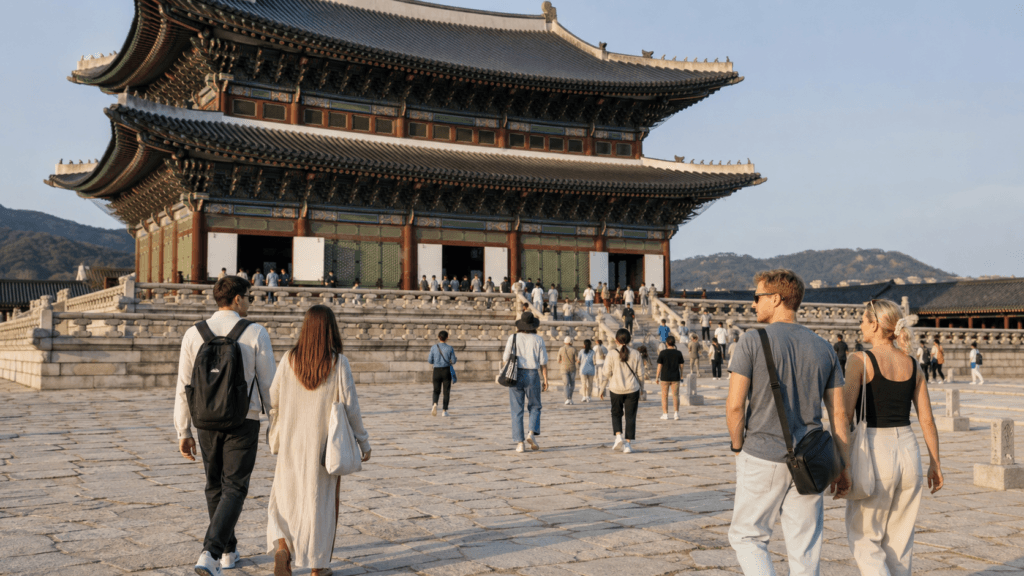
Start at Gyeongbokgung Palace
Arrive near opening time and allow around 90 minutes to two hours.
Gyeongbokgung is Seoul’s largest and most recognizable royal palace. The grounds are spacious, so rushing through the main gates and central courtyard misses much of the atmosphere.
On Tuesdays, use Changdeokgung instead. Travelers visiting the Secret Garden should plan the rest of the day around the reserved tour time.
Walk Through Gwanghwamun Square
From the palace, continue toward Gwanghwamun Square.
The broad avenue provides views of the palace gate, nearby mountains, and statues of King Sejong and Admiral Yi Sun-sin. It works best as a scenic transition rather than a half-day attraction.
Lunch in Seochon or Samcheong-dong
Seochon feels more residential, with small lanes, bakeries, local restaurants, and older neighborhood shops.
Samcheong-dong has more galleries, boutiques, and polished cafes, and leads naturally toward Bukchon.
Both are good lunch areas. Visiting every cafe in both neighborhoods before 2:00 p.m. may turn the trip into a highly caffeinated research project.
Continue to Bukchon Hanok Village
Visit Bukchon between 10:00 a.m. and 5:00 p.m.
The most photographed section contains narrow sloping streets lined with traditional hanok buildings. Thirty to sixty minutes is enough for the main residential lanes.
Travelers interested in traditional architecture may get more from a hanok tea house, craft workshop, or small museum than from circling the same viewpoint several times.
Explore Insadong and Ikseon-dong
Walk downhill to Insadong for crafts, galleries, traditional tea, and souvenirs. The smaller side streets are often more interesting than the main road.
Continue to Ikseon-dong for dinner. Its narrow hanok alleys are filled with restaurants, cafes, bars, and small shops, and the atmosphere becomes livelier after dark.
Cheonggyecheon Stream can be added after dinner when energy remains. Treat it as a bonus rather than a required final stop.
Day 1 route: Gyeongbokgung Palace → Gwanghwamun Square → Seochon or Samcheong-dong → Bukchon → Insadong → Ikseon-dong
Day 2: Namdaemun, Myeongdong and Namsan
Begin at Namdaemun Market
Namdaemun is one of Seoul’s oldest and largest traditional markets.
The market sells food, clothes, accessories, kitchenware, imported goods, and several combinations that do not appear to belong in the same shop. Morning is a good time to explore before the lanes become busier.
Kalguksu Alley and Galchi Jorim Alley are popular food stops, although individual stalls keep different hours.
Walk to Myeongdong
Myeongdong is convenient for cosmetics, pharmacies, fashion, tax-free shopping, and street food.
It is commercial, crowded, and very useful for first-time visitors who want many shops in one compact area. Myeongdong Cathedral provides a quieter break from the main shopping streets.
Allow more time when Korean skincare is part of the plan. “I am only looking” can quickly become a bag containing sunscreen, sheet masks, and a product purchased because the packaging looked unusually trustworthy.
Head Up Namsan Before Sunset
From Myeongdong, reach Namsan by walking, bus, or cable car.
The uphill walk is manageable for active travelers, but less charming when carrying several shopping bags. N Seoul Tower offers a paid observatory, although good views are also available from the surrounding park.
Arrive before sunset to see Seoul in daylight and after dark. Check the seasonal sunset time rather than assuming it will happen around the same hour all year.
Add Dongdaemun Only When Energy Remains
Dongdaemun Design Plaza is an optional evening stop for architecture, night photography, shopping, or exhibitions.
It fits geographically, but the day is already full. The final attraction often receives the tired version of the traveler, and DDP is not known for taking that personally.
Day 2 route: Namdaemun Market → Myeongdong → Namsan Park and N Seoul Tower → optional Dongdaemun Design Plaza
Day 3: Hongdae, Yeonnam-dong and Mangwon
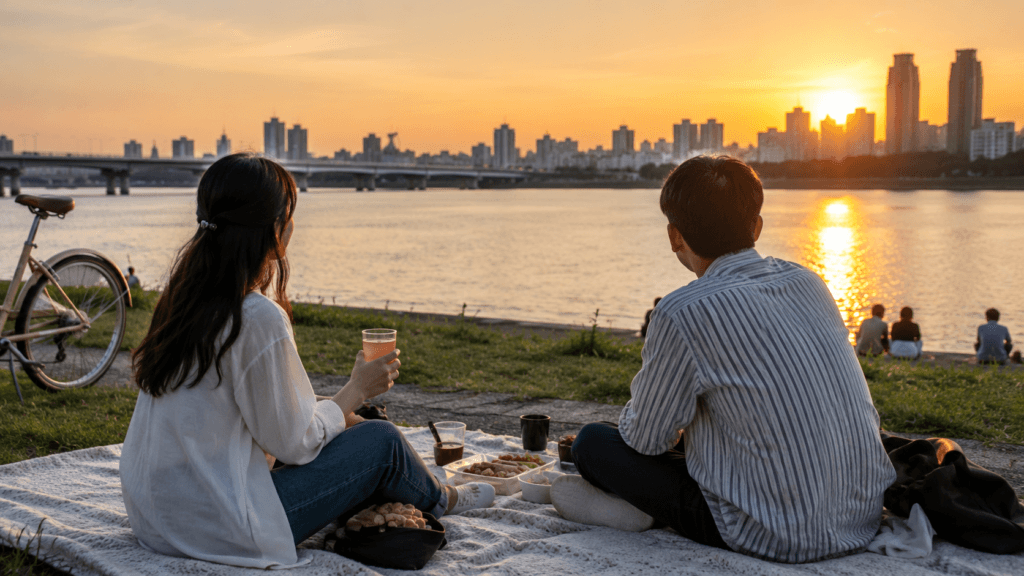
Hongdae and Yeonnam-dong are better from late morning onward, when shops and cafes begin to open and the streets gradually become more active.
Start around Hongdae’s shopping streets, photo booths, arcades, beauty stores, and music venues. Then walk toward Gyeongui Line Forest Park and Yeonnam-dong for lunch or coffee.
The neighborhood changes frequently, so check current cafe and restaurant listings shortly before the trip rather than relying on a social media post from several years ago.
Later in the afternoon, move to Mangwon Market. The compact market is especially good for snacks and casual food, and it sits close enough to Mangwon Hangang Park to combine both in one outing.
Finish at the river around sunset. Spring and autumn offer the most comfortable picnic weather, while summer afternoons can be intensely hot and winter evenings windy.
Day 3 route: Hongdae → Yeonnam-dong → Gyeongui Line Forest Park → Mangwon Market → Mangwon Hangang Park
5 Days in Seoul
Five days adds Seongsu and southeastern Seoul without forcing them into already busy days.
Day 4: Seoul Forest and Seongsu-dong
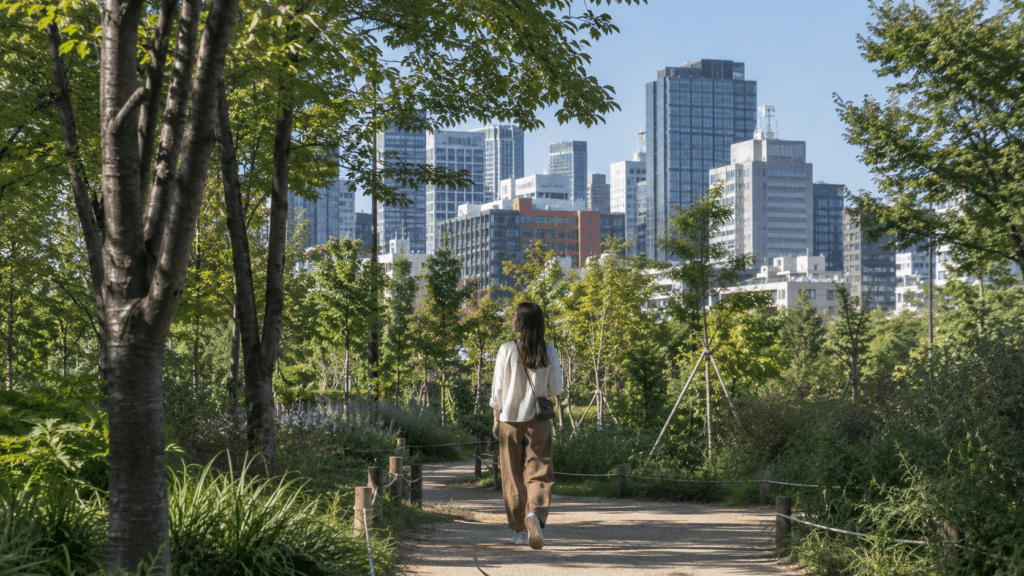
Begin at Seoul Forest while the paths are quiet.
The park includes lawns, gardens, wooded areas, and walking routes that feel removed from the surrounding city. Summer visits are best in the morning, while spring and autumn are ideal for longer walks.
From the park, continue into Seongsu-dong.
Former workshops and warehouses now sit alongside fashion stores, cafes, beauty brands, galleries, and pop-up spaces. The area changes quickly, so specific shops should be checked shortly before arrival.
Seongsu is better approached as a neighborhood to wander through rather than a list of five compulsory stores.
Ttukseom Hangang Park can be added in the evening when the weather is pleasant. Travelers who spent a long evening at Mangwon may prefer dinner in Seongsu instead.
Day 4 route: Seoul Forest → Seongsu-dong → optional Ttukseom Hangang Park
Day 5: Bongeunsa, COEX and Jamsil
Visit Bongeunsa Temple
Bongeunsa sits directly opposite COEX, making the transition from a Buddhist temple to one of Seoul’s largest commercial complexes unusually easy.
Morning is generally calmer and gives the temple more space before the surrounding business district becomes busy.
Explore COEX and Starfield Library
COEX contains shopping, restaurants, exhibitions, entertainment venues, and Starfield Library.
The library is visually striking but often crowded around its central shelves. It is worth seeing, although it remains a public space inside a shopping complex rather than a secret reading room discovered by accident.
Continue to Jamsil
Travelers interested in Gangnam Station can add it after COEX, but this increases transport and shopping time. Going directly to Jamsil creates a smoother day.
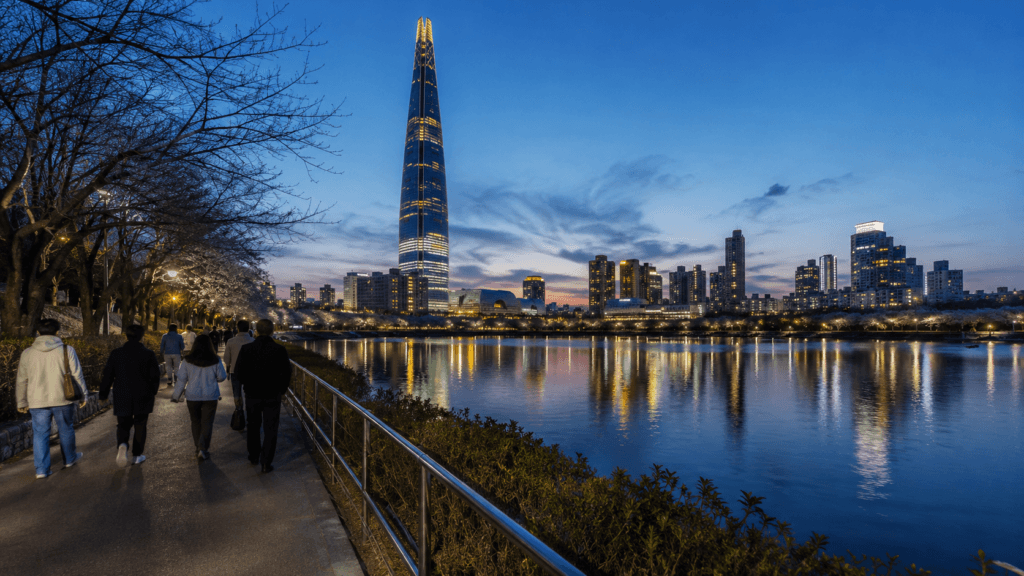
Walk around Seokchon Lake, then continue toward the Lotte World Tower area for dinner or evening views.
Seoul Sky provides a paid observatory. Travelers who already visited N Seoul Tower may decide that one major city view is enough. The skyline will survive without being inspected from every possible height.
Day 5 route: Bongeunsa Temple → COEX and Starfield Library → optional Gangnam Station → Seokchon Lake → Lotte World Tower area
7 Days in Seoul
Seven days allows one day outside Seoul and one slower city day.
Day 6: DMZ or Suwon
The DMZ and Suwon offer completely different experiences.
DMZ for Modern History
A DMZ visit suits travelers interested in the division of the Korean Peninsula and modern Korean history.
Depending on access and current conditions, tours may include Imjingak, the Third Tunnel, Dora Observatory, and other approved locations. Routes can change because of military, security, weather, or operational restrictions.
Bring a passport and follow the operator’s instructions. Access to the Joint Security Area should never be assumed.
A DMZ tour from Seoul is the practical choice because entry to controlled sites is restricted. Tours often begin early, so avoid placing an inflexible evening reservation immediately afterward.
Suwon for Independent Exploring
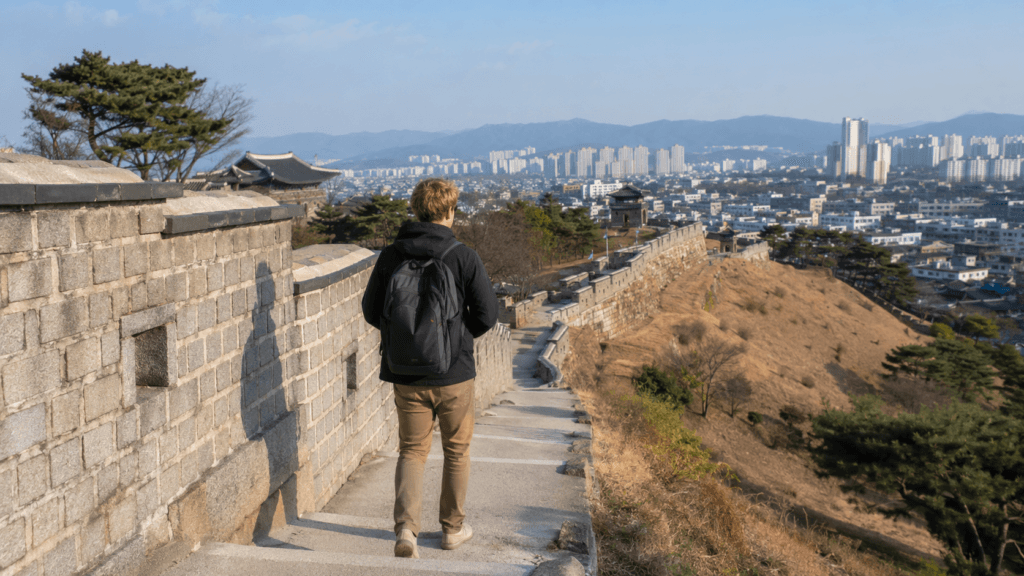
Suwon is easier to visit independently and offers fortress walls, historic buildings, cafes, and local streets.
Begin at Hwaseong Haenggung, then walk part or all of Hwaseong Fortress. The full wall is approximately 5.1 kilometers and may take two to three hours with stops.
Banghwasuryujeong Pavilion is one of the most scenic points, while Haengnidan-gil adds cafes, restaurants, and small shops near the fortress area.
Suwon works particularly well for travelers who prefer flexible timing and do not want to follow a guided tour.
Suwon route: Suwon Station → Hwaseong Haenggung → Hwaseong Fortress → Banghwasuryujeong → Haengnidan-gil
Day 7: Museum, Itaewon or Hannam-dong, and Banpo
Begin at the National Museum of Korea.
Its permanent collection covers Korean art, archaeology, sculpture, ceramics, and Buddhist history. The building is large, so choose the sections that interest you rather than trying to absorb the entire history of Korea before lunch.
The War Memorial of Korea is another strong option nearby, but most travelers should visit one major museum rather than rushing through both.
Afterward, continue to either Itaewon or Hannam-dong.
Itaewon has international restaurants, bars, nightlife, and a busier atmosphere. Hannam-dong is better for galleries, boutiques, cafes, and a slower afternoon.
Finish at Banpo Hangang Park when the weather is suitable. Seasonal fountain schedules can change because of weather or maintenance, so view the show as a bonus rather than the sole purpose of the evening.
Day 7 route: National Museum of Korea → Itaewon or Hannam-dong → Banpo Hangang Park
10 Days in Seoul
Ten days turns Seoul into a base rather than a checklist.
A sensible structure is seven days in the city, two additional excursions, and one flexible final day.
Day 8: Take the Day Trip You Skipped
Travelers who visited the DMZ can go to Suwon.
Those who chose Suwon can take a DMZ tour.
The two destinations complement one another: one focuses on contemporary history and controlled access, while the other offers a more independent historic-city experience.
Day 9: Nami Island or Incheon
Nami Island
Nami Island suits travelers looking for riverside paths, seasonal scenery, trees, and a slower outdoor day.
The journey involves more than a single Seoul subway ride and may include regional trains, buses, taxis, or a ferry. Organized transport simplifies the connections, while independent visitors should allow a full day.
Spring blossoms, autumn foliage, and snowy winter scenery attract the largest crowds, particularly on weekends.
Incheon
Incheon offers two very different directions.
A historic route may include Chinatown, the Open Port area, Jayu Park, Sinpo Market, and Wolmido.
A modern route may focus on Songdo Central Park, contemporary architecture, cafes, and waterfront paths.
Chinatown and Songdo are separated by a substantial journey. Choose one main area instead of spending the day moving between them.
Day 10: Keep the Final Day Flexible
Use the last day for something that did not fit earlier:
- Revisiting a favorite neighborhood
- Shopping for gifts
- A skincare or beauty appointment
- A museum missed because of rain
- A slow cafe day
- Packing and laundry
- A half-day close to the hotel
The advantage of ten days is having enough time to adjust when weather changes, reservations sell out, or a neighborhood turns out to deserve more than the planned hour.
How to Adjust the Itinerary by Season
Spring
Spring is excellent for palaces, Seoul Forest, Seokchon Lake, and the Han River.
Cherry blossom dates change each year and peak bloom may last only a short time. Popular locations become particularly crowded on weekends.
Summer
June can be rainy and humid, while July and August are often hot.
Place outdoor attractions in the morning or evening. Museums, shopping centers, cafes, and markets work better during the hottest part of the day.
Seoul rewards walking, but summer does not award extra points for suffering.
Autumn
Autumn is one of the best periods for walking.
Palaces, Namsan, Seoul Forest, and Hwaseong Fortress become especially attractive as the leaves change. Temperatures may drop quickly after sunset, so carry a light layer.
Winter
Winter is cold, dry, and often clear.
Short daylight hours make early starts more important for outdoor attractions. Museums, food markets, shopping, and cafes are easier to enjoy during the coldest periods.
Riverside parks and Namsan usually feel colder than central shopping districts because of the wind.
Climate Card or T-money?
The Climate Card and T-money serve different types of itineraries.
Climate Card Short-Term Prices
| Duration | Pass price |
|---|---|
| 1 day | ₩5,000 |
| 2 days | ₩8,000 |
| 3 days | ₩10,000 |
| 5 days | ₩15,000 |
| 7 days | ₩20,000 |
The physical card costs an additional ₩3,000.
Short-term passes begin immediately when charged and cover many Seoul subway and city bus services. They do not cover every route.
Important exclusions include:
- Airport buses
- The Shinbundang Line
- Many metropolitan and express buses
- Transport outside the covered Seoul network
- The initial trip from Incheon Airport into Seoul
The Climate Card is useful when staying mainly within Seoul and taking several rides each day.
T-money may be simpler when using public transport only a few times per day, visiting Suwon or Incheon, or combining Seoul with regional travel.
For a ten-day itinerary, the seven-day Climate Card can be used during the busiest Seoul portion, with T-money covering the remaining journeys.
Is the Discover Seoul Pass Worth It?
The Discover Seoul Pass can save money when an itinerary includes several expensive paid attractions or experiences.
It may be useful for travelers visiting combinations of:
- Lotte World
- Observation decks
- Museums and paid exhibitions
- Cultural activities
- Selected tours or performances
It is less valuable for an itinerary focused on palaces, markets, neighborhoods, parks, and cafes.
Compare the normal admission prices with the current cost of the Discover Seoul Pass before buying. A long attraction list does not automatically make a city pass good value.
Where to Stay for This Seoul Itinerary
Myeongdong
Myeongdong is one of the easiest bases for first-time visitors.
It provides central transport, shopping, airport connections, and convenient access to historic Seoul. It is practical rather than peaceful.
Hongdae
Hongdae suits nightlife, cafes, younger travelers, and convenient airport rail access.
It works well for western Seoul, although early palace visits require longer journeys.
Jongno or Insadong
These areas are ideal for palaces, traditional neighborhoods, walking, and a quieter historic atmosphere.
Evenings are calmer than in Hongdae or Gangnam.
Seoul Station
Seoul Station is convenient for regional trains, airport access, and day trips.
Check the exact hotel location because the atmosphere and walking routes differ noticeably by exit.
Gangnam
Gangnam suits business trips, nightlife, shopping, and travelers concentrating on southern Seoul.
It creates longer journeys to Bukchon, the palaces, and Hongdae.
Choosing where to stay in Seoul can remove hours of unnecessary transport over a multi-day trip. Travelers comparing locations and prices can check current Seoul hotel options before finalizing the route.
Common Seoul Itinerary Mistakes
Crossing the City Too Often
Group nearby neighborhoods together.
Hongdae, Jamsil, Myeongdong, and Bukchon do not belong in the same day simply because the subway technically connects them.
Ignoring Palace Closing Days
Check the weekday before assigning Gyeongbokgung or Changdeokgung to a fixed date.
Visiting Bukchon Outside Tourist Hours
Do not follow outdated advice recommending an early-morning residential visit.
Filling Every Evening
Leave room for a long dinner, a riverside walk, or a neighborhood that turns out to be more interesting than expected.
Underestimating Shopping Time
Myeongdong, Seongsu, COEX, and large department stores can consume several hours.
Plan accordingly rather than describing them as quick stops.
Adding Too Many Day Trips
A three-day Seoul itinerary should remain in Seoul.
For most first-time visitors, one excursion during a seven-day trip is enough.
Ignoring Heat and Travel Fatigue
An itinerary that feels comfortable in April may be exhausting in August.
Move parks, palace courtyards, and fortress walks away from the hottest part of the day.
FAQ
Is Three Days Enough for Seoul?
Three days is enough to see the main historic areas, Myeongdong, Namsan, Hongdae, and part of the Han River.
The schedule will be active and leaves little room for day trips.
Is Five Days Too Long in Seoul?
No.
Five days is the most balanced length for many first-time visitors. It provides enough time for palaces, markets, the Han River, Seongsu, Gangnam, and Jamsil without making every day feel rushed.
Is Seven Days in Seoul Worth It?
Yes.
Seven days leaves room for neighborhood exploration, museums, slower meals, and one day outside the city.
What Can I Do With Ten Days in Seoul?
Spend around seven days exploring Seoul, use two days for destinations such as the DMZ, Suwon, Nami Island, or Incheon, and keep one day flexible.
Which Is Better, the DMZ or Suwon?
The DMZ is better for modern history and a guided experience.
Suwon is better for independent travel, fortress walks, cafes, and flexible timing.
Do I Need a Climate Card?
Not always.
It is convenient for frequent travel within Seoul, while T-money may be easier when taking fewer rides or traveling outside the covered area.
Is Seoul Walkable?
Individual neighborhoods are very walkable.
The city as a whole is too large to explore only on foot, so use the subway or buses between districts.
What Is the Best Area to Stay in Seoul?
Myeongdong is the easiest all-around choice for many first-time visitors.
Hongdae is better for nightlife and airport access, while Jongno or Insadong suits palaces and traditional Seoul.
Final Thoughts
Three days gives you Seoul’s headline attractions. Five days provides the best balance for most first-time visitors. Seven days makes room for a day trip and slower neighborhoods, while ten days allows Seoul to become a comfortable base for exploring the surrounding region.
The best Seoul itinerary is not the one containing the greatest number of attractions. It is the one that groups neighborhoods sensibly, respects palace closing days and residential rules, and leaves enough time for meals, markets, and unexpected stops.
A small restaurant, a riverside sunset, or a street discovered after taking the wrong subway exit may remain more memorable than one final attraction reached five minutes before closing.