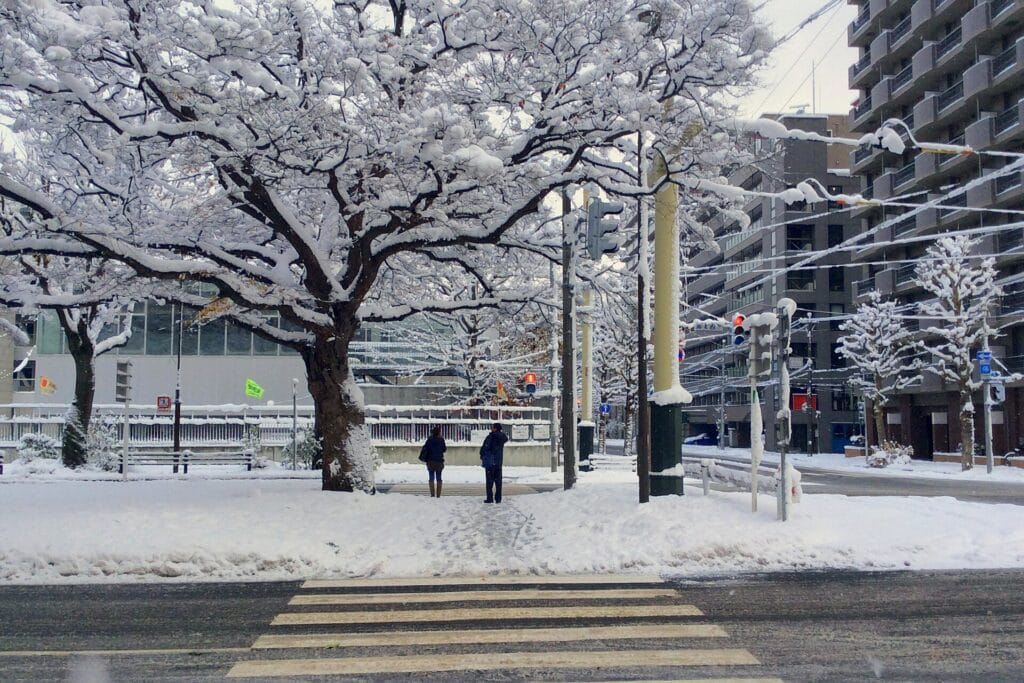
Packed snow, polished crossings and warm indoor spaces change the pace long before the cold becomes dramatic.
- Planning unit
- One winter city day
- Movement pattern
- Walk and warm-stop cycle
- Season
- Snow season
- Reading time
- 6 minutes
Do ordinary city shoes work in Sapporo winter?
They can be warm and still fail at the one job that matters most: staying predictable on compacted snow and ice.
Think in systems, not one heroic boot.
A waterproof upper, warm sock, secure fit and suitable sole work together. Removable traction can help in some conditions, but it must be used as directed and removed when it becomes unsafe indoors.
Alternate outdoor sections with warm stops you would visit anyway.
The point is not to hide from winter. It is to prevent one long exposed block from making the rest of the city day miserable.
-
Step 1
Test the first block near the accommodation
Use the first ten minutes to judge grip, warmth and sock movement before committing to the longest outdoor route or leaving spare equipment behind.
-
Step 2
Walk one central area at a time
Treat Odori, Susukino and any separate venue as distinct chapters. Pause inside a market, museum, station or planned meal between them.
-
Step 3
Reset before the evening
Dry gloves, change a damp sock and check the return route before temperatures drop and polished pedestrian surfaces become harder to read.
-
Step 4
Keep the final walk optional
A night view is not worth forcing when feet are wet, balance feels uncertain or the weather has shifted beyond the forecast.
The best choice is the one that stays dry, secure and usable indoors.
Brand, price and insulation claims matter less than fit, sole behavior and whether the complete setup works for your actual walking style.
-
Waterproof winter boot
Best for: long outdoor blocks
A secure, insulated boot with a winter-oriented sole is the simplest starting point for travelers expecting repeated snow walking.
Tradeoff: Heavy boots can overheat indoors and poor fit causes fatigue quickly.
-
City shoe plus traction aid
Best for: shorter flexible use
A compatible removable aid may improve confidence when conditions warrant and local instructions allow it.
Tradeoff: It is not universal, can feel awkward and may be unsafe on smooth indoor floors.
-
Sock and drying backup
Best for: comfort recovery
A spare dry pair, room to move the toes and a plan for drying footwear often matter more than adding another heavy layer.
Tradeoff: Too many socks can tighten the shoe and reduce warmth rather than improve it.
Small winter habits prevent the most avoidable problems.
Surface reading
Shorten the stride, keep hands available for balance and avoid rushing onto a surface whose shine or texture you cannot read. Follow current local safety guidance.
Cold and moisture
Forecast temperature does not describe wind, wet snow or shade. Check conditions again before the evening and protect electronics and spare layers from moisture.
Indoor transitions
Knock snow from footwear, respect wet-floor signs and manage removable traction before entering shops, transit areas or other smooth indoor surfaces.
When to stop
Drop the farthest venue and the late outdoor loop once footwear is wet, feet are numb or balance is becoming less reliable.