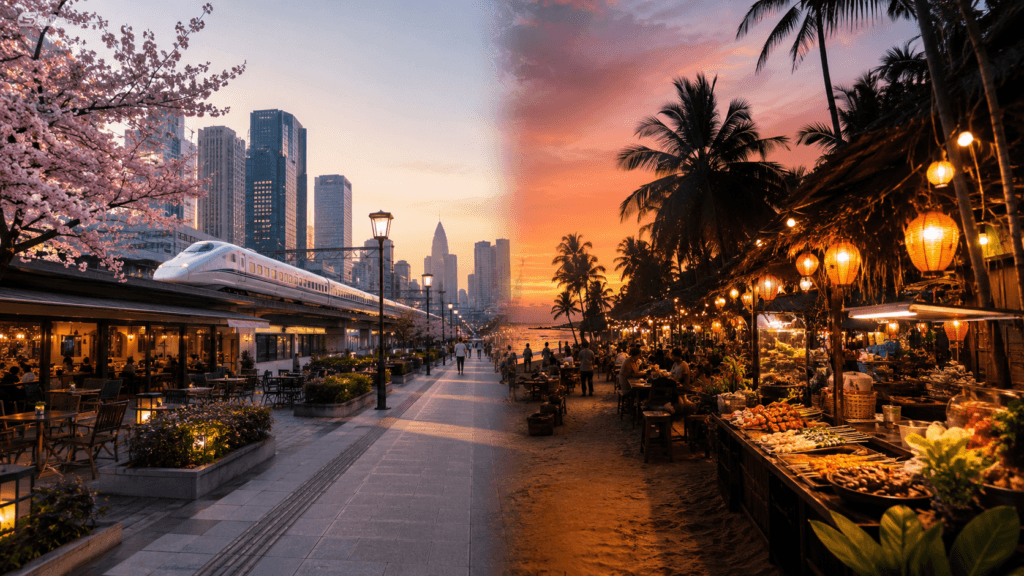
Choosing between East Asia and Southeast Asia can feel like standing in front of two very different doors.
One door opens to bullet trains, neon city streets, cherry blossoms, night views, pop culture, quiet temples and convenience stores that somehow understand your emotional needs.
The other opens to warm weather, street food smoke, beach towns, night markets, scooters, temple courtyards, tropical rain and a travel rhythm that feels a little more relaxed.
Both are excellent. They are just not the same trip.
For a first Asia trip, East Asia is usually better for travelers who prefer smoother logistics, trains, big cities, shopping, pop culture and seasonal scenery. Southeast Asia is usually better for travelers who prefer lower costs, warm weather, street food, beaches and a more flexible travel style.
This guide compares East Asia and Southeast Asia for first-time visitors in 2026, including budget, weather, transport, food, comfort, entry rules and the best beginner-friendly routes.
For a broader route plan, start with our Asia travel itinerary 2026 guide. For country-by-country choices, compare our best countries to visit in Asia in 2026 guide.
Quick Answer: East Asia or Southeast Asia?
Choose East Asia for your first Asia trip when your ideal trip includes:
- Japan, South Korea or Taiwan
- Easier public transport
- Trains and subway systems
- Big cities
- Shopping
- Cafes
- K-pop, anime, gaming or beauty culture
- Spring blossoms or autumn colors
- A more organized travel experience
Choose Southeast Asia when your ideal trip includes:
- Thailand, Vietnam, Malaysia, Singapore, Cambodia or Indonesia
- Lower daily costs
- Warm weather
- Street food
- Night markets
- Beaches and islands
- Temples
- Backpacker routes
- A more flexible travel rhythm
The simplest way to think about it is this:
East Asia feels more structured.
Southeast Asia feels more relaxed.
That does not mean East Asia is boring or Southeast Asia is chaotic. It means the travel style is different. East Asia is often easier to plan by train and city schedule. Southeast Asia often works better with flexible days, short flights, buses, ferries and weather backup plans.
East Asia vs Southeast Asia at a Glance
| Category | East Asia | Southeast Asia |
|---|---|---|
| Best for | Cities, trains, pop culture, shopping, seasonal scenery | Beaches, street food, warm weather, value, flexible travel |
| Easiest countries | Japan, South Korea, Taiwan | Singapore, Thailand, Malaysia |
| Budget level | Usually higher | Usually lower, except Singapore |
| Transport | Excellent trains and subways | Flights, buses, ferries, taxis, scooters and some trains |
| Weather appeal | Spring and autumn | Warm-weather trips, especially dry season routes |
| Food style | Ramen, sushi, Korean BBQ, night markets, cafes | Street food, noodles, curries, tropical fruit, hawker centers |
| Best for beaches | Good, but not usually the main reason | Stronger beach and island options |
| First-time comfort | Very strong | Strong in Singapore, Thailand and Malaysia, more varied elsewhere |
| Best trip length | 7 days to 3 weeks | 2 weeks to 1 month or longer |
For many first-time travelers, East Asia is the easier first step. But Southeast Asia can be more affordable, warmer and better for longer routes.
The better choice depends less on the map and more on the kind of travel day that makes you happy.
Choose East Asia When You Want Smoother Logistics
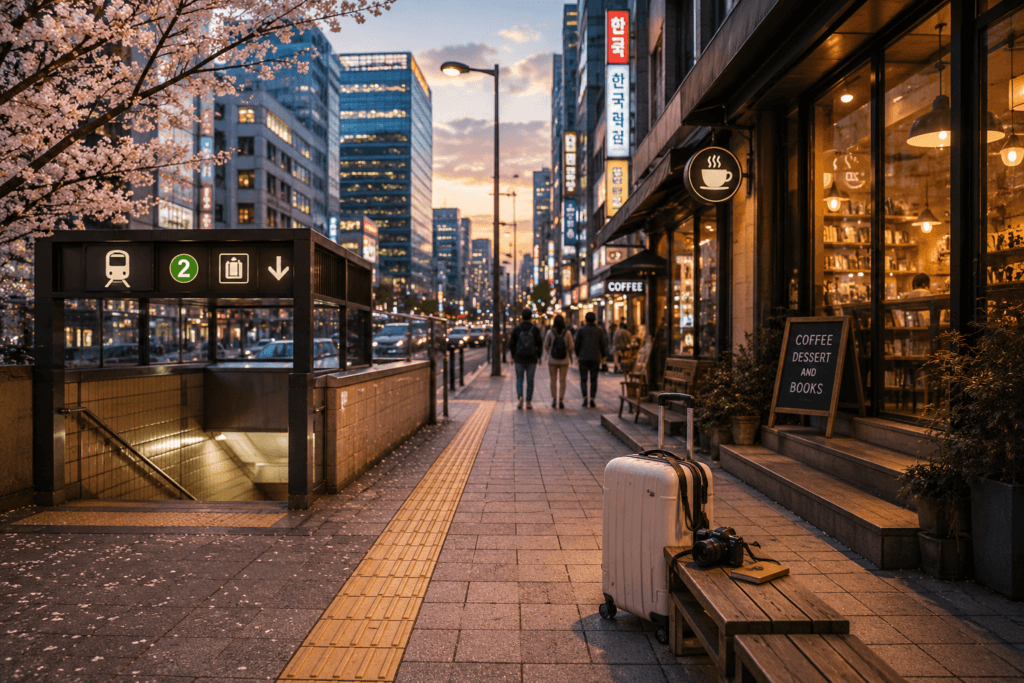
East Asia is usually the easier choice for first-time visitors who want a more organized trip.
Japan, South Korea and Taiwan all have strong public transport systems, excellent city infrastructure and plenty of destinations that can be visited without hiring a driver or joining a tour.
A typical East Asia travel day might look like this:
- Take the subway or train
- Visit a palace, shrine, temple or neighborhood
- Eat lunch near a station
- Explore cafes, shops or museums
- Return safely by public transport at night
That rhythm is comfortable for many travelers.
Japan is especially strong for train travel. South Korea is excellent for subway-based city travel. Taiwan is compact and easy to explore from Taipei. These countries still require planning, of course, but the basic travel structure is easier to understand.
East Asia is a good first choice for travelers who like knowing where they are going, how long it will take and which station exit is closest to the cafe they saved at midnight.
Station exits may still betray you occasionally. That is part of the ritual.
Choose Southeast Asia When You Want Warmth, Value and Flexibility
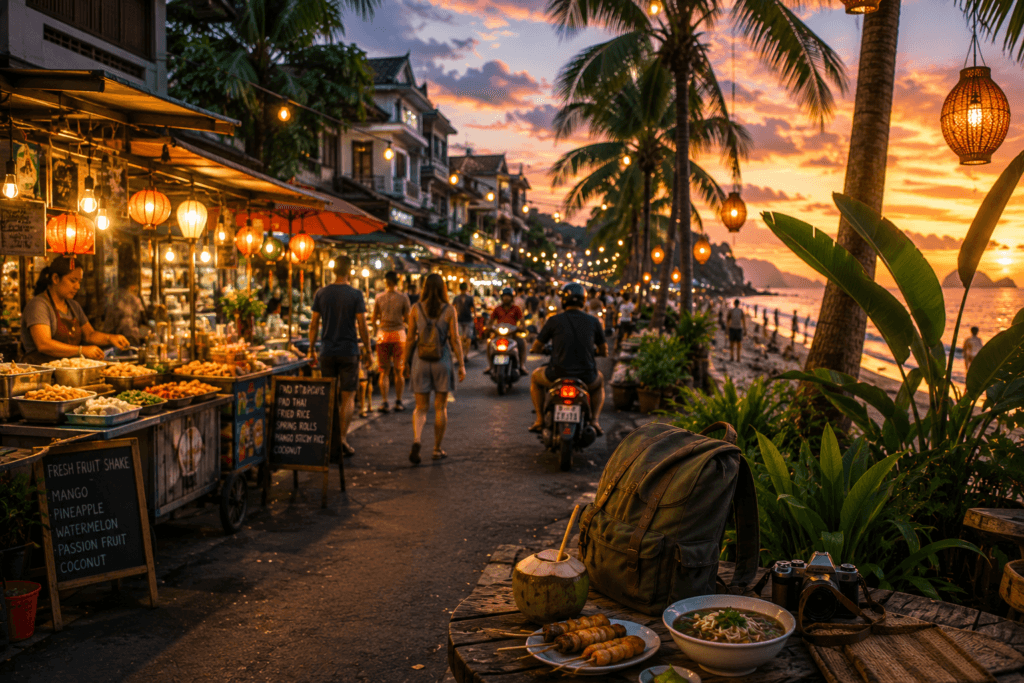
Southeast Asia is usually the better choice for travelers who want warm weather, lower costs, street food, beaches and a more flexible travel rhythm.
Thailand, Vietnam, Malaysia, Cambodia, Indonesia and Singapore all offer very different experiences, but the region is especially strong for food, markets, beaches, temples and longer travel.
A typical Southeast Asia travel day might look like this:
- Eat breakfast at a local cafe or street stall
- Visit a temple, market or old town
- Take a taxi, ride-hailing car, tuk-tuk, ferry or short flight
- Cool down during the hottest part of the day
- Return outside in the evening for night markets and dinner
Southeast Asia often rewards slower travel. A little flexibility helps because weather, traffic and transport timing can change your day.
This region is also better for travelers who want their budget to stretch further. Vietnam, Thailand, Cambodia and Malaysia can be much more affordable than Japan, South Korea or Singapore, especially for food and daily expenses.
Southeast Asia is not always easier, but it often feels more forgiving. Plans can bend a little. Sometimes the best meal is not on your itinerary. It is steaming beside a plastic stool.
Ease of Travel: East Asia Usually Wins
For first-time visitors, East Asia usually wins for ease of travel.
Japan, South Korea and Taiwan are strong choices because public transportation is reliable, cities are organized and major attractions are often easy to reach independently.
East Asia is especially good for travelers who feel nervous about:
- Language barriers
- Transport confusion
- Safety at night
- City navigation
- Solo travel
- Moving between major cities
Japan can still feel complex because train networks are huge. Seoul can feel fast and spread out. Taipei can be humid and busy. But overall, these destinations are easier for independent travelers than many multi-stop Southeast Asia routes.
Southeast Asia can still be easy, especially in Singapore, Bangkok, Kuala Lumpur, Penang and Bali’s popular areas. But once ferries, islands, rural transfers or long bus rides enter the plan, travel days can become less predictable.
The verdict:
East Asia is easier for structured travel.
Southeast Asia is better for flexible travelers.
Budget: Southeast Asia Usually Wins
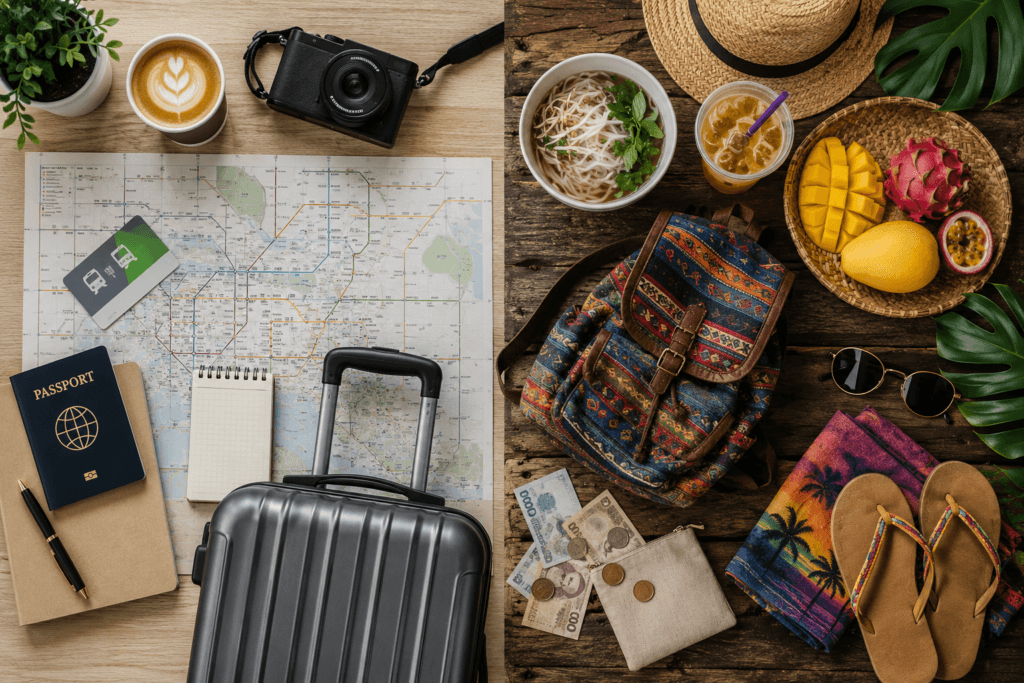
Southeast Asia is usually better for budget travelers.
Japan, South Korea and Taiwan can be done on a reasonable budget, but accommodation, transport and attractions often cost more than in Vietnam, Thailand, Cambodia or Malaysia.
Southeast Asia gives travelers a wider budget range. You can travel cheaply with guesthouses, local food and buses, or spend more on boutique hotels, private tours and resorts. That flexibility makes the region attractive for longer trips.
Vietnam and Cambodia are especially strong for value. Thailand offers options at nearly every budget level. Malaysia can be excellent value compared with Singapore. Indonesia, especially Bali, can range from budget guesthouses to expensive villas.
Singapore is the big exception. It is in Southeast Asia, but it is not a budget destination. Hotels, alcohol and some attractions can be expensive.
For budget, Southeast Asia has the edge.
Weather and Best Time to Visit
Weather is one of the biggest differences between East Asia and Southeast Asia.
East Asia has clearer seasons. Japan, South Korea and Taiwan are often most comfortable in spring and autumn.
For East Asia, the easiest travel periods are usually:
- March to May
- October to November
Spring brings blossoms, mild weather and good city walks. Autumn brings cooler air, foliage and comfortable sightseeing.
Summer in East Asia can be hot, humid and rainy. Winter can be cold in Japan and South Korea, though it can also be beautiful for snow trips, winter lights and hot food.
Southeast Asia is warmer year-round, but the weather varies by country and region. Many mainland Southeast Asia routes are more comfortable during the drier months, often from late autumn to early spring.
For many Southeast Asia routes, a good starting point is:
- November to April
That said, Southeast Asia cannot be reduced to one weather rule. Thailand’s islands differ by coast. Vietnam changes a lot from north to south. Malaysia’s east and west coasts do not always share the same best season. Indonesia has its own dry and rainy patterns.
The verdict:
East Asia is best for spring and autumn city travel.
Southeast Asia is better for warm-weather trips, but you need to check the exact country and region.
Food: Nobody Loses
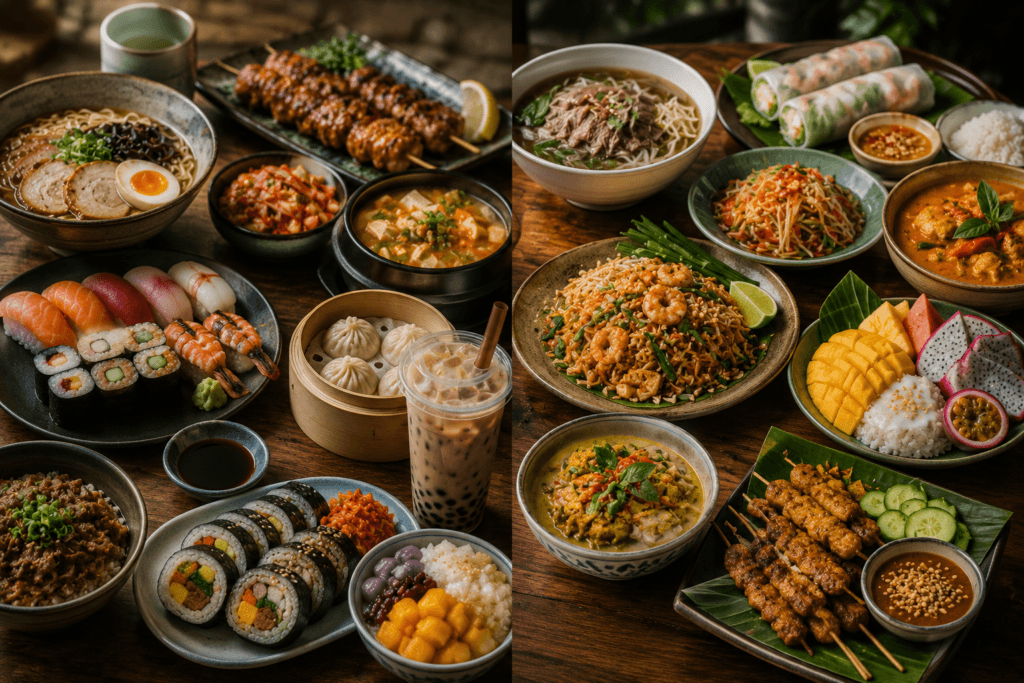
Food is not a fair fight in Asia. Everyone brought weapons.
East Asia gives you ramen, sushi, Korean BBQ, Korean street food, Taiwanese night markets, bubble tea, convenience store meals, hot pot, bakeries, cafes and desserts that can quietly take over your itinerary.
Southeast Asia gives you Thai curries, pad thai, Vietnamese pho, banh mi, fresh herbs, Malaysian hawker food, Singapore food courts, Cambodian noodles, tropical fruit, grilled seafood and night market snacks.
Choose East Asia for:
- Ramen and sushi
- Korean BBQ
- Korean street food
- Taiwanese night markets
- Cafe culture
- Convenience store snacks
- Stylish desserts
Choose Southeast Asia for:
- Thai street food
- Vietnamese noodles and coffee
- Malaysian hawker centers
- Singapore food courts
- Tropical fruit
- Night market dinners
- Spicy, fresh and herb-heavy meals
The verdict:
East Asia is better for polished food cities, cafes and pop culture dining.
Southeast Asia is better for street food, markets and tropical food energy.
The real winner is your appetite.
Cities, Culture and Pop Culture
East Asia usually wins for city travel and pop culture.
Japan and South Korea are especially strong for travelers interested in anime, gaming, K-pop, K-beauty, shopping, themed cafes, design, fashion and modern neighborhoods.
Tokyo and Seoul are two of the most exciting city destinations in Asia. They are dense, layered and full of small discoveries. Kyoto adds tradition and temples. Osaka adds food and nightlife. Busan adds coastal city energy. Taipei adds night markets and a softer pace.
East Asia is a strong choice for travelers who enjoy:
- Big cities
- Public transport
- Shopping districts
- Cafes
- Pop culture
- Museums
- Historic neighborhoods
- Seasonal festivals
- City photography
Southeast Asia also has excellent cities, especially Bangkok, Singapore, Kuala Lumpur, Hanoi, Ho Chi Minh City and George Town. But the city experience is different. It is warmer, looser and often more street-based.
Bangkok is intense and exciting. Hanoi feels atmospheric and food-focused. Singapore is polished and easy. Kuala Lumpur is practical and multicultural. Penang is one of the best food city choices in the region.
The verdict:
East Asia is better for pop culture and polished city travel.
Southeast Asia is better for street energy, food cities and warmer urban travel.
For a city-focused first trip, a Japan and Korea itinerary is one of the easiest options.
Beaches and Nature
Southeast Asia usually wins for beaches.
Thailand, Indonesia, Malaysia, Vietnam, the Philippines and Sri Lanka all offer strong beach and island options. For a first Asia beach trip, Thailand and Bali are especially popular because tourism infrastructure is well developed.
Choose Southeast Asia for:
- Tropical beaches
- Island-hopping
- Diving or snorkeling
- Beach resorts
- Warm-weather slow travel
- Jungle and coastal scenery
- Waterfalls and rice fields
East Asia has beautiful nature too. Japan has mountains, islands, hot springs and ski regions. South Korea has national parks, coastal cities and Jeju Island. Taiwan has mountains, hot springs and dramatic coastlines.
But for many first-time travelers, the classic “warm beach Asia trip” usually points to Southeast Asia.
For beaches, Southeast Asia is the easier answer.
Safety and First-Time Comfort
East Asia and Singapore are usually the safest bets for first-time comfort.
Japan, South Korea, Taiwan and Singapore are popular with first-time visitors because they feel organized and easy to navigate. Public transport is strong, city infrastructure is reliable and solo travel is common.
That does not mean Southeast Asia is unsafe. Thailand, Vietnam, Malaysia, Cambodia and Indonesia receive huge numbers of travelers and can be very enjoyable for first-time visitors. But the travel environment can be less predictable depending on the route.
First-time comfort is usually stronger when:
- Public transport is clear
- Airports are easy
- Accommodation areas are well connected
- Travel scams are easier to avoid
- City navigation is straightforward
- Late arrivals are manageable
East Asia and Singapore do especially well here.
Southeast Asia may require more street awareness, especially around taxis, scooters, traffic, tourist pricing and nightlife areas. Normal travel precautions are usually enough, but first-time visitors should keep plans realistic.
The verdict:
East Asia and Singapore are better for comfort.
Southeast Asia is still beginner-friendly in many places, but routes need more care.
Entry Rules and Travel Paperwork in 2026
Before choosing East Asia or Southeast Asia, check entry requirements for every country on your route.
Many Asian countries now use digital systems, eVisas or arrival cards. These are usually simple, but they still matter.
East Asia Entry Notes
For South Korea, travelers from visa-free countries should check whether K-ETA applies to their passport before departure. South Korea has extended temporary K-ETA exemption for eligible travelers until December 31, 2026.
For Japan, many travelers can enter visa-free depending on nationality. Travelers who need a short-term tourism visa may be able to use the JAPAN eVISA system depending on nationality and residence.
For Taiwan, visa-exempt entry rules vary by passport. Taiwan generally requires passport validity of at least six months from the date of entry for visa-exempt travelers, with some exceptions depending on nationality.
Southeast Asia Entry Notes
Thailand requires foreign travelers to complete the Thailand Digital Arrival Card before arrival. Use the official TDAC website and avoid unofficial paid sites.
Vietnam offers eVisas that can be valid for up to 90 days, with single or multiple-entry options.
Singapore requires most travelers to submit the SG Arrival Card within three days before arrival, including the arrival date.
Malaysia requires foreign travelers to complete the Malaysia Digital Arrival Card before arrival.
Cambodia uses an e-Arrival system that includes arrival, health and customs declaration elements.
The paperwork is not difficult, but it is easy to forget when your brain is busy choosing hotels, flights and which noodle shop deserves your first night.
Check official government websites before booking and again before departure.
Best First-Time East Asia Routes
Japan + South Korea
This is one of the easiest two-country Asia routes.
Best for:
- Cities
- Food
- Shopping
- Pop culture
- Public transport
- First-time travelers who want comfort
Suggested length:
- 10 to 14 days
A simple route could be:
- Tokyo
- Kyoto or Osaka
- Seoul
This route is especially good for travelers who want both traditional culture and modern city energy.
Japan + South Korea + Taiwan
This is a strong three-week East Asia route.
Best for:
- City travel
- Food
- Night markets
- Shopping
- Easy transport
- A balanced first East Asia trip
Suggested length:
- 3 weeks
A simple route could be:
- Tokyo
- Kyoto or Osaka
- Seoul
- Taipei
Taipei makes a good final stop because it is food-focused, friendly and easier to explore than adding a large country with many long-distance routes.
Best First-Time Southeast Asia Routes
Thailand + Vietnam
This is one of the best Southeast Asia routes for first-time visitors.
Best for:
- Food
- Value
- Warm weather
- Street life
- Temples
- A classic first Southeast Asia trip
Suggested length:
- 2 weeks
A simple route could be:
- Bangkok
- Chiang Mai
- Hanoi or Hoi An
This route gives you Thailand’s travel infrastructure and Vietnam’s food and atmosphere without adding too many countries.
Singapore + Malaysia + Thailand
This is one of the most comfortable Southeast Asia routes.
Best for:
- First-time travelers
- Families
- Food
- City travel
- A soft landing into Southeast Asia
Suggested length:
- 3 weeks
A simple route could be:
- Singapore
- Kuala Lumpur
- Penang
- Bangkok
- Chiang Mai or Phuket
Singapore makes the start easy. Malaysia adds food and cultural variety. Thailand adds energy, markets and beaches.
Thailand + Cambodia + Vietnam
This is a strong Southeast Asia route for travelers who want temples, history, food and value.
Best for:
- Angkor Wat
- Street food
- Culture
- Long routes
- Budget-conscious travelers
Suggested length:
- 3 weeks to 1 month
A simple route could be:
- Bangkok
- Chiang Mai
- Siem Reap
- Hanoi
- Hoi An
- Ho Chi Minh City
This route is excellent, but it is better with more time. Do not squeeze it into a short trip unless you enjoy turning border crossings into a hobby.
For better value and warmer weather, a Thailand and Vietnam itinerary is usually a better match.
Common Mistakes When Choosing Between East Asia and Southeast Asia
Mistake 1: Choosing Only by Price
Southeast Asia is usually cheaper, but cheaper does not always mean better for your first trip.
Some travelers would rather pay more for easier transport, cleaner logistics and a smoother city experience. Others would rather spend less and accept more flexibility.
Budget matters, but comfort matters too.
Mistake 2: Trying to Combine Too Much
A common mistake is trying to visit Japan, Korea, Thailand, Vietnam and Singapore in one short trip.
It can be done on a map. It may not feel good in real life.
East Asia and Southeast Asia can be combined, but they work better with at least three weeks and careful flight planning.
Mistake 3: Ignoring Weather
Weather can shape the entire trip.
East Asia has strong seasonal differences. Southeast Asia has regional rainy seasons and heat patterns. Before choosing a route, check the weather for the exact countries and months.
Do not plan a beach-heavy trip without checking rainy season. The ocean does not read your itinerary.
Mistake 4: Underestimating Travel Days
A short flight between countries can still take half a day after packing, airport transfer, immigration, waiting, baggage and hotel check-in.
This matters more in Southeast Asia because island and regional transfers can add extra layers.
Mistake 5: Assuming Southeast Asia Is One Place
Thailand, Vietnam, Singapore, Malaysia, Cambodia and Indonesia are very different.
Singapore is polished and expensive. Vietnam is food-heavy and energetic. Thailand is flexible and tourist-friendly. Cambodia is history-focused. Malaysia is multicultural and practical. Indonesia is vast and island-based.
Southeast Asia is not one travel style. It is a whole shelf of different flavors.
FAQ: East Asia vs Southeast Asia
Is East Asia or Southeast Asia better for first-time travelers?
East Asia is usually easier for first-time travelers who want smoother logistics, public transport, cities, shopping and pop culture. Southeast Asia is better for travelers who want lower costs, warm weather, street food, beaches and flexible travel.
Is East Asia more expensive than Southeast Asia?
In general, yes. Japan and South Korea are usually more expensive than Vietnam, Thailand, Cambodia or Malaysia. Singapore is the major exception because it is in Southeast Asia but can be expensive.
Is Southeast Asia safe for first-time travelers?
Yes, many Southeast Asian destinations are popular with first-time visitors. Singapore, Thailand and Malaysia are especially common beginner choices. Travelers should still use normal precautions around traffic, taxis, nightlife and valuables.
Should I visit Japan and Korea or Thailand and Vietnam first?
Choose Japan and Korea for cities, trains, shopping, pop culture and smoother travel. Choose Thailand and Vietnam for warmer weather, lower costs, street food and a more flexible Southeast Asia route.
Which is better for food, East Asia or Southeast Asia?
Both are excellent. East Asia is great for Japanese food, Korean BBQ, Taiwanese night markets, cafes and convenience store culture. Southeast Asia is great for Thai street food, Vietnamese noodles, Malaysian hawker food, Singapore food courts and tropical fruit.
Which is better for beaches?
Southeast Asia is usually better for beaches. Thailand, Indonesia, Malaysia, Vietnam, the Philippines and Sri Lanka all offer strong beach options. East Asia has beaches too, but they are not usually the main reason most first-time visitors choose the region.
Which is easier for solo travelers?
East Asia is often easier for first-time solo travelers because public transport is strong and major cities feel organized. Singapore, Thailand, Vietnam and Malaysia are also popular with solo travelers, but Southeast Asia routes may require more flexibility.
What is the best month to visit East Asia and Southeast Asia?
For East Asia, March to May and October to November are usually strong choices. For many Southeast Asia routes, November to April is often more comfortable, though weather depends on the specific country and coast.
Can I visit both East Asia and Southeast Asia in one trip?
Yes, but it works better with at least three weeks. For a shorter trip, choose one region first. Combining too much of both can create a trip that looks exciting online but feels rushed on the ground.
Final Thoughts: Choose the Region That Matches Your Travel Style
East Asia and Southeast Asia are both worth visiting. The better first choice depends on the trip you actually want.
Choose East Asia for smoother transport, big cities, shopping, pop culture, trains, seasonal scenery and a more organized first Asia experience.
Choose Southeast Asia for lower costs, warm weather, street food, beaches, temples, night markets and a more flexible travel rhythm.
Japan, South Korea and Taiwan are excellent for travelers who want comfort and city travel. Thailand, Vietnam, Malaysia, Singapore, Cambodia and Indonesia are excellent for travelers who want warmth, value and variety.
You are not choosing the better half of Asia. You are choosing the better first chapter.
And the nice thing about Asia is that the next chapter usually starts whispering before you even finish unpacking.