Last updated: September 2026
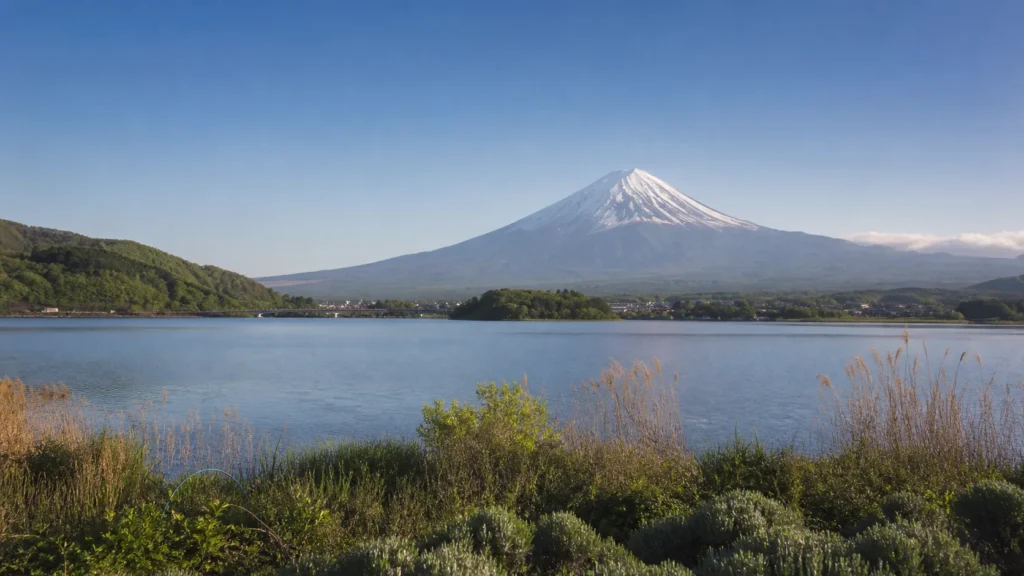
Mount Fuji is close enough to Tokyo for a day trip and far enough away to punish casual planning.
The mountain may be perfectly visible at 7:00 a.m. and hiding behind cloud by lunch. The direct train can sell out. A highway bus that looks faster on paper can lose the argument with traffic. Once you arrive, the lake, pagoda, ropeway and famous photo stops are not standing politely beside one another.
The first decision is therefore not which attraction to visit. It is what kind of day you want.
- Choose Lake Kawaguchiko when a clear, classic Mount Fuji view is the priority.
- Choose Hakone when you want hot springs, volcanic scenery, a ropeway and a lake cruise even if Fuji stays hidden.
- Choose a guided Mount Fuji tour when you want several photo stops without solving rural bus connections yourself.
For most first-time visitors whose main goal is the mountain, Kawaguchiko is the best answer. Here is how to make that answer work in real life.
Affiliate disclosure: This guide contains a few affiliate links. If you book through them, Asia Travel Lab may earn a commission at no extra cost to you. The recommendations and comparisons are based on practical route fit, not on how many booking buttons can be squeezed into a mountain.
The 30-Second Choice: Kawaguchiko vs Hakone vs Tour
| Option | Best for | Main advantage | Main problem | Good weather dependency |
|---|---|---|---|---|
| Self-guided Kawaguchiko | Direct Fuji views, photography, flexible travelers | You control the pace and can prioritize one viewpoint | Popular trains and buses sell out; local movement takes time | Very high |
| Hakone | Onsen, museums, varied transport, cloudy days | The day still has substance without a Fuji view | More transfers and a surprisingly busy sightseeing loop | Medium |
| Guided Mount Fuji tour | First visits, families, travelers short on planning time | Multiple distant stops in one day | Fixed timing, pickup logistics and limited freedom | High, though the itinerary still operates |
Do not try to combine Kawaguchiko and Hakone independently in one day. They look like neighbors on a national map, but local transport makes the combination slow and fragile. You will see a great deal of bus upholstery.
If you are still deciding among several escapes from the capital, compare the broader options in our best Tokyo day trips guide. This article goes deeper into the Fuji decision.
Route A: A Self-Guided Kawaguchiko Day That Does Not Collapse by Noon
The cleanest self-guided route is:
Shinjuku → Shimoyoshida for Chureito Pagoda → Kawaguchiko → one major lake attraction → Shinjuku
The important words are “one major lake attraction.” Oishi Park, the Panoramic Ropeway, a lake cruise, Oshino Hakkai and every photogenic convenience store cannot all be treated as quick stops. Maps do not show queues, missed buses or the 18 minutes spent waiting for one person to finish a portrait session.
Step 1: Leave Shinjuku Early
The direct FUJI EXCURSION limited express is the easiest rail option. Fujikyu Railway's 2026 timetable lists four regular round trips a day, with seasonal extras on some dates. The fastest journey from Shinjuku to Kawaguchiko takes about 1 hour 54 minutes.
The current one-way total is ¥4,200 to Kawaguchiko: ¥2,580 basic fare plus ¥1,620 limited-express fee. Tickets go on sale at 10:00 a.m. one month before travel. There are no ordinary unreserved cars. Even the date-and-section ticket sold when assigned seats are unavailable does not guarantee that you will sit, so book an actual reserved seat when possible.
Use the official Fujikyu Railway FUJI EXCURSION page to confirm the timetable, then reserve through JR East Train Reservation or Ekinet. Weekend mornings, cherry blossom weeks, autumn foliage and Japanese holidays are the dates most likely to turn “I will buy it later” into a two-transfer journey via Otsuki.
The backup rail route is a JR Chuo Line service from Shinjuku to Otsuki, followed by the Fujikyu Railway to Shimoyoshida or Kawaguchiko. It is slower and requires a transfer, but it is useful when the direct limited express is full.
Train or Highway Bus?
The highway bus from Shinjuku Expressway Bus Terminal is cheaper. The official 2026 fare is ¥2,200 one way, discounted to ¥2,000 with online payment, and the scheduled trip to Kawaguchiko is about 1 hour 45 minutes. Seats are assigned, and reservations open one month before departure.
That makes the bus excellent value. It also uses roads.
On a quiet weekday it can be the smart choice. On a weekend, holiday or peak foliage day, traffic near Tokyo and the Fuji area can erase the timetable advantage. Reserve both outbound and return seats; waiting until you arrive at Kawaguchiko to think about the journey home is a small travel thriller nobody requested.
Check current departures and fares on the official Fujikyu highway bus page.
Step 2: Put Chureito First, Not Last
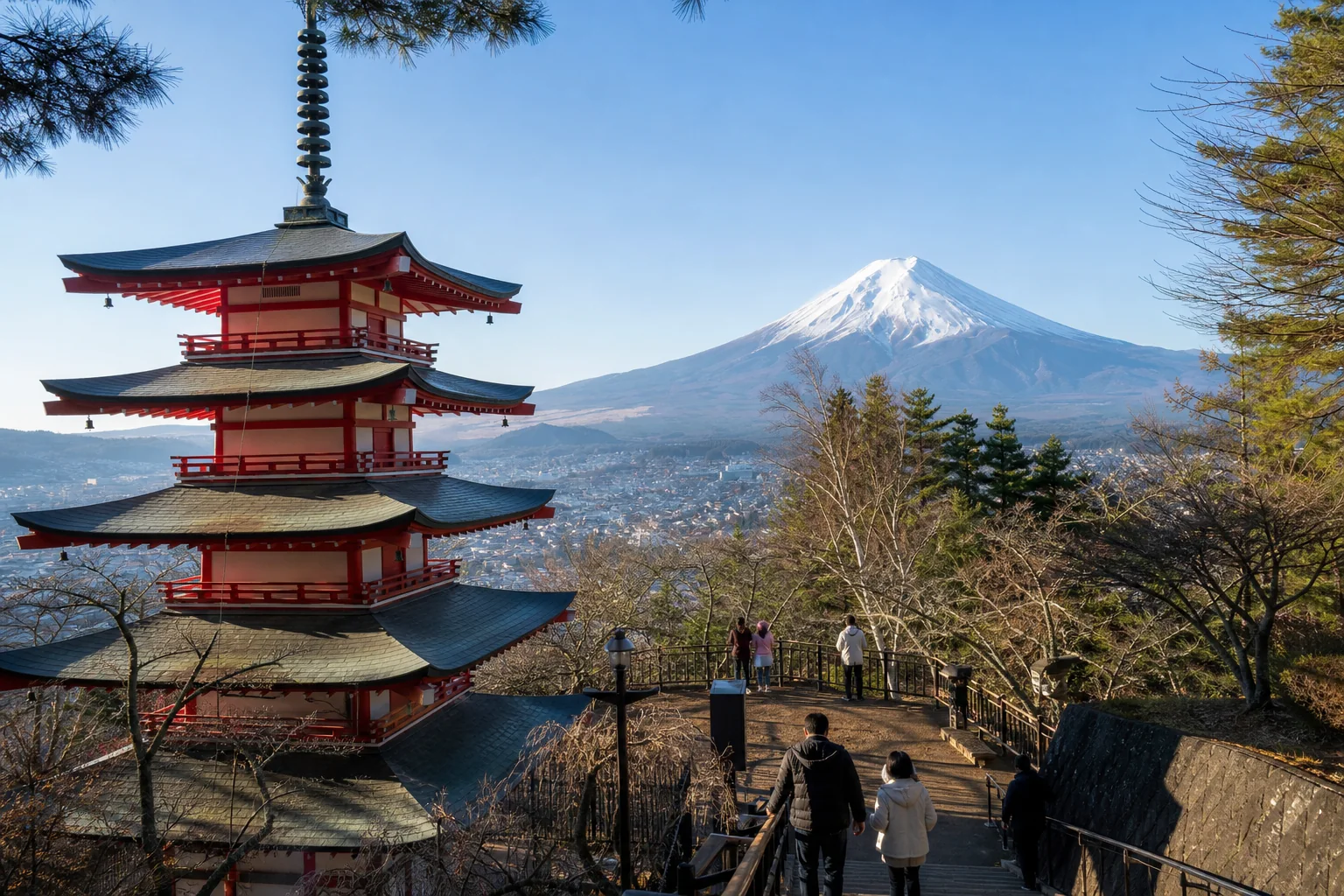
Get off the train at Shimoyoshida Station if Chureito Pagoda is essential. From the station, walk through the neighborhood toward Arakurayama Sengen Park and climb the long stair route to the viewpoint.
The climb is not technical, but it is steep enough to expose any optimism created by convenience-store breakfast. Allow about 90 minutes to two hours from station arrival to departure, longer during cherry blossom season when the observation area may operate with crowd controls.
Go early for three reasons:
- Mount Fuji is often clearest in the morning.
- The viewpoint becomes progressively busier.
- Doing the climb after a full lake circuit feels less charming.
The famous photograph is a compressed composition made with a camera. In person, the viewpoint is smaller, the pagoda is beside the viewing area rather than floating in front of you, and other visitors also had the internet. It is still excellent on a clear day. Just bring realistic expectations with the wide-angle lens.
Step 3: Continue to Kawaguchiko and Choose Your Lake Stop
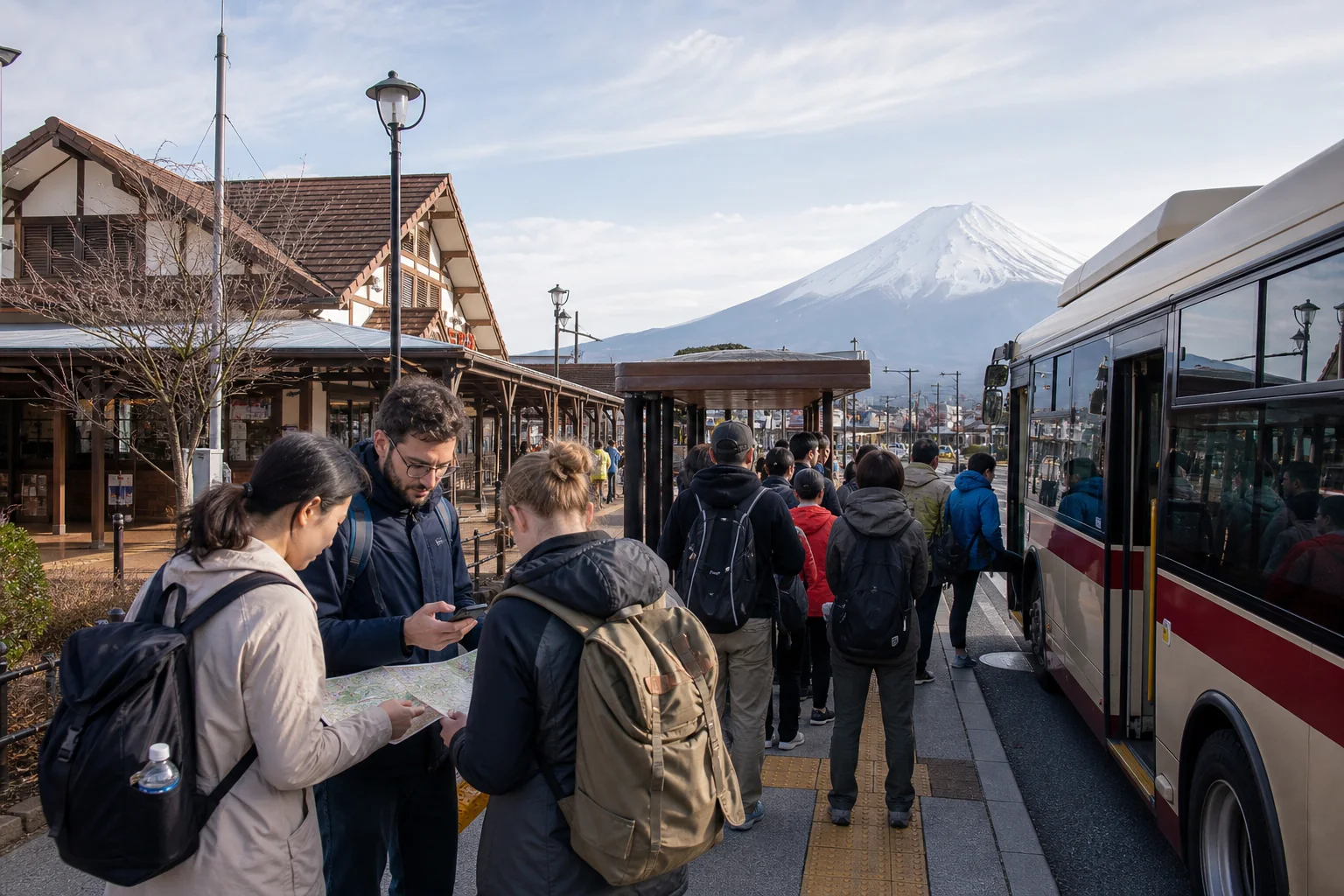
Return to Shimoyoshida Station and take the Fujikyu Railway to Kawaguchiko. At the station, the sightseeing buses leave from the forecourt. The official 2026 network includes the Red Line around Lake Kawaguchiko plus Green and Blue routes to farther lakes.
The two-day sightseeing bus pass is currently ¥2,000 for adults, even if you use it for only one day. It can be convenient for multiple rides, but compare it with individual fares if you plan only a return trip to one stop.
The Red Line is frequent by rural sightseeing standards, not by Tokyo subway standards. The published 2026 guide shows service roughly every 15 minutes on the core route. At busy times, however, one bus may arrive already carrying the ambitions of half the station.
Queue clearly, keep small cash or an IC card ready where accepted, and do not schedule your return to the minute. The Kawaguchiko ticket counter handles sightseeing and highway-bus products, but a line at the counter can consume the time you thought you had saved by arriving early.
Now choose one of these:
Oishi Park: Best for Open Lake-and-Fuji Views
Take the Red Line to Kawaguchiko Natural Living Center, beside Oishi Park. This is the strongest choice when the mountain is visible and photography is the main purpose of the trip.
The shoreline gives you space to change angles without waiting for a gondola. Seasonal flowers add foreground color, though the exact display changes through the year. The downside is distance: Oishi Park is near the far end of the Red Line, so both rides take time and return buses can be busy.
Spend 60 to 90 minutes here, then head back. If the light is excellent, stay longer and delete another attraction from the plan. A clear Fuji view is the attraction, not a delay before the next one.
Mount Fuji Panoramic Ropeway: Best for a High View with a Queue Risk
The ropeway entrance is much closer to Kawaguchiko Station. The ride itself takes about three minutes and reaches an observation area 1,075 meters above sea level.
As of September 2026, the standard operating window is 8:30 a.m. to 5:00 p.m., with the final descent at 5:20 p.m.; summer hours run later. Adult tickets are ¥1,000 round trip or ¥600 one way. Winter schedules can finish earlier, and strong wind, lightning or inspections may stop service.
There is no individual reservation or priority lane. During Golden Week, late July through August and the November foliage season, the official operator specifically advises allowing extra time. Check the official ropeway hours and fare page on the morning of your visit.
Choose the ropeway when the line looks reasonable. If it curls around the building, the mountain will not become more visible because you waited 70 minutes to gain altitude.
What About Oshino Hakkai?
Oshino Hakkai is attractive, but it is not on the compact Kawaguchiko lakeside loop. Adding it independently requires another bus direction and creates a risk of backtracking.
It works when Oshino is one of only two major stops, or when you join a tour that links it with Kawaguchiko and Chureito by coach. It does not fit neatly into an already full Chureito–Oishi Park–ropeway day.
Route B: When a Guided Mount Fuji Tour Is Actually the Better Tool
A guided tour makes sense when your wish list includes three or four places spread across the Fuji Five Lakes area.
For example, this Mount Fuji and Lake Kawaguchiko day tour from Tokyo typically links stops such as Arakurayama Sengen Park, the Kawaguchiko area and Oshino Hakkai in one coach itinerary. Check the exact meeting point, language, cancellation terms and included stops for your date before booking, because seasonal routing can change.
A tour is especially useful if:
- Fuji is your only open day outside Tokyo.
- You do not want to reserve separate long-distance and local buses.
- You are traveling with children or relatives who prefer fewer transfers.
- Oshino Hakkai and Chureito Pagoda are both priorities.
- You understand that “10-hour tour” includes Tokyo traffic.
The compromise is control. Photo stops may be 30 to 60 minutes, lunch may happen when the group schedule says so, and one late passenger can become a supporting character in everybody's day.
Read the departure instructions the night before. Tokyo meeting areas such as Shinjuku are large, and “near the station” is not a useful phrase at 7:20 a.m. Screenshot the map, identify the correct station exit and arrive 15 to 20 minutes early. A booked coach does not chase people through underground malls.
Route C: Pick Hakone When Fuji Is a Bonus, Not the Contract
Hakone and Kawaguchiko solve different travel problems.
Kawaguchiko gives you the stronger chance of a large, direct Mount Fuji view. Hakone gives you a varied day: mountain railway, cable car, ropeway, Owakudani's volcanic terrain, Lake Ashi cruise, museums and onsen options. Fuji can appear from Lake Ashi or elevated viewpoints, but it is less dominant and still weather-dependent.
The Hakone Freepass from Shinjuku costs ¥7,100 for two days as of 2026. It includes one discounted Odakyu round trip between Shinjuku and Odawara plus unlimited use of eight designated transport systems in Hakone. The faster Romancecar requires a separate limited-express ticket; the current Shinjuku–Hakone-Yumoto surcharge is ¥1,200.
Hakone is the better choice when:
- The Fuji forecast is poor but you still want a mountain day.
- An onsen or art museum matters more than the classic lake photograph.
- You enjoy transport as part of the attraction.
- You can start early and keep moving around the loop.
It is not automatically easy. Buses around Lake Ashi can fill, ropeway service can pause in bad weather, and doing the full loop plus a long onsen visit requires discipline. Check real-time service status and current pass details on the official Hakone Navi site.
The Weather Rule That Saves the Day
Do not use central Tokyo's sky as your only forecast.
Check a Fuji-area forecast and live camera when you wake up. Japan's national tourism organization notes that early morning or late afternoon often provides the best close views, winter tends to bring the crispest visibility, and the rainy period from early June to mid-July commonly hides the mountain.
Practical rules:
- Clear morning forecast: prioritize Chureito or the lake view first.
- Cloud building after 10:00 a.m.: skip a slow breakfast in Tokyo.
- Mixed cloud: go only if you would enjoy the lake or town without a full Fuji view.
- Heavy rain or strong wind: reconsider Kawaguchiko; the ropeway may stop and the mountain may disappear entirely.
- Flexible itinerary: move the day trip to the clearest day, but recheck ticket change and cancellation rules first.
Cloud is not a booking error. It is mountain weather. The useful question is whether the rest of your chosen route is worth the journey.
When One Night at Kawaguchiko Is Smarter
A day trip is efficient, but an overnight stay gives you two visibility windows: late afternoon and the next morning. It also lets you enjoy the north shore after tour buses leave and makes room for an onsen without watching the return timetable.
Stay overnight when photography is important, when you want a ryokan dinner, or when your route has space for a slower Fuji chapter. Compare current Fujikawaguchiko hotels on Agoda and Fujikawaguchiko hotels on Trip.com, then check three details before paying:
- Is the property near Kawaguchiko Station or does it offer a shuttle?
- Is dinner included, and what is the last check-in time for meals?
- Does “Fuji view” describe the room, a public bath, a lobby window or simply the town?
Lakeside hotels can be awkward without a shuttle after local buses slow down. Save the hotel's phone number and arrival instructions offline. A lake-view room is less romantic when your suitcase is doing a 35-minute roadside hike.
If you are building Fuji into a longer route rather than a Tokyo day trip, our Japan itinerary for 7 days, 10 days and two weeks shows where an overnight stop fits without creating a luggage relay.
Small Problems That Cause Big Delays
The Wrong Shinjuku Exit
The highway bus leaves from Shinjuku Expressway Bus Terminal, commonly called Busta Shinjuku, by the South Exit area. Allow time to navigate inside the station. For a train, confirm whether your ticket starts at Shinjuku and find the correct JR platform rather than following signs for the bus terminal.
Buying Only the Outbound Ticket
Return trains and buses can sell out too. Reserve the return before leaving Tokyo. Pick a departure with a buffer instead of the final service you could theoretically catch.
Depending on Card Payment Everywhere
Major ticket counters and attractions increasingly accept cards, but rural buses, small food shops and temporary facilities may be less predictable. Carry some yen. Keep an IC card charged, but do not assume every regional ticket can be tapped like the Yamanote Line.
Carrying Large Luggage
Use Tokyo station lockers or hotel storage. A daypack is enough. Highway-bus luggage space is limited, and carrying a suitcase through Shimoyoshida's stairs is an unusual way to train for climbing season.
Treating the Last Bus as a Plan
Photograph the current timetable at the stop. Service changes, road congestion and full vehicles can affect the return. Leave your final attraction earlier than instinct suggests, especially in winter when daylight and operating hours shorten.
FAQ
Is a Mount Fuji day trip from Tokyo worth it?
Yes, if you accept the weather risk and choose a focused route. Kawaguchiko is worth the trip for clear Fuji views; Hakone is more dependable as a varied sightseeing day.
Can I visit Mount Fuji's summit on a day trip?
This guide is for viewing Mount Fuji, not climbing it. Summit climbing is a separate seasonal activity that requires preparation, official trail information and usually much more time.
Is Kawaguchiko or Hakone better for first-time visitors?
Choose Kawaguchiko if the iconic Mount Fuji view is the main goal. Choose Hakone for onsen, museums, volcanic scenery and a day that remains interesting when Fuji is hidden.
What is the cheapest way from Tokyo to Kawaguchiko?
The direct highway bus is usually cheaper than the FUJI EXCURSION. In 2026, online payment from Shinjuku to Kawaguchiko is ¥2,000 one way, compared with ¥4,200 for the direct limited-express train.
Do I need to reserve in advance?
Yes for the direct FUJI EXCURSION and highway buses, especially on weekends and during peak seasons. Local sightseeing buses do not use reserved seats, so queues still matter after arrival.
Can I do Chureito Pagoda and Lake Kawaguchiko in one day?
Yes. Visit Chureito first, then continue by train to Kawaguchiko and choose one main lake attraction. Adding Oishi Park, the ropeway, a cruise and Oshino Hakkai creates a rushed day.
What time should I leave Tokyo?
Aim for a departure around 7:00 to 8:00 a.m., earlier during busy seasons. Morning visibility is often better, and arriving before the largest tour groups makes local transport easier.
Is the JR Pass valid on the FUJI EXCURSION?
JR coverage does not automatically cover the entire journey because part of the route runs on Fujikyu Railway. Pass holders may need to pay the non-JR portion and any required seat charges. Confirm the exact conditions for your pass before boarding.
The Practical Verdict
Choose self-guided Kawaguchiko if you can reserve transport, start early and happily delete stops when the mountain appears.
Choose a guided tour if you want Chureito, Oshino and Kawaguchiko in one day without managing the connections.
Choose Hakone if Fuji would be lovely but a ropeway, cruise, museum or onsen would still make the day worthwhile.
The mountain controls the view. You control whether the rest of the plan survives the weather.