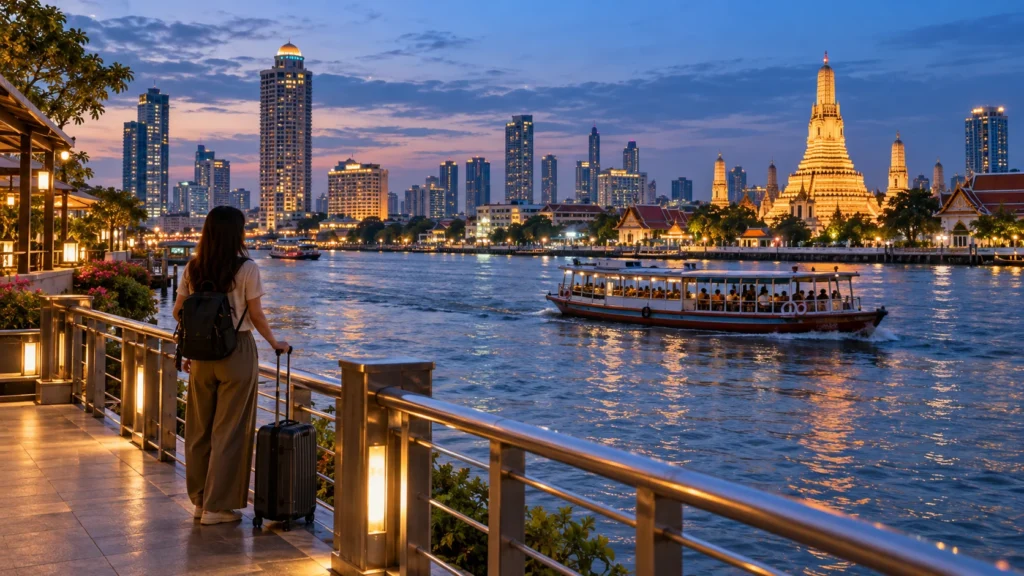
Bangkok hotel maps are full of promising little dots. The problem starts when you leave the lobby. Your “five minutes from the Skytrain” can involve a narrow pavement, three crossings and a staircase with no obvious lift. Your river-view room may be lovely, but reaching dinner across town becomes a traffic negotiation. Location here is about the journey you will repeat, not the district name printed on the booking page.
For a first trip, shortlist Asok for transport, Silom for a balanced city stay, or the riverside for temple days and a slower pace. Choose Siam for shopping and indoor backup plans. Choose Chinatown when food and historic streets are the main event. Khao San suits a social backpacker trip, while Ari is better for travelers who already know the headline sights.
This guide compares seven useful bases, then shows how to test a hotel before paying. Hotel rates change with dates, room type and cancellation terms, so the recommendations focus on location rather than a nightly price that may disappear by lunchtime.
Start with the day you want to have
| Your priority | Start here | What to check |
|---|---|---|
| First visit with mixed sightseeing | Asok or Silom | Actual walking route to both rail systems |
| Temples, river walks and a comfortable hotel | Riverside near a useful pier | Public boat and hotel shuttle schedules |
| Shopping, children and rainy afternoons | Siam | Mall connections and room size |
| Food, photography and old streets | Chinatown | Noise, lift access and distance to Wat Mangkon MRT |
| Hostels, bars and meeting other travelers | Khao San / Banglamphu | Street-facing rooms and rail access |
| Cafes and a quieter repeat visit | Ari | How many daily trips you will make south |
There is no single centre that solves every Bangkok itinerary. The temple district, shopping belt and restaurant neighborhoods sit in different directions. Pick the area that makes your most frequent journey easy. If you have not settled your plan yet, use our Bangkok sightseeing guide to group activities before choosing a room.
Asok and central Sukhumvit: the forgiving first-trip choice
Asok earns its place through an unusually useful combination: BTS Asok and MRT Sukhumvit meet here. That gives you a practical route toward the shopping belt, Silom, Chinatown and other parts of the city. The official BTS network map is worth saving offline before arrival.
Hotels, malls, international restaurants and convenience stores are plentiful. Returning late is straightforward, and travelers with different dinner preferences can usually find a compromise. Terminal 21 is a useful indoor landmark, but the neighborhood outside it is busy, noisy and heavily trafficked. This is convenience with a soundtrack.
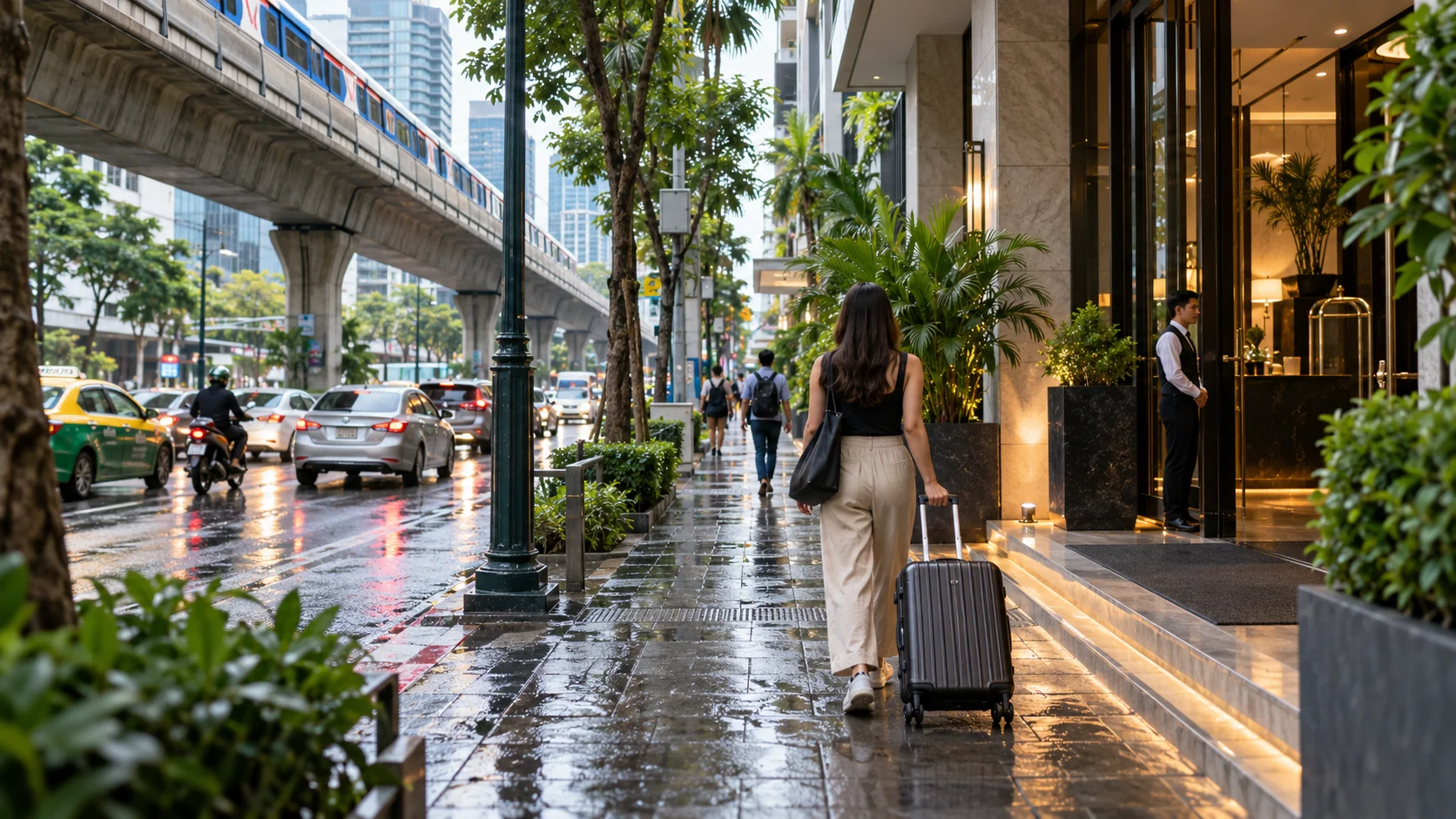
The soi matters as much as the station
A soi is a side street. Some central Sukhumvit sois are calm after their first block; others carry restaurants, bars and constant vehicle movement. A hotel deep inside a soi may advertise a free shuttle to the BTS. Ask how often it runs, when it stops, and whether you can request it for the return journey. A shuttle that disappears after dinner does not shorten the walk home.
Stay close to Asok if you plan to use both BTS and MRT most days. Phrom Phong works better for polished malls, restaurants and a more comfortable hotel atmosphere, although it lacks the same interchange advantage. Thong Lo is attractive for dining and nightlife, but many destinations sit far up the side streets; a BTS station bearing the neighborhood name does not put every cafe beside the platform.
Nana has plenty of accommodation and strong late-night energy. Check the exact street carefully if traveling with children or avoiding nightlife. Farther east, On Nut can offer better room value and everyday food, but repeated trips toward temples and the river add time. Do the commute calculation before celebrating the cheaper rate.
Choose Asok if: you want a practical base for varied days and easy late arrivals. Main trade-off: traffic, narrow pavements and the possibility of noise outside an otherwise excellent hotel.
Silom and Sathorn: a strong balance of transport, food and comfort
Silom is an excellent alternative when Sukhumvit feels too hectic. Around Sala Daeng BTS and Si Lom MRT, you have access to two rail systems, restaurants, shopping and the Lumpini Park side of the city. It works well for travelers who want busy days but prefer a slightly less sprawling evening.
Farther along the BTS Silom Line, Chong Nonsi and Saint Louis serve the business district and a wide range of hotels. Sathorn has attractive full-service properties, but its broad roads and large blocks make exact location particularly important. “Sathorn hotel” could mean an easy rail walk or a taxi-dependent stay.
Check which side of the main road contains the hotel entrance. A map may show the station nearby while the comfortable crossing lies farther away. With luggage, ask about the exit with lift access rather than choosing the closest staircase. Saving three minutes is less satisfying when your suitcase becomes a gym exercise.
The district changes by street and time. Offices bring weekday activity, while some blocks become quiet after business hours. Around nightlife streets, the opposite happens. Read reviews from guests who stayed recently and mention sleep, rather than relying on a broad claim that Silom is either quiet or lively.
Choose Silom if: you want strong transport, good food and access toward the river without staying directly on it. Choose Sathorn carefully: prioritize a short station walk unless the hotel itself is the main reason for the stay.
The riverside: ideal for temple days, provided the pier works
A riverside hotel can make Bangkok feel less relentless. You get open views, moving water and a pleasant way to travel between historic sights. Hotels around Bang Rak and the Saphan Taksin area are especially practical when they combine access to BTS with the Sathorn pier.
The Chao Phraya Tourist Boat operator lists Sathorn, ICONSIAM, Ratchawongse and several historic-district piers on its route. Check the current timetable for your actual travel date: public boats, hotel shuttles and evening extensions are different services.
A private hotel shuttle is useful, but investigate it properly. Where does it go? Is it frequent enough for sightseeing? Does the last departure fit dinner plans? If it only connects to one pier, you still need to understand the onward journey. A free boat can be excellent value and still leave you waiting beside the river with a hungry child.
Properties on the opposite bank may offer larger grounds and a resort feeling, with extra crossing time built into each trip. That is a reasonable choice for a relaxed holiday. It is less appealing when the schedule includes shopping in Siam, dinner in Thong Lo and an early departure every morning.
If you will visit several river stops in one day, compare the Chao Phraya hop-on hop-off boat pass on Klook. Check the included service, redemption instructions and last departure. For only one or two rides, compare individual tickets before buying a pass.
Choose the riverside if: temples, hotel downtime and a slower evening matter most. Main trade-off: trips away from the river can require a boat connection, rail transfer or traffic-sensitive taxi.
Siam: shopping convenience and the best rainy-day backup
Siam makes sense when your group likes shopping, food courts and the ability to move indoors quickly. Siam BTS is the interchange between the two main BTS lines. National Stadium and Ratchathewi can also be useful hotel anchors, depending on which end of the shopping district you need.
For families, the practical appeal is simple: food, bathrooms, supermarkets and indoor activities are close. When a tropical shower interrupts the afternoon, the plan rarely collapses. Hotels with genuine walkway or mall connections are particularly helpful, but confirm whether those links remain accessible outside shopping hours.
The compromises are crowds and road traffic. A short car journey can become slow, and ride-hailing pickup points around malls are often specific. Screenshot the hotel driveway and pickup instructions. The building’s street address may point a driver toward the wrong side of a large complex.
Do not assume every Pratunam hotel has Siam’s rail convenience. Pratunam is useful for markets and shopping, but the walk to BTS varies considerably. Phaya Thai is worth considering separately if Airport Rail Link access is your priority. Choose the station first, then look for the right room.
Choose Siam if: shopping, children or indoor flexibility shape the trip. Main trade-off: a less intimate neighborhood atmosphere and busy approaches by road.
Chinatown: the food-focused stay with a few honest compromises
Chinatown is rewarding when eating and walking are part of the itinerary, rather than activities squeezed between attractions. Yaowarat’s busy evening streets contrast with quieter lanes, historic buildings and cafes farther from the main road. The Tourism Authority of Thailand’s Chinatown guide highlights its longstanding shopping and street-food character.
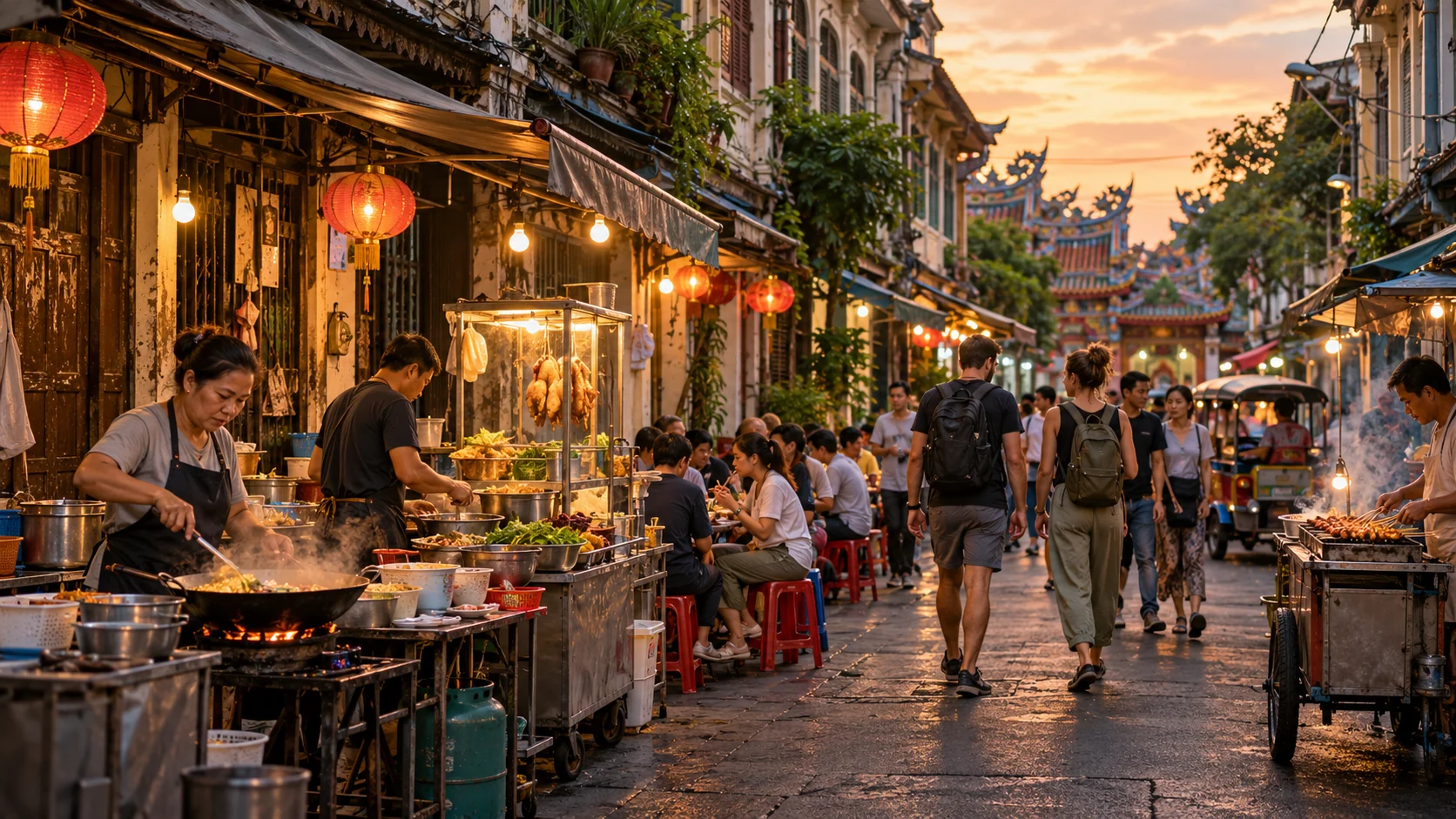
Wat Mangkon MRT makes the district much easier to use as a base. The station does not eliminate the last-mile walk, though. Check how far the hotel lies from the correct entrance, and whether the route passes through congested market lanes. Rolling a suitcase through a dinner crowd is technically possible. So is regretting it.
Boutique hotels can be atmospheric, but older buildings may have compact rooms, steep stairs or limited sound insulation. Ask about lift access and window type. A room above a restaurant may stay busy well after you are ready to sleep, while one in a nearby lane can be noticeably calmer.
Choose Chinatown if: food, historic streets and river-side sightseeing dominate your days. Main trade-off: crowding and a longer journey to the Sukhumvit dining belt.
Khao San and Banglamphu: social travel, with transport planning
Khao San is useful for hostels, bars and meeting other travelers. Banglamphu around it offers quieter guesthouses, cafes and access toward the historic district. Treat these as related but different experiences. Being near the nightlife is not the same as sleeping directly above it.
This area lacks the immediate BTS or MRT access of Asok and Silom. Depending on the destination, you will use walking, boats, buses or taxis. If most days are around the Grand Palace, temples and old town, that can work well. If every afternoon involves Siam or Sukhumvit, the additional transfers become repetitive.
For sleep, look several streets away from the busiest bars and read reviews specifically about bass, late-night crowds and room orientation. “Quiet room available” is a request, not a guarantee. Also check reception hours at small guesthouses if arriving after midnight.
Choose Banglamphu if: you want a social budget trip and historic-district days. Main trade-off: less predictable journeys across the rest of Bangkok.
Ari: a good repeat-visit base
Ari appeals to travelers who want cafes, neighborhood restaurants and a less tourist-heavy setting. BTS access makes it workable, but it sits north of many first-trip sights. A relaxed breakfast here is a pleasure; a packed itinerary that repeatedly sends you south may cancel out that advantage.
Check the side-street walk rather than the distance to the station alone. Some attractive properties are set back from the rail corridor, and afternoon heat still applies in a fashionable neighborhood. Ari is strongest when you plan one major excursion a day and leave time to enjoy the surroundings.
Choose Ari if: you have visited Bangkok before or value everyday neighborhood time. Main trade-off: extra travel for temples, the river and late-night Sukhumvit plans.
Test the room before you book it
Read the walking route as a traveler with luggage
Use street-level images and recent reviews to check the hotel entrance, pavement width, crossings and station lifts. A five- to eight-minute comfortable walk is a useful target, but there is no magic distance. A shaded route can be easier than a shorter exposed one. During heavy rain, a hotel shuttle or direct station link becomes valuable.
Keep BTS and MRT payment separate in your mind
Bangkok’s rail systems do not share every payment method. The MRT operator’s current contactless guidance allows eligible international Visa and Mastercard credit cards on the Blue and Purple lines, while debit-card eligibility is narrower. Do not assume every foreign debit card will work. Use the same eligible card for entry and exit, and keep a backup payment method.
For BTS, consult the official Rabbit card instructions or buy the relevant station ticket. A stored-value card can reduce repeated ticket purchases, but do not buy one solely because a hotel advertisement describes it as universal. Plan around the lines you will actually use.
Compare the final price and cancellation deadline
You can compare Bangkok hotels on Agoda and check Bangkok room rates on Trip.com. Match room type, dates, breakfast and refund conditions before comparing totals. Search cards may handle taxes and charges differently.
Affiliate disclosure: we may receive a commission from these booking links at no additional cost to you. They are comparison tools; the right neighborhood and room conditions remain the priority.
Check the cancellation deadline in the property’s local time, any security deposit, and whether the stated bed arrangement is guaranteed. Families should confirm occupancy rules and child breakfast costs. A room accommodating three people does not always include three comfortable beds.
Plan the first and last journey
For Suvarnabhumi arrivals, our Bangkok airport transfer guide explains where the Airport Rail Link is useful and when a taxi makes more sense. Do not apply the same route to Don Mueang: it is a different airport with different rail connections.
If you are taking an independent day trip from Bangkok to Ayutthaya, check the departure station before booking. Hotel proximity to an old station does not guarantee proximity to your actual train. For one early departure, a planned taxi may be easier than choosing the entire stay around it.
Questions worth settling before checkout
What is the best area for a first visit?
Asok is the strongest transport-first choice, while Silom is a balanced alternative. Pick the riverside if temples and a comfortable hotel matter more than quick access to the shopping and nightlife districts.
Is Sukhumvit better than the riverside?
Sukhumvit suits varied restaurant plans, rail travel and late evenings. The riverside suits temple sightseeing, views and hotel downtime. Compare the actual station or pier access; the district names alone do not answer the question.
Where should families stay?
Siam is practical for malls and indoor backup plans. A riverside hotel with reliable connections can be excellent for slower days. At either location, prioritize room size, bed arrangements and an easy arrival route.
Can I use one hotel for a whole Bangkok trip?
Usually yes for a three- to five-night visit. Moving hotels consumes a useful part of a day. Split the stay only when you want a distinct city-and-resort experience or when a longer itinerary makes the change worthwhile.
How do I avoid a noisy room?
Read recent comments about the exact street, ask for a room away from bars and main roads, and confirm whether windows seal properly. A high floor helps with some traffic noise but does not guarantee silence.
Choose the base that simplifies the journeys you will repeat. For most first visits, that means a comfortable walk to Asok or Silom’s rail connections. For a temple-focused holiday, a useful river pier can be more valuable. Then check the room details: Bangkok has plenty of excellent hotels, but the route from their front doors deserves equal attention.