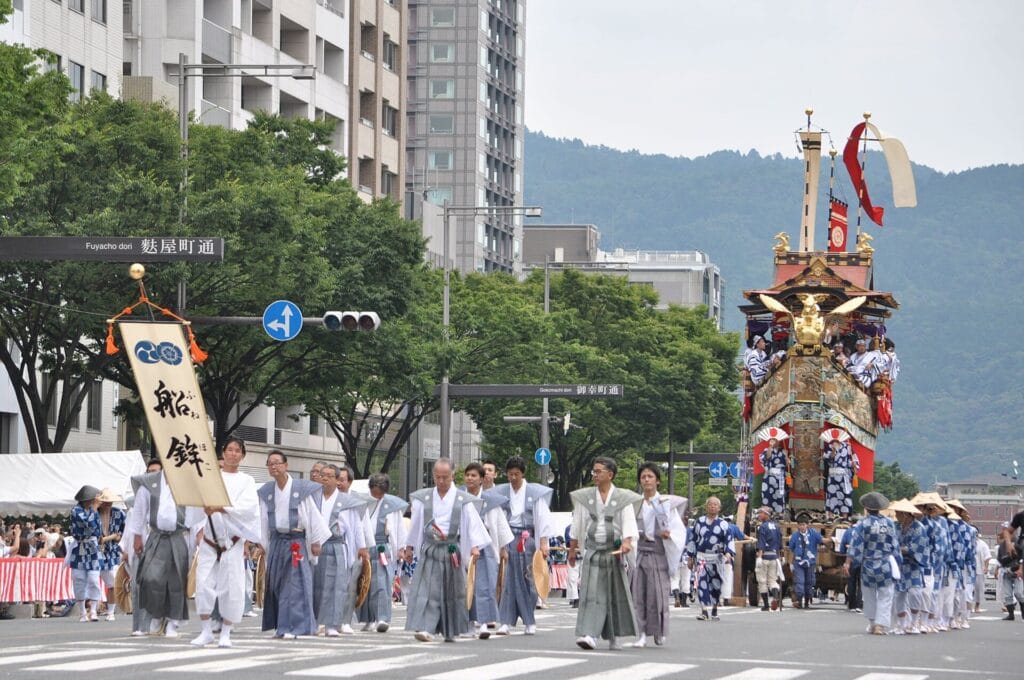
Choose a specific Gion Matsuri phase before choosing dates: the lantern-lit Yoiyama evenings and the July 17 and 24 processions create different trips.
- Suggested stay
- 4–5 days
- Best base
- Shijo–Karasuma or central Kyoto
- Trip style
- Living heritage + early starts
Why make this the reason for the trip?
Gion Matsuri is a month of shrine rites and neighborhood traditions, not a single parade. Kyoto's official guide identifies the early Yoiyama period on July 14–16, the early float procession on July 17, the latter Yoiyama period on July 21–23 and the latter procession on July 24. Choosing one cluster makes a more realistic first trip than trying to cover the whole month.
A realistic festival trip shape
- Day 1Learn the float neighborhoods
Walk the central streets before the busiest evening, note transit exits and see how the festival sits inside ordinary Kyoto neighborhoods.
- Day 2Experience Yoiyama
Arrive before peak crowds, focus on a small group of streets and respect private homes and displayed treasures.
- Day 3+Watch the procession with a plan
Use an official route map or reserved seat, then keep the afternoon light because heat and standing time are substantial.
Getting there and moving around
Public transport is the default because central roads and pedestrian patterns change. Shijo, Karasuma, Karasuma Oike and Kyoto Shiyakusho-mae serve different parts of the processions and neighborhood displays. Do not assume the early and latter processions follow the same route.
What to expect
Yoiyama is an evening neighborhood experience with lanterns, music and decorated floats. Procession mornings are formal moving displays with large crowds and long exposure to summer heat. Paid viewing seats are optional and edition-specific; official 2026 sales information includes several seat categories and rules.
Weather and packing
Kyoto in July is hot, humid and vulnerable to sudden rain. Carry water, sun protection, a breathable layer and compact rain gear. Schedule cooling breaks before you feel exhausted.
Practical and respectful travel
- Keep entrances, shopfronts and neighborhood lanes clear; this is an active community tradition.
- Take rubbish with you and follow any one-way pedestrian instructions.
- Use the current official map because traffic controls and viewing rules can change.
Build the wider trip
Build the rest of Kyoto around early starts and a slower midday. A northern or eastern temple morning can work, but avoid a cross-city checklist on the main procession day.
- Nishiki and central Kyoto outside peak festival hours
- Yasaka Shrine and the eastern district with respectful timing
- A quiet temple morning on the day after Yoiyama
Connect the wider trip
Use these guides to connect your base, daily route and cultural context. A linked 2026 festival may be a completed edition; check its date status before planning a future visit.
- Kyoto & Kansai Travel Guide — Regional planning
- Gion Matsuri: Choose a Phase Before Booking Kyoto — Itinerary and practical reading