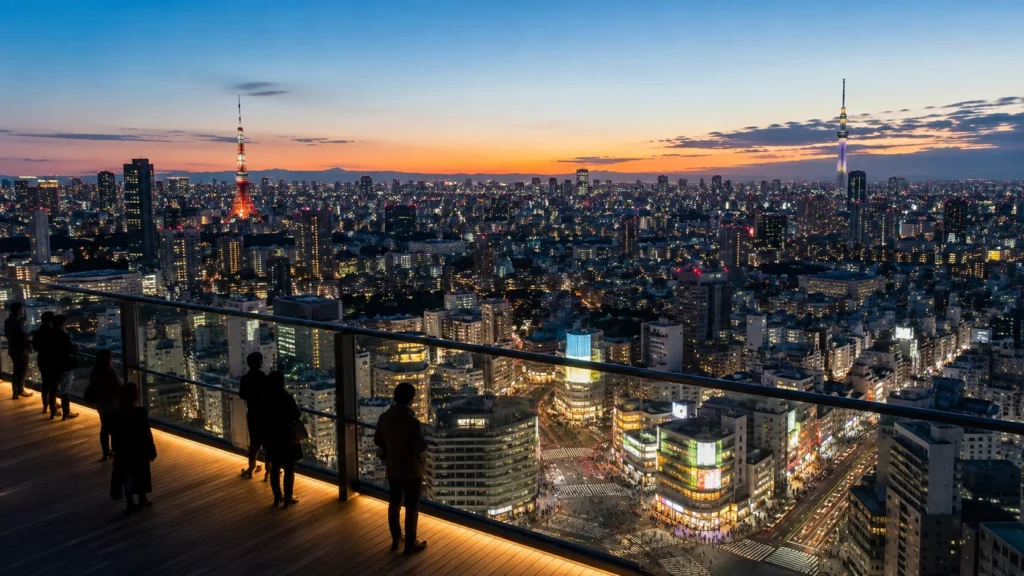
Tokyo has no shortage of excellent views. The difficult part is paying for the right one.
Shibuya Sky gives you an open-air rooftop in the middle of Tokyo's busiest modern district. Tokyo Skytree is much higher, fully enclosed and better prepared for uncertain weather. Tokyo Tower is lower, cheaper and surrounded by a neighborhood that makes the visit feel like more than an elevator ride.
The best choice depends on what you want in the photograph, the forecast and where you will already be that day. A 450-meter view on a hazy day can look like a very expensive glass of milk.
This guide compares Shibuya Sky, Tokyo Skytree and Tokyo Tower using current 2026 ticket rules, prices, booking pressure and realistic routes. There is also a free backup for travelers whose sightseeing budget has already experienced Tokyo shopping.
Affiliate disclosure: This article contains selected affiliate links. If you book through one of them, Asia Travel Lab may earn a commission at no extra cost to you. We only place a booking link where it helps solve a real planning problem.
The 30-Second Answer
| Choose this | Best for | Main strength | Main weakness |
|---|---|---|---|
| Shibuya Sky | First visits, couples, sunset, open-air photos | The most exciting overall experience | Sunset slots sell quickly; rooftop can close in bad weather |
| Tokyo Skytree | Maximum height, families, rainy days, Asakusa routes | 350m and 450m indoor viewpoints | More expensive at peak times; glass reflections and haze |
| Tokyo Tower | Night atmosphere, lower budget, flexible plans | Iconic neighborhood approach and good value | Lower view; the tower itself is missing from your skyline |
| Tokyo Metropolitan Government Building | Free backup, Shinjuku days | No admission fee | Less theatrical and subject to temporary closures |
Best overall for most first-time visitors: Shibuya Sky.
Best in rain or cold wind: Tokyo Skytree.
Best value among the paid options: Tokyo Tower Main Deck.
Best if you want Tokyo Tower in your photograph: Shibuya Sky or Tokyo Skytree, not Tokyo Tower. This sounds obvious. It still surprises people after they have paid.
First Decide What Must Appear in the View
Observation deck comparisons often begin with height. Photography begins with a different question: what disappears when you stand inside the landmark?
Go up Tokyo Tower and you cannot photograph Tokyo Tower as part of the skyline. Go up Tokyo Skytree and Skytree disappears. Shibuya Sky is not Tokyo's most recognizable tower, so its view includes both of the city's famous vertical markers from different directions. That makes Shibuya Sky the most versatile choice for a first-time skyline photograph.
Tokyo Tower still wins for the experience around the view. Walking from Zojoji Temple or Shiba Park toward it is one of the city's most satisfying urban approaches. Skytree has the strongest sense of scale: from 350 or 450 meters, roads and the Sumida River form a map beneath you.
So do not ask only, “Which deck is highest?” Ask:
- Open roof or weatherproof room?
- Must Tokyo Tower appear in the photos?
- Shibuya, Asakusa or Shiba Park already on the route?
- Is the forecast clear enough to justify extra height?
Height expands a clear view. It also expands the haze between you and everything you came to see.
Shibuya Sky: Best Overall, but the Booking Requires a Plan
Shibuya Sky sits about 229 meters above Shibuya inside Shibuya Scramble Square. The experience has three parts: the Sky Gate transition, the enclosed Sky Gallery on the 46th floor and the open-air Sky Stage on the roof.
The rooftop is why people compete for tickets. Glass barriers frame the skyline without putting a ceiling over it, and the city feels close enough to have texture. You can see the Scramble Crossing below, Shinjuku's towers to the north and Tokyo Tower across the city. On exceptionally clear days, Mount Fuji may appear, but treat that as a weather bonus rather than a contractual obligation from Japan.
Current Shibuya Sky Prices and Hours
According to the official Shibuya Scramble Square information, Shibuya Sky generally operates from 10:00 to 22:30, with final admission at 21:20.
For visitors aged 12 and over, current official web prices are:
- ¥2,700 for entry from 10:00 to 15:00
- ¥3,400 for entry from 15:00 to 21:20
Counter prices are ¥3,000 and ¥3,700 respectively. Children aged 6 to 11 are currently ¥1,200 at the counter; younger children are free. Check the official calendar before paying.
The afternoon premium is not subtle. You are paying for the possibility of sunset and night views, not just admission.
The Sunset Ticket Problem
Shibuya Sky uses timed admission, and the desirable late-afternoon slots can disappear quickly. Third-party inventory commonly opens around midnight Japan time two weeks before the visit date, although release patterns and remaining inventory can vary.
Do not search only for the exact minute of sunset. Entering 60 to 90 minutes before sunset gives you time for the elevator sequence, lockers, indoor gallery and rooftop before the light changes. Book the group together rather than assuming the next time slot will feel identical.
If the official site is sold out, you can check the current date and remaining inventory for Shibuya Sky tickets on Klook. Compare the final price and cancellation conditions before checkout.
What Travelers Usually Discover at the Locker
Loose bags, hats and other items that could blow away may not be taken onto the roof; lockers are provided. Bring a phone or camera with a secure strap and confirm the current rules before carrying elaborate equipment.
Wind is the real wildcard. The indoor Sky Gallery can remain available when the rooftop is closed, but the open-air experience is the main reason to choose Shibuya Sky over its rivals. Roof closure and refund treatment can depend on the ticket seller and exact condition, so read the terms attached to your booking. “The roof was closed” does not automatically mean every reseller handles compensation the same way.
The Station Exit That Saves Ten Annoying Minutes
For Tokyo Metro or Tokyu lines, follow signs for Exit B6 and Shibuya Scramble Square. From JR lines, use the Central or South gates and follow signs toward the East Exit. Give yourself extra time during evening rush hour. Missing a timed slot because you were circling underground beside six bakeries is a very Shibuya way to learn about station design.
Shibuya Sky fits naturally after Harajuku, Omotesando or a Shibuya afternoon. It does not fit naturally after a late visit to Asakusa unless you enjoy crossing the entire city for one elevator.
Tokyo Skytree: Choose It for Height, Weather and an East-Tokyo Day
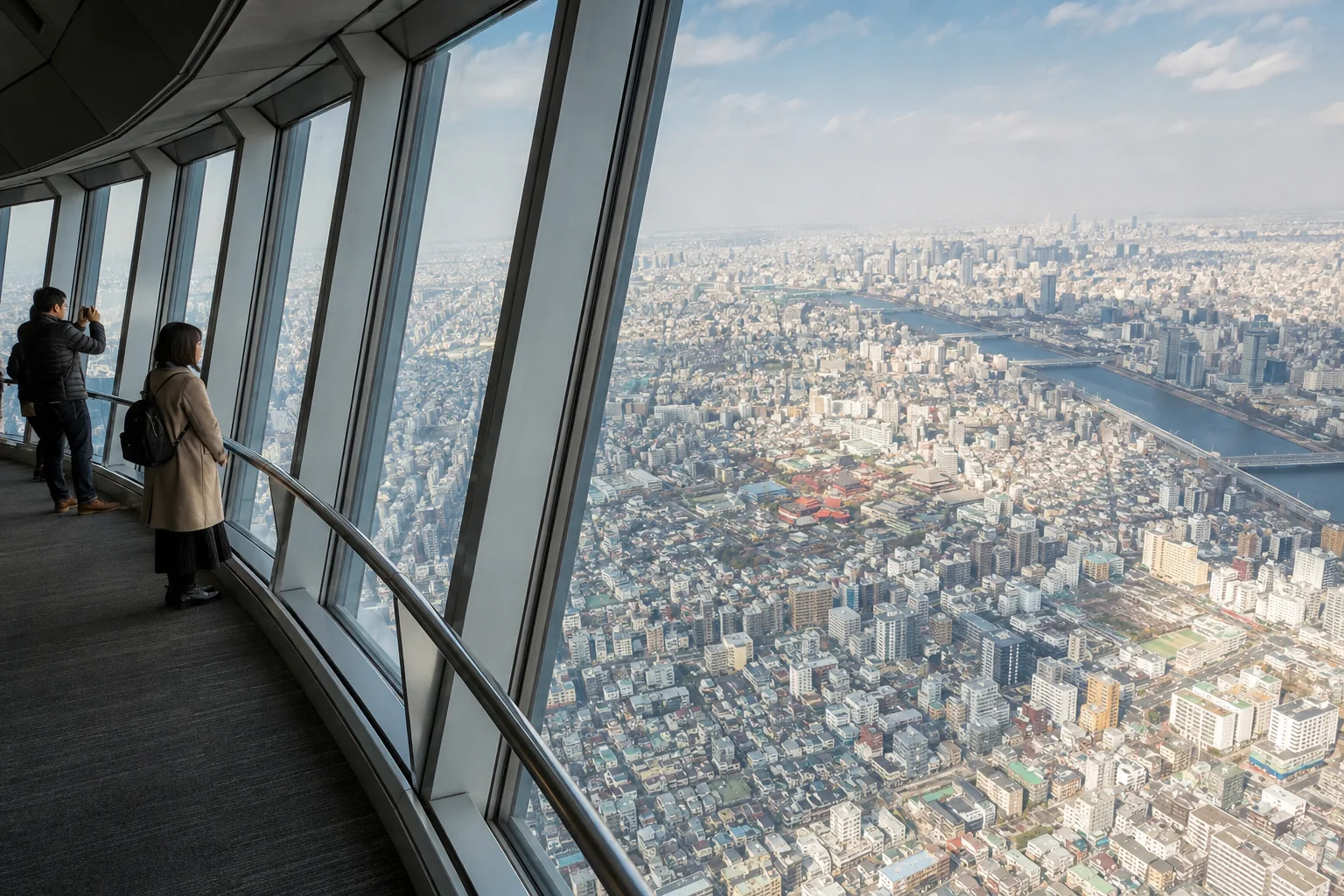
Tokyo Skytree has two main observation levels: the Tembo Deck at 350 meters and the Tembo Galleria at 450 meters. Both are enclosed. That immediately makes Skytree the safest premium choice when the forecast includes rain, winter cold or strong rooftop wind.
It also offers the biggest view. On a clear morning, the Sumida River gives the vast scene an understandable shape. Mount Fuji may appear when the air is unusually clear, especially in colder months.
The 2026 Pricing Change You Need to Know
Tokyo Skytree introduced dynamic pricing from April 1, 2026. Ticket prices now vary by visit date and demand, so older blogs showing one weekday price and one holiday price are no longer reliable.
The official 2026 pricing announcement explains the change. The official calendar currently shows adult Tembo Deck advance admission starting around ¥2,100 on lower-priced dates; your date may cost more. Online tickets are generally cheaper than the counter.
Official advance tickets go on sale two months before the visit date. You can usually purchase online until the day of entry if space remains, but weekends, holidays and seasonal peaks can sell out. Check the official Tokyo Skytree ticket FAQ for the latest sales and change rules.
For a simple inventory comparison, see Tokyo Skytree tickets on Klook. Deck-only and 350m-plus-450m combinations are commonly offered, but the displayed price depends on the date and product.
Is the 450m Tembo Galleria Worth It?
Choose the 450m combination if maximum height is the point, the sky is clear and this may be your only Tokyo trip. Its sloping glass corridor feels distinct from the lower deck.
Choose the 350m Tembo Deck only if you are watching the budget, visibility is mediocre or you mainly want the classic view. The difference between 350 and 450 meters is real, but it does not create better weather. In haze, paying to see a slightly larger quantity of pale gray is not essential.
Families may prefer Skytree because the entire experience is indoors and Tokyo Solamachi provides shops, food and facilities.
Reflections, Crowds and Timing
The glass that protects you from rain also appears in photographs. Wear dark clothing, move the camera close to the window without touching it and avoid shooting directly beside a bright display. A small lens hood helps. Large tripods may be restricted or impractical in crowds, so confirm current equipment rules before carrying one.
For distant clarity, morning often beats sunset. Winter mornings after a weather front can be excellent; summer afternoons are frequently hazier. At night, reflections increase but city lights replace the distant horizon as the subject.
Opening and closing times vary by date. Use the official Tokyo Skytree hours calendar rather than relying on a universal closing time copied into an old itinerary. Final admission is generally one hour before closing.
Skytree is directly accessible from Tokyo Skytree Station and Oshiage Station. Pair it with Asakusa, Senso-ji and the Sumida River. The route is geographically sensible and lets you see Skytree from outside before going up. Our best Tokyo day trips guide can help keep Fuji or Nikko on a separate day instead of overloading this east-Tokyo route.
Tokyo Tower: Lower, Cheaper and Better as a Whole Neighborhood Experience
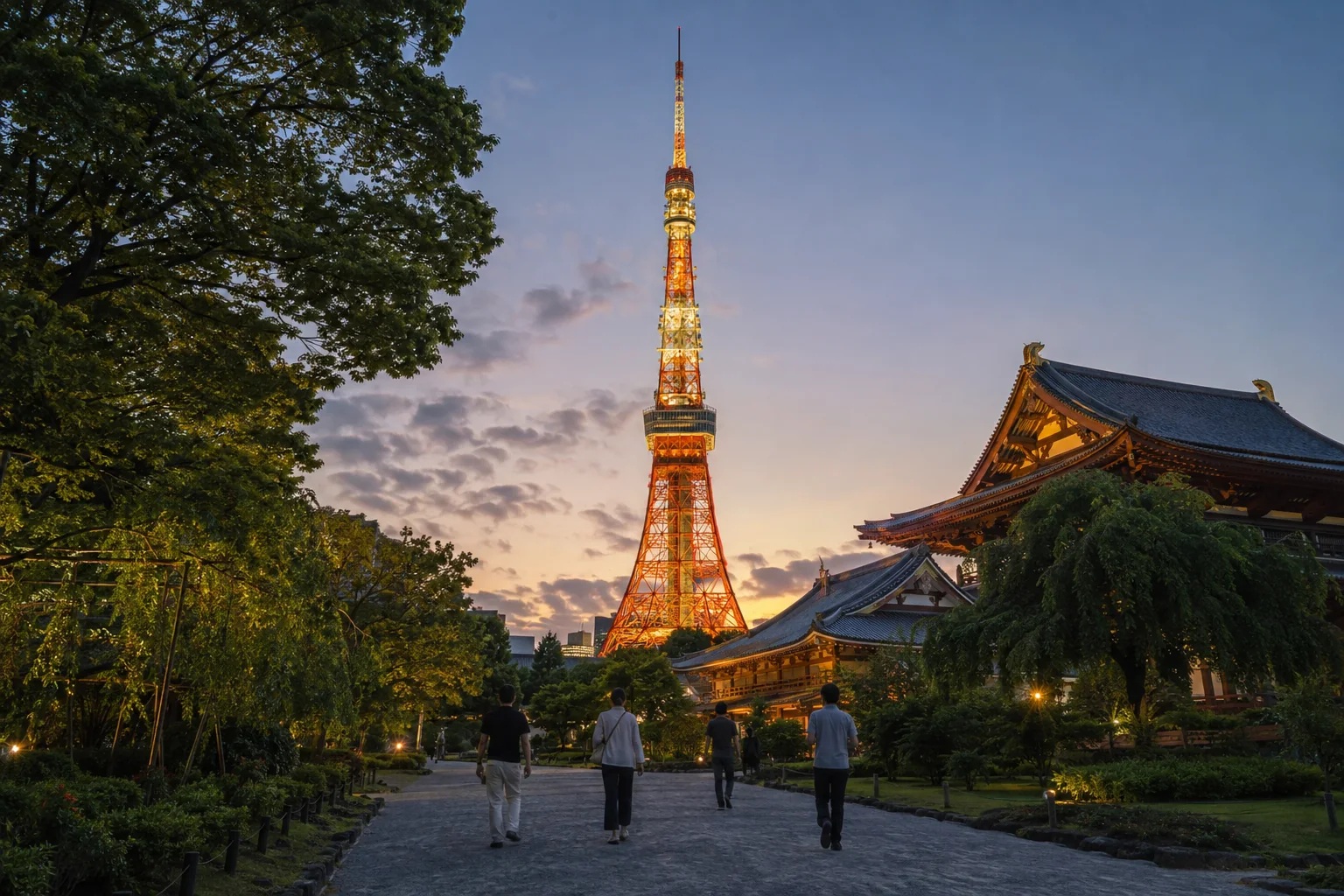
Tokyo Tower is the shortest option, but its best part often begins before the ticket gate.
Approach through Zojoji Temple or Shiba Park in late afternoon. The red-and-white tower rises behind old temple roofs, then becomes brighter as the sky darkens. You get the landmark photograph outside and the city view inside. This creates a more complete evening than arriving inside a shopping complex, taking an elevator and leaving.
Main Deck or Top Deck Tour?
The official Tokyo Tower fee and hours page currently lists:
- Main Deck, 150m: ¥1,500 for adults; open 9:00 to 23:00, last admission 22:30
- Top Deck Tour, 150m + 250m: ¥3,300 online or ¥3,500 at the counter for adults; open 9:00 to 22:45, last tour 22:15
The Main Deck is the value choice. It is high enough for a satisfying night view, stays open late and costs substantially less than the premium afternoon options elsewhere.
The Top Deck Tour suits travelers wanting a structured attraction and higher perspective. Photographers may prefer the lower Main Deck's street detail—and Tokyo Tower itself still cannot appear in the view.
Same-day availability is often less stressful than Shibuya Sky, although busy periods can still fill. You can compare current options for Tokyo Tower tickets on Klook with official web prices before booking.
The Top Deck may close because of weather or operational conditions. Check notices on the visit date, especially during high winds.
When Tokyo Tower Is the Smartest Choice
Choose Tokyo Tower when you want a flexible evening, care about the landmark's atmosphere or are staying around Roppongi, Hamamatsucho, Shiodome or Azabudai. The closest practical stations include Akabanebashi, Onarimon and Kamiyacho, depending on your route.
The Main Deck can also be a late addition after dinner. If you are building a longer route, our Japan itinerary for 7 days, 10 days and 2 weeks explains how many Tokyo days to protect before adding Kyoto and Osaka.
Let the Weather Make the Final Decision
Use a booking strategy that respects both demand and the sky.
Clear, Cold Morning
Choose Tokyo Skytree. Strong visibility and extra height offer the best chance of seeing the Kanto region and Mount Fuji.
Clear Afternoon Moving Into Sunset
Choose Shibuya Sky if you can secure the slot. Arrive early enough to experience daylight, blue hour and city lights. Blue hour—the period just after sunset—usually photographs better than a completely black sky.
Rain, Strong Wind or Winter Cold
Choose Tokyo Skytree. The enclosed decks protect the main experience. Shibuya Sky's indoor gallery is good, but losing the rooftop removes its defining advantage.
Haze or Low Cloud
Choose Tokyo Tower Main Deck, postpone the premium view or use the free option below. Lower viewpoints retain nearby street detail when distant scenery disappears.
No Forecast Confidence and a Fixed Travel Week
Reserve a cancellation-friendly product and read the deadline. Weather disappointment and official closure are not always treated as the same event.
Three Routes That Do Not Waste Half a Day
Modern Tokyo Route: Harajuku → Omotesando → Shibuya Sky
Spend the afternoon around Meiji Shrine, Harajuku or Omotesando, then walk to Shibuya. Avoid a rigid dinner immediately after entry; elevators, lockers and crowds can extend the visit.
Old Tokyo Route: Asakusa → Sumida River → Tokyo Skytree
Visit Senso-ji early, explore Asakusa and cross the river toward Skytree. Choose morning for distant visibility or evening for city lights and dinner at Solamachi.
Landmark Evening: Zojoji → Shiba Park → Tokyo Tower
Reach Zojoji before the grounds close, photograph the tower from the park as daylight fades, then visit the Main Deck after dark.
Do not put Skytree and Shibuya Sky on the same day just because both are in Tokyo. The city is much wider than the tourist map suggests. One excellent view plus a neighborhood is usually better than two elevators separated by an hour of trains.
The Free Backup: Tokyo Metropolitan Government Building
The observatories in the Tokyo Metropolitan Government Building in Shinjuku are about 202 meters high and charge no admission fee. Access is via the Observatory Elevator in Main Building No. 1.
This is not a direct replacement for Shibuya Sky's open roof or Skytree's scale, but it is an excellent backup for a Shinjuku day, a limited budget or uncertain visibility. The building can close with little notice because of weather, maintenance or official operations, so check the Tokyo Metropolitan Government observatory page on the day rather than assuming both decks are open.
Queues can form before sunset. The view costs zero yen; the waiting time has not received the same discount.
Which Tokyo Observation Deck Should You Book?
Choose Shibuya Sky for one memorable first-trip view. Its open roof and landmark-filled skyline make it the strongest overall experience, but prime times need planning and wind can change the visit.
Choose Tokyo Skytree if height matters most, you are traveling with children, the forecast is unstable or Asakusa is already in your plan. Pay for the 450m Galleria only when clear visibility or the highest point itself matters to you.
Choose Tokyo Tower if you prefer atmosphere, value and flexibility. Photograph the tower from Zojoji or Shiba Park, then use the Main Deck for a late city view. It is the easiest option to enjoy as part of a complete neighborhood evening.
Use the Tokyo Metropolitan Government Building when the budget is tight or the sky is not convincing enough for a premium ticket.
There is no bad tower here. There is only the wrong tower for the weather, the route and the photograph you imagined.
Quick Questions Before You Book
Is Shibuya Sky better than Tokyo Skytree?
For most first-time visitors, yes. Shibuya Sky feels more open and visually connected to central Tokyo. Skytree is better for maximum height, rain protection, families and an Asakusa-based day.
Can I visit Shibuya Sky without booking ahead?
Sometimes, but do not rely on it for sunset, weekends or holidays. Timed slots can sell out. Book as soon as your preferred inventory opens and confirm the entry window on the ticket.
Is Tokyo Skytree worth the 450m upgrade?
It is worth it on a clear day if the highest possible viewpoint is a priority. In haze or rain, the 350m deck usually provides enough of the experience.
Which deck has the best night view?
Shibuya Sky has the most dramatic open-air feeling. Tokyo Tower Main Deck offers the best value late at night. Skytree provides the widest illuminated cityscape but has more window reflections.
Can I see Mount Fuji?
Possibly, especially on clear winter mornings, but never book solely for Fuji. Skytree has the greatest height, while Shibuya Sky can also offer a good view when visibility is exceptional.
Which option is easiest with children?
Tokyo Skytree is generally easiest because it is enclosed and connected to a large shopping and dining complex. Tokyo Tower is also manageable. Shibuya Sky requires more attention to rooftop safety and loose-item restrictions.