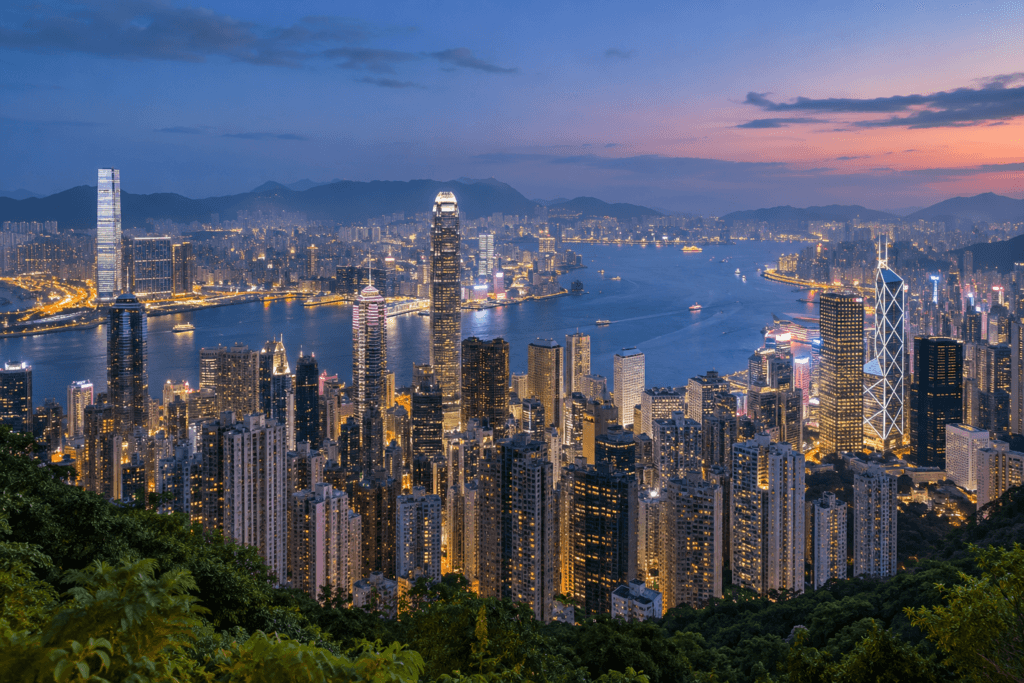
Victoria Peak is easy to put on a Hong Kong itinerary. Choosing the right ticket, reaching the correct station and getting back down after the skyline lights up takes a little more thought.
The first useful distinction: the Peak is a destination, the Peak Tram is transport, and Sky Terrace 428 is a paid viewing platform. You can visit the hill without riding the tram, and you can ride the tram without buying terrace admission. Buying the largest bundle is not an entrance requirement for the neighbourhood.
This Victoria Peak guide helps you choose between those options, then build a visit around visibility, walking energy and the time you actually have. A harbour view is the goal. An impressive collection of unused vouchers is not.
Affiliate disclosure: Some links below are affiliate links. If you book through them, Asia Travel Lab may earn a commission at no extra cost to you. Booking links are optional; official information is linked separately. Images are AI-generated editorial illustrations, not photographs of an actual visit.
Information checked on 6 October 2026. Fares, opening hours, package conditions and service arrangements can change. Confirm your travel date before paying.
Decide what you want to buy before choosing how to go
If this is your first Hong Kong trip and the tram ride is part of the appeal, choose a tram ticket, with terrace admission added only if you want that particular platform. If your main goal is an outdoor walk and a wide harbour view, a road journey plus Lugard Road can be a better use of your budget.
For a short visit with limited walking, a tram-and-terrace combination is straightforward. For a slower afternoon, a tram uphill, an outdoor viewpoint and a different transport option downhill can create a more flexible route. Check whether the ticket you are considering is single or return before arranging that mixed journey.
| Your priority | Start with | What to check |
|---|---|---|
| The tram experience | Peak Tram ticket | Single versus return; terrace entry is separate unless included |
| A compact paid viewpoint visit | Tram plus Sky Terrace 428 | Validity, admission and any stated boarding arrangements |
| A walking-focused afternoon | Road transport and Lugard Road | Weather, daylight and your return route |
| Reduced boarding friction | An explicitly named priority package | The designated entrance, direction and time restrictions |
A normal online ticket should not be treated as priority boarding. Priority is a specific product feature, not something that happens automatically because your payment took place on a phone.
A useful adult fare benchmark, not a promise for every date
On the operator’s official ticket page checked for this guide, the displayed adult fares were HK$116 return or HK$82 single for the tram, HK$80 for Sky Terrace 428 alone, and HK$182 return or HK$146 single for the tram-and-terrace Special Combo. The page also links to regular/peak-day information. Use these figures as a comparison snapshot and confirm the applicable fare and conditions for your visit.
Compare like with like. A one-way tram offer is not directly comparable with a return journey plus terrace entry. A cheaper ticket may be exactly right for you, but only after you know what it leaves out.
You can also compare Peak Tram and Sky Terrace packages on Klook. Its listing contains different ticket types, including tram-only, terrace combinations and specifically labelled priority options. Read the selected option, rather than assuming the headline describes every package on the page.
Before checkout, check the date, number of journeys, age category, cancellation conditions and redemption instructions. Save the confirmation somewhere you can reach quickly. An order receipt and an admission QR code are not necessarily the same screen.
Build the visit around visibility, not a fixed sunset appointment
A clear morning can deliver a more satisfying panorama than a cloudy sunset. Keep the Peak flexible within your trip when possible, and check the Hong Kong Observatory forecast before committing to a non-refundable, date-specific booking.
Look beyond the rain symbol. Low cloud and haze can matter just as much to a skyline visit. A dry forecast does not guarantee a clear view from the hill, and a blue patch above your hotel does not prove that the upper slopes are clear.
For a daylight-to-night visit, work backwards from that day’s sunset. Leave room for reaching the terminus, finding the correct entrance, boarding and walking to your chosen viewpoint. Do not schedule arrival at the bottom station for the moment you want to be taking photographs at the top.
Late afternoon is attractive because the city changes character as lights come on. It is also an obvious choice for other visitors. If queues bother you more than missing the golden-hour photograph, consider an earlier visit rather than buying a ticket and hoping timing will solve itself.
Do not plan on a universal thirty-minute queue or a guaranteed crowd-free weekday. Demand, holidays, operating arrangements and weather all affect the experience. Give the Peak its own flexible block, rather than placing a non-refundable dinner booking immediately after it.
Get to the right starting point in Central
For the tram, use Peak Tram Lower Terminus, 33 Garden Road, Central as your destination. That is a different starting point from the buses leaving the Exchange Square area. Central is not one convenient front door; choosing the right destination before you leave the MTR saves an unnecessary uphill detour.
The current ticket listing describes the walk from Central MTR Exit J2 through Chater Garden and onward up Garden Road. Check station signs and a live pedestrian map on the day, especially if an exit or crossing is temporarily unavailable. The final approach involves uphill walking, so build in a breather in humid weather.
Before starting, open the station destination on your map, check the route and put the phone away where possible. Trying to interpret a tiny map while negotiating crossings is a poor combination. Keep your group together at crossings and regroup away from the main pedestrian flow.
Arriving in Hong Kong that same day? Sort the hotel transfer first using our Hong Kong airport-to-city guide. Leave luggage at your accommodation if permitted, then decide whether you have the energy and visibility for the Peak. Turning an arrival afternoon into a transfer, check-in, hill visit and timed dinner is an ambitious way to discover jet lag.
When road transport makes more sense
The Hong Kong Tourism Board’s Peak Circle Walk information lists bus 15 or X15 from Exchange Square and green minibus 1 from Two IFC as access options. Confirm the actual service, stop and departure arrangement for your day; do not assume every listed route runs at the same frequency or from the same bay.
Road transport is useful when the tram itself is optional, or when you want a different journey in one direction. It is not a guaranteed queue escape: road traffic and departure queues can add their own delays. Avoid choosing it solely because someone else’s visit happened to be faster.
If you are considering a taxi, confirm the destination and meter arrangements with the driver. For a group, compare the whole journey cost, not just one person’s ticket. Travellers who get carsick should also consider the winding road rather than focusing only on price.
At the terminus: solve the ticket problem before the queue problem
Open the voucher before joining a line. Read whether your booking allows direct entry or asks for another redemption step, and follow the instructions for that precise package. A rule for terrace-only admission should not be borrowed for a tram package.
Check that the travel date is correct, every traveller has an appropriate ticket and the QR code is readable. Turn up screen brightness when presenting it, keep enough battery for the return journey and do not depend on finding mobile reception at the gate.
If you have priority access, locate the specified entrance and confirm whether it applies uphill, downhill or both. If you have an ordinary ticket, join the ordinary boarding arrangement directed by staff. Do not abandon your position because a different-looking line seems shorter without understanding what it serves.
Online booking can remove a purchasing task. It does not make boarding capacity unlimited. Treat priority products as a way to change the boarding process under their stated conditions, not a guarantee of an empty carriage or uninterrupted entry.
Bring a payment backup for transport and food. Check accepted payment methods before you reach the front of a counter or board a service; do not assume the card used for the online ticket will cover every small expense on the hill.
Choose one main viewpoint, then add a walk if conditions allow
Sky Terrace 428: a defined viewing platform
Choose Sky Terrace if you want a clearly defined paid viewpoint and prefer a compact sightseeing visit to a longer outdoor route. It is useful for travellers who want to concentrate their time in one place, but buying admission cannot improve visibility.
The operator currently lists the tram at 7:30am–11pm and Sky Terrace 428 at 8:30am–10pm, daily including public holidays. Check the operator’s hours and notices again before travel. The different closing times matter: a tram still operating does not mean the terrace is still admitting visitors.
Keep time for moving through the building and returning to your transport. If you arrive late, ask about admission arrangements before buying an extra ticket. Do not spend the final part of the evening assuming that the published closing time is an invitation to arrive at that exact minute.
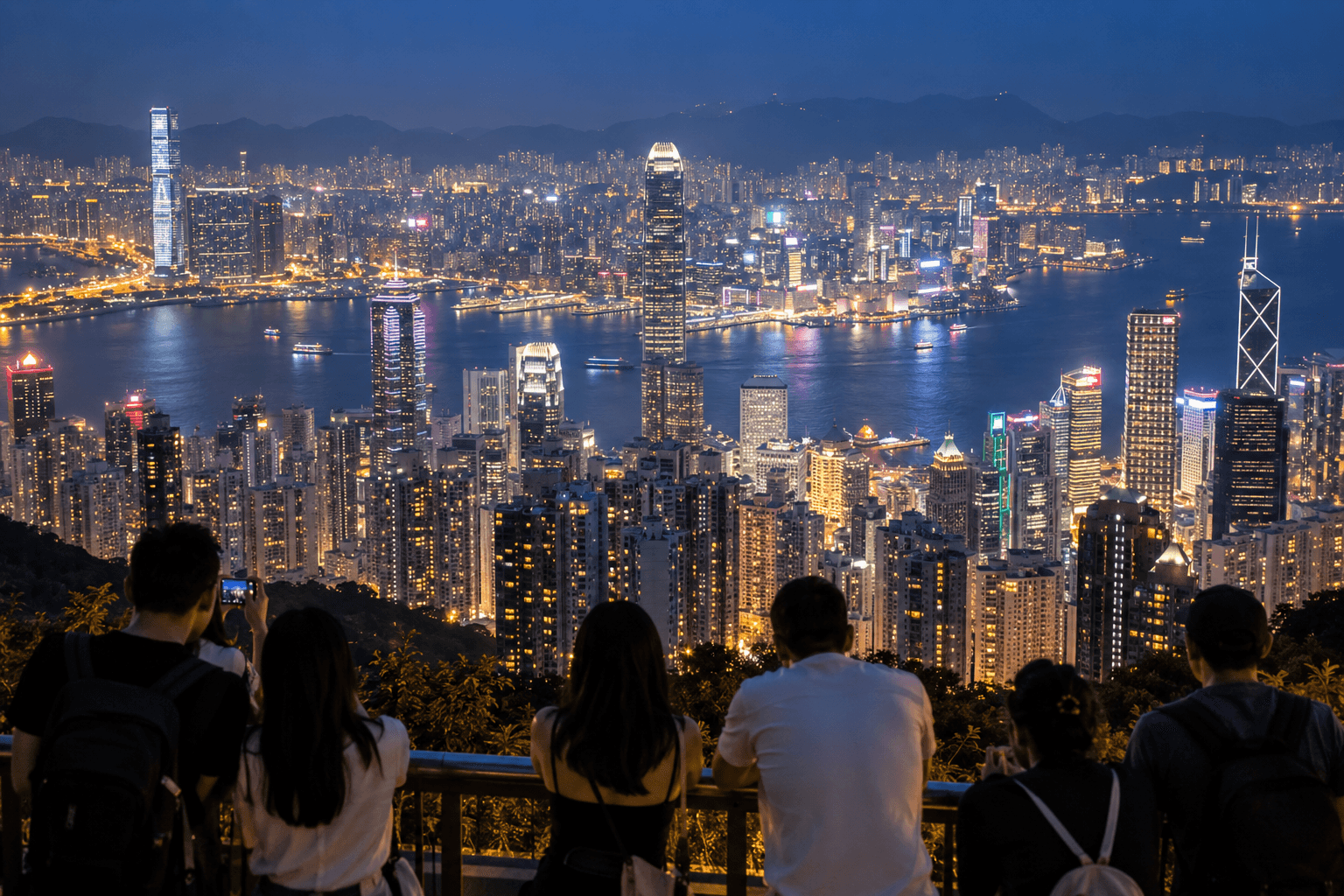
Lugard Road: the walking-first alternative
Lugard Road is the alternative to consider when you prefer a public outdoor route to a paid viewing deck. It does not require a Sky Terrace ticket. Follow on-site signs and respect any temporary access restrictions; free access is not permission to ignore a closure.
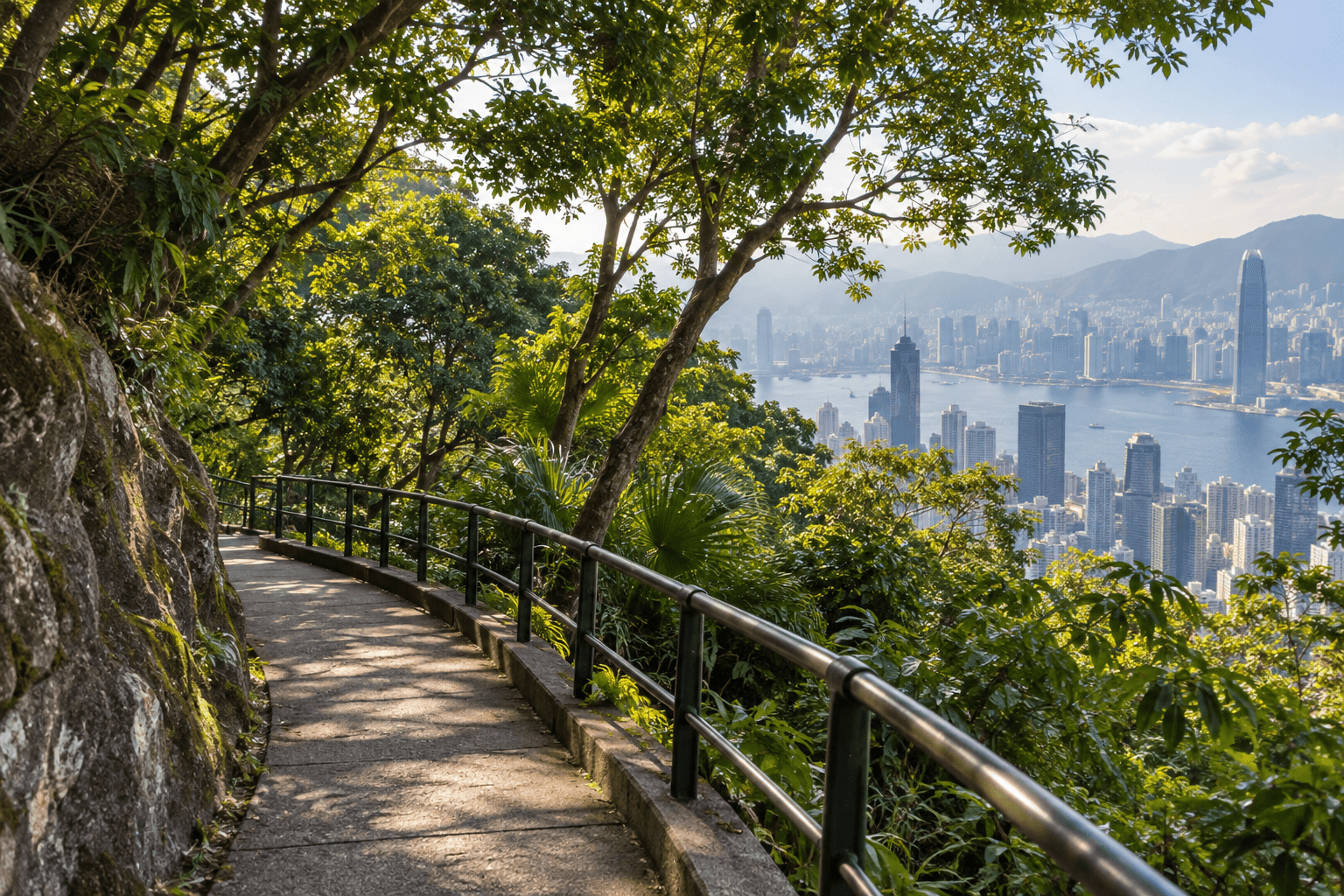
The Tourism Board describes Lugard Road Lookout as roughly a twenty-minute walk along a shaded route, with views opening beyond the trees. That is an orientation estimate, not a deadline. Your pace, stops and starting point will change the time.
Do not expect every metre of the route to deliver the full postcard view. Continue only as far as your energy and conditions allow. Turning back along the familiar path can be a perfectly good visit; finishing a loop is not required to justify coming uphill.
For a longer outing, the Tourism Board identifies the Peak Circle Walk as a 3.5km loop with an indicative one-hour walking time. Allow additional time for photographs and pauses. Start it with enough daylight and energy, rather than adding it automatically after a long day in the city.
Use shoes with dependable grip. Damp paving, changing light and a phone held at eye level are not a friendly combination. Keep clear of other walkers when stopping for a photograph, and avoid leaning beyond railings for a slightly wider frame.
A workable afternoon-to-evening plan
Start with a weather check. If the hill is hidden in low cloud, move the visit within your itinerary if your ticket conditions allow it. If the forecast is promising, eat beforehand or carry a small snack so hunger does not become the next scheduling problem.
Go uphill with a buffer. Reach your chosen departure point well before the light you want. Leave time for the transport process rather than treating the advertised ride time as the entire door-to-viewpoint journey.
Pick the main experience first. Use the terrace if that is what you booked, or walk towards the outdoor view if walking is your priority. Trying to complete every possible viewpoint before sunset can turn a pleasant afternoon into a self-imposed race.
Pause between daylight and night. A snack or a short break is useful, especially with children. Keep an eye on the weather and the return options. You do not need to remain pressed against a railing throughout the entire change of light.
Return before you are exhausted. Check the departure queue and service arrangements while you still have choices. A return ticket can make the tram a convenient default, but flexibility is more valuable than insisting on using every paid journey regardless of the conditions.
This is a planning sequence, not a timed tour. Allow a generous part of the afternoon and evening if you want walking, food and both daylight and night views. For a short stop, drop the extra walk and stay focused on one viewpoint.
Rain, children and limited mobility change the best choice
In ordinary rain, ask yourself whether the view still makes the journey worthwhile. Indoor food or shopping can provide a break, but they are not substitutes for clear visibility if the panorama was the reason you came.
During severe weather, follow official warnings and current operator notices. Do not head onto an exposed outdoor route to rescue a non-refundable ticket. Your booking conditions and the operator’s disruption arrangements are what matter, not a general claim that all weather cancellations receive refunds.
With young children, keep the route short, prepare food and toilet breaks and decide whether a stroller will help or become extra equipment to manage. Ask about the specific access arrangements before booking if steps, transfers or boarding are important to your group.
For limited mobility, do not assume that a venue described as accessible means every nearby path and approach suits you. Confirm the whole chain: arrival point, boarding, lift access, viewpoint, toilets and the return journey. A direct road arrival may reduce some walking, but the exact drop-off and onward route still need checking.
Solo visitors should keep enough battery and data for the journey home. Groups should agree on a meeting point and a latest departure plan before separating for food or photographs. Mobile messages are less useful when everyone’s phone is busy taking the same skyline picture.
Stay near the rest of your trip, not just this one attraction
Central or a well-connected Hong Kong Island base can make the Peak outing convenient, but there is no need to choose your entire hotel location around one evening. A Kowloon hotel can still work well when it better matches your wider itinerary.
Compare neighbourhoods first with our guide to where to stay in Hong Kong. Then check the exact walk to transport, luggage access and room conditions rather than booking the first property described as central.
Once you have chosen an area, you can check Hong Kong hotel availability on Agoda or compare Hong Kong stays on Trip.com. Compare final totals, cancellation deadlines and room types for the same dates; neither link implies that one platform is always cheaper.
The simplest good Peak visit is often one transport choice uphill, one main viewpoint and a sensible route back. Add the terrace, priority access or a longer walk because it solves a problem for your trip—not because the booking page has room for another checkbox.