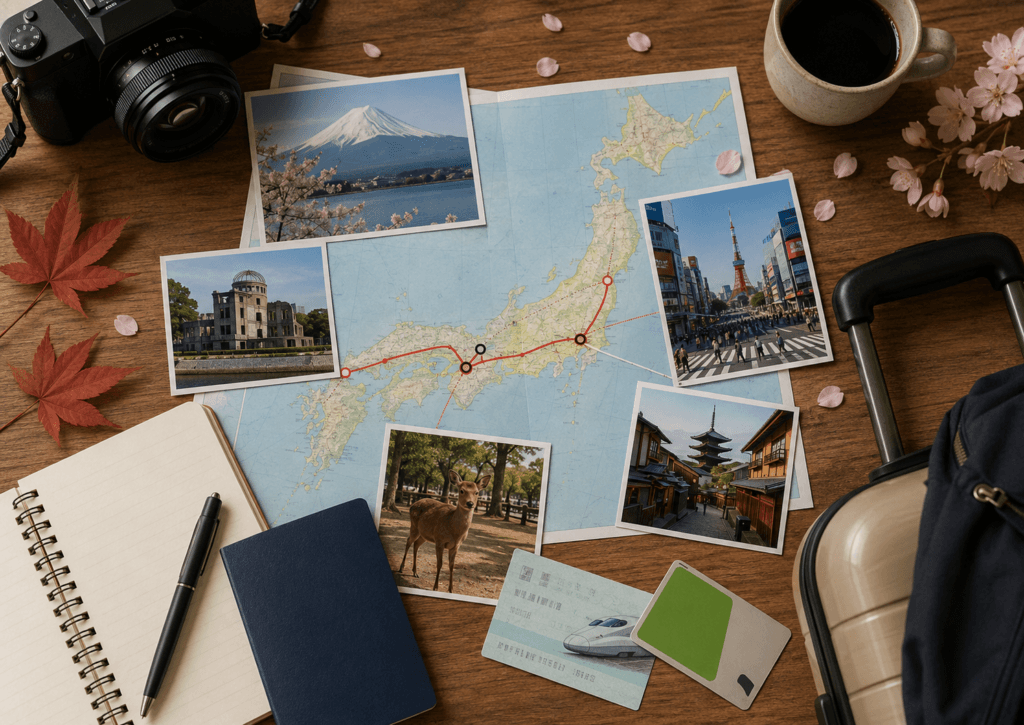
Planning a Japan itinerary looks easy at first.
Japan has excellent trains.
The cities are well connected.
The signs are organized.
The convenience stores seem emotionally prepared for your arrival.
Then the map starts whispering.
Tokyo looks possible. Kyoto looks possible. Osaka looks possible. Mount Fuji, Nara, Hiroshima, Hakone, Nikko, Kanazawa and Hokkaido all look possible too.
The map is being polite. Your feet may have a different opinion.
Japan is wonderfully organized, which tricks many first-time visitors into overplanning. The best Japan itinerary is not the one with the most cities. It is the one where Tokyo, Kyoto and Osaka have enough space to feel different instead of becoming a blur of train platforms, temple gates and convenience store sandwiches eaten in a hurry.
For most first-time visitors, the best Japan itinerary is:
Tokyo → Kyoto → Osaka
With 7 days, keep it simple with Tokyo, Kyoto and Osaka. With 10 days, add Nara or a Mount Fuji / Hakone day. With 2 weeks, you can slow down and add Mount Fuji, Hakone, Nara, Hiroshima or Miyajima without treating the Shinkansen like your main attraction.
Japan is not a quiet backup destination in 2026. Tokyo, Kyoto, Osaka, Mount Fuji and major seasonal routes can get busy, so book well-located hotels, popular trains, theme parks and key experiences early during cherry blossom, autumn foliage and holiday periods.
This route is built around the decisions that actually matter: how many days you have, where to sleep, when to move cities, whether the JR Pass makes sense, how to avoid luggage problems on trains and what entry rules to check before you fly.
If you are still comparing routes across Asia, start with our Asia travel itinerary 2026 guide. For travelers planning to combine Japan with Korea, our Japan Korea itinerary 2026 can help before booking flights.
Quick Answer: Best Japan Itinerary
For most first-time visitors, the best Japan itinerary is:
Tokyo → Kyoto → Osaka
This route works because it gives you the classic first Japan experience:
- Tokyo for modern city energy, food, shopping and neighborhoods
- Kyoto for temples, gardens, old streets and traditional atmosphere
- Osaka for food, nightlife, day trips and a more casual city mood
Here is the simple version:
| Trip Length | Best Route | Best For |
|---|---|---|
| 7 days | Tokyo + Kyoto + Osaka | Fast first-time highlights |
| 10 days | Tokyo + Kyoto + Osaka + Nara or Mount Fuji | Best balanced first Japan trip |
| 2 weeks | Tokyo + Mount Fuji / Hakone + Kyoto + Osaka + Nara + Hiroshima / Miyajima | Slower and deeper route |
| 3 to 5 days | Tokyo only, or Osaka/Kyoto only | Short stopover |
| 1 month | Tokyo, Kansai, Kyushu, Tohoku, Hokkaido or regional slow travel | Long-stay travelers |
The sweet spot is 10 days. Seven days works, but it is tight. Two weeks is much better if you want more than the classic Tokyo, Kyoto and Osaka route.
Is Japan Good for First-Time Visitors?
Yes, Japan is one of the best countries in Asia for first-time visitors.
It is clean, organized, safe for most travelers, easy to navigate with planning, and full of variety. You can build a trip around cities, temples, food, anime, shopping, nature, hot springs, trains, design, history, gardens or seasonal scenery.
Japan is especially good for travelers who want:
- Excellent public transport
- Big city energy
- Historic temples and shrines
- Great food
- Clean streets
- Shopping
- Cafes
- Convenience stores
- Safe-feeling solo travel
- Seasonal travel
- Day trips
- Train-based routes
But Japan is not effortless just because it is organized.
Stations can be huge. Popular areas can be crowded. Hotels in good locations can sell out. Restaurants may require reservations. Weather changes by season. And if you try to add every famous city to one short trip, Japan will quietly hand you a rail timetable and watch your ambition start sweating.
The best first Japan trip should choose fewer regions and enjoy them properly.
If you are choosing between Japan and Southeast Asia, compare this route with our Thailand itinerary 2026, Vietnam itinerary 2026 or Bali itinerary 2026 before deciding. If you are still deciding whether Japan or Southeast Asia fits your travel style better, our East Asia vs Southeast Asia guide can help you compare the mood, budget and route style.
How Many Days Do You Need in Japan?
You need at least 7 days for a good first Japan itinerary, but 10 days is better.
A realistic guide:
- 3 to 5 days: Stay in Tokyo, or stay in Osaka/Kyoto only
- 7 days: Tokyo + Kyoto + Osaka
- 10 days: Best first-time Japan itinerary
- 2 weeks: Better for Mount Fuji, Hakone, Nara, Hiroshima or Miyajima
- 1 month: Great for regional slow travel
If you only have one week, do not try to visit Tokyo, Kyoto, Osaka, Mount Fuji, Nara, Hiroshima, Kanazawa, Nikko and Hokkaido.
That is not an itinerary. That is a train station scavenger hunt.
Japan’s transport is excellent, but every city change still takes time. You need to check out, reach the station, find the platform, ride the train, move luggage, check in again and somehow still have energy to enjoy the place you came for.
The trains are fast. Your travel day is not always fast.
For most travelers, 10 days gives the best first-time balance. Two weeks lets Japan breathe.
Best Japan Route: Tokyo, Kyoto and Osaka
The classic first Japan route has three main parts:
Tokyo → Kyoto → Osaka
This route works because each city gives you a different version of Japan.
Tokyo
Tokyo is the best place to start for many travelers.
It gives you neighborhoods, food, shopping, museums, nightlife, parks, pop culture, temples, towers, cafes and day trips. Tokyo can feel enormous, but it becomes easier when you plan by area.
For a first trip, Tokyo is easier when you think in neighborhoods. Shinjuku and Shibuya are good for energy, nightlife and shopping. Asakusa and Ueno work well for old Tokyo, temples, parks and museums. Ginza and the Tokyo Station area feel polished and practical. Akihabara is useful if your suitcase has a pop-culture compartment. Harajuku, Omotesando, Roppongi, Toyosu, Kichijoji and Nakameguro can all fit depending on your interests and pace.
Tokyo is not a city you “finish.” It is a city you sample.
Do not plan Shinjuku, Asakusa, Harajuku, Ginza, Akihabara and Odaiba in one day unless you enjoy turning subway transfers into a competitive sport.
Kyoto
Kyoto is the traditional heart of many first Japan itineraries.
It gives you temples, shrines, gardens, old streets, tea houses, bamboo groves and quiet corners, though the famous areas can be very crowded.
Good first-time Kyoto areas include:
- Fushimi Inari
- Kiyomizu-dera
- Higashiyama
- Gion
- Arashiyama
- Kinkaku-ji
- Nishiki Market
- Philosopher’s Path
- Nijo Castle
- Kyoto Station area
Kyoto rewards early mornings and smart pacing. The most famous places are worth seeing, but the city becomes better when you leave space for slower streets, small temples and cafes that were not shouting from every travel list.
Osaka
Osaka is the easiest place to finish for many first-time travelers.
It gives you food, nightlife, shopping, casual energy and easy day trips to Kyoto, Nara, Kobe and Himeji. It also has Kansai International Airport, which can make departures easier if you do not want to backtrack to Tokyo.
Good first-time Osaka areas include:
- Dotonbori
- Namba
- Shinsaibashi
- Umeda
- Osaka Castle
- Shinsekai
- Kuromon Market
- Universal Studios Japan, if that is part of your trip
Osaka is less polished than Kyoto and less overwhelming than Tokyo. It is a good final city because it lets your itinerary loosen its collar a little.
7-Day Japan Itinerary: Tokyo, Kyoto and Osaka
A 7-day Japan itinerary should stay focused.
The best route is:
Tokyo → Kyoto → Osaka
Suggested route:
- Days 1 to 3: Tokyo
- Days 4 to 5: Kyoto
- Days 6 to 7: Osaka, or return to Tokyo
This route gives you the classic first Japan experience, but it is tight. You will need to avoid too many day trips.
Days 1 to 3: Tokyo
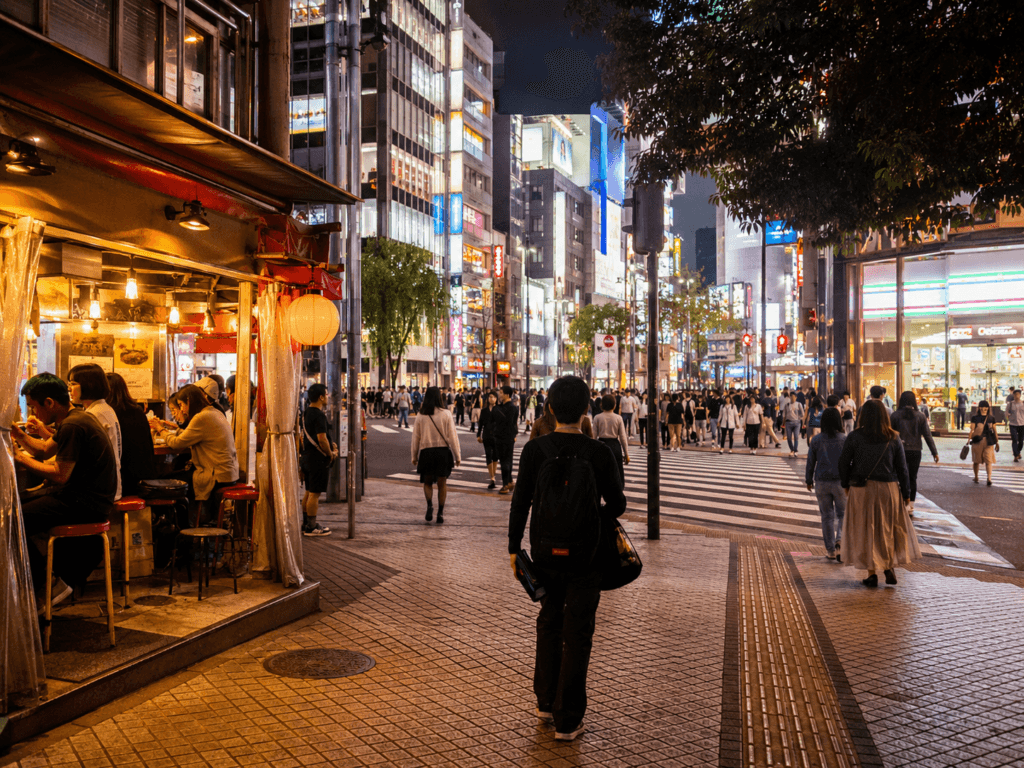
Start in Tokyo.
Use the first day gently if you arrive after a long flight. Choose one neighborhood near your hotel, eat well and resist the urge to sprint across the city immediately.
A simple Tokyo plan:
- Day 1: Arrival, easy neighborhood walk and dinner
- Day 2: Asakusa, Ueno, Akihabara or Tokyo Station area
- Day 3: Shibuya, Harajuku, Shinjuku or another west-side route
Group your days by area. Tokyo is huge, but it becomes manageable when you stop treating the subway map like a treasure puzzle.
For shopping and nightlife, stay around Shinjuku, Shibuya or Ginza. For easier traditional sightseeing, Asakusa or Ueno can work well. For train convenience, Tokyo Station or Shinjuku can be very practical.
Three days in Tokyo is not enough to see everything, but it is enough to understand why people return.
Days 4 to 5: Kyoto
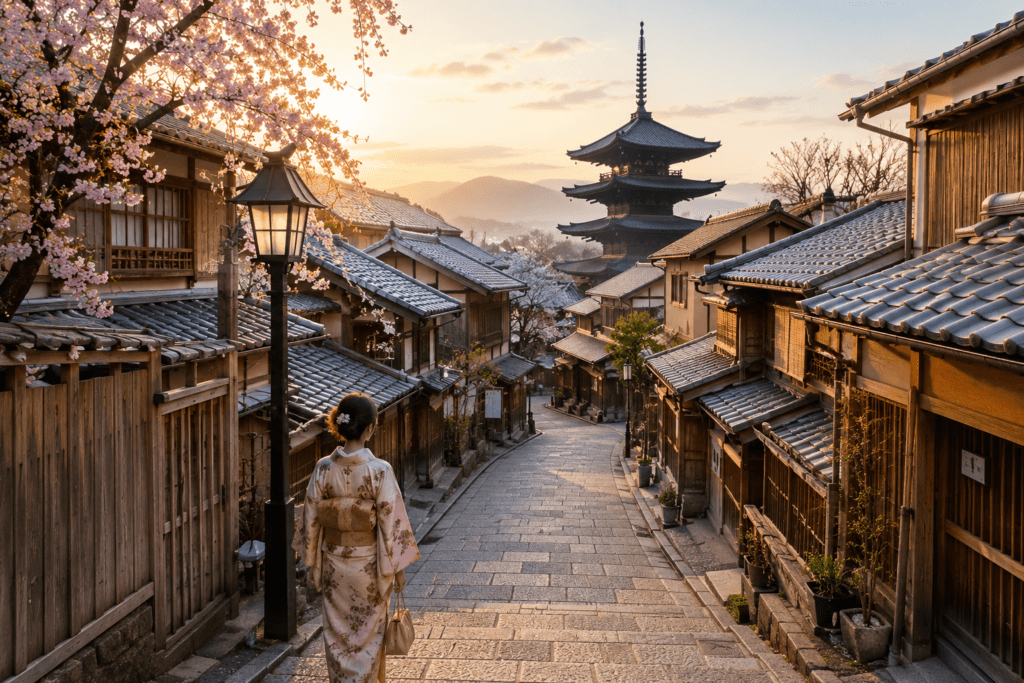
Take the Shinkansen from Tokyo to Kyoto.
With only two days in Kyoto, focus on the highlights.
Suggested plan:
- Day 4: Fushimi Inari, Kiyomizu-dera, Higashiyama and Gion
- Day 5: Arashiyama, Kinkaku-ji or a slower temple and garden day
Kyoto can be crowded, especially around famous temples and streets. Start early if you want a calmer experience.
Do not try to visit every famous temple in two days. At some point, your brain will stop saying “beautiful” and start saying “more stairs?”
Pick a few important places and leave space to wander.
Days 6 to 7: Osaka or Back to Tokyo
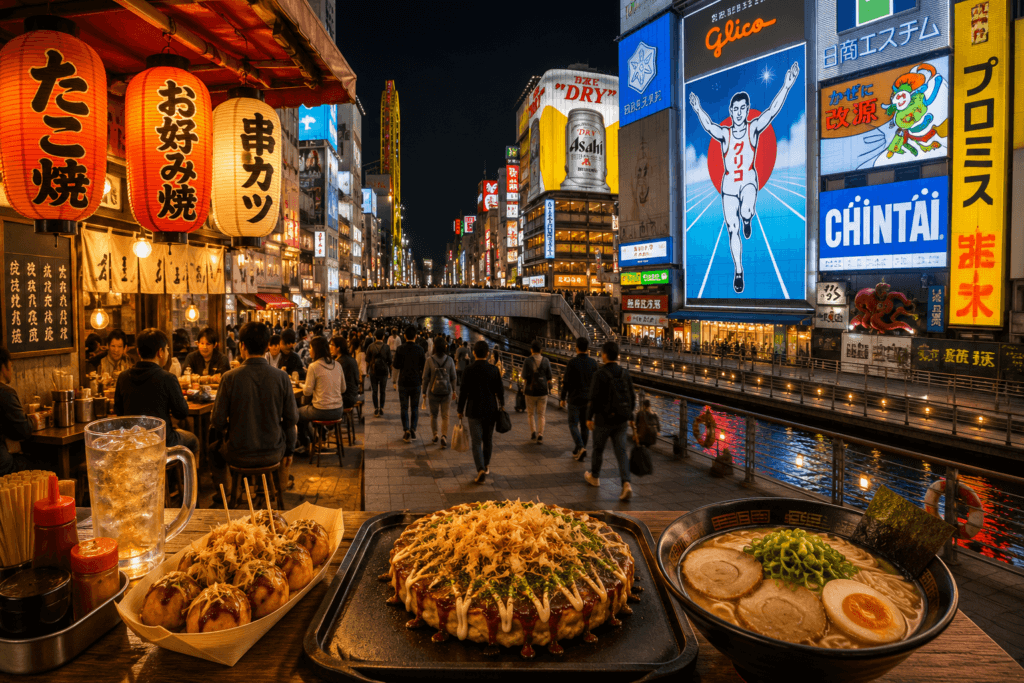
For the final two days, choose Osaka or return to Tokyo.
Choose Osaka if you fly out of Kansai International Airport or want food, nightlife and a different city mood.
Choose Tokyo if your round-trip flight leaves from Tokyo and you want to avoid a stressful final transfer.
A simple Osaka plan:
- Day 6: Osaka Castle, Umeda or Shinsekai, Dotonbori at night
- Day 7: Namba, Kuromon Market, last shopping and airport transfer
If you stay in Osaka, you can also visit Nara as a half-day or day trip, but with only 7 days in Japan, do not overpack the final stretch.
Seven days in Japan works best when you accept that this is a first taste, not a national completion badge.
10-Day Japan Itinerary: Best First-Time Route
A 10-day Japan itinerary is the best option for most first-time visitors.
The route is:
Tokyo → Kyoto → Osaka + Nara or Mount Fuji / Hakone
Suggested route:
- Days 1 to 4: Tokyo
- Days 5 to 7: Kyoto
- Days 8 to 10: Osaka + Nara or Mount Fuji / Hakone
This route gives Tokyo, Kyoto and Osaka enough space without turning every morning into a station transfer.
Days 1 to 4: Tokyo
Spend four days in Tokyo.
Suggested plan:
- Day 1: Arrival and easy evening
- Day 2: Asakusa, Ueno and Akihabara
- Day 3: Shibuya, Harajuku and Shinjuku
- Day 4: Choose your interest: museums, shopping, food, anime, gardens, Tokyo Disney Resort, digital art attractions, Nikko or a Mount Fuji day trip
Four days is much better than three. It gives you time to enjoy Tokyo instead of constantly negotiating with train lines.
Tokyo works best when each day has a theme. One day for old Tokyo and markets. One day for modern neighborhoods. One day for shopping or pop culture. One day for a day trip or slower exploration.
If you plan to visit Tokyo Disney Resort, give it a full day. Do not squeeze it between Asakusa and Shibuya unless you want your itinerary to start making cartoon sound effects.
Days 5 to 7: Kyoto
Take the Shinkansen to Kyoto.
Spend three days in Kyoto.
Suggested plan:
- Day 5: Kiyomizu-dera, Higashiyama and Gion
- Day 6: Fushimi Inari, Nishiki Market and central Kyoto
- Day 7: Arashiyama, Kinkaku-ji or a quieter temple route
Three days in Kyoto is a good first visit. You can see the major sights and still leave room for smaller streets, tea, gardens and accidental discoveries.
Kyoto is one of the most beautiful cities in Japan, but famous places can get crowded. The secret is not to avoid all famous sights. The secret is to visit early, group areas wisely and stop pretending you can see the whole city in one heroic day.
Days 8 to 10: Osaka + Nara or Mount Fuji / Hakone
Finish with Osaka and one day trip.
Option A:
Osaka + Nara
This is the easiest choice if you are already in Kansai.
- Day 8: Osaka food and city sights
- Day 9: Nara day trip
- Day 10: Last shopping, food and departure
Nara is easy from Osaka or Kyoto and works well for temples, deer, parks and a slower historic atmosphere.
Option B:
Mount Fuji or Hakone
This works better if you want mountain scenery, hot springs or views of Mount Fuji, and you plan the transport carefully.
You can visit Hakone between Tokyo and Kyoto, or do Mount Fuji as a day trip from Tokyo. Weather matters, because Mount Fuji does not appear just because your calendar asked politely.
For most first-time visitors, Osaka + Nara is easier. Mount Fuji or Hakone is more scenic but needs better planning.
A 10-day Japan itinerary is the best starter route because it gives you Tokyo’s energy, Kyoto’s tradition and Osaka’s food without turning the trip into a luggage relay.
2-Week Japan Itinerary: Tokyo, Fuji, Kyoto, Osaka and Hiroshima
A 2-week Japan itinerary lets you travel better.
The best route is:
Tokyo → Mount Fuji / Hakone → Kyoto → Osaka / Nara → Hiroshima / Miyajima
Suggested route:
- Days 1 to 4: Tokyo
- Days 5 to 6: Mount Fuji or Hakone
- Days 7 to 10: Kyoto
- Days 11 to 12: Osaka and Nara
- Days 13 to 14: Hiroshima and Miyajima, or return to Tokyo
This route gives you cities, temples, mountains, food, day trips and one deeper extension.
Days 1 to 4: Tokyo
Start with four days in Tokyo.
Use these days for neighborhoods, food, shopping, museums, parks and one special interest day.
Tokyo is a good place to start because it has everything you need: transport, hotels, food, convenience stores, airport access and enough glowing signs to remind you that sleep is technically optional.
But do not try to do everything.
Choose your priorities:
- First-time landmarks
- Food and nightlife
- Anime and gaming
- Fashion and shopping
- Museums and design
- Gardens and temples
- Theme parks
- Day trips
A well-planned Tokyo stay feels exciting. An overplanned Tokyo stay feels like your phone battery is the tour guide.
Days 5 to 6: Mount Fuji or Hakone
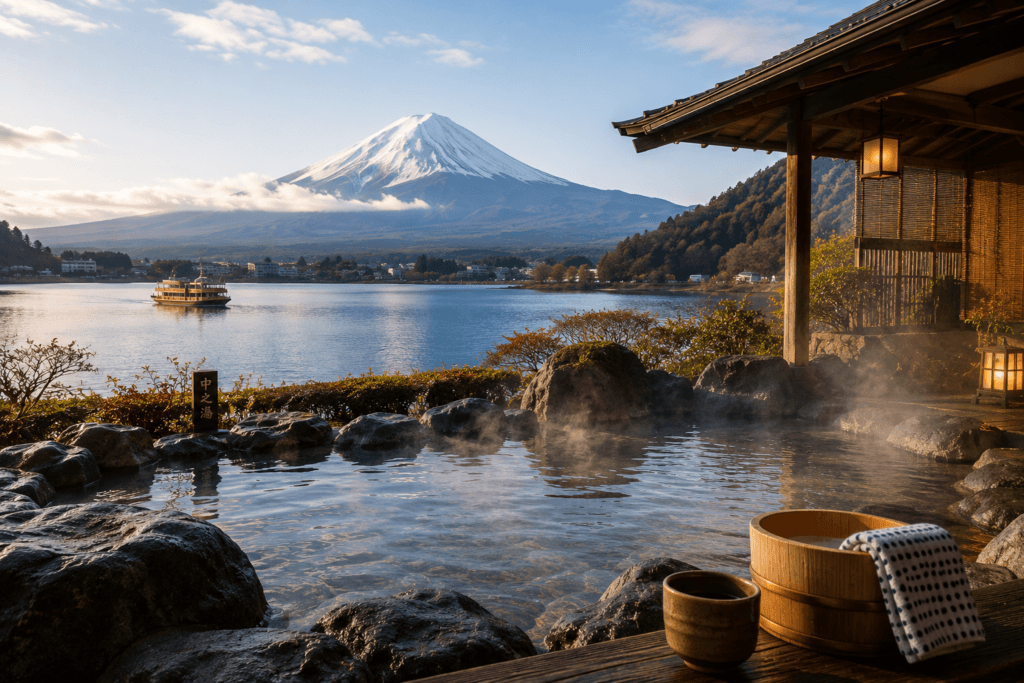
Add two days for Mount Fuji or Hakone.
Choose Hakone if you want hot springs, mountain views, museums, lake scenery and a classic overnight stop between Tokyo and Kyoto.
Choose Kawaguchiko if you want stronger Mount Fuji views, lake scenery and photography opportunities.
Mount Fuji views depend heavily on weather. Clear mornings are often better, but there are no guarantees. Do not build your emotional stability around one mountain appearing on command.
An overnight stay is better than a rushed day trip if Mount Fuji or onsen time matters to you.
Days 7 to 10: Kyoto
Spend four days in Kyoto.
This gives you a slower and better Kyoto experience.
Suggested plan:
- Day 7: Arrive, Gion and Higashiyama evening
- Day 8: Kiyomizu-dera, Sannenzaka, Ninenzaka and Gion
- Day 9: Fushimi Inari, Nishiki Market and central Kyoto
- Day 10: Arashiyama, Kinkaku-ji or quieter temples
With four days, you can avoid racing between famous places. You can start early, rest midday and enjoy evenings when the city feels softer.
Kyoto is best when your itinerary has margins. The best moments are often between the famous stops: a small garden, a quiet lane, a cup of matcha, a temple bell somewhere you did not plan.
Days 11 to 12: Osaka and Nara
Move to Osaka or use it as a base for Nara.
Suggested plan:
- Day 11: Nara day trip, Osaka evening
- Day 12: Osaka food, shopping and nightlife
Nara is one of the easiest and best day trips in Japan for first-time visitors. It gives you temples, parks, history and deer that behave like tiny local officials.
Osaka is a great place to relax after Kyoto. Eat takoyaki, okonomiyaki, ramen, sushi, kushikatsu or whatever your stomach starts campaigning for.
Osaka is not subtle about food. That is part of the charm.
Days 13 to 14: Hiroshima and Miyajima, or Return to Tokyo
For the final section, choose based on your departure airport and energy level.
Option A:
Hiroshima and Miyajima
This is a strong choice if you want history, food and one of Japan’s most memorable island shrine experiences.
A simple plan:
- Day 13: Travel to Hiroshima, Peace Memorial Park and Museum
- Day 14: Miyajima, then continue or depart if your route allows
Hiroshima and Miyajima are worth it, but they make the final section more active. If you prefer a slower ending, stay in Osaka or return to Tokyo instead.
Option B:
Return to Tokyo
This is better if your flight leaves from Tokyo and you do not want a stressful final day.
If your flight leaves from Kansai International Airport, Hiroshima may be easier to include. If your flight leaves from Tokyo, think carefully before adding it at the end.
A 2-week Japan itinerary gives you enough time to add extra depth. Just make sure your final days do not become a race between your luggage and the airport clock.
Best Time to Visit Japan
Japan is a four-season country, but not every season is equally easy for a first trip.
The best overall seasons for many first-time visitors are:
Spring and autumn
Spring is famous for cherry blossoms. Autumn is famous for colorful leaves, comfortable weather and outdoor sightseeing.
But Japan’s seasons have trade-offs.
Spring
Spring is one of the most popular times to visit Japan.
Good months often include:
- March
- April
- May
Cherry blossom season is beautiful, but it is also crowded and hotel prices can rise. Blossom timing changes by year and region, so avoid planning the entire trip around one exact bloom date.
Spring is best for travelers who want mild weather, flowers, parks, gardens and classic first-time Japan scenery.
Summer
Summer can be hot and humid.
June often brings rainy-season travel in much of Japan, with more rain as the season moves through the country. July and August can be hot, lively and festival-heavy.
Summer can still be fun, especially for festivals, fireworks, mountains and Hokkaido, but it requires heat and rain planning.
If your itinerary includes lots of outdoor walking in Tokyo, Kyoto and Osaka, summer may test your relationship with humidity.
Late Summer and Typhoon Risk
Late August and September may require more flexibility because typhoons can affect travel.
That does not mean you must avoid Japan completely, but you should leave room in your itinerary and avoid booking every important transfer with zero buffer.
A typhoon does not care how carefully you color-coded your spreadsheet.
Autumn
Autumn is one of the best times to visit Japan.
Good months often include:
- October
- November
- Early December, depending on region
October often brings comfortable weather after the main typhoon season has largely passed, while November is excellent for autumn leaves in many areas.
Autumn is a strong choice for first-time visitors because it offers comfortable walking weather, seasonal food and beautiful scenery.
Winter
Winter can be a good time to visit Japan if you want fewer crowds in some cities, winter illuminations, hot springs, snow scenery or skiing.
Tokyo, Kyoto and Osaka are usually manageable in winter, though it can feel cold. Hokkaido, Nagano and Tohoku are better for snow-focused trips.
Winter is not the classic first Japan season for everyone, but it can be excellent if your route fits.
JR Pass and Shinkansen Tips in 2026
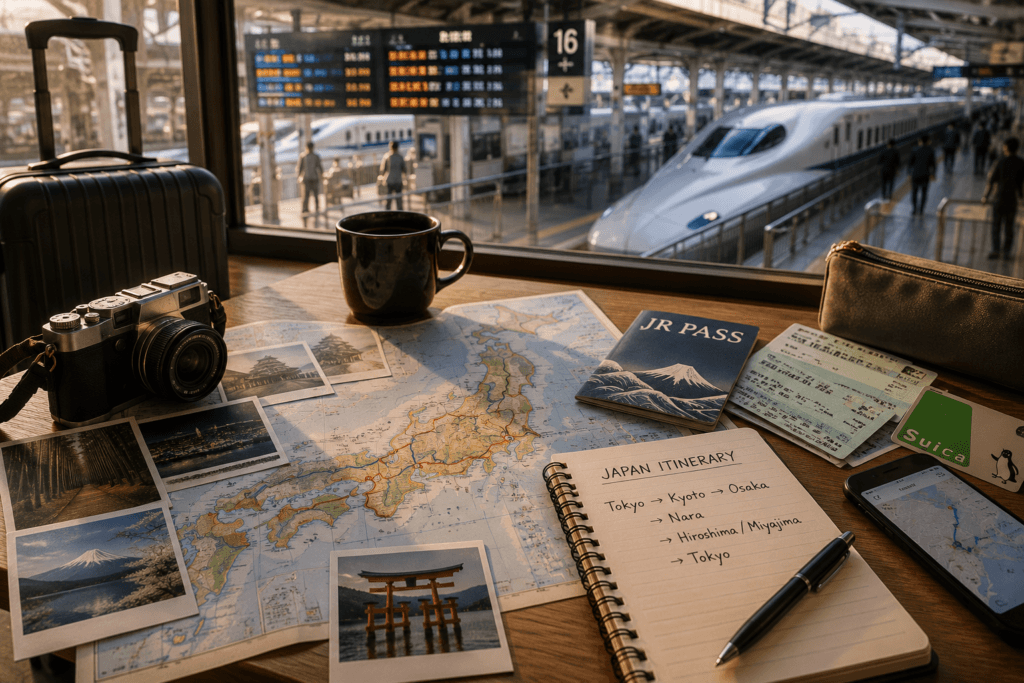
The Japan Rail Pass is useful for some trips, but it is not automatic.
Do not buy the Japan Rail Pass just because it sounds powerful. For a simple Tokyo, Kyoto and Osaka route, compare regular Shinkansen tickets first.
The pass can still help on longer or more complex routes, especially if you travel Tokyo, Kyoto, Osaka, Hiroshima and back within the pass period. But for many first-time itineraries, regular tickets may be easier or cheaper.
The JR Pass is math in travel clothing, not magic.
JR Pass Price Reminder
The nationwide Japan Rail Pass has become much more expensive than it used to be. For many travelers, the decision now depends on the exact route.
Before buying, compare:
- Tokyo to Kyoto
- Kyoto to Osaka
- Osaka to Hiroshima
- Return to Tokyo, if needed
- Airport transfers
- Regional JR Pass options
- Non-JR transport
- Whether you actually want to move that much
If you are traveling later in 2026, check the latest official JR Pass prices and purchase conditions before buying, because nationwide Japan Rail Pass prices are scheduled to increase from October 1, 2026.
Shinkansen Luggage Rules
If you travel on major Shinkansen routes with a large suitcase, check the oversized baggage rules.
Bags with total dimensions over 160 cm may require a reserved seat with oversized baggage space on routes such as the Tokaido, Sanyo and Kyushu Shinkansen.
This matters for Tokyo, Kyoto, Osaka and Hiroshima routes.
If your suitcase is large, reserve the right seat before boarding. Do not discover luggage policy while standing on a train platform with a suitcase that looks like it packed another suitcase.
Should You Reserve Shinkansen Seats?
Seat reservations are useful during busy periods, especially around:
- Cherry blossom season
- Golden Week
- Obon
- Autumn foliage
- New Year holidays
- Long weekends
- Major events
If your route is simple and outside peak periods, buying tickets as you go can work. But for popular travel dates, reservations reduce stress.
How to Get Around Japan
Japan is one of the easiest countries in the world to travel by train, but first-time visitors still need a plan.
Common transport options include:
- Shinkansen
- JR trains
- Private railways
- Subway systems
- Local buses
- Airport trains
- Highway buses
- Domestic flights
- Taxis
For most first-time visitors, trains are the best option.
Shinkansen
The Shinkansen connects major cities quickly.
Common first-time routes include:
- Tokyo to Kyoto
- Tokyo to Osaka
- Kyoto to Osaka
- Osaka to Hiroshima
- Tokyo to Hakone or nearby transfer points
- Tokyo to Kanazawa, if adding that region
Shinkansen travel is smooth, fast and comfortable. But station size, luggage and platform navigation still matter.
Arrive early for your first ride. Give yourself time to buy food, find the platform and look calm even if your brain is holding a small emergency meeting.
Local Trains and Subways
Tokyo, Kyoto and Osaka all have strong train and subway networks.
Tokyo’s network is huge but manageable with a navigation app. Osaka is easier. Kyoto relies more on buses and local trains for certain temple areas.
Use IC cards where available, such as Suica, Pasmo or ICOCA. Digital versions may be easier for some travelers, depending on your phone and card compatibility.
Buses
Buses are especially useful in Kyoto, rural areas and some mountain destinations.
In Kyoto, buses can get crowded around famous temple routes. If possible, combine trains, walking and taxis rather than relying only on buses.
Domestic Flights
Domestic flights can be useful for long-distance routes, such as Tokyo to Hokkaido, Kyushu or Okinawa.
For the classic Tokyo, Kyoto and Osaka route, trains are usually easier.
Taxis
Taxis are clean and useful but expensive compared with public transport.
Use taxis for short hops, late nights, luggage-heavy transfers or when buses are crowded. Do not build your entire Japan budget around taxis unless your wallet has been training.
Entry Rules in 2026
Before traveling to Japan, check the latest entry rules based on your passport.
Visit Japan Web
Before flying to Japan, travelers can use Visit Japan Web for immigration and customs procedures.
It does not replace checking visa rules for your passport, but it can make arrival smoother if you complete the required information before landing.
Use the official Visit Japan Web service only, and make sure your information matches your passport and travel documents.
Japan eVISA
Some travelers may be eligible to apply for a Japan eVISA for short-term tourism, depending on nationality and place of residence.
Do not assume everyone can use the same process. Always check the official Japan eVISA or Japanese embassy information for your passport before booking.
Visa rules are not the place to trust a random comment from 2019 with surprising confidence.
Before You Travel, Check These
Before departure, check:
- Passport validity
- Visa or visa-free eligibility
- Japan eVISA requirements, if needed
- Visit Japan Web
- Arrival airport
- First hotel address
- Return or onward flight details
- Travel insurance
- Mobile data or eSIM
- Shinkansen tickets or JR Pass decision
- Oversized baggage rules, if carrying a large suitcase
Entry paperwork is not the dreamy part of Japan planning, but it keeps your first day from becoming an airport side quest.
Budget Tips for Japan
Japan can be affordable, mid-range or expensive depending on how you travel.
Food can be surprisingly reasonable. Trains and hotels can be expensive. Theme parks, ryokan stays and seasonal hotels can raise the budget quickly.
Save Money on Food
Japan has excellent food at many price levels.
Budget-friendly options include:
- Convenience store meals
- Ramen
- Udon
- Soba
- Curry rice
- Gyudon
- Conveyor belt sushi
- Bento boxes
- Department store food halls
- Supermarket discounts in the evening
- Standing bars and casual izakaya
You do not need expensive restaurants every day. Some of the happiest Japan meals happen under fluorescent convenience store lights at 11 p.m., which sounds wrong until you experience it.
Save Money on Accommodation
Hotel location matters.
A cheaper hotel far from a useful station can cost you time, transfers and energy. In Tokyo, stay near a train or subway line that fits your plans. In Kyoto, choose carefully because buses and temple distances can shape your days. In Osaka, Namba and Umeda are popular bases.
Book early during cherry blossom season, autumn foliage, New Year, Golden Week and major event periods.
Save Money on Transport
Compare regular train tickets before buying the JR Pass.
For Tokyo, Kyoto and Osaka only, a nationwide JR Pass may not be worth it. For longer routes that include Hiroshima and a return to Tokyo, it may become more useful.
Also check regional passes. Sometimes a regional pass fits better than the nationwide one.
Save Money on Attractions
Many temples, gardens and museums have reasonable entry fees, but costs add up if you visit many in one day.
Theme parks and special experiences should be booked and budgeted separately. For Universal Studios Japan, Tokyo Disney Resort, digital art attractions or special restaurants, plan ahead.
Japan rewards planning, but it punishes the sentence “we will just figure it out later” during peak season.
Common Mistakes to Avoid
Mistake 1: Trying to Visit Too Many Cities
Japan’s trains are excellent, but that does not mean you should change cities every night.
For 7 days, keep it to Tokyo, Kyoto and Osaka. For 10 days, add one day trip. For 2 weeks, add Mount Fuji, Hakone, Nara or Hiroshima carefully.
Mistake 2: Buying the JR Pass Without Doing the Math
The JR Pass is not always the best choice.
Compare your exact route before buying. A simple Tokyo, Kyoto and Osaka trip may be cheaper with regular tickets.
Mistake 3: Underestimating Tokyo
Many first-time visitors give Tokyo too little time.
Tokyo deserves at least 3 or 4 days on a first Japan itinerary. It is huge, layered and full of neighborhoods that feel completely different.
Mistake 4: Overpacking Kyoto
Kyoto is not best enjoyed as a temple race.
Choose areas carefully, start early and leave space for walking. The city becomes better when you stop treating it like a checklist.
Mistake 5: Ignoring Luggage Rules
Large suitcases can create problems on busy trains and Shinkansen routes.
Check oversized baggage rules and reserve the correct seats when needed.
Mistake 6: Booking Hotels Too Late
Popular Japan routes can get expensive during peak seasons.
Book early for cherry blossom, autumn foliage, holidays, theme parks and major city events.
Mistake 7: Forgetting Weather and Season
Japan changes a lot by season.
Spring and autumn are popular for good reason, but June rain, summer heat and late-summer typhoon risk can affect your route.
FAQ: Japan Itinerary
How many days do you need in Japan?
You need at least 7 days for a good first Japan itinerary. Ten days is better, and 2 weeks is ideal if you want Tokyo, Kyoto, Osaka, Mount Fuji, Nara and Hiroshima without rushing too much.
Is 7 days enough for Japan?
Yes, 7 days is enough if you keep the route simple. A good 7-day Japan itinerary is Tokyo for 3 days, Kyoto for 2 days and Osaka or Tokyo for 2 days.
Is 10 days enough for Japan?
Yes, 10 days is one of the best lengths for a first Japan trip. It gives you time for Tokyo, Kyoto, Osaka and one extra stop such as Nara, Mount Fuji or Hakone.
Is 2 weeks too long in Japan?
No, 2 weeks is not too long. It is ideal if you want a slower first Japan route with Tokyo, Mount Fuji or Hakone, Kyoto, Osaka, Nara and Hiroshima or Miyajima.
What is the best Japan itinerary for first-time visitors?
The best first-time Japan itinerary is Tokyo, Kyoto and Osaka. With more time, add Nara, Mount Fuji, Hakone, Hiroshima or Miyajima.
Should I visit Kyoto or Osaka?
Visit both if you can. Kyoto is better for temples, gardens and traditional streets. Osaka is better for food, nightlife, shopping and easy day trips.
Should I stay in Kyoto or Osaka?
Stay in Kyoto if traditional atmosphere matters most. Stay in Osaka if you want food, nightlife, better hotel value and easier access to some day trips. Many travelers split time between both.
Is the JR Pass worth it in 2026?
It depends on your route. For a simple Tokyo, Kyoto and Osaka itinerary, compare regular Shinkansen tickets first. The JR Pass may be more useful for longer routes such as Tokyo, Kyoto, Osaka, Hiroshima and return to Tokyo.
Do I need Visit Japan Web?
Visit Japan Web can be used for immigration and customs procedures and may make arrival smoother. It does not replace checking visa rules for your passport.
What is the best time to visit Japan?
Spring and autumn are usually the best times for first-time visitors. March to May and October to November are popular, but cherry blossom and autumn foliage periods can be crowded and expensive.
Final Thoughts: Let Japan Breathe Between Train Rides
Japan is easy to travel, but easy to overfill.
For 7 days, choose Tokyo, Kyoto and Osaka.
For 10 days, add Nara, Mount Fuji or Hakone.
For 2 weeks, add more depth with Hiroshima, Miyajima or a slower mountain stop.
The best Japan itinerary is not the one with the most train rides. It is the one where each city has enough space to feel different.
Tokyo is the spark.
Kyoto is the pause.
Osaka is the appetite.
Mount Fuji is the maybe, because weather has its own personality.
Let Japan breathe between train rides. The trains will be there, the temples will be there, and the convenience stores will continue quietly saving travelers at midnight.
You do not need to collect the whole country on your first trip.
Your suitcase will thank you. Your feet may write a poem.
Official planning resources
Use these official resources to confirm entry rules, transport details, and destination updates before booking.