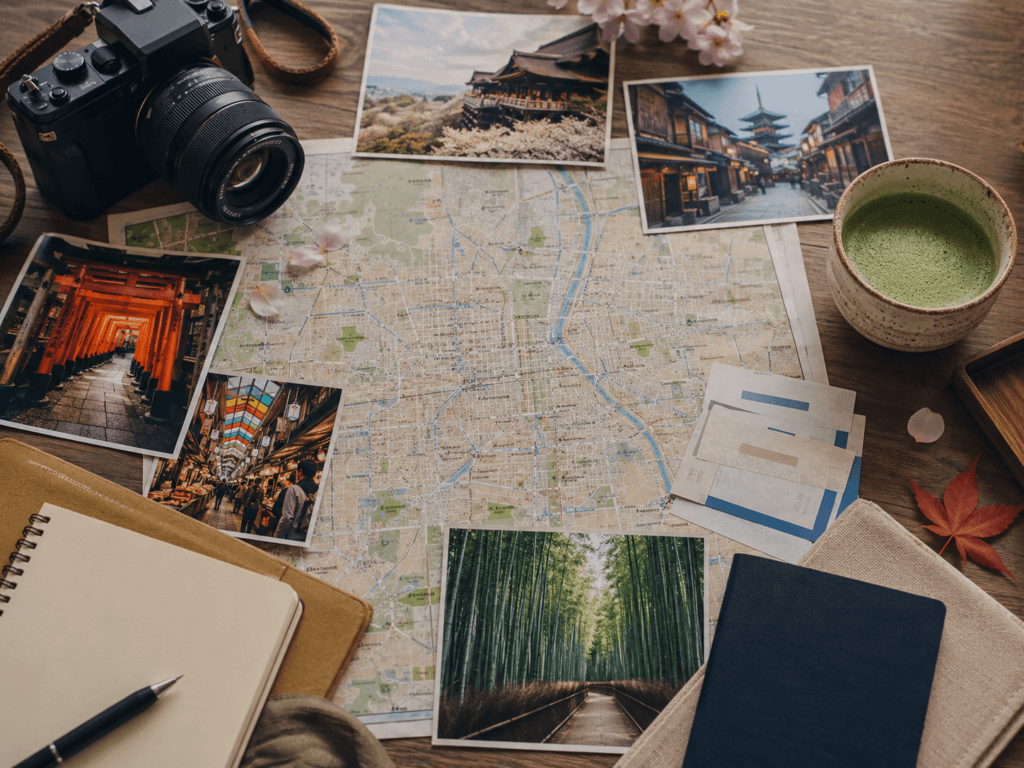
Planning a Kyoto itinerary is not difficult because Kyoto lacks beautiful places.
That is not the problem.
Kyoto has temples, shrines, gardens, old streets, tea houses, bamboo paths, riverside walks, quiet lanes and enough photogenic corners to make your camera feel overemployed.
The real challenge is this: everyone wants to visit the same beautiful places at the same beautiful time.
Kyoto is not a city you should sprint through with a temple checklist and a tired camera. The famous places are famous for a reason, but the city becomes much better when you give it mornings, margins and enough space to hear your own footsteps.
For most first-time visitors, the best Kyoto itinerary is built around these areas:
Higashiyama → Gion → Fushimi Inari → Nishiki Market → Arashiyama
With 2 days in Kyoto, focus on Kiyomizu-dera, Higashiyama, Gion, Fushimi Inari and either Nishiki Market or Arashiyama.
With 3 days in Kyoto, you can add Nijo Castle, Arashiyama and Kinkaku-ji without turning every hour into a bus transfer.
With 4 days in Kyoto, you can slow down and add Uji, Kurama, Kibune, Nara or a quieter neighborhood day.
Kyoto rewards early starts, thoughtful routing and realistic expectations. It does not reward trying to visit eight temples before lunch unless your travel style is “pilgrim with a spreadsheet.”
If Kyoto is part of a longer Japan trip, start with our Japan itinerary 2026 guide before deciding how many nights to stay. If you are arriving from Tokyo, read our Tokyo itinerary 2026 guide first so you do not overpack both cities back-to-back.
Quick Answer: Best Kyoto Itinerary
For most first-time visitors, the best Kyoto itinerary is:
- Day 1: Kiyomizu-dera, Higashiyama and Gion
- Day 2: Fushimi Inari, Nishiki Market and Nijo Castle or central Kyoto
- Day 3: Arashiyama and Kinkaku-ji
- Day 4: Uji, Kurama/Kibune, Nara or slow Kyoto neighborhoods
Here is the simple version:
| Trip Length | Best Route | Best For |
|---|---|---|
| 2 days | Higashiyama + Gion + Fushimi Inari + Nishiki or Arashiyama | Fast first-time highlights |
| 3 days | Higashiyama + Gion + Fushimi Inari + Nijo Castle + Arashiyama | Best first Kyoto trip |
| 4 days | Add Uji, Kurama/Kibune, Nara or slow neighborhoods | More relaxed Kyoto |
| 1 day | Kiyomizu-dera + Higashiyama + Gion only | Very short visit |
| 5 days or more | Kyoto plus day trips and quieter temples | Slow travel |
The sweet spot is 3 days. Two days works, but it will feel tight. Four days is better if you want Kyoto to feel like a city instead of a beautiful obstacle course.
Is Kyoto Good for First-Time Visitors?
Yes, Kyoto is one of the best cities in Japan for first-time visitors.
It gives you the classic images many travelers dream about: temple roofs, stone lanes, tea houses, bamboo groves, shrine gates, gardens, old wooden streets and seasonal beauty.
Kyoto is especially good for travelers who want:
- Temples and shrines
- Traditional streets
- Japanese gardens
- Tea culture
- Historic neighborhoods
- Walkable sightseeing areas
- Seasonal cherry blossoms or autumn leaves
- Day trips
- Quiet mornings
- Photography
- A slower contrast to Tokyo and Osaka
But Kyoto is also one of Japan’s most crowded major destinations. The city is beautiful, but the famous areas can become very busy, especially around cherry blossom season, autumn foliage season, weekends and holidays.
The best Kyoto itinerary is not just about what to see. It is about when to go, how to connect areas and where to leave space.
A perfect-looking route on a map can still feel terrible if it sends you across the city at the same time as every tour bus, school trip and traveler with a fresh pair of white sneakers.
Kyoto works best when you treat it as a walking city with clusters, not as a list of isolated attractions.
How Many Days Do You Need in Kyoto?
You need at least 2 days in Kyoto for a basic first visit.
A realistic guide:
- 1 day: Choose Higashiyama and Gion only
- 2 days: Best minimum for first-time highlights
- 3 days: Best first Kyoto itinerary
- 4 days: Better for a slower trip or day trip
- 5 days or more: Good for quiet temples, Uji, Kurama, Kibune, Nara or deeper exploring
If you only have one day, do not try to visit Kiyomizu-dera, Fushimi Inari, Arashiyama, Kinkaku-ji, Gion, Nishiki Market and Nijo Castle.
That is not Kyoto travel. That is a temple buffet with no chewing.
For most travelers, 3 days is the best balance. It gives you one day for Higashiyama and Gion, one day for Fushimi Inari and central Kyoto, and one day for Arashiyama or northwest Kyoto.
Four days lets the city breathe. You can visit the famous places without needing every morning to start with a tactical briefing.
Where to Stay in Kyoto
Where you stay in Kyoto can shape your entire trip.
Kyoto is not as huge as Tokyo, but transport can be slower than visitors expect. Buses can get crowded, taxis can be useful but costly, and famous areas are not always connected in a straight line.
For first-time visitors, these are the easiest areas.
Kyoto Station
Kyoto Station is the most practical base.
It is good for:
- Shinkansen arrivals and departures
- Trains to Osaka, Nara and Uji
- Airport connections
- Buses
- Luggage storage
- Convenience
- Short Kyoto stays
Stay near Kyoto Station if you want easy transport and day trips. It is not the most atmospheric area, but it is very practical.
Kyoto Station is a good choice if your itinerary includes Nara, Osaka, Uji or an early train. It is the sensible shoes of Kyoto hotel areas. Not glamorous, but very useful.
Gion / Higashiyama
Gion and Higashiyama are best for atmosphere.
They are good for:
- Traditional streets
- Kiyomizu-dera
- Yasaka Shrine
- Gion evening walks
- Tea houses
- Early morning sightseeing
- Photography
Stay here if you want Kyoto to feel old and cinematic as soon as you step outside.
The trade-off is price and convenience. Hotels can be expensive, streets can be busy, and luggage movement may be less simple than staying near a major station.
Kawaramachi / Shijo
Kawaramachi and Shijo are excellent central bases.
They are good for:
- Restaurants
- Shopping
- Nishiki Market
- Gion access
- Buses
- Night walks
- Balanced sightseeing
This is one of the best areas for first-time visitors because it sits between practical transport and Kyoto atmosphere.
Stay here if you want food, shops, central access and an easier evening scene.
Arashiyama
Arashiyama is beautiful but not ideal for most first-time visitors as a main base.
It is good for:
- Bamboo Grove
- Tenryu-ji
- Togetsukyo Bridge
- River scenery
- Ryokan stays
- A quieter overnight mood
Stay in Arashiyama if you want a scenic stay and do not mind being away from central Kyoto.
For most first-time visitors, Arashiyama is better as a day or half-day trip than as the main base.
Simple Recommendation
For most first-time visitors:
- Choose Kyoto Station for convenience and day trips
- Choose Kawaramachi / Shijo for balance
- Choose Gion / Higashiyama for atmosphere
- Choose Arashiyama for a scenic, slower stay
The best Kyoto base is not always the prettiest one. It is the one that keeps your itinerary from becoming a daily bus puzzle.
2-Day Kyoto Itinerary
A 2-day Kyoto itinerary should focus on the most important first-time areas.
The best route is:
- Day 1: Kiyomizu-dera, Higashiyama and Gion
- Day 2: Fushimi Inari, Nishiki Market and Nijo Castle or Arashiyama
Two days is enough for a good first taste, but you need to be selective.
Day 1: Kiyomizu-dera, Higashiyama and Gion.
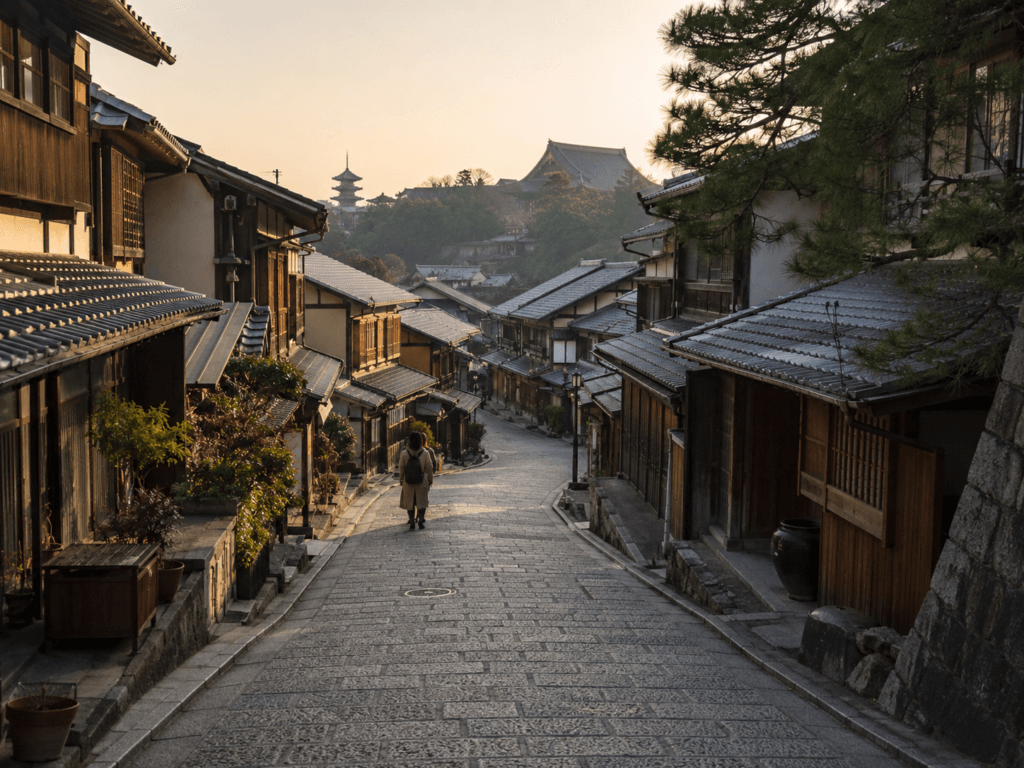
Start your Kyoto trip in Higashiyama.
This is the Kyoto many first-time visitors imagine before arriving: old streets, temple views, stone lanes, small shops and traditional atmosphere.
Morning: Kiyomizu-dera
Start early at Kiyomizu-dera.
Kiyomizu-dera usually works best in the morning. The temple generally opens at 6:00 a.m., but closing times change by season and special night-viewing periods, so check the official schedule before you go.
Things to do around Kiyomizu-dera:
- Main temple stage
- Otowa Waterfall area
- Temple grounds
- Views over Kyoto
- Sannenzaka
- Ninenzaka
This area becomes very crowded later in the day, especially during cherry blossom and autumn foliage seasons.
If you can arrive early, do it. Morning Kyoto has a different texture. The streets are softer, the shops are just waking up, and your photos are less likely to include fourteen strangers holding matcha ice cream.
Late Morning: Sannenzaka and Ninenzaka
After Kiyomizu-dera, walk slowly through Sannenzaka and Ninenzaka.
These are some of Kyoto’s most famous preserved streets, with traditional buildings, shops, cafes and small lanes.
Do not rush this area. The beauty is in the slope of the street, the wooden facades, the little turns and the feeling that Kyoto is briefly letting you walk through a postcard.
But remember: people live and work around these neighborhoods. Stay out of private property, avoid blocking narrow lanes and do not treat every doorway as a photo prop.
Afternoon: Yasaka Shrine and Maruyama Park
Continue toward Yasaka Shrine and Maruyama Park.
This route works naturally from Higashiyama toward Gion.
Good stops include:
- Yasaka Shrine
- Maruyama Park
- Chion-in area, if you want a temple extension
- Small tea shops and cafes
- Side streets toward Gion
If you started early, this is a good time to slow down. Kyoto is best when you leave room between famous places.
Evening: Gion
Finish Day 1 in Gion.
Gion is atmospheric in the evening, with lanterns, narrow streets and traditional buildings. Walk through the area calmly and respectfully.
Important etiquette matters here.
Gion is not a stage set. It is a real neighborhood where people live and work. Do not chase geiko or maiko, take photos without permission, enter private property or block narrow streets for photos.
Kyoto is beautiful, but it is not a free costume drama with tourists holding the camera.
Good evening areas include:
- Hanamikoji Street
- Shirakawa area
- Yasaka Shrine evening walk
- Pontocho, if you want dinner nearby
- Kamo River area
If you want dinner in Gion or Pontocho, consider booking ahead during busy seasons.
Day 2: Fushimi Inari, Nishiki Market and Nijo Castle or Arashiyama
Day 2 depends on your travel style.
You have two good options:
Option A:
Fushimi Inari + Nishiki Market + Nijo Castle
Option B:
Fushimi Inari + Arashiyama
Choose Option A if you want a balanced city day with shrines, food and history.
Choose Option B if Arashiyama is a must-see for you.
Morning: Fushimi Inari
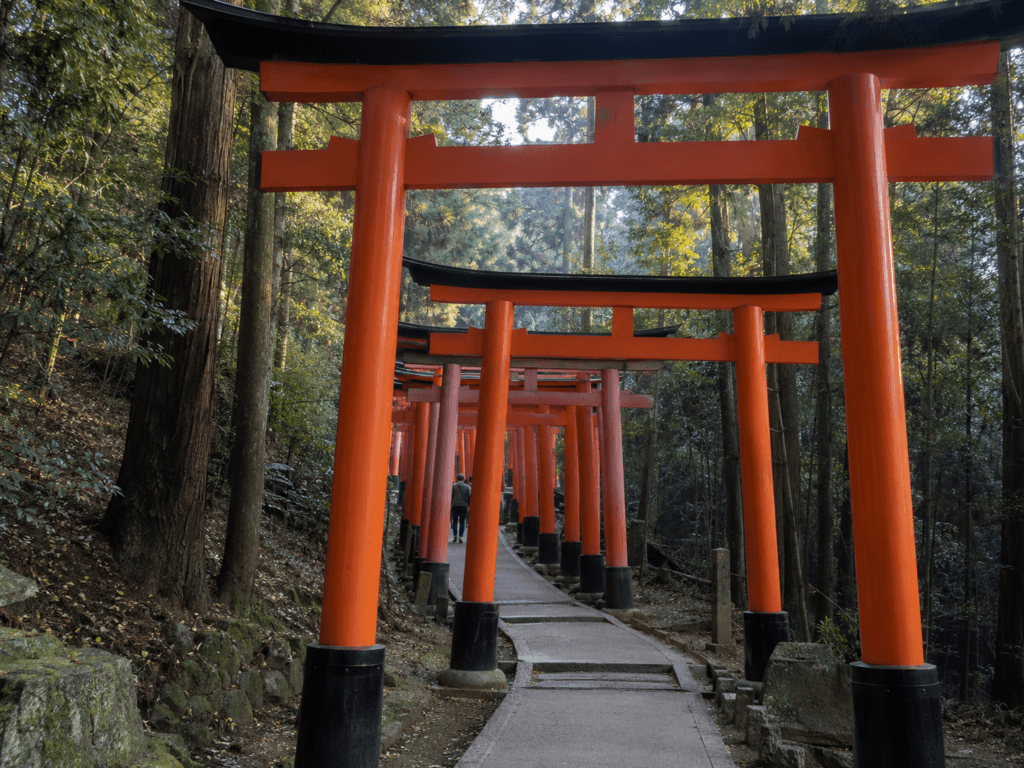
Start early at Fushimi Inari.
Fushimi Inari is one of Kyoto’s most iconic sights, famous for its red torii gates. It is open early and late, which makes it easier to avoid the worst crowds.
The lower gate area gets busy quickly. If you want a quieter experience, keep walking upward. Many visitors stop after the first photogenic sections, so the path often becomes calmer as you climb.
You do not need to hike the entire mountain unless you want to. Even a partial walk can be rewarding.
Fushimi Inari is best when you do not treat it as one photo spot. Keep walking. The shrine slowly changes from crowded landmark to forest path, and that is where the magic starts to lower its voice.
Midday: Nishiki Market
After Fushimi Inari, return toward central Kyoto and visit Nishiki Market.
Nishiki Market is good for snacks, small food stops, pickles, sweets, seafood, tea and casual browsing.
Tips for Nishiki Market:
- Go before peak afternoon crowds if possible
- Eat in designated areas when requested
- Do not block the narrow walkway
- Bring some cash
- Treat it as a grazing stop, not a full meal plan
Nishiki is fun, but it can become crowded. Walk slowly, be patient and do not stop suddenly in the middle of the lane unless you want to become part of the traffic system.
Afternoon Option A: Nijo Castle
If you choose the central Kyoto route, visit Nijo Castle in the afternoon.
Nijo Castle is one of Kyoto’s most important historic sites. It works well after Nishiki Market because it adds history and architecture without sending you to the opposite side of the city.
If Nijo Castle is part of your Kyoto itinerary, check ticket options in advance. Ninomaru-goten Palace is the classic stop, while Honmaru-goten Palace requires advance reservations, so check web ticket options before building it into your day.
This is Kyoto quietly reminding you that beautiful old buildings also enjoy paperwork.
Afternoon Option B: Arashiyama
If Arashiyama is a must-see and you only have 2 days, use the afternoon for Arashiyama instead.
This is a faster route, but it can work if you start early and keep expectations realistic.
Focus on:
- Bamboo Grove
- Tenryu-ji Temple
- Togetsukyo Bridge
- River area
- Short cafe or snack stop
The Arashiyama Bamboo Grove is short, so do not cross the city only to take one rushed photo and leave. Pair it with Tenryu-ji Temple, Togetsukyo Bridge and a slower riverside walk.
The bamboo is the opening scene, not the whole movie.
3-Day Kyoto Itinerary
A 3-day Kyoto itinerary is the best first-time route for most travelers.
The best route is:
- Day 1: Kiyomizu-dera, Higashiyama and Gion
- Day 2: Fushimi Inari, Nishiki Market and Nijo Castle
- Day 3: Arashiyama and Kinkaku-ji
This gives you Kyoto’s most famous areas without forcing every major sight into two days.
Day 1: Higashiyama and Gion
Use Day 1 for the classic eastern Kyoto route.
Suggested route:
- Kiyomizu-dera
- Sannenzaka
- Ninenzaka
- Yasaka Shrine
- Maruyama Park
- Gion
- Pontocho or Kamo River evening
This is the best opening day because it gives you the strongest traditional Kyoto atmosphere.
Start early, walk slowly and leave extra time for side streets.
Kyoto’s famous lanes are not just corridors between attractions. They are part of the experience.
Day 2: Fushimi Inari, Nishiki Market and Central Kyoto
Use Day 2 for Fushimi Inari and central Kyoto.
Suggested route:
- Early morning Fushimi Inari
- Nishiki Market
- Nijo Castle
- Kawaramachi or Pontocho evening
This day balances shrine gates, food and history.
It also avoids sending you to Arashiyama right after Fushimi Inari, which can be possible but tiring.
Kyoto looks compact on a map until you add buses, crowds and the tiny drama of choosing the wrong exit.
Day 3: Arashiyama and Kinkaku-ji
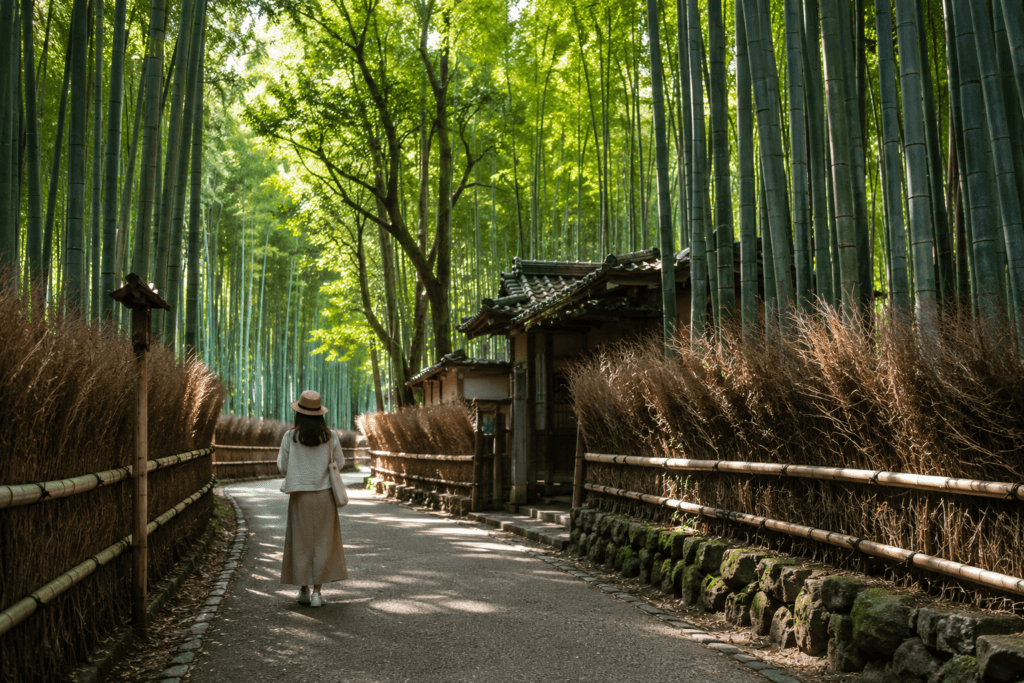
Use Day 3 for western Kyoto.
Start in Arashiyama.
Suggested route:
- Bamboo Grove
- Tenryu-ji Temple
- Togetsukyo Bridge
- Arashiyama river area
- Optional: Okochi Sanso Villa
- Afternoon: Kinkaku-ji, if you still have energy
Arashiyama works best in the morning. It gets crowded later, especially around the Bamboo Grove and main streets.
Kinkaku-ji can fit after Arashiyama, but check transit and timing. It is beautiful, but it is also a popular stop with limited time needed for most visitors.
If you feel tired, skip Kinkaku-ji and enjoy Arashiyama more slowly.
This is important: a calmer Arashiyama day is often better than a rushed Arashiyama plus Kinkaku-ji plus another temple day.
Kyoto does not give extra points for collecting temple stamps inside your nervous system.
4-Day Kyoto Itinerary
A 4-day Kyoto itinerary gives you more freedom.
The best route is:
- Day 1: Higashiyama and Gion
- Day 2: Fushimi Inari, Nishiki Market and Nijo Castle
- Day 3: Arashiyama and Kinkaku-ji
- Day 4: Uji, Kurama/Kibune, Nara or slow Kyoto neighborhoods
Day 4 is your choice day.
Pick one route based on your travel style.
Option 1: Uji
Uji is a great choice if you like tea, riverside walks and a slower atmosphere.
It is easy to reach from Kyoto and works well as a half-day or relaxed day trip.
Uji is good for:
- Matcha
- Byodo-in Temple
- Uji River
- Tea shops
- A calmer day after busy Kyoto sightseeing
Choose Uji if you want a gentler day with culture and food without going too far.
Option 2: Kurama and Kibune
Kurama and Kibune are good for travelers who want mountain atmosphere.
This route is best if you enjoy nature, shrines, forest walks and a quieter side of Kyoto.
It can include:
- Kurama-dera
- Forest paths
- Kibune Shrine
- Riverside dining in season, if available
- Mountain village scenery
This is more active than Uji and requires better timing.
Choose Kurama and Kibune if you want to feel Kyoto step away from city streets and into the trees.
Option 3: Nara Day Trip
Nara is one of the best day trips from Kyoto.
It is good for:
- Todai-ji Temple
- Nara Park
- Deer
- Kasuga Taisha
- Historic atmosphere
- Easy train access
Nara can also be done from Osaka, so choose the base that makes the most sense for your wider Japan route.
Nara deer are charming, but remember they are still animals. They may look polite, then suddenly negotiate for crackers like tiny park officials.
Option 4: Slow Kyoto Neighborhood Day
A slow Kyoto day can be better than another packed day trip.
Good slower areas include:
- Philosopher’s Path
- Nanzen-ji
- Eikan-do
- Shimogamo Shrine
- Kyoto Imperial Palace area
- Local cafes and small temples
- Kamo River walk
Choose this if you want Kyoto to feel less like a sightseeing mission and more like a city.
This is often the day travelers remember most, not because it has the biggest landmark, but because they finally stopped rushing.
Best Time to Visit Kyoto
Kyoto is beautiful year-round, but the best seasons are usually spring and autumn.
Spring
Spring is one of the most popular times to visit Kyoto.
Cherry blossoms usually draw heavy crowds, especially around late March and early April depending on the year.
Good spring areas include:
- Philosopher’s Path
- Maruyama Park
- Kiyomizu-dera area
- Keage Incline
- Arashiyama
- Kamo River
Spring Kyoto is beautiful, but it is not quiet. Book accommodation early and start sightseeing early.
Do not build your entire emotional plan around one exact blossom date. Flowers are not customer service agents.
Summer
Summer in Kyoto can be hot and humid.
June may bring rainy-season weather. July is famous for Gion Matsuri, which is one of Kyoto’s major events but also a busy period. August can be hot and heavy.
Summer can still work, but plan indoor breaks, lighter walking routes and slower afternoons.
Good summer ideas:
- Early morning temples
- Cafes and museums midday
- Evening walks
- River areas
- Mountain routes, if weather allows
Kyoto summer is not gentle. It arrives with humidity and asks why you packed dark jeans.
Autumn
Autumn is one of the best times to visit Kyoto.
Mid-November to early December is often very popular for autumn leaves, though timing changes by year and location.
Good autumn areas include:
- Tofuku-ji
- Eikan-do
- Kiyomizu-dera
- Arashiyama
- Kinkaku-ji
- Nanzen-ji
- Philosopher’s Path
Autumn is stunning, but crowds can be intense. Book early and use morning or late-day visits wisely.
Winter
Winter can be a good time to visit Kyoto if you want fewer crowds than peak spring and autumn.
It can be cold, but the city feels calmer. Temples and gardens have a different quietness in winter.
Winter is good for:
- Temples
- Hot tea
- Museums
- Kaiseki meals
- Ryokan stays
- Fewer crowds in some areas
Snow is not guaranteed, but when Kyoto gets light snow, the city looks like it has lowered its voice.
How to Get Around Kyoto
Kyoto transport is useful, but it can be slower than first-time visitors expect.
Common options include:
- Buses
- Subway
- JR trains
- Private railways
- Taxis
- Walking
- Bicycle rentals, depending on area and comfort
The best strategy is to combine transport and walking by area.
Do not rely only on buses for every day. Kyoto buses can get crowded, especially around famous sights and during peak seasons.
Buses
Buses are useful because they reach many temples and neighborhoods.
But they can be crowded and slow in popular areas. If your route depends on multiple buses, leave extra time.
Avoid bringing large luggage on buses when possible. Crowded Kyoto buses and large suitcases are not a charming trio.
Subway
Kyoto’s subway system is smaller than Tokyo’s, but it is useful for some routes.
It works well for:
- Kyoto Station
- Karasuma line areas
- Nijo Castle access
- Some central Kyoto movement
- Connecting with other transport
Use the subway when it fits the route. It can be more predictable than buses.
Trains
Trains are useful for Fushimi Inari, Arashiyama, Uji, Osaka and Nara.
Important train-based routes include:
- JR Nara Line to Fushimi Inari and Uji
- Keihan Line for eastern Kyoto and Fushimi Inari access
- JR or private railways for Arashiyama
- JR or Kintetsu for Nara
Trains can save time if you choose the right line.
Taxis
Taxis can be useful in Kyoto, especially for short hops or when buses are crowded.
Use taxis for:
- Early morning starts
- Tired evenings
- Moving between less connected areas
- Family travel
- Rainy days
- Luggage-heavy moments
They cost more than public transport, but sometimes a taxi saves enough time and energy to be worth it.
Kyoto Subway and Bus Passes
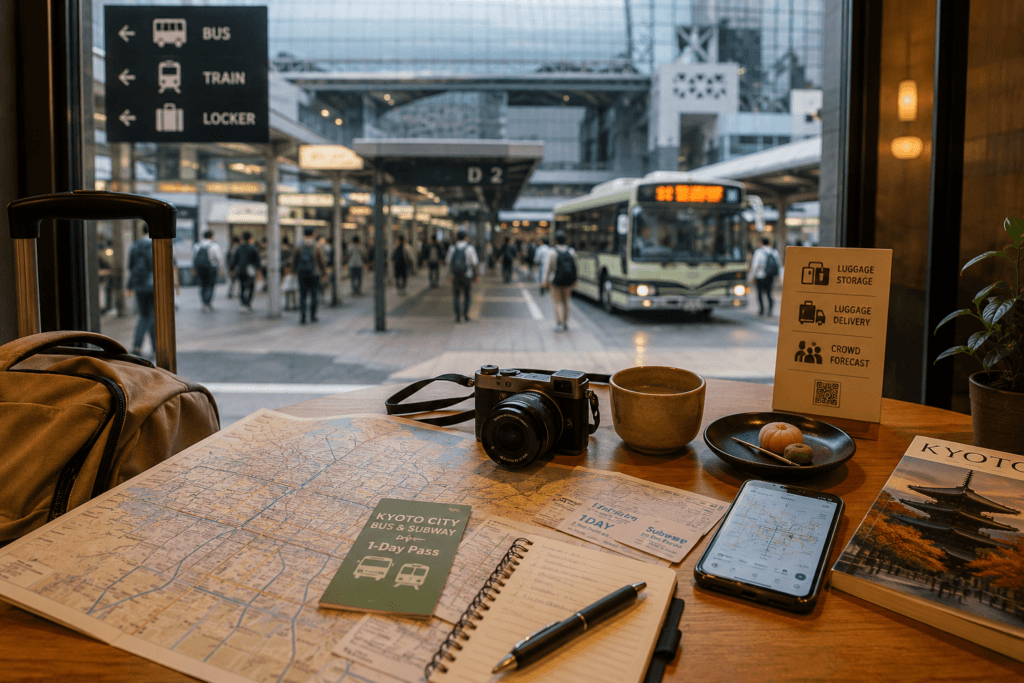
Kyoto has several transport passes, but you should choose based on your route.
The Subway & Bus 1-Day Pass costs 1,100 yen for adults and 550 yen for children. It can be useful if your day includes several bus and subway rides, but remember that it is valid for the calendar day of use, not a rolling 24-hour period.
Kyoto passes are helpful tools, not tiny paper wizards.
If your route uses mostly trains, such as Fushimi Inari, Uji or Arashiyama by rail, a bus and subway pass may not be the best fit.
Before buying a pass, check:
- How many rides you will take
- Whether your lines are included
- Whether trains or buses make more sense
- Whether walking is easier between nearby sights
- Whether you are traveling during a crowded season
For many visitors, paying as you go can be simpler. For busy bus-and-subway days, a pass can help.
Crowd Avoidance Tips
Crowds are one of the biggest challenges in Kyoto.
Before visiting the most famous sights, check Kyoto’s official congestion forecast. Sometimes shifting a visit by one or two hours can change the whole mood of the day.
Kyoto rewards early birds, late wanderers and anyone who does not arrive at the Bamboo Grove at exactly the same time as three tour buses.
Practical tips:
- Visit Kiyomizu-dera early
- Visit Fushimi Inari early or later in the day
- Visit Arashiyama early
- Avoid peak midday hours at the most famous areas
- Use less crowded nearby temples when famous spots feel packed
- Do not schedule every famous place on a weekend
- Leave extra time during cherry blossom and autumn foliage seasons
- Use luggage storage or delivery instead of dragging bags around
If a place is too crowded, do not force the moment. Kyoto has side streets, smaller temples and quiet corners. Sometimes the best travel decision is stepping one lane away.
Gion and Kyoto Etiquette
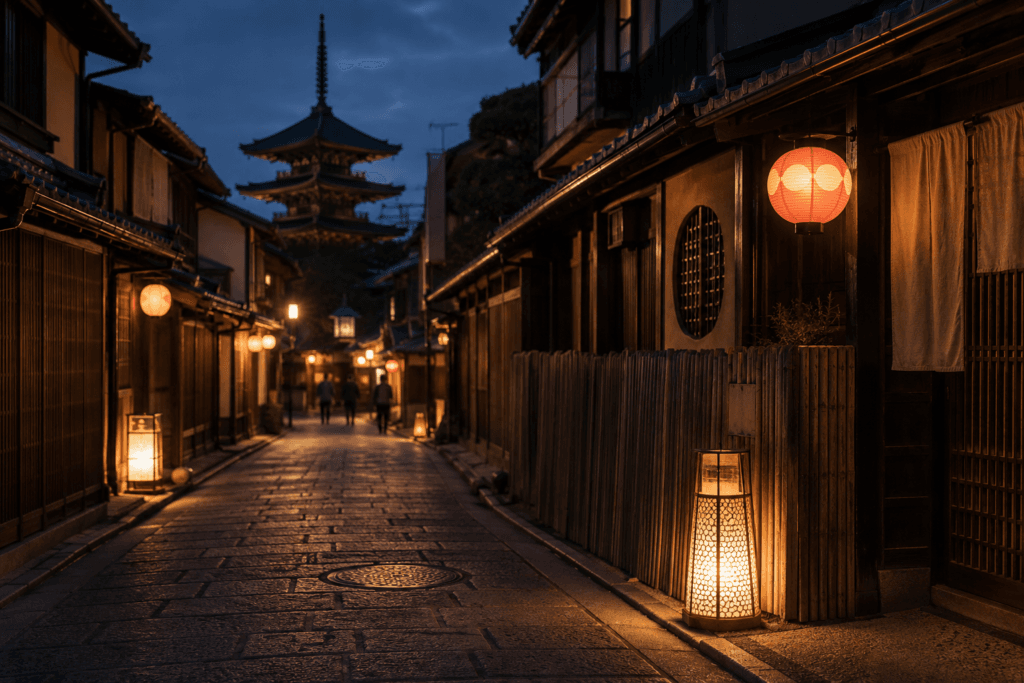
Kyoto is a real city, not a theme park.
This matters most in places like Gion, Higashiyama and traditional neighborhoods.
Respect these rules:
- Do not chase geiko or maiko
- Do not photograph people without permission
- Do not enter private property
- Do not block narrow streets for photos
- Do not touch buildings, lanterns, bamboo or private objects
- Follow signs and local instructions
- Eat only where it is allowed
- Keep noise low in residential areas
- Be careful with tripods and large bags
Gion is especially sensitive because it is a working cultural district.
If you want to see traditional performance, look for official venues or cultural shows rather than trying to catch people in the street.
Kyoto is more beautiful when visitors behave like guests, not treasure hunters.
Luggage Tips: Use Hands-Free Travel When Needed
Kyoto is not a good city for dragging large luggage through sightseeing areas.
If you arrive before hotel check-in, consider luggage storage or luggage delivery instead of carrying suitcases onto crowded buses or through narrow streets.
Kyoto Station has luggage services, lockers and hands-free travel options that can make arrival day much easier.
This is especially useful if you plan to visit a sight before check-in.
Better plan:
- Arrive at Kyoto Station
- Store or send luggage
- Visit one nearby or easy-to-reach area
- Check in later
- Start proper sightseeing the next morning
Worse plan:
- Arrive with large suitcases
- Take a crowded bus
- Drag luggage through Higashiyama
- Regret several decisions in public
Kyoto’s hands-free travel services exist for a reason.
Budget Tips and Kyoto Accommodation Tax
Kyoto can be affordable or expensive depending on season, hotel location and travel style.
Accommodation is often the biggest cost.
In 2026, Kyoto’s accommodation tax changed, and the tax amount depends on the accommodation fee per person per night. Higher room rates can mean a higher per-person, per-night tax.
For lower-priced stays, the tax starts from 200 yen per person per night, but higher room rates can carry a much higher tax. If you are booking a ryokan or luxury hotel, check the final price carefully before assuming the nightly rate tells the whole story.
It is not the kind of souvenir anyone dreams about, but it is still part of the real Kyoto budget.
Budget tips:
- Book early for cherry blossom and autumn foliage seasons
- Consider Kyoto Station or slightly less famous areas for better value
- Use convenience stores and casual restaurants for some meals
- Mix paid temples with free walks
- Check whether transport passes match your actual route
- Avoid unnecessary taxis, but use them strategically when they save time
- Plan luggage storage or delivery if it prevents stress
Kyoto has many paid temples and gardens. Individual entry fees may look small, but a temple-heavy day can add up.
Choose fewer places and enjoy them more.
Your wallet and your attention span may both appreciate the gesture.
Common Mistakes to Avoid
Mistake 1: Trying to See Too Many Temples
Kyoto is not best enjoyed as a temple checklist.
Choose fewer places and give them enough time. After several temples in one day, even beautiful roofs can start blending together.
Mistake 2: Visiting Famous Spots at Peak Time
Kiyomizu-dera, Fushimi Inari and Arashiyama can get very crowded.
Start early or visit later when possible.
Mistake 3: Ignoring Transport Time
Kyoto sights are not always as close as they look.
Buses, transfers and walking time matter. Group your itinerary by area.
Mistake 4: Staying Too Far from Useful Transport
A scenic hotel far from convenient transport can make every day harder.
Choose a base that fits your route.
Mistake 5: Bringing Large Luggage onto Crowded Buses
Avoid this if possible.
Use lockers, hotel storage or delivery services.
Mistake 6: Treating Gion Like a Photo Set
Gion is a real neighborhood and cultural district.
Respect privacy, do not chase geiko or maiko, and do not block streets for photos.
Mistake 7: Skipping Quiet Places
The famous sights are worth visiting, but Kyoto’s quieter places are often what make the city memorable.
Leave space for side streets, smaller temples, cafes and riverside walks.
FAQ: Kyoto Itinerary
How many days do you need in Kyoto?
You need at least 2 days in Kyoto for a basic first visit. Three days is the best length for most first-time visitors, and 4 days is better if you want a slower trip or day trips.
Is 2 days enough for Kyoto?
Yes, 2 days is enough for the main highlights if you plan carefully. A good 2-day Kyoto itinerary includes Kiyomizu-dera, Higashiyama, Gion, Fushimi Inari and either Nishiki Market, Nijo Castle or Arashiyama.
Is 3 days enough for Kyoto?
Yes, 3 days is ideal for many first-time visitors. It gives you time for Higashiyama, Gion, Fushimi Inari, central Kyoto, Arashiyama and Kinkaku-ji.
Is 4 days too long in Kyoto?
No, 4 days is not too long. It gives you time to slow down and add Uji, Kurama, Kibune, Nara or quieter Kyoto neighborhoods.
What is the best Kyoto itinerary for first-time visitors?
The best first-time Kyoto itinerary is Higashiyama and Gion on Day 1, Fushimi Inari and central Kyoto on Day 2, and Arashiyama plus Kinkaku-ji on Day 3.
Should I stay in Kyoto Station or Gion?
Stay near Kyoto Station for transport and day trips. Stay in Gion or Higashiyama for atmosphere. Kawaramachi and Shijo are good balanced choices.
Is Arashiyama worth visiting?
Yes, Arashiyama is worth visiting, especially if you include the Bamboo Grove, Tenryu-ji Temple, Togetsukyo Bridge and the river area. Do not visit only for one quick bamboo photo.
Is Fushimi Inari worth visiting?
Yes, Fushimi Inari is one of Kyoto’s most memorable sights. Go early or walk farther up the trail for a quieter experience.
What is the best time to visit Kyoto?
Spring and autumn are the most famous seasons, but they are also the busiest. Winter can be quieter, and summer can work if you plan around heat and humidity.
Do I need a Kyoto bus pass?
Maybe. The Subway & Bus 1-Day Pass can help if you take several included rides in one day. But if your route uses trains or lots of walking, paying as you go may be simpler.
Final Thoughts: Let Kyoto Be More Than a Checklist
Kyoto is best when you stop treating it like a temple checklist.
For 2 days, focus on Higashiyama, Gion, Fushimi Inari and one extra area.
For 3 days, add Arashiyama and central Kyoto.
For 4 days, slow down with Uji, Kurama, Kibune, Nara or quieter neighborhoods.
The famous places are worth seeing, but Kyoto becomes much better when you give it margins.
Start early. Walk slowly. Respect local neighborhoods. Use buses and taxis wisely. Check crowd forecasts when needed. Do not drag your suitcase through a narrow temple lane like it is enjoying the culture too.
Kyoto is not a city to collect quickly.
It is a city to enter gently, one morning street at a time.