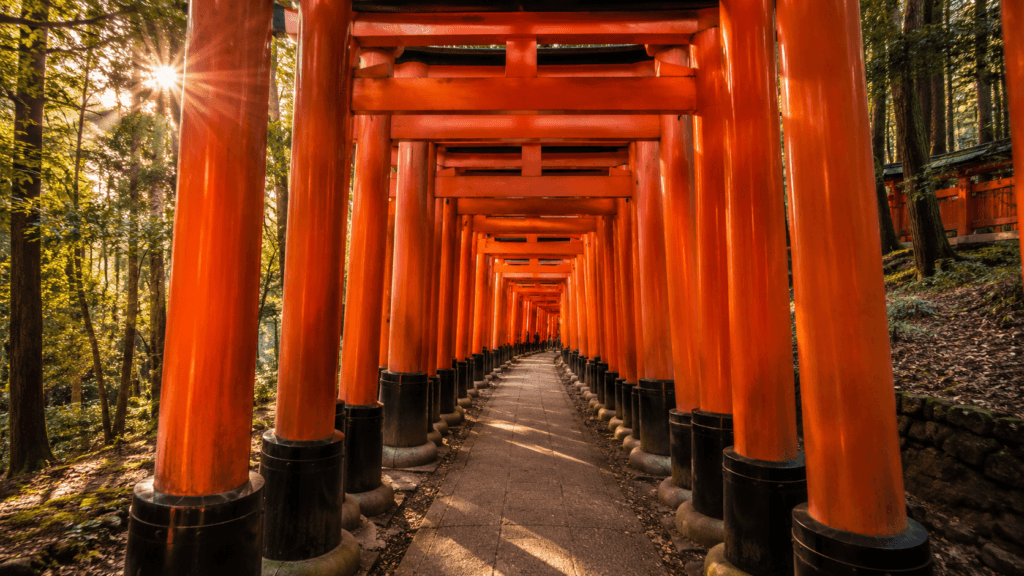
Fushimi Inari Taisha is one of Kyoto’s most famous places, and it is easy to understand why.
Thousands of red torii gates climb into the forested slopes of Mt. Inari, creating one of the most recognizable scenes in Japan. It is beautiful, atmospheric and almost impossible to walk through without reaching for your camera. It is also extremely popular, which means timing can make the difference between a peaceful shrine walk and a slow-moving photo queue with excellent gate design.
This Fushimi Inari guide is for first-time visitors who want to know the best time to go, how long to spend, whether you need to hike the whole mountain, how to get there from Kyoto Station, and what mistakes to avoid.
Fushimi Inari is already included in Kyoto Itinerary 2026, but it deserves its own guide because many visitors underestimate the route. The lower torii gates are easy to visit, but the full mountain walk takes more time and energy than a quick photo stop.
Here is how to visit Fushimi Inari in 2026 without letting the crowds, stairs or camera traffic steal the best part of the experience.
Is Fushimi Inari Worth Visiting?
Yes, Fushimi Inari is absolutely worth visiting, especially if this is your first time in Kyoto.
The torii gates are the famous part, but the shrine is not just a photo tunnel with excellent branding. Fushimi Inari Taisha is the head shrine of Japan’s Inari shrines, with a history that goes back to 711. Inari is associated with harvests, business prosperity, home safety and many kinds of wishes.
That history gives the place more weight than a simple sightseeing stop. You will see fox statues, shrine buildings, smaller sub-shrines, stone altars, forest paths and long rows of torii gates donated over many years.
The best visit happens when you treat Fushimi Inari as a sacred mountain shrine first and a photo spot second. Take photos, of course. Everyone does. But keep moving, stay respectful and remember that this is still an active place of worship.
Quick Answer: How to Visit Fushimi Inari
For most first-time visitors, the best plan is simple:
Go early in the morning.
Take the JR Nara Line to JR Inari Station.
Visit the main shrine area.
Walk through Senbon Torii.
Continue at least to Okusha Hohaisho.
Walk higher if you want fewer crowds.
Return when the route starts feeling like enough.
You do not need to hike the entire mountain to enjoy Fushimi Inari. Many visitors are happy with the lower torii gates and a partial walk up the trail. If you enjoy hiking, views and quieter paths, continue higher toward the Yotsutsuji viewpoint area or complete the full loop around Mt. Inari.
For travelers who want shrine context, photo timing and route guidance without figuring everything out alone, Fushimi Inari early morning walking tours can be a useful option before the trip.
Best Time to Visit Fushimi Inari
The best time to visit Fushimi Inari is early morning.
If you want the famous torii gate photos with fewer people, arrive before the main wave of visitors. The lower gate tunnels can become very crowded later in the morning, especially during cherry blossom season, autumn foliage, weekends and holidays.
Early morning gives the shrine a calmer feeling. The air feels cooler, the forest is quieter and the red gates look more dramatic before the paths fill up. This is one of those Kyoto places where waking up early actually pays rent.
Late afternoon or evening can also be atmospheric, but it is better for confident travelers who are comfortable with darker forest paths and a quieter shrine setting. If this is your first visit, morning is the safest and easiest choice.
Go early if you want torii gates. Go late morning if you also want 300 strangers politely joining your composition.
Is Fushimi Inari Open 24 Hours?
The shrine grounds are generally open all day, and there is no admission fee to walk through the main shrine grounds and torii gate trails.
However, do not assume everything around the shrine operates 24 hours. Shops, food stalls, shrine services, goshuin counters and nearby restaurants may keep separate hours. If you visit very early or late, you may get a quieter atmosphere, but fewer services will be open.
For most travelers, early morning after sunrise is the sweet spot. You get softer crowds without losing the basic comfort of daylight.
How to Get to Fushimi Inari from Kyoto Station
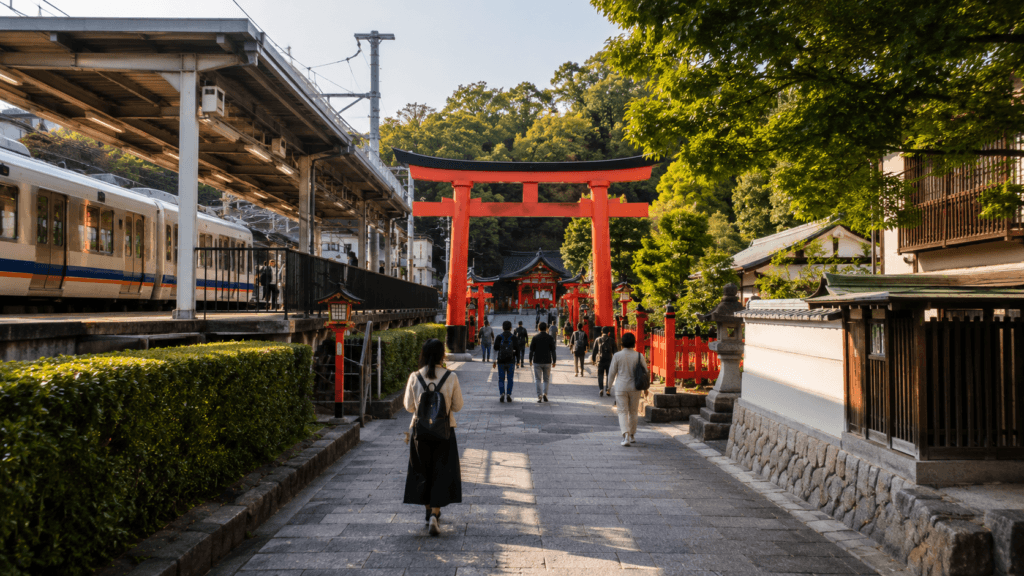
The easiest way to get to Fushimi Inari from Kyoto Station is by JR Nara Line.
Take the train to JR Inari Station. The shrine entrance is right outside the station, which is rare Kyoto transport mercy. For once, the map is not playing tricks on you.
Fushimi Inari is also accessible from Keihan Fushimi-Inari Station, which is useful if you are coming from the Gion-Shijo or central Kyoto side. From Keihan Fushimi-Inari Station, it is a short walk east toward the shrine.
Avoid driving if possible. The area around the shrine can become crowded, and public transportation is the smoother choice for most visitors.
If you are planning several Kyoto days, use Where to Stay in Kyoto 2026 before booking your hotel. Staying near useful train lines makes places like Fushimi Inari much easier to visit early.
Best Transport Options
Use JR Inari Station if you are coming from Kyoto Station.
Use Keihan Fushimi-Inari Station if you are coming from the Gion-Shijo or central Kyoto side.
Avoid bus-only routes if you want the smoothest trip.
Use public transport instead of driving.
Prepare mobile data for maps, train routes and timing.
For reliable access to maps and train routes, prepare Japan eSIM for travelers before arrival. Fushimi Inari is easy to reach, but it is still nice when your phone behaves like a helpful travel assistant instead of a tiny confused brick.
How Long Do You Need at Fushimi Inari?
How long you need depends on how far you want to walk.
For a short visit, plan around 45 to 60 minutes. This is enough for the main shrine area, Senbon Torii, Okusha Hohaisho and a simple return.
For a medium visit, plan around 1.5 to 2 hours. This gives you time to continue higher, escape some of the lower crowds and enjoy more of the forested shrine path.
For the full Mt. Inari loop, plan around 2.5 to 3 hours. The full route is more of a hike than many visitors expect. It is not extreme, but it does involve stairs, slopes and steady walking.
Kyoto will not send a certificate if you climb every step. Choose the route your legs will still respect later.
Best Fushimi Inari Route for First-Time Visitors
For most first-time visitors, I recommend the medium route.
Start at JR Inari Station.
Enter through the main torii gate.
Visit the main shrine area.
Walk through Senbon Torii.
Continue to Okusha Hohaisho.
Keep walking higher if the crowds are heavy.
Aim for the Yotsutsuji viewpoint area if you have energy.
Return the same way or continue the loop if you want the full hike.
This route gives you the iconic torii gate experience without forcing you into the full mountain walk. The lower section is the busiest, but once you continue higher, the atmosphere often becomes calmer. The sounds change too. Near the bottom, you hear footsteps, voices and camera shutters. Higher up, the shrine begins to feel more like a forest walk.
Short Visit Route: 45 to 60 Minutes
Choose this route if you are short on time or visiting before another Kyoto stop.
Start at the main entrance.
Visit the main shrine.
Walk through Senbon Torii.
Continue to Okusha Hohaisho.
Take photos respectfully.
Return to the station.
This is enough to experience the famous red gate tunnels, but it will also be the most crowded part of the shrine. If you only do the lower route, go early.
Medium Route: 1.5 to 2 Hours
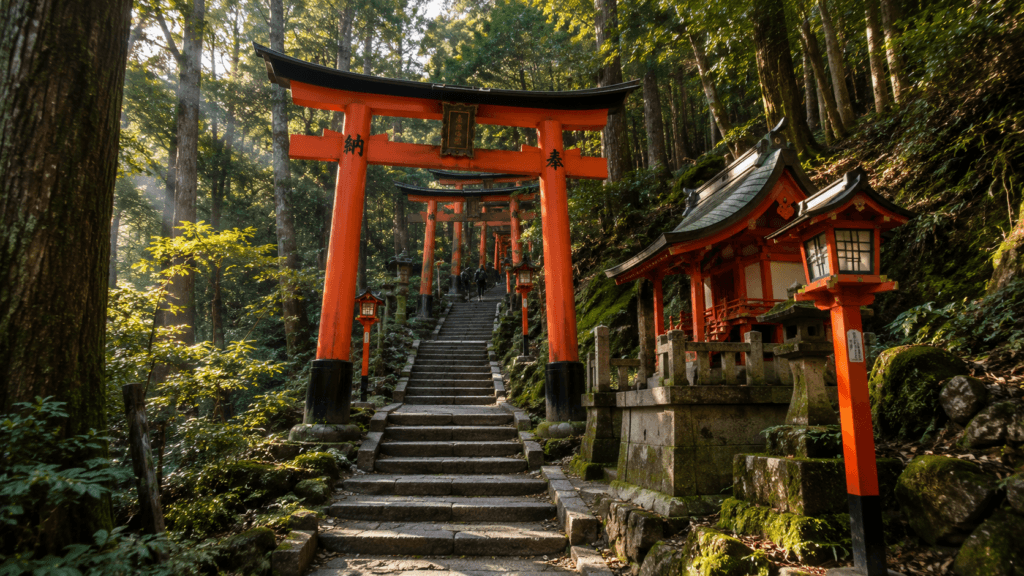
Choose this route if you want the best balance.
Start with the main shrine and Senbon Torii, then continue beyond the busiest lower section. The path becomes more interesting as you climb, and the crowd usually thins out. This is where many visitors start to understand why Fushimi Inari is more than one photo spot.
The medium route is my favorite option for most travelers. It gives you the famous view, some quieter shrine atmosphere and enough walking to feel like you actually visited the mountain without turning the rest of your day into a recovery program.
Full Hike: 2.5 to 3 Hours
Choose the full hike if you enjoy walking and have enough time.
The full route around Mt. Inari can take around two to three hours depending on your pace, photo stops and breaks. You will pass many torii gates, smaller shrines, forested paths, stone altars and rest stops along the way.
The full loop is not technically difficult, but it is steady. Bring water, wear comfortable shoes and do not start too late if you are unfamiliar with the route.
If your Kyoto schedule is packed, do not force the full hike. A partial walk can still be excellent.
Senbon Torii and Photo Tips
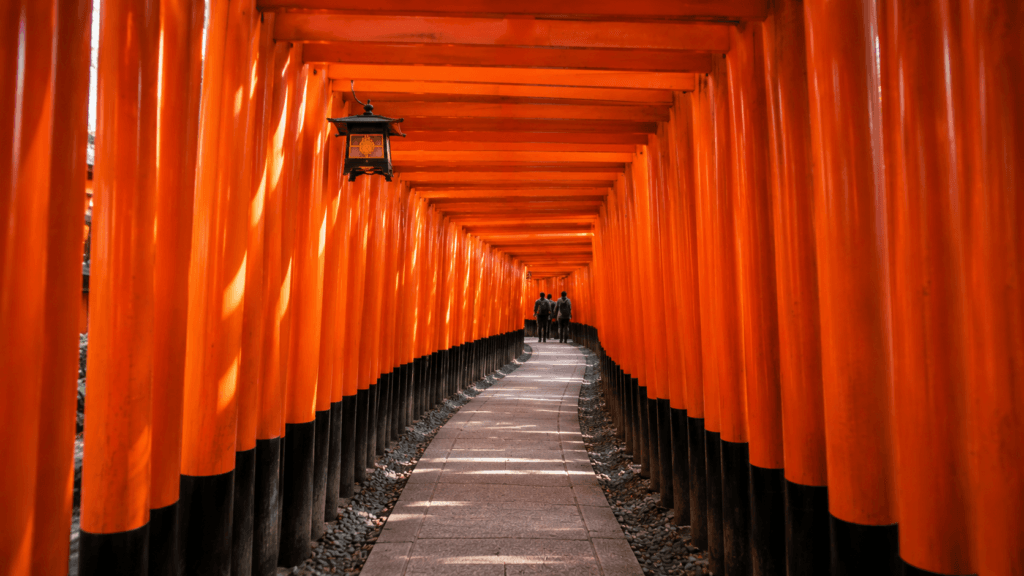
Senbon Torii is the most famous section of Fushimi Inari.
This is where the red torii gates stand close together, forming the tunnel-like path you have probably seen in photos. It is beautiful, but it is also narrow and very popular.
If you want better photos, go early and move beyond the first crowded section. Many visitors stop near the beginning, so walking a little farther can make a big difference. You may not get a completely empty shot, but you will get a calmer one.
The best photo tip is also the simplest etiquette tip: take the photo, then keep moving. Do not block the path for long shoots, outfit changes, tripod experiments or dramatic staring into the distance while twenty people wait behind you.
The torii gates are not a studio set. Take the photo, keep moving and let other people have their small Kyoto moment too.
Shrine Manners and Rules
Fushimi Inari is a sacred site, not just a tourist attraction.
Do not smoke, make fires, enter restricted areas, fly drones, damage buildings, torii gates or trees, litter, feed wild animals, bring pets except necessary assistance animals, take commercial photos without permission, or block narrow paths while taking photos or videos.
Most of this is simple common sense, but crowded photo spots have a strange way of making people forget it.
Be respectful. Do not carve or mark anything. Do not climb on structures. Do not touch fox statues or shrine objects unnecessarily. Do not stop in narrow paths for too long. If someone is trying to pass, move.
A little patience on the path makes the whole shrine feel calmer, including your own visit.
Fox Statues and Inari Meaning
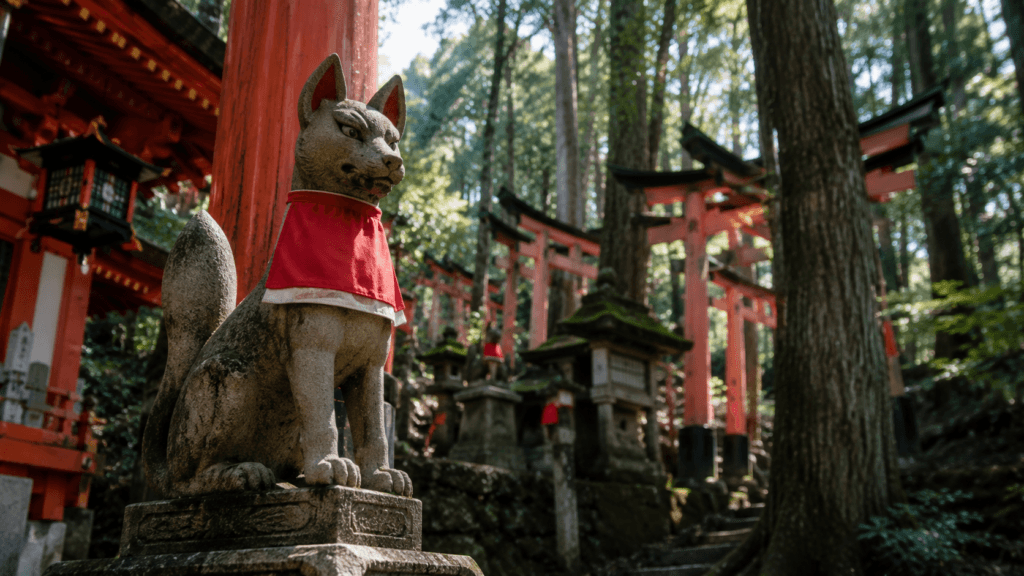
You will notice many fox statues around Fushimi Inari.
Foxes are considered messengers of Inari, which is why they appear throughout the shrine. Some hold symbolic objects in their mouths, such as keys or scrolls. They are not random decoration. They are part of the shrine’s identity.
This fox connection also appears in food around the approach streets. Inari sushi, made with rice inside sweet fried tofu pockets, and kitsune udon, topped with fried tofu, are both easy food options to look for after your walk.
The fox theme is not a cute marketing accident. It belongs here.
What to Eat Near Fushimi Inari
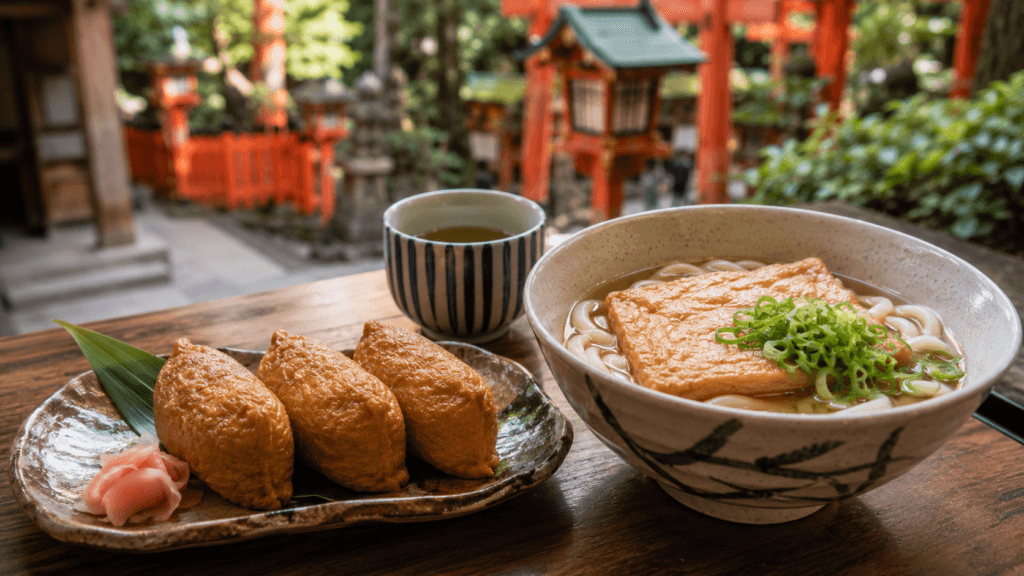
After visiting the shrine, look for snacks and light meals around the approach streets.
Good options include inari sushi, kitsune udon, rice crackers, grilled snacks, sweets, tea drinks and casual Kyoto-style bites. The area near the shrine is used to visitors, so it is easy to find simple food before returning toward central Kyoto.
If you visit very early, many shops may not be open yet. In that case, enjoy the quieter shrine first and eat later near Kyoto Station, Nishiki Market or downtown Kyoto.
For a full Kyoto food-and-sightseeing day, Fushimi Inari works well before lunch in central Kyoto.
What to Combine With Fushimi Inari
Fushimi Inari works best as a morning stop.
After visiting, you can return toward central Kyoto and continue with Nishiki Market, Gion, Nijo Castle or the Kamo River area. If you are following Kyoto Itinerary 2026, this shrine fits naturally into a Day 3 route before food and downtown sightseeing.
You can also combine Fushimi Inari with Nara if you are using the JR Nara Line, but that makes for a fuller day. For a more relaxed Kansai side trip, compare this with Nara Day Trip 2026 before deciding how much to pack into one day.
If you are building a longer Japan trip, place Fushimi Inari inside Japan Itinerary 2026 so Kyoto, Osaka and Tokyo do not compete for the same tired afternoon.
Fushimi Inari or Arashiyama: Which Is Better?
Both are worth visiting, but they offer very different experiences.
Fushimi Inari is better for red torii gates, shrine atmosphere, early morning walks and a more active uphill route.
Arashiyama is better for bamboo, river scenery, gardens, mountain views and a slower half-day route.
If you have 3 days in Kyoto, visit both. They show different sides of the city, and they pair well in a balanced itinerary. If you only have time for one, choose Fushimi Inari if you want Kyoto’s most iconic shrine walk. Choose Arashiyama if you want scenery, bamboo and riverside wandering.
For route-level detail, use Kyoto Itinerary 2026 to place Arashiyama and Fushimi Inari on separate days.
Should You Visit Fushimi Inari at Night?
You can visit Fushimi Inari later in the day or evening, and it can feel atmospheric.
However, night visits are better for confident travelers who are comfortable walking in a quieter shrine and forest setting. The lower shrine area is easier, but the mountain paths become darker and less active.
If it is your first visit, early morning is the better choice. It gives you quiet atmosphere, daylight and easier navigation. Evening can be interesting, but do not treat the full mountain hike at night casually.
Kyoto is not the place to discover that your phone battery and your courage both prefer daylight.
Common Mistakes to Avoid at Fushimi Inari
The first mistake is arriving too late and expecting empty photos. Fushimi Inari is famous. The lower torii gates will not stay quiet just because you brought hope.
The second mistake is thinking you must hike the whole mountain. You do not. A partial walk can be excellent.
The third mistake is wearing uncomfortable shoes. The route involves stairs and slopes, especially if you continue higher.
The fourth mistake is blocking narrow paths for photos. Take your picture and move on so others can pass.
The fifth mistake is forgetting that this is a sacred place. Do not damage gates, trees or shrine property. Do not fly drones. Do not feed animals. Do not treat the shrine like a themed photo studio.
The sixth mistake is trying to combine too much afterward. Fushimi Inari can be short or long depending on your route, so do not schedule an aggressive afternoon unless you know how much walking you want.
Best Place to Stay for Visiting Fushimi Inari
If Fushimi Inari is high on your Kyoto list, Kyoto Station is the most practical base. The JR Nara Line makes the trip easy, especially for an early morning visit.
Shijo-Kawaramachi and Gion can also work well if you use the Keihan Line. These areas are better if you want evening atmosphere, restaurants and old streets near your hotel.
For most first-time visitors, Kyoto Station, Shijo-Kawaramachi or Gion are better bases than staying near Fushimi Inari itself. The shrine is easy to reach, but the surrounding area is not the most convenient base for your entire Kyoto trip.
Before booking, read Where to Stay in Kyoto 2026 and compare your hotel area with your planned route.
FAQ About Fushimi Inari
Is Fushimi Inari worth visiting in 2026?
Yes, Fushimi Inari is worth visiting in 2026, especially for first-time Kyoto travelers. The red torii gates, shrine atmosphere and mountain route make it one of Kyoto’s most memorable places.
What is the best time to visit Fushimi Inari?
Early morning is the best time to visit Fushimi Inari. The lower torii gates become crowded later in the day, especially during weekends, holidays, cherry blossom season and autumn foliage.
Is Fushimi Inari free?
Yes, there is no admission fee to walk through the main shrine grounds and torii gate paths. Shops, food stalls and shrine services may have separate opening hours.
How long does Fushimi Inari take?
A short visit takes around 45 to 60 minutes. A medium visit takes around 1.5 to 2 hours. The full Mt. Inari loop can take about 2.5 to 3 hours depending on your pace.
Do you need to hike to the top of Fushimi Inari?
No, you do not need to hike to the top. Many visitors enjoy the lower torii gates and a partial walk. Continue higher only if you have time, energy and comfortable shoes.
How do I get to Fushimi Inari from Kyoto Station?
Take the JR Nara Line from Kyoto Station to JR Inari Station. The shrine entrance is right outside the station, making it one of the easiest major Kyoto attractions to access by train.
Can I visit Fushimi Inari and Nara on the same day?
Yes, it is possible because both are connected by the JR Nara Line, but it can become a full day. Start early if you want to combine them, and avoid overloading the schedule.
Is Fushimi Inari better than Arashiyama?
Neither is simply better. Fushimi Inari is better for shrine atmosphere and torii gates, while Arashiyama is better for bamboo, river views and a slower scenic route. If you have enough time in Kyoto, visit both.
Can I visit Fushimi Inari at night?
You can visit later in the day or evening, but first-time visitors are usually better off going early in the morning. Night visits can feel atmospheric, but mountain paths are darker and quieter.
Final Thoughts: How to Enjoy Fushimi Inari
Fushimi Inari is one of Kyoto’s most unforgettable places, but the best visit depends on how you approach it.
Go early if you want calmer torii gates. Walk higher if the lower paths feel crowded. Choose a route that matches your energy. Respect the shrine rules. And remember that you do not need to complete the whole mountain for the visit to matter.
The red gates are famous for a reason, but Fushimi Inari is more than one photo. It is a working shrine, a mountain walk, a cultural landmark and a place where Kyoto feels both iconic and strangely quiet once you move beyond the busiest path.
Let the shrine breathe, and it will give you a much better memory than a rushed photo ever could.