The Osaka Amazing Pass sounds like one of those travel products that should make life easier.
One pass. Many attractions. Trains and buses included. A city full of places to visit.
Very tempting.
But here is the important part: the Osaka Amazing Pass is not automatically worth it for every traveler.
It can save you money if you use it actively. It can also become an expensive QR code if your Osaka plan is mostly Dotonbori, street food, shopping and relaxed wandering.
The pass is best for travelers who plan to visit multiple paid attractions in one day and move around Osaka using eligible trains and buses. It is usually not the best choice if you only want to eat, shop, take photos and enjoy free neighborhoods.
This guide explains the Osaka Amazing Pass 2026, including prices, validity, transport rules, covered attractions, 1-day vs 2-day tips, Osaka e-Pass differences, sample routes and who should skip it.
If you are still building your Osaka route, start with our Osaka itinerary 2026 guide before deciding whether the pass fits your sightseeing day. If you are choosing a hotel base first, our Where to Stay in Osaka 2026 guide can help you decide whether Namba, Umeda or another area makes the pass easier to use.
Quick Answer: Is the Osaka Amazing Pass Worth It?
The Osaka Amazing Pass is worth it if you plan to visit at least two or three paid attractions in one day and use eligible trains or buses several times.
It is usually worth considering if your day includes places like Osaka Castle, Umeda Sky Building, Tsutenkaku, Tempozan Ferris Wheel, river cruises or other participating attractions.
It is usually not worth it if your Osaka day looks like this:
- Walk around Dotonbori
- Eat takoyaki
- Shop in Shinsaibashi
- Visit free streets
- Take photos
- Eat again
- End the night with convenience store dessert
That is a wonderful Osaka day.
It is not necessarily a pass day.
The simple rule:
| Your Osaka Plan | Should You Buy the Pass? |
|---|---|
| 2 to 3 paid attractions plus transport | Usually yes |
| 1 paid attraction plus casual wandering | Usually no |
| Mostly food, shopping and free neighborhoods | Usually no |
| Full sightseeing day with attractions across Osaka | Often yes |
| USJ-focused trip | Usually no, focus on USJ planning |
| Nara or Kyoto day trip | No, this is an Osaka city sightseeing pass |
The pass is a sightseeing tool, not a tiny financial wizard.
Use it hard, and it can shine. Use it softly, and it may sit in your phone wondering why it was invited.
What Is the Osaka Amazing Pass?
The Osaka Amazing Pass is a digital sightseeing pass for Osaka.
It combines two main benefits:
- Entry to around 40 participating attractions
- Unlimited rides on eligible trains and buses within the covered area
This makes it different from a simple subway pass.
It is designed for travelers who want to pack several Osaka attractions into one or two days.
Popular examples of included attractions may include places such as Osaka Castle, Umeda Sky Building Kuchu Teien Observatory, Tsutenkaku, Tempozan Ferris Wheel and Tombori River Cruise, depending on each facility’s participation rules, opening days and conditions.
The exact list of participating attractions, operating hours and limitations can change, so always check the official list before buying.
This is important because a pass is only valuable if the attractions you actually want are available on the day you plan to use it.
A pass does not save money on a closed attraction.
It simply becomes a very organized disappointment.
Osaka Amazing Pass 2026 Price and Validity
For 2026, the regular Osaka Amazing Pass prices are:
| Pass Type | Price |
|---|---|
| 1-Day Osaka Amazing Pass | ¥3,500 |
| 2-Day Osaka Amazing Pass | ¥5,000 |
The sales period is from March 25, 2026 to March 31, 2027.
The 1-day pass is valid for one day until March 31, 2027.
The 2-day pass is valid for two consecutive days until April 1, 2027.
However, the ticket is valid for three months from the date of purchase and must be activated by March 31, 2027.
That means you should not buy it too early unless your travel date is clear.
A pass purchased far in advance can quietly become a calendar trap.
What About the Itami Airport Version?
There is also an Osaka Amazing Pass Osaka Itami Airport version.
For 2026, it costs:
| Pass Type | Price |
|---|---|
| 1-Day Osaka Amazing Pass Osaka Itami Airport version | ¥3,800 |
| 2-Day Osaka Amazing Pass Osaka Itami Airport version | ¥5,400 |
This version has a wider coverage area around Itami Airport, including some additional railway sections.
But do not confuse Itami Airport with Kansai Airport.
The Itami Airport version does not mean you can use the pass from Kansai Airport.
If you arrive at Kansai Airport, plan your KIX transfer separately.
The airport names are not interchangeable. Osaka’s transport system is polite, but it will not rescue a mistaken airport assumption with a tiny apology bow.
Adult and Child Prices
The Osaka Amazing Pass has the same price for adults and children.
This matters for families.
Some attractions may already have cheaper child tickets or free entry for young children, so families should calculate carefully before buying passes for everyone.
For adults doing a busy attraction day, the math can work well.
For young children who may not use enough attractions, it may not.
The pass does not become cheaper just because someone is small and holding a snack.
1-Day vs 2-Day Pass: Which Should You Choose?
The 1-day pass costs ¥3,500.
The 2-day pass costs ¥5,000.
At first glance, the 2-day pass looks like a better deal because the second day costs much less than buying another 1-day pass.
But you should only choose the 2-day pass if you can use it well on two consecutive days.
The 2-day pass is not for two random days during your trip. It is for two consecutive days.
Choose the 1-Day Pass If:
- You have one busy Osaka sightseeing day
- You want to visit several paid attractions in one route
- You are not sure you want two packed days
- You are also visiting Kyoto, Nara or USJ on other days
- You prefer flexibility
For most first-time visitors, the 1-day pass is easier to use well.
You can choose one strong sightseeing day and build the route around the pass.
Choose the 2-Day Pass If:
- You have two consecutive Osaka sightseeing days
- You want to visit many participating attractions
- You are staying in Osaka city
- You enjoy structured sightseeing
- You are comfortable moving around by metro and train
- You do not mind planning your route carefully
The 2-day pass can be good value if your itinerary is attraction-heavy.
But if one of those days becomes a lazy food-and-shopping day, the pass starts losing power.
The 2-day pass is not a pillow. Do not buy it if you plan to nap on one of its days.
Important Timing Rule: It Is Not a 24-Hour Pass
This is one of the biggest mistakes travelers make.
The Osaka Amazing Pass is not a rolling 24-hour or 48-hour pass.
For the digital ticket, one day is counted from 3:00 a.m. to 2:59 a.m. the following day.
For transport, the pass is valid from the first train to the last train of the day. It is not valid for 24 or 48 consecutive hours after you start using it.
This means starting the pass late at night is usually a bad idea.
If you activate a 1-day pass at 8:00 p.m., you do not get a full new day tomorrow. You have simply given your pass a very short career.
Think of it as a calendar-day sightseeing pass.
Best use:
- Start in the morning
- Visit attractions during opening hours
- Use transport between places
- Finish with an evening attraction or city view
Bad use:
- Start after dinner
- Visit one attraction
- Ride the subway twice
- Wonder why the numbers are grumpy
Starting it late at night is a small financial tragedy wearing a QR code.
What Is Included?
The Osaka Amazing Pass includes two main things.
1. Participating Attractions
The pass gives access to around 40 participating sightseeing spots.
Each attraction has its own rules, opening hours, closure days, admission conditions and possible restrictions.
Some attractions may require checking the facility website or current operating status before visiting.
Some special exhibitions or limited events may require extra charges.
Each participating attraction can generally be used once during the valid period.
This is enough for most travelers.
Unless you were planning to become emotionally attached to the same Ferris wheel twice, one visit per attraction should be fine.
2. Eligible Trains and Buses
The regular Osaka Amazing Pass includes unlimited rides on eligible transport within the covered area.
This includes Osaka Metro, Osaka City Bus on most routes, New Tram and certain sections of private railway lines mainly within Osaka City.
Covered private railways can include parts of Hankyu, Hanshin, Keihan, Kintetsu and Nankai.
But the key phrase is: within the eligible coverage area.
This is not an all-Japan train pass.
It is not a Kansai-wide pass.
It is not a Shinkansen pass.
It is not a Kansai Airport transfer pass.
It is an Osaka city sightseeing pass with transport coverage.
That difference matters.
What Is Not Included?
The Osaka Amazing Pass is useful, but it has limits.
Kansai Airport Is Not Included
The regular Osaka Amazing Pass cannot be used at Kansai Airport.
If you are arriving at KIX, you need to plan and pay for your airport transfer separately.
This is a very important point.
Do not land at Kansai Airport expecting the Osaka Amazing Pass to carry you gracefully to Namba like a magical airport carpet.
It will not.
If KIX is your arrival airport, read our Kansai Airport to Osaka 2026 guide before planning your first day.
JR Lines Are Not the Main Benefit
The pass is mainly useful for Osaka Metro and eligible private railway/bus coverage.
Do not assume it covers every train in Osaka.
If your route depends heavily on JR lines, check carefully before relying on the pass.
Reserved Seats and Limited Express Trains May Cost Extra
Even when a railway line is covered, some express reserved-seat trains may require extra fees.
This can apply to certain services on Kintetsu, Nankai, Keihan and Hankyu.
Do not assume every comfortable seat has surrendered to the pass.
When in doubt, check before boarding or ask station staff.
Special Exhibitions May Cost Extra
Some facilities may include regular admission but not special exhibitions.
If a museum, observatory or event has a special exhibit, extra charges may apply.
Always check the attraction’s current rules before going.
Screenshots Are Not Accepted
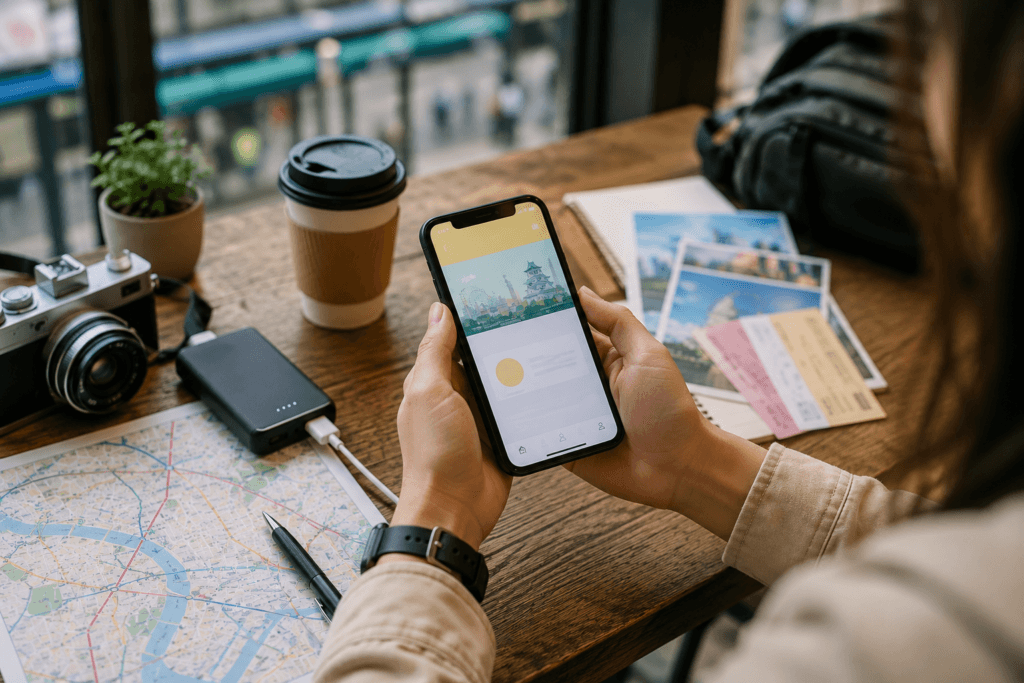
The Osaka Amazing Pass is a digital ticket, and screenshots or printed copies are not accepted.
You need to use it properly on your smartphone.
That means your phone must be charged, your network should work and your browser or camera settings may matter for certain use cases.
This is not the day for your battery to begin its silent retirement.
Bring a power bank if you are doing a long sightseeing day.
Osaka Amazing Pass vs Osaka e-Pass
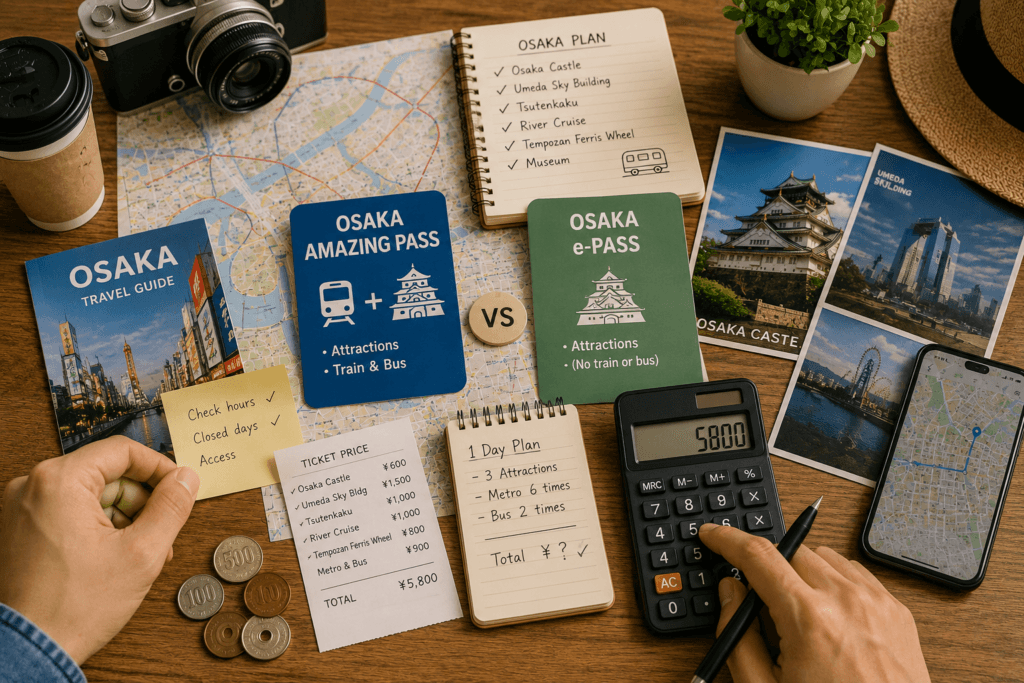
The Osaka Amazing Pass and Osaka e-Pass are not the same thing.
This is where many travelers get confused.
Osaka Amazing Pass
The Osaka Amazing Pass includes:
- Participating attraction entry
- Eligible train and bus transport
- Around 40 participating sightseeing spots
- 1-day and 2-day options
- Stronger value for travelers moving around Osaka by transport
This is better if you want both attractions and transport included.
Osaka e-Pass
The Osaka e-Pass focuses on attractions.
It gives access to more than 25 participating facilities, but public transport fees such as trains and buses are not included.
The Osaka e-Pass can be cheaper and more flexible for travelers who want attraction access but do not need transport included.
At the time of writing, commonly listed Osaka e-Pass prices are:
| Osaka e-Pass Type | Commonly Listed Price |
|---|---|
| 1-Day Osaka e-Pass | ¥2,400 |
| 2-Day Osaka e-Pass | ¥3,000 |
Check the current official purchase page before buying, because ticket products, prices and sales conditions can change.
The simple difference:
| Pass | Includes Attractions? | Includes Transport? |
|---|---|---|
| Osaka Amazing Pass | Yes | Yes, within eligible coverage |
| Osaka e-Pass | Yes | No |
Choose Osaka Amazing Pass if you want transport plus attractions.
Choose Osaka e-Pass if you only want attraction entry and prefer to pay transport separately.
The e-Pass is like ordering just the meal.
The Amazing Pass is the meal plus the train ride to go eat it.
Best Attractions Covered by the Osaka Amazing Pass
The best attractions for pass value are usually paid places that would cost meaningful money if purchased separately.
Commonly important attractions to check may include the following, but the exact participating list, operating hours and conditions can change.
Always check the official participating attractions page before your trip.
Common attractions travelers often check include:
- Osaka Castle Museum
- Umeda Sky Building Kuchu Teien Observatory
- Tsutenkaku
- Tempozan Ferris Wheel
- Tombori River Cruise
- Osaka water bus or cruise options
- Museums and observation decks
- Other participating cultural or city attractions
The pass becomes stronger when you combine several paid attractions in one logical route.
For example:
- Osaka Castle area in the morning
- River cruise or museum in the afternoon
- Umeda or Tsutenkaku view in the evening
The pass becomes weaker when you try to use it for places that are already free or not included.
Dotonbori is fun, but walking through Dotonbori is free.
Shopping is fun, but the pass does not pay for your shopping bag. Rude, perhaps, but financially understandable.
Sample 1-Day Osaka Amazing Pass Route
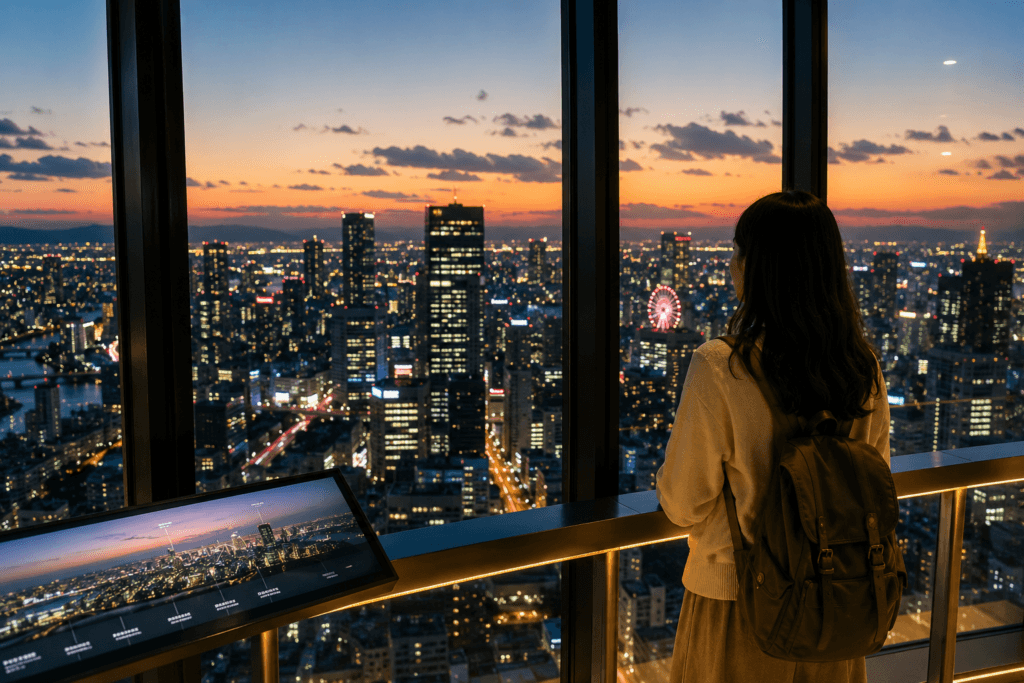
Here is a sample 1-day route for travelers who want to make the pass work.
This is not the only possible route, but it shows the kind of day where the pass can make sense.
Morning: Osaka Castle Area
Start with Osaka Castle.
Visit Osaka Castle Museum if it is included and open on your travel day. You can also walk around the park and nearby areas.
This is a good first stop because it gives you history, views and a strong Osaka landmark.
Late Morning or Lunch: Move Toward Central Osaka
Use eligible transport to move toward your next area.
Depending on your route, you can head toward Namba, Tennoji, Umeda or another participating attraction.
Do not forget to eat.
A pass day without food is not efficient. It is just hunger wearing comfortable shoes.
Afternoon: Cruise, Museum or Tsutenkaku Area
Choose one or two participating attractions that fit your route.
Possible options may include a river cruise, museum, Tsutenkaku-area attraction or another participating facility.
This is where the pass starts becoming useful.
One attraction alone is usually not enough.
Two attractions plus transport starts making sense.
Three attractions plus transport is where the pass begins to stretch its legs.
Evening: Umeda or Night View
End with a city view if the attraction is available and operating during your visit.
Umeda Sky Building or another participating evening attraction can be a good finale, depending on current rules and opening hours.
Then return to your hotel using eligible transport.
This kind of day can make the 1-day pass worthwhile.
But only if you actually want this much sightseeing in one day.
If your ideal Osaka day is slow food wandering, do not force the pass into your pocket like a tiny itinerary drill sergeant.
Sample 2-Day Osaka Amazing Pass Route
The 2-day pass is best if you want two consecutive sightseeing days in Osaka.
Here is a sample structure.
Day 1: Classic Osaka Sightseeing
Use Day 1 for central and historic attractions.
Possible focus:
- Osaka Castle area
- Museum or garden
- River cruise
- Dotonbori evening walk
This gives you a balanced first day with both paid attractions and free city wandering.
Day 2: Views, Retro Osaka and Bay Area
Use Day 2 for attractions farther apart.
Possible focus:
- Umeda or city view
- Tsutenkaku / Shinsekai area
- Tempozan Ferris Wheel or bay area attraction
- Additional participating facility if timing works
This second day can make the 2-day pass stronger because you continue using both transport and attraction benefits.
But be realistic.
Two consecutive packed sightseeing days can be tiring.
If you are also planning Universal Studios Japan, Kyoto or Nara around those days, do not build an itinerary that looks like a travel spreadsheet had too much coffee.
Who Should Buy the Osaka Amazing Pass?
The Osaka Amazing Pass is best for travelers who want a full Osaka sightseeing day.
You should consider buying it if:
- You plan to visit two or three paid attractions in one day
- You will use Osaka Metro or eligible trains several times
- You enjoy structured sightseeing
- You want to see classic Osaka attractions
- You are staying in Osaka city
- You are comfortable checking attraction hours and routes
- You want transport and admission combined
It is especially useful for first-time visitors who want an efficient sightseeing day.
For example, if you want Osaka Castle, a cruise, an observation deck and several train rides, the pass may make sense.
This is where the pass is strong.
It rewards movement.
It rewards planning.
It rewards the traveler who wakes up and says, “Today we are doing Osaka properly,” then actually leaves the hotel before lunch.
For booking, compare Osaka Amazing Pass tickets before your trip if your itinerary clearly matches the pass.
Who Should Skip the Osaka Amazing Pass?
You should probably skip the pass if:
- You mainly want Dotonbori and food
- You plan to shop more than sightsee
- You only want one paid attraction
- You dislike packed sightseeing days
- You are going to USJ
- You are taking a day trip to Kyoto or Nara
- You arrive late and only have half a day
- You prefer slow travel
- Your hotel is close to most things you want
- You do not want to check attraction rules
Food-focused travelers often do not need the pass.
Osaka is famous for food, and many food experiences do not require attraction tickets.
Namba, Dotonbori, Shinsaibashi, Kuromon Market and Shinsekai can fill a day without needing many paid entries.
That may be a better Osaka day for you.
Not every city needs to be optimized.
Sometimes the best Osaka plan is eating something hot from a tiny counter and calling it research.
Osaka Amazing Pass vs Regular Tickets
The best way to decide is simple.
List the attractions you actually want.
Then check:
- Normal admission prices
- Transport cost between places
- Whether the attractions are included
- Whether they are open on your pass day
- Whether special rules apply
- Whether your route is realistic
If the pass total is cheaper and the route feels natural, buy it.
If the savings only work after adding attractions you do not really care about, skip it.
That is the classic pass trap.
You start with “I want to save money.”
Then suddenly you are crossing the city to visit a place you did not know existed ten minutes ago, purely because it is included.
That is not saving money.
That is letting a QR code choose your personality.
Common Mistakes
Mistake 1: Thinking It Works Like a 24-Hour Pass
It does not work as a rolling 24-hour or 48-hour pass.
Use it from the morning if you want value.
Mistake 2: Buying It for a Food and Shopping Day
Dotonbori, Shinsaibashi and many street areas are free to walk around.
The pass is strongest for paid attractions, not casual wandering.
Mistake 3: Assuming Kansai Airport Is Included
The regular Osaka Amazing Pass cannot be used at Kansai Airport.
Plan your airport transfer separately.
Mistake 4: Ignoring Attraction Hours
Some attractions close earlier than expected or have irregular closures.
Check before you go.
A closed attraction is not a surprise bonus.
It is a locked door with excellent timing.
Mistake 5: Starting Too Late
If you activate the pass late in the day, you may not have enough time to use it well.
Start early.
Mistake 6: Confusing Osaka Amazing Pass with Osaka e-Pass
The Amazing Pass includes eligible transport.
The e-Pass does not include train and bus fares.
Choose based on your route.
Compare Osaka e-Pass tickets only if you want attraction access without included transport.
Mistake 7: Forgetting Phone Battery
Screenshots and printed copies are not accepted.
Keep your phone charged.
Bring a power bank.
Your pass lives in your phone, which means your phone has joined the itinerary.
You may also want to set up Japan eSIM options before arrival if you rely on mobile tickets, maps and attraction pages during the day.
Mistake 8: Overplanning
Do not schedule too many attractions just because they are included.
A pass should improve your day, not turn Osaka into a checklist with legs.
Best Area to Stay for Using the Osaka Amazing Pass
The best hotel area for using the Osaka Amazing Pass depends on your route.
In general, Namba and Umeda are both good bases.
Namba
Namba is good if you want food, nightlife and easy access to Dotonbori, Shinsaibashi and central Osaka.
It can work well for a pass day that includes southern or central attractions.
Umeda
Umeda is good if you want transport convenience, shopping and access to northern Osaka routes.
It can work well for a pass day that includes Umeda, Osaka Castle or wider movement around the city.
Tennoji or Shinsekai
Tennoji and Shinsekai can work if your route includes Tsutenkaku, Tennoji-area attractions or southern Osaka.
For more help choosing a base, read our Where to Stay in Osaka 2026 guide.
A good pass day starts before the first attraction.
It starts with not choosing a hotel that makes every transfer feel like a small negotiation.
Osaka Amazing Pass and USJ
The Osaka Amazing Pass is usually not the main pass you need if Universal Studios Japan is the focus of your Osaka trip.
USJ is a full-day experience, and it has its own ticket strategy.
If you are going to USJ, focus on:
- Studio Pass
- Express Pass options
- Super Nintendo World entry rules
- Official app
- Park arrival time
- Hotel location near Universal City
The Osaka Amazing Pass is better for Osaka city sightseeing.
USJ is a different beast with popcorn buckets.
If USJ is the main reason for your Osaka trip, our Universal Studios Japan Guide 2026 may be more important than this pass.
Osaka Amazing Pass and Day Trips
The Osaka Amazing Pass is not a Kyoto pass.
It is not a Nara pass.
It is not a Kobe pass.
It is not a general Kansai pass.
Use it for Osaka city sightseeing.
If you are planning a Nara day trip, read our Nara day trip 2026 guide instead.
If your wider route includes Tokyo, Kyoto, Osaka and other cities, our Japan itinerary 2026 guide can help you decide where the Osaka Amazing Pass actually fits.
A pass should match the city you are exploring that day.
Do not ask an Osaka sightseeing pass to become a regional dragon. It has a smaller job.
FAQ: Osaka Amazing Pass 2026
How much is the Osaka Amazing Pass in 2026?
The regular Osaka Amazing Pass costs ¥3,500 for the 1-day pass and ¥5,000 for the 2-day pass.
Is the Osaka Amazing Pass worth it?
It is worth it if you visit multiple paid attractions in one day and use eligible transport several times. It is usually not worth it for a relaxed food, shopping and free-walking day.
Does the Osaka Amazing Pass include Kansai Airport?
No. The regular Osaka Amazing Pass cannot be used at Kansai Airport. Plan your KIX transfer separately.
Is the Itami Airport version the same as Kansai Airport coverage?
No. The Osaka Itami Airport version is for Itami Airport-related coverage. It does not mean the pass can be used from Kansai Airport.
Does the Osaka Amazing Pass include trains and buses?
Yes, the pass includes unlimited rides on eligible trains and buses within the covered area, including Osaka Metro and certain other routes. Always check the official coverage map before travel.
Is the Osaka Amazing Pass valid for 24 hours?
No. It is not a rolling 24-hour pass. The digital ticket day runs from 3:00 a.m. to 2:59 a.m. the following day, and transport is valid from first train to last train of the day.
Is the 2-day Osaka Amazing Pass worth it?
The 2-day pass can be worth it if you have two consecutive attraction-heavy days in Osaka. If one of those days is relaxed or outside Osaka, the 1-day pass may be safer.
Are adults and children the same price?
Yes, Osaka Amazing Pass prices are the same for adults and children. Families should calculate carefully because some attractions may already have lower child prices.
Can I use screenshots of the Osaka Amazing Pass?
No. Screenshots and printed copies are not accepted. Use the digital ticket properly on your smartphone.
What is the difference between Osaka Amazing Pass and Osaka e-Pass?
The Osaka Amazing Pass includes attractions plus eligible transport. The Osaka e-Pass includes attractions but does not include train or bus fares.
Should I buy Osaka Amazing Pass for Dotonbori?
Usually no, not if you are only walking around Dotonbori, eating and shopping. Dotonbori is mostly a free area to explore. The pass is better for paid attractions.
Should I buy Osaka Amazing Pass for USJ?
Usually no. USJ requires separate planning and tickets. The Osaka Amazing Pass is for Osaka city sightseeing, not a USJ day.
What is the best way to use the Osaka Amazing Pass?
Start in the morning, visit two or three paid attractions, use eligible transport between them and check opening hours before you go.
Final Thoughts: Buy It Only If You Will Use It Well
The Osaka Amazing Pass can be a very good deal.
But only if your itinerary matches it.
Buy it if you want a busy Osaka sightseeing day with multiple paid attractions and several transport rides.
Skip it if your Osaka dream is mostly food, shopping, Dotonbori, cafes and slow wandering.
The pass is not a personality test.
It is a tool.
Use it on the right day, and it can save money.
Use it on the wrong day, and it becomes a polite little reminder that not every travel product needs to be bought.
For many visitors, the best strategy is simple:
Plan your Osaka itinerary first.
Choose your hotel area.
Decide whether you have one real pass day.
Then buy the pass only if the numbers and the route make sense.
That is how you keep the Osaka Amazing Pass amazing, instead of accidentally turning it into the Osaka Mildly Confusing Pass.