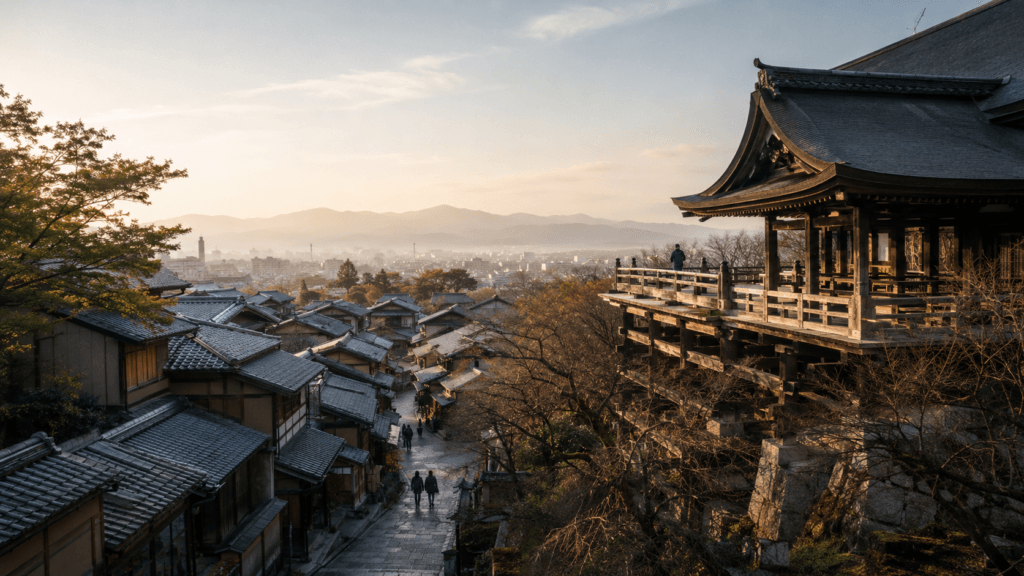
Kyoto looks peaceful in photos, but the city has a sneaky way of testing your schedule.
A temple that looks close on Google Maps may still involve a bus, a walk, a crowd, another walk, and suddenly your “quick stop” has eaten half the afternoon. That is why the best way to plan Kyoto is not by collecting every famous temple like travel stickers. It is by moving through the city area by area.
This Kyoto 3-day itinerary is designed for first-time visitors who want the classic experience without turning the whole trip into a temple marathon. You will visit Kiyomizu-dera, Higashiyama’s old streets, Gion, Arashiyama, the Bamboo Grove, Kinkaku-ji, Fushimi Inari, Nishiki Market and Nijo Castle.
If you are also planning a wider Japan trip, this route works well with Japan Travel Guide 2026, Osaka 3-Day Itinerary 2026 and Kansai Itinerary 2026. Kyoto is easy to combine with Osaka, Nara and other Kansai stops, but it deserves more than a rushed day trip if your schedule allows.
Before you arrive, it is also worth setting up Japan eSIM for Travelers and checking Kyoto hotel deals early, especially if you are visiting during cherry blossom season or autumn foliage. Kyoto is beautiful during peak seasons, but hotel prices can grow tiny horns.
Here is how to spend 3 days in Kyoto with temples, old streets, food stops and enough breathing room to actually enjoy the city.
Is 3 Days Enough for Kyoto?
Yes, 3 days in Kyoto is enough for a first visit.
You will not see every famous temple, garden and shrine in the city, but you can see the major highlights at a comfortable pace. The trick is to plan by area instead of jumping across the city all day.
Kyoto looks simple on a map, but travel time can be slower than expected. Some temples are not close to train stations. Buses can get crowded. Old streets can be slow to walk through because everyone stops for photos, snacks and the occasional “wait, this place is real?” moment.
For this itinerary, Day 1 focuses on Higashiyama, Kiyomizu-dera and Gion. Day 2 covers Arashiyama and Kinkaku-ji. Day 3 starts at Fushimi Inari, then moves back into central Kyoto for Nishiki Market, downtown Kyoto and Nijo Castle.
This route gives you Kyoto’s big names without making the whole visit feel like homework.
If you are still deciding how many days to spend in Japan, read How Many Days in Japan Is Enough? before finalizing your route.
Day 1: Kiyomizu-dera, Higashiyama Old Streets and Gion
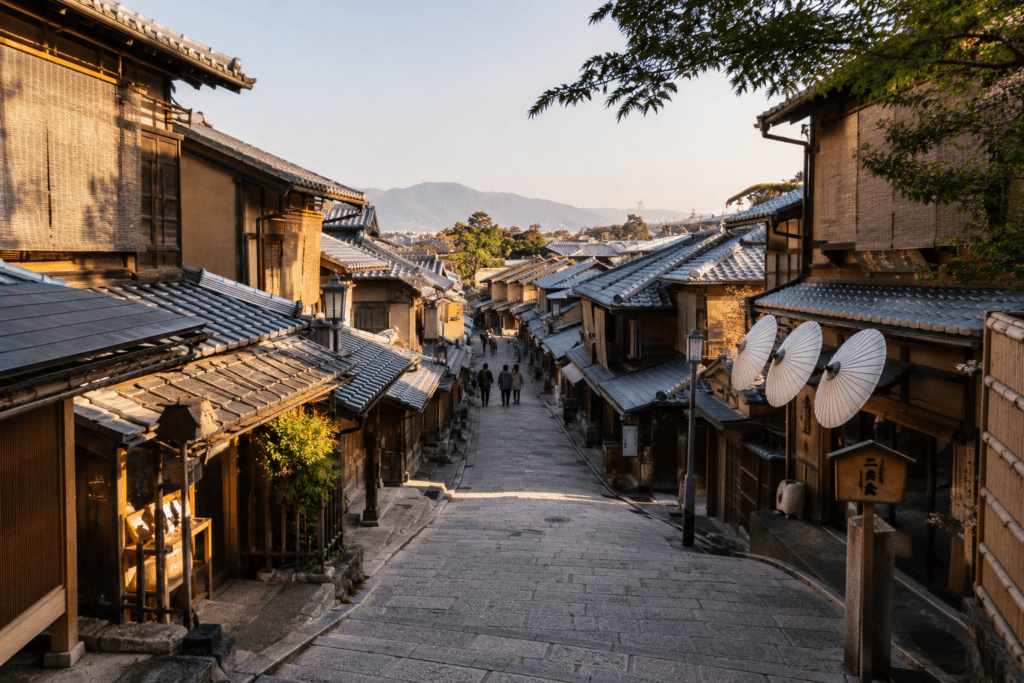
Start your first day at Kiyomizu-dera, one of Kyoto’s most famous temples.
This is one of those places where arriving early really changes the mood. In the morning, the walk up toward the temple still has some breathing space. Later in the day, the same streets can turn into a slow-moving river of visitors, kimono rentals, school groups and camera sticks floating above the crowd like tiny antennas.
Kiyomizu-dera usually opens early, so it works well as your first stop. The wooden stage, hillside views and temple buildings give you the kind of Kyoto scene many travelers imagine before they arrive. During cherry blossom season, fresh green season and autumn foliage, the view becomes even more dramatic.
For 2026, Kiyomizu-dera also has special night viewing periods during selected dates in spring, summer and autumn. These are limited seasonal openings, not an every-night schedule. If your visit matches one of those dates, you can adjust this day and visit in the evening instead.
If you want a deeper experience around this area, a Kyoto Higashiyama walking tour can be useful, especially if you like understanding the stories behind temples and old streets instead of just walking past pretty buildings.
Walk Down Through Sannenzaka and Ninenzaka
After Kiyomizu-dera, do not rush to the next attraction. The walk down through Sannenzaka and Ninenzaka is one of the best parts of Day 1.
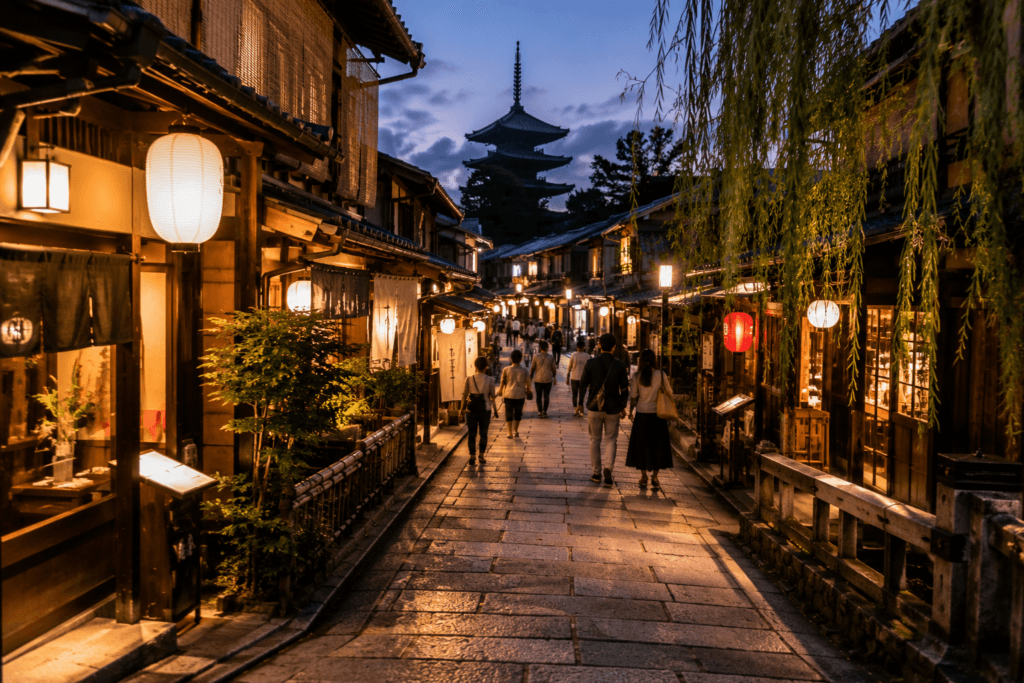
These old sloped streets are lined with traditional-style buildings, small shops, sweets stores, cafes and souvenir stops. Yes, they are touristy. No, that does not mean they are not worth visiting. Some places are popular because they still work beautifully, even with crowds.
This is where Kyoto becomes more than a list of temples. You pass matcha soft serve, roasted tea sweets, rice crackers, ceramics shops and little corners where people suddenly stop walking because the street in front of them looks too good to ignore.
A good route is to walk from Kiyomizu-dera down through Sannenzaka and Ninenzaka, then continue toward Yasaka Pagoda. The pagoda view is one of the most photographed scenes in Kyoto, so expect company. The goal is not to get a completely empty photo. Take the shot, enjoy the street and keep moving before your patience melts like matcha ice cream in July.
For more seasonal planning, connect this section naturally with Best Time to Visit Japan 2026.
Continue to Yasaka Shrine and Gion
From the Higashiyama streets, continue toward Yasaka Shrine. It is an easy and natural stop before walking into Gion.
Gion is not just one street or one photo spot. It is a neighborhood best enjoyed slowly, especially in the late afternoon and evening. You can walk through Hanamikoji, explore smaller side streets, or continue toward Pontocho Alley and the Kamo River.
Many visitors hope to see geisha or maiko in Gion, but it is important to be respectful. Do not block streets, chase people or treat local residents like part of a show. Gion is beautiful because it is still a real neighborhood, not a theme park with wooden walls.
For dinner, Gion and Pontocho have many restaurants, but prices vary a lot. Some places are elegant and expensive, while others are casual and traveler-friendly. If you are visiting during a busy season, do not wait until you are starving before choosing a restaurant. Kyoto restaurants do not always reward spontaneous hunger.
If you want a less stressful evening, consider booking a Kyoto food tour in Gion or Pontocho. It can be helpful if you are nervous about small restaurants, Japanese menus or choosing where to eat in a busy area.
Suggested Day 1 Route
Start at Kiyomizu-dera Temple.
Walk down through Sannenzaka and Ninenzaka.
Stop near Yasaka Pagoda for photos.
Continue to Yasaka Shrine.
Walk through Gion in the late afternoon.
End the evening around Pontocho Alley or the Kamo River.
This is one of Kyoto’s best walking days because the streets between the famous stops are part of the experience. The route matters as much as the attractions.
Day 1 Travel Tip
Do not bring a large suitcase into Higashiyama if you can avoid it.
The area has slopes, narrow sidewalks, stone paths and heavy foot traffic. With a small bag, it feels atmospheric. With a rolling suitcase, it becomes a personal weather disaster. Use hotel luggage storage, station lockers or luggage delivery if your schedule allows.
If you are arriving from another city, check Japan luggage delivery guide before building your Kyoto arrival day.
Day 2: Arashiyama Bamboo Grove, Togetsukyo Bridge and Kinkaku-ji
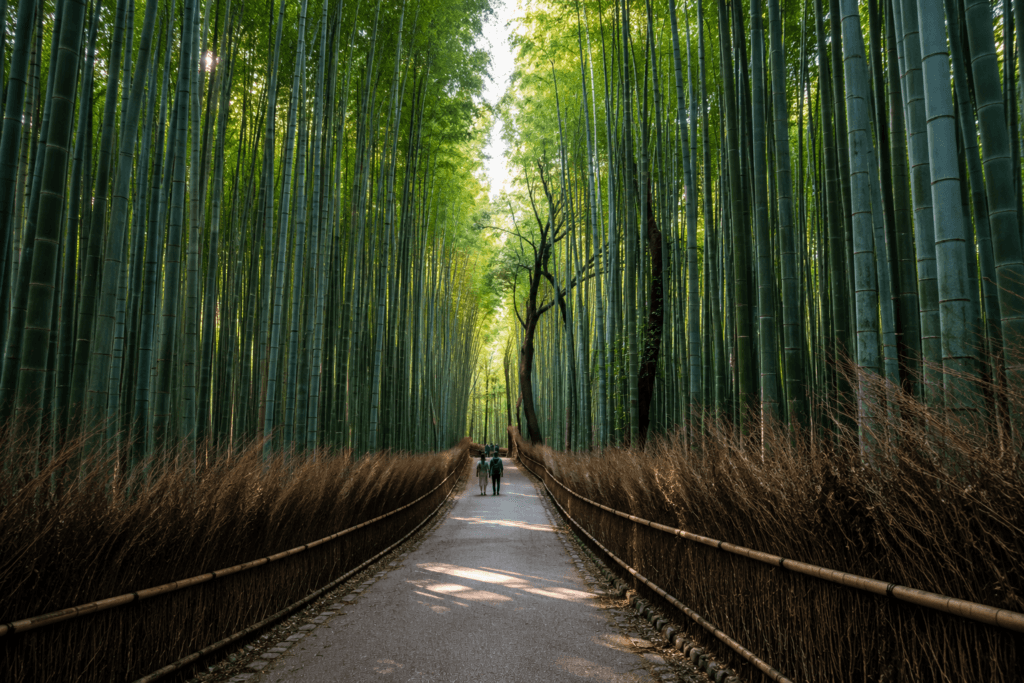
Day 2 starts in Arashiyama, one of Kyoto’s most scenic areas.
Arashiyama is famous for the Bamboo Grove, but the district is more than one photo path. There are riverside views, temple gardens, small shops, seasonal scenery and quieter corners if you move away from the busiest route.
Arrive early if you can. This is not just standard travel advice copied from every guide on the internet. In Arashiyama, early morning really does change the experience. The Bamboo Grove can feel calm and almost cinematic before the main crowds arrive. Later in the day, it becomes more of a slow photo parade. Still fun, but not exactly peaceful.
Walk through the Bamboo Grove first, then continue toward the area around Tenryu-ji. If you want to add one temple on this day, Tenryu-ji is one of the easiest choices because it fits naturally into the route.
After that, head toward Togetsukyo Bridge. The river and mountain views are especially beautiful in spring and autumn, but the area has a pleasant atmosphere in most seasons. This is a good place to slow down, grab a snack and let the morning feel like part of the trip instead of just a transit mission.
If you want a smoother day, you can book an Arashiyama and Bamboo Grove tour, especially if you prefer a guided route instead of figuring out transfers and timing by yourself.
Suggested Day 2 Morning Route
Start at Arashiyama Bamboo Grove.
Visit Tenryu-ji or the nearby garden area.
Walk toward Togetsukyo Bridge.
Have lunch or snacks around Arashiyama.
Leave enough travel time before heading to Kinkaku-ji.
The most important rule for Day 2 is simple: do not overpack it. Arashiyama looks easy on paper, but the area invites wandering. That is the point.
For travelers comparing Kyoto with other cities, this section can link naturally to Kyoto vs Osaka: Which City Should You Stay In?
Visiting Kinkaku-ji
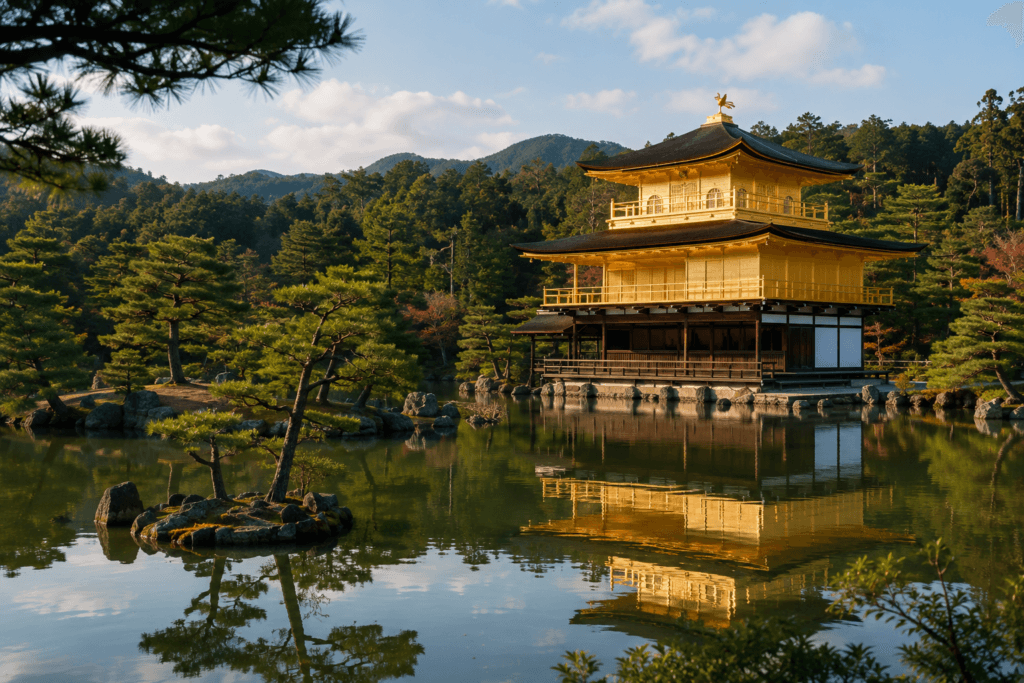
In the afternoon, head to Kinkaku-ji, also known as the Golden Pavilion.
Kinkaku-ji is one of Kyoto’s most iconic sights. The gold-covered pavilion reflected in the pond is exactly the kind of scene that makes people understand why Kyoto is famous. The visit itself is not very long, but the image stays with you.
Kinkaku-ji is generally open from 9:00 a.m. to 5:00 p.m. Try not to arrive too close to closing time because the walking route is one-way and you may feel rushed.
Kinkaku-ji is worth visiting, but it is not right next to Arashiyama. This is where the map becomes a little too optimistic. Give yourself enough travel time, especially if you are using buses. Kyoto traffic has a talent for turning “nearby” into “why are we still moving so slowly?”
If you feel tired after Arashiyama, it is okay to skip Kinkaku-ji and spend more time in western Kyoto. A good itinerary should help your trip, not bully you.
What to Eat on Day 2
Arashiyama has many traveler-friendly food stops. You can find soba, tofu dishes, matcha sweets, croquettes, soft serve, small cafes and simple snacks.
This is a good day for casual eating rather than a tight restaurant plan. Grab something around Arashiyama, then return to central Kyoto for dinner later. The areas around Kawaramachi, Shijo and Kyoto Station offer more choices in the evening.
If you like slow travel, leave time for a cafe stop. Arashiyama is one of those places where sitting for 30 minutes can feel just as useful as visiting one more attraction.
For more food ideas across Japan, add an internal link to What to Eat in Japan: First-Time Food Guide.
Day 2 Travel Tip
Use trains when possible.
Buses are useful in Kyoto, but they can be crowded around major tourist areas. For Arashiyama, rail access is often more comfortable than relying only on buses. If you include Kinkaku-ji, expect a bus or transfer at some point, but try to keep your route simple.
Kyoto’s buses are not difficult, but they can be tiring when packed. A crowded bus after a long walking day has a special way of removing the poetry from travel.
If you are planning more city-to-city travel, this is a good place to link Japan train travel guide for first-time visitors.
Day 3: Fushimi Inari, Nishiki Market and Nijo Castle
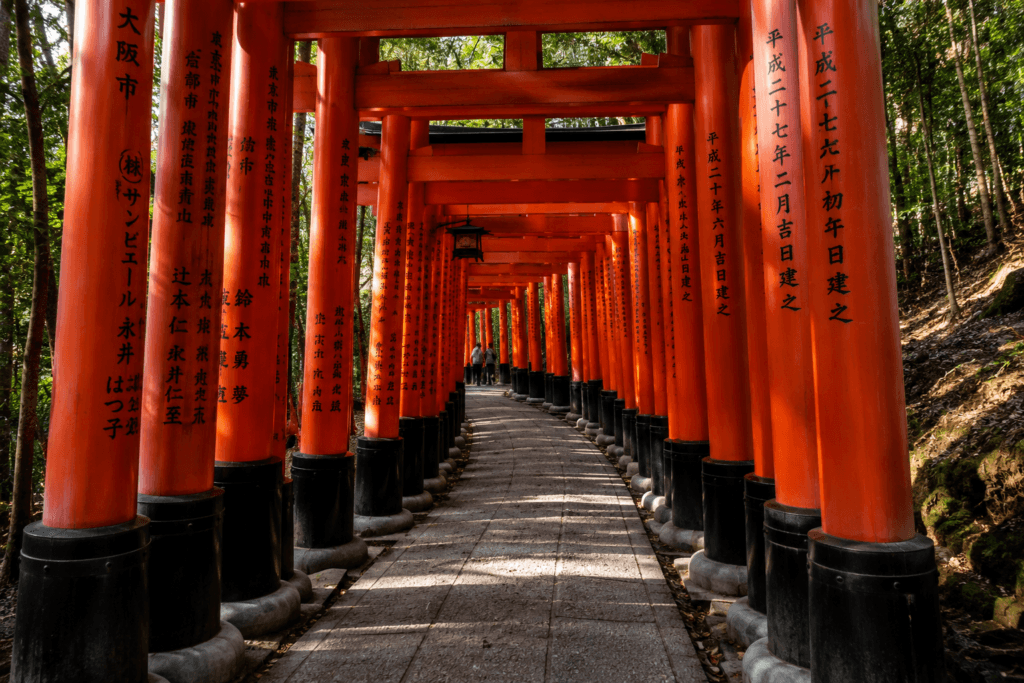
Start Day 3 at Fushimi Inari Taisha.
Fushimi Inari is one of Kyoto’s most famous shrines, known for its long tunnels of red torii gates. The shrine dates back to 711 and has more than 1,300 years of history. It is also the head shrine of Inari shrines across Japan.
This is one of the best places in Kyoto to visit early in the morning. The lower torii gates are the famous part, but they are also where almost everyone stops for the same photo. Walk a little higher and the shrine starts to breathe again.
You do not need to hike the entire mountain unless you want to. Many first-time visitors walk through the main torii gate sections, continue partway up the trail, enjoy the atmosphere, then return. That is perfectly fine. Kyoto does not hand out medals for maximum stair suffering.
If you do continue higher, you will notice the crowd thinning out. The sound changes too. The lower area is full of footsteps, voices and camera shutters. Higher up, the path becomes quieter, and the shrine begins to feel more like a mountain walk than a photo stop.
If you want transport and timing handled more easily, consider a Fushimi Inari and Kyoto highlights tour.
Suggested Day 3 Morning Route
Arrive at Fushimi Inari early.
Walk through the main torii gate tunnels.
Continue higher up the trail if you want fewer crowds.
Return to the station and head toward central Kyoto.
Have lunch around Nishiki Market or downtown Kyoto.
Fushimi Inari works well as a morning stop because it has convenient rail access. After visiting, it is easy to move back toward central Kyoto for food, shopping and afternoon sightseeing.
Nishiki Market and Downtown Kyoto
After Fushimi Inari, head to Nishiki Market.
Nishiki Market is one of Kyoto’s most popular food areas. It is not a hidden local secret, and it is not a quiet market where you will wander alone among mysterious family-run stalls. It is busy, famous and very used to visitors.
That said, it is still fun if you treat it the right way. Do not think of Nishiki Market as a full sit-down lunch plan. Think of it as a tasting walk. Try a few small bites, look at pickles, sweets, seafood snacks, skewers, tea, knives, seasonings and Kyoto-style ingredients, then continue into the nearby shopping streets.
The area around Shijo and Kawaramachi is also useful for cafes, shopping and rainy-day breaks. After temples and shrines, downtown Kyoto gives your brain a different texture. Sometimes you need history. Sometimes you need coffee and air conditioning.
If this article is part of a larger Japan food cluster, link this section to Best Japanese Street Food for Travelers.
Visit Nijo Castle
In the afternoon, visit Nijo Castle.
Nijo Castle feels different from Kyoto’s temples and shrines. Instead of quiet temple halls and sacred mountain paths, you get palace architecture, gates, gardens and a look at the power of the Tokugawa shogunate.
Ninomaru-goten Palace can generally be visited without a reservation, but Honmaru-goten Palace requires advance web tickets. If Honmaru-goten is important to you, do not leave that part to travel luck. Tickets are limited, and “we will figure it out when we arrive” is not always a winning strategy in Kyoto.
Nijo Castle fits well on Day 3 because it pairs nicely with downtown Kyoto. After visiting, you can return to your hotel, walk along the Kamo River, or have dinner around Kawaramachi.
If you prefer booking ahead, add Nijo Castle tickets or Kyoto attraction tickets here.
Day 3 Evening Option
For your final evening, keep it simple.
Walk along the Kamo River.
Return to Pontocho for dinner.
Explore Kawaramachi and Shijo.
Have a relaxed cafe stop.
Do last-minute shopping near Kyoto Station.
After three days of temples, shrines, old streets and food stops, a calm final evening feels better than forcing one more attraction into the schedule. Kyoto is often most memorable when you stop trying to complete it.
For a wider route plan, link this section to Japan 7-Day Itinerary for First-Time Visitors.
Best Area to Stay for This Kyoto 3-Day Itinerary
For a first Kyoto trip, the best areas to stay are Kyoto Station, Kawaramachi, Gion-Shijo and Karasuma/Shijo.
Kyoto Station is the practical choice. It is especially useful if you are arriving by Shinkansen, taking day trips, traveling with luggage or leaving early for another city. It may not feel as romantic as staying near Gion, but practical becomes very attractive when your train arrives late and your hotel is a short walk away.
Kawaramachi and Gion-Shijo are better for restaurants, nightlife, shopping and evening walks. These areas are more atmospheric and convenient for Day 1 and Day 3. If you like stepping out of your hotel and immediately finding food, lights and walkable streets, this is a strong choice.
Karasuma/Shijo is a balanced option. It is central, connected and usually a little calmer than the busiest parts of Gion and Kawaramachi.
For 2026, remember that Kyoto’s accommodation tax changed from March. The tax is charged per person per night and depends on the room rate. Budget travelers may only notice a small extra cost, but higher-end stays can add much more. When comparing hotels, check whether taxes are included in the price before deciding which room is actually cheaper.
This is the best place to add where to stay in Kyoto for first-time visitors as an internal link if you make a separate hotel-area article later.
For monetization, you can naturally add Kyoto hotels near Kyoto Station, Kyoto hotels near Gion or Kyoto family-friendly hotels depending on the audience you want to target.
How to Get Around Kyoto
Kyoto is best explored with a mix of trains, subway, buses and walking.
The first thing many visitors learn is that “bus everywhere” sounds easier than it feels. Buses reach many temples and traditional areas, but they can become crowded around Kyoto Station, Kiyomizu-dera, Gion, Kinkaku-ji and Arashiyama.
Use trains and subway lines for longer movement when possible, then use buses for the final connection to temples or areas that are not close to rail stations. This usually feels smoother than sitting on crowded buses all day.
The Subway & Bus 1-Day Pass costs 1,100 yen for adults and 550 yen for children. It can be useful on days when you plan to take several subway and bus rides. The Kyoto City Subway 1-Day Pass is another option if your route mainly uses the subway.
IC cards such as ICOCA and Suica are also easy for first-time visitors. They can be used on many local trains, subway lines and buses, which means you do not need to think too hard every time you move.
For this 3-day itinerary, you probably do not need a pass every day. Some days may be cheaper and easier with an IC card, especially when you are walking a lot or using rail lines outside the subway system.
This section should link naturally to Japan IC Card Guide 2026 and How to Use Trains in Japan.
If you are buying transport products before your trip, add Japan eSIM and transport pass bundle only if the offer is actually relevant.
Simple Kyoto Transport Strategy
Use trains for longer routes when possible.
Use buses for final connections to temples.
Use the subway for central Kyoto movement.
Use an IC card when you want flexibility.
Buy a day pass only when your route includes enough rides.
This is not a dramatic travel hack, but it works. Kyoto transportation is not scary. It just rewards travelers who avoid unnecessary bus rides during peak hours.
Common Mistakes to Avoid in Kyoto
The first mistake is planning too many temples in one day. Kyoto has a deep bench of beautiful places, but your attention has limits. Choose fewer stops and enjoy them properly.
The second mistake is relying only on buses. Buses are helpful, but crowds and traffic can drain your energy. Mix trains, subway and walking whenever possible.
The third mistake is visiting the most famous places at the busiest times. Kiyomizu-dera, Fushimi Inari and Arashiyama are much better early in the day.
The fourth mistake is staying too far from transport. A cheaper hotel can become less appealing if every morning starts with a long commute before the actual sightseeing even begins.
The fifth mistake is treating Kyoto like a checklist. The city is at its best when you leave time for small discoveries: a quiet lane, a small garden, a tea shop, a riverside walk or a meal you did not plan.
For a supporting article, link this section to Japan Travel Mistakes First-Time Visitors Should Avoid.
Best Time to Visit Kyoto
The best times to visit Kyoto are spring and autumn.
Spring brings cherry blossoms, soft weather and some of the city’s most famous scenery. It also brings high prices and heavy crowds, so book early if you want to visit during peak bloom.
Autumn is another excellent season, especially for temple gardens, mountain views and old streets. The fall colors give Kyoto a rich, dramatic look, but popular spots become very crowded.
Winter is colder and quieter. It can be a good time for travelers who prefer fewer people, lower hotel prices and a calmer atmosphere. Some gardens and temple areas feel especially peaceful in winter.
Summer is hot and humid, but it has festivals, evening atmosphere and lush green scenery. If you visit in summer, plan early starts, indoor breaks and plenty of water. Kyoto summer does not politely suggest hydration. It demands it.
For most first-time visitors, late March to early April and mid-November to early December are the dream seasons. May, June, September and October can also work well depending on weather, budget and your tolerance for crowds.
This section should link to Best Time to Visit Japan 2026 and, later, Japan Cherry Blossom Guide 2026 or Japan Autumn Foliage Guide 2026.
Who This Kyoto Itinerary Is Best For
This itinerary is best for first-time visitors who want Kyoto’s classic highlights without rushing too much.
It works well for couples, solo travelers, friends, families with older children and travelers visiting Kyoto as part of a larger Japan trip.
It is also useful if you are staying in Kyoto for three nights or visiting from Osaka with a focused plan. If you are doing Kyoto as repeated day trips from Osaka, start early and keep the schedule realistic. Travel time will quietly steal part of each day.
This route is not for travelers who want only hidden Kyoto. It includes famous places because famous places are often famous for a reason. The trick is visiting them in a smarter order and knowing when to step away from the biggest crowds.
If readers are still planning their base city, link this section to Should You Stay in Kyoto or Osaka?
Kyoto 3-Day Itinerary Summary
Day 1: Kiyomizu-dera, Sannenzaka, Ninenzaka, Yasaka Pagoda, Yasaka Shrine, Gion and Pontocho.
Day 2: Arashiyama Bamboo Grove, Tenryu-ji area, Togetsukyo Bridge, Kinkaku-ji and central Kyoto dinner.
Day 3: Fushimi Inari, Nishiki Market, downtown Kyoto, Nijo Castle and a relaxed Kamo River evening.
This gives you a balanced mix of temples, shrines, old streets, food, shopping and evening atmosphere.
For travelers building a longer route, add Osaka 3-Day Itinerary 2026, Nara Day Trip from Kyoto or Osaka and Kansai Itinerary 2026 near this summary.
FAQ About a Kyoto 3-Day Itinerary
Is 3 days enough for Kyoto?
Yes, 3 days is enough for a first Kyoto trip. You can see major highlights such as Kiyomizu-dera, Gion, Arashiyama, Kinkaku-ji, Fushimi Inari, Nishiki Market and Nijo Castle. You will not see everything, but you can enjoy the city without rushing too much.
Should I stay in Kyoto or Osaka?
If Kyoto is your main focus, staying in Kyoto is better. You can start earlier, enjoy quieter mornings and walk around in the evening. Osaka can work for day trips, but commuting back and forth takes time.
What is the best area to stay in Kyoto for first-time visitors?
Kyoto Station, Kawaramachi, Gion-Shijo and Karasuma/Shijo are the best areas for most first-time visitors. Kyoto Station is practical for transport, while Kawaramachi and Gion-Shijo are better for restaurants and evening atmosphere.
Do I need a Kyoto transport pass?
Not always. The Subway & Bus 1-Day Pass can be useful if you take several rides in one day. For lighter travel days, an IC card such as ICOCA or Suica may be easier and sometimes cheaper.
When should I visit Fushimi Inari?
Visit Fushimi Inari early in the morning if possible. The lower torii gate area becomes very crowded later in the day. Walking higher up the trail also helps you escape the biggest crowds.
Is Kiyomizu-dera open at night?
Kiyomizu-dera has special night viewing during limited seasonal periods in 2026, including selected dates in spring, summer and autumn. It is not open late every night, so check the official schedule before planning an evening visit.
Is Kinkaku-ji worth visiting?
Yes, Kinkaku-ji is worth visiting, especially for first-time travelers. The Golden Pavilion is one of Kyoto’s most iconic views. The visit itself does not take very long, but getting there requires some transport planning.
Can I visit Kyoto as a day trip from Osaka?
Yes, Kyoto can be visited as a day trip from Osaka, but 3 days is much better. A day trip usually limits you to one or two areas, while three days lets you experience temples, old streets, food markets, riverside walks and evening Kyoto.
Final Thoughts: How to Enjoy 3 Days in Kyoto
Kyoto is not a city you should attack with a checklist.
The temples are beautiful, the old streets are atmospheric and the food stops are fun, but the real charm often appears between the famous places. It is in the walk down a quiet lane, the tea break you did not plan, the river breeze at night or the moment you realize that one more temple today might not improve your life.
With 3 days in Kyoto, focus on areas instead of individual pins on a map. Start early when it matters, use trains and buses wisely, and leave enough space in your schedule for Kyoto to surprise you.
That is usually when the city feels less like a travel plan and more like a memory forming in real time.
Before finalizing your trip, compare Kyoto hotel deals, prepare Japan eSIM for Travelers and check whether a Kyoto guided tour or attraction ticket makes sense for your travel style.