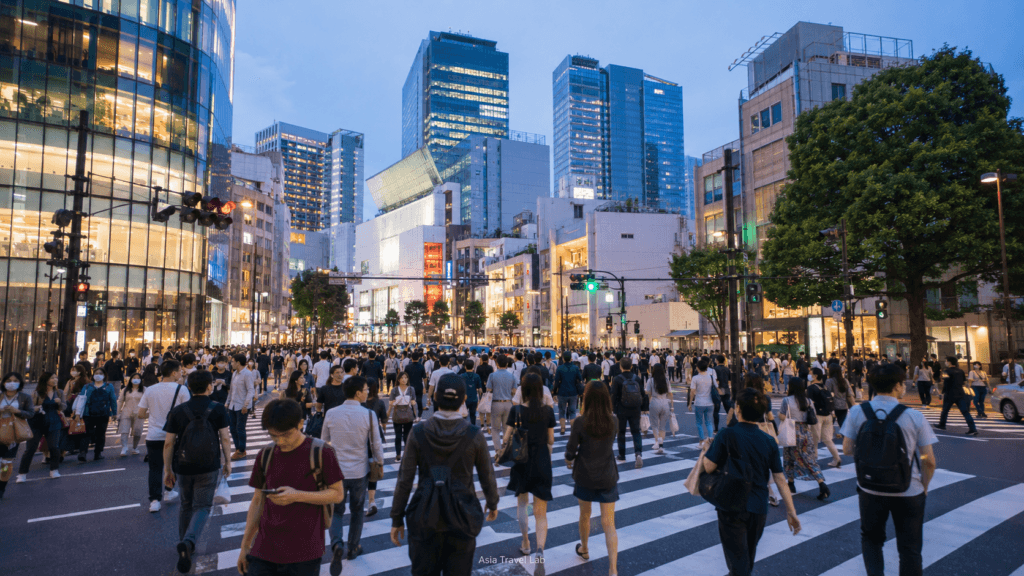
Shibuya is the part of Tokyo that looks easy on a map and then politely steals three hours from your afternoon.
Many first-time visitors come for Shibuya Scramble Crossing, take a photo, wave at Hachiko, and leave. That is not wrong, exactly. But it is a little like opening a bento box, eating one grain of rice, and saying you understand lunch.
Shibuya is more than one famous crossing. It is a full Tokyo neighborhood with rooftop views, shopping malls, fashion streets, food spots, nightlife, pop culture, new complexes, station exits that enjoy confusing people, and enough city energy to make your camera work overtime.
This Shibuya guide covers the best things to do in 2026, including Shibuya Crossing, Shibuya Sky, Hachiko, Center Gai, Shibuya 109, Shibuya Parco, Miyashita Park, Shibuya Sakura Stage, food, shopping, nightlife and a simple first-time visitor route.
Before visiting Shibuya, it helps to understand the city layout in Tokyo Travel Guide 2026. For a full day-by-day plan, pair this guide with Tokyo Itinerary 2026. If you want to stay near Shibuya, compare hotel areas in Where to Stay in Tokyo 2026.
Some links in this guide may be affiliate links, which means we may earn a small commission if you book through them, at no extra cost to you.
Why Visit Shibuya in 2026?
Shibuya is one of Tokyo’s most famous neighborhoods, and for good reason. It gives first-time visitors the Tokyo they imagined before the trip: glowing screens, crowds, fashion stores, cafes, music, shopping, rooftop views and streets that feel alive from afternoon until late evening.
But Shibuya is not only about big city chaos. The area has layers.
Around the station, everything feels fast and bright. Near Center Gai, the energy becomes younger and louder. Around Shibuya Parco and Miyashita Park, you get shopping, pop culture, food and design. Walk a little farther and you can find quieter cafes, smaller streets and a different side of the neighborhood.
Shibuya works especially well for first-time Tokyo atmosphere, skyline views, shopping, cafes, night photos and a half-day city route. It is also easy to combine with Harajuku, Omotesando, Ebisu, Daikanyama or Shinjuku, depending on your schedule.
The trick is not to rush through Shibuya too quickly. The crossing is the opening scene, not the whole movie.
Quick Shibuya Travel Tips
For most first-time visitors, Shibuya works best as a half-day plan. You can visit in the afternoon, stay for sunset at Shibuya Sky if you have a ticket, then enjoy dinner or a night walk.
Here are the basics:
- Best first stop: Shibuya Scramble Crossing
- Best view: Shibuya Sky
- Best meeting point: Hachiko Statue, but expect crowds
- Best shopping areas: Shibuya 109, Shibuya Parco, Miyashita Park
- Best newer area to add: Shibuya Sakura Stage
- Best time for photos: late afternoon to evening
- Best nearby areas to combine: Harajuku, Omotesando, Daikanyama or Ebisu
- Biggest mistake: thinking Shibuya is only the crossing
If Shibuya Sky is a priority, book early. Sunset is the dream slot, but it is also the slot everyone else dreams about. Tokyo has many travelers, and apparently all of them enjoy orange skies.
Check Shibuya Sky tickets once your Tokyo dates are fixed, especially if you want a sunset or evening visit.
Start at Shibuya Scramble Crossing
Shibuya Scramble Crossing is the classic place to begin.
This famous intersection sits just outside Shibuya Station and is one of Tokyo’s most recognizable sights. At busy times, huge groups of pedestrians cross from multiple directions at once, creating the organized chaos that Shibuya is known for.
The best way to experience it is simple: cross it once at street level.
Do not overthink it. Wait for the light, walk across, look around, and enjoy the tiny thrill of being part of the moving crowd. It only takes a minute, but it is one of those Tokyo moments that feels bigger than it should.
After that, try seeing it from above. You can look for views from nearby buildings, cafes or observation spaces. Shibuya Sky gives a much wider view of the city, while lower viewpoints are better if you want to watch the crossing itself.
A good first-time route is:
- Exit Shibuya Station near Hachiko.
- See the Hachiko Statue.
- Cross Shibuya Scramble Crossing.
- Explore the streets around Center Gai.
- Continue to Shibuya Sky, Shibuya 109, Parco or Miyashita Park.
Just remember that Shibuya Crossing is busy for a reason. Do not stop in the middle of the road for photos, no matter how cinematic your travel soul feels in that moment. The crowd has places to be.
See Tokyo from Shibuya Sky
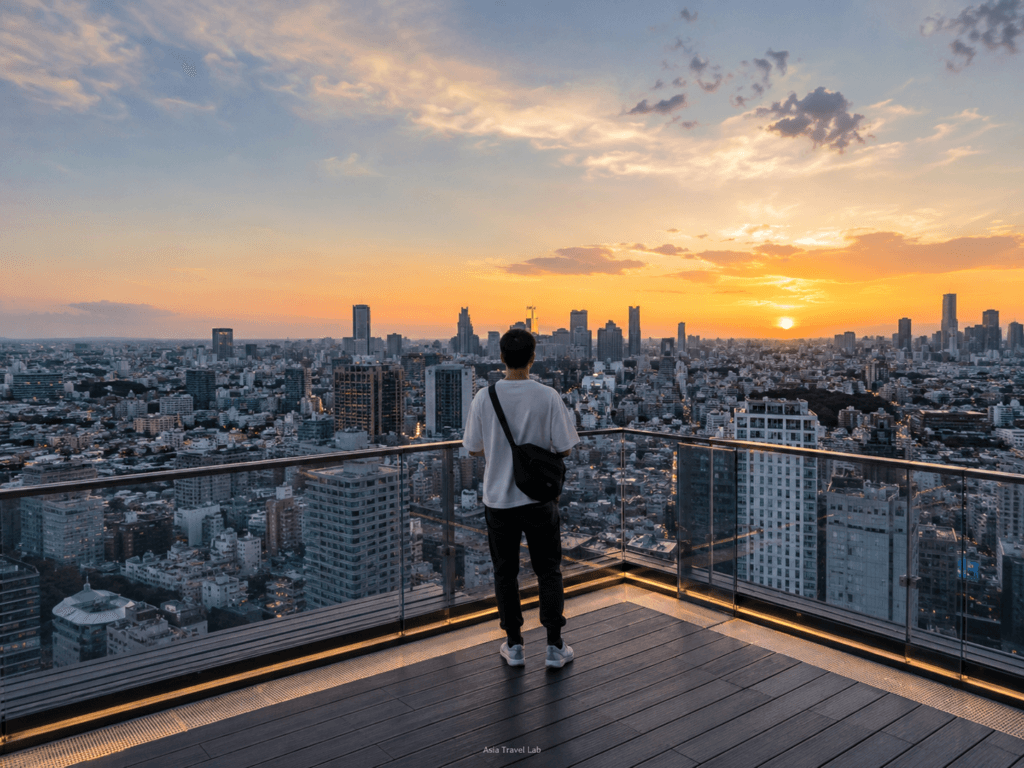
Shibuya Sky is one of the best viewpoints in Tokyo for first-time visitors.
Located above Shibuya Scramble Square, it gives you a wide view over Shibuya and the Tokyo skyline from about 229 meters above ground. On a clear day, you may be able to see major city landmarks and even Mt. Fuji in the distance.
This is not just a quick observation deck. It is one of the best ways to understand Tokyo’s scale. From street level, Shibuya feels like a flood of people, lights and exits. From above, the city suddenly becomes a giant map of neighborhoods, towers, trains and tiny moving lives.
Shibuya Sky usually operates from morning until late evening, with last entry before closing, but hours and ticket availability can change. Always check the official schedule before visiting.
Sunset is the most popular time. If you want that golden-hour view, book early and arrive with extra time. Morning and daytime visits can be calmer, while night visits give you the full neon city effect.
Important practical tip: do not bring big luggage. Observation decks often have strict rules about bags, loose items, tripods, selfie sticks, food and drinks. If you are visiting before check-in or after check-out, use a station locker or hotel luggage storage first.
Shibuya Sky is especially worth it if this is your first Tokyo trip. Tokyo can feel enormous from the street, but the view from above helps the city finally arrange itself into something your brain can politely process.
Meet Hachiko and Understand the Station Area
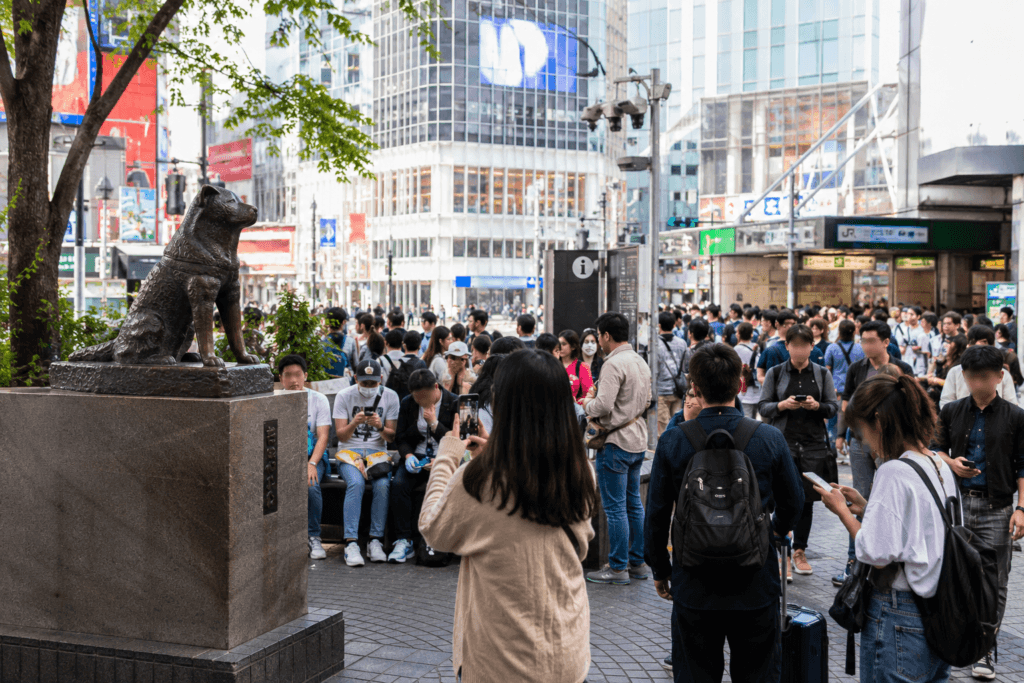
The Hachiko Statue is one of Shibuya’s most famous meeting points.
It honors Hachiko, the loyal dog remembered for waiting at Shibuya Station for his owner. Today, the statue is a popular photo stop and meeting place just outside the station.
It is worth seeing, but keep your expectations realistic. Hachiko is small, the crowd is big, and there may be a line of people trying to take photos. It is a meaningful stop, but it is not a quiet emotional moment unless you visit early.
The area around Hachiko is also one of the easiest places to get slightly confused. Shibuya Station has many exits, underground passages and connected buildings. It is still changing because of long-term redevelopment around the station area, so old advice about exits can become outdated.
The rule is simple: check the exact exit before walking.
If you are meeting someone near Hachiko, Shibuya Sky, Shibuya 109, Miyashita Park or Sakura Stage, confirm the exit in your map app. Getting to Shibuya is easy. Getting out of Shibuya Station through the right exit is the tiny boss battle.
Mobile data helps more than you expect here, especially when the station exits start multiplying on your screen. If you do not want to depend on public Wi-Fi while navigating Shibuya Station, check Japan eSIM for travelers before your trip.
Best Things to Do in Shibuya
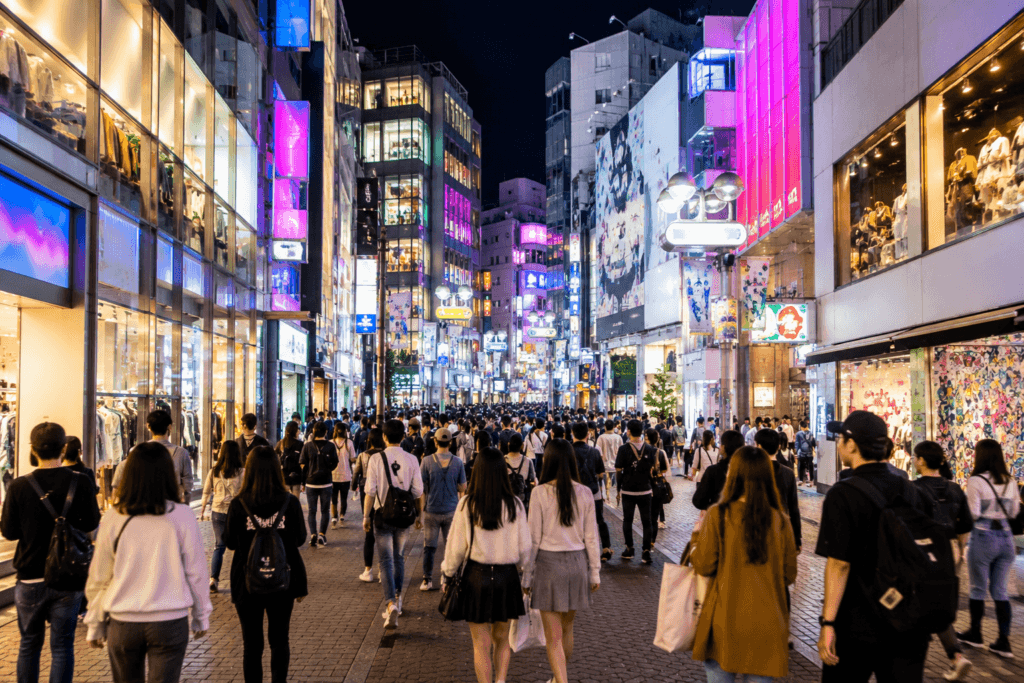
Shibuya is best when you let it unfold by area. Start near the crossing, then choose your route based on your mood: shopping, food, pop culture, rooftop views or nightlife.
Center Gai
Center Gai is one of Shibuya’s most famous streets. It is busy, youthful and full of shops, restaurants, fast food, game centers, karaoke spots and nightlife energy.
This is not the calmest part of Tokyo. It is loud, bright and sometimes messy. But if you want Shibuya’s young city atmosphere, Center Gai is part of the experience.
During the day, Center Gai feels like a busy shopping street. In the evening, it becomes more clearly Shibuya: lights, music, groups of friends, quick meals, game centers and people moving in every direction.
Use normal travel sense here. Watch your belongings, avoid suspicious touts and do not follow random offers into bars or clubs. Shibuya is generally safe, but busy nightlife areas always deserve a little common sense.
Shibuya 109
Shibuya 109 is one of the most recognizable fashion landmarks in the area.
Located near the crossing, it is strongly connected with youth fashion, trends and Shibuya style. Even if you do not plan to shop seriously, it is worth knowing as a landmark and quick stop near the station.
The building usually operates from late morning to evening, but store hours can vary. If you are visiting for a specific shop, check ahead.
Shibuya 109 is best as a short fashion stop rather than a full shopping mission for most travelers. Browse a few floors, get a feel for the style, then continue exploring the neighborhood before Shibuya quietly absorbs your entire afternoon.
Shibuya Parco
Shibuya Parco is one of the best places in the area for pop culture, design, food and shopping.
It is especially useful if you are interested in anime, manga, gaming, character goods, creative shops, cafes or modern Tokyo culture. Parco feels more curated than a typical mall, with a stronger mix of fashion, entertainment and design.
For travelers who like Akihabara but also want something more stylish and compact, Shibuya Parco is a good fit. It is less of an electronics district and more of a modern culture box with many small surprises inside.
It is also a good rainy-day or hot-day stop. Tokyo weather has a talent for turning “I will just walk around” into “I need air-conditioning and a drink immediately.” Parco understands this problem.
Miyashita Park
Miyashita Park works well as a reset point between Shibuya stops.
You can grab casual food, browse a few shops, walk up to the rooftop area, and then return to the street-level chaos with slightly better morale. It is close to the station but feels different from the crossing area, which makes it useful when Shibuya starts to feel too intense.
The complex combines shopping, casual dining, a food hall and a rooftop park. The shopping area usually operates from late morning to evening, while restaurants and food hall hours can run later. Store hours vary, so check individual shops if you are going for a specific place.
Miyashita Park is easy to pair with Shibuya Parco, Center Gai or a walk toward Harajuku. It is not necessarily the deepest cultural experience in Tokyo, but it is practical, modern and very convenient.
Sometimes that is exactly what a travel day needs.
Shibuya Sakura Stage
Shibuya Sakura Stage is one of the newer areas worth knowing in 2026.
Located near Shibuya Station around the Sakuragaoka side, it is a large complex with shops, restaurants, cafes, offices, event spaces and plazas. It gives travelers another reason to explore beyond the most crowded crossing area.
Shibuya Sakura Stage is not the first place every tourist needs to visit. Start with the crossing, Hachiko and Shibuya Sky first. Then, if you still have time, Sakura Stage helps show how Shibuya keeps changing.
It is a good extra stop if you want a newer, cleaner station-side area, a cafe break or a short walk away from the most famous crowds.
Think of Sakura Stage as a second-layer Shibuya stop. It is not the headline, but it gives the neighborhood more depth.
Oku-Shibuya
Oku-Shibuya, sometimes called “back Shibuya,” is a quieter area northwest of the main station area. It is known for smaller cafes, restaurants, shops and a calmer atmosphere compared with the crossing and Center Gai.
This is not where you go for your first dramatic Shibuya photo. It is where you go when you want a break from the crowd without leaving the neighborhood completely.
If your Shibuya plan is only two hours, skip it. If you have half a day or more, it can be a nice way to see that Shibuya is not all screens and scramble crossings.
Oku-Shibuya is especially nice for repeat visitors or travelers who like slower neighborhood walks. It is still Shibuya, just with the volume turned down.
What to Eat in Shibuya
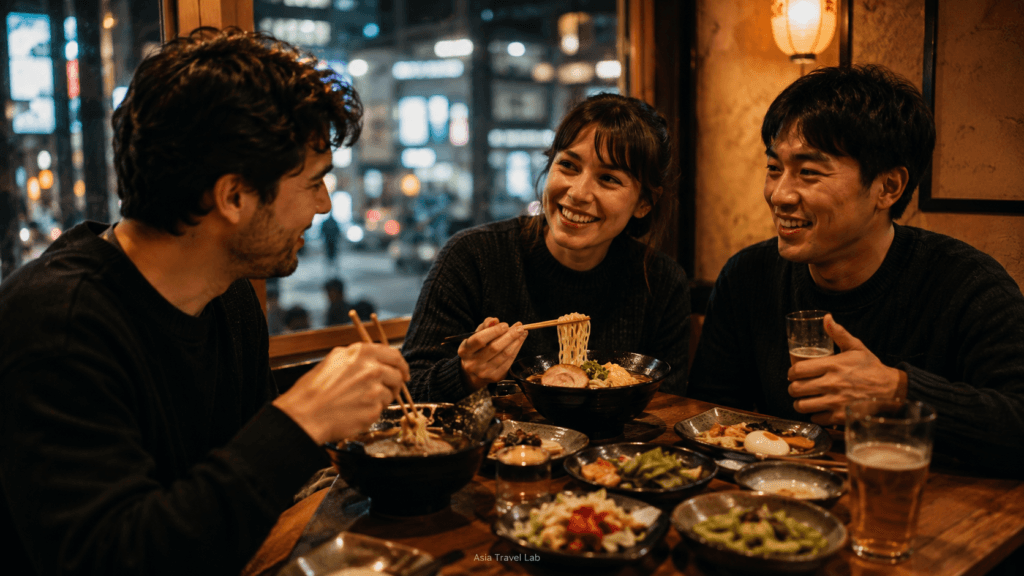
Shibuya is not usually the neighborhood people choose for one specific famous dish. It is better as an easy food area where you can find almost anything: ramen, sushi, tonkatsu, izakaya food, cafes, desserts, burgers, curry, yakiniku, late-night snacks and quick meals.
This makes it great for first-time visitors because you do not need to plan every meal perfectly.
If you are visiting Shibuya Sky around sunset, plan dinner afterward. The area around Shibuya Station has plenty of restaurants, but popular spots can get busy in the evening.
For a casual route, you can eat around Center Gai, Miyashita Park, Shibuya Parco, Sakura Stage or the station-area malls. Department store food floors and food halls are also useful when you want something easy without committing to a long restaurant search.
One useful tip: do not spend too long searching for the “perfect” restaurant if you are hungry. A solid nearby option is often better than walking 25 minutes while everyone slowly becomes hungry and dramatic.
Shibuya rewards flexible eating. Have a few ideas, but leave room for the place you notice while walking.
Shopping in Shibuya
Shibuya is one of Tokyo’s best shopping areas, especially if you like fashion, lifestyle shops, pop culture and trend-focused stores.
The best shopping area depends on what you want.
Choose Shibuya 109 for fashion and youth trends.
Choose Shibuya Parco for pop culture, anime, gaming, design, fashion and food.
Choose Miyashita Park for a mix of shopping, casual food and rooftop atmosphere.
Choose Shibuya Scramble Square for convenient station-area shopping and views from Shibuya Sky.
Choose Sakura Stage if you want newer shops, restaurants and a cleaner station-side complex.
Shibuya shopping is not only about buying things. It is also part of the neighborhood’s identity. You can walk through the malls, browse a few floors, stop for coffee and still feel like you are experiencing the area.
That said, shopping in Shibuya can become a time trap. A “quick look” can quietly become two hours, one dessert and a bag you did not plan to carry.
This is why Shibuya is best with loose structure. Choose two or three places that matter to you, then let the rest happen naturally.
Nightlife and Evening Walks
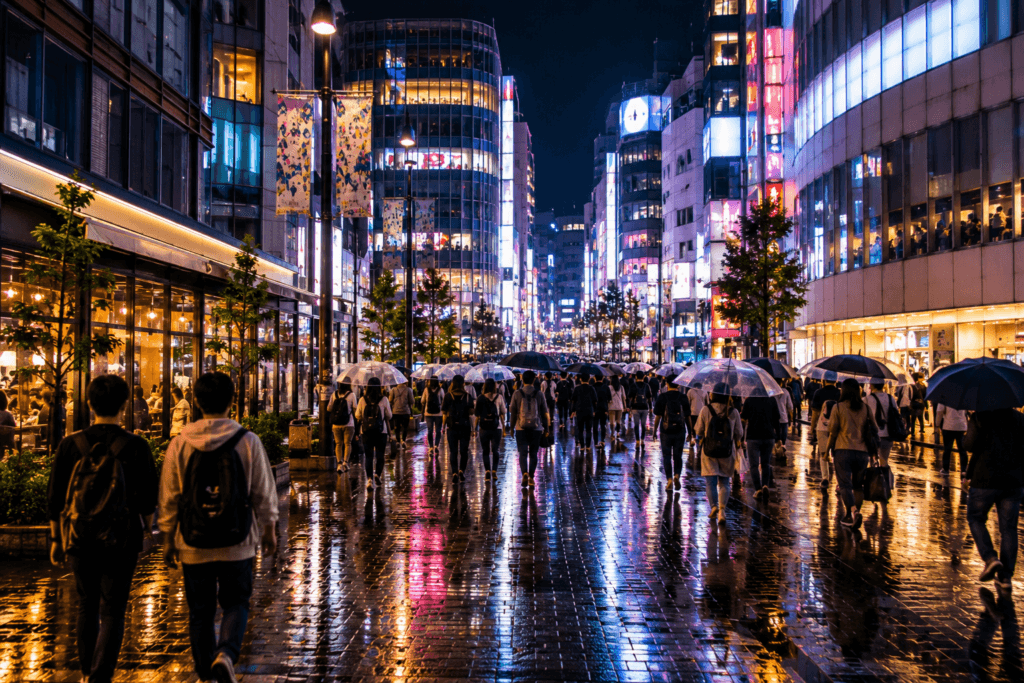
Shibuya is one of Tokyo’s livelier evening areas.
The neighborhood becomes more photogenic after dark, especially around the crossing, Center Gai, Dogenzaka, Miyashita Park and the streets near the station. Neon signs, moving crowds and glowing buildings make Shibuya feel like the Tokyo many travelers came to see.
A simple evening plan works well: cross Shibuya Scramble Crossing after dark, walk through Center Gai, stop for dinner, then continue to Miyashita Park or a nearby cafe or bar. If you booked Shibuya Sky at sunset or after dark, build the evening around that.
Shibuya is generally safe, but nightlife areas can be busy and loud. Avoid suspicious street approaches, watch your belongings and know your last train time if you are not staying nearby.
If your Tokyo plan also includes a theme park day, see Tokyo Disneyland vs DisneySea 2026 for help choosing the right park.
How to Get to Shibuya
Shibuya is easy to reach from most major Tokyo areas.
The station is served by JR, Tokyo Metro, Tokyu and Keio lines, making it one of the city’s major transport hubs. From Shinjuku, it is a short ride on the JR Yamanote Line. From Tokyo Station, you can reach Shibuya by train with a transfer or direct options depending on your route.
From Haneda or Narita Airport, Shibuya is reachable by train, airport bus or transfer. The best choice depends on your arrival time, luggage and hotel location.
The real challenge is not getting to Shibuya. The real challenge is choosing the right exit.
For first-time visitors, use your map app until the final few minutes. Shibuya Station is large, connected to many buildings and still changing. If you are heading to Hachiko, Shibuya Sky, Shibuya 109, Parco, Miyashita Park or Sakura Stage, check the exact exit before you start walking.
If you want to stay near this area, compare Tokyo hotels in Shibuya and also read Where to Stay in Tokyo 2026 before booking. Shibuya is exciting, but it is not the cheapest or calmest base.
Suggested Half-Day Shibuya Route
If this is your first time in Shibuya, a half-day route works well.
Afternoon to Evening Route
Start at Hachiko Statue and Shibuya Scramble Crossing. Cross the intersection once, then explore the streets around Center Gai.
After that, visit Shibuya 109 if you want fashion, or Shibuya Parco if you prefer pop culture, gaming, anime, cafes and design shops.
Then walk toward Miyashita Park for a short break, shopping or food. If you want a newer station-side area, add Shibuya Sakura Stage.
Finish with Shibuya Sky if you booked a ticket. Sunset is the most popular time, but evening views are also excellent.
Afterward, have dinner around Shibuya Station, Miyashita Park, Center Gai, Sakura Stage or nearby streets.
Simple Route Summary
- Hachiko Statue
- Shibuya Scramble Crossing
- Center Gai
- Shibuya 109 or Shibuya Parco
- Miyashita Park
- Shibuya Sakura Stage if you have extra time
- Shibuya Sky
- Dinner or night walk
This route gives you the classic Shibuya experience without turning the day into a frantic loop of mall entrances and wrong exits.
For a full Tokyo plan, continue with Tokyo Itinerary 2026. If Shibuya is part of your first Japan route, you can also connect it with Japan Itinerary 2026.
Common Mistakes to Avoid in Shibuya
Only Visiting the Crossing
Shibuya Scramble Crossing is famous, but it is not the whole neighborhood. Give yourself time for Shibuya Sky, shopping streets, food, Parco, Miyashita Park or Sakura Stage.
Not Booking Shibuya Sky Early
Shibuya Sky is popular, especially around sunset. If the view matters to you, book ahead instead of hoping for the best on the day.
Bringing Large Luggage
Shibuya is not fun with large luggage. Crowds, stairs, exits and observation deck rules can make it stressful. Use hotel storage or station lockers.
Trusting Old Exit Advice
Shibuya Station and the area around it are still changing. Always check your map app and confirm the correct exit.
Trying to Combine Too Much
Shibuya, Harajuku, Omotesando, Daikanyama and Shinjuku can connect well, but do not overload the day. A rushed Shibuya visit can become a blur of stairs, shops and “wait, where are we?”
Ignoring Crowd Etiquette
Do not stop suddenly in the middle of the crossing. Do not block stairs or station exits for photos. Shibuya is busy, and the city works better when everyone keeps moving.
Assuming Shibuya Is Quiet at Night
Shibuya is lively in the evening. That is part of its appeal, but if you want a calm hotel base, check your exact hotel location carefully before booking.
Shibuya FAQ
Is Shibuya worth visiting?
Yes. Shibuya is one of Tokyo’s best neighborhoods for first-time visitors because it combines the famous crossing, Shibuya Sky, shopping, food, nightlife and strong city atmosphere in one area.
How long should I spend in Shibuya?
A quick visit can take one to two hours, but a better first-time visit takes half a day. If you include Shibuya Sky, shopping, food and evening photos, plan at least four to six hours.
What is Shibuya famous for?
Shibuya is famous for Shibuya Scramble Crossing, Hachiko, youth fashion, shopping, nightlife, music, cafes, pop culture and Shibuya Sky.
Is Shibuya better during the day or at night?
Both are good. Daytime is better for shopping and easier photos. Evening is better for lights, atmosphere, Shibuya Sky and the classic neon city feeling.
Do I need tickets for Shibuya Crossing?
No. Shibuya Scramble Crossing is a normal public crossing, so you do not need a ticket. Shibuya Sky, however, requires a ticket.
Is Shibuya Sky worth it?
Yes, especially for first-time Tokyo visitors who want a dramatic skyline view. It is one of the best places to understand the scale of Tokyo.
Can I visit Shibuya and Harajuku together?
Yes. Shibuya and Harajuku are close and easy to combine. A popular route is Harajuku and Omotesando in the afternoon, then Shibuya in the evening.
Is Shibuya good for shopping?
Yes. Shibuya is excellent for fashion, pop culture, lifestyle shops, department stores, character goods, cafes and trend-focused shopping.
Is Shibuya good for families?
Shibuya can work for families, especially during the day, but it is busy. Families with young children should avoid overly packed nightlife areas and allow extra time around the station.
Should I stay in Shibuya?
Stay in Shibuya if you want energy, shopping, cafes, nightlife and easy access to Harajuku and Omotesando. Choose another area if you want quieter evenings or better hotel value.
Final Thoughts
Shibuya is one of the easiest Tokyo neighborhoods to love quickly, but also one of the easiest to do badly if you only cross the street, take one photo and leave.
Give it a few hours. Cross Shibuya Scramble Crossing, see Hachiko, explore Center Gai, visit Shibuya 109 or Shibuya Parco, take a break at Miyashita Park, add Sakura Stage if you have time, and book Shibuya Sky if the view matters to you.
Shibuya is loud, bright, stylish, crowded and occasionally confusing. That is the point.
Come for the crossing. Stay because the neighborhood keeps pulling another street, another cafe, another view and another wrong exit out of its pocket.