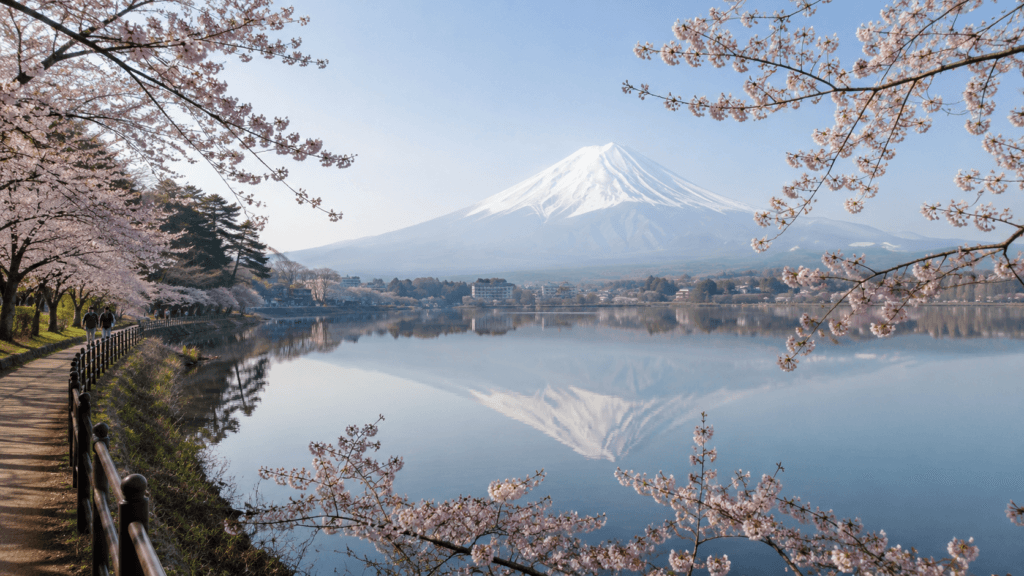
Choosing the best time to visit Japan sounds simple until you realize how many different versions of Japan exist.
There is snowy Hokkaido, humid Osaka, subtropical Okinawa, and mountain towns where autumn arrives weeks before it reaches Tokyo. A date that is perfect for cherry blossoms may be expensive and crowded. A cheaper month may come with rain, intense heat, or shorter daylight hours.
For most first-time visitors traveling through Tokyo, Kyoto, and Osaka, the best times to visit Japan are mid-May to late May and mid-October to mid-November. These periods usually offer comfortable temperatures without the worst summer humidity or the largest national holiday crowds.
Late March to early April is the classic choice for cherry blossoms, while January and February are better for skiing, snow scenery, hot springs, and quieter city travel.
The goal is not to find one perfect month for everyone. It is to choose a season that fits your route, budget, and tolerance for heat, rain, and crowds.
Quick Answer: When Is the Best Time to Visit Japan?
For most travelers, these are the strongest options:
| Travel goal | Best time |
|---|---|
| Best overall weather | Mid-May to late May |
| Best autumn weather | Mid-October to mid-November |
| Cherry blossoms | Late March to early April |
| Autumn leaves in Tokyo and Kyoto | Mid-November to early December |
| Lowest city crowds | Mid-January, February, June |
| Skiing and snow | January to February |
| Festivals and fireworks | July to August |
| Lower travel costs | Mid-January to February, June, early December |
May is particularly attractive once Golden Week finishes. Days are warm, landscapes are green, and the main rainy season has usually not reached central Japan in full force.
October offers a similarly useful balance. Summer humidity begins to fade, walking becomes easier, and the first autumn colors appear in northern and mountain regions.
Travelers planning a multi-city route can use this seasonal overview together with a Japan itinerary to decide how many days to spend in each destination.
Japan’s Seasons at a Glance
Japan has four distinct seasons, but they do not arrive everywhere at the same time.
| Season | Typical conditions | Crowds and costs | Best for |
|---|---|---|---|
| Spring | Mild, changeable, occasional rain | High during cherry blossom season and Golden Week | Flowers, gardens, first visits |
| Summer | Hot, humid, rainy early in the season | High during festivals and Obon | Festivals, fireworks, hiking |
| Autumn | Mild to cool, often comfortable | High in famous foliage areas | Walking, temples, fall colors |
| Winter | Cold and generally dry in major cities | Lower outside ski areas and New Year | Snow, hot springs, budget travel |
Hokkaido can still be wintry while Kyushu is already enjoying spring flowers. Okinawa may be warm enough for light clothing while Tokyo residents are wearing winter coats.
This regional difference matters most when your trip covers several parts of the country. A single packing list may not work for both Sapporo and Okinawa, even when the flights are only a few hours apart.
Japan Weather, Crowds and Costs by Month
January: Clear Skies, Snow and Quieter Cities
January is one of the best months for winter travel.
Tokyo, Kyoto, and Osaka are cold, but the weather is often dry and clear. Snow is uncommon in central Tokyo, although northern Japan, mountain destinations, and areas facing the Sea of Japan can receive heavy snowfall.
The first few days of January are different from the rest of the month. New Year is a major family and religious holiday, and many people visit shrines and temples for hatsumode, the first prayer of the year.
Some museums, restaurants, shops, and smaller businesses close or reduce their hours during this period. Transport can also be busier as people travel home.
After the first week, major cities usually become calmer. Hotels may offer better value than they do during spring or autumn, while ski areas in Hokkaido and Nagano remain firmly in high season.
January is a strong choice for city sightseeing, hot spring stays, snow villages, and winter photography. Bring warm layers and shoes that can handle cold rain or ice.
February: Winter Festivals and Lower Urban Crowds
February remains cold, but it can be one of the most rewarding months for travelers who enjoy winter scenery.
Hokkaido and mountain resorts are deep into ski season, while cities such as Tokyo and Osaka are often quieter than they will be a few weeks later.
Plum blossoms begin to appear in some regions before the cherry blossoms arrive. They receive far less international attention, which means plum gardens can feel pleasantly relaxed compared with the busiest sakura parks.
Outside major snow festivals and ski destinations, February can also be a good-value month for hotels.
Travelers combining Tokyo with Hokkaido or the Japanese Alps should pack for very different conditions. A bright Tokyo afternoon may feel crisp but manageable. A snowy evening farther north is less interested in optimism.
March: Early Spring and Rising Demand
March sits between winter and spring.
Early in the month, mornings and evenings can still feel cold. By late March, temperatures begin to soften and the first major cherry blossom crowds may arrive in warmer regions.
Tokyo, Kyoto, and Osaka often see blossoms from late March into early April, but the timing changes every year. A warm winter can bring the season forward, while colder conditions can delay it.
Hotel prices and visitor numbers begin rising quickly once updated blossom forecasts are released. Travelers who want a spring atmosphere without the largest crowds may prefer early or mid-March.
March works especially well for travelers who enjoy cooler sightseeing weather, early flowers, and flexible travel plans.
Pack layers and a compact umbrella. Spring can produce sunshine, wind, and cold rain before lunch.
April: Cherry Blossoms and Peak Spring Crowds
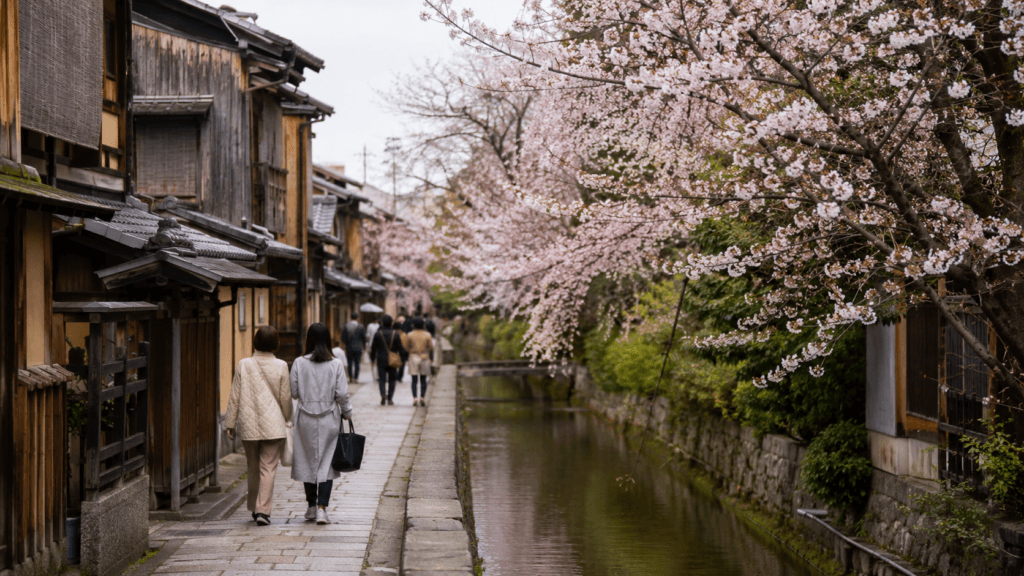
April is one of Japan’s most popular travel months.
The weather is usually comfortable, parks and gardens come back to life, and cherry blossoms may be visible across many of the country’s best-known destinations.
The downside is demand.
Tokyo, Kyoto, Osaka, Nara, and other famous spring locations can become extremely crowded. Hotels near major stations may be expensive or fully booked well in advance.
Popular cherry blossom parks are especially busy on weekends and in the evenings. The flowers themselves are also weather-sensitive. Strong wind or rain can shorten the best viewing period.
Late April leads into Golden Week, one of Japan’s busiest domestic travel periods. In 2026, Showa Day falls on April 29, followed by national holidays from May 3 to May 6.
April is worth choosing when cherry blossoms are a major part of the trip. It is less suitable for travelers whose priorities are low prices, empty attractions, and last-minute hotel decisions.
Everyone has seen the same beautiful spring photographs. Quite a few people have decided to stand inside them.
May: The Best All-Round Month After Golden Week
May is one of the strongest months for general sightseeing, but the first week should be treated separately.
Golden Week brings heavy domestic travel around April 29 and May 3 to May 6 in 2026. Trains, airports, theme parks, resorts, and popular cities can become very busy.
Once the holiday period ends, the atmosphere changes.
Mid-May and late May usually bring warm days, green landscapes, and comfortable weather for walking. It is also early enough to avoid the most widespread part of the rainy season in Tokyo, Kyoto, and Osaka.
This is an excellent time for a multi-city trip, countryside excursions, gardens, hiking, and long days outdoors.
Comfortable temperatures also make May a good month for following a busy Tokyo itinerary without needing an air-conditioned break every hour.
Where possible, plan your trip after May 10. You may find calmer transport, better room availability, and a more relaxed version of Japan.
June: Rainy Season and Greener Landscapes
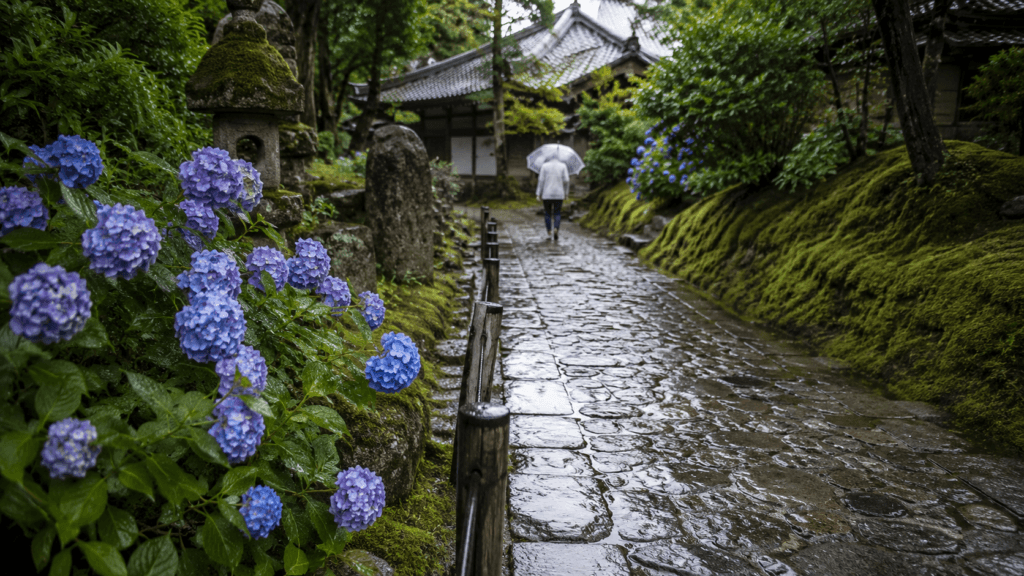
June marks the beginning of the rainy season across much of Japan.
This does not necessarily mean heavy rain all day, every day. It often brings cloudy skies, short showers, sudden downpours, and high humidity.
The uncertainty can be inconvenient, particularly for travelers planning hikes, coastal views, or outdoor photography. On the other hand, parks and temple gardens become intensely green, hydrangeas bloom, and major attractions may be less crowded than they are in April or November.
Hotel prices can also be more attractive on weekdays.
June works best for travelers who are comfortable changing plans and mixing outdoor sightseeing with museums, shopping, cafes, and indoor attractions.
Hokkaido is relatively less affected by the rainy season, making it a useful alternative during this period.
Water-resistant shoes are more valuable than fashionable ones in June. Japan has excellent convenience stores, but buying emergency socks every afternoon is not a cultural experience you need to collect.
July: Festivals, Humidity and Mountain Travel
July begins with humid, unsettled conditions in many regions. Once the rainy season ends, temperatures rise quickly.
Tokyo, Kyoto, and Osaka can feel exhausting because sightseeing usually involves long walks, limited shade, and frequent transfers between outdoor attractions.
Historical temperature averages do not fully explain how the humidity feels at street level. A tightly packed itinerary may become difficult by midday.
July still has important advantages. It brings traditional festivals, fireworks, mountain hiking, and the main climbing season for Mount Fuji.
Northern Japan and highland destinations are often more comfortable than central Japanese cities.
Plan outdoor sightseeing for the morning and evening. Museums, department stores, cafes, and shopping centers are useful during the hottest part of the day.
Breathable clothing, sun protection, water, and regular rest breaks are essential.
August: Big Festivals and Serious Heat
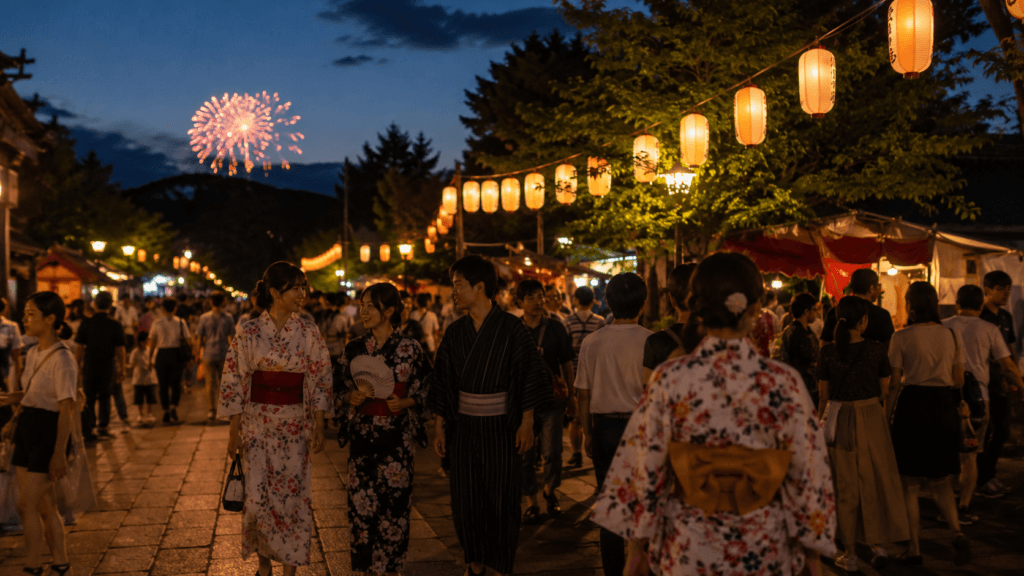
August is one of Japan’s hottest and most humid months. It is also one of its liveliest.
Large festivals and fireworks events take place across the country. Tohoku is especially well known for its early-August festivals, while many cities hold evening celebrations.
Obon usually falls around August 13 to 16. Although it is not a standard national holiday period in exactly the same way as Golden Week, it creates heavy domestic travel as families return to their hometowns.
Flights, trains, buses, and hotels can book out early. Some central business areas may feel quieter, but the transport network leading out of and back into major cities can be extremely busy.
August suits travelers focused on festivals, beaches, Hokkaido, or mountain scenery.
It is less suitable for a tightly scheduled temple and neighborhood tour in Kyoto. Five outdoor attractions before lunch may look efficient on paper, but the sun gets a vote.
September: Lingering Heat and Typhoon Risk
September usually brings fewer summer vacation crowds, but early in the month it can still feel hot and humid.
Typhoons are an important planning factor. Flights, ferries, and train services may be delayed or canceled when severe weather approaches.
Not every trip is disrupted, but it is wise to leave flexibility between long-distance journeys. Avoid placing an international flight immediately after a remote island stay or ferry trip without backup time.
The 2026 calendar also creates a busy travel period from September 21 to September 23. Respect for the Aged Day falls on September 21, September 22 becomes an additional holiday, and the Autumnal Equinox falls on September 23.
September can work well for travelers who want fewer crowds than August and are comfortable with warm weather. Flexible reservations and reliable mobile access are especially useful for checking transport and weather updates, so it is worth comparing Japan eSIM plans before departure.
October: Comfortable Weather and Easier Sightseeing
October is one of the best all-around months for visiting Japan.
Temperatures become more comfortable, humidity drops, and long days of walking feel much easier than they do in summer.
Autumn colors begin in Hokkaido, northern Japan, and higher mountain regions before moving south. Tokyo, Kyoto, and Osaka are often still mostly green during October, so travelers should not expect peak maple colors everywhere.
This month is ideal for first-time city trips, countryside day tours, hiking, food travel, and neighborhood exploration.
Travelers spending several days in the capital can use a Tokyo travel guide to compare areas, attractions, and transport before choosing where to focus their time.
Popular destinations will still be busy, but October generally feels more manageable than cherry blossom season or peak autumn weekends in Kyoto.
November: Autumn Leaves and Cool, Clear Days
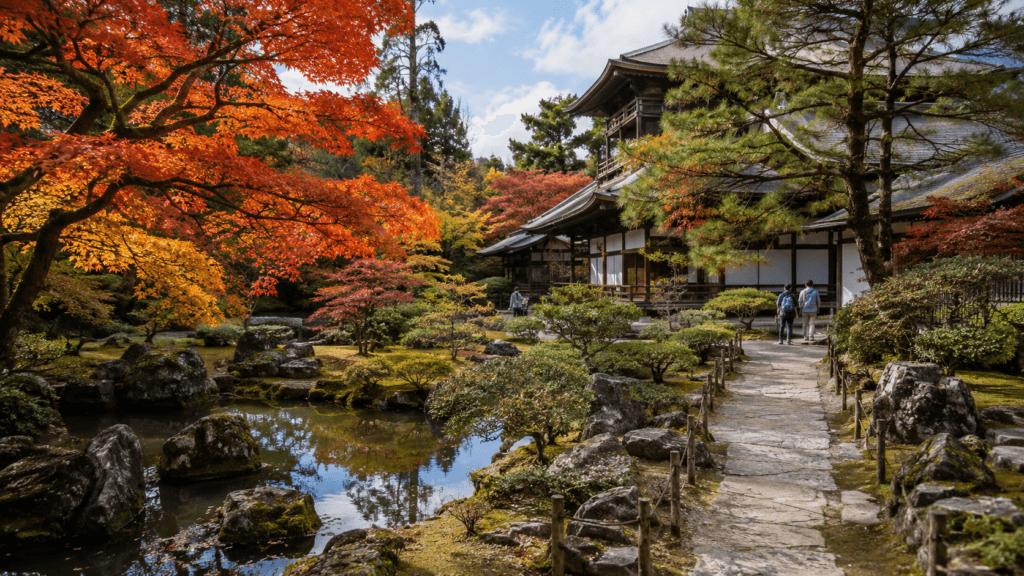
November is another excellent month, particularly for travelers seeking autumn scenery.
Many parts of Japan experience cool air, lower humidity, and relatively clear skies. Autumn leaves reach cities and lower elevations later than they do in northern or mountain regions.
Tokyo often sees strong color from mid-November into early December. Kyoto’s most famous autumn period usually becomes busiest during the second half of November.
Temples such as Kiyomizu-dera, Eikando, and Tofukuji can be extremely crowded during peak foliage. Evening illumination events are beautiful, but rarely quiet.
Early November is a useful compromise for travelers who value comfortable weather more than perfect red leaves. Late November offers stronger color in Tokyo and Kyoto, along with larger crowds and higher hotel demand.
December: Illuminations and the Start of Winter
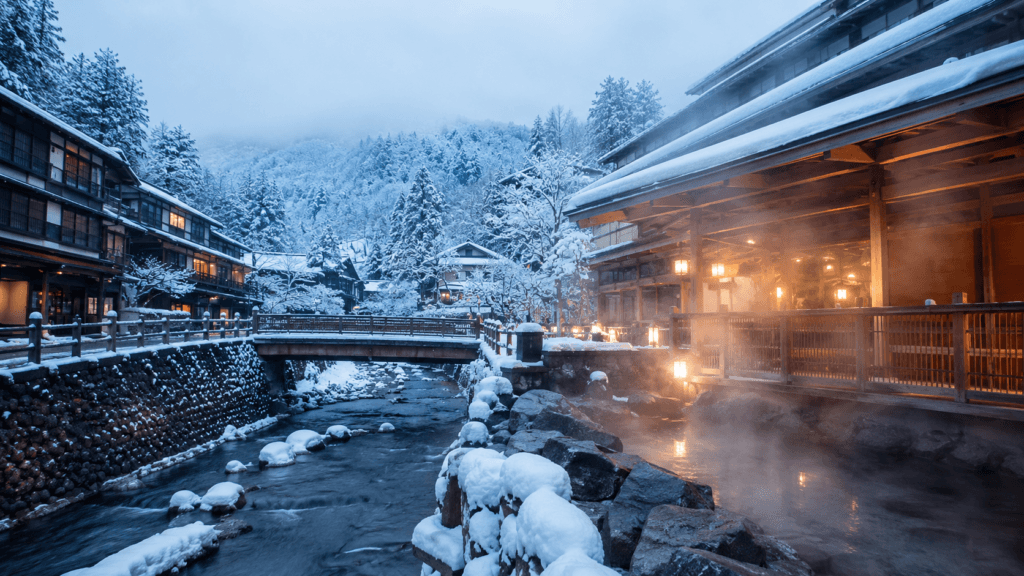
Early December is often a pleasant time for city travel.
Temperatures are cold but manageable with a proper coat, and seasonal illumination displays appear in Tokyo, Osaka, Kobe, Nagoya, and other cities.
Ski resorts begin opening from late November through December, depending on snowfall and elevation.
The final days of the month are more complicated. Domestic travel rises as people return home for New Year, and some independent restaurants, attractions, and shops close.
Early December works well for winter illuminations, clear views of Mount Fuji, quieter city sightseeing, and early-season skiing.
Late December can still be enjoyable, but travelers should check transport availability and opening hours carefully.
Best Time to Visit Japan for Cherry Blossoms
For Tokyo, Kyoto, and Osaka, late March to early April is the usual target.
However, cherry blossoms do not follow fixed dates. Warmer conditions may bring them forward, while cold weather may delay them. Wind and rain can also shorten the period of full bloom.
A practical strategy is to:
- Travel for at least seven to ten days.
- Include more than one city or elevation.
- Check updated forecasts close to departure.
- Avoid making every booking non-refundable.
- Treat full bloom as a bonus rather than a guarantee.
Travelers arriving later can follow the blossom season north into Tohoku and Hokkaido, where flowering occurs weeks after Tokyo and Kyoto.
Best Time to Visit Japan for Autumn Leaves
Autumn foliage begins in Hokkaido and high mountain areas before spreading south.
A general planning guide is:
- Late September to October: Hokkaido and high elevations
- October to early November: Tohoku, Nagano, and mountain regions
- Mid-November to early December: Tokyo, Kyoto, Osaka, and nearby areas
- Late November into December: Parts of Kyushu and warmer southern regions
For a classic Tokyo and Kyoto trip, mid-November to early December is usually the most useful period.
Travelers who prefer quieter scenery may enjoy mountain towns earlier in autumn rather than waiting for the busiest city temples.
Cheapest Time to Visit Japan
The cheapest period depends on the destination.
For Tokyo, Kyoto, and Osaka, better prices are often available during:
- Mid-January to February
- The June rainy season
- Parts of early September
- Early December
These periods are not guaranteed to be cheap. Concerts, festivals, sporting events, weekends, and school holidays can cause prices to rise in a single city.
Winter is also not inexpensive everywhere. Hokkaido and popular ski resorts may be costly during peak snow season.
Hotel prices can vary dramatically by district, so choosing where to stay in Tokyo may affect your budget almost as much as choosing the month.
During cherry blossom season, Golden Week, Obon, and peak autumn weekends, well-located rooms may disappear months in advance. Check Japan hotel availability before finalizing non-refundable flights.
Best Time to Visit Japan With Fewer Crowds
For smaller crowds, consider:
- Mid-January after the New Year period
- February outside ski areas
- Mid to late May after Golden Week
- June during the rainy season
- Early December before year-end travel
Even in quieter months, famous attractions such as Fushimi Inari, Senso-ji, and Shibuya Crossing are rarely empty.
Timing often matters as much as the season. Visit famous sites early in the morning, stay overnight in popular day-trip towns, and explore residential neighborhoods during the busiest midday hours.
Best Time to Visit Tokyo
Tokyo works throughout the year, but spring and autumn offer the easiest weather for walking.
March to May and October to November are comfortable for exploring neighborhoods, parks, shopping districts, and observation decks.
Winter can be cold but often clear, making January and February good for lower-crowd sightseeing and Mount Fuji views.
July and August are hot and humid, although Tokyo has enough indoor attractions to rescue almost any afternoon.
Best Time to Visit Kyoto
Kyoto is at its most visually dramatic during cherry blossom and autumn foliage seasons. Those are also its busiest periods.
May after Golden Week and October are excellent alternatives. The weather is generally comfortable, while crowds are often more manageable than they are in early April or late November.
Summer is hot and humid. Winter is colder than many visitors expect, but temples are quieter and occasional snowfall can transform the city.
Best Time to Visit Osaka
Osaka has mild winters and hot, humid summers.
Spring and autumn are the most comfortable seasons for exploring Dotonbori, Osaka Castle, markets, and nearby day-trip destinations.
Food-focused travelers can enjoy Osaka in any month. Takoyaki does not become less cooperative in February.
Best Time to Visit Hokkaido
Hokkaido follows a different seasonal pattern from Tokyo, Kyoto, and Osaka.
Winter is ideal for skiing, snow festivals, and frozen landscapes. Summer is cooler than central Japan, making July and August popular for road trips, flower fields, hiking, and outdoor activities.
Spring arrives later, while autumn colors appear earlier.
Best Time to Visit Okinawa
Okinawa has a subtropical climate and much warmer winters than mainland Japan.
Spring and late autumn are excellent for sightseeing and outdoor activities. Summer is suitable for beach travel but brings strong heat, humidity, and possible typhoon disruption.
Okinawa’s rainy season also begins earlier than it does in Tokyo or Kyoto, so national weather summaries should not be applied without checking regional conditions.
Major Japan Travel Dates in 2026
The following periods may affect hotel prices, train reservations, and crowd levels:
- April 29: Showa Day
- May 3 to May 6: Golden Week holiday cluster
- Around August 13 to August 16: Obon travel period
- September 21 to September 23: Silver Week holiday sequence
- December 29 to January 3: New Year travel and business closures
Travel during these periods is possible, but early reservations become more important. Reserved train seats, domestic flights, and convenient hotels may sell out faster than international visitors expect.
Common Mistakes When Choosing When to Visit Japan
Assuming Cherry Blossoms Bloom on Fixed Dates
They do not.
Blooming dates change each year and vary across regions. Check current forecasts and leave some flexibility in the itinerary.
Ignoring Japanese Holiday Periods
Golden Week, Obon, Silver Week, and New Year can have a major effect on domestic travel.
A normal-looking weekday may be part of a longer national holiday sequence.
Treating Japan as One Climate Zone
Sapporo, Tokyo, Kyoto, and Okinawa do not share the same weather calendar.
Check each destination separately, especially when traveling from north to south.
Underestimating Summer Humidity
A temperature forecast does not fully explain how July or August feels during a full day of walking.
Reduce the number of midday attractions and plan indoor breaks.
Expecting Autumn Leaves Everywhere in October
October is excellent for travel, but Tokyo and Kyoto often reach their strongest autumn colors later.
Choose Hokkaido, Tohoku, or mountain regions for earlier foliage.
Choosing the Cheapest Month Without Considering the Trip
June may be affordable, but it may not be good value for a trip built around hiking and landscape photography.
A slightly more expensive month with better weather can produce a much stronger trip.
Booking a Tight Schedule During Typhoon Season
Late August and September require flexibility.
Leave extra time before international flights and avoid connecting several weather-sensitive routes without a backup plan.
FAQ
What Is the Best Month to Visit Japan?
For many first-time visitors, May is the best month, particularly after Golden Week.
The weather is usually warm without peak summer humidity, and gardens and countryside areas are green.
October is a close alternative for comfortable walking weather.
Is April or November Better for Japan?
Choose April for cherry blossoms and a classic spring atmosphere.
Choose November for autumn leaves, cooler temperatures, and often clearer weather.
Both periods can be crowded, especially in Kyoto.
What Is the Most Difficult Month to Visit Japan?
August is often the hardest month for travelers who dislike heat and humidity.
September can also be unpredictable because of lingering heat and typhoon risk.
When Is Japan Least Crowded?
Mid-January, February, June, and early December are generally quieter in major cities.
Special events, ski seasons, and holiday periods may create local exceptions.
When Is the Rainy Season in Japan?
Across much of central Japan, the rainy season usually runs from June into July.
It begins earlier in southern regions and affects Hokkaido less than most of the country.
When Is Typhoon Season in Japan?
Typhoons can occur over a broad period, but the greatest concern for travelers is usually from late August through September.
Transport disruption is possible even when a storm does not directly reach a major city.
How Far Ahead Should I Book Japan Hotels?
For cherry blossom season, Golden Week, Obon, Kyoto’s autumn season, and New Year, booking several months ahead is sensible.
During quieter periods, there may be more flexibility, but popular hotels near major stations can still sell out.
Is Winter Good for a First Trip to Japan?
Yes.
Winter offers smaller city crowds, clear days, hot springs, seasonal food, and snow experiences.
It is especially suitable for travelers who prioritize culture, food, and city sightseeing over gardens and long daylight hours.
Final Thoughts
The best time to visit Japan depends on which version of the country you want to experience.
Choose mid to late May or mid-October to mid-November for comfortable weather and a balanced first trip. Aim for late March to early April if cherry blossoms are the priority, but prepare for higher prices and larger crowds.
November is excellent for autumn color in Tokyo and Kyoto, while winter suits travelers interested in snow, hot springs, and quieter cities. Summer rewards heat-tolerant visitors with festivals, fireworks, beaches, and mountain travel.
Japan rarely has a completely empty season. The difference between a smooth trip and a stressful one usually comes down to avoiding major domestic holidays, checking regional weather, and leaving enough room for unexpected changes.
Choose the season first, then build the route around what that season does best. Trying to fit cherry blossoms, beaches, snow, and autumn leaves into one trip is ambitious. Your suitcase may be the first to object.