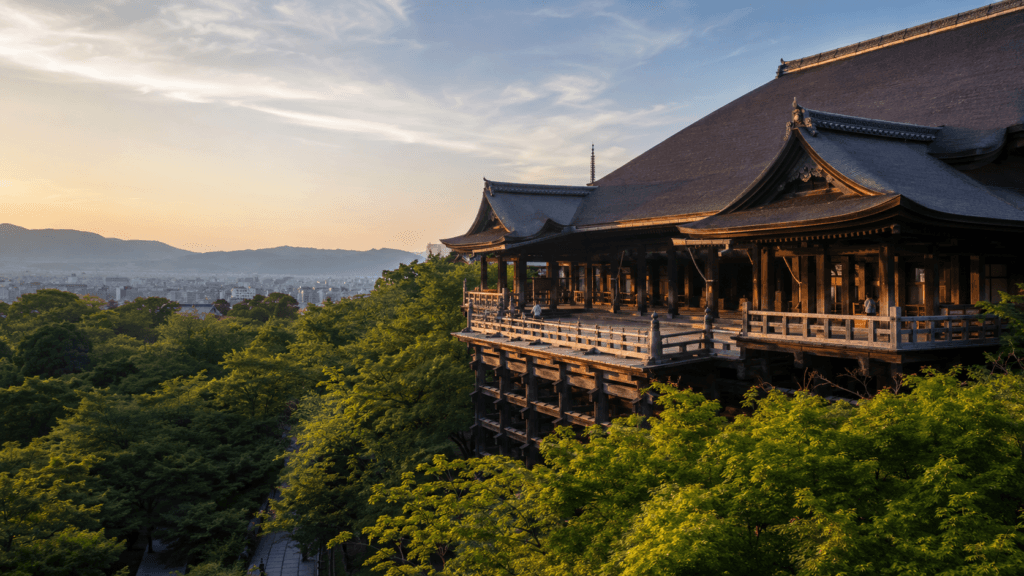
Kiyomizu-dera is one of Kyoto’s most famous temples, but the best way to visit it is not to rush in, take one photo from the wooden stage and sprint away like your itinerary is chasing you.
This temple works best as part of a walking route. Start at Kiyomizu-dera, then slowly move downhill through Kiyomizuzaka, Sannenzaka, Ninenzaka, Yasaka Pagoda and toward Gion. The temple is the headline, but the streets around it are part of the story.
Kiyomizu-dera has more than 1,250 years of history and sits on the slopes of Mt. Otowa in Kyoto’s Higashiyama area. It is famous for its large wooden stage, hillside views, old approach streets and seasonal scenery. In spring and autumn, it becomes one of Kyoto’s most popular places, which is travel-guide language for “go early or bring patience.”
This Kiyomizu-dera guide covers the best time to visit, 2026 night viewing dates, how to get there, how to walk through Higashiyama afterward, what mistakes to avoid and how to make the visit feel less like crowd survival training.
Kiyomizu-dera is already part of Kyoto Itinerary 2026, but it deserves its own guide because this area can easily become either the best morning of your Kyoto trip or a slow uphill negotiation with crowds, buses and souvenir bags.
Is Kiyomizu-dera Worth Visiting?
Yes, Kiyomizu-dera is absolutely worth visiting, especially for first-time travelers in Kyoto.
It is one of the city’s signature temples and one of the best places to understand why Kyoto feels so different from Tokyo or Osaka. The temple combines history, hillside scenery, traditional architecture and one of Kyoto’s most enjoyable walking areas.
The famous wooden stage is the main attraction. From there, you can see across the temple grounds and toward Kyoto city. The view changes beautifully by season: cherry blossoms in spring, fresh green leaves in early summer, fiery colors in autumn and a quieter atmosphere in winter.
But Kiyomizu-dera is not only about the temple itself. The walk up and down through Higashiyama is a major part of the experience. This is why the visit feels better when you give it time.
Quick Answer: How to Visit Kiyomizu-dera
For most first-time visitors, the best plan is simple:
Go early in the morning.
Visit Kiyomizu-dera before the main crowds arrive.
Walk down through Kiyomizuzaka.
Continue through Sannenzaka and Ninenzaka.
Stop near Yasaka Pagoda.
Walk toward Yasaka Shrine and Gion.
Keep the rest of the day flexible.
This route works because you start high at the temple and slowly walk downhill through one of Kyoto’s most atmospheric neighborhoods. That is much easier than bouncing around the city and returning later when the streets are packed.
Travelers who prefer temple context and a smoother route through Higashiyama can compare Kiyomizu-dera and Higashiyama walking tours before the trip.
Best Time to Visit Kiyomizu-dera
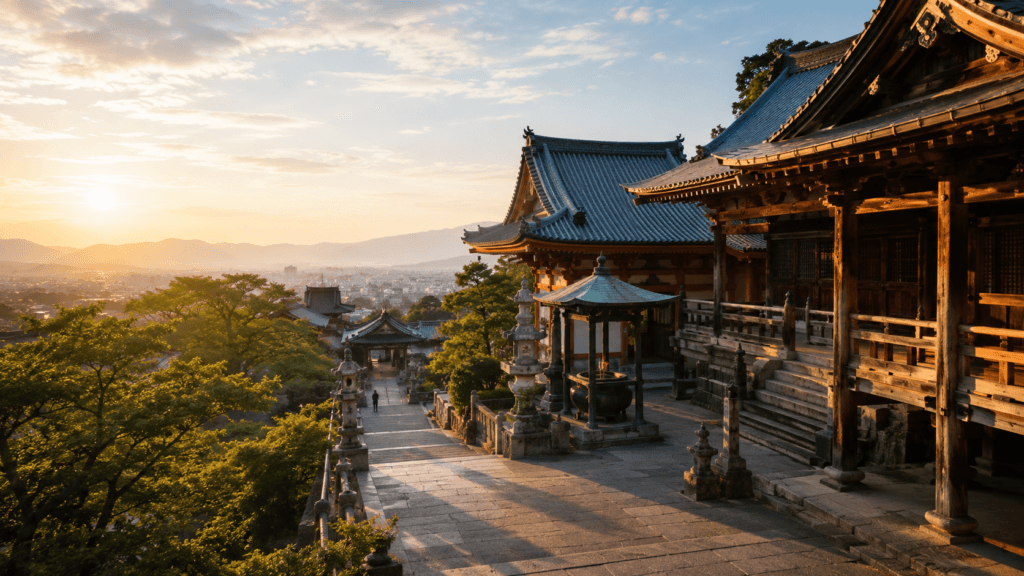
The best time to visit Kiyomizu-dera is early morning.
Kiyomizu-dera is one of Kyoto’s most visited temples, and the approach streets can become crowded very quickly. Early morning gives you more space on the temple stage, better photo chances and a calmer walk through Higashiyama before the shops and tour groups fully wake up.
Late morning to mid-afternoon is usually the busiest time. This is when the slopes around Kiyomizuzaka, Sannenzaka and Ninenzaka can feel like a slow-moving souvenir river. It is still beautiful, but it becomes harder to enjoy the atmosphere.
Spring and autumn are the most scenic seasons, but also the busiest. Cherry blossom season and autumn foliage season are beautiful enough to make people ignore common sense and hotel prices at the same time.
Winter is quieter and easier for slow travelers. Summer can be hot and humid, so morning is even more important.
For most travelers, the best choice is either early morning or one of the official special night viewing dates.
Kiyomizu-dera Hours and Night Viewing in 2026
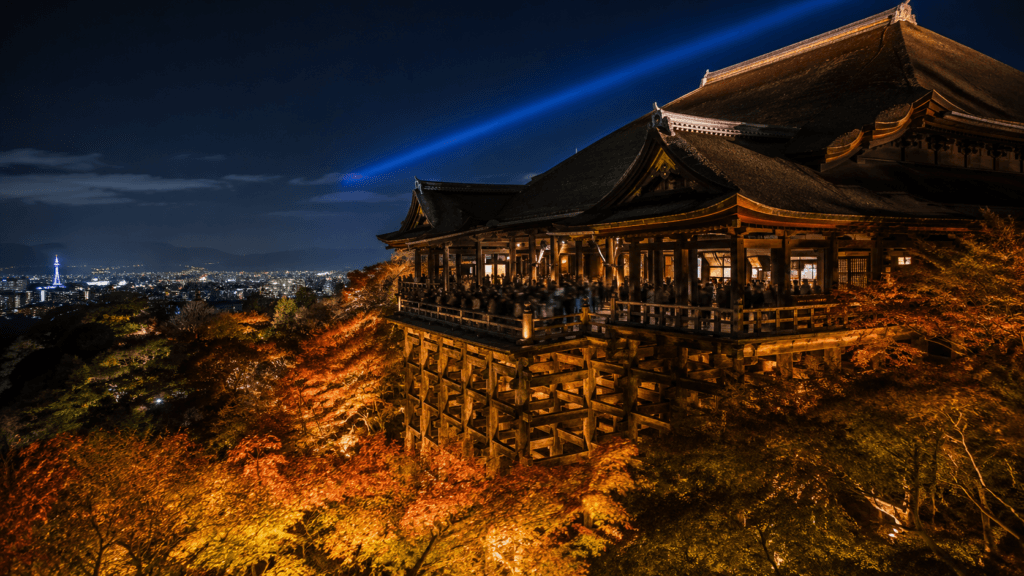
Kiyomizu-dera usually opens from early morning, but closing times can vary by season, special events and night viewing periods. Always check the official schedule before visiting if your plan depends on a specific time.
The most important 2026 update is the special night viewing schedule. Kiyomizu-dera does not open late every night. Night viewing happens only during selected seasonal periods.
In 2026, the special night viewing dates are:
Spring: March 27 to April 5, 2026.
Summer: August 14 to August 16, 2026.
Autumn: November 21 to November 30, 2026.
During these special night viewing periods, the temple is open until 9:30 p.m., with last entry at 9:00 p.m.
This matters because many travelers imagine a romantic night visit and then discover the temple is not open late on their date. Do not build a night plan on vibes alone. Kiyomizu-dera only opens late on selected dates.
Should You Visit Kiyomizu-dera at Night?
Yes, Kiyomizu-dera night viewing can be worth it, but only when your travel dates match the official schedule.
The atmosphere at night is very different from the daytime visit. The temple buildings, trees and hillside views feel more dramatic after dark, especially during spring and autumn. It can be crowded, but the mood is special enough that many visitors still find it memorable.
A night visit works best for travelers staying nearby in Gion, Higashiyama, Shijo-Kawaramachi or central Kyoto. It is less convenient for travelers staying far away, especially after a full sightseeing day.
For first-time visitors with limited time, I would choose early morning as the safer option. For travelers visiting during the official night viewing dates, evening can be a beautiful alternative.
How to Get to Kiyomizu-dera
Kiyomizu-dera is in eastern Kyoto’s Higashiyama area. The temple is not directly beside a train station, so most visitors need a bus, taxi or walk from a nearby station.
From Kyoto Station, many visitors use city bus routes such as 206 toward Gojozaka or Kiyomizu-michi, then walk uphill to the temple. The final walk usually takes around 10 minutes, depending on your pace and the crowd.
The problem is that everyone else has seen the same simple route. Buses from Kyoto Station toward Kiyomizu-dera can become crowded, especially during peak seasons.
Another option is to use rail as much as possible. From Kyoto Station, you can take the JR Nara Line to Tofukuji, transfer to the Keihan Line, get off near Kiyomizu-Gojo, and walk from there. This route involves more walking, but it can avoid some bus congestion.
From Gion-Shijo or Kawaramachi, you can use buses or walk depending on your energy and route. Travelers staying near Higashiyama or Gion may prefer walking through the old streets as part of the experience.
Best Transport Tips
The direct bus is easiest to understand, but not always the most comfortable.
Rail plus walking can be smoother during busy seasons.
Taxi can be useful for families or travelers with limited time, but traffic near the temple area can still slow things down.
Do not bring large luggage to Kiyomizu-dera.
Comfortable shoes matter because the approach includes slopes and stone streets.
For mobile maps, bus timing and walking directions, prepare Japan eSIM for travelers before arrival. Kyoto is much friendlier when your phone is not quietly panicking at 12 percent battery.
Best Walking Route: Kiyomizu-dera to Higashiyama and Gion
The best way to visit Kiyomizu-dera is to turn it into a walking route.
Start at Kiyomizu-dera, then walk downhill through the Higashiyama streets instead of treating the temple as an isolated stop.
A good route looks like this:
Kiyomizu-dera.
Kiyomizuzaka.
Sannenzaka.
Ninenzaka.
Yasaka Pagoda and Hokan-ji area.
Yasaka Shrine.
Gion.
Pontocho or the Kamo River in the evening.
This is one of Kyoto’s best walking days because the streets between the sights are not filler. They are the point.
The route also works well because it keeps your movement natural. You start with the temple, then let the day gradually shift from hillside views to old streets, small shops, shrine stops and evening atmosphere.
For a full 3-day route, place this walk inside Kyoto Itinerary 2026.
Kiyomizuzaka: The Approach Street
Kiyomizuzaka is the main approach street leading to and from Kiyomizu-dera.
It is lined with souvenir shops, sweets stores, pottery, snacks and small places selling Kyoto-style gifts. It can be fun, but it can also be crowded. In the morning, it feels more relaxed. By midday, it can become a slow uphill shuffle with snacks.
Do not rush this part, but do not get stuck either. The best way to enjoy it is to browse lightly, grab something small and keep moving toward Sannenzaka and Ninenzaka.
This is also where large luggage becomes a terrible idea. Bring a small bag, not a rolling suitcase. These slopes have no interest in your luggage drama.
Sannenzaka and Ninenzaka
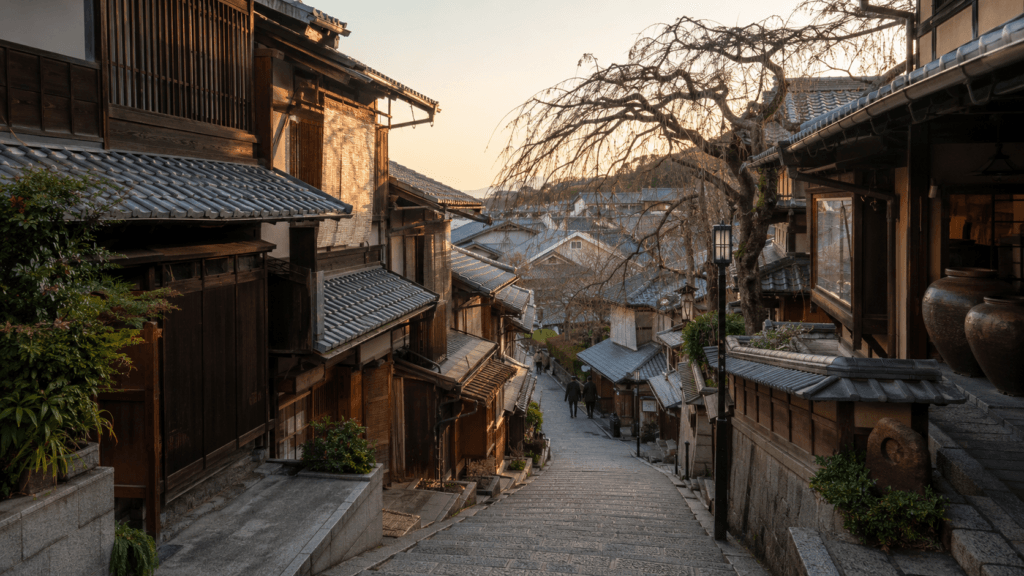
Sannenzaka and Ninenzaka are two of Kyoto’s most famous old streets.
They are touristy, but that does not make them fake. They are still some of the most atmospheric streets in Kyoto, especially before the lunch crowd arrives. Traditional-style buildings, stone paths, small shops, cafes, matcha sweets and ceramic stores make this area feel like the Kyoto many travelers imagined before arriving.
The key is timing. Early morning feels calm and photogenic. Late morning and afternoon are much busier. During peak seasons, the streets can become so crowded that walking slowly is no longer a choice. It is the local traffic system.
Take photos, but do not block the street. These lanes are narrow, and everyone is trying to have their own small Kyoto moment.
Yasaka Pagoda and Hokan-ji Area
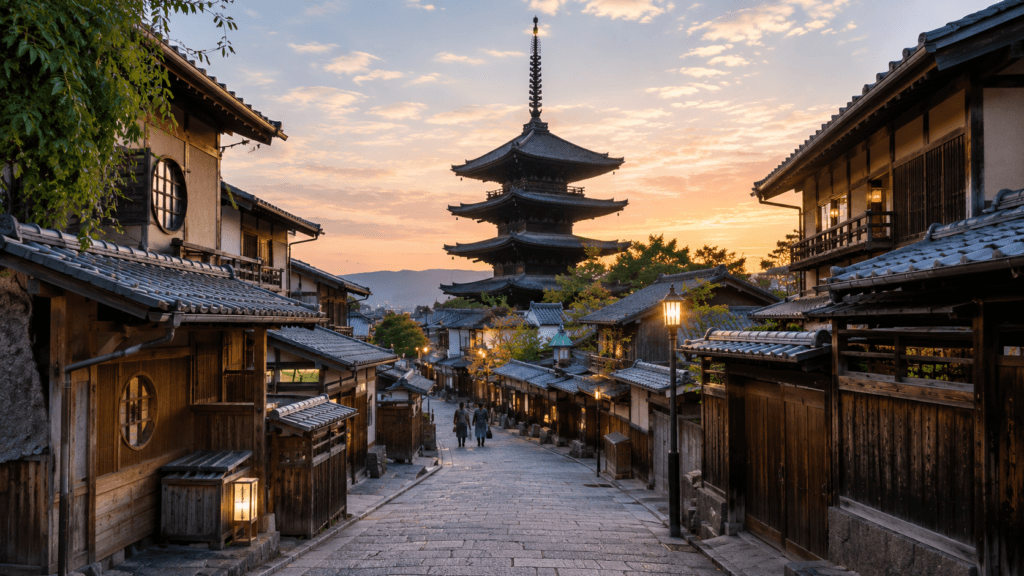
After Ninenzaka, continue toward the Yasaka Pagoda area.
The view of the pagoda rising behind old streets is one of Kyoto’s most famous scenes. It is also one of the most photographed. Expect people, cameras and patient travelers waiting for a moment when the street looks slightly less crowded.
This area is best enjoyed as part of the walk rather than as a place to freeze in one spot for the perfect photo. Take your picture, enjoy the view and keep the street moving.
The Yasaka Pagoda area also works well as a transition point between the temple slopes and the lower Higashiyama or Gion area.
Continue to Yasaka Shrine and Gion
From the Yasaka Pagoda area, continue toward Yasaka Shrine and Gion.
Yasaka Shrine is an easy stop before entering Gion, and it helps connect the temple walk with Kyoto’s evening atmosphere. From there, you can continue into Gion, walk toward the Kamo River, or end the day around Pontocho.
Gion is beautiful, but it is also a real neighborhood. Geiko and maiko are not mascots, and local streets are not a stage set. Do not chase people for photos, block narrow lanes, enter private alleys or treat the area like a theme park.
Take the photo, then let the street breathe. Kyoto looks better when everyone remembers they are sharing it.
For travelers planning to stay near these old streets, compare the Higashiyama and Gion sections in Where to Stay in Kyoto 2026.
Photo Tips for Kiyomizu-dera
Kiyomizu-dera is photogenic almost everywhere, but the best photos usually come from timing and patience rather than trying to force a perfect shot.
Early morning gives you better light and fewer people.
The temple stage is best photographed from nearby viewpoints rather than only from the stage itself.
The approach streets look best when they are not completely packed.
Yasaka Pagoda works better when photographed as part of the street scene.
Night viewing photos can be beautiful, but low light requires steadier hands or a better camera.
The biggest mistake is standing too long in narrow paths for photos. Take the shot, step aside and let others pass. The city does not need one more traffic jam made of tripods and confidence.
What to Eat Near Kiyomizu-dera
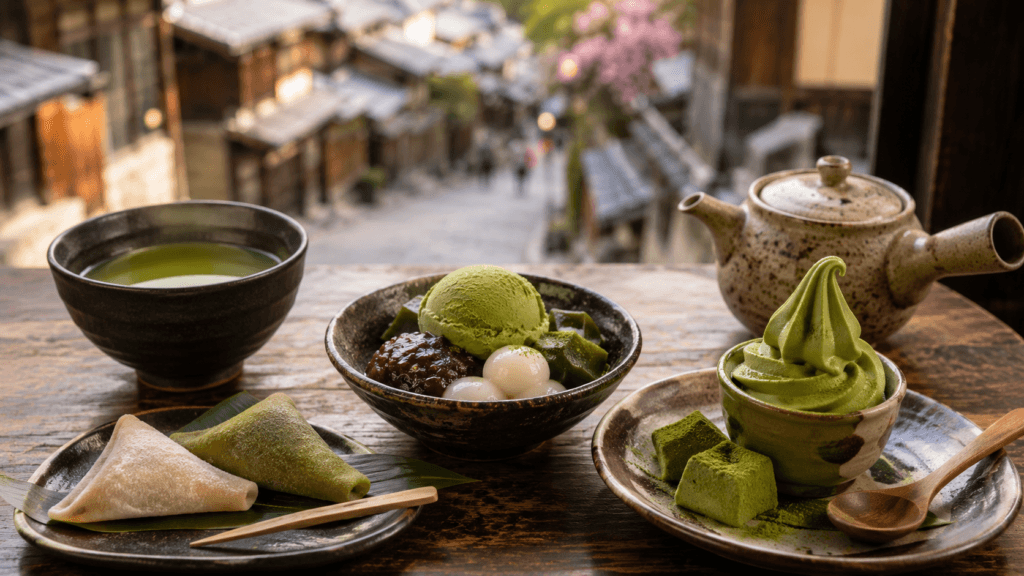
The Higashiyama area has many easy snack stops.
Look for matcha soft serve, yatsuhashi, roasted tea sweets, rice crackers, dango, small cakes, coffee, tea and Kyoto-style desserts. There are also cafes and restaurants around the wider Higashiyama and Gion area, though prices can vary.
This is a good area for light snacks rather than a heavy meal. Many visitors enjoy tasting small things while walking downhill from Kiyomizu-dera toward Gion.
For dinner, Gion, Pontocho and Shijo-Kawaramachi usually offer more choices. If the temple visit is part of a full day, snack around Higashiyama and save dinner for a more flexible area.
Travelers who prefer food and walking combined can compare Kyoto food and Higashiyama walking tours.
Should You Rent a Kimono Near Kiyomizu-dera?
Kiyomizu-dera and Higashiyama are popular areas for kimono rental.
The old streets and temple scenery make a beautiful background, and many rental shops are located around the area. It can be a fun experience, especially for photos along Sannenzaka, Ninenzaka and the Yasaka Pagoda area.
The practical side matters too. Kimono and traditional footwear can make walking slower, especially on slopes and stone streets. Plan less distance, move carefully and avoid rushing.
For travelers planning photos around Higashiyama, Kyoto kimono rental near Kiyomizu-dera can be a natural option.
Kiyomizu-dera or Fushimi Inari: Which Is Better?
Both are worth visiting, but they feel very different.
Kiyomizu-dera is better for temple architecture, hillside views, old streets and a classic Higashiyama walking route.
Fushimi Inari is better for red torii gates, shrine atmosphere, forest paths and an active uphill walk.
For most first-time visitors, I recommend visiting both if the schedule allows. They show different sides of Kyoto and fit well into a 3-day itinerary. Kiyomizu-dera is usually best for Day 1 with Higashiyama and Gion, while Fushimi Inari works well as an early morning stop on another day.
For the red torii gate route, use Fushimi Inari Guide 2026 together with this Kiyomizu-dera guide.
Kiyomizu-dera or Arashiyama: Which Is Better?
Kiyomizu-dera and Arashiyama also offer very different Kyoto experiences.
Kiyomizu-dera is better for temple views, old streets, historic atmosphere and a walk into Gion.
Arashiyama is better for bamboo, river scenery, mountain views and a slower western Kyoto day.
Travelers with 3 days in Kyoto should try to visit both. Travelers with only one full day need to choose based on travel style. Choose Kiyomizu-dera for the classic temple-and-old-street Kyoto feeling. Choose Arashiyama for scenery and a more spacious half-day route.
For western Kyoto planning, see the Arashiyama day in Kyoto Itinerary 2026.
Common Mistakes to Avoid at Kiyomizu-dera
The first mistake is arriving too late and expecting calm. Kiyomizu-dera is famous, and famous places rarely stay quiet out of kindness.
The second mistake is treating it as only a temple stop. The Higashiyama walk is part of the experience.
The third mistake is bringing large luggage. Slopes, stone streets and crowds do not mix well with rolling suitcases.
The fourth mistake is relying only on crowded buses from Kyoto Station during peak times. The bus may be simple, but simple does not always mean smooth.
The fifth mistake is blocking narrow streets for photos. Take your picture and keep moving.
The sixth mistake is planning night viewing without checking the official dates. Kiyomizu-dera is not open late every night.
The seventh mistake is forgetting that Higashiyama and Gion are real neighborhoods. Respect private areas, keep voices down and do not chase geiko or maiko for photos.
Best Place to Stay for Visiting Kiyomizu-dera
The most atmospheric areas for visiting Kiyomizu-dera are Higashiyama and Gion.
Staying nearby lets you visit early in the morning or walk back in the evening without a long transfer. It is especially good for travelers who want old streets, traditional atmosphere and a slower Kyoto feeling.
Shijo-Kawaramachi is also a strong choice because it offers better access to food, shopping and transport while still being close to Higashiyama.
Kyoto Station is more practical for transport, but it is less atmospheric. It works well for travelers with luggage, day trips or Shinkansen plans.
For a full comparison, read Where to Stay in Kyoto 2026 before booking.
Travelers who want to stay near the old streets can compare Kyoto hotels near Higashiyama or Kyoto ryokan stays in Gion.
FAQ About Kiyomizu-dera
Is Kiyomizu-dera worth visiting in 2026?
Yes, Kiyomizu-dera is worth visiting in 2026, especially for first-time Kyoto travelers. The temple stage, hillside views, seasonal scenery and Higashiyama walking route make it one of Kyoto’s most memorable places.
What is the best time to visit Kiyomizu-dera?
Early morning is the best time to visit Kiyomizu-dera. The temple and nearby approach streets become crowded later in the day, especially during cherry blossom season, autumn foliage and holidays.
Does Kiyomizu-dera have night viewing in 2026?
Yes, Kiyomizu-dera has special night viewing during selected dates in 2026. The spring period is March 27 to April 5, the summer period is August 14 to 16, and the autumn period is November 21 to 30. During these periods, the temple is open until 9:30 p.m., with last entry at 9:00 p.m.
Is Kiyomizu-dera open at night every day?
No, Kiyomizu-dera is not open late every night. Night viewing is limited to specific seasonal dates, so check your travel dates before planning an evening visit.
How do I get to Kiyomizu-dera from Kyoto Station?
From Kyoto Station, many visitors use city bus routes such as 206 toward Gojozaka or Kiyomizu-michi, then walk uphill to the temple. During busy seasons, another option is to use JR and Keihan trains, then walk from Kiyomizu-Gojo.
How long do you need at Kiyomizu-dera?
Plan at least 1 to 2 hours for the temple and main viewpoints. If you also walk through Sannenzaka, Ninenzaka, Yasaka Pagoda and toward Gion, plan a half day.
Can I walk from Kiyomizu-dera to Gion?
Yes, walking from Kiyomizu-dera to Gion is one of the best routes in Kyoto. The route passes through Kiyomizuzaka, Sannenzaka, Ninenzaka, Yasaka Pagoda and Yasaka Shrine before reaching Gion.
Is Kiyomizu-dera good during cherry blossom season?
Yes, Kiyomizu-dera is beautiful during cherry blossom season, but it is also very crowded. Visit early or consider the official spring night viewing dates if they match your trip.
Is Kiyomizu-dera better in the morning or evening?
Morning is better for first-time visitors who want easier navigation and fewer crowds. Evening is beautiful during official night viewing periods, but it requires checking dates and planning the return route.
Final Thoughts: How to Enjoy Kiyomizu-dera
Kiyomizu-dera is one of Kyoto’s classic sights, but the best visit is not just about reaching the temple.
Go early, enjoy the wooden stage, then let the day unfold through Higashiyama’s old streets. Walk down through Kiyomizuzaka, Sannenzaka and Ninenzaka. Pause near Yasaka Pagoda. Continue toward Gion when the light starts to soften.
This is one of Kyoto’s best routes because it gives you more than one famous place. It gives you a whole morning or afternoon of temple views, old streets, snacks, photos and small moments between the big stops.
Kiyomizu-dera is beautiful, but the walk around it is what makes the day feel complete. Give it time, keep your route simple and let Kyoto do what it does best: make you walk slower without quite realizing it.