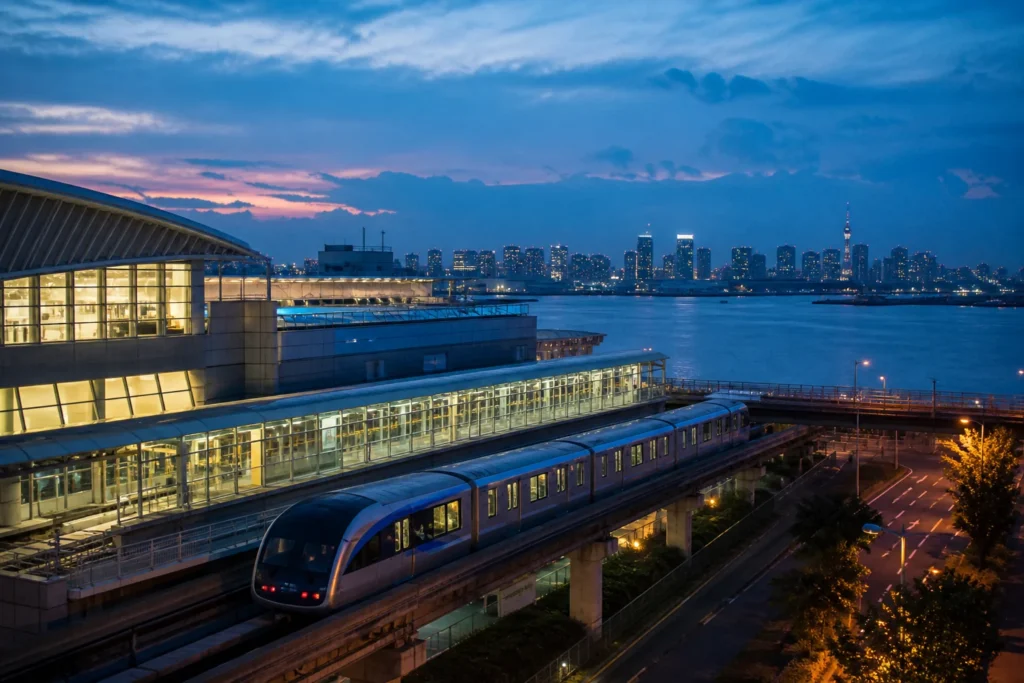
Landing at Haneda is the easy part. The airport sits close to central Tokyo, trains are frequent, and the signs are unusually kind to jet-lagged brains.
The mistake is asking for one “best” route. Tokyo is not one destination, and a fast-looking journey can hide a crowded transfer and two elevators.
This guide starts with your hotel area, not with the transport company. It compares the Keikyu Line, Tokyo Monorail, airport buses, and taxis using information checked on August 31, 2026. Fares and timetables can change, so confirm your exact departure on the official operator site on travel day.
The 30-Second Answer
- Shinagawa: take the Keikyu Line. It is direct and usually the obvious choice.
- Tokyo Station, Ginza, Shimbashi, or Hamamatsucho: use the Tokyo Monorail when the Hamamatsucho transfer suits your hotel; use Keikyu via Shinagawa when it produces an easier JR connection.
- Shibuya or Shinjuku: take Keikyu to Shinagawa and change to JR, unless an airport bus stops very close to your hotel and you have heavy luggage.
- Asakusa, Nihombashi, or Higashi-ginza: look for a Keikyu train continuing onto the Toei Asakusa Line. It may run through without a transfer.
- Ueno or Akihabara: the monorail to Hamamatsucho followed by JR is usually simple.
- After the last useful train: check the current late-night bus schedule first, then compare a fixed-fare taxi or prebooked transfer.
If you have not chosen a neighborhood yet, compare the practical trade-offs in our where to stay in Tokyo guide before booking the room. Airport access is not the only reason to choose a base, but it becomes very persuasive when you are carrying 23 kilograms of evidence that you overpacked.
Keikyu, Monorail, Bus, or Taxi?
| Option | Best for | Typical first connection from Terminal 3 | Main drawback |
|---|---|---|---|
| Keikyu Line | Shinagawa, Shibuya, Shinjuku, Asakusa | About 14 minutes to Shinagawa; ¥330 paper ticket or ¥327 IC fare | Train destinations vary, so the platform display matters |
| Tokyo Monorail | Hamamatsucho, Tokyo Station, Ueno, Akihabara | As little as 13 minutes to Hamamatsucho; ¥520 paper ticket or ¥519 IC fare | Nearly everyone must transfer at Hamamatsucho |
| Airport bus | Hotels or stations with a convenient direct stop | About 35 minutes to Tokyo Station in normal conditions | Traffic can turn a neat plan into an accidental city tour |
| Taxi or private transfer | Families, groups, very heavy luggage, late arrivals | Roughly 20–40 minutes to many central districts | Highest cost; tolls and late-night charges may apply |
Times above are transport estimates, not door-to-door guarantees. Immigration, baggage collection, walking, and traffic add time.
The official Haneda train and monorail page confirms that both rail systems connect directly with the terminals. Tokyo Monorail’s official fare table lists the Terminal 3–Hamamatsucho fare at ¥520 for a paper ticket or ¥519 using an IC card. Keikyu’s airport guide gives a daytime journey of about 14 minutes to Shinagawa, although the exact stopping pattern depends on the train.
Choose the Route by Hotel Area
Shinagawa: Keikyu Without Debate
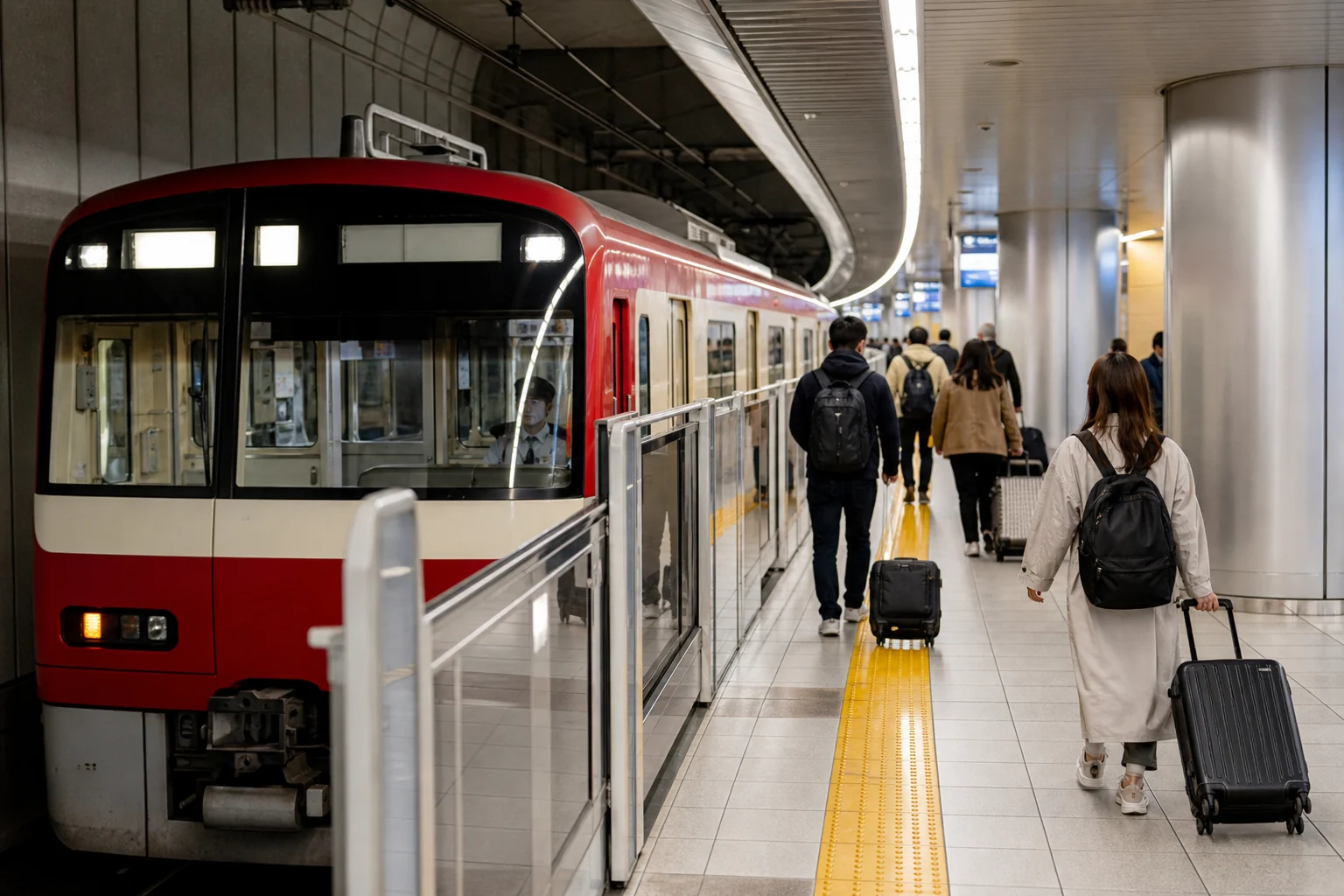
Keikyu is the cleanest answer for Shinagawa. Board a Tokyo-bound train at Haneda and get off at Shinagawa. From Terminal 3, the fastest trains take roughly 14 minutes.
The only real trap is boarding in the wrong direction. Keikyu trains also run toward Yokohama. Check that the display lists Shinagawa, Sengakuji, Asakusa, Aoto, or another Tokyo-side destination before stepping aboard.
At Shinagawa, do not automatically follow every passenger toward the JR transfer gates. If your hotel is around Takanawa or Konan, check the correct station exit first. Shinagawa Station has two very different sides, and “only five minutes from the station” becomes an interpretive statement when you emerge on the wrong one.
Shibuya and Shinjuku: Keikyu Plus JR
For Shibuya or Shinjuku, take Keikyu to Shinagawa and transfer to the JR Yamanote Line. Keikyu’s airport access guide estimates approximately 26 minutes to Shibuya and 33–34 minutes to Shinjuku from the airport under daytime conditions.
This is usually faster and more frequent than waiting for a direct bus. It is less attractive during the weekday rush with large suitcases. Shinagawa’s transfer is well signed, but the Yamanote platforms and trains can be crowded.
An airport bus becomes competitive when it stops at your hotel or Busta Shinjuku and you value one seated ride more than a few saved minutes. Check the final walk before paying.
Once settled, our Shinjuku guide and Shibuya guide can help you avoid repeating that wrong-exit experience for the rest of the trip.
Tokyo Station and Marunouchi: Two Good Answers
There is no direct rail line from Haneda to Tokyo Station in 2026. The future JR Haneda Airport Access Line is still a future project, not a train you can board after landing.
You have two practical rail routes:
- Tokyo Monorail to Hamamatsucho, then JR to Tokyo Station. This is easy to understand and usually takes around 25–35 minutes before hotel walking time.
- Keikyu to Shinagawa, then JR to Tokyo Station. This can be similarly fast and may be cheaper depending on the exact starting terminal and ticket combination.
Choose by the side of Tokyo Station where your hotel sits. Marunouchi, Yaesu, and Nihombashi addresses can look close on a booking map while requiring a surprisingly long walk through the station complex. If an airport bus stops at the hotel or the Tekko Building, paying more for a direct ride may be sensible with luggage.
The airport’s official bus page currently gives approximately 35 minutes to Tokyo Station in normal traffic. Treat that as a planning estimate, not a promise made personally by Tokyo’s expressways.
Ginza, Shimbashi, and Hamamatsucho: Let the Final Ten Minutes Decide
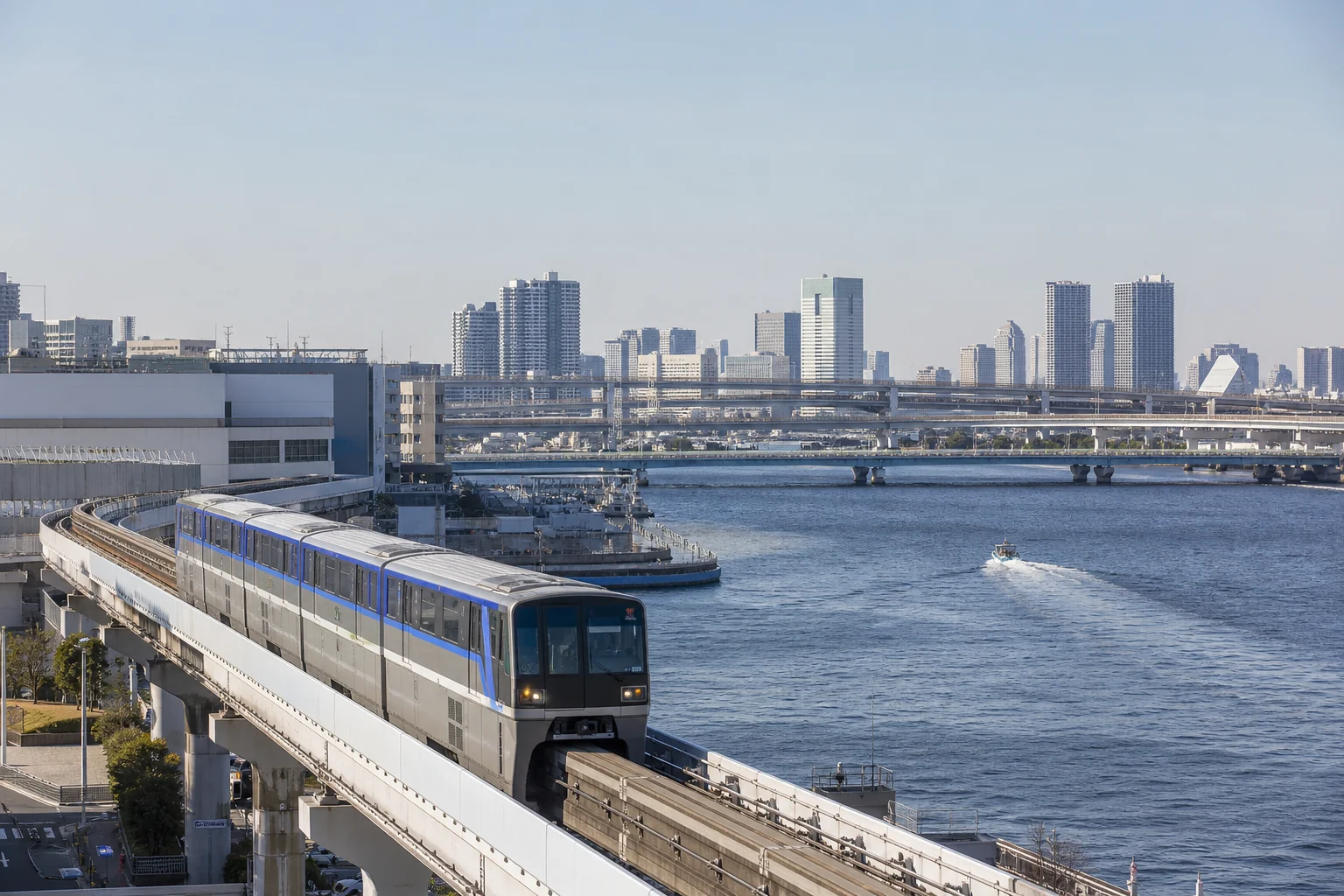
For Hamamatsucho, the Tokyo Monorail is direct. The fastest Haneda Express service from Terminal 3 takes about 13 minutes; local trains take longer.
For Shimbashi, take the monorail and change to JR at Hamamatsucho. Ginza is less tidy because the best route depends on the hotel’s nearest subway station. A hotel near Higashi-ginza may be easier on a Keikyu through-service to the Toei Asakusa Line. A hotel closer to Yurakucho may suit the monorail and JR.
Open the hotel’s map and identify the nearest entrance, not merely the nearest station name. Ginza stations have many exits, and not every exit has the elevator your suitcase was emotionally promised.
Asakusa, Nihombashi, and Oshiage: Watch the Keikyu Destination Board
Keikyu trains can continue beyond Sengakuji onto the Toei Asakusa Line. The right service may take you directly to stations including Higashi-ginza, Nihombashi, Asakusabashi, Asakusa, and Oshiage.
That does not mean every Keikyu train from Haneda goes there. Some terminate earlier or require a change. Read the English platform display and listen for the destination. If the train terminates at Shinagawa, changing there may still be straightforward, but it is not the luggage-friendly direct ride you expected.
Keikyu’s published airport guide estimates roughly 36 minutes to Asakusa and 39–41 minutes to Oshiage from Terminals 1 and 2 on suitable daytime services. Terminal 3 is a few stops closer.
This route is especially useful for travelers staying around Asakusa because it avoids crossing Tokyo on the Yamanote Line. It also pairs neatly with the eastern side of our Tokyo itinerary.
Ueno and Akihabara: Monorail Plus JR
Take the Tokyo Monorail to Hamamatsucho, then transfer to the JR Yamanote or Keihin-Tohoku Line for Akihabara or Ueno.
Keikyu can also work through Shinagawa, but Hamamatsucho generally creates a more intuitive northbound JR connection. Check the train category on the Keihin-Tohoku Line because rapid services skip some stations during parts of the day.
At Hamamatsucho, follow signs for JR rather than the Toei subway. The transfer is not inside one seamless paid area: you leave the monorail section and enter JR. Keep your ticket if using a special combined fare, or tap the same IC card at each gate.
Odaiba, Toyosu, and Tokyo Disney Resort: Check the Bus Before Building a Rail Puzzle
Airport buses can be valuable for waterfront districts because rail routes often require awkward transfers. Service frequency changes, and some routes may be suspended or operate only at limited times, so use the airport’s live route search rather than an old timetable screenshot.
For Odaiba, compare a direct bus with the monorail to Tennozu Isle and onward rail connections. For Toyosu, a bus may reduce walking but not necessarily save time in traffic. For Tokyo Disney Resort, direct airport buses are usually the easiest when their schedule matches your arrival.
The Terminal Detail That Causes Real Mistakes
Haneda has three passenger terminals:
- Terminal 1: mainly JAL and several domestic carriers.
- Terminal 2: mainly ANA domestic flights, plus some international ANA services.
- Terminal 3: the main international terminal.
Do not assume every international flight uses Terminal 3. Check the airline and flight number before arranging a pickup or telling a travel companion where to meet.
Keikyu uses one combined station for Terminals 1 and 2, called Haneda Airport Terminal 1·2 Station, plus a separate Terminal 3 station. Tokyo Monorail has separate stations for Terminals 1, 2, and 3.
If you reach the wrong terminal, Haneda operates a free inter-terminal shuttle bus. As of August 2026, daytime buses generally run every four minutes and evening services every eight minutes, with extended early and late operating hours. Allow extra time because airport roads can still delay the shuttle.
Buying Tickets Without Creating a Queue Behind You
Suica, PASMO, and compatible nationwide IC cards work on Keikyu, Tokyo Monorail, JR, and most Tokyo subway services. Tapping an IC card is the easiest option because it calculates each fare automatically.
If you buy a paper Tokyo Monorail ticket, the official ticket-machine instructions state that credit cards are not accepted at those machines. Have yen available or use a compatible IC card.
On weekends, holidays, and selected peak periods, Tokyo Monorail sells a Monorail and Yamanote Line Discount Ticket for ¥590. It covers one trip via Hamamatsucho to a Yamanote Line station. Check the current sales calendar before relying on it.
When the Airport Bus Is Worth the Extra Cost
Use the bus when at least one of these is true:
- It stops at your hotel or within a very short, level walk.
- You have large luggage, a stroller, or limited mobility.
- Your group would rather sit once than navigate a station transfer.
- Your arrival falls outside the most convenient train window.
Buy the bus ticket before boarding and confirm the numbered stop for your terminal. Terminal 3 has machines and staffed ticket counters.
Traffic is the variable. During weekday peaks, rain, holidays, or road incidents, a bus can take much longer than the published estimate. Avoid a bus when you have a tight reserved train connection elsewhere in Tokyo.
Late-Night Arrival: Use a Decision Order
Do not plan around the scheduled landing time. Plan around the time you expect to exit customs with your luggage.
- Check the official Keikyu and Tokyo Monorail planners for a complete route to your hotel, not merely the last train leaving the airport.
- Check the airport’s late-night bus section. As of August 2026, Terminal 3 lists several overnight departures toward Shinjuku and Ikebukuro, but schedules may change with flight operations.
- Compare a fixed-fare taxi or prebooked private transfer.
- If the cost is unreasonable, consider an airport-area hotel and travel after breakfast.
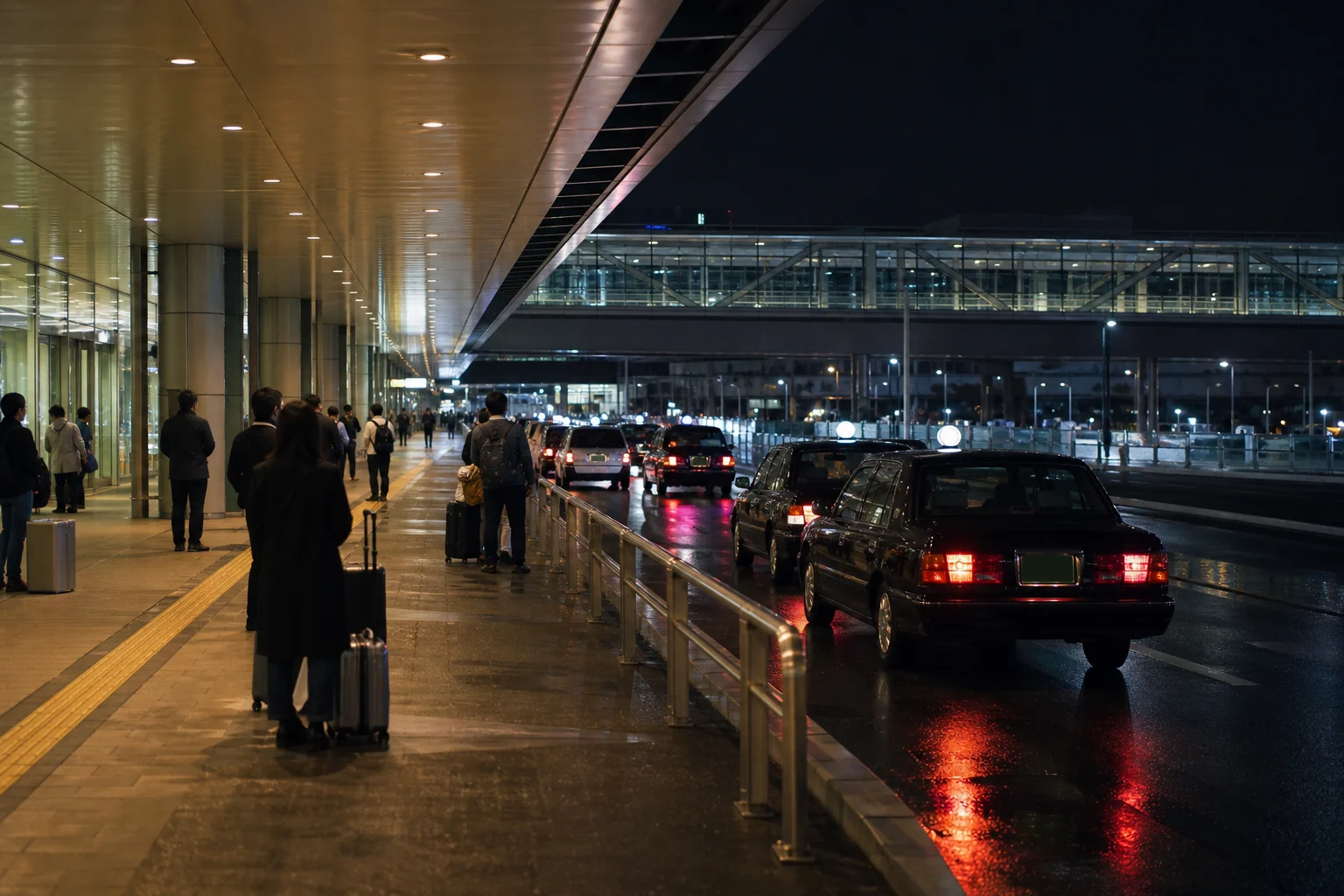
Haneda taxis offer fixed fares to eligible Tokyo and Kanagawa zones. Highway tolls are added, some areas use the meter, and trips between 10:00 p.m. and 5:00 a.m. generally cost more. Confirm the zone and total conditions with the taxi company before riding.
Luggage Changes the Best Route
One carry-on suitcase rarely changes the answer. Two large cases, a stroller, and a sleeping child absolutely do.
The rail systems have elevators, but the transfer station and final hotel exit may still require detours. Search the destination station’s elevator exit before boarding. If the elevator puts you 700 meters from the hotel, a direct bus or short taxi from a major station may be the better plan.
Avoid the weekday morning and evening rush when possible. Trains still run, but boarding with luggage can feel like adding a wardrobe to a full elevator.
A Practical Arrival Checklist
- Confirm your terminal and hotel’s nearest usable station exit.
- Save the hotel name and address in Japanese.
- Check the complete route after clearing immigration.
- Use an IC card when available; keep some yen for machines that do not accept credit cards.
- Read the Keikyu train destination before boarding.
- Treat bus times as traffic-dependent.
- Keep mobile data working for last-minute route changes; our Japan eSIM guide compares the practical options.
- If you are comparing both Tokyo airports, see our Narita Airport to Tokyo guide.
Frequently Asked Questions
What is the cheapest way from Haneda Airport to central Tokyo?
Keikyu is usually the cheapest fast option for Shinagawa and destinations reached through it. From Terminal 3 to Shinagawa, the published fare is ¥330 for a paper ticket or ¥327 using an IC card. Your total depends on the onward JR or subway ride.
Is the Tokyo Monorail covered by the Japan Rail Pass?
Tokyo Monorail is part of the JR East group and has traditionally been covered by eligible Japan Rail Pass products, but pass rules and activation procedures can change. Confirm your specific pass before travel. Keikyu is not covered by the Japan Rail Pass.
Can I take one train from Haneda to Asakusa?
Yes, some Keikyu services continue onto the Toei Asakusa Line and reach Asakusa without a transfer. Check the destination and service pattern because not every airport train runs through.
Which is better for Tokyo Station: Keikyu or the monorail?
Both work. The monorail via Hamamatsucho is simple; Keikyu via Shinagawa can be similarly fast and sometimes cheaper. Choose according to your hotel’s side of Tokyo Station, luggage, and live departure times.
How early should I leave Tokyo for a Haneda flight?
Work backward from the airline’s recommended check-in time, then add the hotel-to-station walk, transfer time, and a disruption buffer. For an international flight, leaving central Tokyo three to four hours before departure is a comfortable starting point, but your airline’s requirement takes priority.
Is a taxi from Haneda worth it?
It can be for three or four travelers, families, late arrivals, or hotels far from a convenient station. Compare the full fixed fare, highway toll, late-night surcharge, and pickup fee with the cost of separate rail tickets and the effort of the final walk.
One More Official Check for the Keikyu Route
Link checked October 12, 2026: use the Keikyu Haneda Airport Access Guide to check the route, destination and operating information for your terminal and hotel area. Recheck the actual departure you intend to take; this addition does not revalidate every fare or timetable quoted earlier in the article.