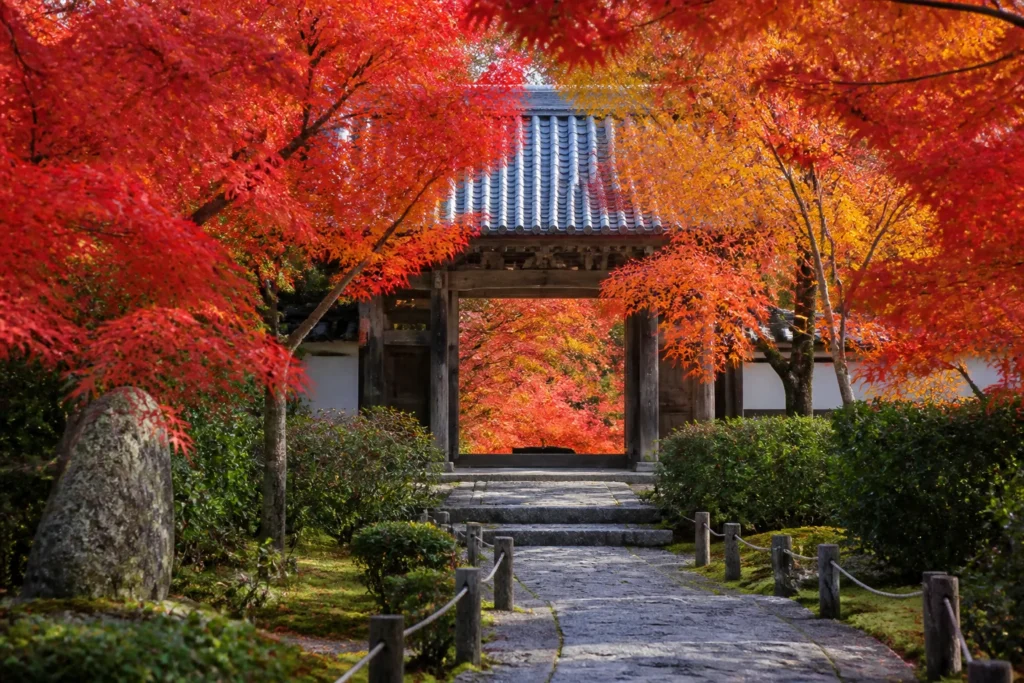
Japan’s autumn colors do not arrive on one convenient national date.
They begin in high mountains and northern regions, move through valleys and smaller cities, then reach the major urban gardens of Tokyo, Kyoto, and Osaka much later. A traveler can land in Japan during “autumn” and find brilliant red maples, stubbornly green trees, or a carpet of leaves that peaked five days ago.
The calendar is only the first clue. Elevation, temperature, tree type, and local weather matter just as much.
As of August 27, the official nationwide Japan autumn leaves forecast for 2026 has not been released. That is normal. The Japan Weather Association publishes its foliage forecasts between September and November; in 2025, the first forecast appeared on September 18. Until the 2026 forecast arrives, exact peak dates should be treated as estimates, not promises from a very confident maple tree.
This guide uses official seasonal patterns and recent forecast methodology to help you choose dates now, reserve the expensive parts early, and keep enough flexibility to follow the color once local reports become useful.
Forecast status — August 27, 2026: The date ranges below are planning windows based on typical patterns and recent official forecasts. They are not the final 2026 peak forecast. This page should be updated after the Japan Weather Association releases its first 2026 forecast.
The Short Answer: Pick the Window That Matches Your Route
For a first trip built around Tokyo, Kyoto, and Osaka, the safest planning window is roughly November 20 to early December.
That does not guarantee peak color in all three cities. It does give you a realistic chance of seeing late-November foliage in Tokyo and Kyoto, followed by later color in Osaka or other parts of western Japan.
If you are traveling earlier, do not force Tokyo and Kyoto to perform autumn on command. Change the route instead.
| Travel period | Stronger planning targets | Main trade-off |
|---|---|---|
| Mid-September to early October | Daisetsuzan and high-elevation Hokkaido | Mountain conditions change quickly; city trees may still be green |
| Mid- to late October | Hokkaido cities, Tohoku, Oku-Nikko, higher Nagano areas | Longer transfers and cooler weather |
| Early to mid-November | Lake Kawaguchiko, Hakone, Nagano, parts of Nikko | Popular buses and limited express trains can sell out |
| Mid- to late November | Kyoto, Tokyo gardens, Miyajima, lower-elevation central Japan | Peak crowds and expensive hotels |
| Late November to early December | Tokyo, Kyoto, Osaka, parts of Kyushu | Earlier mountain areas will be past peak |
The official JNTO overview describes the national season as running from late September to early December, beginning in Hokkaido and moving south. High-altitude locations turn earlier than the surrounding lowlands, which is why a simple north-to-south calendar can mislead you. JNTO’s autumn overview and the Japan Weather Association’s forecast methodology are the two useful reference points before the 2026 dates are published.
Why “Peak Date” Is Less Precise Than It Sounds
The Japan Weather Association defines peak maple viewing as the stage when most leaves on maple trees have turned red. That is useful, but it does not mean every tree in a city changes together.
Ginkgo trees turn yellow on a different schedule. A shaded temple garden may trail a sunny avenue. A mountain lake can be finished while a nearby city park is only beginning. Wind and heavy rain can also shorten the best-looking period after the leaves have changed.
This creates a familiar travel problem: you book one famous temple for one famous date, then discover that the best color is happening 40 minutes away.
A better strategy is to plan around layers:
- Choose a region with several foliage options at different elevations.
- Reserve accommodation and important long-distance transport.
- Keep at least one day flexible.
- Check local color reports seven days before the visit.
- Make the final spot decision 24 to 48 hours ahead, after checking weather and transport conditions.
The leaves are allowed to ignore your spreadsheet. Your route should be able to survive this insult.
Choose the Route Before You Choose the Famous Tree
Route 1: Tokyo, Kyoto, and Osaka for a First Visit
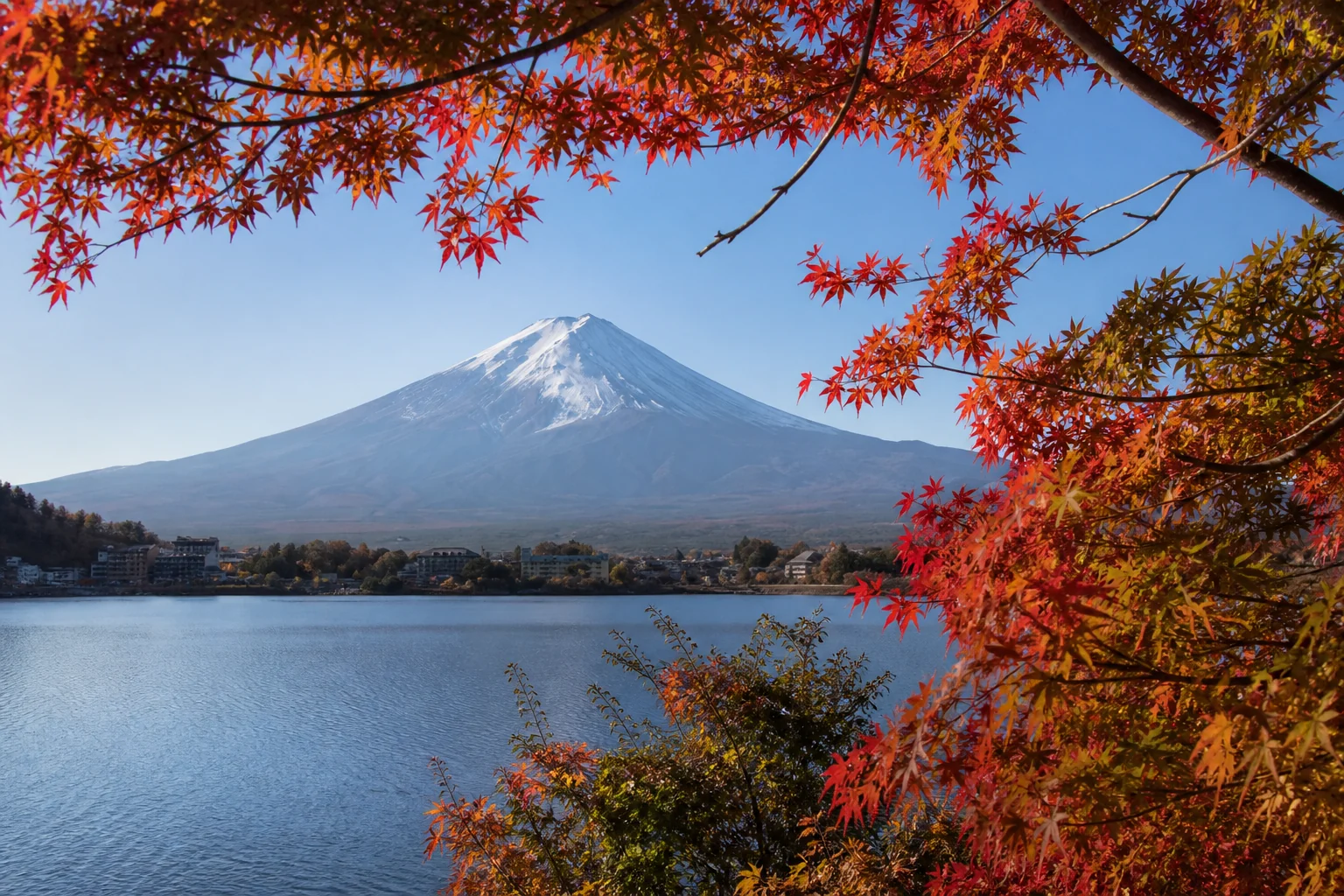
This is the easiest autumn route for first-time travelers because it combines major cities with several day-trip options.
Suggested timing: late November into early December
Suggested length: 10 to 14 days
A practical sequence is:
Tokyo → Lake Kawaguchiko or Hakone → Kyoto → Osaka
Spend four or five nights in Tokyo. Use the city’s gardens as your low-effort foliage options, then keep one day available for Mt. Takao, Lake Kawaguchiko, Hakone, or another higher-elevation escape.
Continue to Kyoto for four nights. Do not plan every day around the most famous temples. Combine one early-start headline area with a quieter district or indoor stop, because late-November Kyoto can turn a peaceful garden plan into a moving queue with cameras.
Finish with two or three nights in Osaka. The city’s foliage often arrives later than mountain regions, and Osaka gives you easy access to Minoh, Nara, or additional Kyoto time if the timing is better there.
Our Japan itinerary 2026 explains how to divide days between the main cities. Use that route as the base, then replace one general sightseeing day with the best foliage option available during your actual week.
Route 2: Follow Earlier Color Through Northern Japan
Travelers visiting in October need a different map.
Start with Hokkaido or Tohoku rather than waiting for central Tokyo to turn red. Mountain areas in Hokkaido can begin changing in September, while lower areas and cities follow later. The autumn window is short, and snow can overlap with color at higher elevations.
For a nine- or ten-day trip, choose one northern region instead of trying to collect all of them.
Hokkaido option: Sapporo → Jozankei → Daisetsuzan or another national park area
Tohoku option: Sendai → Naruko Gorge or Yamagata → Tokyo
Nikko option: Tokyo → Oku-Nikko overnight → central Nikko → Tokyo
Nikko needs special care. Oku-Nikko’s lakes, waterfalls, and higher roads change before the lower shrine district. Mountain traffic becomes heavy on peak weekends, and buses can spend more time admiring brake lights than foliage.
If you only have one day, choose either the central World Heritage area or Oku-Nikko. Our Tokyo day-trip comparison explains the transport difference.
Route 3: Two Bases, Less Luggage, More Flexibility
Not every autumn trip needs a national leaf chase.
For a calmer ten-day plan, stay in Tokyo for five nights and Kyoto for five nights. Use each city as a base and decide on day trips after checking the forecast.
From Tokyo, possible adjustments include Mt. Takao, Nikko, Hakone, or Lake Kawaguchiko. From Kyoto, look toward Ohara, Takao, Arashiyama, Nara, or Osaka depending on color and crowds.
This route sacrifices the satisfaction of drawing a heroic line across Japan. In return, you unpack twice, avoid repeated hotel check-ins, and retain enough flexibility to follow current conditions.
That is usually a good trade.
Tokyo: Easier to Adjust Than Kyoto
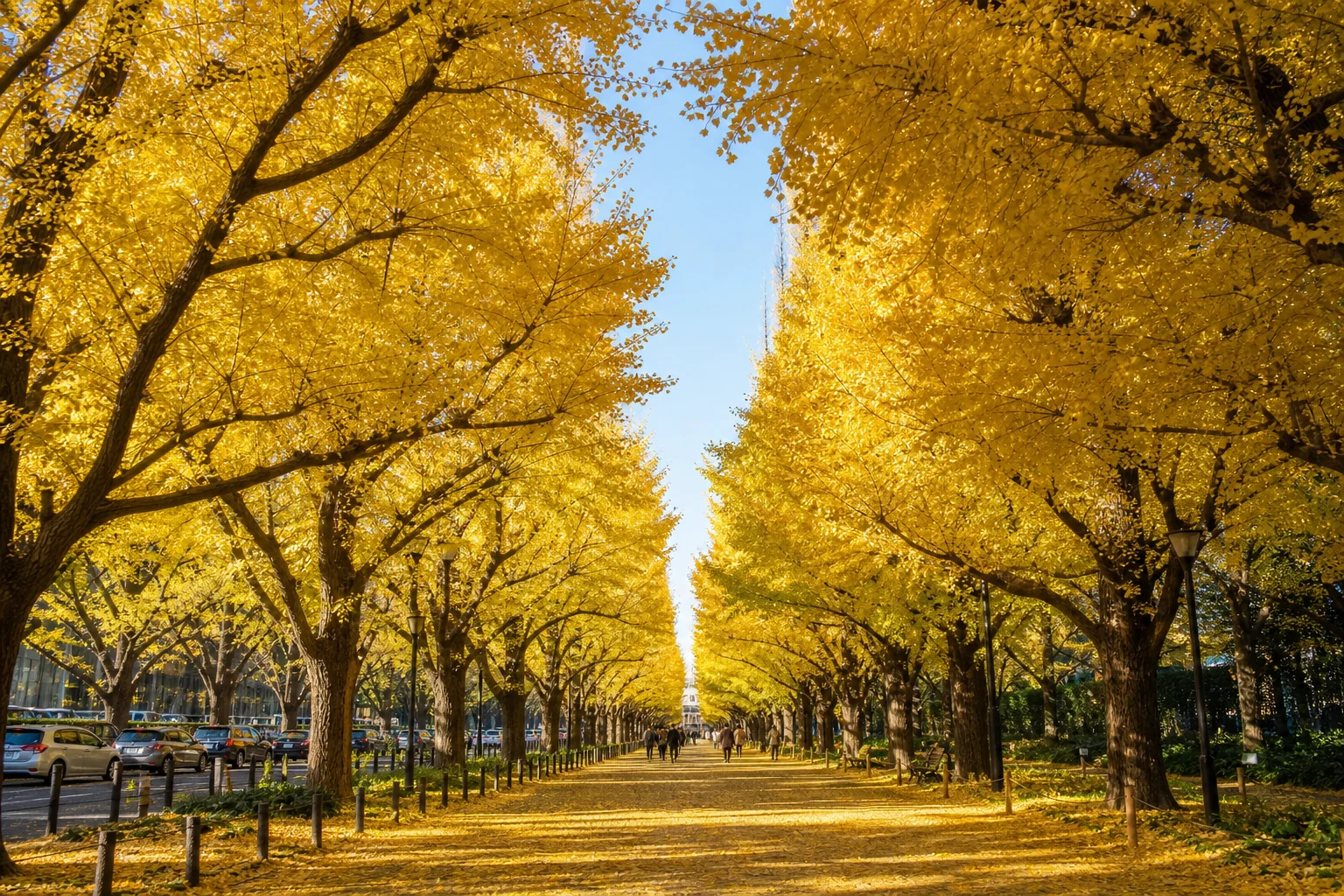
Tokyo is useful during an uncertain foliage week because its viewing areas are spread across the city and nearby mountains.
For red maples, Rikugien and Koishikawa Korakuen are classic garden choices. For yellow ginkgo, Meiji Jingu Gaien offers a completely different look. Shinjuku Gyoen is spacious and easier to combine with a normal city day.
The official Tokyo guide recommends weekday mornings for the busiest autumn sites. It also places Rikugien’s strongest typical period around late November to early December. See the current list on GO TOKYO’s autumn leaves guide.
The practical advantage is not only the number of trees. It is the number of backup plans.
If rain arrives, switch to a museum or shopping district and try the garden the next morning. If central Tokyo is still green, consider Mt. Takao or a longer day trip. If the mountain forecast is poor, stay in the city instead of spending four hours traveling to photograph mist.
Our Tokyo itinerary 2026 can absorb these changes without breaking the rest of the trip.
Kyoto: Beautiful, Busy, and Unforgiving of Late Starts
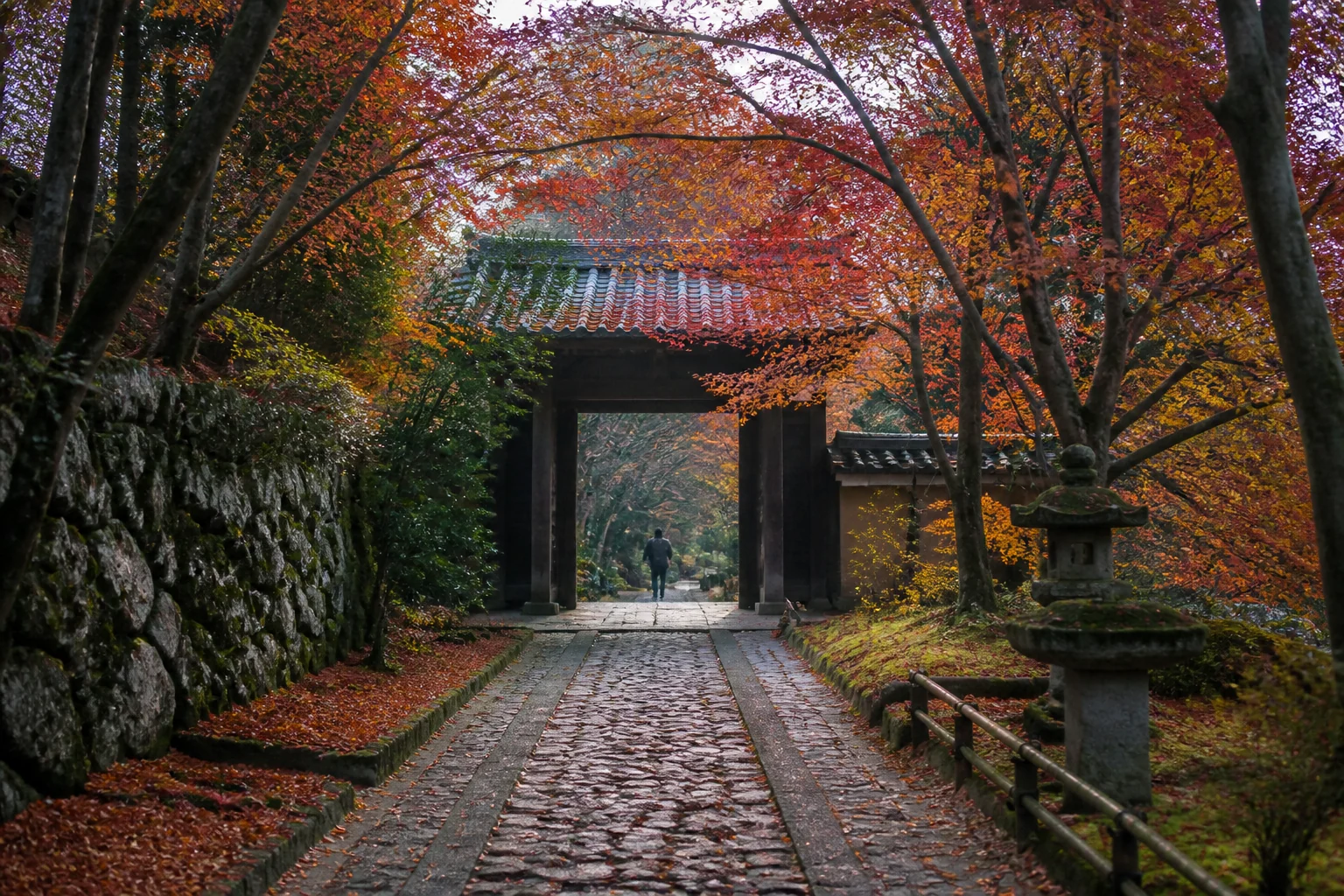
Kyoto delivers the images many travelers associate with autumn Japan: red maples around temple roofs, moss gardens covered with fallen leaves, and illuminated evening paths.
It also delivers buses that arrive full.
Kyoto’s official tourism information says leaves usually begin changing near the end of October, reach their broad peak around mid-November, and move past peak near the end of November, with higher areas such as Takao, Ohara, and Mt. Hiei changing earlier. The exact pattern varies every year. Check the Kyoto autumn leaves information shortly before visiting.
During the busiest weeks, organize days by geography rather than fame.
- Higashiyama morning: Kiyomizu-dera, Sannenzaka, Ninenzaka, then continue downhill instead of crossing the city for lunch.
- Eastern temple day: choose a limited number of gardens around Nanzenji, Eikando, or the Philosopher’s Path area.
- Arashiyama morning: arrive before the main excursion wave, then leave space for one quieter temple rather than five rushed stops.
- Fushimi Inari: go around dawn or later in the evening; midday is the least mysterious version of 10,000 torii gates.
For the full walking logic, use our Kiyomizu-dera guide and Fushimi Inari guide. The Kyoto itinerary 2026 will help keep each day in one part of the city.
Book Kyoto accommodation early if your dates are fixed. A cancellable room near a useful station is more valuable than waiting for the exact forecast and discovering that the remaining options require two buses and an optimistic relationship with luggage.
The Reservation Order That Avoids Expensive Mistakes
You do not need to reserve every garden in August. You do need to protect the parts that become painful when inventory disappears.
Book first
- Cancellable hotels in Kyoto and Tokyo
- Limited express trains for high-demand day trips once dates are fixed
- A ryokan or onsen stay if it is central to the trip
- Popular night illuminations when official tickets are released
- Luggage-forwarding or storage plans when using a one-night mountain stop
Decide later
- The exact Tokyo garden
- Mt. Fuji versus Hakone
- The specific Kyoto temple used for peak color
- Outdoor plans on a rain or strong-wind day
- Whether a day trip is worth keeping after the local color report updates
This article contains affiliate links. If you book through one, Asia Travel Lab may earn a commission at no extra cost to you.
For Lake Kawaguchiko, independent trains and buses work well when reserved early. If those seats are gone—or if you prefer several viewpoints without negotiating local bus queues—a Mt. Fuji day tour from Tokyo can be the simpler option. Check the cancellation policy, meeting point, and included stops before paying. “Mt. Fuji tour” is a category, not a guarantee that the mountain will clock in for work.
Small Problems That Become Large in Peak Season
The last kilometer takes longer than the train
Japan’s intercity trains are fast. The bus from a regional station to a mountain viewpoint may not be.
Build buffer time for ticket lines, packed buses, station exits, and the walk from the stop. A route that looks elegant in a map app can become fragile after one missed rural connection.
Digital payment is common, not universal
IC cards handle many local trips, but they do not replace every reserved ticket or cover every rural bus. Keep a physical payment card and some cash available. Download tickets before leaving strong mobile coverage, and do not let your phone begin a mountain day at 18 percent battery.
Sunset arrives earlier than your appetite for sightseeing
Late-November daylight disappears quickly. Many gardens and temples close before dinner unless they operate a separate illumination event. Put outdoor scenery first, then save restaurants, shopping, or night views for later.
A famous illumination can mean a second crowd peak
Evening openings are atmospheric, but they are not secret. Arrive before the busiest entry period when possible, check whether a separate ticket is required, and avoid scheduling an inflexible dinner immediately afterward.
Rain changes the plan; wind changes the leaves
Light rain can deepen autumn colors and reduce some crowds. Strong wind after peak can strip trees quickly. Check both the foliage report and the short-term weather forecast before committing to a long day trip.
Pack layers, a compact umbrella, shoes that tolerate wet stone, and a small cloth for the camera lens. Fashion can recover. Socks take things personally.
A Three-Check Forecast Routine
Use three planning checkpoints instead of refreshing a foliage map every morning from August onward.
About one month before travel: Read the latest national forecast and confirm whether your broad route still matches the season.
Seven days before each region: Check local tourism updates, garden notices, transport reservations, and recent weather. This is when you choose likely day-trip targets.
Twenty-four to 48 hours before: Check rain, wind, live cameras where available, and current color reports. Finalize the next day—not the entire trip.
The Japan Weather Association normally updates its national forecast several times between September and November. In 2025, it issued releases in September, October, and November, and explained that warmer autumn temperatures tend to delay color while cooler temperatures accelerate it. See the 2025 forecast release and methodology for how the process works.
Japan Autumn Leaves 2026 FAQ
What is the best time to see autumn leaves in Japan in 2026?
For a first-time Tokyo–Kyoto–Osaka route, late November into early December is the strongest planning window. Hokkaido and high mountain areas turn much earlier, while western lowlands can remain colorful into December. Wait for the official 2026 forecast before treating any individual date as peak.
Is October too early for autumn leaves in Japan?
October is too early for peak color in central Tokyo and much of Kyoto, but it is useful for Hokkaido, Tohoku, Nikko’s higher areas, and mountain destinations in central Japan. Match the route to the month instead of forcing the Golden Route into the wrong season.
Is Tokyo or Kyoto better for autumn foliage?
Kyoto offers the classic temple-and-maple scenery, but it is more crowded and accommodation can be expensive. Tokyo offers more flexible city gardens, easier indoor backup plans, and access to several day trips. Travelers who can visit both should use Tokyo for flexibility and Kyoto for concentrated historic scenery.
Can I see Mt. Fuji and autumn leaves on the same trip?
Yes. Lake Kawaguchiko often fits an early- to mid-November planning window, but foliage and clear mountain visibility are separate variables. Check color reports, weather, and live cameras before traveling. A clear Tokyo morning does not guarantee an unobstructed Fuji view.
Do I need reservations for autumn foliage spots?
Many parks and temples use normal admission, but some illuminations, special openings, trains, tours, and buses require or strongly benefit from advance booking. Reserve accommodation and limited-capacity transport first. Keep ordinary garden choices flexible until the weather is clearer.
What is a good 10-day Japan autumn itinerary?
Use four nights in Tokyo, four nights in Kyoto, and two nights in Osaka. Keep one Tokyo day and one Kansai day flexible for the best current foliage. If your trip falls in October, replace Kyoto and Osaka with a northern or higher-elevation region.
Final Planning Rule
Do not build a Japan autumn trip around one tree, one temple, or one screenshot from last year.
Choose a route with different elevations. Book flexible accommodation. Protect the limited-capacity transport. Then wait until the forecast becomes useful before deciding exactly where Tuesday morning belongs.
The best autumn itinerary is not the one that predicts nature perfectly six months ahead.
It is the one that can change without collapsing.